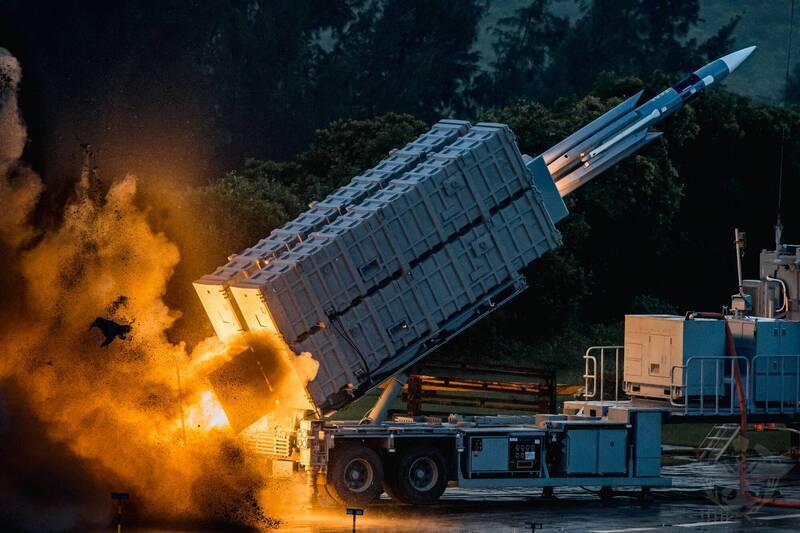
Is this ‘porcupine’/asymmetrical or not? …. Not sure what the radar contract is (PAVE-PAWS?). The Taiwanese Air Force will need 10x the Sidewinders and AMRAAMs, and 400 Harpoons are still on backorder. Long story short: cannot count on the Chinese communists being as incompetent as the Russians invading Ukraine. Communist China is far larger than Taiwan. And Taiwan Republic does not have a nice protected land neighbor like Poland to slowly dribble supplies in during the war. The Sidewinders are not enough to put two on each of their existing F-16Vs, not to mention the 66 F-16Vs on backorder.
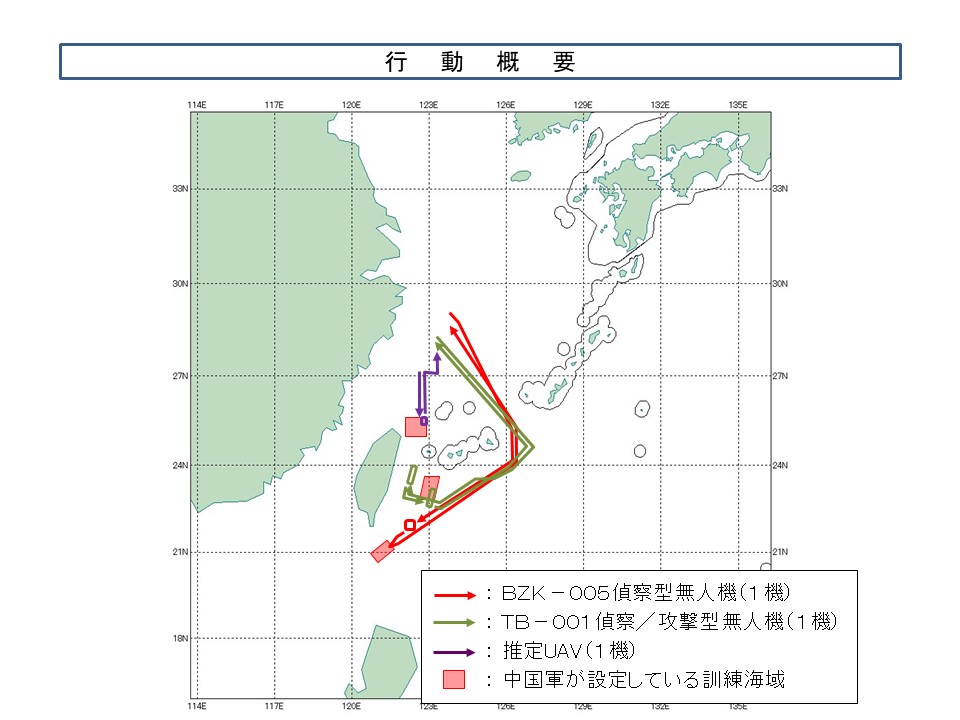
If whoever from the Biden administration did not overreact and unwisely leaked Speaker Pelosi’s planned visit to Taiwan to selected press, and then tried to mobilize the chorus of talking heads generating weeks of ever more hysterical punditry against the visit. And if the Chinese communists did not respond to this routine, nothing out of the ordinary visit with their ballistic missile tantrum (and to deliberately choose to include the Japanese EEZ in this belligerent overreaction ….). Given what we know about the global news cycle, the fixation of the Euro-American centric English language press on domestic and Euro-American news, honestly, how many people would have noticed that Speaker Pelosi or any of these subsequent delegations visited Taiwan? So was this a “Pelosi effect”? Or, is it a “Deliberate and unwise White House leak, DC foreign policy establishment, and the Chinese Communist Party” effect?
It is fair to think of the Pelosi effect as having reframed how the many parties – democratic Taiwan, its neighbor Japan, US national interest in the region, and the Chinese communists are discussed and covered in the west.
The conceptual framing of ‘symbolic’ v ‘ substantive’ is fascinating. When journalists cover foreign dignitaries visiting the White House I don’t recall ever seeing this framing. On the eve of the Russian invasion of Ukraine when western leaders visited Moscow, were those trips symbolic or substantive (most likely, as with most visits, both ….) I agree with Dr. Kuo that given the scale and immediacy of Chinese communist belligerence, these important foreign visits must be matched with sustained, multidomain, concrete action. And while imperial powers often are slow in reflection, an honest appraisal is that the US has been decades late in understanding the threat posed by the Chinese communists, distracted and navel-gazing for decades – urgent changes from the US are required in ensuring its West Pacific alliance system will survive the Chinese communist challenge.
An important reason why foreign dignitaries visiting Taiwan Republic is critical is that for decades the China Communist Party and the China KMT have tried to frame the “Taiwan Problem” as a domestic, end of the most recent Chinese civil war issue. Once Taiwan started electing its presidents and national legislators in 1996, the Chinese civil war-domestic problem could no longer stand. This is why President Lee and President Tsai’s seemingly mild and intuitive focus on democratic sovereignty bothers both China parties so much. The Chinese communist’s recent claim that the Taiwan Strait is “domestic, territorial water” is just another facet of this line of thinking. Speaker Pelosi and others, flying official aircraft, using their official titles, landing in a dual-use civilian/military air base in Taipei, visiting democratically elected national leaders in the Taiwanese executive and legislative branches, all without receiving permission (visas, flight clearance ….) from Beijing, punctures the positions held by the Chinese parties.
There is also much to be said for expanding the level of official contact between Taiwan and its democratic allies, including higher officials and military leaders. Given the gravity of the geostrategic threats posed by Beijing, isn’t it odd that the US Secretary of State doesn’t speak with the Taiwanese Foreign Minister on the phone, the Secretary of Defense, or the Joint Chief of Staff? Why shouldn’t the elected presidents of both nations speak regularly – to coordinate, clarify, to understand one another’s priorities and preferences? Such a breakthrough would be symbolic but also address glaring substantive problems. And given the innovations in online communications brought about because of the pandemic, one hope for greater creativity between DC, Taipei, and Tokyo. If it is too much still for President Tsai to fly to DC and visit the White House, why should she be prevented from attending Congressional and Executive branch-hosted online forums and meetings? And vice versa.
One. I find this report reassuring. Taiwan cannot afford to domestically develop too many weapon systems – and for historical, diplomatic, political, and psychological reasons, this is the impression one gets, that for a modest-sized nation, with limited funds, with a very acute national security threat, Taiwan’s domestic military research institutions (mostly military and quasi-government controlled) have tried to cover too many projects. An important cause of this has been ambiguous and self-defeating US policies – forcing Taiwan to waste time and resources on the IDF jet fighters, the long-delayed Taiwanese submarine program being two of the many examples.
Two. As a part of Taiwan’s democratizing there are three pillars of “normalization” required – normalizing Taiwan’s international presence/alliance arrangements as a democratic nation-state; normalizing Taiwan’s domestic civilian-led democratic political institutions to include the military and military adjacent planning; and normalizing the process wherein domestically developed weapon system coheres with Taiwan’s overall national security, geostrategic, and geoeconomics objectives. Again, Taiwan’s national security transition faces two legacies – transforming the military from a dictatorship preservation entity into a national protection military while at the same time waiting for the US to update its previously unhelpful security assistance policies towards Taiwan.
Three. A critical area of reform is the democratization and “Taiwanization” of the national security apparatus – using Ukraine as a role model – so that the total national power of Taiwan can be harnessed by its military. Cyberwarfare and drone technology are the two glaring areas where Taiwan has world-class talents in its civil society, yet an insular and slow-to-transform national security apparatus has been unable to absorb these national advantages fully. For the last few decades, one cannot see a concerted effort to invest in intelligence and electronic warfare – surprising for a small nation facing a giant enemy. The delay by many decades of effort to develop a domestic AEGIS/VLS-ish capacity for the Taiwanese Navy is another example of structural, and institutional challenges.
Four. Many encouraging signs these last few years that Taiwan’s ruling party, as well as its democratic allies, and reform-minded Taiwanese officers understand these areas require rapid transformation. It may not be the most exciting area of discussion compared with flashy weapon platforms – I am thrilled that Taiwanese and US officials are focusing on logistics, spare parts, munitions, and vital strategic stockpiles. They may not be newspaper headline material nor look good for parades. Still, one hopes serious preparation will convince the Chinese communists that a war of annexation would be too costly for their dictatorship. 30.8.2022
“Taiwan has unveiled plans for a record boost in defence spending, weeks after China staged unprecedented military exercises around the democratically governed island … The 13.9 percent spending increase, which includes funding for new fighter jets and other equipment, would take the total defence budget to a record 586.3 billion New Taiwan dollars ($19.41bn), or about 15 percent of total government expenditure.” https://www.aljazeera.com/economy/2022/8/25/taiwan-unveils-record-defence-budget-amid-tensions-with-china
One. Like most functioning democracies, elected leaders in Taiwan and Taiwanese citizens would prefer to allocate their national budget to other more productive projects. Facing an authoritarian, imperialist neighbor, Taiwan has no choice. I expect Taiwan to maintain this budget trajectory for the rest of this decade.
Two. I expect to see defense budget increases among Taiwan’s democratic neighbors, including the US Indo-Pacific command. It would sure would be nice, and would make a ton more sense – efficiency, utility, etc., for a US-led conversation among the key players – US, Taiwan Republic, Japan, Quad, AUKUS+ on how best to coordinate strategic and tactical objectives while ensuring that limited resources are not wasted. This is also a rare area where the two American political parties can work together towards a common national security objective.
Three. Which gets us to the perennial problem with the evolving meaning of the American policy of strategic ambiguity. In the olden days when America had to prevent a Chinese communist invasion of Taiwan while also preventing the dictator Chiang Kai-shek from “reclaiming” his mainland (and dragging America into a dreadful Asian land war ….), strategic ambiguity made sense. Now that many of the political, military, and economic realities on all sides have changed, it is time to transition to strategic clarity with tactical ambiguity. Strategic clarity in that the US and its democratic allies state clearly to the Chinese communists that a war in the western Pacific is not acceptable, and if need be, will be prevented by force. Tactical ambiguity means each POTUS will, with particular circumstances of time and place and types of military aggression, choose from a broad menu of policy options.
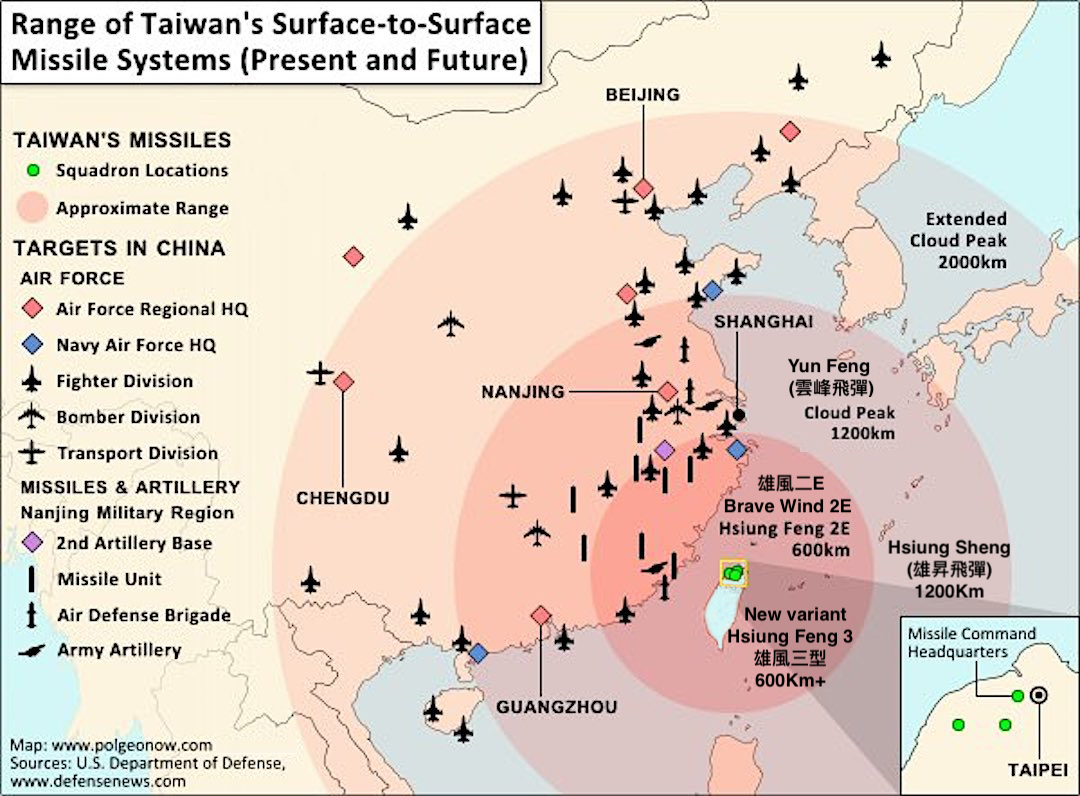
Four. Perhaps more of this has been done since the 1996 Chinese communist missile crisis behind closed doors, though more ought to be done – normalizing direct and frequent conversations between Taiwan, US, Japan, Australia, Korea, on what will and will not occur, what each nation’s primary military, economic, diplomatic responsibilities would be in the event of a crisis. This is important for everyone. Even a superpower like the US has budget limitations and must prioritize – and for a smaller nation like Taiwan, this clarity is essential. Otherwise, while policy circles and policymakers argue about “porcupine” or “asymmetrical” versus “conventional,” Taiwanese policymakers are not in a position to choose without knowing this broader global alliance context. An example: if the Taiwanese chooses “porcupine” – short-range, land-based, munitions and personnel to fight the invaders who land in Taiwan. What happens if Beijing chooses a blockade? What if China focuses on long-range ballistic missile strikes? How should the democratically elected leaders of Taiwan choose if its democratic allies remain “ambiguous” on what would happen?
Five. Finally, all nations must be more assertive and creative in getting expertise and reform into the Taiwanese Ministry of National Defense and its national security-intelligence establishments. President Tsai is the most national security competent president Taiwan has ever elected, but her DPP, and Taiwanese civil society, do not have enough expertise or leverage to reform and democratize the Taiwanese national security establishment. In a kinder gentler world over the course of decades, a democratic Taiwan can reform its military on its own – but it does not have the luxury of time. Ideally, this reform would come from direct contact and military advisory groups from Japanese, and American officers with Taiwanese officers along with regular and direct contact between national security officials on all sides. It may require a diplomatically sensitive transition move, like a return to Chiang Kai-shek’s Japanese military advisor group 白團 in the 1950s and 1960s – to systemically facilitate recently retired American and Japanese officers to come to Taiwan (and allow more Taiwanese officers to visit Japan and the US) and serve as advisors and consultants.
For Taiwan Republic and its democratic allies, increasing the military budget is only a small part of the project. How such an increased military budget is spent will determine how effective this democratic alliance will be. 28.8.2022
Historical knowledge, particularly world history level analysis, is so vital for policymaking. A few big-picture ideas and predictions.
The world is dynamic, yet humans shape the world as if it is static. When America and communist China normalized their relations in the 1970s unresolvable issues were purposely fudged. The status of Taiwan is one of those – this is why there is the confusing ‘One China Principle’ versus the ‘One China Policy’. Long story short: in the 1970s and 1980s, Taiwan was a China KMT colonial dictatorship, the Chinese communists did not have the means to invade and annex Taiwan, the two dictatorships did not have a disagreement about One China – merely over which side is the real China and which side are the bandits. It was far easier for Beijing and DC back then to sidestep the issue over the status of Taiwan.
This is not the reality of 2022 – for several decades starting with President Clinton successive administrations have talked about adjusting policies to changing reality. A stronger but authoritarian, ethnonationalist, imperialist communist China, a democratic and technologically advanced Taiwan Republic where the sovereignty is arrived at via peaceful fair and free national elections. And yet by our bad luck, we have had decades of mediocre presidents, each distracted by his own scandals and mistakes. My observation is that with the end of Globalization 1.0 – leaders can either get ahead of changing circumstances and shape and guide – or, as in the case of US Indo-Pacific policy, we can passively wait until we are forced to deal with it. That is where we are now, the room and time for kicking the can down the road have run out.
Military. For at least a decade the Chinese communists have had the ability to plausibly annex Taiwan by force. At the very least to cause a ton of damage and disruption to the region. America had been distracted by its wars in Iraq and Afghanistan, and the GWoT. Not until the Obama second term did we pivot to the Indo-Pacific, and even now it has been half-hearted. Not only have we not focused on the military preparation for the China Threat, but we have also been slow in changing the diplomatic-political conceptualizations necessary to deter and defeat China’s ambitions. Meaning, the 1970s fudging about the status of Taiwan was basically a ‘agree to disagree’ – Red China had no power to act, and both DC and Beijing wanted to focus on the USSR. However, by 2022 it is long past the time for a US-led global adjustment on Taiwan – is it a nation? would a Chinese communist invasion to annex Taiwan violate international norms? Strategic ambiguity can no longer function while serving the vital national interests of the US and its democratic allies in the Indo-Pacific.
That strategic ambiguity era is gone; the status quo is dynamic. The previous pattern that used to work – kind of like with the North Koreans, is changing rapidly. Every time Beijing wants something it throws a military tantrum – and then their partners in the west would push for “de-escalation/talks” – and then DC would concede something. This is how we ended up with so many communique. That era is over not because “hawks” are in charge – the material and geostrategic realities have changed.
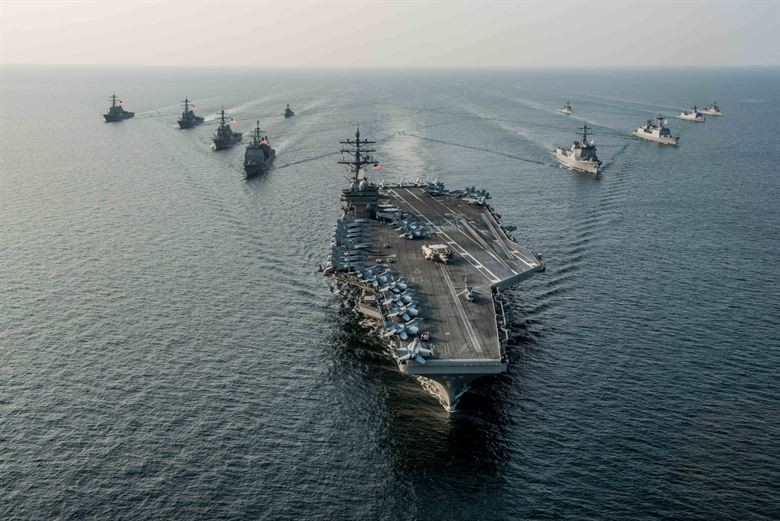
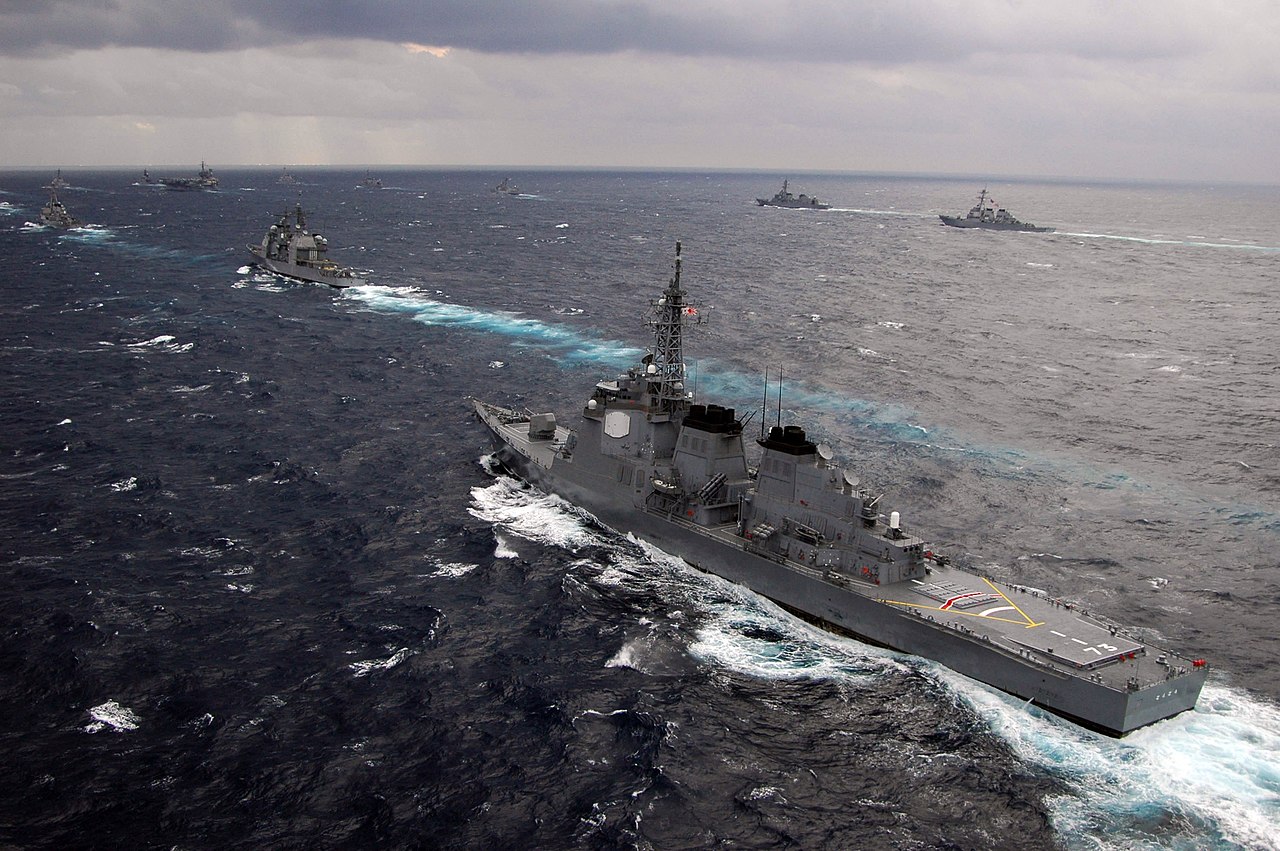
So while there are long overdue military-strategic changes that this latest Chinese communist missile crisis will provoke – Japan will change its constitution and double its military; Japan-Taiwan-US will no longer hide their military-intelligence collaborations. The counterstrike capabilities of both Japan and Taiwan will massively increase – Japan will become a nuclear power before the end of this decade. Assuming American democracy can keep it together long enough to deal with real-world problems, the largest overdue project is an American-led global democracy consensus on the status of Taiwan. My guess is that it will be the internationalization of the Taiwan Relations Act adopted by Japan and NATO and Quad. Think of it this way – during the annual RIMPAC maneuver in the south Pacific the “group photos” of the alliance carriers and destroyers and submarines – there will be a diplomatic-economic parallel to this. What we know about the Chinese communists is that they can target and sanction smaller nations like Lithuania – but when democracies take collective action, they are too vulnerable alone to act. 7.8.2022
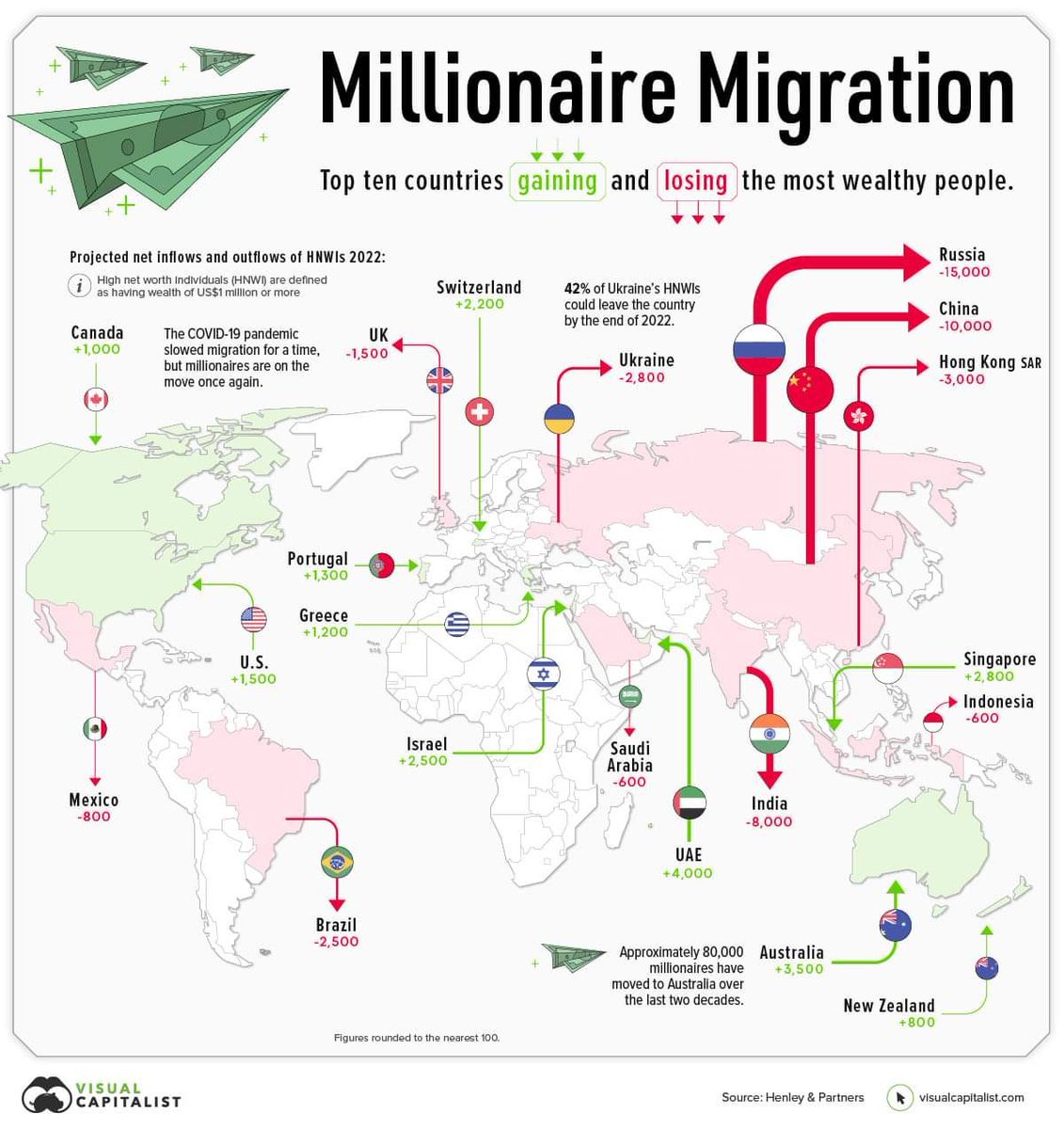
See earlier post re: demography and geography. Humans lie with words, so to triangulate the truth, watch where they send their kids for college, where they park their can’t-afford-to-lose retirement funds, and whose embassies and consulates have a line waiting for immigration visas. And while Chinese keyboard super-patriots are louder and more obnoxious than before, if you use these three metrics, you will find plenty of American, EU, Canadian, and Australian passports. While there are always essentialist ethnonationalist idiots: the fact remains, that there is nothing about supposed Chineseness, or Russianness, or Americaness, that makes a nation naturally more or less attractive to migrants. And students are always surprised when I gently remind them that millions of migrants wanting to come to America now does not make this ‘natural’ nor ‘eternal’ — and I find it super insulting when people on different sides of the ideological spectrum assume that migrants primarily are driven by money alone. The same kind of offense I take at assumptions that American citizens join the military primarily for money. Sure a job is important, but plenty of places on earth for jobs. America promises an unrivaled degree of stability, legal protection, equality, and social mobility, that though flawed and worthy of critique and improvements, relatively speaking, is unmatched by most nations on earth. We Americans of 2022 are doing a horrible job understanding and improving our own American democratic story, which is terrible for us, and bad news for the democratic world. 20.8.2022
Much thanks to controversial hardliner and ultranationalist dictator Xi Jinping for making Taipei the best national capital for democratically elected legislators to visit in 2022. Reportedly the visit from our Japanese cousins is to discuss national security. The 1996 Chinese communist missile tantrum pushed Americans to think more realistically about cooperation with the Taiwanese military. I think the 2022 Chinese communist missile tantrum is doing the same for the Japanese. Ultimately, if allied forces plan to fight together, they need to practice plan and communicate together. This is why I predict the return of Japanese and American military officers to Taiwan Republic. 24.8.2022
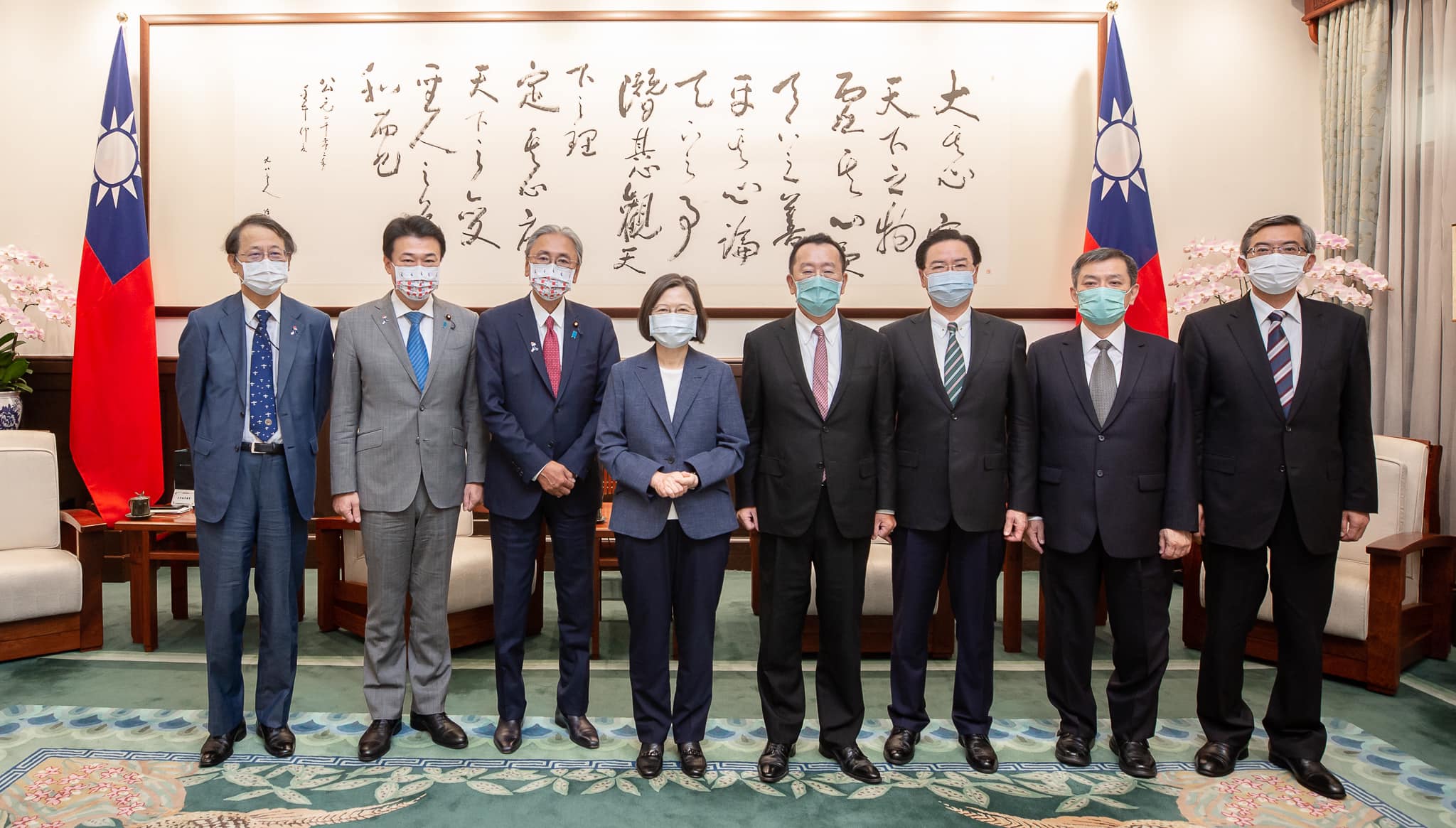
“Democratic partners should strengthen their alliance to defend against interference by authoritarian states, and protect regional peace and stability, President Tsai Ing-wen (蔡英文) told delegations from Stanford University’s Hoover Institution and the Japan-Republic of China Diet Members’ Consultative Council yesterday … At a separate meeting with the Japanese delegation representing more than 260 lawmakers in the council, Tsai reiterated the importance of deepening cooperation with democratic partners … “Taiwan and Japan have over the years formed close ties through suffering and hardship. The friendship and values that the two countries share would only be reaffirmed through more and greater challenges ahead,” she said … Retired US admiral James Ellis, who led the US delegation, said escalating threats to peace and stability for Taiwanese and the Indo-Pacific region, as well as growing challenges to the security of the semiconductor and other supply chains, are causes for concern. … “Now more than ever, we believe it is important for individuals and institutions in the US and other countries to demonstrate support for Taiwan’s right to exist as a self-governing democracy to cooperate with its vibrant private enterprises, particularly in the high-tech sector, and to maintain close connection to and solidarity with Taiwan’s creative and freedom-loving people,” Ellis said … Taiwan’s hard-won status as one of the most liberal democracies of the post-Cold War world is a major reason it enjoys such admiration, as well as broad and deep support in the US and elsewhere, Ellis said.”
Demography and geography are not quite destiny, though close.
1. This is a terrible time to be American higher ed thought leader unless you are in the 1% of highly financed higher ed factories with prestige in engineering and healthcare. If Arizona State can accumulate 100,000 plus online students, imagine what Stanford can do when it decides it needs this revenue stream.
2. Given how important immigration has always been to American prosperity, it is amazing how little Americans actually talk about it. Without immigration, American demography would have collapsed decades ago. And while the labor crisis now is complicated (as is inflation), it is also interesting to see the dominant narrative twisting into whichever imaginary direction (can’t find workers because welfare is paying too much for The Poor to buy meth and be couch potatoes ….) except to understand the centrality of immigration in American labor.
3. Would be lovely to get a human wellness-centered study on what it is about this capitalist modernity we have imposed on the globe, that no matter the religion or race or history, a nation hits certain macroeconomic indicators and the birthrate collapses. A kind of paradox. Rather than the usual media-talking head blame women blame religion blame government blame this blame that, I just want to know why, and if humans having fewer or no children are overall happier or not happier. 19.8.2022
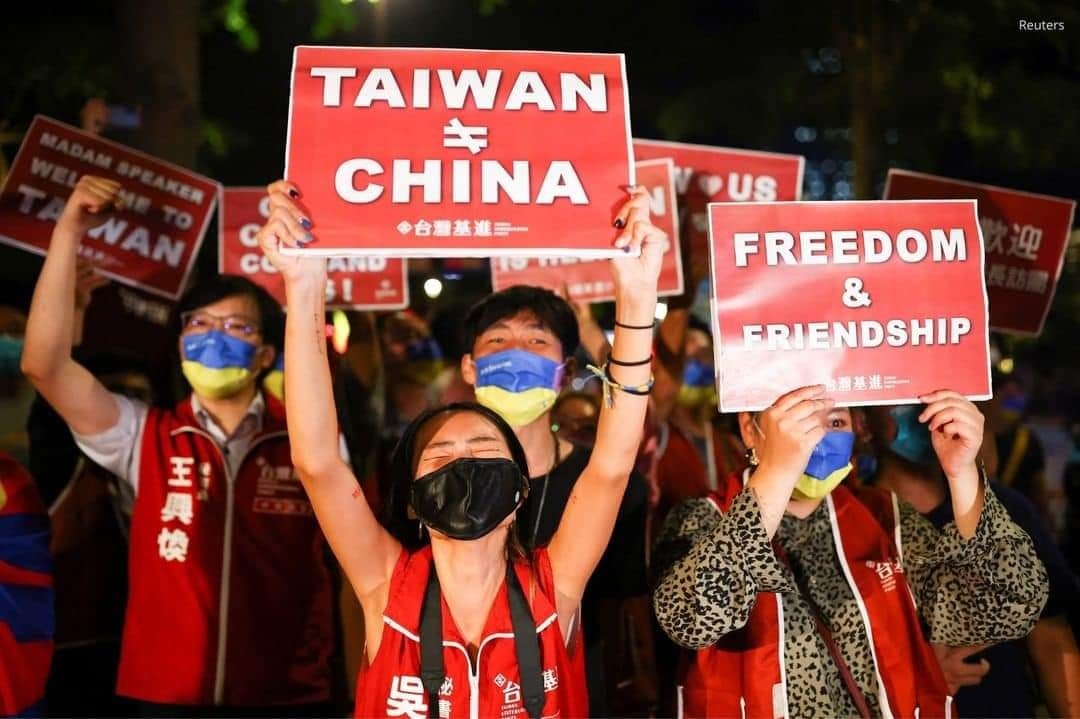
The third US Congressional delegation of this month to visit Taiwan Republic will arrive this week, along with a delegation from the Japanese Diet (reportedly with a focus on national security). Also, delegations from legislatures of Canada, the UK, Germany, Denmark, Lithuania, and the EU have also announced plans to visit Taiwan Republic soon. Eventually, western democracies must remove the self-imposed ban on high-level cabinet executives visiting Taiwan, particularly national security officials and military leaders, Taiwan’s redefining of the “status quo” as premised on its democratic sovereignty matches well with democratically elected legislators visiting. 22.8.2022
“Naval forces for the United States, Japan, the Republic of Korea, Australia and Canada wrapped up the Pacific Dragon 2022 exercise on Monday … The biennial multinational air and missile defense drills began on Aug. 5 in Hawaii at the Pacific Missile Range Facility Barking Sands (PMRF) and off the coast of Kauai … This was the first time Australia and Canada took part in the exercises, as previous iterations only included the U.S., Japan and the Republic of Korea.”
Fascinating combination and timing — coupled with the US-Indonesian military maneuver and the Japanese Navy visiting Fiji. If you think this missile defense maneuver took place without the massive Taiwanese-American PAVE-PAWs radar, and Taiwanese Patriot Pac 3s involved, then I have many bridges to sell at a discount. Of the many many unintended consequences from dictators. During the 1996 Chinese communist missile tantrum, the American military discovered that from 1979-1996 they had neglected and isolated the Taiwanese military so much that in a crisis, these quasi-allied forces would be unable to function together. Billions in arms sales and many decades of nonpartisan efforts from the US later, the 2022 Chinese communist missile tantrum met a very different US-Taiwan-Japan military alliance. The Russian invasion of Ukraine, coupled with Chinese communist human rights violations in East Turkestan and Hong Kong, will accelerate the push to formalize the military alliance. Beijing is warning American warships away from the Taiwan Strait — the big news this year could possibly be Japanese missile defense destroyers sailing alongside the US Navy near Taiwan, or, into the Taiwan Strait. 18.8.2022



 Taiwan in World History (台灣與世界歷史)