
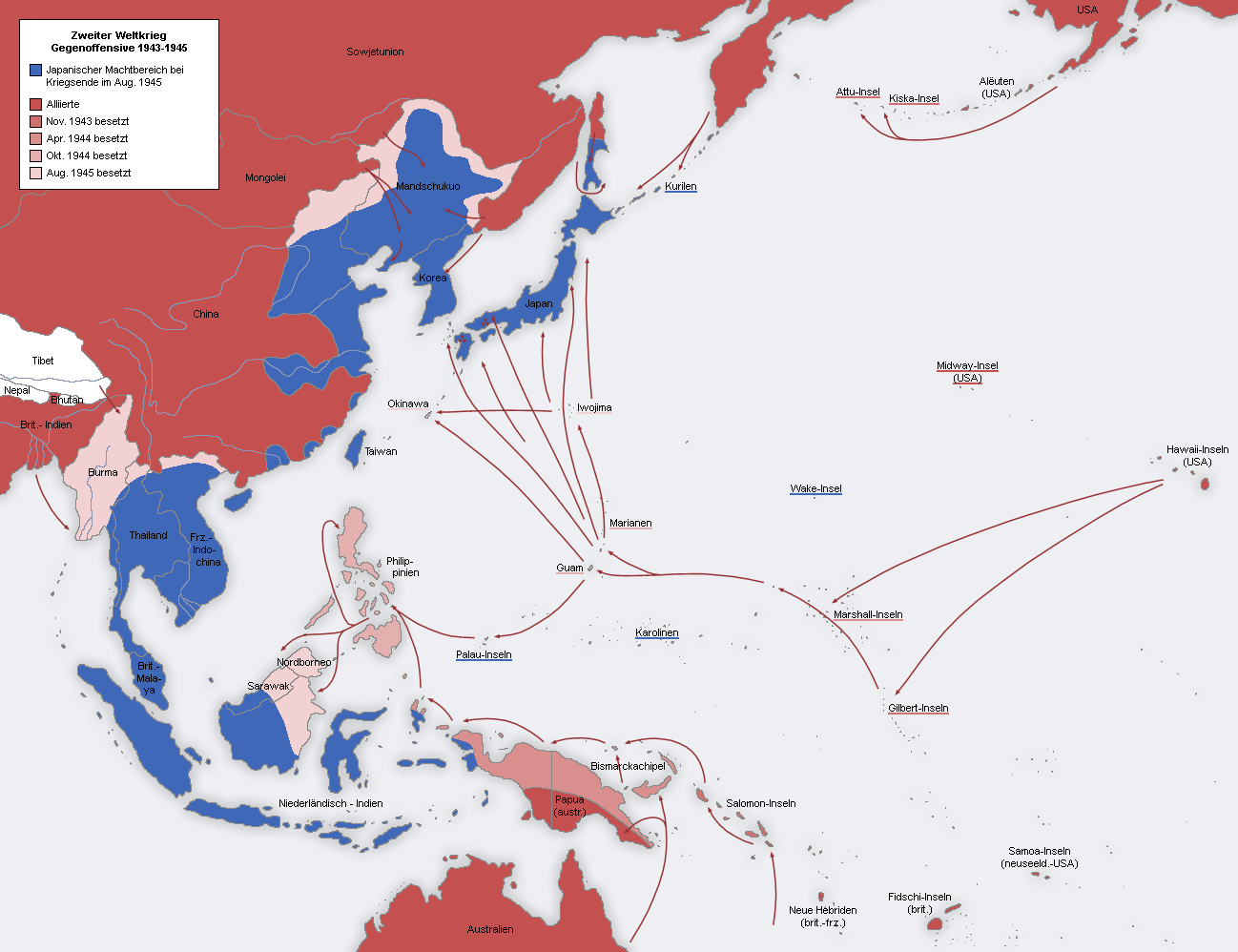
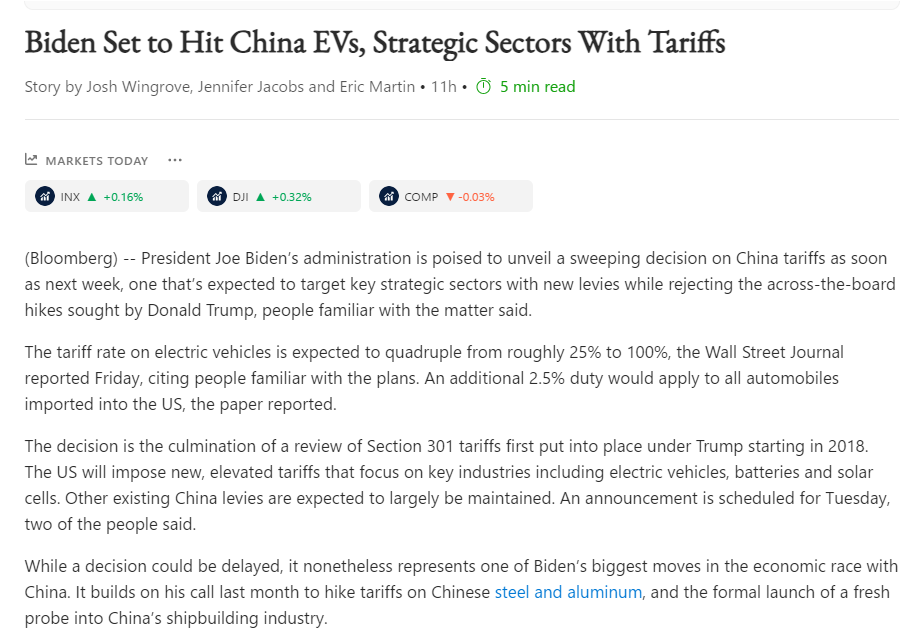
The dangers of a policy spiral. “Biden Set to Hit China EVs, Strategic Sectors With Tariffs,” Markets Today. Geoeconomics and geostrategery classrooms. The policy spiral involving economic sanctions now has a US cutting off oil supply to the Empire of Japan on the eve of the Pacific War feel. Partisans will pick and choose ahistorical moments in the timeline to blame communist China and/or US. My sense is that years before the West realized, the Chinese communists knew their ability to make themselves profitable to the West was coming to an end — and so Beijing decided a de-globalized, disconnected, poorer China that’s on a permanent war footing is a safer bet for Xi’s dictatorship. Will the Chinese communists repeat the Empire of Japan’s major mistake — thinking that actively pursuing expansionist warfare would make them safer? That part I am not sure yet, although in the last two years, I have become more convinced that dictator Xi might just be stupid enough to repeat that mistake. Certainly the military set up in the Indo-Pacific, particularly from the South Sea into the Taiwan Strait and the East Sea are prone for an accident.
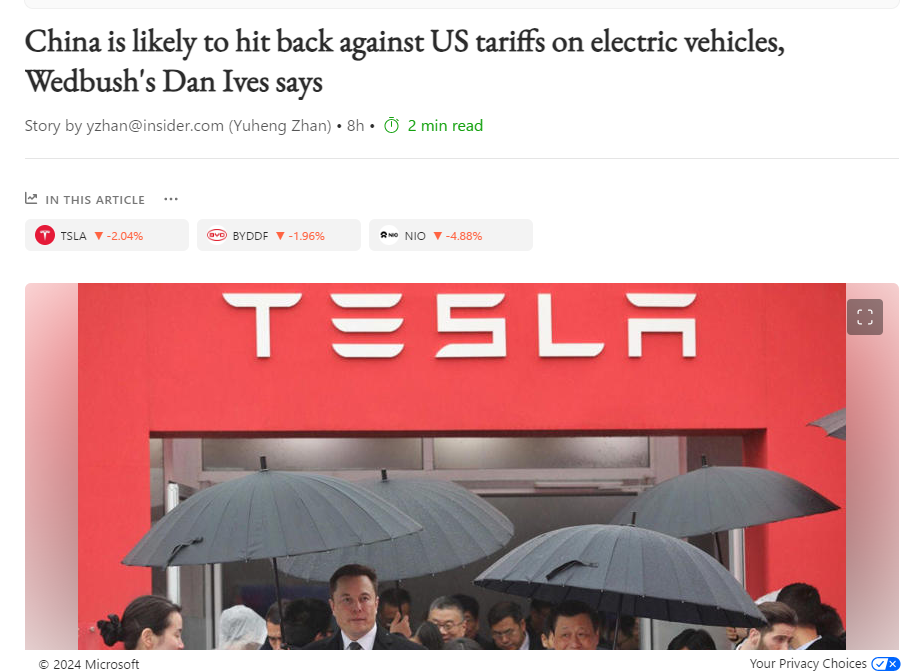
This is a companion article regarding geoeconomic policy spirals on the eve of Pearl Harbor. The main thing to understand about a policy spiral is that even when observers and policymakers can see them clearly, they are difficult to stop — because every policymaker gets short-term memory problems, because no one can agree on where the timeline ends and begins — most important, neither democratically elected nor dictatorial leaders want to be the one to “cave” and pay the domestic legitimacy price for being weak – requiring one party to back off is the only way to stop a policy spiral. You add in the complexities of the sectors involved — economic, politics, religious, military …. — add in multinational, domestic and foreign policies, and policy spirals are difficult to end without a massive catastrophe. I have always thought of the two world wars as major spasms within a huge, century-plus-long policy spiral — once one Western imperialist power decided foreign colonies, global empires, militarism, and mercantilism was the path, other Western nations plus Japan responded in kind. You would have thought the First World War was costly enough to cause a break in the policy spiral and encourage a deep rethink — it was not nearly enough. It required an even worse Second World War plus the nucular age to cause a break. It was not a utopian break — Cold War, local skirmishes, etc etc. But it was an unusually stable and prosperous few decades, 1945 to say 2000. the first break in this stability was the unwise decision by junior Bush to instigate a needless war in Iraq — that signaled the end of the 1945 world order. Everything after is far too complex to lay out in a fifteen-week seminar, much less a post. The main point being: the world is now knee deep in another dangerous policy spiral.
© Taiwan in World History 台灣與世界歷史. This site grants open access for educational and not-for-profit use. Maps and illustrations are borrowed under educational and not-for-profit fair use. If you are the rights holder and prefer not to have your work shared, please email TaiwanWorldHistory (at) Gmail (dot) com and the content will be removed.
 Taiwan in World History (台灣與世界歷史)