President Tsai Ing-Wen, Nymphia Wind, and this emerging Taiwanese national identity. National identity and Taiwan Republic 台灣国classrooms.
Tsai Ing-Wen and Nymphia Wind are as important to this emerging Taiwanese national identity as missiles, State Department policy papers, and the UN.
President Tsai has invented an understated, humble, nerdy bookish Taiwanese cool – an unusual combination for Taiwanese and world politicians. As her remarkable, world-changing eight-year term draws to an end, I will periodically share reflections on the emerging independent Taiwan shaped by her leadership. President Tsai is not a traditional politician, and her charisma is not traditional either – I have trouble listening to her speeches because they are content rich but her delivery is incredibly boring. She is unusual for a politician in the modern age in that she says precious little and does not appear to desire to be the center of national attention. No one calls her Tsai Goddess 蔡神, and she seems perfectly happy about that. It speaks to a remarkable level of confidence and peace in herself.
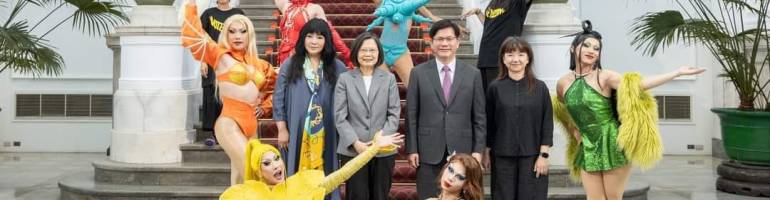
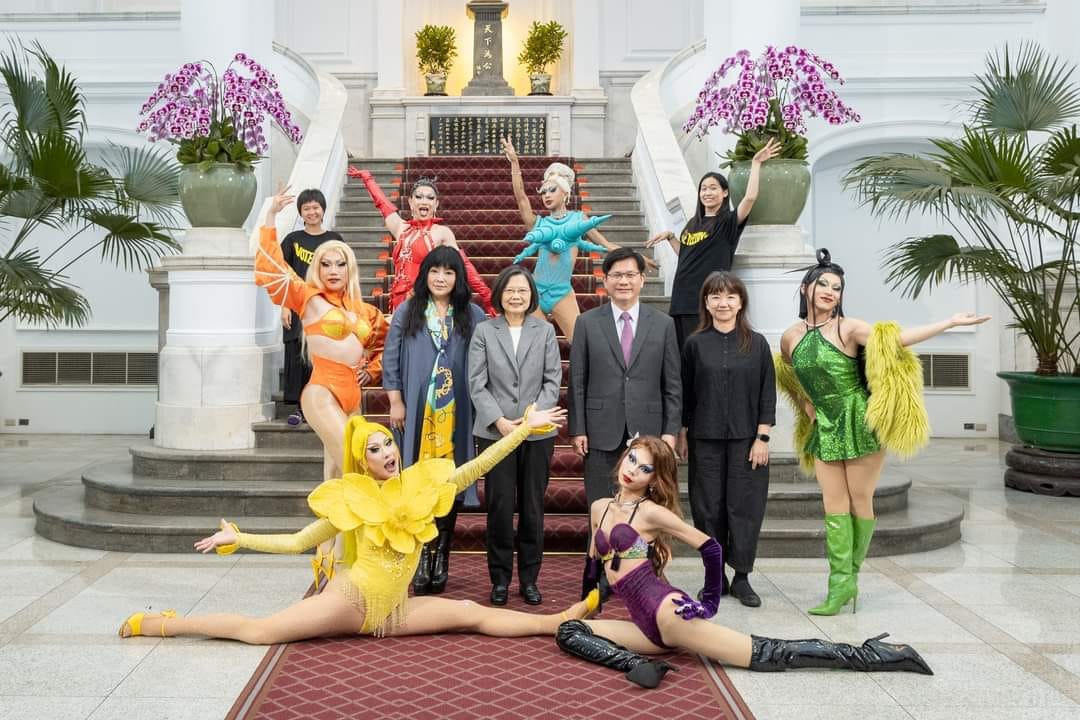
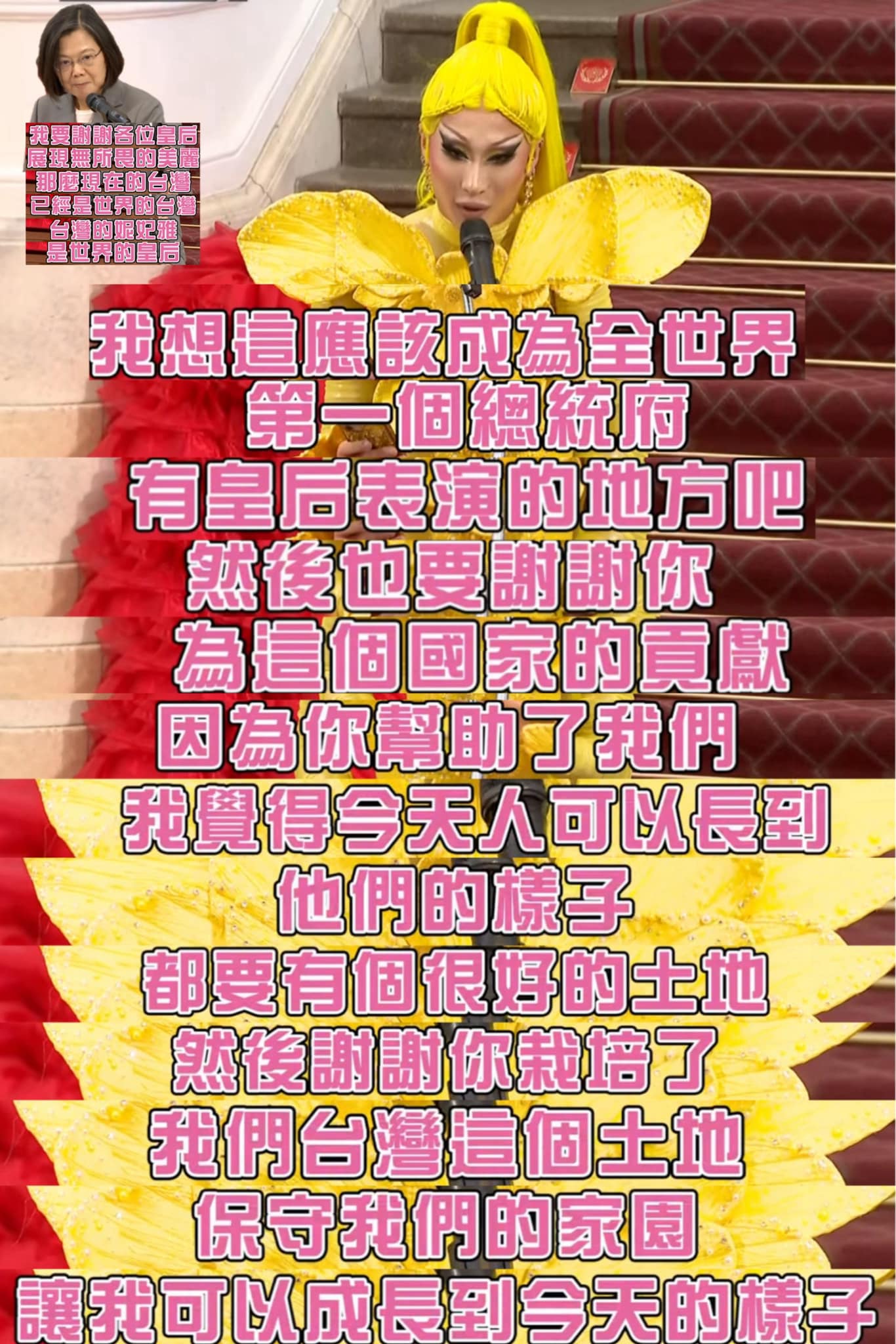
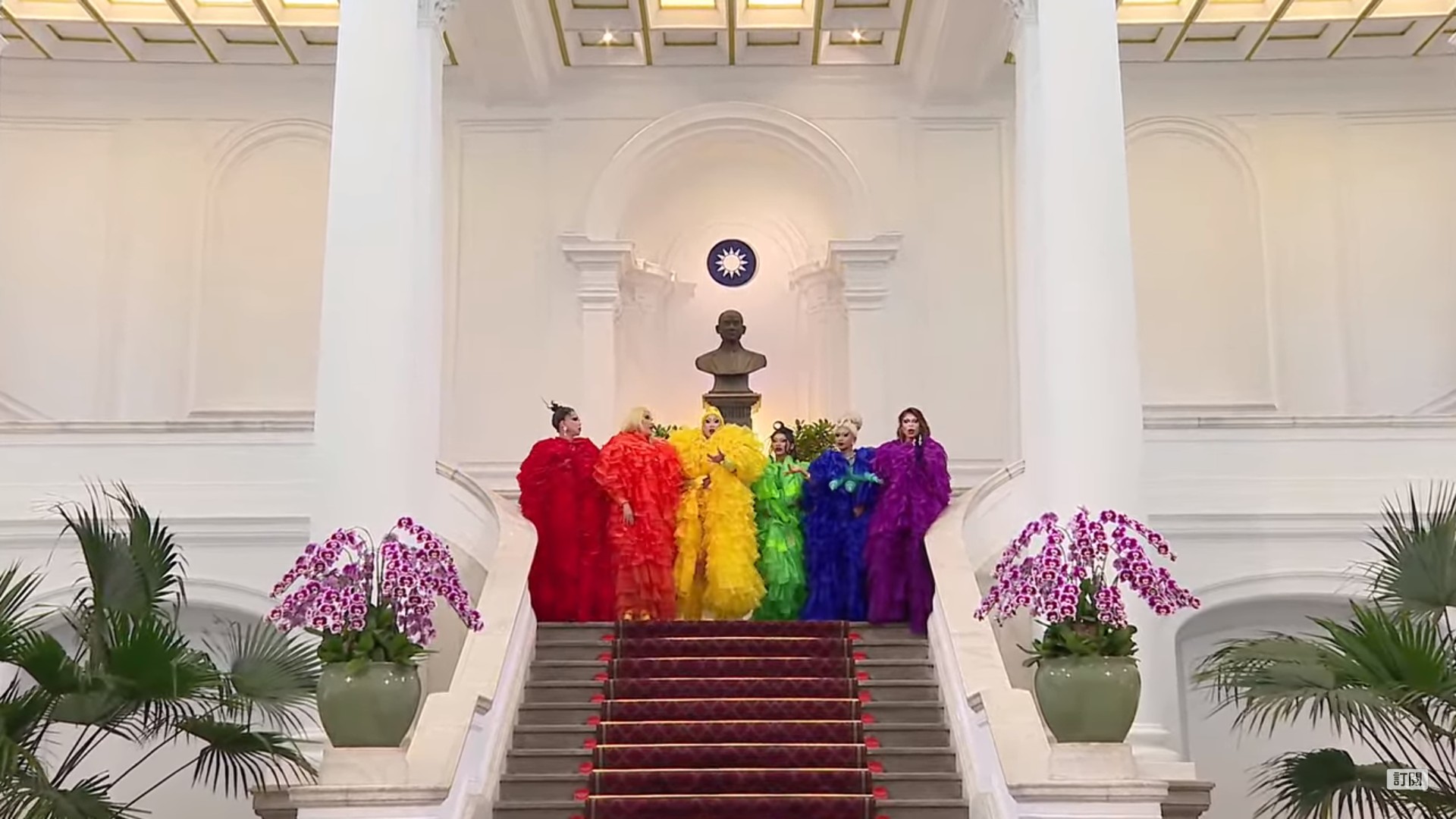
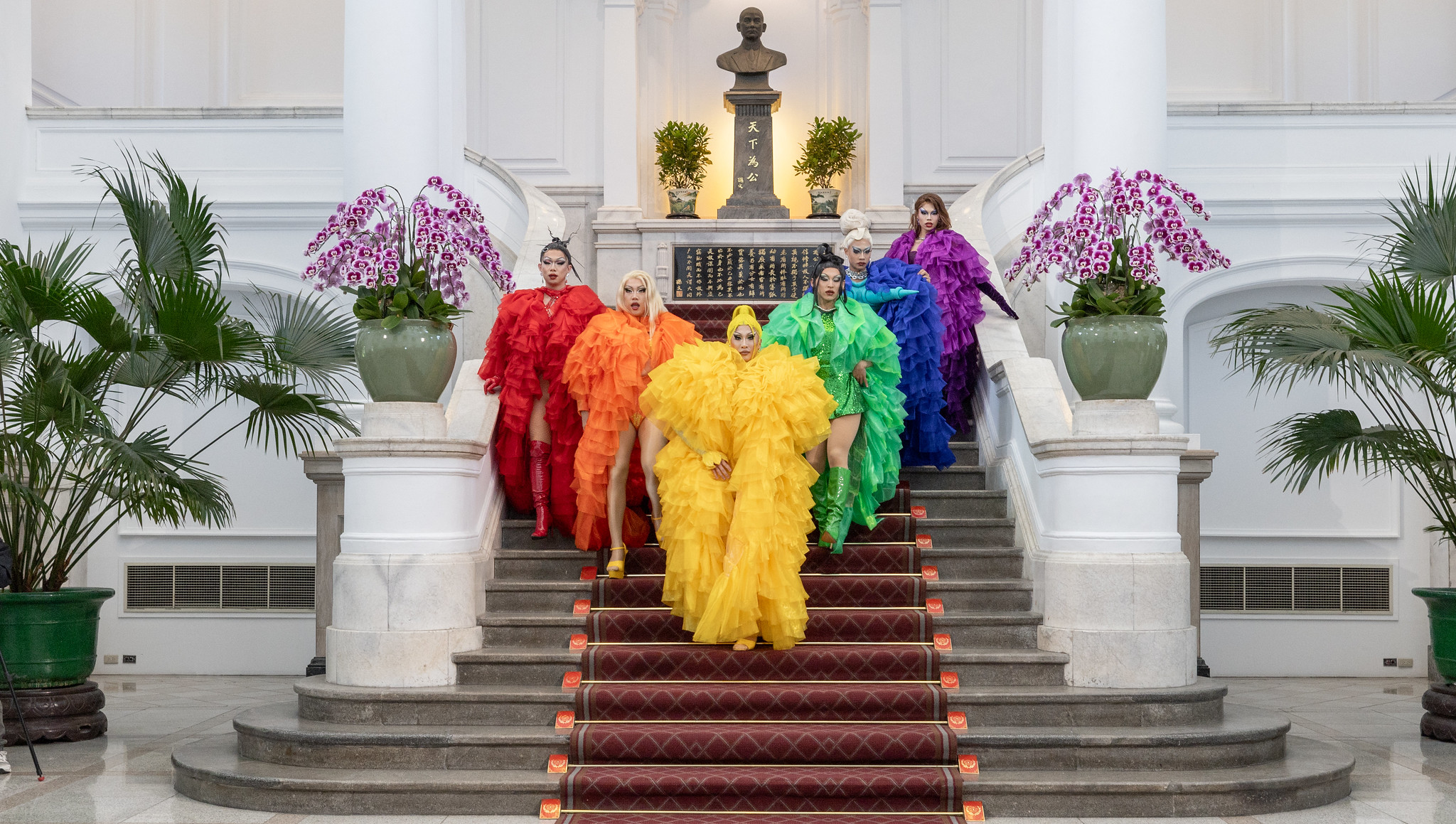
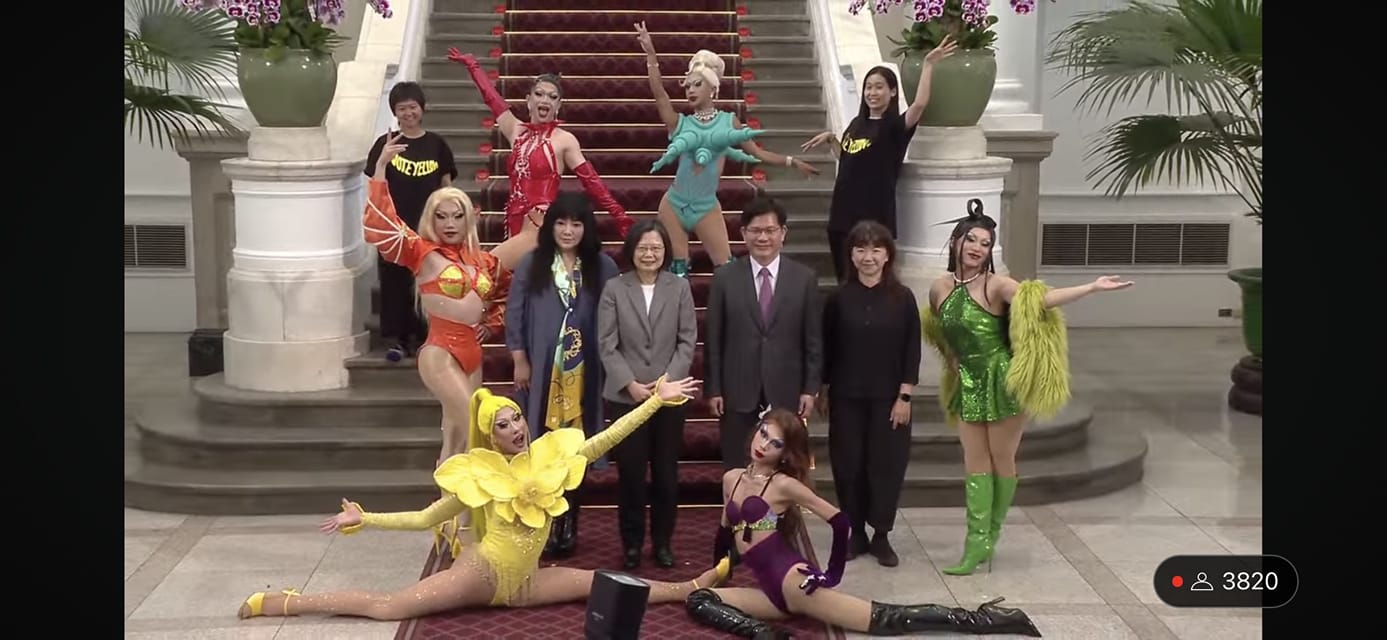
Taiwanese drag queen and victor of the hit TV show “RuPaul’s Drag Race,” Nymphia Wind visited the Taiwanese presidential palace yesterday and was honored by President Tsai. With a more ordinary political leader one can imagine any number of calculations – conservative-reactionary voters, public perception, religious leaders, and so on. I thought the event crystalize Tsai’s unique leadership style, and highlighted a particular way she is shaping this emerging Taiwanese national identity – gently tolerant, forward-looking, while minimizing direct confrontations. Tsai is competent at using the social media age tools while being, in this sense, wholly counter-cultural – her message is not divide/attack, but calling her citizens to build new bridges and doors. And this counter-cultural Taiwanese national identity has the support of a stable governing majority, while receiving unprecedented support from the US, Japan, and other nations in the Free World.
And it is Tsai’s stubborn incrementalism, moderation, cosmopolitanism, a counter-cultural kind of love of slowness and quietness that frustrates and angers both his supporters and his enemies foreign and domestic. Tsai is also unusual in that she rarely feels the need to counter-attack, or even acknowledge these assaults.
An interesting contrast between the two DPP presidents Chen and Tsai. Chen is one of the best natural retail politicians of his generation – charismatic, and bombastic, but also short-sighted, and self-centered, his words often not matched by deeds. Many of his Taiwan independence words were used for short-term campaign purposes, producing the opposite effect internationally and domestically. More so, I think both the China KMT and the China communists preferred Chen because they knew he would take the bait and argue everything. President Tsai’s approach is an improvement made upon President Lee’s realism, idealism, and incrementalism – a peaceful transition into a Taiwan-centric national identity is only possible when it is acceptable to independence supporting Taiwanese (remarkable to hear president-elect Lai speak of RoC Taiwan), those related to the Chinese folks brought to Taiwan by Chiang in 1949, and supported by the US, Japan, and major democratic powers. National status and national identity are dynamic – and no doubt the Tsai formulation is transitory – but a critical departure in the Taiwanese postwar national history.
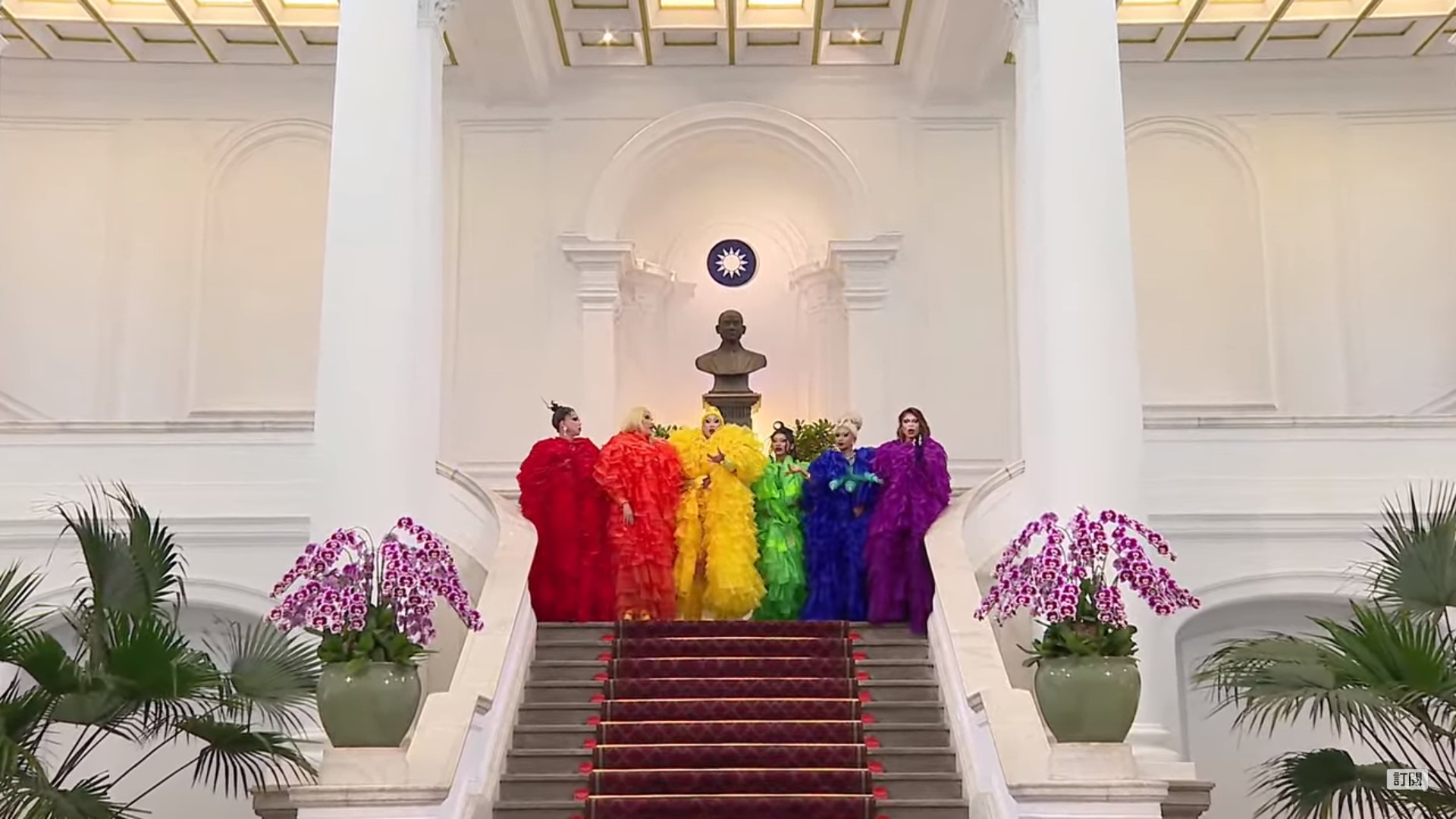
President Tsai hosting Nymphia Wind and other drag queens in the presidential palace is extraordinary. Tsai has frustrated many deep greens for avoiding and slow-walking many of the decolonization steps – such as removing the word “China/Chinese” from institutional names, in fact, she has mostly taken the superstructures left by the China KMT dictatorship, the so-called “RoC” – and kept the exteriors of these structures – flag, presidential palace, Sun Yat-sen as the fabricated founding father, Double Ten National Day – while changing what they mean to a Taiwanese citizen in 2024 by slowly, creatively, and often joyously subvert the meaning from within.
And so this remarkable sight within this building built by the Japanese as the seat of power when they administered Taiwan – which then got adopted by Chiang Kai-shek when he lost the Chinese Civil War in 1949 as his “presidential palace,” holding on to Sun Yst-sen as his claim to remain as the legitimate ruler of China, while using this presidential palace as the locus of power of the China KMT colonialist dictatorship over Taiwan – the superstructure of the Chiang crime family remain remarkably intact – RoC name and flag, statue of Sun Yat-sen, the national emblem that looks like a copy of the China KMT party emblem – yet with a democratically elected president, a concept opposed by the Leninst KMT, hosting world-renowned drag queen/fashion designers/artists. I felt the same sense of wonderment and awe watching the colorful and glamorous drag queens dancing around the reactionary symbols of Sun and the national emblem inside the presidential palace as I often do attending Taiwanese temple festivals – ancient symbols and rites freely intermixed with pole dancers, LED neon, manga-inspired characters, electronic pop music. Nonsensical, but peaceful and incremental, this emerging Taiwanese national identity. 15.5.2024

© Taiwan in World History 台灣與世界歷史. This site grants open access for educational and not-for-profit use. Maps and illustrations are borrowed under educational and not-for-profit fair use. If you are the rights holder and prefer not to have your work shared, please email TaiwanWorldHistory (at) Gmail (dot) com and the content will be removed.
 Taiwan in World History (台灣與世界歷史)