Monthly Archives: May 2024

Reviews. Let’s Talk About Chu 愛愛內含光 National identity and popular culture classrooms.

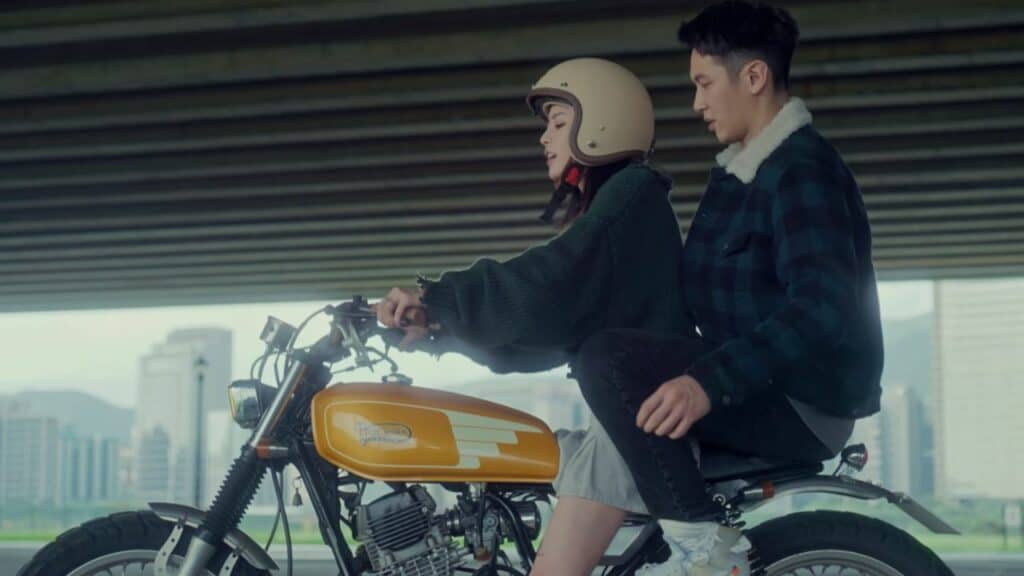
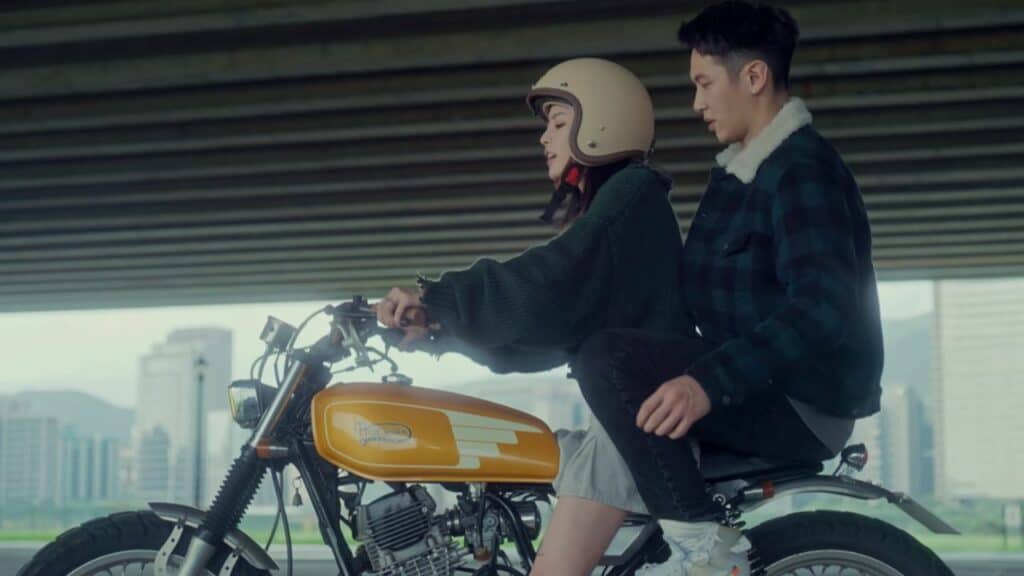
Reviews. Let’s Talk About Chu 愛愛內含光. National identity and popular culture classrooms. Netflix. A refreshing thing about Taiwan versus America is how difficult it is to get Taiwanese to mass panic about sexual or moral-ethical issues. It’s not that they are necessarily “progressive” or enlightened, but that in Taiwan you are more likely to get a shrug. As I watched this problematic show, I imagined what the tiresome “what about the children” reactions might have been on the east side of the Pacific. There are many things about Taiwan’s peculiar colonial history – colonized by the Chinese invaders since 1945 – and the impact on its educational-cultural means of production, that I am highly suspicious of. The politics of languages. How come the east side of Taipei gazillioaires never speak Taiwanese in these tee vee shows? For a show premised on the idea that its frankness about sex and sexuality is supposed to shock-provoke, that’s actually the most boring part of the show – but then I generally find film and tee-vee portrayal of sex either boring and/or unintentionally funny. So maybe that’s me and not them. Most of the sub-threads of this eight-episode show are contrived – the professor and his ex-student; the gay couple with the problematic portrayal of a descendant of a 1949er becoming a street hoodlum speaking not very good Taiwanese (my experience is that kids and grandkids of 1949ers who grew up in rural Taiwan speak more fluent Taiwanese than me and my cousins in Taipei ….) and so on. What made the show work for me are the superb lead actress Chan Tzu Hsuan (xoxo) and lead actor Kai Ko (oxox). Beyond their ability to keep my attention, ironically this relationship is the opposite of the shock-and-awe sex premise of the show. It’s a predictable, conventional love story. It’s about companionship, about genuine concern for one another, an ordinary, boring kind of love. And that’s OK by me. Love and relationships are predictable and boring because life is boring too. Like many recent Taiwan for Netflix shows this is a beautifully shot product – with a conventional but well-done soundtrack. Although in this mass media age, one inevitably notices copy-catting – lead actor with a motorcycle. Taiwanese directors now seem to love a particular bridge scene with the motorcycles at dusk. Rooftops, Taiwanese directors in the 2020s love rooftops for some reason. Maybe because at street level Taipei is such a mess. As contrived and silly as the show overall is, there were several moments during the eight episodes when lead actress Chan Tzu Hsuan’s facial expressions – when she thought she saw her father and his mistress in particular – that are super-duper. Minimal, heartbreaking, less is more. In all though, a broader issue not only for Taiwanese but for global artists to ponder. This is not the first time when a Taiwanese show launched bravely and then ended up with the socially acceptable happy endings – and maybe some of this is a human trait, but one wonders what part market pressure plays a role? These shows can be art, but they are primarily products – conventional capitalist markets are conventional – making unconventional products unprofitable. 18.2.2024


© Taiwan in World History 台灣與世界歷史. This site grants open access for educational and not-for-profit use. Maps and illustrations are borrowed under educational and not-for-profit fair use. If you are the rights holder and prefer not to have your work shared, please email TaiwanWorldHistory (at) Gmail (dot) com and the content will be removed.
Leave a comment

Filed under books and artifacts, Taiwan Republic

Taiwanese national identity and the global order: Geostrategery, Taiwan Republic 台灣国 , and national identity classrooms

Taiwanese national identity and the global order. Geostrategery, Taiwan Republic 台灣国 , and national identity classrooms.

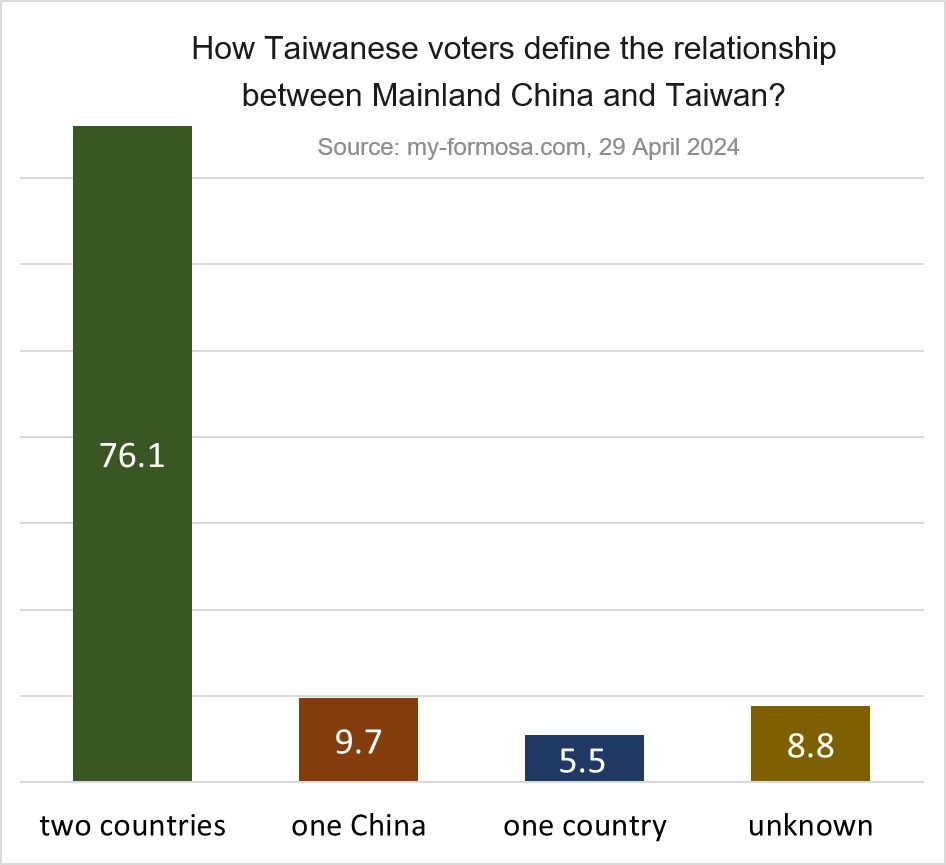
This emerging Taiwanese national identity. Came across this poll on the Twitters recently. How Taiwanese citizens self-identify in this poll is not surprising. The majority is basically the governing coalition President Tsai cobbled together over eight years – a fusion of Taiwan Republic, Taiwan, RoC Taiwan, Taiwan RoC, and RoC voters.  President-elect Lai and the DPP need to figure out why this governing majority doesn’t translate well in legislative and local elections. Taiwan’s “mainlander” and Chinese communist-dominated media obsess over America’s statement not supporting “Taiwan independence,” and ignore substantive US, Japan, and Free World redefinition of what “status quo” means — i.e., status quo now also functionally means not supporting China annexing Taiwan, peaceful or by force. Also important to note the complex, dialectical, chemical-reaction characteristics of how national identities form – this emerging Taiwanese national identity is a compromise, articulated by Presidents Lee and Tsai – though leaders oftentimes respond to identity formation from below rather than to create, invent, or to lead them. This is the one feature that the authoritarian Chinese Communist Party and the China KMT cannot fathom – that a free people can, over time, come to these ideas without being brainwashed or forced by a higher authority.

Polls like this matter more for domestic electoral politics. They matter less for Taiwan’s ability to maintain its de facto independence within the global system – except perhaps in the realm of national security. To maintain this independence, Taiwan requires coherent and honest national security consciousness, improvements in its military (particularly upper-level leadership), and support from the US, Japan, and the Free World. Meaning, that to make national identity sustainable, it must be supported by military and economic power, and the endorsement of important global powers.

The nature of national identity, particularly for middling to smaller nations in the global system, is reactive-passive rather than active-assertive. Just as Taiwanese (Taiwan the place/people/nationality) ‘national’ identity did not emerge until the Japanese arrived; just as the Manchus did not ponder the status of Taiwan until global maritime powers arrived, the reality is that even if one hundred percent of Taiwanese citizens believe Taiwan is a sovereign, independent nation (whether as Taiwan, Taiwan Republic, ROC Taiwan, Taiwan ROC), that independence depends on Taiwan’s ability to defend that status, and whether this Taiwanese sovereignty separate from China is supported by the major powers.

This makes the interaction between the emerging Taiwanese national identity from the 1990s, when Taiwan slowly dismantled the authoritarian and colonialist system imposed by the China KMT, and the changing US policy regarding Taiwan, communist China, and the Indo-Pacific the key. Taiwan’s first democratically elected president Lee Teng-hui and President Tsai sought a Taiwanese national identity and sovereign status independent from the People’s Republic of China, acceptable to the US and the Free World, while minimizing domestic discord. Meanwhile, as the ability of the Chinese Communist Party to make China profitable for the Free World dissipated by the 2010s, and as dictator Xi went on an isolationist war footing, the US and its allies began to redefine what “status quo” means in the Taiwan context. While the pro-communist China media within Taiwan obsesses over the boilerplate US declaration that it “does not support Taiwan independence” (one will be hard-pressed to find a major political leader within the pro-Taiwan sovereignty groups that’s spoken about “Taiwan independence” in the last decade ….), I think the US will clarify this revised “status quo” because the China KMT and PFP are one step away from conceding to Beijing that “one China/one nation” = People’s Republic of China.

When Ma or whoever within the pan-blue/white/red camp concedes Taiwan’s sovereignty to the People’s Republic of China, the US, and its democratic allies will openly oppose both “independence” and “annexation/unification” on the basis that both are changes to the status quo. The US and Free World definition of “status quo” in the Taiwan Strait is a two-state solution – has been for decades but as the CCP and KMT have accelerated their push for Taiwan to surrender its sovereignty, the greater urgency for the US, Japan and its allies to also clarify their position. During the Lee Teng-hui era, there was still enough finesse on the Chinese communist side, and ambiguity among the deep blue/red groups inside Taiwan, to have the face-saving “special state-to-state” formulation. President Tsai is probably the last Taiwanese president in a position to give the Chinese communists a face-saving way to peacefully live with the status quo – notice for example that while she has been firm on the two sovereign states on both sides of the Taiwan Strait, she has never declared what the future might be. So Tsai’s eight years were a lost opportunity for the Chinese communists and its allies inside Taiwan. From this moment forward Taiwan’s status will be a matter of total national-allies power (economic, military, educational, technological ….) – communist China, its allies inside Taiwan, Russia, et al, versus Taiwan, US, Japan, and their democratic allies. 2.5.2024

© Taiwan in World History 台灣與世界歷史. This site grants open access for educational and not-for-profit use. Maps and illustrations are borrowed under educational and not-for-profit fair use. If you are the rights holder and prefer not to have your work shared, please email TaiwanWorldHistory (at) Gmail (dot) com and the content will be removed.

Leave a comment

Filed under geoeconomics, geostrategery, Taiwan Republic, world history