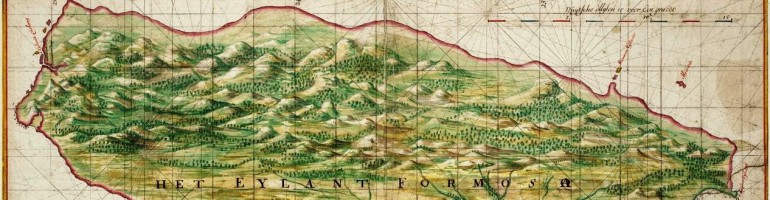
President Tsai Ing-wen and this emerging Taiwanese national identity, part five, “Tainan: The 400-year-old cradle of Taiwanese culture,” BBC. Taiwan Republic 台灣国, national identity, and world history classrooms. This article on Tainan and Taiwanese history by Will Buckingham is excellent. A rarity for articles in either English or Mandarin dealing with Taiwanese history and national identity to have such a balance between accuracy and necessary complications. Particularly noteworthy is the attention the author paid to Taiwan’s indigenous, pre-global imperialism (European, Chinese, Japanese, China KMT) history and identity.
The last paragraph of this article should be highlighted: “As Tsio̍h told me before I climbed on my bike to cycle home from the Confucius temple: “We Taiwanese are not that pure. We’re a hybrid society. We should be proud of that and start telling people this history and these stories of hybridity. Then maybe we can find peace with ourselves.”
In decades of teaching world history to American students, I have assigned a semester-long research project where students connect their family’s history with the world history we studied. Every semester I would gently remind them that not a single human being is ever 100% anything – and as sure as I am that Taiwan Republic has great food or that my mother will never, ever like a haircut I get, more than one student will begin the research presentation by proudly declaring their family to be “100% [insert the nationality]”
So the quote above, while apt for Taiwanese citizens, particularly as a young democratic nation facing down an aggressive, authoritarian, imperialist neighbor, is also sound advice for all of humanity.
It’s an interesting psychological phenomenon. Why is it so important for some to be “pure”? Maybe we have become so accustomed to taking tests and being graded that we erroneously equate higher national identity “purity” with a higher score. I’ve also often reminded students that even though intellectually humans say that we want to learn and be challenged, in reality, most of us prefer simple answers, a clean story arc where heroes and villains are unambiguous, with a happy ending that ties up all loose ends.
“Impurity,” like functioning democracies, is the opposite of that simple, memorable, story that requires little work from the audience – multicultural, multinational, dynamic democratic national identities require commitment, sacrifice, and hard work.
Hybridity, impurity, and complications are characteristics of this emerging Taiwanese national identity under President Tsai. In Taiwan’s struggles to maintain its democratic sovereignty, there is tension between reactionary, authoritarian forces (from China and its allies in Taiwan and the Free World) propagating a fictional but easier-to-narrate blood and soil national identity, versus a subtle, contradictory, chaotic emerging Taiwanese identity based upon democratic sovereignty. This is an island democratic nation of 23 million citizens, whose presidential palace was built by the Japanese, later used by the China KMT colonizers-dictators, now housing democratically elected presidents. This democracy is still using the formal name of “RoC” imposed on Taiwan by the authoritarian China KMT, where multicultural citizens speak Mandarin, Taiwanese, Hakka, Indigenous; or Indonesian, Malay, English, or Vietnamese. How does Taiwan maintain a functioning, stable democracy capable of defending itself from Chinese communist subversions and sabotage – through mass media, social media, by using educational institutions and authoritarian and anti-democracy political parties such as the China KMT – without resorting to “easier/quicker” blood and soil and authoritarian constructs. How Taiwanese citizens decolonize the authoritarian and colonialist-imperialist mode of thinking about national identity – hence what democracy means and how it functions to preserve itself – is critical to the sustainability of this democratic nation. 15.7.2024
© Taiwan in World History 台灣與世界歷史. This site grants open access for educational and not-for-profit use. Maps and illustrations are borrowed under educational and not-for-profit fair use. If you are the rights holder and prefer not to have your work shared, please email TaiwanWorldHistory (at) Gmail (dot) com and the content will be removed.
 Taiwan in World History (台灣與世界歷史)