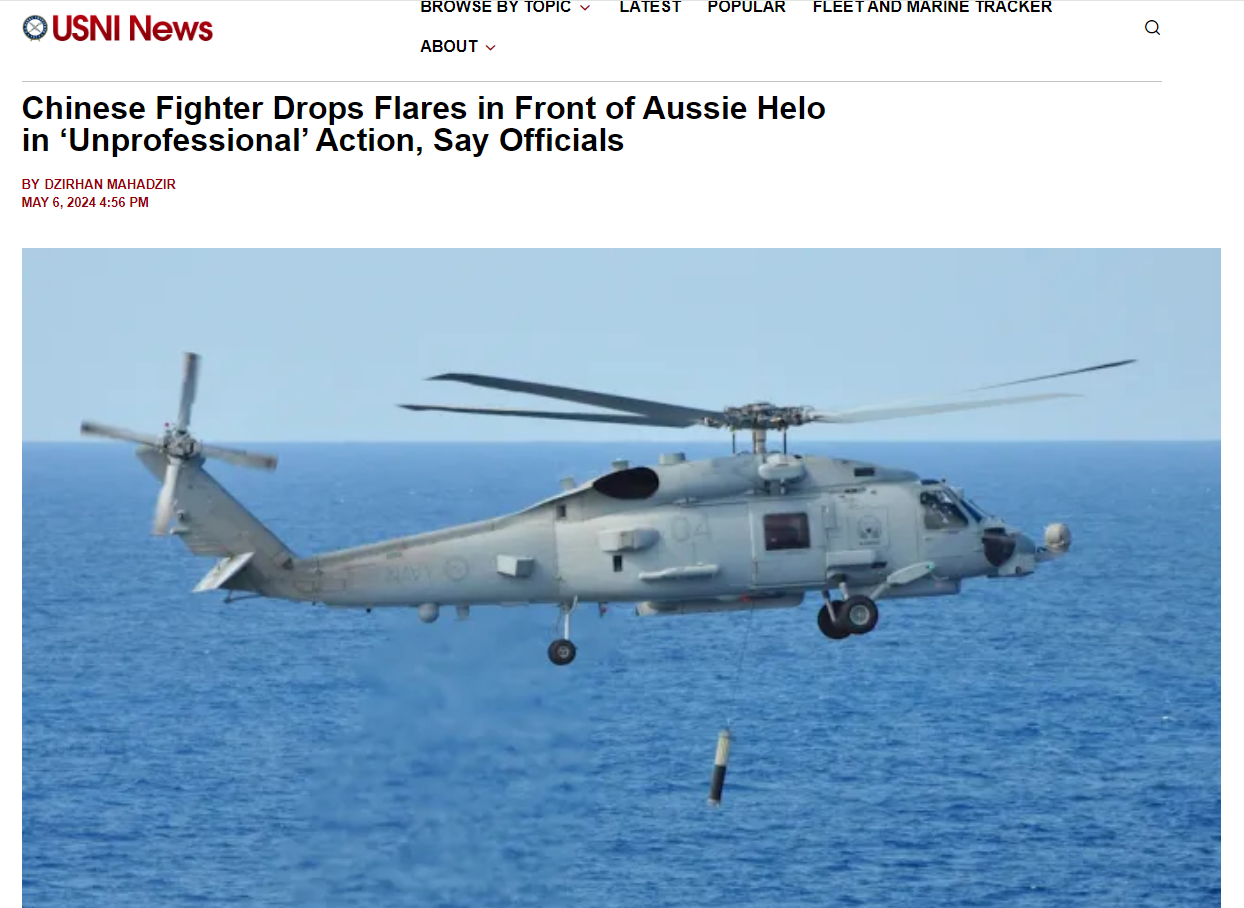
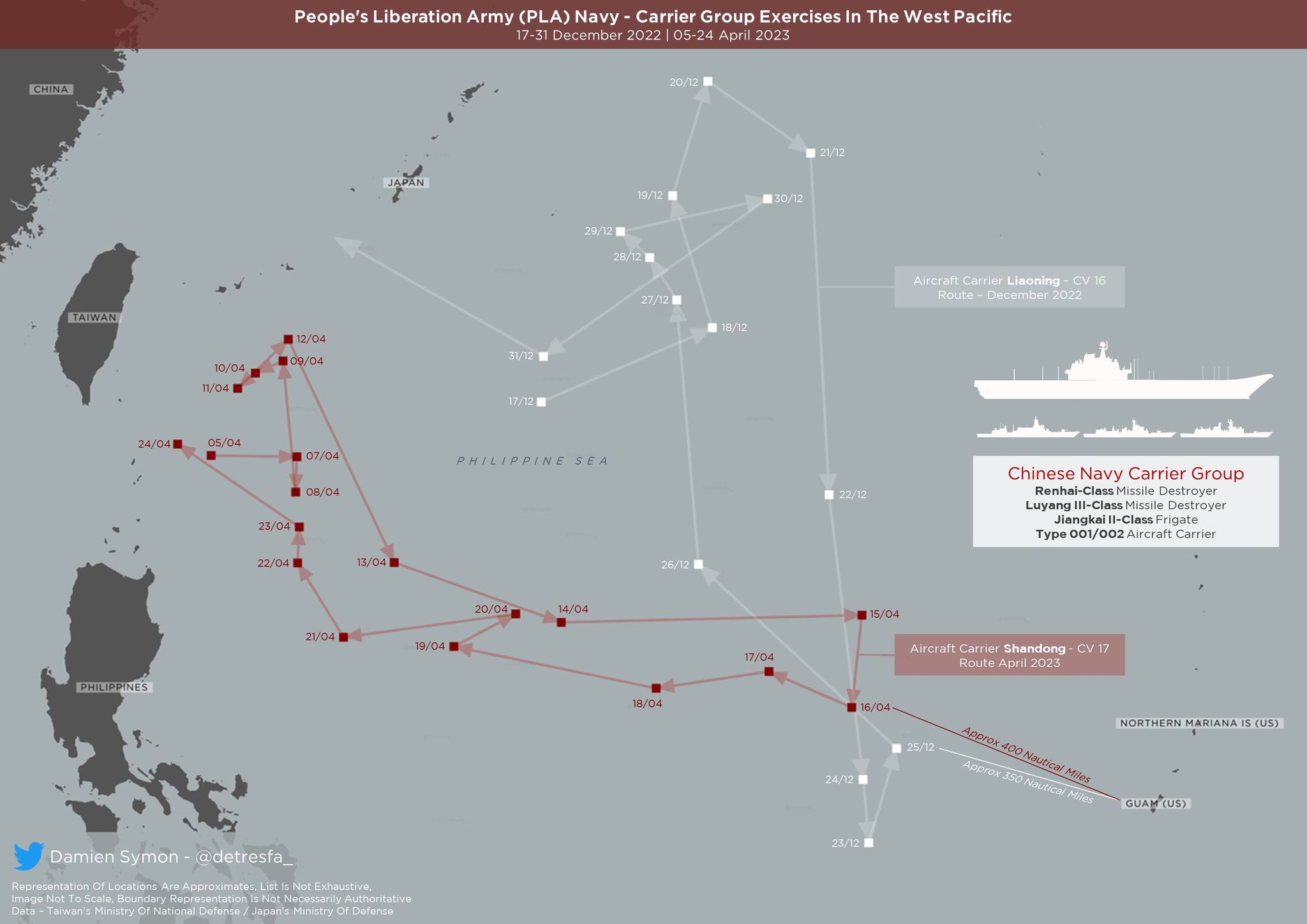
“Chinese Fighter Drops Flares in Front of Aussie Helo in ‘Unprofessional’ Action, Say Officials,” USNI News. Geostrategery and military classrooms. The likelihood that Chinese communists will purposefully plan and execute a war the same way dictator Putin did against Ukraine is low-ish. The likelihood that the Taiwan Strait is where the Chinese communist war begins is also low — even dictator Xi knows any such action will guarantee a third world war and the end of his communist dictatorship. My bet is on something like this incident in the South, East, Yellow, and Japan Seas — where the Chinese communists believe they can nudge and prod right up to the edge, even over the edge to move the goalpost, and somehow manage and contain the conflict. Unlike the armed forces of democratic nations led by the US, the Chinese communist military is not as well trained, not as professional, and not as disciplined. There is also the dictator’s conundrum – everyone working below dictator Xi is guessing what the Dear Leader wants, and everyone is trying to show maximum toughness and loyalty to the dictator. I have read, unconfirmed, reports that this is how that Chinese school bus-sized spy “balloon” invaded the heartland of the United States – not Xi approved, a lower-level commander trying to curry favor. How long before a Chinese communist combat pilot or naval captain takes things a step too far and kills someone? We have had many close calls — the Chinese communist pilot taking down a US Navy EP-3 near Hainan Island during the George W Bush administration being a good example. Back during the Bush days communist China was still too profitable for the Free World for that crisis to escalate — in 2024 China is a big financial deficit — a similar incident, poorly trained, trying to please the leadership, hot-dogging communist Chinese pilot or captain can easily cause a wider-broader war.
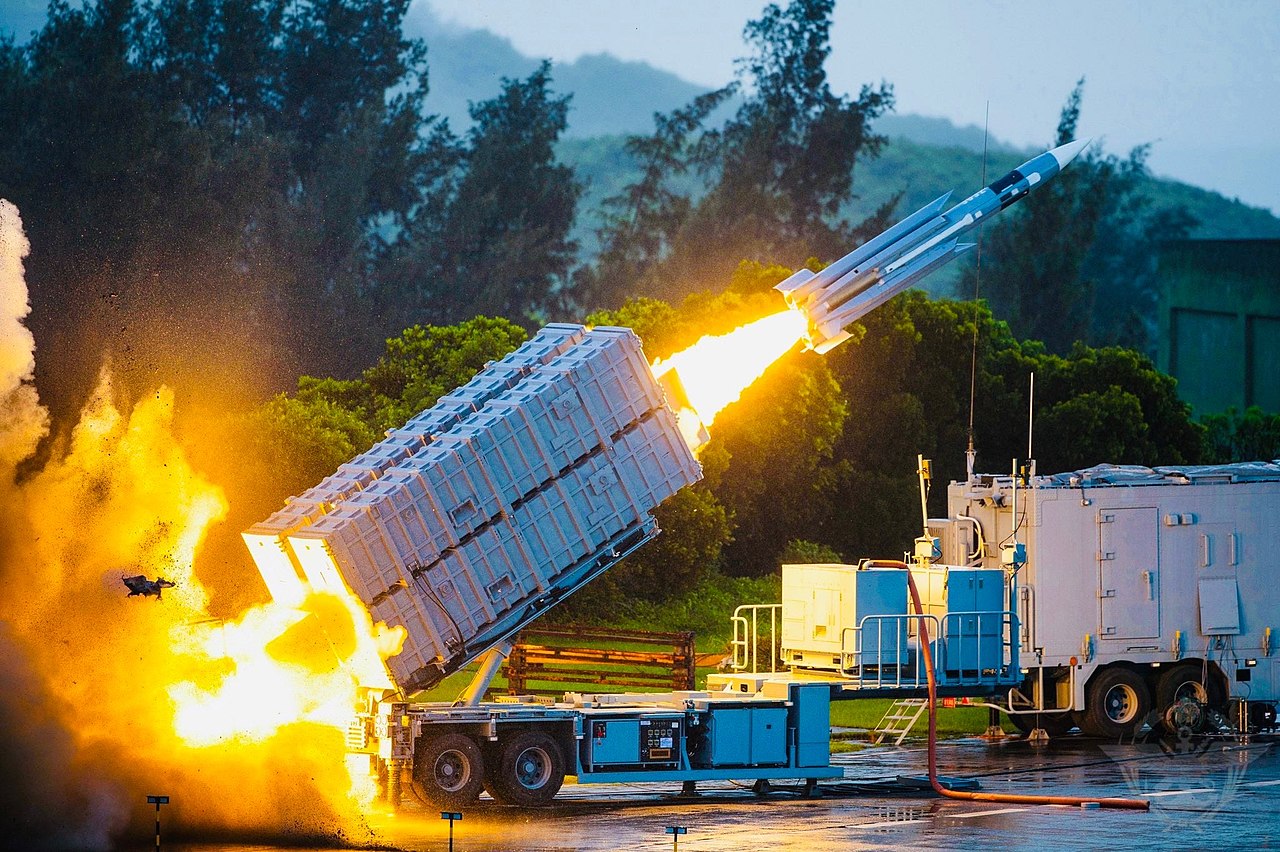
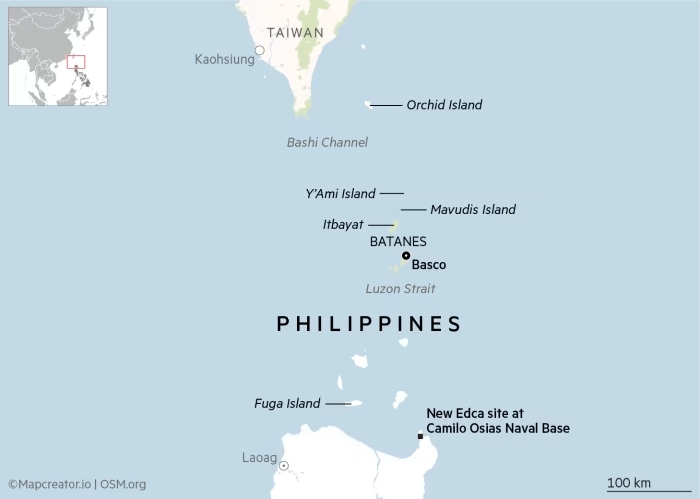
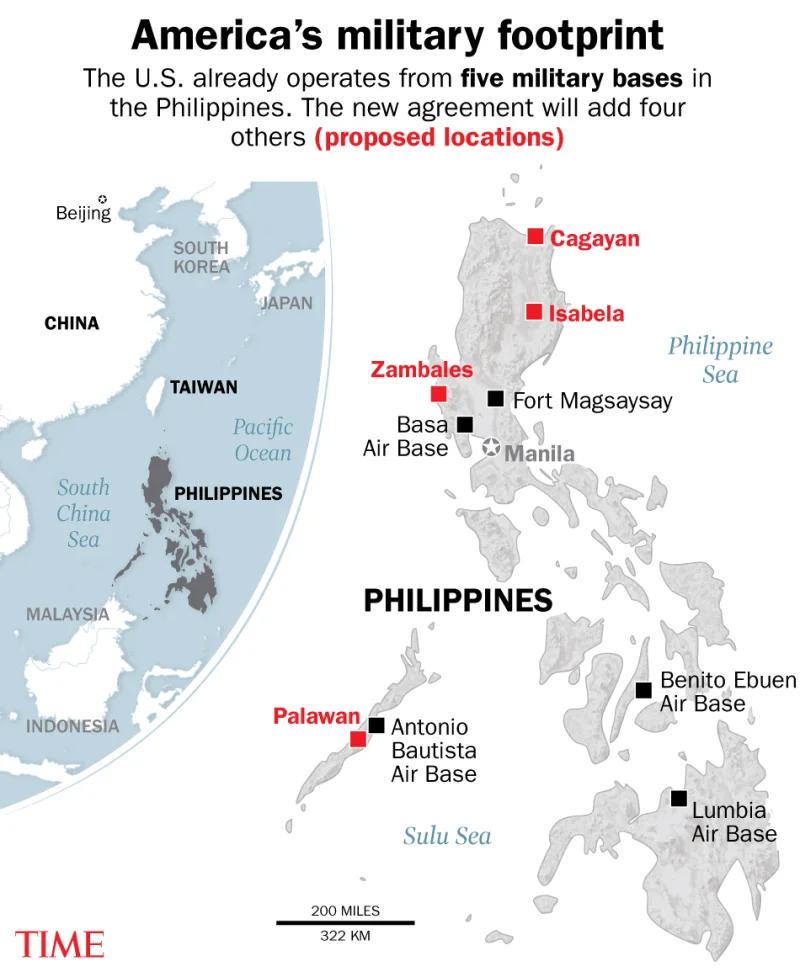
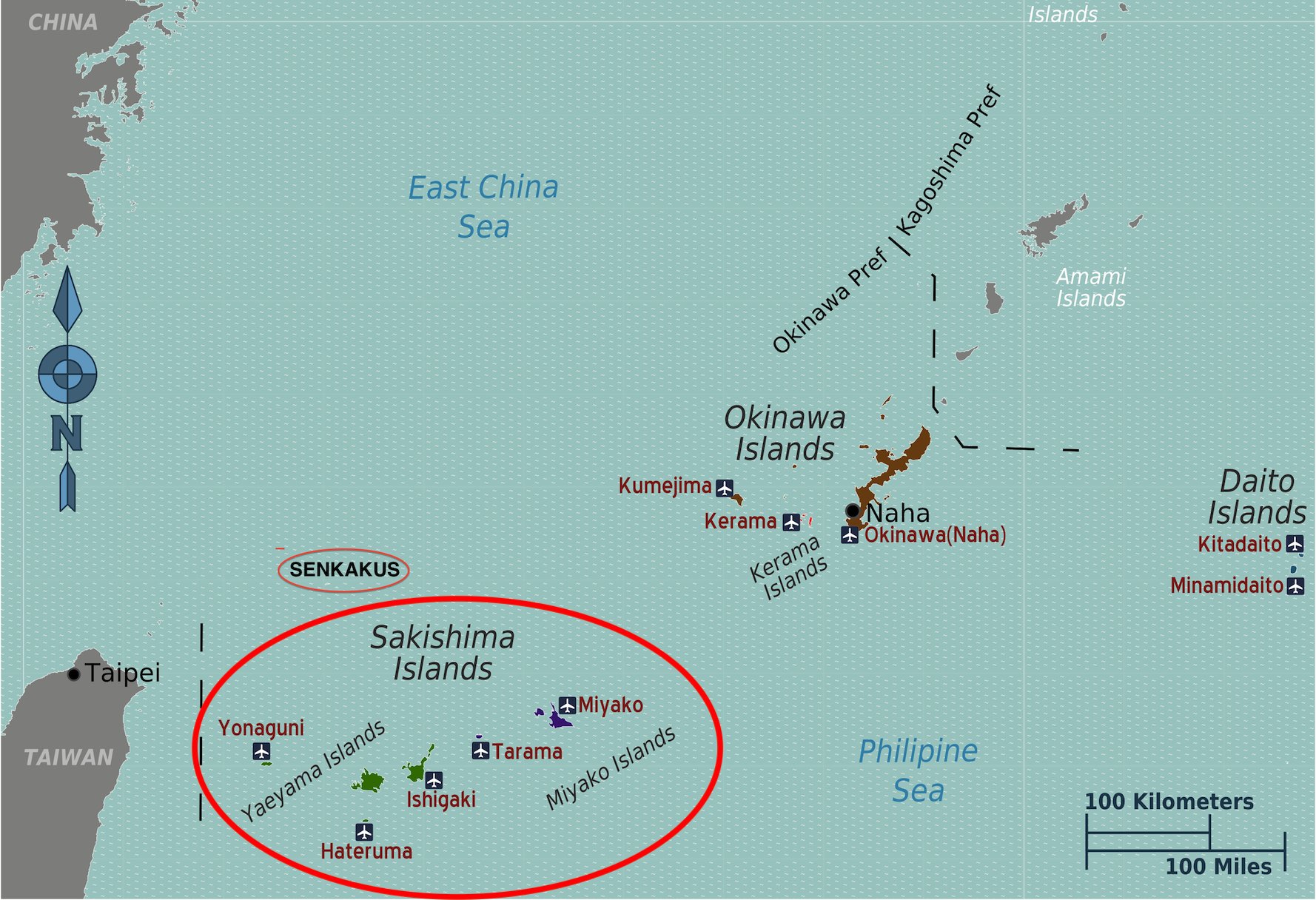
Bibliography: The importance of Japan and the Philippines in the defense of Taiwan Republic. Geostrategery and world history classrooms. The significance of the American military moves in the last two years with the Japanese and Philippines islands closest to Taiwan Republic is this: they close off the Chinese communist military’s paths to envelop Taiwan by air and by sea to Taiwan’s east — and in turn, funnel the invading Chinese communists into confined kill zones. The US Marines led the revolution in thinking with lighter, mobile, highly networked land-based surface-to-air and surface-to-surface missile units. Land-based because they are far cheaper and more sustainable than aircraft carriers and warships. Taiwan is massed with thousands of land-based missiles/mobile units. And there are signs that the Taiwanese military, with American assistance, is moving to coordinate their own force structure and thinking with that of the US Marines. President Tsai has successfully nudged the Taiwan military upper leadership into the area of unmanned vehicles – air, sea, and subsurface. The US and allies’ deployment northeast and southeast of Taiwan allows the Taiwanese military to focus on the communist threats from the west. In basketball and American football terms, these land units are zone defense, whereas the American, Japanese, and Free World/AUKUS+ carrier battle groups, submarines, and strategic bombers are mobile strike units/man-to-man offense. Recent reports in Taiwanese online newspapers that the US has assisted Taiwan in securing access to LINK-22 would be an important step forward in coordinating Taiwanese, American, Japanese, AUKUS, NATO, and ASEAN forces.
Taiwanese national identity and the global order. Geostrategery, Taiwan Republic 台灣国 , and national identity classrooms.
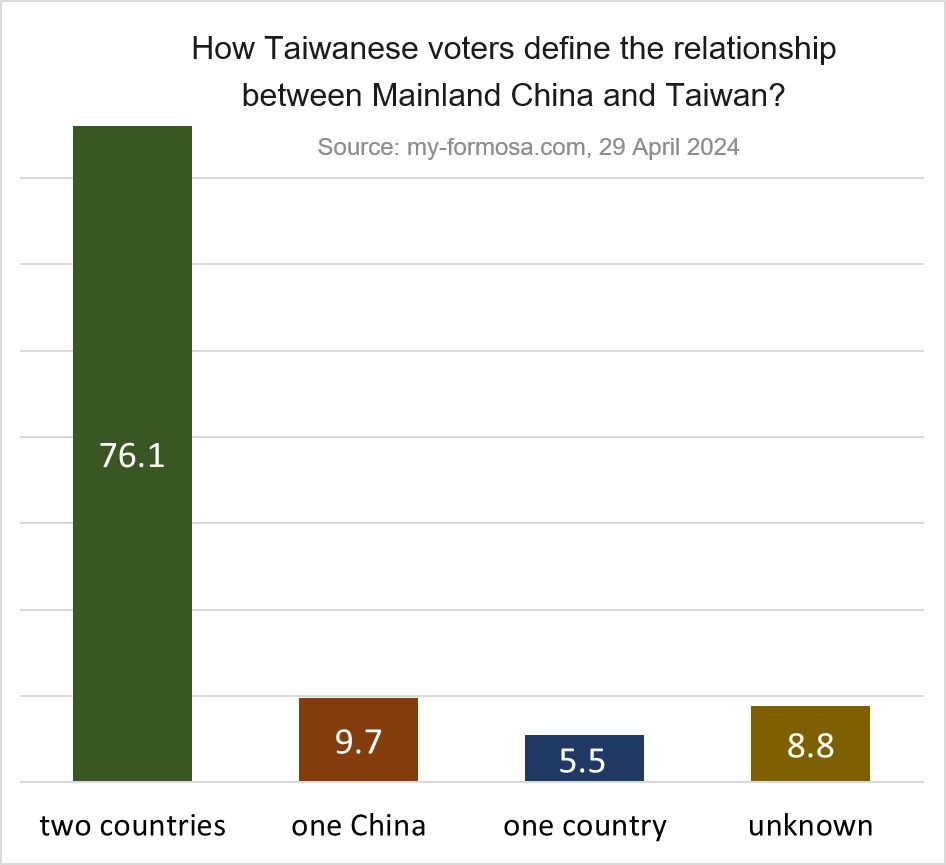
This emerging Taiwanese national identity. Came across this poll on the Twitters recently. How Taiwanese citizens self-identify in this poll is not surprising. The majority is basically the governing coalition President Tsai cobbled together over eight years – a fusion of Taiwan Republic, Taiwan, RoC Taiwan, Taiwan RoC, and RoC voters. President-elect Lai and the DPP need to figure out why this governing majority doesn’t translate well in legislative and local elections. Taiwan’s “mainlander” and Chinese communist-dominated media obsess over America’s statement not supporting “Taiwan independence,” and ignore substantive US, Japan, and Free World redefinition of what “status quo” means — i.e., status quo now also functionally means not supporting China annexing Taiwan, peaceful or by force. Also important to note the complex, dialectical, chemical-reaction characteristics of how national identities form – this emerging Taiwanese national identity is a compromise, articulated by Presidents Lee and Tsai – though leaders oftentimes respond to identity formation from below rather than to create, invent, or to lead them. This is the one feature that the authoritarian Chinese Communist Party and the China KMT cannot fathom – that a free people can, over time, come to these ideas without being brainwashed or forced by a higher authority.
Polls like this matter more for domestic electoral politics. They matter less for Taiwan’s ability to maintain its de facto independence within the global system – except perhaps in the realm of national security. To maintain this independence, Taiwan requires coherent and honest national security consciousness, improvements in its military (particularly upper-level leadership), and support from the US, Japan, and the Free World. Meaning, that to make national identity sustainable, it must be supported by military and economic power, and the endorsement of important global powers.
The nature of national identity, particularly for middling to smaller nations in the global system, is reactive-passive rather than active-assertive. Just as Taiwanese (Taiwan the place/people/nationality) ‘national’ identity did not emerge until the Japanese arrived; just as the Manchus did not ponder the status of Taiwan until global maritime powers arrived, the reality is that even if one hundred percent of Taiwanese citizens believe Taiwan is a sovereign, independent nation (whether as Taiwan, Taiwan Republic, ROC Taiwan, Taiwan ROC), that independence depends on Taiwan’s ability to defend that status, and whether this Taiwanese sovereignty separate from China is supported by the major powers.
This makes the interaction between the emerging Taiwanese national identity from the 1990s, when Taiwan slowly dismantled the authoritarian and colonialist system imposed by the China KMT, and the changing US policy regarding Taiwan, communist China, and the Indo-Pacific the key. Taiwan’s first democratically elected president Lee Teng-hui and President Tsai sought a Taiwanese national identity and sovereign status independent from the People’s Republic of China, acceptable to the US and the Free World, while minimizing domestic discord. Meanwhile, as the ability of the Chinese Communist Party to make China profitable for the Free World dissipated by the 2010s, and as dictator Xi went on an isolationist war footing, the US and its allies began to redefine what “status quo” means in the Taiwan context. While the pro-communist China media within Taiwan obsesses over the boilerplate US declaration that it “does not support Taiwan independence” (one will be hard-pressed to find a major political leader within the pro-Taiwan sovereignty groups that’s spoken about “Taiwan independence” in the last decade ….), I think the US will clarify this revised “status quo” because the China KMT and PFP are one step away from conceding to Beijing that “one China/one nation” = People’s Republic of China.
When Ma or whoever within the pan-blue/white/red camp concedes Taiwan’s sovereignty to the People’s Republic of China, the US, and its democratic allies will openly oppose both “independence” and “annexation/unification” on the basis that both are changes to the status quo. The US and Free World definition of “status quo” in the Taiwan Strait is a two-state solution – has been for decades but as the CCP and KMT have accelerated their push for Taiwan to surrender its sovereignty, the greater urgency for the US, Japan and its allies to also clarify their position. During the Lee Teng-hui era, there was still enough finesse on the Chinese communist side, and ambiguity among the deep blue/red groups inside Taiwan, to have the face-saving “special state-to-state” formulation. President Tsai is probably the last Taiwanese president in a position to give the Chinese communists a face-saving way to peacefully live with the status quo – notice for example that while she has been firm on the two sovereign states on both sides of the Taiwan Strait, she has never declared what the future might be. So Tsai’s eight years were a lost opportunity for the Chinese communists and its allies inside Taiwan. From this moment forward Taiwan’s status will be a matter of total national-allies power (economic, military, educational, technological ….) – communist China, its allies inside Taiwan, Russia, et al, versus Taiwan, US, Japan, and their democratic allies. 2.5.2024
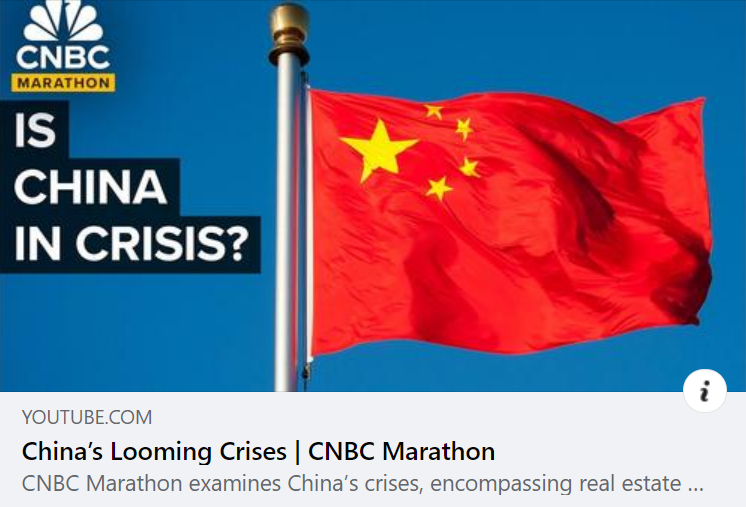
“China’s Looming Crises | CNBC Marathon” . World history and geostrategery classrooms. The most remarkable thing about this question and this report is the fact that it appeared in a Western imperialist corporate financial press — Big Wall Street and Big Western Imperialist Higher Ed are the two industrial sectors most in the tank for the Chinese Communist Party and the blood money it handed out. The same Western pack mentality commentariat that talked up the “inevitable” Chinese Century is the same pack mentality industrial complex talking up the rapid collapse of communist China. I maintain the same skepticism and caution re: both extremes. It is true that communist China is no longer profitable for the Free World. It is true that dictator Xi has decided, as Putin has, that a deglobalized communist China that is on a permanent war footing (“continuous revolution”), that is poorer, is the best way to save his communist dictatorship. Once we understand these two main ideas, then we’ll see why advice from the Western imperialist academia and think tanks on how to “engage” and “de-escalate” and “pacify” the Chinese communists is at best ineffective, and I fear, highly dangerous for world peace.
This phase of the Chinese communist economic crisis is not unique in world history – demography changes, overcapacity, macroeconomic cycles, the transition from an export-led, low-wage economy into a consumer-service-led mature, domestic economy, etc. etc. What Western imperialist commentariat gingerly dances around is the fact that dictator Xi has either killed, imprisoned, and/or exiled nearly all economically competent leaders who makes any difference or dares to challenge Xi’s ignorance and hubris. While communist China’s economic crisis is multifaceted and complex, the main challenge to its economy is the nature of a totalitarian dictatorship. Dictatorships handle crises poorly — the Chinese communists mishandled the pandemic from beginning to end; the authoritarian Trump botched the pandemic for similar reasons — knowledge can only be held by the Great Leader, wrong choices cannot be debated honestly and changes made quickly. China’s economic crisis is a subset of its political crisis — since its late Manchu era, that’s been the case – a vast, landed, multinational empire with many talented thinkers, yet authoritarianism has stifled China’s ability to create a sustainable political and economic system. It is China’s continuous, self-inflicted political disasters from the late 1800s to now that prevents moderate, sensible, humane economic policies from emerging.



 Taiwan in World History (台灣與世界歷史)