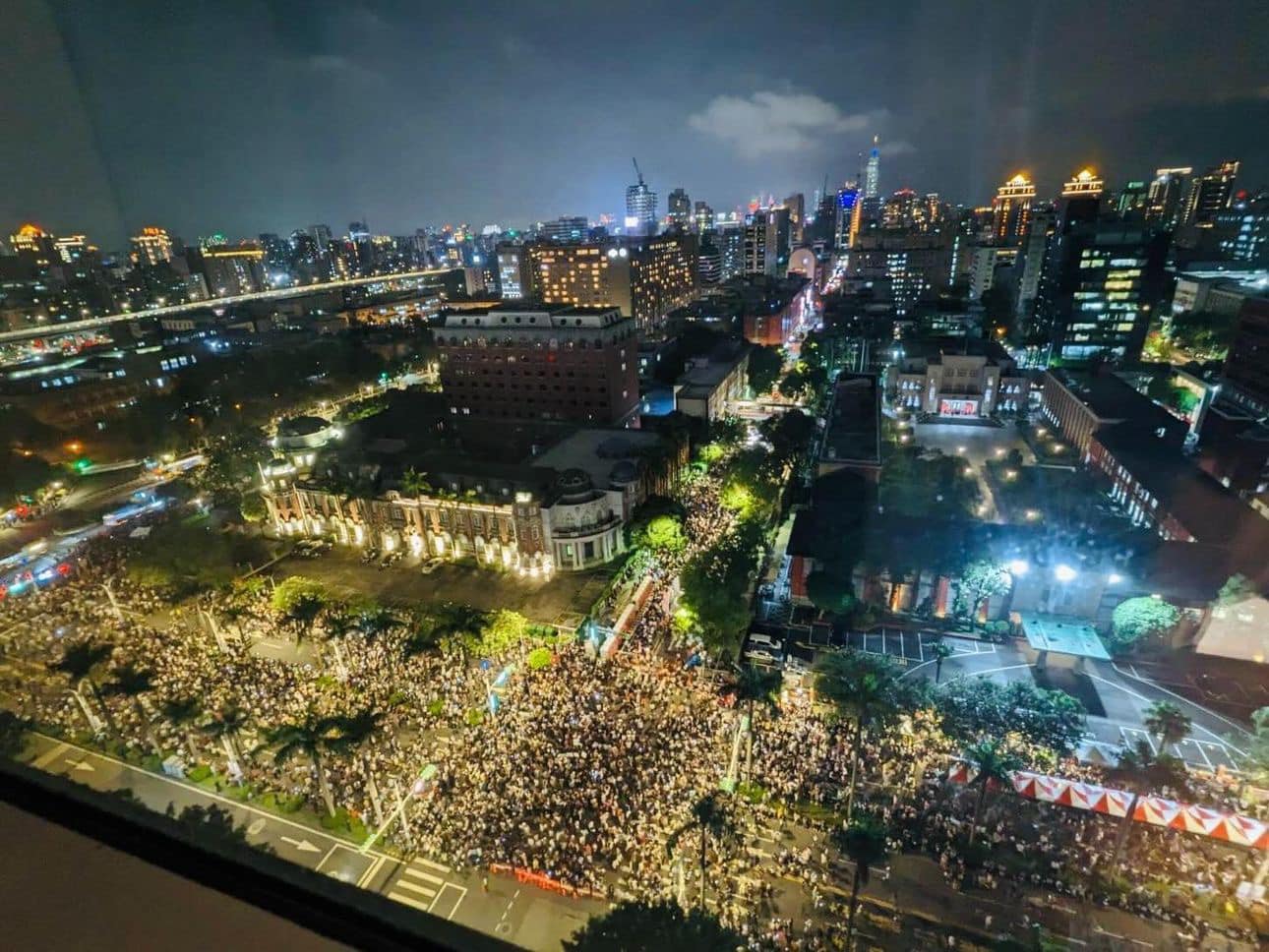
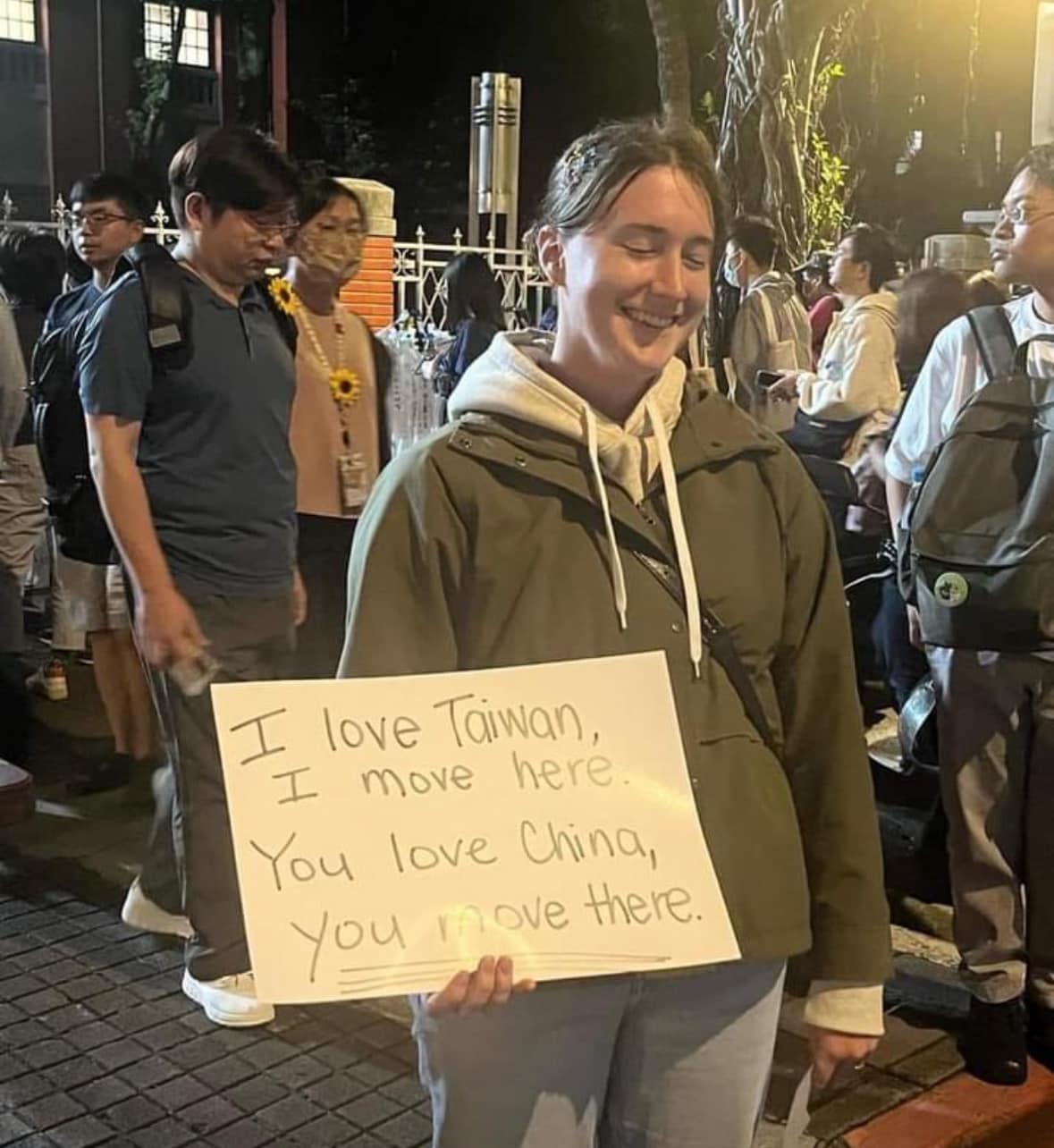
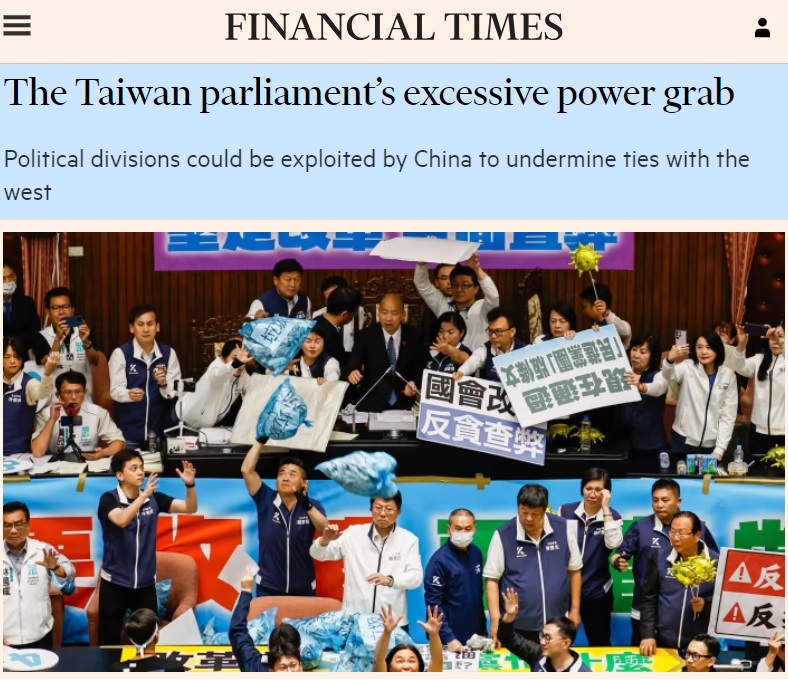
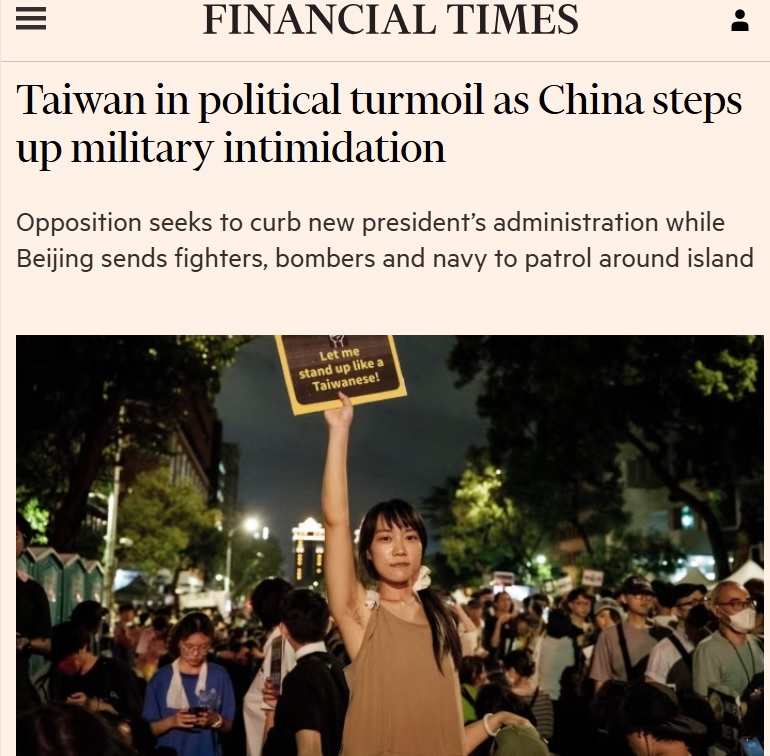
金融時報:立院職權修法 為中國對台滲透創造可乘之機 FT: Legislations passed by Taiwan Legislature Open Door for Chinese Communist Infiltration, CNA 中央社. Democracy, world history, and Taiwan Republic 台灣国 classrooms. It will take time to fully assess how much damage the thin majority the pro-communist China parties in Taiwan have done with their “reform” bills in the legislature. This Financial Times report – unless you believe the FT works on behalf of the ruling DPP – is a fair summary.
- The problem with the “status quo.” This horribly designed constitution Taiwan is forced to use was reluctantly created by the China KMT when it nominally ruled China. The China KMT, a Leninist authoritarian elder cousin to the Chinese Communist Party, never intended for the constitution to serve a liberal democracy. It resisted democracy in China by imposing a one-party dictatorship and dressing it up as a Period of Political Tutelage for decades. The problem with the fictional “status quo” insisted by the US, the Chinese, and the Chinese occupiers-colonialists in Taiwan, is that it forces a modern, dynamic, island democratic nation to use a constitution invented by backward, authoritarian, Chinese dictators from decades ago.
- All domain warfare against liberal democracies. None of this makes any sense without understanding the meaning of “all domain warfare” waged by the Chinese communists. Idealists from safer democracies in the West can pretend that there were better decades when the Chinese communists mellowed with trade and cultural exchanges and educational agreements – in reality, Beijing has never, ever stopped its all-domain warfare against all liberal democracies. An important tool in that communist toolbox – as Chairman Mao wisely taught, never fight a military war without being fully confident of victory – is to subvert and damage liberal democracies with democratic tools. Just as Putin’s Russia is seeking to defeat the US from within, the Chinese communists see pro-China parties in Taiwan as their best tools to defeat Taiwan’s democratic sovereignty from within.
- Echoes from Ukraine. How Putin’s neo-communists damaged Ukraine through electoral politics and information warfare before the full-on military invasion, and how Putin and Xi’s communist dictatorships have attempted to weaken American and other Western democracies with democratic principles – free speech, etc., are good examples to remember when studying what the China KMT and the China People’s Party are doing with their paper-thin majority in the Taiwan legislature.
- Saving liberal democracies from neo-authoritarians. A broader-deeper problem for those who support Taiwan’s democratic sovereignty must ponder is embedded within a twin threat. On the one hand, it is the US-imposed status quo that requires rethinking (on many, many levels – Chinese Communist Party arming itself to enact a form of Chinese imperialism against the region and the world that decades ago appeared less likely; coupled with a Taiwanese democracy that can no longer tolerate a poorly designed, anti-democratic, outdated constitution imposed on Taiwan by the China KMT invaders). It is also that all liberal democracies are facing a modernized, dynamic, sophisticated, and well-funded authoritarian world history moment – from communist China and Russia to authoritarian multi-billionaires and multinationals. How does a liberal democracy remain a democratic nation worth dying and killing for – while adapting extraordinary measures to combat extraordinary attacks? We see the US and Western Europe grappling with this dilemma – Taiwan and Ukraine are on the very cutting edge, the frontline of this new world war to save democracy.
- A final historical context, though this current wave of assault from the Chinese communists and its allies in the China KMT and China People’s Party is grave and severe. During the first DPP presidential administration of Chen Shui-bian the China KMT and allied pro-China parties not only held a vast majority in the legislature – it had the advantage of holding similar majorities over the military, judicial, and executive bureaucracies. Chen and the DPP, because of the China KMT dictatorship, had difficulty staffing the executive branch and had a vast knowledge-experience gap. The pro-China parties back then had the additional advantage of American ambivalence – US policymakers were more used to dealing with the authoritarian China KMT, and they still entertained the fantasy of double deterrence. President Tsai’s eight years were highly frustrating for enemies of Taiwanese democracy foreign and domestic partly because of her unusual personality – quiet confidence, counter-cultural lack of need to be at the center of attention, and stubbornness on core principles. What is usually lost to analysts of Taiwanese politics is that had Ma and other pro-China fascist-authoritarians not kicked President Lee out of the KMT, had Lee’s dream of turning the China KMT into a democratic Taiwan KMT – an LDP of Taiwan – President Tsai and her RoC Taiwan majority would have been a Taiwan KMT administration. An important reason for Tsai’s success is that she came up as a China KMT technocrat – she knows where the China KMT bodies are buried, she understands their dirty tricks, and she is comfortable with the China KMT invented national bureaucracy. While one ought to be alarmed by this latest assault upon Taiwan’s democracy and independence carried out by the China KMT and the China People’s Party, one should be hopeful that unlike the dangerous days of Lee’s and Chen’s second term when pro-China anti-democracy forces attempted nearly successful soft coups, Taiwanese democracy has become more resilient, that DPP executives have had more experience, and that US and the Free World now sees a clear line of demarcation between pro-democracy and anti-democracy forces inside Taiwan.

© Taiwan in World History 台灣與世界歷史. This site grants open access for educational and not-for-profit use. Maps and illustrations are borrowed under educational and not-for-profit fair use. If you are the rights holder and prefer not to have your work shared, please email TaiwanWorldHistory (at) Gmail (dot) com and the content will be removed.



 Taiwan in World History (台灣與世界歷史)