Tag Archives: geoeconomics

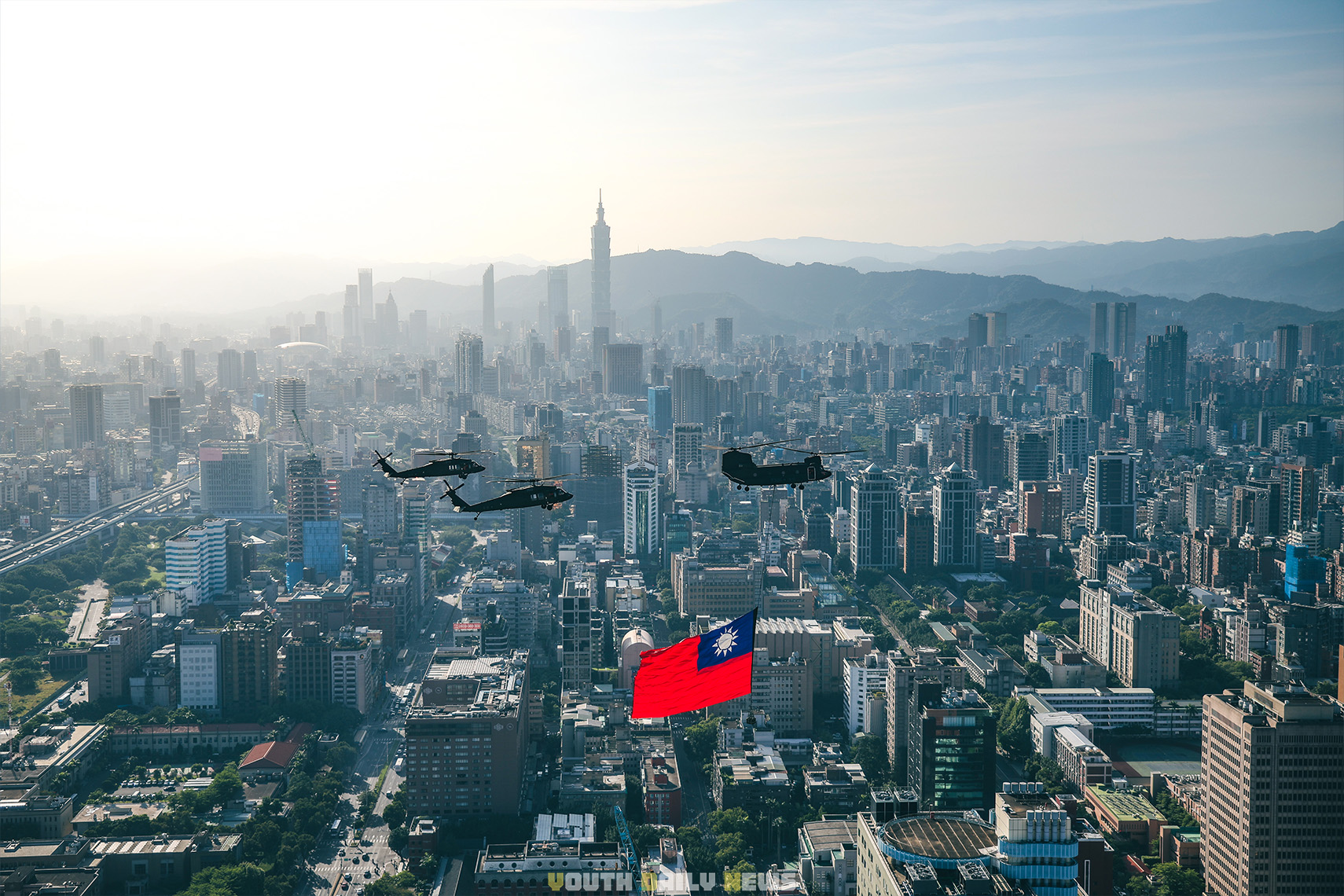
‘Porcupine’ without clarity on Taiwan’s statehood will not work: “Taiwan may yet become a porcupine,” The Strategist ASPI. Taiwan Republic 台灣国 and geostrategery classrooms.

‘Porcupine’ without clarity on Taiwan’s statehood will not work: “Taiwan may yet become a porcupine,” The Strategist ASPI. Taiwan Republic 台灣国 and geostrategery classrooms. This is an excellent article. Particularly noteworthy is the attention the author paid to the historical-political-cultural background within the autocratic China KMT-dominated national security apparatus which has frustrated efforts at reform. This is unusual for English-language IR analysts. The key paragraph is:

“Historical legacy worsens the military’s rigid top-down culture and bureaucratic resistance to change: it was once part of the then authoritarian Nationalist Party (KMT), which imposed dictatorship on Taiwan from 1949 to 1987. Previous defence ministers have often been retired generals or admirals, who have tended to allocate funds and choose programs to suit the desires of the service they came from, regardless of the needs of national defence.”

Analysts have aptly compared Taiwan’s democratization – broadly understood, in all realms of this emerging democratic nation – as comparable to pro-democracy and pro-Taiwan leaders trying to upgrade and fix an aircraft while it is in flight. Taiwan Republic’s first democratically elected president Dr. Lee Teng-Hui had to simultaneously combat reactionary, anti-democratic, and anti-Taiwan forces within the China KMT, erroneous and unhelpful policies from the US, and the Chinese communists while democratizing Taiwan. President Chen, the second democratically elected president, had to face a parliament dominated by the anti-democracy and anti-Taiwan China KMT, along with a US that maintained unhelpful policies. While Presidents Tsai and Lai face the US and the Free World that is finally realizing the threat to the world posed by the Chinese communists, the importance of domestic political stability and the threat of an invasion from the Chinese to annex Taiwan means the pace of reform and change within the Taiwan national security apparatus is limited.

Two elements are often missing in foreign analysis of Taiwan’s military reforms to prepare for the Chinese invasion are domestic consensus on Taiwan’s national identity, and the clarity by the US and democratic allies on Taiwan’s democratic sovereignty. Taiwan does not have a healthy democratic polity because not all of the major political parties recognize Taiwan’s democratic sovereignty. Anti-democracy and anti-Taiwan China KMT’s leaders in the parliament are adamant that China – Taiwanese democratic sovereignty’s greatest enemy – must be addressed as the “mainland”. If there is no national consensus on “us/we” versus “them/they” – then from whom should the Taiwanese military defend Taiwanese citizens? If you read enough China KMT and China KMT adjacent writings you might be convinced that unreliable American imperialists or Japanese pose a greater threat than the Chinese communists. President Lai’s challenge is to nudge the national security apparatus to democratize and indigenize itself so that the national identity confusion is resolved – only then can democratic forces within Taiwan have a productive debate over whether the “porcupine” strategy makes sense, and if so, in what form would it be most effective. In short, it is impossible to have such a national security debate if the major parties do not even agree on Taiwan’s nationhood.

The other element missing in many analyses is that the porcupine strategy without a clear commitment from the US and the Free World to Taiwan’s democratic sovereignty will not deter Chinese imperialists from military adventurism. Think of this as the global companion to Taiwan’s domestic national identity crisis. So long as the US and the Free World maintain the dated strategic ambiguity regarding Taiwan’s democratic sovereignty, then Chinese imperialists in Beijing will imagine the opportunity where their militarism will succeed. So long as policymaking circles in DC and other democratic capitals hold on to the outdated and erroneous beliefs that democratic nations can dialogue and engage the Chinese communists into a peaceful compromise (how did this belief work out with dictator Putin and democratic Ukraine by the way? ….) – then the dictators of China will dream of a shock and awe, low cost, lighting military strike against democratic Taiwan where collaborators within Taiwan will assist in creating a de facto communist annexation of democratic Taiwan. Without clarity on Taiwan’s emerging national identity – premised on democratic sovereignty – domestically and abroad, Taiwan’s national security will not be enhanced, whether it be porcupine or hellscape. 30.7.2024

© Taiwan in World History 台灣與世界歷史. This site grants open access for educational and not-for-profit use. Maps and illustrations are borrowed under educational and not-for-profit fair use. If you are the rights holder and prefer not to have your work shared, please email TaiwanWorldHistory (at) Gmail (dot) com and the content will be removed.

Leave a comment

Filed under geoeconomics, geostrategery, Taiwan Republic, world history

How to preserve peace and deter war? “Japanese think tank’s war game over Taiwan exposes weaknesses. JFSS calls for closer coordination between Taipei, Washington, and Tokyo to fight future China threat,” Taiwan News. Geostrategery, Taiwan Republic 台灣国, and world history classrooms.

How to preserve peace and deter war? “Japanese think tank’s war game over Taiwan exposes weaknesses. JFSS calls for closer coordination between Taipei, Washington, and Tokyo to fight future China threat,” Taiwan News. Geostrategery, Taiwan Republic 台灣国, and world history classrooms. A quasi-official Japanese think tank holding a wargame with quasi-official Taiwanese officials is a breakthrough. Professor Lai’s calls for clarity from Japan and the US, and for direct communication and coordination between Taiwan Republic, Japan, and the US are important for the preservation of peace in the Indo-Pacific.

There is an endless argument over how to preserve peace and deter war. Advocates for strategic ambiguity, for example, assert that with ambiguity, America has been able to “manage” the military balance in the Indo-Pacific, while “double deterring” both sides of the Taiwan Strait from “escalating tensions” and causing war. This view ignores the fact that one cannot find major political figures in democratic Taiwan advocating for war or radical, instability-causing policies – unless one defines democratic sovereignty as provocative. The war talks are coming from the Chinese communists and their allies inside Taiwan and the Free World. This begs a question: if the Chinese communists had the military capability in the 1990s to invade and annex Taiwan, with none of the conciliatory, engagement-oriented, strategically ambiguous policies unchanged on the American side, are we certain that the Chinese communists would not have started a war back then? When the US and NATO were still attempting to reset their relationships with Putin, did his efforts to undermine Ukrainian sovereignty subside? Did it modify his attempt to destroy Western democracies from within?

This leads to a strategic question: what do the Chinese communists want? There is a divide on this question regarding both the Chinese communists and Putin’s Russia. Some treat dictator Xi’s communist China and dictator Putin’s Russia as merely another great power, another normal nation in the dysfunctional family of nations. Based on that assumption, dictator Putin invaded Ukraine because NATO posed a threat, and Putin merely wanted to improve his nation’s security, and Xi has become increasingly belligerent because the Taiwanese dare to hold free and fair democratic presidential elections and chart their own ways. If only Ukraine and Taiwan would negotiate with Moscow and Beijing they argue – but to negotiate what? Well, negotiate away their own democratic sovereignty, and then there will be peace in our time.

What if the main source of friction is a disagreement over what the world order ought to be? An American-led postwar world order versus a return to a fragmented, regional powers-dominated sphere of influence order – a Social Darwinian, might makes right, a multipolar world full of regional imperialisms where the larger powers always have the right to militarily subdue their unfortunate smaller neighbors?

For the current phase of the Indo-Pacific crisis instigated by the Chinese communists, clarity from the US and Japan would go a long way to deter Chinese imperialism and militarism. Had dictator Putin known that the US and NATO would not allow his dictatorship to survive if he invaded Ukraine he would have made a different calculation. What we do know is that strategic ambiguity – Ukraine edition, coupled with attempts at dialogue, and even threats of economic sanctions, failed to deter Putin.

Ambiguity from the Free World aside, Putin also received erroneous information from his national security leaders, and the anti-democracy and anti-Ukraine forces inside Ukraine. This is where Professor Lai’s advice to Japan and the US is most important. Much of what dictator Xi and the Chinese communists are hearing about Taiwan is coming from the anti-Taiwan and anti-democratic China KMT and its allies – that the Taiwanese military is brittle, that Taiwanese soldiers will surrender at the first sign of trouble, that DPP politicians will flee, that America is a paper tiger and will not put up a fight. Sound familiar? How did dictator Putin come to believe that an elite paratrooper unit landing at the Kyiv Airport would lead to a quick, painless victory to subdue democratic Ukraine? In modern Chinese history, the China KMT is always corrupt and inept, whereas the Chinese communists are evil but competent – a competency that is borne of cold-blooded rationality. This is why clarity in words (a Chinese-instigated war will end the communist dictatorship) and actions (official and public dialogue between national security leaders of Taiwan and the Free World and regular rotations of American and allied forces into Taiwan) from the US, Japan, and the Free World regarding the price Beijing will pay if they choose a war of annexation against Taiwan are the key to preserve peace. 14.7.2024

© Taiwan in World History 台灣與世界歷史. This site grants open access for educational and not-for-profit use. Maps and illustrations are borrowed under educational and not-for-profit fair use. If you are the rights holder and prefer not to have your work shared, please email TaiwanWorldHistory (at) Gmail (dot) com and the content will be removed.

Leave a comment

Filed under geoeconomics, geostrategery, Taiwan Republic, world history

“[Taiwan] MND [Ministry of National Defense] outlines arms stockpiling policy. SCOPES, CALIBERS: The defense minister said the military has plans to develop a 6.8mm rifle, and is issuing optical sights, with all rifle-armed troops to get a scope,” Taipei Times. Geostrategery, Taiwan Republic 台灣国, and world history classrooms.

“[Taiwan] MND [Ministry of National Defense] outlines arms stockpiling policy. SCOPES, CALIBERS: The defense minister said the military has plans to develop a 6.8mm rifle, and is issuing optical sights, with all rifle-armed troops to get a scope,” Taipei Times. Geostrategery, Taiwan Republic 台灣国, and world history classrooms. The greatest threats to world peace and Taiwan’s national security are instability within domestic American politics, the rise of extremism and populism, and the revival of American isolationism.

This article should be read along with the reports on US Senate and House 2025 NDAA, articles linked below.

The questions asked by the anti-Taiwan and anti-democracy China KMT and People’s Party legislators are not due to national security – how can one care about “national” security if they do not consider Taiwan to be a “nation”? Instead, they are intended to assist the Chinese communists’ information warfare fomenting fear among Taiwanese citizens and creating a false sense that Taiwan strengthening its military will “provoke” a Chinese invasion. This is no different than some American and European academics and journalists assuming that Ukranian and Taiwanese democracies are by definition “provocative” and “escalatory” for the Russians and the Chinese dictators.

What is significant about this new civilian Minister of National Defense and his answers are the connections with the US House and Senate’s 2025 NDAA and the mandate for the Pentagon to establish a contingency stockpile to prepare for the growing China Threat. Another way to think about it is: that for decades Taiwanese leaders have focused on weapons/platforms and neglected logistics – dispersal, hardening of bases, electricity, water supply, communications, etc. The fact that this focus on logistics and training changed under President Tsai signaled Taiwanese civilian leaders’ seriousness – also indicating that President Tsai made significant inroads into the national security area – clearing out reactionary China KMT forces. President Tsai is the first democratically elected president in Taiwan to have made significant inroads into the national security area.

These four articles are also a good example of how closely the pro-Taiwan and pro-democracy, democratically elected leaders of Taiwan are working with the legislative and executive branches of the United States. Particularly noteworthy is the bipartisan American push for broader, more creative ways of increasing Taiwan’s national security – ammunition stockpiles are for the most acute of China Threats – integrating Taiwan into the US-led global military supply chains, focusing on geoeconomic ties in high technology, machinery, unmanned vehicles, aviation and space, agriculture, fisheries – along with educational and cultural ties, are just as important for safeguarding Taiwan’s democratic sovereignty.

Assuming relative political stability within the US and Taiwan, there are further steps needed beyond the munition stockpiles. Whether munition stockpiles are stored in and/or near Taiwan – units of American, Japanese, and allied forces must enter Taiwan and collaborate with Taiwanese military and civilian units. Only then will these forward-positioned stockpiles have any meaning. Taiwanese and American military planners, through these regular visits, can test and evaluate logistical issues on the ground. For example, during a Chinese invasion and attempted blockade, what are the harbors and airports that Taiwanese and allied forces must secure? Do the US, Japan, and allies have appropriate ships, unloading and loading vehicles, transport airplanes and helicopters? What are the key land routes and storage facilities for additional munitions to enter Taiwan and be safely dispersed and efficiently dispersed and used? What are the contingencies and backup plans? It has been decades since the US and Japanese militaries have had a presence in Taiwan – their return will not only signal resolve towards the Chinese communists but only by regularly sending military units into Taiwan can the US and Japanese military planners test and modify complex multinational military planning. 12.7.2024

US Senate bill requires arms stockpile for Taiwan. Bill also seeks US-Taiwan common operating picture, industrial base cooperation https://www.taiwannews.com.tw/news/5900262

US bill calls for arms stockpile to aid Taiwan. BUILDING TIES: A US House version of an NDAA bill would require that the Pentagon report on efforts to bolster defense industry cooperation with Taiwan https://www.taipeitimes.com/News/front/archives/2024/06/16/2003819412

US House passes military aid for Taiwan. DETERRENCE: Along with US$500 million in military aid and up to US$2 billion in loans and loan guarantees, the bill would allocate US$400 million to countering PRC influence https://www.taipeitimes.com/News/front/archives/2024/06/30/2003820091
© Taiwan in World History 台灣與世界歷史. This site grants open access for educational and not-for-profit use. Maps and illustrations are borrowed under educational and not-for-profit fair use. If you are the rights holder and prefer not to have your work shared, please email TaiwanWorldHistory (at) Gmail (dot) com and the content will be removed.

Leave a comment

Filed under geostrategery, Taiwan Republic, world history

“US officials say UN Resolution 2758 twisted: sources. UNDER THE RADAR: Two US deputy assistant state secretaries visited Taiwan and met with foreign diplomats to discuss how to boost the nation’s international participation,” Taipei Times. Taiwan Republic 台灣国, geostrategery, and world history classrooms.

“US officials say UN Resolution 2758 twisted: sources. UNDER THE RADAR: Two US deputy assistant state secretaries visited Taiwan and met with foreign diplomats to discuss how to boost the nation’s international participation,” Taipei Times. Taiwan Republic 台灣国, geostrategery, and world history classrooms. Even though arguing over the textual meaning of UN resolutions is something that my students roll their eyes over, this is as important as weapons and troops because it goes to the heart of the American and Free world’s position on Taiwan Republic’s democratic sovereignty. The combat jets and naval vessels are necessary to carry out geostrategery policies – but clarity on the international, sovereign boundaries between the People’s Republic of China and the “Republic of China” Taiwan is an important step in fixing the decades-long American mistake made in the name of strategic ambiguity. Not the least in clarifying whether or not the Free World has a legitimate reason to come to democratic Taiwan’s aid if the Chinese communists choose to invade – is it a Chinese civil war (no!), or is it, like Russia invading Ukraine, one nation invading another (yes!!)? This is why the China KMT has vehemently opposed one citizen one vote direction presidential elections in Taiwan.

Just as Taiwanese presidents Dr. Tsai and Dr. Lai must make domestic and diplomatic concessions – weighing relative tranquility with needed reforms – and hence the current mainstream position inside Taiwan regarding the meaning of democratic sovereignty is that the PRC and the RoCTaiwan are not subservient to one another but Taiwan as of now will hold onto the tragic-comedic formal name “RoC” – global powers must balance between changing facts and policy inertia. Although in the realm of recognizing China as a threat to global democracies, shoring up Taiwan’s de facto independence, and redefining the “status quo” as near-permanent, things have been moving at light speed.

My educated guess is this: with the latest trip to China made by the reactionary, fascist, anti-democratic former China KMT Chair Ma, and with the “mainstream” China KMT leadership loudly denying Taiwan’s democratic sovereignty, the only remaining usefulness of the China KMT to the Chinese communists is for the China KMT to recognize that the People’s Republic of China as the only legitimate representative of One China, and to concede that Taiwan must be annexed and ruled underneath this PRC-One China. If DC, Tokyo, London, and other liberal democratic capitals see this trend clearly, then they know that once the China KMT crosses that line into official surrender, the Free World must fully recognize Taiwan’s democratic sovereignty as a response. 23.6.2024

© Taiwan in World History 台灣與世界歷史. This site grants open access for educational and not-for-profit use. Maps and illustrations are borrowed under educational and not-for-profit fair use. If you are the rights holder and prefer not to have your work shared, please email TaiwanWorldHistory (at) Gmail (dot) com and the content will be removed.

Leave a comment

Filed under geoeconomics, geostrategery, Taiwan Republic, world history

“US bill calls for arms stockpile to aid Taiwan. BUILDING TIES: A US House version of an NDAA bill would require that the Pentagon report on efforts to bolster defense industry cooperation with Taiwan,” Taipei Times. Taiwan Republic 台灣国, geostrategery, and world history classrooms.

“US bill calls for arms stockpile to aid Taiwan. BUILDING TIES: A US House version of an NDAA bill would require that the Pentagon report on efforts to bolster defense industry cooperation with Taiwan,” Taipei Times. Taiwan Republic 台灣国, geostrategery, and world history classrooms. It is interesting to see continued bipartisan legislative leadership on the emerging American strategy in the Indo-Pacific. The joint naval drill led by Japan with vessels from Canada, the Philippines, and the US in the South Sea is another news over the weekend to note. And the admiral in charge of the Indo-Pacific command visiting Indonesia is super important – Indonesia, like India, is not likely to become a formal ally – but when China starts a war, it is critical that neither Indonesia nor India stay fully neutral.

These annual legislative pushes from Congress for the executive branch to do more and to be more decisive are a reminder that America has yet to have a full, national, alliance-wide strategic reappraisal of the threat to its national security posed by communist China. This is where episodic banning of companies – TikTok, DJI drones, Huawei, etc. – misses the point. China has waged a coherent, strategically clear war against liberal democracies since 1949 – while liberal democracies have been in a dreamscape, well-meaning, naïve, self-serving. Engagement as the US and the Free World had conducted with China from 1979 to 2024 is what financed the Chinese communists into the leading military threat to liberal democracies. What are the commercial, financial, technological, educational, and other tools of statecraft America may use to decrease the China Threat without going to war? Sure would be nice to have a presidential election cycle where such weighty issues for national survival is debated instead of the usual nonsense, no?

In a similar way, these congressional calls are fine ideas as far as they go – but they lack an overarching coherence – perhaps because the executive branch is still stuck in over cautiousness, bureaucratic inertia, the hubris of thinking a continental empire like the Chinese communists can be “managed.” To stockpile munitions in and around Taiwan Republic in case of a Chinese invasion would require a national, and alliance-wide, strategic vision. From strategy to doctrine, from tactics to coordination. If the Americans and allies are to store munitions inside Taiwan, how should the Taiwanese national military go about its own national military planning? Likewise, the plan is to bring Taiwan into the American national security supply chains. Wouldn’t it make sense to quickly pick a few obvious, less challenging items – Javelins, Stingers, Sidewinders – to license produce in Taiwan with American supervision, to test the collaboration process, and for the US to aid in Taiwan’s ability to prevent classified information from being stolen by the Chinese? Here too the American national security supply chain requires a commitment and strategic clarity for Taiwan to either curtail or modify its own domestic weapons program.

The most obvious next concrete steps to normalize American relations with Taiwan as a sovereign nation is to license produce those lower-end weapons, and to use American weapons Taiwan has already purchased — like the new M-1A2T main battle tanks, HIMARS, and land-based Harpoon anti-ship missiles — to rotate American sailors, soldiers, and marines into Taiwan to “train and coordinate,” unit to unit – eventually, ideally, these rotations would involve all branches on all levels – from command to small outposts, from the three branches to logistics and intelligence and military academies and so on. Here again, a national strategy and clarity from the American side is required. 17.6.2024

© Taiwan in World History 台灣與世界歷史. This site grants open access for educational and not-for-profit use. Maps and illustrations are borrowed under educational and not-for-profit fair use. If you are the rights holder and prefer not to have your work shared, please email TaiwanWorldHistory (at) Gmail (dot) com and the content will be removed.
Leave a comment

Filed under geoeconomics, geostrategery, Taiwan Republic, world history

“Calls for China regime change are ‘reckless’: Kurt Campbell. U.S. deputy secretary of state says ‘careful coexistence’ needed with Beijing,” Nikkei. Geostrategery, Taiwan Republic 台灣国 and world history classrooms.

“Calls for China regime change are ‘reckless’: Kurt Campbell. U.S. deputy secretary of state says ‘careful coexistence’ needed with Beijing,” Nikkei. Geostrategery, Taiwan Republic 台灣国 and world history classrooms. I would love to see a scholarly study on why Western imperialist academia, IR circles, and policymakers love to trap themselves in these strawmen-extreme arguments. It is such a waste of time and energy, and they can’t seem to get enough – strategic ambiguity, engagement, regime change …. China’s either going to take over the world, or it will cease to exist …. We either need regime change or engagement. To Campbell’s credit — one of the Biden liberal hawks I admire — his position coheres to the real world, couched in diplomatic phrasing because he is an important official. As a retired monkey, I can be less diplomatic. What happens in communist China does not concern me. How the Chinese choose to organize their nation is not my business. My interest in communist China is purely focused on how Chinese imperialism threatens democratic Taiwan Republic, the US, and the Free world. That’s. It.

As a retired academic historian, I really should not have to remind Americans, of all people, why “regime change” is never a good idear. I mean seriously, the invasion of Iraq and the American quagmire in Afghanistan was not that long ago – imagine those decades and trillions America poured into the Middle East invested into this global struggle against communist China and other autocratic forces. Nor should the US give the ethno-nationalist Chinese Communist Party an easy excuse to rationalize their imperialism and belligerence. As a historian of China’s history, I am also delighted to share this reminder: it could always get worse. That is to say, millions of ordinary people lost their lives from the end of the Qing Dynasty to now because of utopian promises of a new order in China, and the recurring lesson is that with China, it could (and often) become worse. Call me cautious or conservative – better the devil we know as far as geostrategic choices for liberal democracies.

“Engagement” unrestricted is how we got ourselves into this current global crisis in the first place – Campbell’s interesting modifications of one of these Western imperialist academia cult-like phrases is reassuring. Liberal democracies cannot engage communist China because it is not an ordinary member of the family of liberal democratic nations. No more than we can pretend that there are private Chinese companies not under the thump of the dictatorship, or that Chinese universities are different than the Chinese Communist Party. Liberal democracies cannot “engage” China without caution because the Chinese Communist Party’s stated goal — Beijing is frank and honest, it is the West that has been delusional for decades — is to subvert and defeat the liberal democratic world order. This is a fact even during what some Western imperialist academics consider to be the “good old days” of engagement when Chinese dictators such as Jiang Zemin and Hu Jintao were more reasonable. Go ask the Tibetans and Uyghurs if these communist dictators were more mellow. More importantly, the core position of The Party did not change, albeit the tone and atmospherics were of course different than dictator Xi.

So, the academic arguments and catch-phrase wars notwithstanding, the main public policy choices facing the US and the Free World are to protect global democracies with better social welfare safety nets, to modify previous decades’ mindless globalization with a better system that enhances liberal democracies and punishes autocracies, and to update core liberal democratic principles to defeat the multi-domain war waged against them by autocrats foreign and domestic, state and nonstate. The only way to deter a Chinese imperialist war is to build global alliances (not merely military, but economic, educational, technological ….), to stock up on munitions and harden military bases, and to take a cue from the innovations in thinking led by the US Marines, and for the US and its democratic allies to deliver a clear message to dictator Xi that the consequence of a war instigated by him will be the end of his dictatorship. The Free World failed to convince Putin of this, and the survival of the dictatorship and the ill-gotten gains of the dictator and his family are the only things dictators care about. Short of a military war instigated by the autocrats, we must find ways to contain and mitigate these autocracies as peacefully as possible. 13.6.2024

© Taiwan in World History 台灣與世界歷史. This site grants open access for educational and not-for-profit use. Maps and illustrations are borrowed under educational and not-for-profit fair use. If you are the rights holder and prefer not to have your work shared, please email TaiwanWorldHistory (at) Gmail (dot) com and the content will be removed.
Leave a comment

Filed under geoeconomics, geostrategery, Taiwan Republic, world history

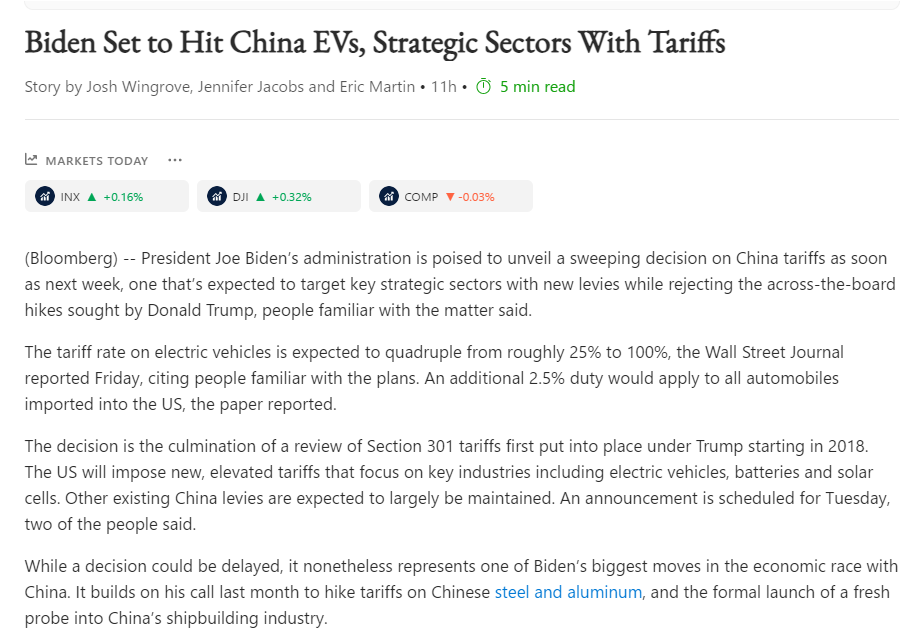
The dangers of a geoeconomics policy spiral. “Biden Set to Hit China EVs, Strategic Sectors With Tariffs,” Markets Today. Geoeconomics and geostrategery classrooms.

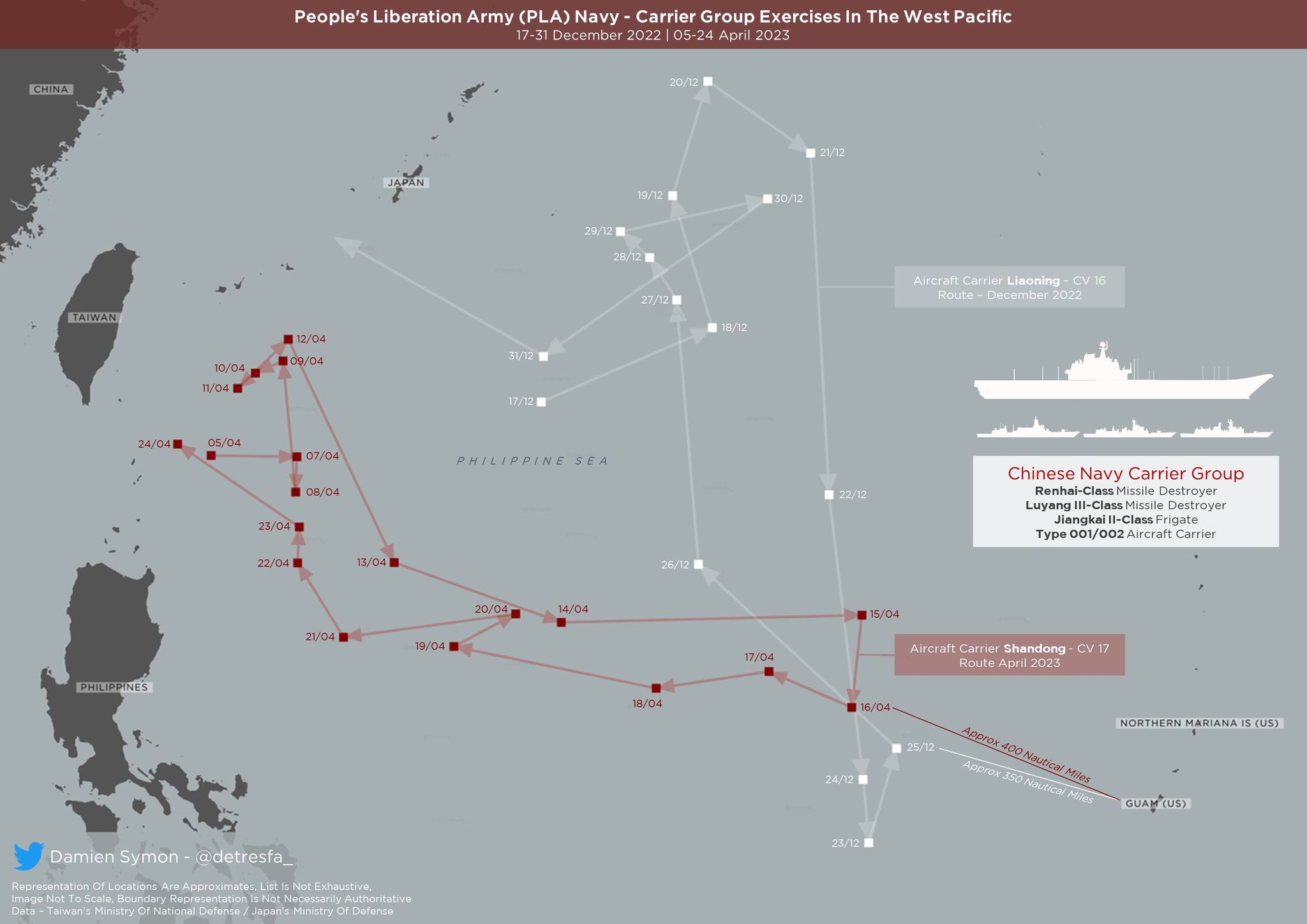
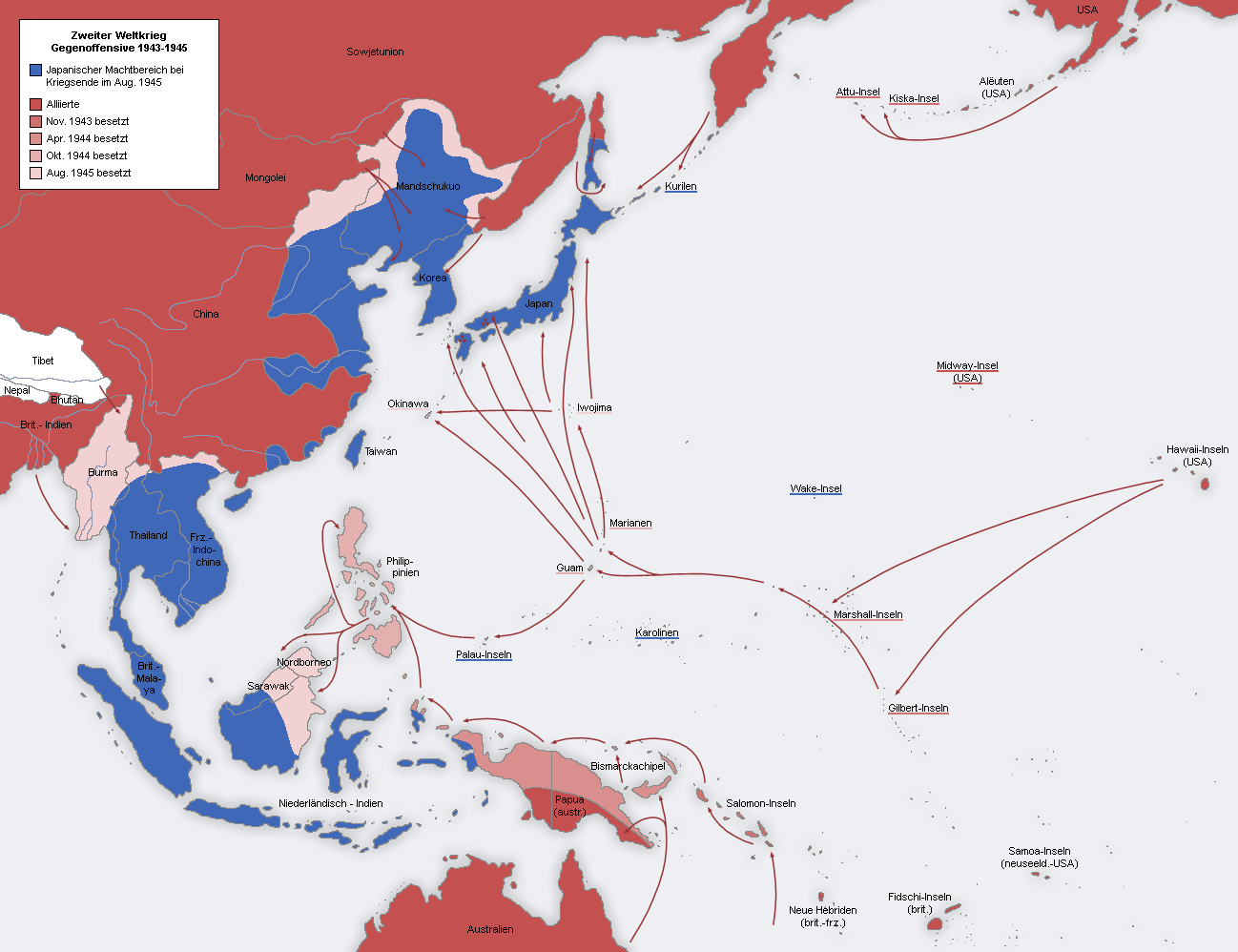
The dangers of a policy spiral. “Biden Set to Hit China EVs, Strategic Sectors With Tariffs,” Markets Today. Geoeconomics and geostrategery classrooms. The policy spiral involving economic sanctions now has a US cutting off oil supply to the Empire of Japan on the eve of the Pacific War feel. Partisans will pick and choose ahistorical moments in the timeline to blame communist China and/or US. My sense is that years before the West realized, the Chinese communists knew their ability to make themselves profitable to the West was coming to an end — and so Beijing decided a de-globalized, disconnected, poorer China that’s on a permanent war footing is a safer bet for Xi’s dictatorship. Will the Chinese communists repeat the Empire of Japan’s major mistake — thinking that actively pursuing expansionist warfare would make them safer? That part I am not sure yet, although in the last two years, I have become more convinced that dictator Xi might just be stupid enough to repeat that mistake. Certainly the military set up in the Indo-Pacific, particularly from the South Sea into the Taiwan Strait and the East Sea are prone for an accident.

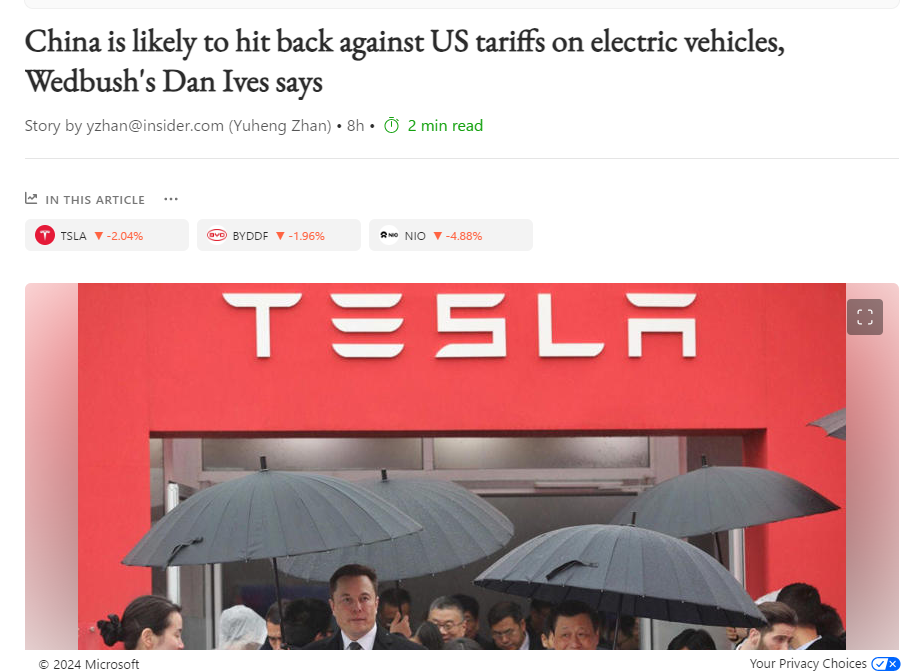
“China is likely to hit back against US tariffs on electric vehicles, Wedbush’s Dan Ives says,” Markets Insider

This is a companion article regarding geoeconomic policy spirals on the eve of Pearl Harbor. The main thing to understand about a policy spiral is that even when observers and policymakers can see them clearly, they are difficult to stop — because every policymaker gets short-term memory problems, because no one can agree on where the timeline ends and begins — most important, neither democratically elected nor dictatorial leaders want to be the one to “cave” and pay the domestic legitimacy price for being weak – requiring one party to back off is the only way to stop a policy spiral. You add in the complexities of the sectors involved — economic, politics, religious, military …. — add in multinational, domestic and foreign policies, and policy spirals are difficult to end without a massive catastrophe. I have always thought of the two world wars as major spasms within a huge, century-plus-long policy spiral — once one Western imperialist power decided foreign colonies, global empires, militarism, and mercantilism was the path, other Western nations plus Japan responded in kind. You would have thought the First World War was costly enough to cause a break in the policy spiral and encourage a deep rethink — it was not nearly enough. It required an even worse Second World War plus the nucular age to cause a break. It was not a utopian break — Cold War, local skirmishes, etc etc. But it was an unusually stable and prosperous few decades, 1945 to say 2000. the first break in this stability was the unwise decision by junior Bush to instigate a needless war in Iraq — that signaled the end of the 1945 world order. Everything after is far too complex to lay out in a fifteen-week seminar, much less a post. The main point being: the world is now knee deep in another dangerous policy spiral.

© Taiwan in World History 台灣與世界歷史This site grants open access for educational and not-for-profit use. Maps and illustrations are borrowed under educational and not-for-profit fair use. If you are the rights holder and prefer not to have your work shared, please email TaiwanWorldHistory (at) Gmail (dot) com and the content will be removed.
Leave a comment

Filed under geoeconomics, world history

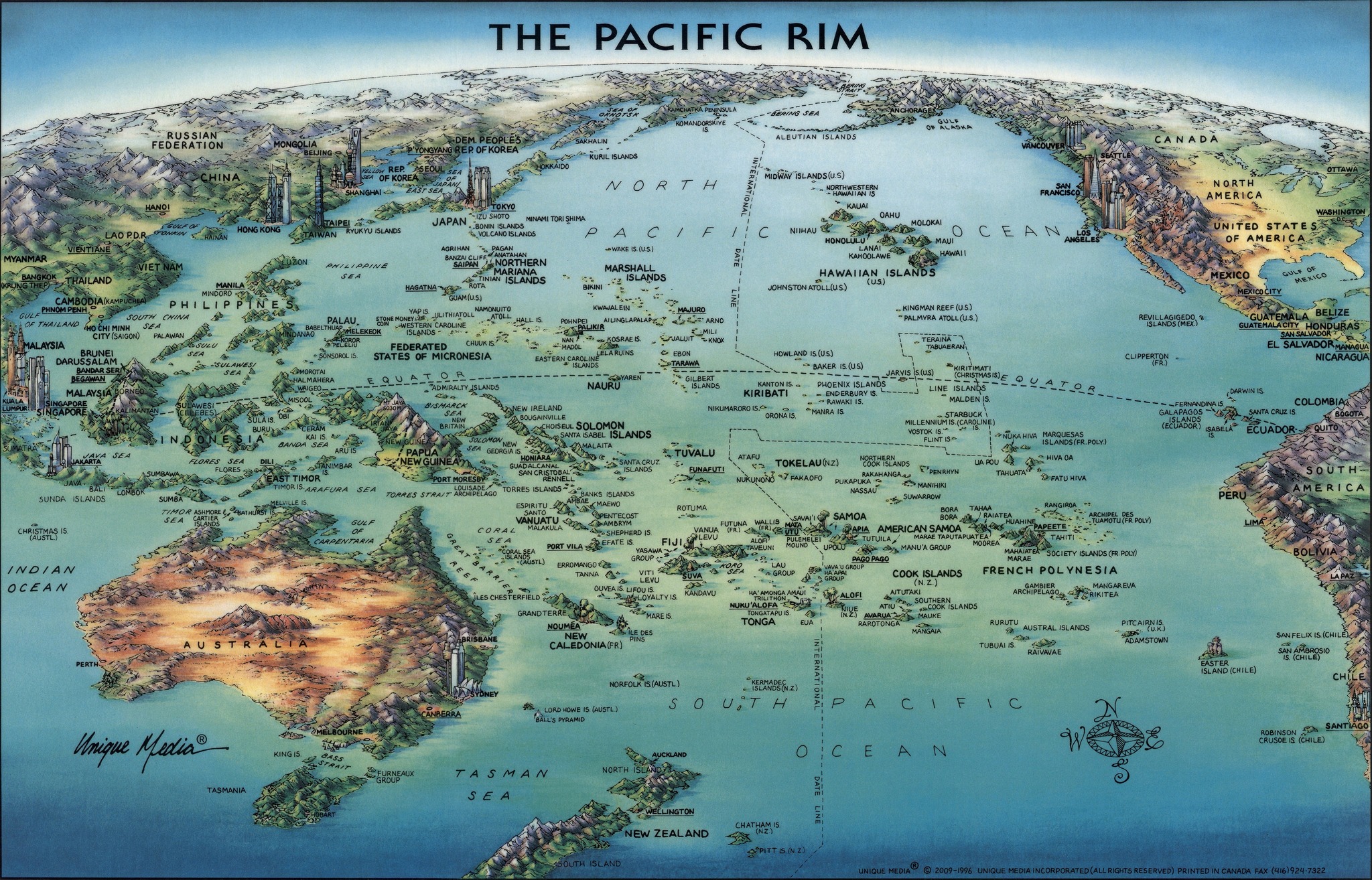
How DC became obsessed with a potential 2027 Chinese invasion of Taiwan, Defense News. Taiwan Republic 台灣国 and geostrategery classrooms

How DC became obsessed with a potential 2027 Chinese invasion of Taiwan, Defense News. Taiwan Republic 台灣国 and geostrategery classrooms.

As a historian, I appreciate this type of intellectual history of how an idea came to be. How did the US become obsessed with the domino theory in Southeast Asia? Why did the US think it was possible, or even desirable, to install American-style democracies in the Middle East after 9-11? And any student of Washington, DC would not be surprised by a town obsessed with fads and pack-mentality – down to annoying, glib catchphrases (thank Buddha the icky kimono thing seems to have finally faded ….) – envelope-pushing, paradigm-shifting, etc.

Is it fair to call the present-day US focus on the threat posed by the Chinese communists an “obsession”? One could go with a more moderate, fair word like “focus” can’t one. However the fact that Admiral Davidson gave the DC policymakers a year certain – even though his testimony was far more complicated and nuanced – makes this focus easier to propagate.

I don’t know if the Chinese communists will invade and attempt to annex Taiwan Republic in 2027. I don’t even think dictator Xi did. I do know watching the recent CSIS conference that people who should know more than I do, commanders and deputy commanders of branches of the American armed forces seem to speak of Chinese communist preparation less hypothetically and far more urgently than I can ever remember. And sure, I remember Iraq II and the failure of policymakers to understand reality on the ground. On the other hand, American intelligence on Russian intentions on the eve of the invasion of Ukraine seems near perfect.

Maybe the fact that this 2024 attention to the threat posed by communist China’s expansionism and imperialism feels like an “obsession” only in the historical context with how many decades Washington, DC and global democracies lulled themselves into a delusion – that somehow globalization and trade and cultural exchange will pacify the Chinese communists and make the world “flat”? Just as Putin’s invasion of Ukraine is a reminder to Western elites that certain fundamental features of human history have not been entirely erased by “progress,” dictator Xi’s aggressiveness is a reminder that while one can put fancy pants high rises and bullet trains all over China, but for the Chinese communists, their desire to subvert the US-led world order had never changed. And Davidson Window or not, I had always assumed no matter the Chinese communist leader, they have not attempted to annex Taiwan by force not because of “management” by DC think tank folks, but because they have not achieved such military capacity – once they do, you can sign a million more treaties and Beijing will militarily pursue Chinese imperialism against Taiwan and beyond.

While I have been impressed by the Biden liberal hawks and how they have expertly wielded tools of global statecraft – chip wars, interest rate wars, alliance building, preparing the armed forces – even the most recent foreign aid package still showed a lack of obsession/proper priority-urgency – 60 billion for Ukraine, 20 for Israel, 15 for the “Indo-Pacific,” – I am in full support of Ukraine, just merely pointing out that if we go by dollar amounts, this is hardly an obsession.

It is also confusing to view this phenomenon from Taipei’s perspective – on the one hand significant change in US policy regarding Taiwan – greater respect, more open, and normalizing political-diplomatic, and military interactions. President Biden should be given great credit – even though the Mandarins of DC policymaking circle had a massive cow about alleged “gaffes” – for repeatedly stating America’s commitment to defend Taiwan. On the other hand, the delays in the shipment of major weapons purchased by Taiwan from the US. It is not at all clear if the US has taken a firm and clear position on Taiwan’s critical submarine program. Most importantly, sooner or later, the US, Japan, and the Free World will have to obsess about another reality – if a Taiwan free from Chinese occupation is a matter of American and allies’ national interest, then a permanent military presence in and around Taiwan by the US and allies is the policy necessary to deter Chinese communist aggression. 9.5.2024

© Taiwan in World History 台灣與世界歷史This site grants open access for educational and not-for-profit use. Maps and illustrations are borrowed under educational and not-for-profit fair use. If you are the rights holder and prefer not to have your work shared, please email TaiwanWorldHistory (at) Gmail (dot) com and the content will be removed.
Leave a comment

Filed under geoeconomics, geostrategery, Taiwan Republic

Bibliography: The importance of Japan and the Philippines in the defense of Taiwan Republic. Geostrategery and world history classrooms.

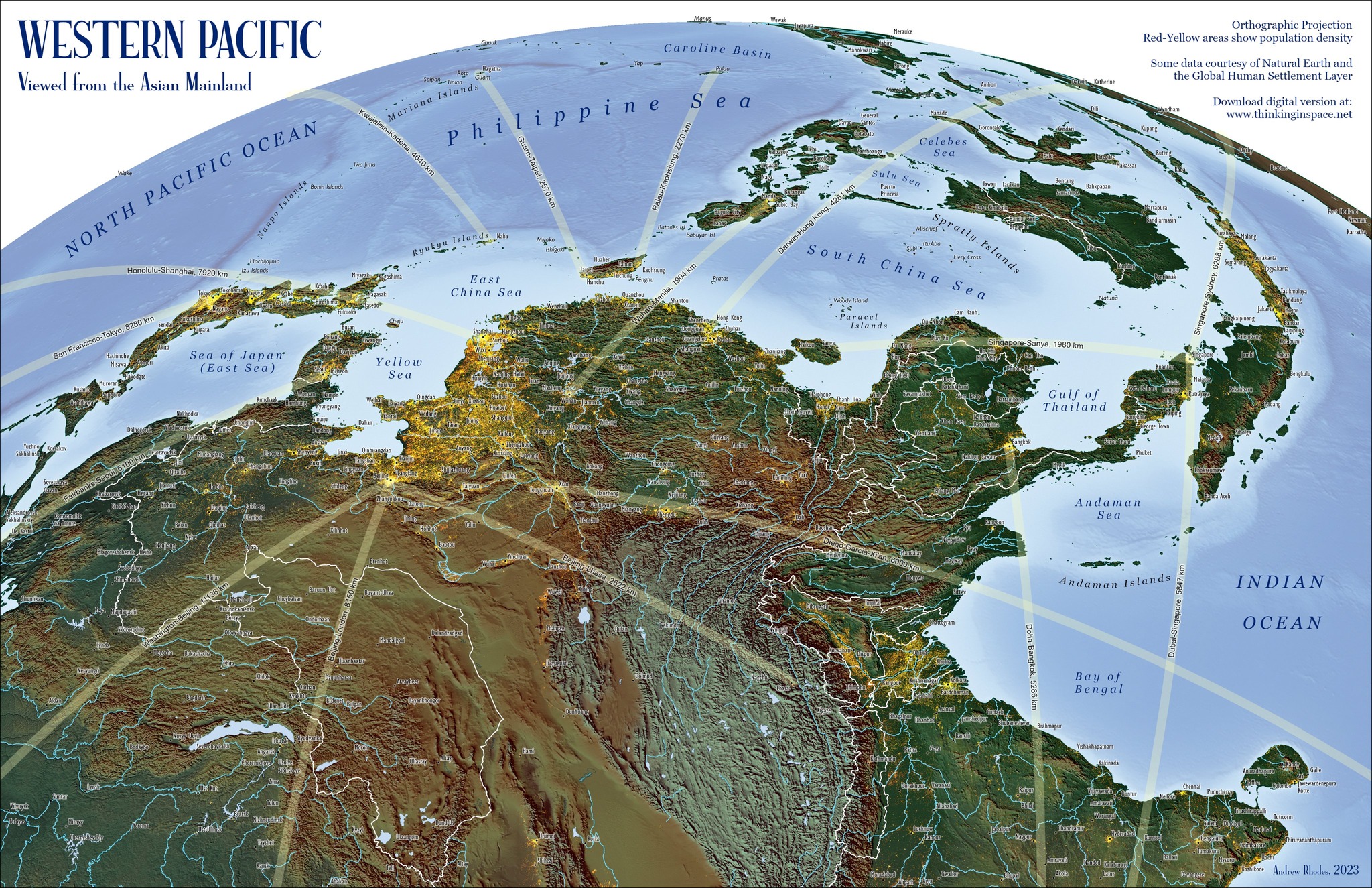
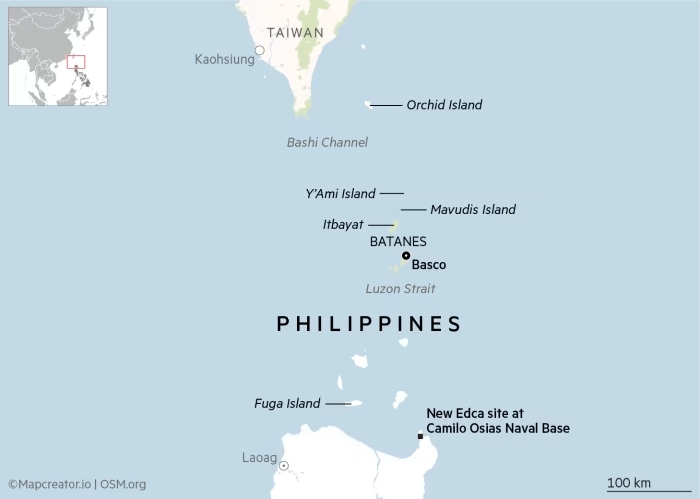
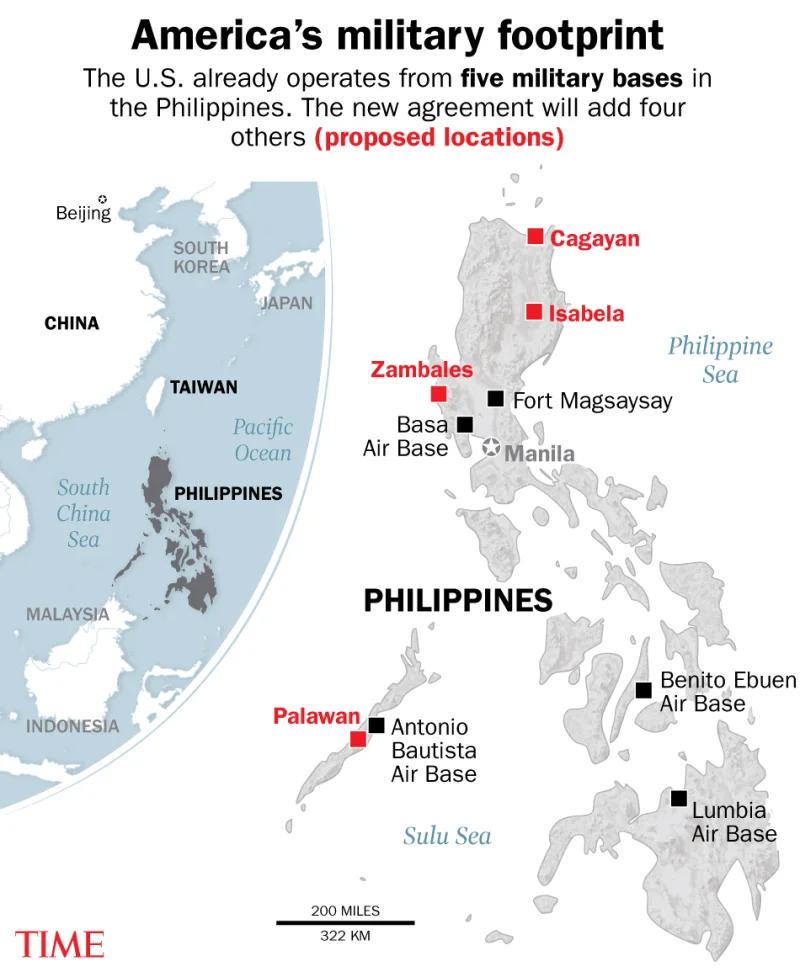
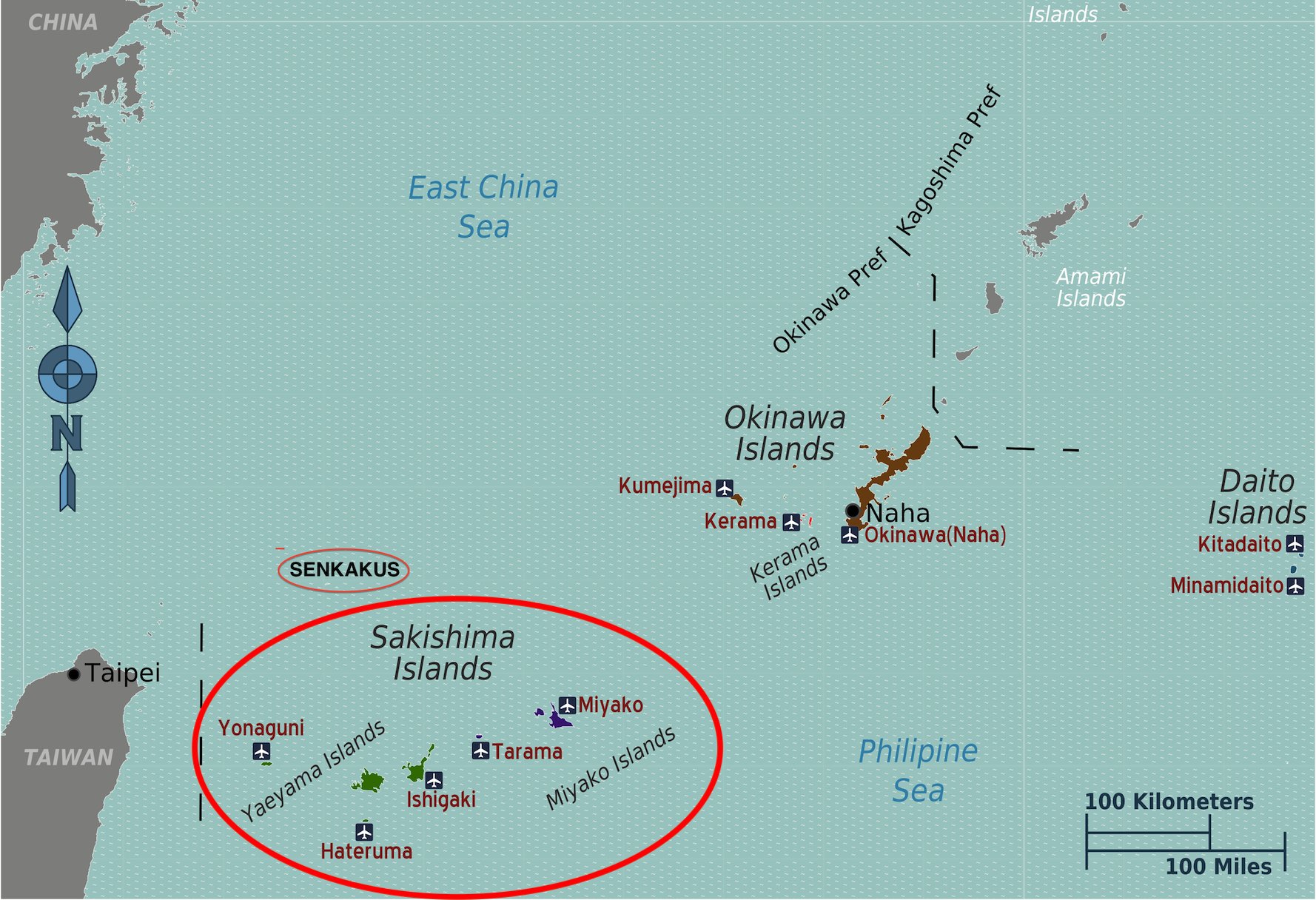
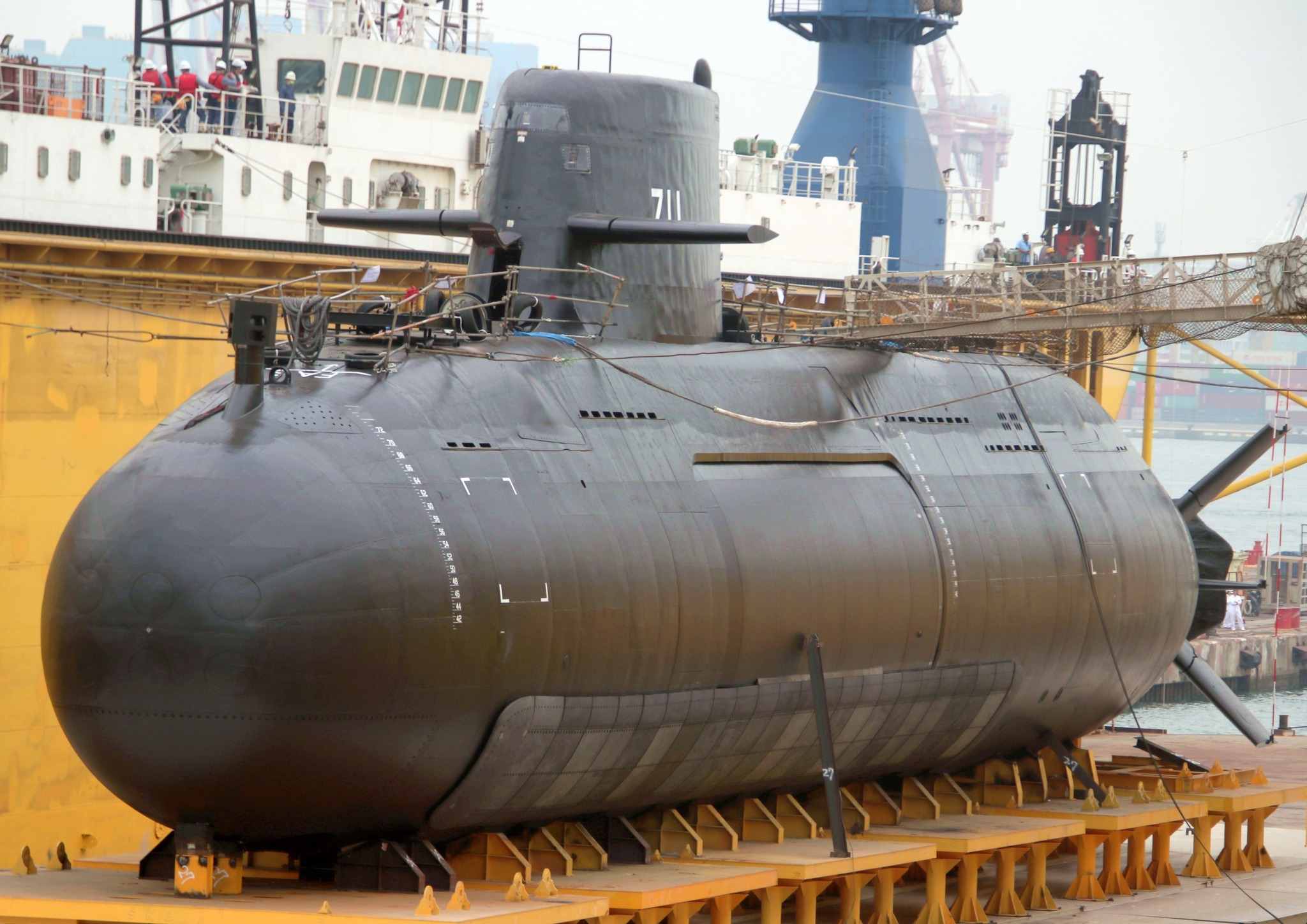
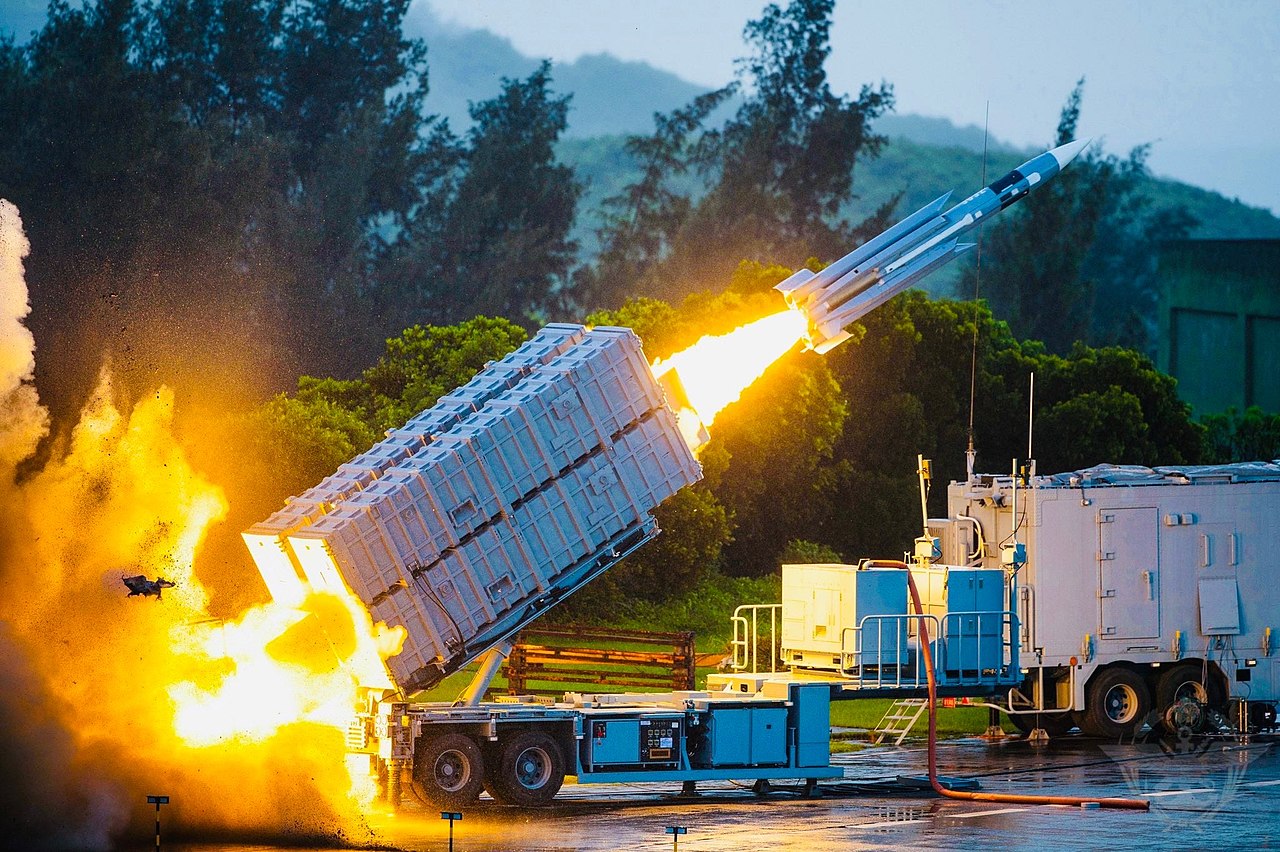
Bibliography: The importance of Japan and the Philippines in the defense of Taiwan Republic. Geostrategery and world history classrooms. The significance of the American military moves in the last two years with the Japanese and Philippines islands closest to Taiwan Republic is this: they close off the Chinese communist military’s paths to envelop Taiwan by air and by sea to Taiwan’s east — and in turn, funnel the invading Chinese communists into confined kill zones. The US Marines led the revolution in thinking with lighter, mobile, highly networked land-based surface-to-air and surface-to-surface missile units. Land-based because they are far cheaper and more sustainable than aircraft carriers and warships. Taiwan is massed with thousands of land-based missiles/mobile units. And there are signs that the Taiwanese military, with American assistance, is moving to coordinate their own force structure and thinking with that of the US Marines. President Tsai has successfully nudged the Taiwan military upper leadership into the area of unmanned vehicles – air, sea, and subsurface. The US and allies’ deployment northeast and southeast of Taiwan allows the Taiwanese military to focus on the communist threats from the west. In basketball and American football terms, these land units are zone defense, whereas the American, Japanese, and Free World/AUKUS+ carrier battle groups, submarines, and strategic bombers are mobile strike units/man-to-man offense. Recent reports in Taiwanese online newspapers that the US has assisted Taiwan in securing access to LINK-22 would be an important step forward in coordinating Taiwanese, American, Japanese, AUKUS, NATO, and ASEAN forces.

距台不到200公里 美菲澳「肩並肩」演習再登巴丹島

https://def.ltn.com.tw/article/breakingnews/4663565

美菲澳軍隊演練空降巴丹島 為台海或南海衝突做準備 https://www.taisounds.com/news/content/84/123755

American troops return to strategic islands near Taiwan for air-assault practice

https://www.stripes.com/branches/army/2024-05-05/balikatan-air-assault-taiwan-china-13759680.html

US Holds Drills With the Philippines at Tiny Island Near Taiwan

Filipino, US troops fire at ‘invasion’ force in war games

https://www.taipeitimes.com/News/front/archives/2024/05/07/2003817488

史上最長漢光兵推 任務式指揮「去中心化」授權部隊獨立作戰

https://www.taisounds.com/news/content/71/123500

【強化制海資通】透過AI接戰系統整合 讓以岸制海打擊戰力發揮極大化

【博騰專案】美助攻獲北約同意 國軍規劃逾550億向美軍購LINK-22數據鏈系統

【博騰專案】建構第一島鏈情資互通網迫切 日方促賴清德及早完成LINK-22系統

【博騰專案】配合LINK-22系統建構 長程預警雷達性能升級費用由美方支應

© Taiwan in World History 台灣與世界歷史This site grants open access for educational and not-for-profit use. Maps and illustrations are borrowed under educational and not-for-profit fair use. If you are the rights holder and prefer not to have your work shared, please email TaiwanWorldHistory (at) Gmail (dot) com and the content will be removed.
Leave a comment

Filed under geoeconomics, geostrategery, Taiwan Republic, world history

Taiwanese national identity and the global order: Geostrategery, Taiwan Republic 台灣国 , and national identity classrooms

Taiwanese national identity and the global order. Geostrategery, Taiwan Republic 台灣国 , and national identity classrooms.

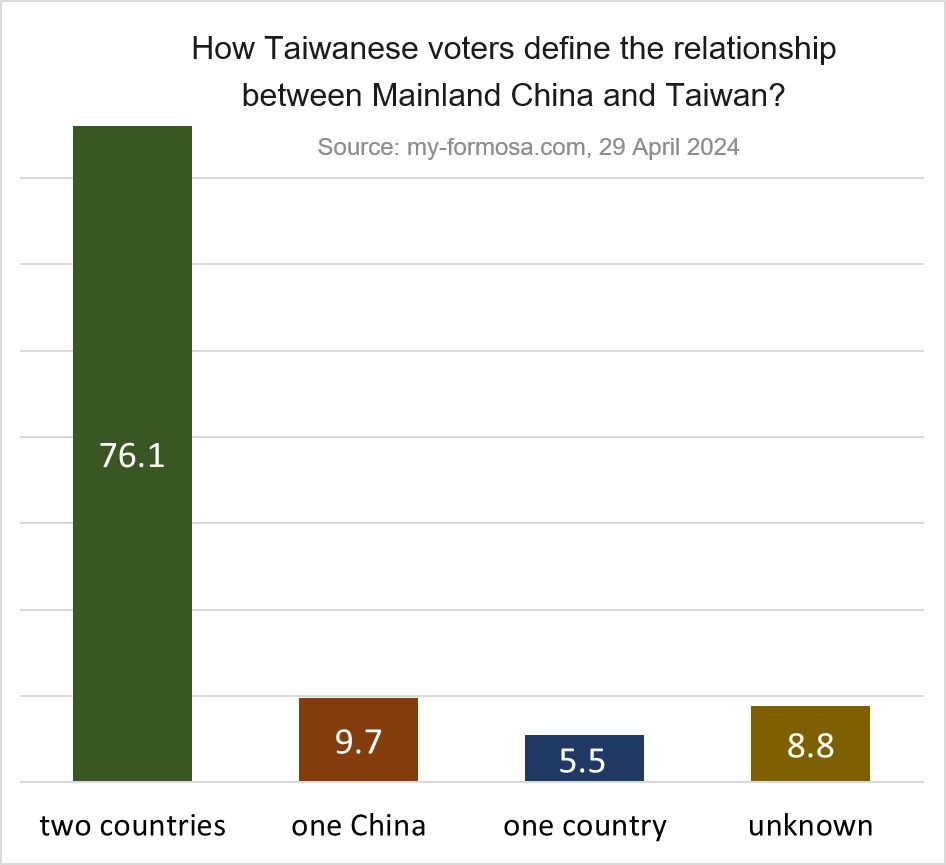
This emerging Taiwanese national identity. Came across this poll on the Twitters recently. How Taiwanese citizens self-identify in this poll is not surprising. The majority is basically the governing coalition President Tsai cobbled together over eight years – a fusion of Taiwan Republic, Taiwan, RoC Taiwan, Taiwan RoC, and RoC voters.  President-elect Lai and the DPP need to figure out why this governing majority doesn’t translate well in legislative and local elections. Taiwan’s “mainlander” and Chinese communist-dominated media obsess over America’s statement not supporting “Taiwan independence,” and ignore substantive US, Japan, and Free World redefinition of what “status quo” means — i.e., status quo now also functionally means not supporting China annexing Taiwan, peaceful or by force. Also important to note the complex, dialectical, chemical-reaction characteristics of how national identities form – this emerging Taiwanese national identity is a compromise, articulated by Presidents Lee and Tsai – though leaders oftentimes respond to identity formation from below rather than to create, invent, or to lead them. This is the one feature that the authoritarian Chinese Communist Party and the China KMT cannot fathom – that a free people can, over time, come to these ideas without being brainwashed or forced by a higher authority.

Polls like this matter more for domestic electoral politics. They matter less for Taiwan’s ability to maintain its de facto independence within the global system – except perhaps in the realm of national security. To maintain this independence, Taiwan requires coherent and honest national security consciousness, improvements in its military (particularly upper-level leadership), and support from the US, Japan, and the Free World. Meaning, that to make national identity sustainable, it must be supported by military and economic power, and the endorsement of important global powers.

The nature of national identity, particularly for middling to smaller nations in the global system, is reactive-passive rather than active-assertive. Just as Taiwanese (Taiwan the place/people/nationality) ‘national’ identity did not emerge until the Japanese arrived; just as the Manchus did not ponder the status of Taiwan until global maritime powers arrived, the reality is that even if one hundred percent of Taiwanese citizens believe Taiwan is a sovereign, independent nation (whether as Taiwan, Taiwan Republic, ROC Taiwan, Taiwan ROC), that independence depends on Taiwan’s ability to defend that status, and whether this Taiwanese sovereignty separate from China is supported by the major powers.

This makes the interaction between the emerging Taiwanese national identity from the 1990s, when Taiwan slowly dismantled the authoritarian and colonialist system imposed by the China KMT, and the changing US policy regarding Taiwan, communist China, and the Indo-Pacific the key. Taiwan’s first democratically elected president Lee Teng-hui and President Tsai sought a Taiwanese national identity and sovereign status independent from the People’s Republic of China, acceptable to the US and the Free World, while minimizing domestic discord. Meanwhile, as the ability of the Chinese Communist Party to make China profitable for the Free World dissipated by the 2010s, and as dictator Xi went on an isolationist war footing, the US and its allies began to redefine what “status quo” means in the Taiwan context. While the pro-communist China media within Taiwan obsesses over the boilerplate US declaration that it “does not support Taiwan independence” (one will be hard-pressed to find a major political leader within the pro-Taiwan sovereignty groups that’s spoken about “Taiwan independence” in the last decade ….), I think the US will clarify this revised “status quo” because the China KMT and PFP are one step away from conceding to Beijing that “one China/one nation” = People’s Republic of China.

When Ma or whoever within the pan-blue/white/red camp concedes Taiwan’s sovereignty to the People’s Republic of China, the US, and its democratic allies will openly oppose both “independence” and “annexation/unification” on the basis that both are changes to the status quo. The US and Free World definition of “status quo” in the Taiwan Strait is a two-state solution – has been for decades but as the CCP and KMT have accelerated their push for Taiwan to surrender its sovereignty, the greater urgency for the US, Japan and its allies to also clarify their position. During the Lee Teng-hui era, there was still enough finesse on the Chinese communist side, and ambiguity among the deep blue/red groups inside Taiwan, to have the face-saving “special state-to-state” formulation. President Tsai is probably the last Taiwanese president in a position to give the Chinese communists a face-saving way to peacefully live with the status quo – notice for example that while she has been firm on the two sovereign states on both sides of the Taiwan Strait, she has never declared what the future might be. So Tsai’s eight years were a lost opportunity for the Chinese communists and its allies inside Taiwan. From this moment forward Taiwan’s status will be a matter of total national-allies power (economic, military, educational, technological ….) – communist China, its allies inside Taiwan, Russia, et al, versus Taiwan, US, Japan, and their democratic allies. 2.5.2024

© Taiwan in World History 台灣與世界歷史. This site grants open access for educational and not-for-profit use. Maps and illustrations are borrowed under educational and not-for-profit fair use. If you are the rights holder and prefer not to have your work shared, please email TaiwanWorldHistory (at) Gmail (dot) com and the content will be removed.
Leave a comment

Filed under geoeconomics, geostrategery, Taiwan Republic, world history