Tag Archives: geoeconomics

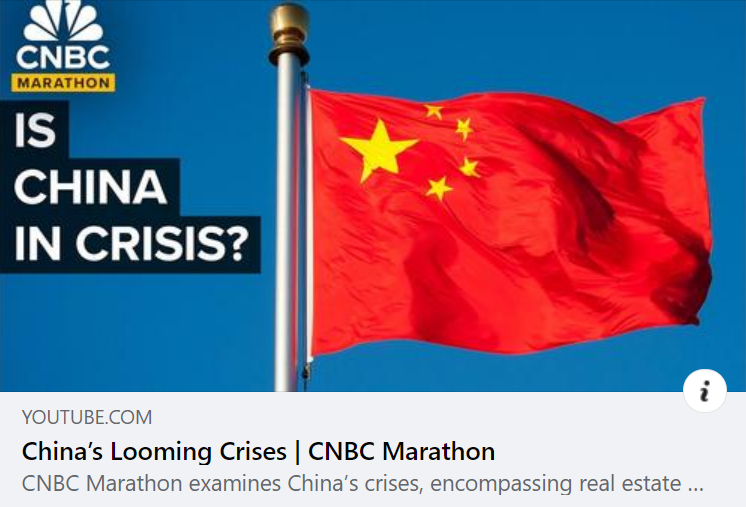
“China’s Looming Crises | CNBC Marathon” World history and geostrategery classrooms

“China’s Looming Crises | CNBC Marathon” . World history and geostrategery classrooms. The most remarkable thing about this question and this report is the fact that it appeared in a Western imperialist corporate financial press — Big Wall Street and Big Western Imperialist Higher Ed are the two industrial sectors most in the tank for the Chinese Communist Party and the blood money it handed out. The same Western pack mentality commentariat that talked up the “inevitable” Chinese Century is the same pack mentality industrial complex talking up the rapid collapse of communist China. I maintain the same skepticism and caution re: both extremes. It is true that communist China is no longer profitable for the Free World. It is true that dictator Xi has decided, as Putin has, that a deglobalized communist China that is on a permanent war footing (“continuous revolution”), that is poorer, is the best way to save his communist dictatorship. Once we understand these two main ideas, then we’ll see why advice from the Western imperialist academia and think tanks on how to “engage” and “de-escalate” and “pacify” the Chinese communists is at best ineffective, and I fear, highly dangerous for world peace.

This phase of the Chinese communist economic crisis is not unique in world history – demography changes, overcapacity, macroeconomic cycles, the transition from an export-led, low-wage economy into a consumer-service-led mature, domestic economy, etc. etc. What Western imperialist commentariat gingerly dances around is the fact that dictator Xi has either killed, imprisoned, and/or exiled nearly all economically competent leaders who makes any difference or dares to challenge Xi’s ignorance and hubris. While communist China’s economic crisis is multifaceted and complex, the main challenge to its economy is the nature of a totalitarian dictatorship. Dictatorships handle crises poorly — the Chinese communists mishandled the pandemic from beginning to end; the authoritarian Trump botched the pandemic for similar reasons — knowledge can only be held by the Great Leader, wrong choices cannot be debated honestly and changes made quickly. China’s economic crisis is a subset of its political crisis — since its late Manchu era, that’s been the case – a vast, landed, multinational empire with many talented thinkers, yet authoritarianism has stifled China’s ability to create a sustainable political and economic system. It is China’s continuous, self-inflicted political disasters from the late 1800s to now that prevents moderate, sensible, humane economic policies from emerging.

© Taiwan in World History 台灣與世界歷史. This site grants open access for educational and not-for-profit use. Maps and illustrations are borrowed under educational and not-for-profit fair use. If you are the rights holder and prefer not to have your work shared, please email TaiwanWorldHistory (at) Gmail (dot) com and the content will be removed.
Leave a comment

Filed under geoeconomics, geostrategery, world history

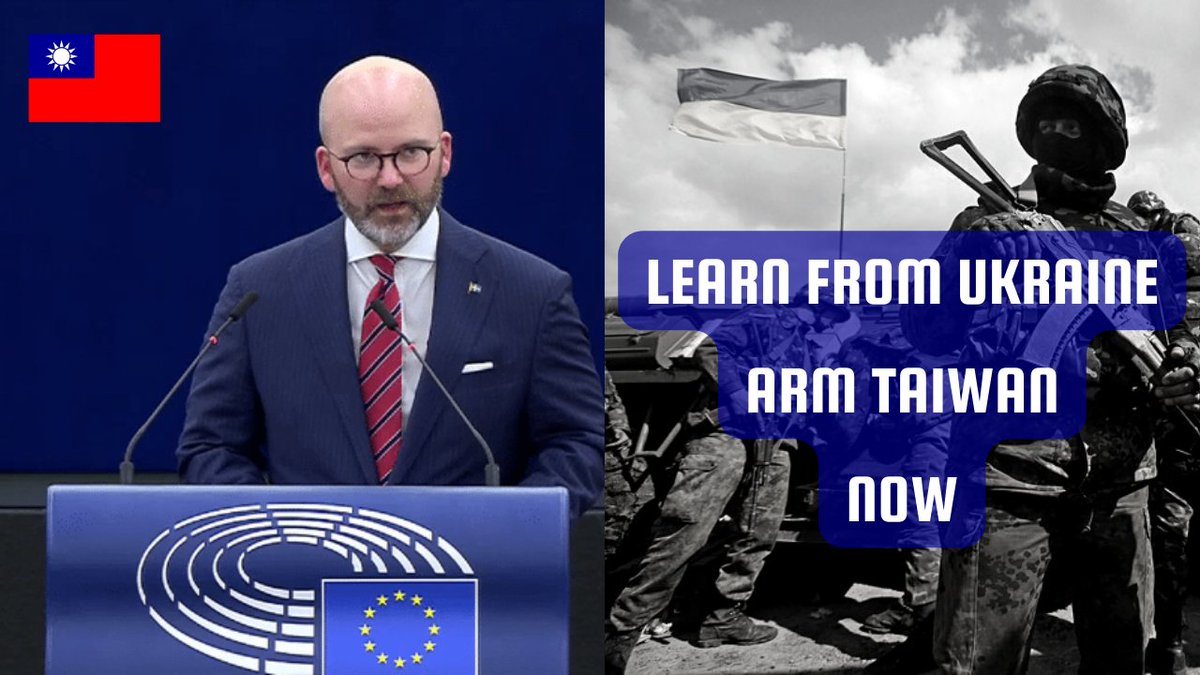
Lessons from Ukraine for the Indo-Pacific. Meta/conceptual

Lessons from Ukraine for the Indo-Pacific. Meta/conceptual

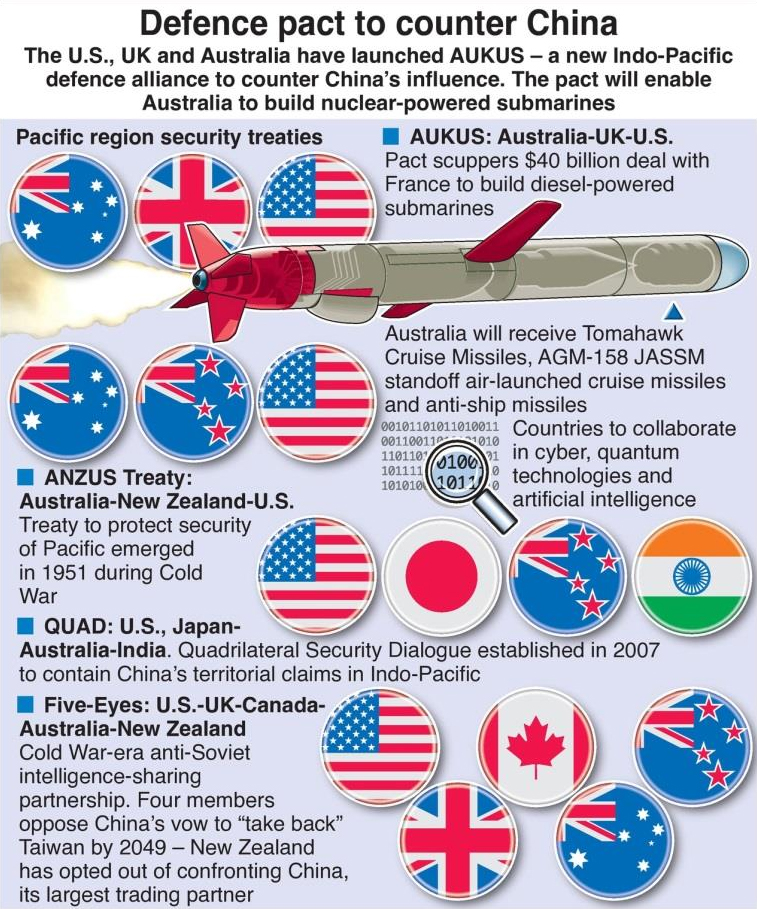
Geostrategery and world history classrooms. More than two years after the Russian invasion of Ukraine, has the Western foreign policy-national security establishments – public and private – learned lessons and made improvements? I fear perhaps not, or not enough, and walls of missiles and AUKUS submarines notwithstanding, this poses the greatest challenge in the face of the China Threat. There has been exceptional analysis, but not the “mainstream/loudest” – which has stubbornly held onto decades-long conceptual frameworks. Although US intelligence performed brilliantly, many in the policymaking establishment were not convinced that Putin would invade. Nor have we gotten good analysis of why Putin chose to invade at this time – a lot of Western-centric guesses, NATO, historical grievance, whatever. There was widespread surprise at how bravely the Ukrainians fought, and how shoddy the Russian military performed.

If these were the major blind spots of Western policymaking establishment during the Russian invasion of Ukraine, we should be concerned about similar blind spots while analyzing the Indo-Pacific and the China Threat. There is a growing consensus among US and Western intelligence that for dictator Xi of communist China, the ability to invade Taiwan by 2027 is the primary objective. Are we suffering from similar Western academia-think tank-official establishment mistakes regarding policymaking calculus within the Chinese dictatorship?

A few educated guesses. I don’t think dictator Putin cared much about the expansion of NATO (See Finland and Sweden). I think Putin was primarily motivated by primordial, reactionary ideas about geostrategery, and national security, reviving ancient Russian imperialist-chauvinist ways of seeing neighboring nations as subordinate, tribute states. I think his calculus is that an isolated, permanent warring Russia that’s poor and full of grievances real and imagined-manufactured makes his dictatorship safer. Is this why sanctions have not changed Putin’s thinking? It is certainly why the parade of Western leaders flying to Moscow on the eve of the invasion for dialogue didn’t do anything. This is why I have concluded that the “escalation/de-escalation/management” model favored by Western national security establishment makes little sense when dealing with dictatorships with an entirely different set of motivations.

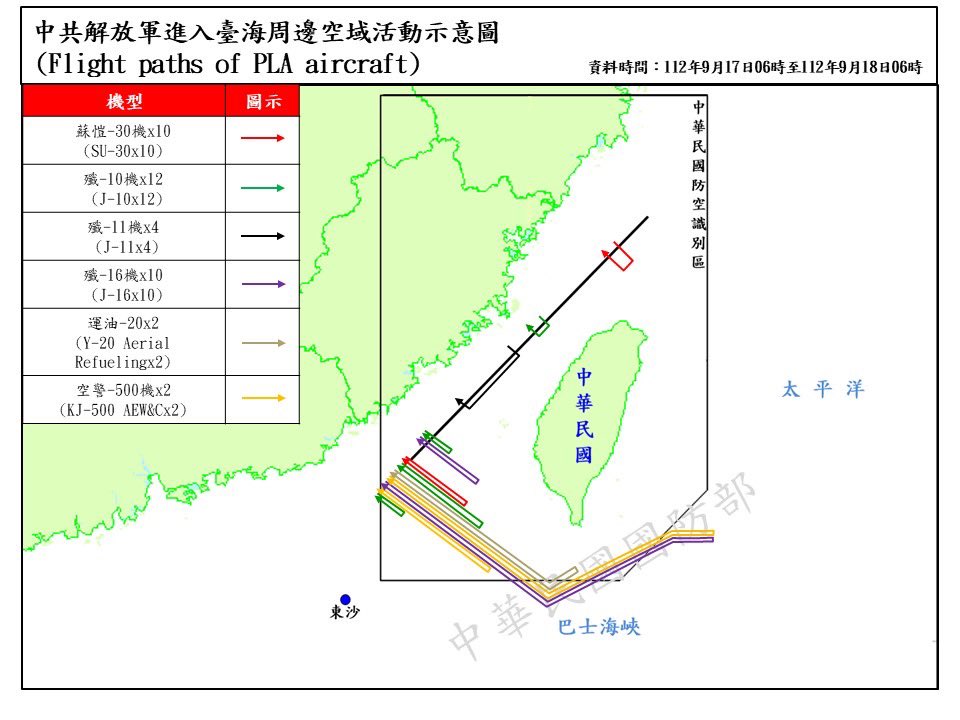
Now back to the Indo-Pacific/China Threat. We have a similar and worrisome pattern wherein Western intelligence sees aggressive and rapid preparation by the Chinese imperialists. We see evidence – Chinese military aggressiveness from India to Southeast Asia into the South Sea against Taiwan, Japan, and Korea – of both preparation and intentions. Just as with Putin’s Russian imperialism, Xi’s Chinese imperialism has been stated by the Chinese communists in plain words – the right of the Chinese communist to invade and subjugate Taiwan, the right of Chinese imperialism to expand its sphere of influence from the Sino-Indian border to Southeast Asia, from the South Sea through the Taiwan Strait into the East Sea and the Western Pacific. Is it possible that once again Western foreign policy intelligentsia is repeating the same mistakes from Russia-Ukraine, imposing Western values and Western policymaking hierarchies onto another continental, imperialist dictatorship? I have read calls for assuring Beijing. I have seen proposals to make concessions. My question is – had the Western powers “gave” Ukraine to Russia in 2022, would Putin stop his aggressive policy challenging the US-led world order? And a similar question now – if the Western powers “give” Taiwan Republic or the Philippines or the South Sea to communist China, would that result in the Chinese communist dictatorship behaving in a way that benefits the US-led world order? Why haven’t relatively harsh economic sanctions and tools to decouple the Russian economy from the global trade system not curb Russian or Chinese aggression? And if such economic sanctions prove relatively ineffective against Russia, would they become more successful against China?

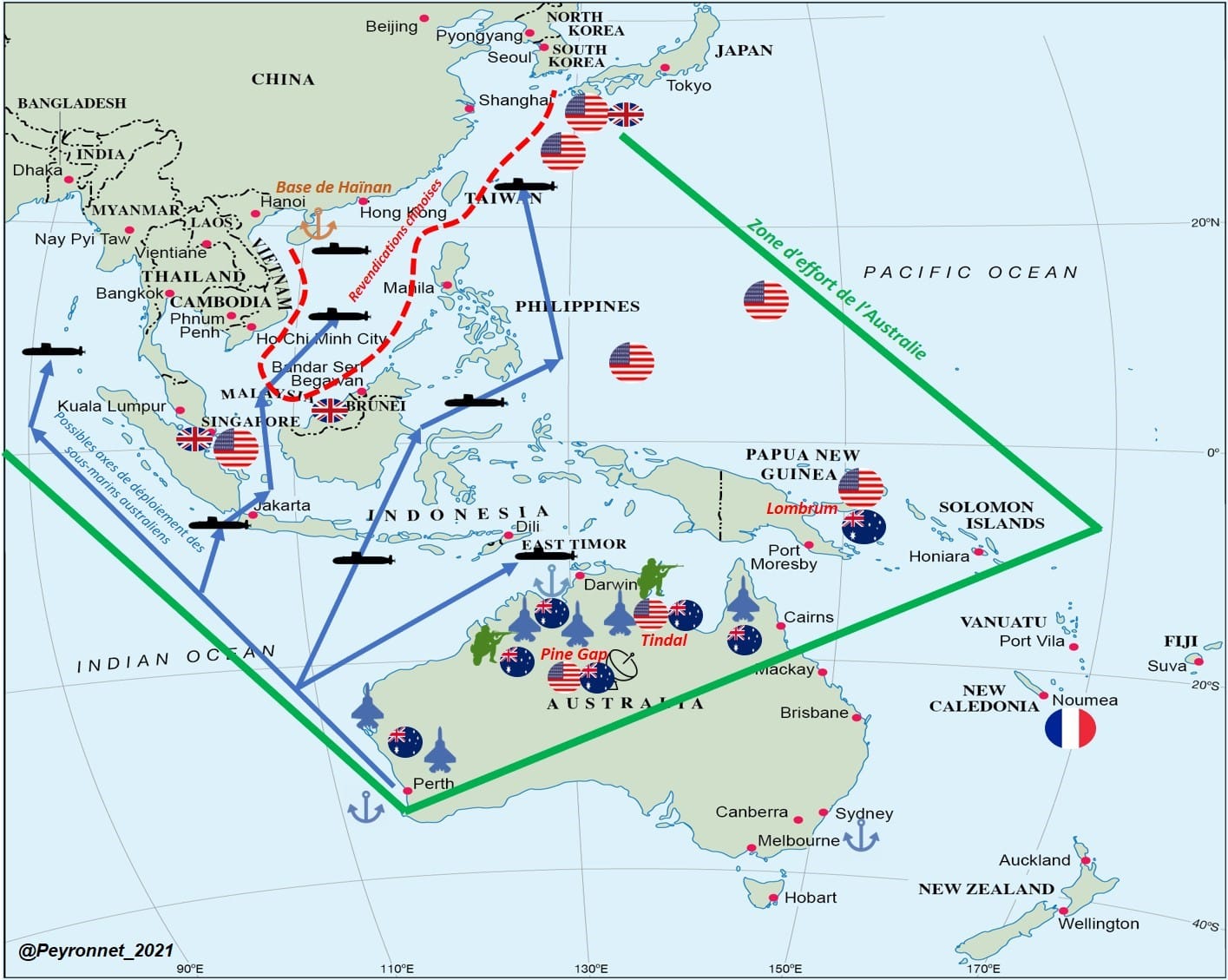
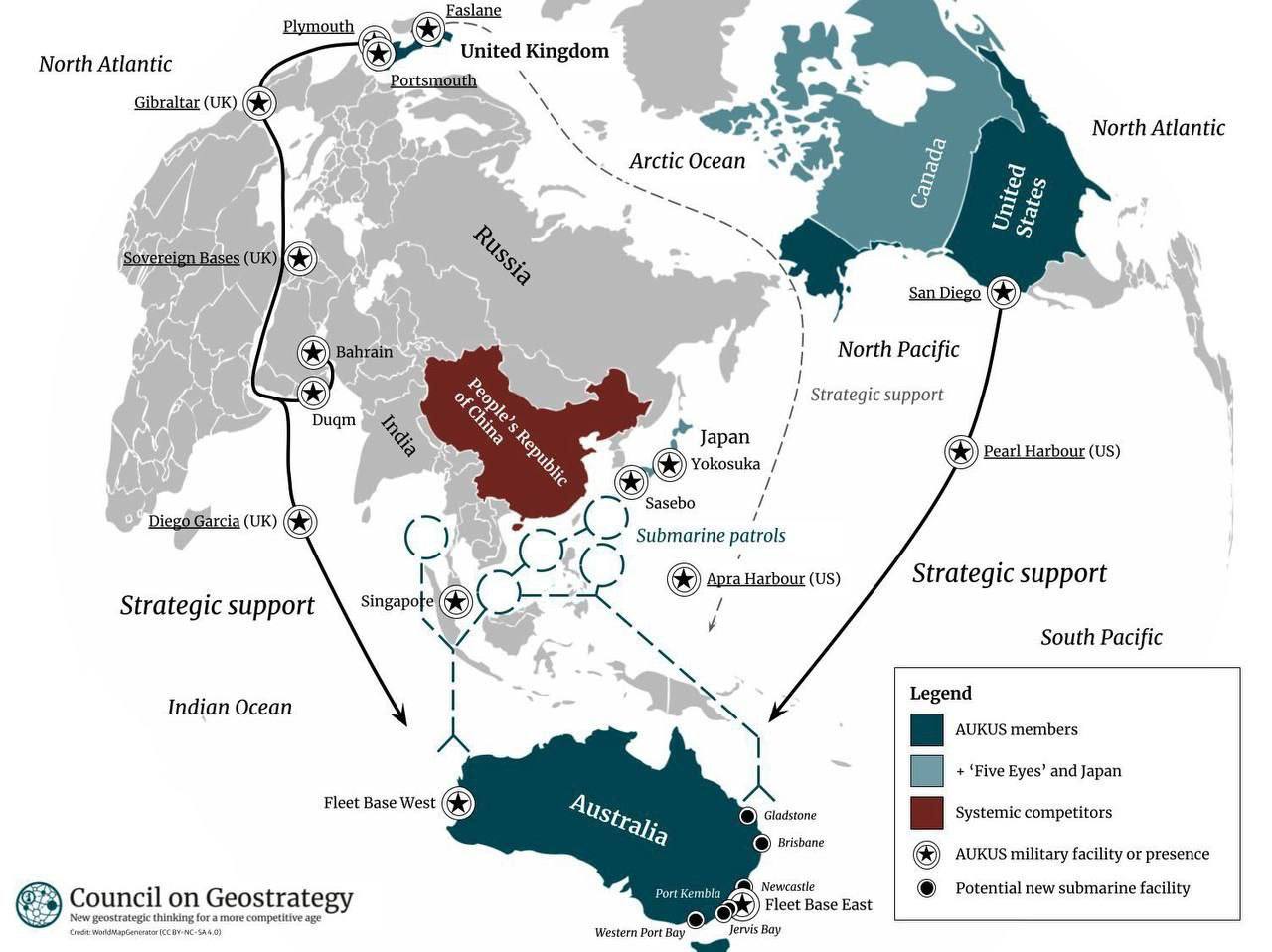
If my guess is correct – both dictator Putin and dictator Xi have calculated that decoupling from globalization – globalization to them merely means another phase in the post-war world order invented by the United States and enforced by the American navy – makes their dictatorship more secure, then what policies before 2022, and what policies in 2024, would have more likely prevent military aggression from the Russians and the Chinese? Would including Ukraine in EU and/or NATO as a response to the invasion of Crimea be the way? Does a US/AUKUS-led coalition of troops rotating into Taiwan and the South Sea change the calculation for dictatorship preservation for Xi? 27.4.2024

© Taiwan in World History 台灣與世界歷史. This site grants open access for educational and not-for-profit use. Maps and illustrations are borrowed under educational and not-for-profit fair use. If you are the rights holder and prefer not to have your work shared, please email TaiwanWorldHistory (at) Gmail (dot) com and the content will be removed.
Leave a comment

Filed under Taiwan Republic

Repairing a fragmenting world order

Geostrategery and world history classrooms.

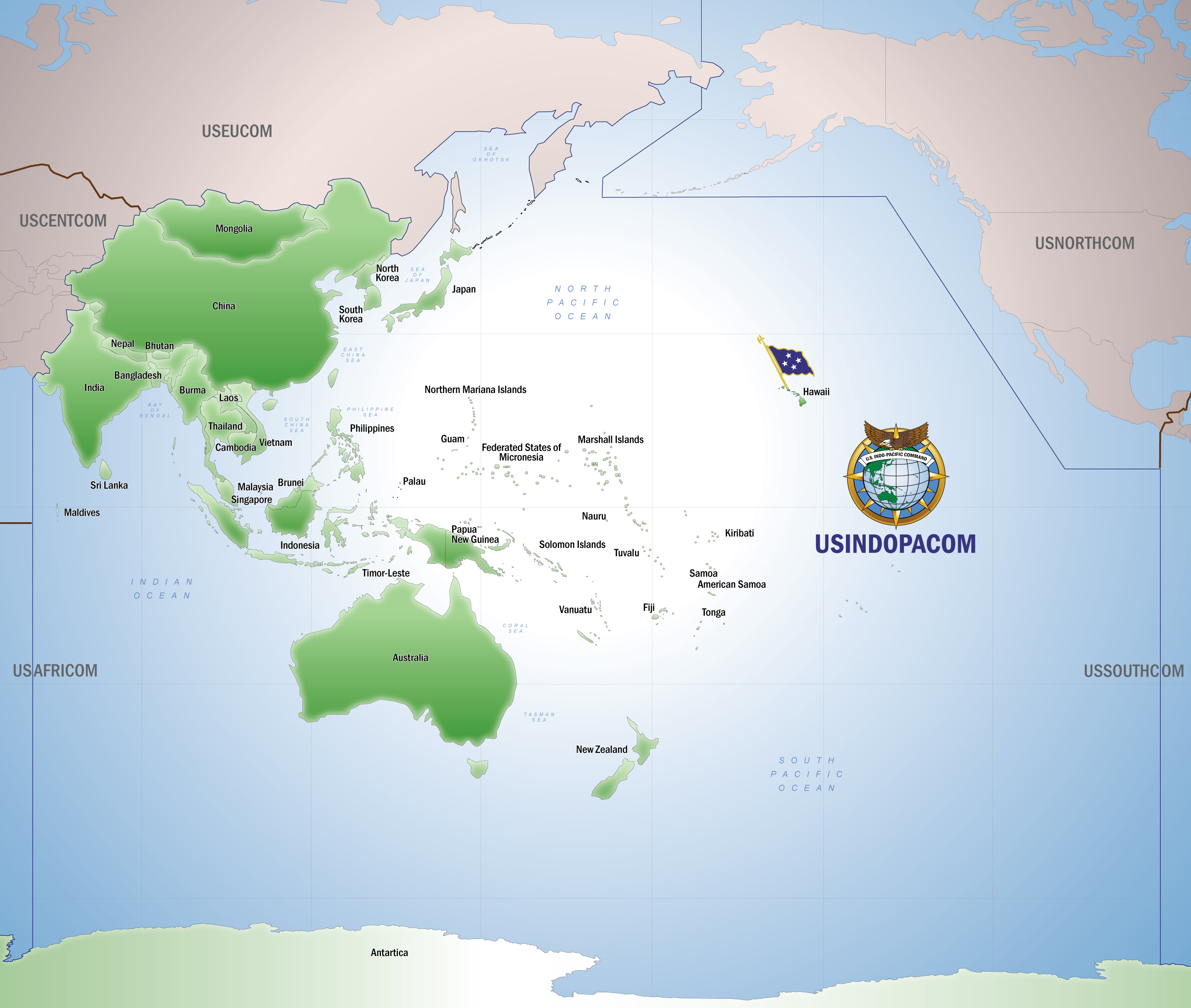
Some analysts will continue to focus on Taiwan — semiconductors, alleged national humiliation, etc. etc …. The narrative is: if we “give” democratic Taiwan to the Chinese communists, there will be world peace. Thankfully many national policymakers are not this misguided. I have been watching closely the US-Philippines, Japan-Philippines, and US/Japan-Vietnam/ASEAN moves. My theory is this: this is a dangerous moment in world history when one superpower, the US, is in domestic disarray because of the rise of American fascism; while the would-be next superpower, China, has been stillborn — neither powerful enough to create a new Pax Sinica; nor small enough to not do major damage as it flails and circles the drain. The main issue is not superficial and myopic like Taiwan-only — though Taiwan is an important piece; or whether we are talking to the Chinese nicely enough. The category of analysis is world order, and the theater of this struggle begins with the South and East Seas, not the Taiwan Strait. Though yes, Taiwan is a key chokepoint between the two seas.

If this is what’s happening, then the US focus on Vietnam and the Philippines makes a ton more sense. I have written previously that the postwar American-invented world order is maritime-based, US Navy-enforced, and focused on free access to global raw material, labor, manufacturing, and markets. A not-quite superpower communist China, reaching into the South and East Seas attempting to “split” the Pacific and Indian Oceans challenges this world order. An American superpower in domestic disarray makes for a dangerous decade ahead. One can “give” democratic Taiwan to the Chinese tomorrow. Hell, one can even “give” democratic Japan (the truth is if Taiwan falls to the communists both Korea and Japan are dead nations walking ….) — it would not change the underlying, structural, global forces at work, no more than if we “give” democratic Ukraine to the Russians. I have been impressed with the complex global alliances the Biden liberal hawks have restored and enhanced. However, the best bet to ensure global stability and avoid a hot world war is to invest in American and global liberal democratic social welfare safety nets — to fund global democratic institutions. Populism-fascism across global liberal democracies will make a world war inevitable. 2.10.2023

© Taiwan in World History 台灣與世界歷史. This site grants open access for educational and not-for-profit use. Maps and illustrations are borrowed under educational and not-for-profit fair use. If you are the rights holder and prefer not to have your work shared, please email TaiwanWorldHistory (at) Gmail (dot) com and the content will be removed.
Leave a comment

Filed under Taiwan Republic

Reading Taiwanese newspaper – Democratic sovereignty, head of FCC in Taiwan Republic: World history, geostrategery, and Taiwan Republic 台灣国 classrooms

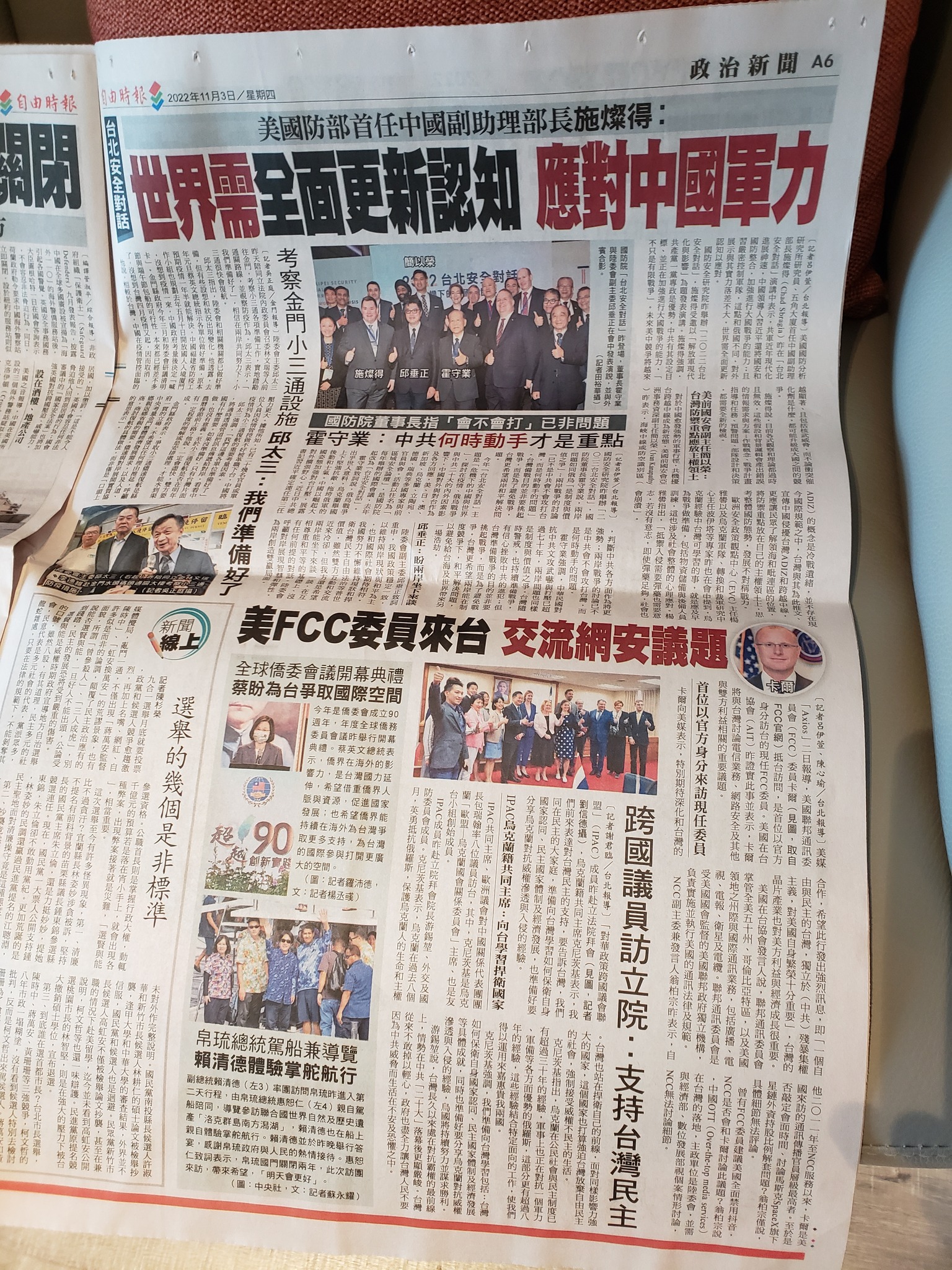
Taiwan news, Thursday (3/11/2022) print newspaper. Most important news is tucked away inside A6, I find the only print newspaper left in Taipei confusing. A global security dialogue took place in Taipei, a second-third track quasi-official conference full of leaders from the Indo-Pacific. That the focus is on the China Threat is not surprising. That a former US official called on Taiwan Republic to focus its resources to defend its soverignty is fantastic — this echoes President Tsai’s main idea, and is why the China communists-KMT and some American academics are staging such fierce information warfare against Tsai and Taiwanese democracy.

On the same page is the other significant news: the head of the American FCC is visiting Taiwan Republic to discuss cybersecurity. Taiwan Republic just established a Ministry of Digital Affairs and assigned their genius cabinet member Audrey Tang (part Taiwanese, part Vulcan) to head it. Remember the head of the Taiwanese FBI visiting the head of the American FBI? Then I pointed out that whether the Library of Congress style categorizing has the heading of hacking, cybercrime, industrial espionage, illegal drugs, or human trafficking, these are all spokes leading back to the Chinese Communist Party. And so once the Americans started counterattacks against the Chinese communists in semiconductors, then I am looking at ways the US will lead its democratic allies to combat the Chinese in financial, cyber, and other related realms. Taiwan is an interesting frontline beyond the obvious geography — China, HK, Taiwan, California — the movement of people, multiple passports, nationalities, know-how, capital — dictator Xi plugged up HK as a conduit to strengthen (temporarily) his dictatorship, the US, in turn, shows up in Taiwan Republic with FBI, DEA, Coast Guard, and Homeland Security. A multifront, all-domain, global struggle. 4.11.2022

© Taiwan in World History 台灣與世界歷史. This site grants open access for educational and not-for-profit use. Maps and illustrations are borrowed under educational and not-for-profit fair use. If you are the rights holder and prefer to not have your work shared, please email TaiwanWorldHistory (at) Gmail (dot) com and the content will be removed.
Leave a comment

Filed under Taiwan Republic

What are the status quo – Taiwan Republic studies and a changing global reality: World history, geostrategery, and Taiwan Republic 台灣国 classrooms

When it comes to the Taiwan Strait the actors and players, however different they are, converge on the quasi-religious, allegedly sacred principle of the “status quo.” But what does it mean, and is it that important?

President Biden and Secretary Blinken recently – and accurately – framed the status quo as no side using violence to change the de facto reality. What has been the reality? In China there is unfortunately a ‘People’s’ Republic of China with a Chinese communist dictatorship – and in Taiwan, there is a “Republic of China” that used to be a warlord Chiang dictatorship, but since the 1990s has become a stable, electoral democracy. Whatever official name one gives to the political entity exercising democratic sovereignty over Taiwan, Taiwan has never been a part of the PRC.

Is this “status quo”? Philosophically the concept of the status quo has always been a fudge, a placeholder, an illusion. World history and human behavior are always dynamic – we build monuments and write last wills and testaments all in desperate, futile attempts to pretend that there can be permanence, unchanging, but this is impossible. The “status quo” hedge was formulated in the 1970s to get to pressing business – US-communist China facing down the USSR – moving, and deferring irresolvable differences over Taiwan.

The US government has been inconsistent, and self-contradictory for decades on its own Taiwan policies. The one constant element regarding its meaning of the status quo is no war – and no military coercion to change the status quo. This is ironic given some American anti-war activists rhetorically converging with some US think tankers converging with Chinese communist propaganda about what the status quo means, and who is allegedly pushing for war.

So, if the historically accurate definition of the status quo is that “RoC/Taiwan/Make up any name it actually matters less than democratic sovereignty derived from free and fair elections in Taiwan” has never been a part of the People’s Republic of China, and Taiwan’s future must be peacefully and democratically decided by its 23 million citizens free from coercion and threats, then I cannot think of a major political party nor likely presidential candidate in Taiwan who would dare to veer far from this democracy red line. Can we say the same for American academics and think tank experts? Their relative reluctance to center democratic sovereignty is fascinating and ought to be a separate study/book.

I think a particularly bad habit pushed by the China communists and China KMT is to overload the system with character salads and mind-numbing numerical formulations – the fictional 92 consensus that’s not a consensus, the three yes and four no’s and the five musts and twelve something somethings and on and on and on. Cutting through the junk, the fundamental belief of the Chinese communists, some in the China KMT, and some in American academia are that might makes right – communist China is bigger, its status quo, which is invasion and annexation of democratic Taiwan, is the meaning of status quo. This is also why some American experts will do almost anything to avoid using the words democracy/dictatorship – ever notice that? I bet they talk about democracy plenty when it comes to domestic American politics though. As Mr. Spock would say, fascinating.

Two additional issues are usually ignored but worth thinking about. Historically, in terms of “separatists” and “splittists” – in 1949, it was Mao and the Chinese communists who added the tragic comedic word “People’s” to the Republic of China and created the reality of two Chinas – so, who split from whom? What would geopolitics have been like had Mao kept the national name and declared Chiang a bandit?

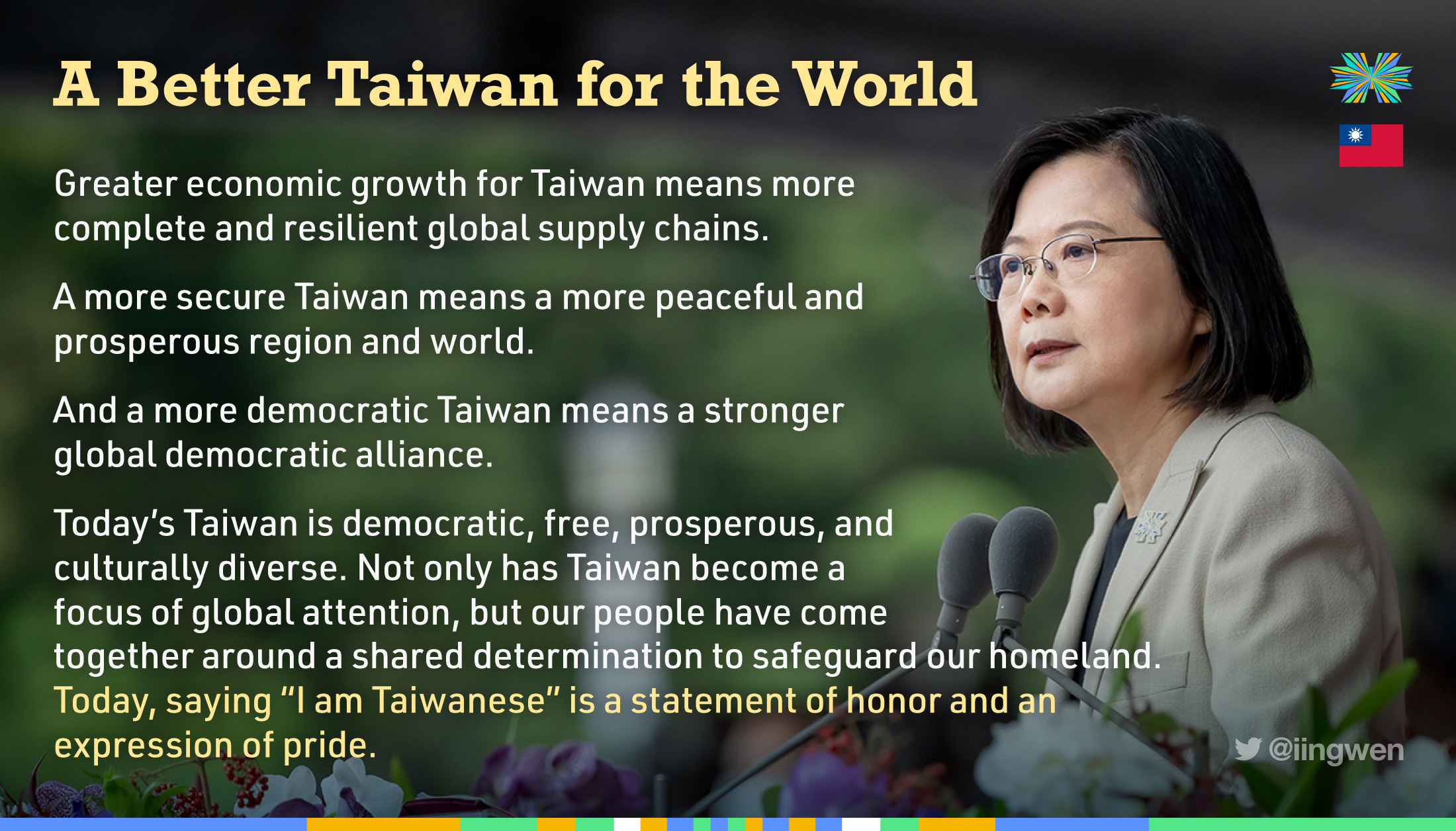
And I know this is difficult to swallow given concerted China communists and China KMT, and some US academics’ propaganda to vilify the democratically elected president of Taiwan Tsai Ing-wen. Decades from now world history will show that Tsai’s moderate, intricate domestic and foreign compromises are the last plausible opportunity for the China communists and China KMT to have a facesaving option to avoid a wasteful, unwinnable war. Yes, President Tsai has danced around RoC RoC-Taiwan RoC is Taiwan. Her red line is democracy and peace, not having or not having China in the national name – and notice, she has never, ever made pronouncements about the future. Like any good world historian and believer in democracy, she knows that that is a bad habit brought to Taiwan by Chinese authoritarians – to have the arrogance and imperiousness to leave edicts to descendants on what they may or may not do. Democracy, peace, and letting the future citizens of Taiwan democratically and peacefully choose their own path. In an era of narrow ethnonationalism (China CCP and China KMT, plus fascism all over the democratic west), Tsai’s policies are a bulwark for principled democratic values. Would be lovely to see self-styled progressives and enlightened western academics and journalists support this kind of thoughtful policy from President Tsai, both for democracy and for true peace. 29.10.2022

© Taiwan in World History 台灣與世界歷史. This site grants open access for educational and not-for-profit use. Maps and illustrations are borrowed under educational and not-for-profit fair use. If you are the rights holder and prefer to not have your work shared, please email TaiwanWorldHistory (at) Gmail (dot) com and the content will be removed.
Leave a comment

Filed under Taiwan Republic

Bibliography: A Chinese communist invasion to annex Taiwan Republic “imminent”?: Taiwan dispatch, geostrategery, and Taiwan Republic 台灣国 classrooms

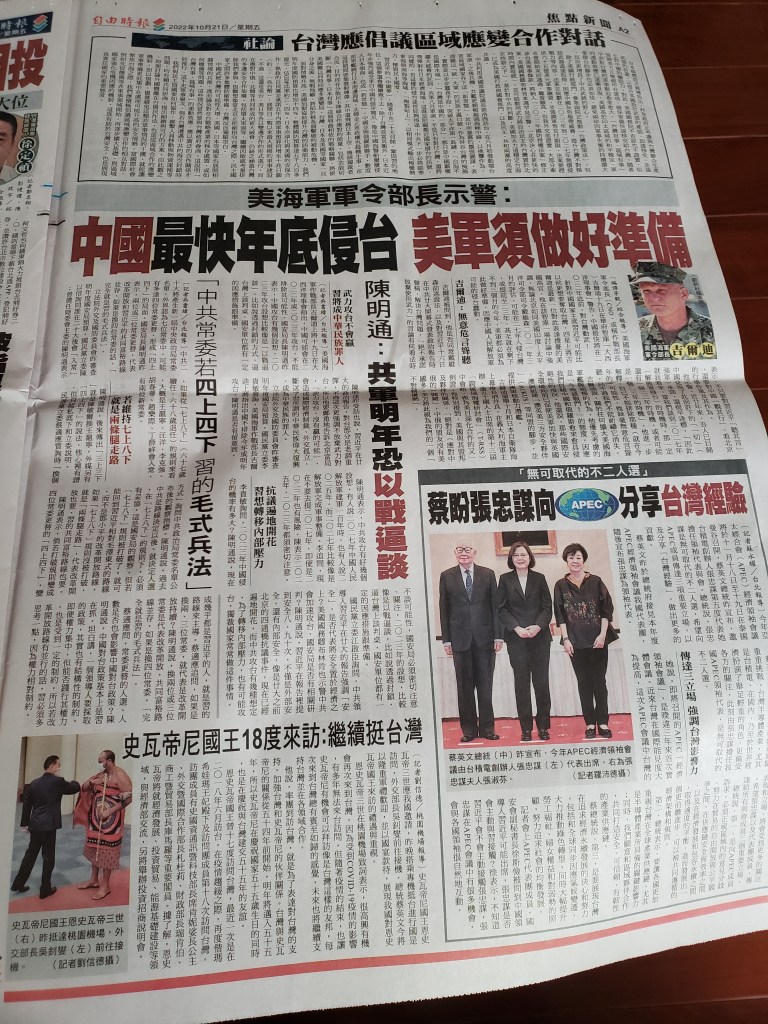
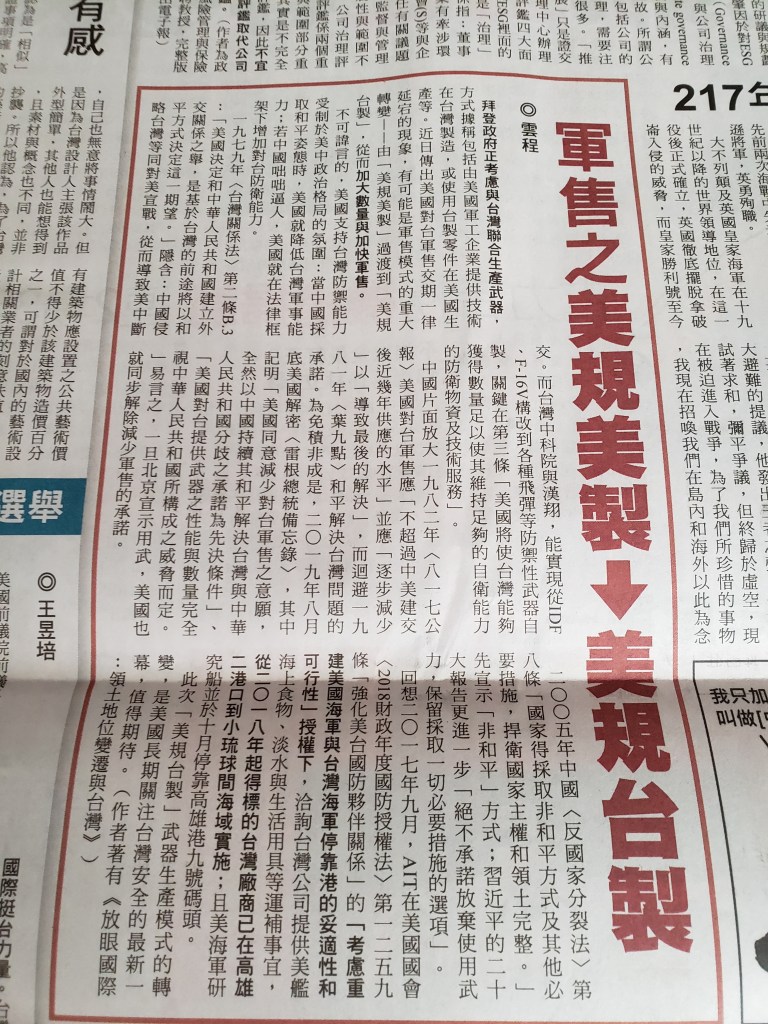
Taipei is now sadly a one traditional newspaper town (traditional as in print). A few observations. Amazing how much Taiwan Republic and the world have changed that the leader of the US Navy speaking of imminent Chinese communist invasion to annex Taiwan is on the second page, not the front. The big news about US-Taiwan Republic co-producing weapons got tucked away, though with a very interesting op-ed.

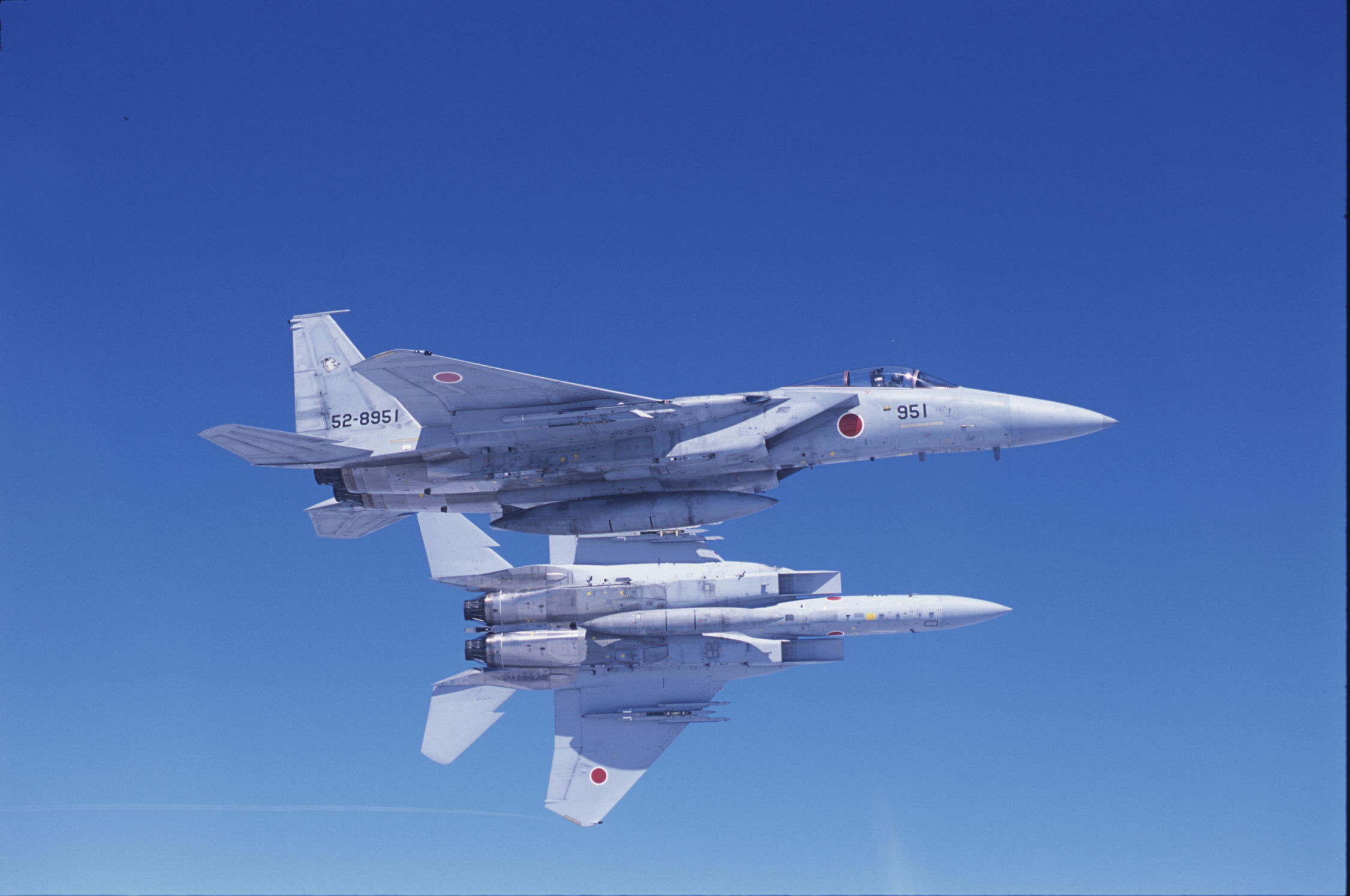
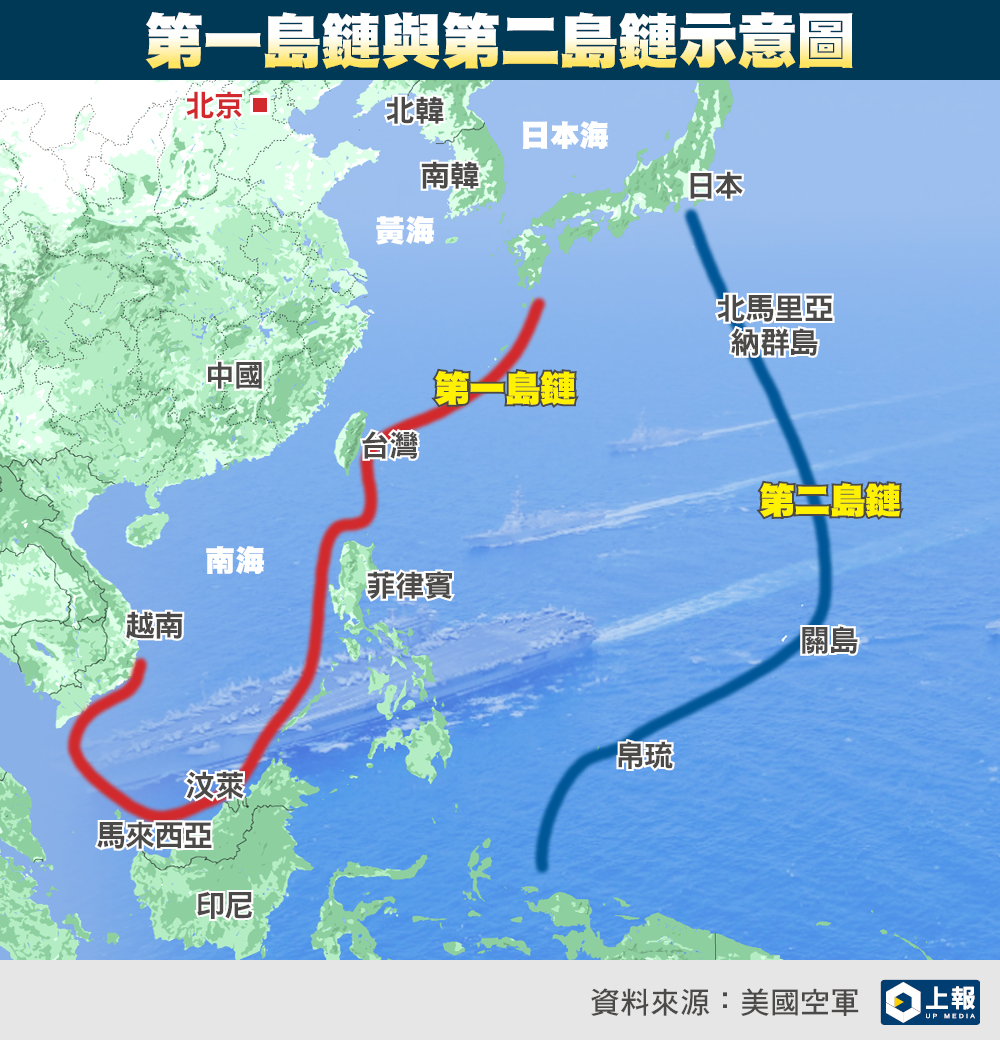
If you asked me a year ago if there would be a war, I would have said 10% yes, 90% no — now watching the body language of American, Taiwanese, Japanese, and European (minus Germans ….) political and military leaders, we are now at even odds, 50-50. In retrospect, when former Prime Minister Abe coaxed and warned the US to reexamine its policy of strategic ambiguity, it was probably not a theoretical argument. Big mistake if you think a war will be Taiwan focused or can be contained to Taiwan — this is not Ukraine/Europe, study the map and you will see why any Chinese communist invasion will become a kinetic world war. This is why it is so critical to pursue military, political, economic, and diplomatic policies now to prevent Beijing from attacking – without forcing Taiwan to surrender its democratic sovereignty.

再提中共欲加速統一 布林肯:可能用脅迫甚至武力[影]

China’s Accelerated Timeline to Take Taiwan Pushing Navy in the Pacific, Says CNO Gilday

China’s plans to annex Taiwan moving ‘much faster’ under Xi, says Blinken

© Taiwan in World History 台灣與世界歷史. This site grants open access for educational and not-for-profit use. Maps and illustrations are borrowed under educational and not-for-profit fair use. If you are the rights holder and prefer to not have your work shared, please email TaiwanWorldHistory (at) Gmail (dot) com and the content will be removed.
Leave a comment

Filed under Taiwan Republic

A significant ‘no-position’ position: ‘No position’ on sovereignty: Ned Price, Taipei Times: Geostrategery and Taiwan Republic 台灣国 classrooms

US Department of State spokesman Ned Price on Monday said that Washington does not take a position on the sovereignty issue between Taiwan and China, a position not often explicitly stated by US officials. Price was responding to a question at a news briefing on whether Washington’s “one China” policy supported the belief that “Taiwan is part of China and that the US respects Chinese territorial integrity and sovereignty over Taiwan.” The US “does not take a position on sovereignty,” Price said, adding that Washington’s “one China” policy has not changed and has been at the crux of the US’ approach to Taiwan since 1979, when the US’ Taiwan Relations Act went into effect.

Several important global and historical contexts usually missing in the general discourse on the Chinese communist problem. First, this “no position” position by the US, clearly stated, takes place a year after President Tsai’s significant democratic sovereignty Taiwan has never been a part of the PRC speech. The US, Japan, and EU did not respond to that speech – they neither endorsed, nor disavowed, President Tsai’s assertion that Taiwan has never been a part of communist China, that China and Taiwan exercise separate sovereignties, and that the future of Taiwan belongs exclusively to the twenty-three million citizens of Taiwan exercising their democratic sovereignty.

Since that speech, the emphasis of the US, Japan, and EU has been on the peaceful ‘status quo’ – meaning, as they see more and more menacing signs of Chinese communist plans for military options to annex Taiwan, the international line for acceptable behavior has been underlined and sharpened.

Finally, a more subtle but critical point. The US may have no “formal” position on Taiwanese sovereignty (and significantly, Price phrased this as sovereignty across the strait, meaning, Chinese communist sovereignty is also up for discussion ….) but the ‘body language’ of the US, Japan, and EU since the 2021 speech by President Tsai has been anything but position-less. The Taiwanese de facto embassy in Washington, DC, and Tokyo and major European capitals have been as active and public as they have been in decades. European and Asian diplomats visit the Taiwanese embassy in DC and Tokyo – Taiwanese diplomats meet regularly with their American, Japanese, and European counterparts across the globe. One may call all of this “unofficial” and “no position” and “no change in policy” all one wishes – what is one to make of all of this? A peaceful status quo marks the Chinese communist military option as a catastrophic international incident. No position on sovereignty saves a little bit of face for the Chinese communists – incidentally, President Tsai convincing her supporters to tolerate, for now, “RoC” does the same – while the US, Japan, and the EU in behavior push interactions with Taiwan up to the edge of all-but-formal-recognition.

© Taiwan in World History 台灣與世界歷史. This site grants open access for educational and not-for-profit use. Maps and illustrations are borrowed under educational and not-for-profit fair use. If you are the rights holder and prefer to not have your work shared, please email TaiwanWorldHistory (at) Gmail (dot) com and the content will be removed.
Leave a comment

Filed under Taiwan Republic

Taiwan and the global maritime empire: World history and geostrategery classrooms

Signal and noise, forest and trees. Many over-the-top reports about Chinese communist blockades and missiles and jet fighters around Taiwan Republic. Related to my earlier post about the nature of Taiwanese democratization and its resilience, compared to the 1996 Chinese communist crisis, this time Taiwan Republic is far more democratic, diverse, and less reliant on a centralized party-state. This is the same as the unruly democracy in Ukraine that confounded and surprised the invading Soviet Red Army and western experts. Imperialists, western or not, are always confounded when peasants have their own ideas – and are willing to fight for them.

Rather than being led by the western press and think tanks passing on Chinese communist scary talking points, and staring only at Speaker Pelosi’s visit or these Chinese communist military intimidations, none of what’s been happening makes any sense without understanding the nature of global shipping. It is not that Taiwan is unique or important per se, but that Taiwan is one of many, many global maritime chokepoints in the Chinese communist world war against the maritime global order imposed by the US Navy. From 1300 AD to now we have lived in an era of global maritime empires. Each leading maritime imperial power has had unique takes on how this empire building ought to proceed. But they ALL share a core principle – a ‘rules-based’ world order and a ‘free and open maritime environment’ that is to serve the global movements of goods, services, and labor. Anything, ANYTHING (and anyone) that interferes with this principle is pummeled.

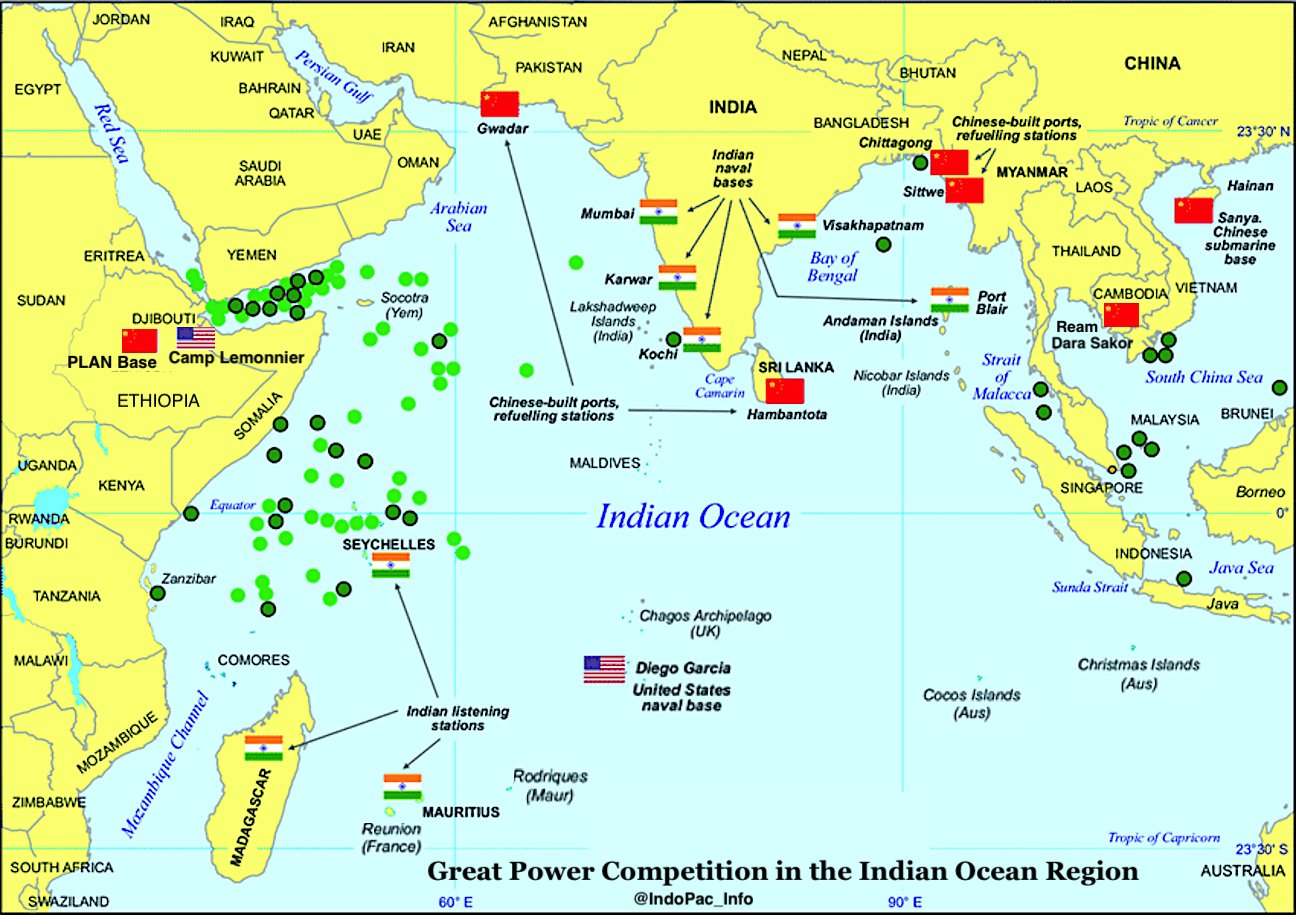
The revival of the Chinese communist economy from 1980 to 2022 owes largely to this global maritime imperial order imposed by the US Navy. But as the Chinese communists ascend, and the US stalled or declined, this Globalization 1.0 world order frayed. This is why while it is important to study the Taiwan case, not connecting Taiwan to many many other global cases misses the central point – the Chinese communist navy bases in East Africa, Mideast, South Asia, and Southeast Asia. Chinese communists claimed the entirety of the South and East Seas. Chinese communists recently declared the Taiwan Strait as Chinese territorial water, functionally choking off critical supplies for Japan and Korea. Chinese communist military expansions into the south Pacific. Chinese communist “corporations” buying major global shipping harbors – and shares of the Panama and Suez canals. The main point is that this present Chinese communist crisis over Taiwan Republic is not occurring in isolation – and all of them are related to a long-standing effort by the Chinese communists to subvert the maritime empire created and led by the US Navy.

Once we understand the historical and global context, then it is easier to guess what the US Navy, Japanese Navy, and NATO navies will do if the Chinese communists come anywhere near a blockade of the Taiwan Republic. And no of course this is not about friendship. It is not even about democracy though it really doesn’t hurt. It’s actually not even about dollars and cents per se. A global maritime imperial order requires steadfast enforcement of precedence. The two ‘recent’ historical precedents I can think of are the Libyan attempt to claim the tiny, far less economically important than the Taiwan Strait Gulf of Sidra, as their own – the US Navy showed up in less than a day and pummeled the Libyan military. And the Iranian attempt to blockade the opening to the Pershing Gulf – US and allied navies showed up immediately and annihilated the Iranian navy. 3.8.2022

© Taiwan in World History 台灣與世界歷史. This site grants open access for educational and not-for-profit use. Maps and illustrations are borrowed under educational and not-for-profit fair use. If you are the rights holder and prefer to not have your work shared, please email TaiwanWorldHistory (at) Gmail (dot) com and the content will be removed.
Leave a comment

Filed under Taiwan Republic

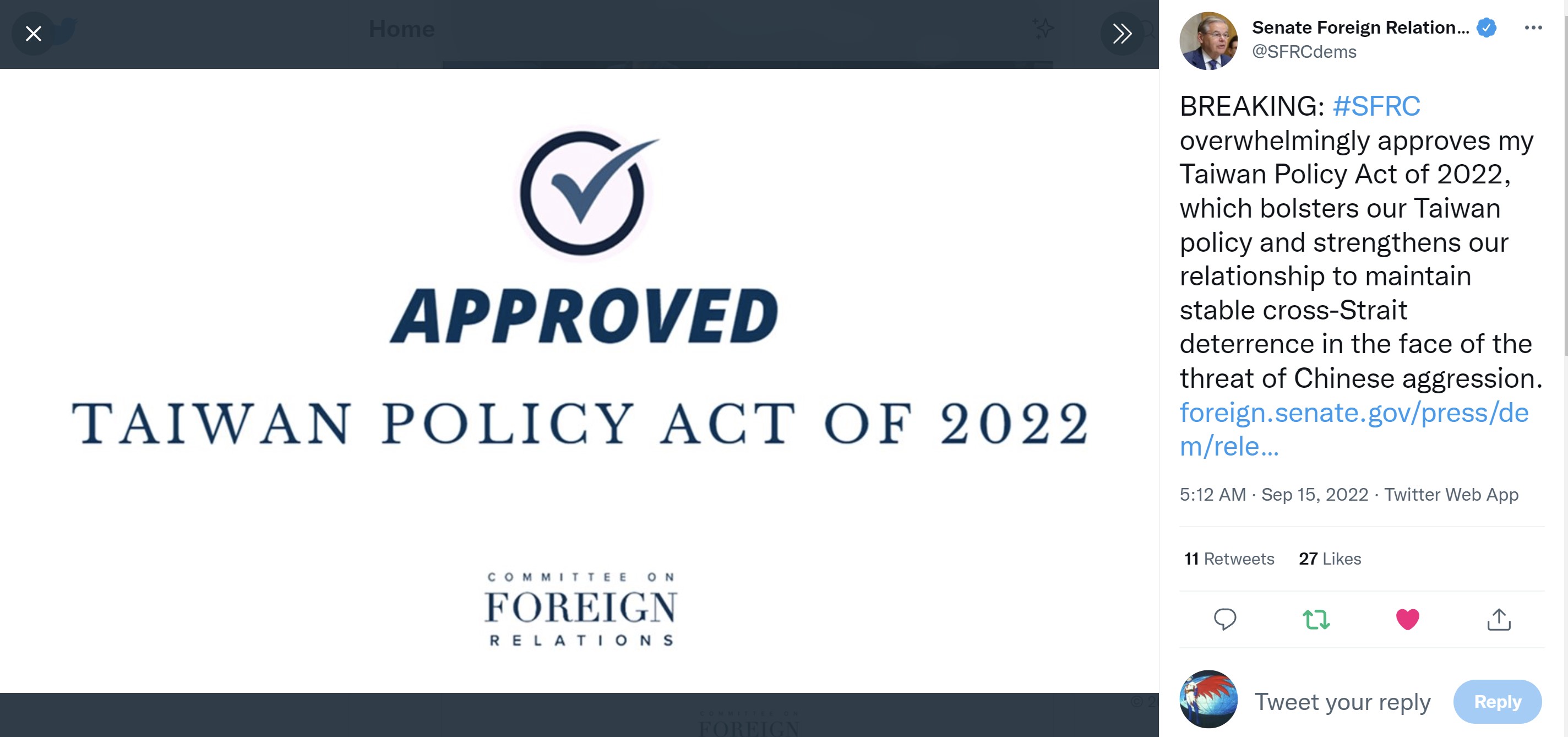
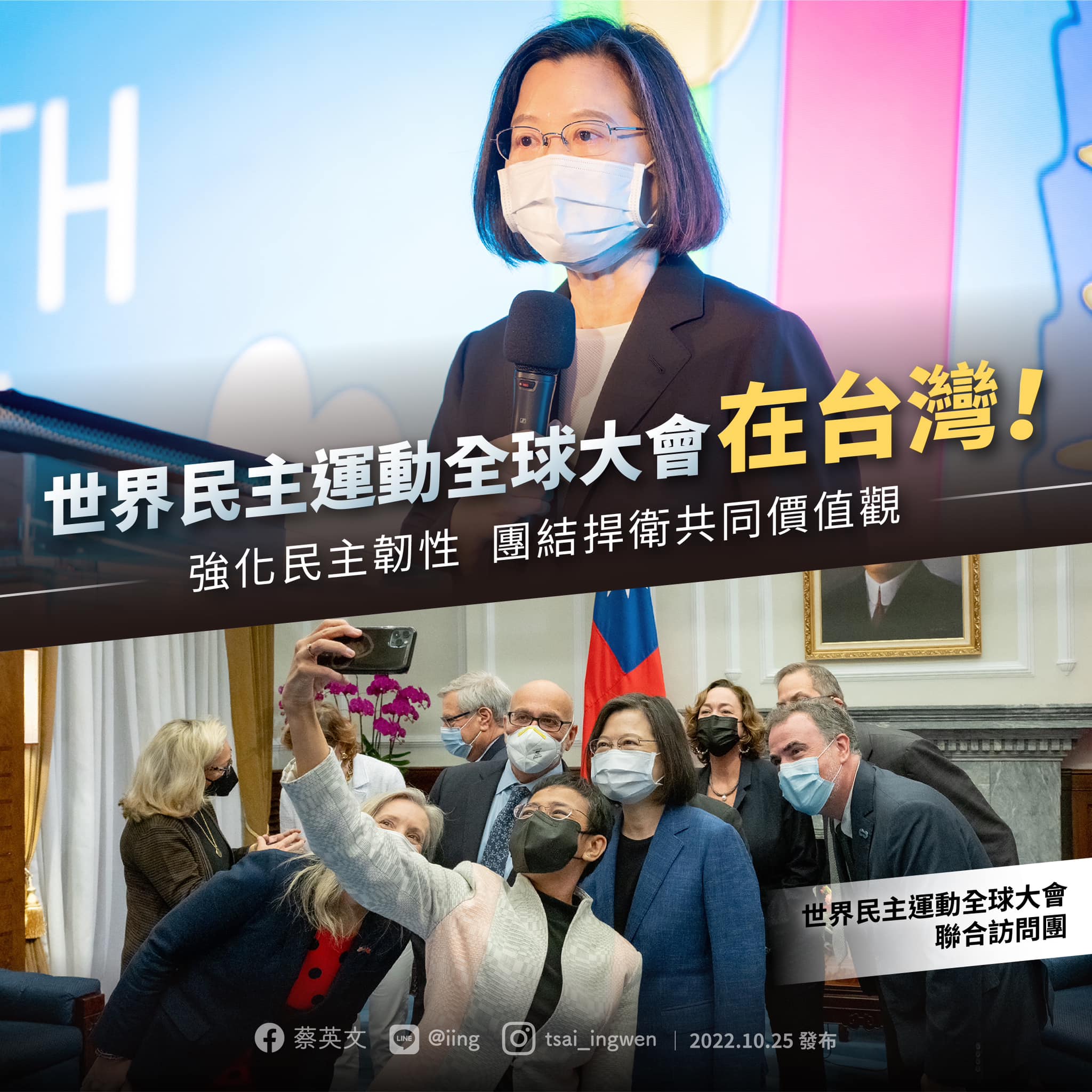
Deterring a Chinese war of annexation with the Taiwan Policy Act of 2022: Geostrategery and Taiwan Republic 台灣国 classrooms

When you install an alarm system for your home are you “provoking” and “escalating” against your neighbor? Only if one believes your neighbors have the right to access your home. The simple but clearest way to think about Taiwan Republic and Ukraine.

Global studies-information warfare pro tip: think of the narratives generated by Moscow and its echo chambers in western academia, media, think tanks, and officialdom against democratic Ukraine (It’s about NATO, the pandemic made Putin crazy, we need offramps and golden bridges for Moscow, de-escalation but only by Ukrainians conceding land and democratic sovereignty …. Nuclear war!); and the propaganda generated by the Chinese communists, their amen corners in western academia, media, think tanks against Speaker Pelosi’s routine visit to Taiwan Republic (The Fourth Taiwan Strait Crisis, dictator Xi’s fragile ego and coronation as dictator for life, apparently someone in the White House has a Chinese Communist farmer’s almanac and it shows American officials may not visit Taiwan on “PLA Day,” don’t forget “face”!) as global information warfare dress rehearsals. Then understand the “Taiwan Policy Act of 2022 will raise tension/anger the snowflakey Chinese/nucular war etc etc” hot takes coming from western experts in this context.

I have written about the Taiwan Policy Act so will not repeat here This should have been done during the 1990s. Think of the TPA as a decades late updating of the Taiwan Relations Act, TRA 2.0. As to angering the Chinese — wake me up when they are not hysterical about something, that would be the real news/moment to notice. The fallacy held by many in the west is also the key lesson that remains unlearned from the west’s deadly mistakes in Ukraine. While we should never purposely provoke a dictatorship, we should also remain clear-eyed that a dictatorship’s choices are often not tied to actions chosen by global democracies. Did the west ‘provoke’ the Chinese communist genocide against Tibet? Or the genocide against East Turkestan? Was the Putin invasion of Ukraine provoked by anyone in DC or Kyiv (I know, to some in the west, by Ukrainians and Taiwanese merely daring to democratically elect their leaders and have an opinion about their own future they are ‘provocations’ ….) So we return to the key issue for all frontline democracies – not lofty jargon and theories which did nothing to prevent the loss of lives and suffering in Ukraine and elsewhere – How do democracies prevent-deter war launched by dictators without capitulation and surrendering one’s democratic sovereignty? Taiwan Policy Act of 2022 is an important step in clarifying to Beijing that an invasion to annex Taiwan will be treated by the global democracies as an international incident, not a domestic affair. It should raise the price for war for Beijing, hopefully, high enough cost to prevent a war of annexation.

台灣政策法案出委員會 美國務院感謝國會力挺台 https://news.ltn.com.tw/news/world/breakingnews/4059671

Taiwan Policy Act would help Taiwan boost defense more swiftly: Scholars https://focustaiwan.tw/politics/202209150018

US’ Taiwan bill adds new arms spending https://www.taipeitimes.com/News/front/archives/2022/09/16/2003785398

© Taiwan in World History 台灣與世界歷史. This site grants open access for educational and not-for-profit use. Maps and illustrations are borrowed under educational and not-for-profit fair use. If you are the rights holder and prefer to not have your work shared, please email TaiwanWorldHistory (at) Gmail (dot) com and the content will be removed.
Leave a comment

Filed under Uncategorized

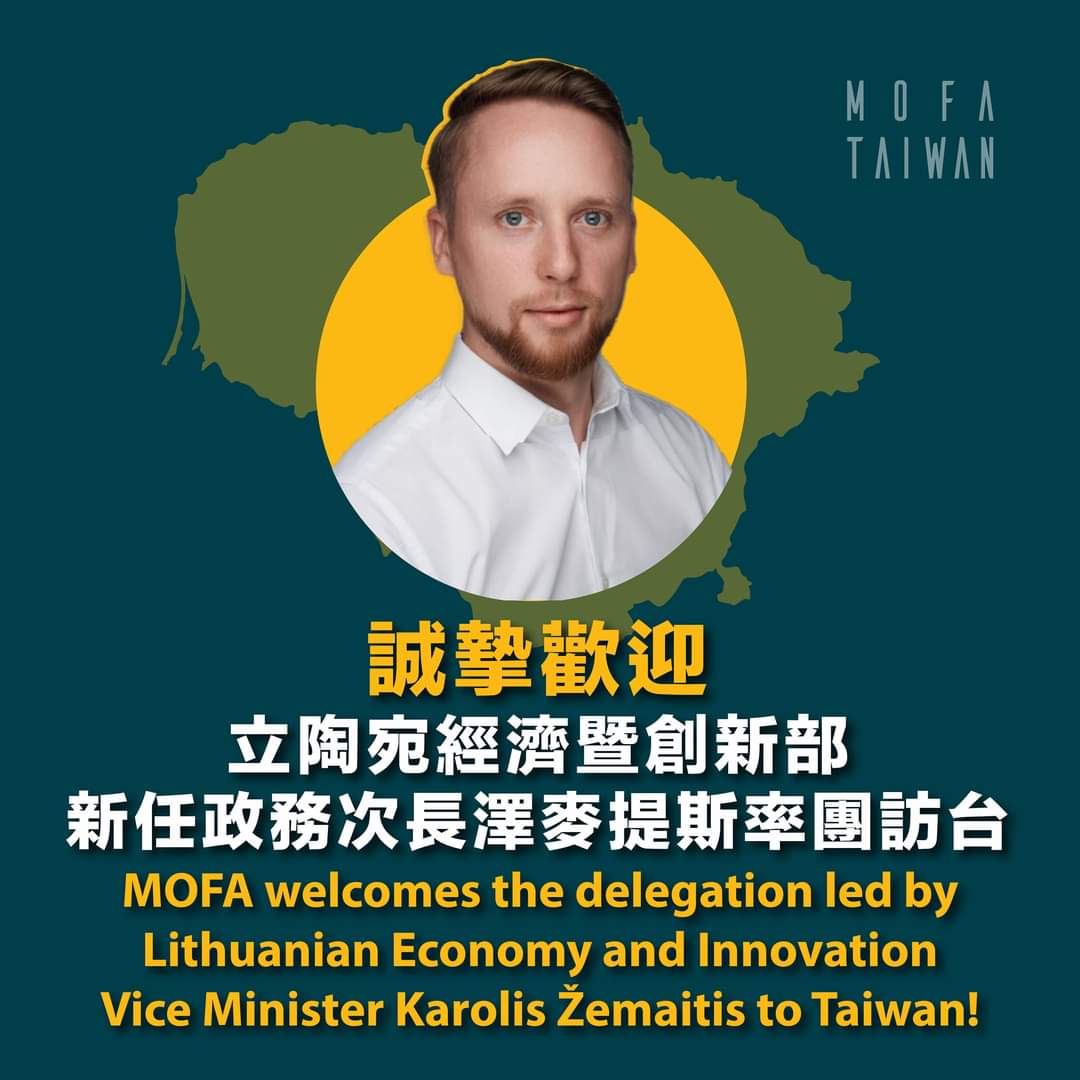
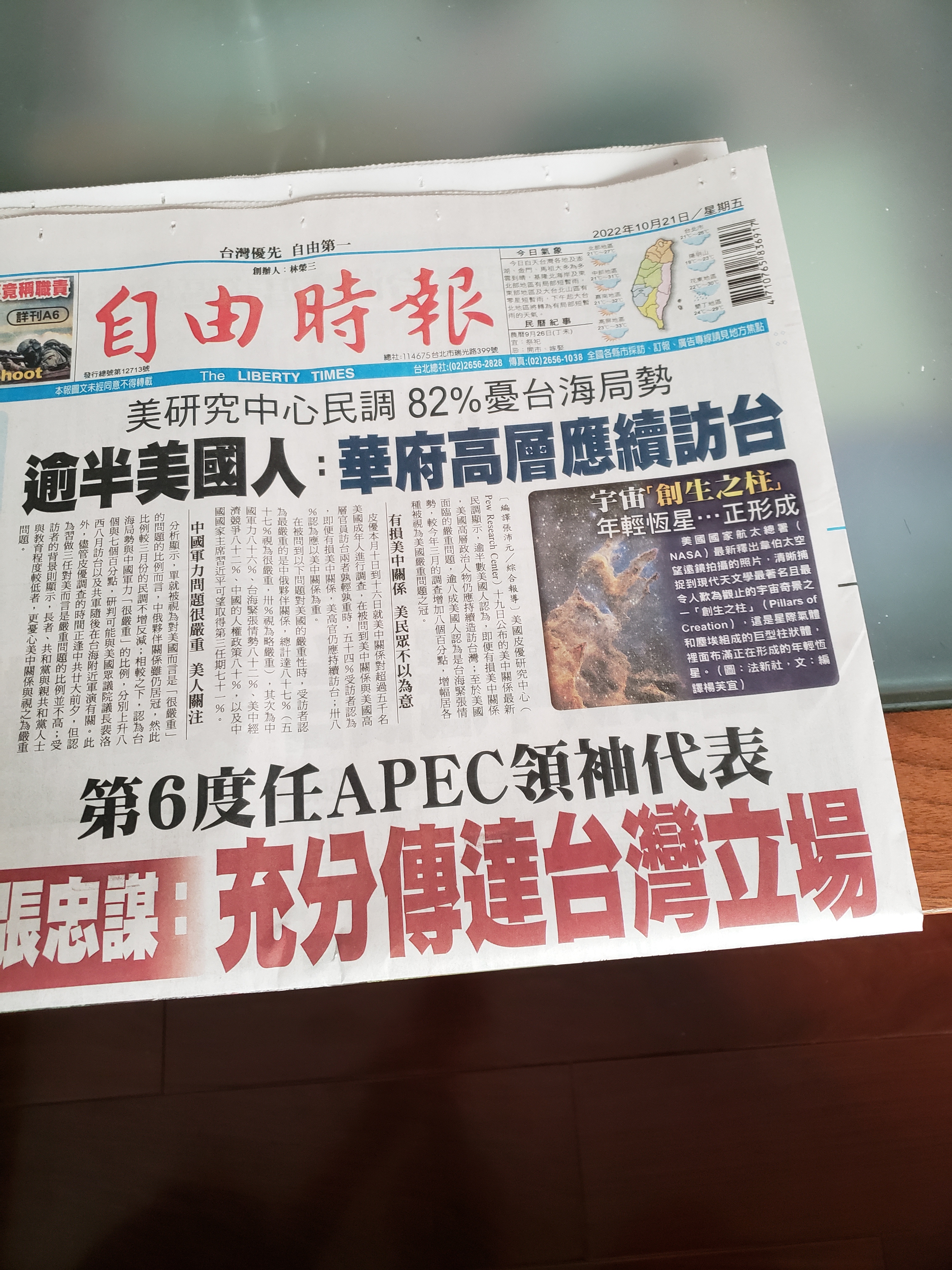
Internationalizing Taiwan to deter a Chinese war of annexation – “Lithuanian office opens in Taipei,” Taipei Times: Geostrategery and Taiwan Republic 台灣国 classrooms

Lithuania’s first representative to Taiwan, Paulius Lukauskas, on Monday applied to the Ministry of Foreign Affairs for diplomatic documentation, marking the official opening of the Lithuanian Trade Representative Office in Taipei, the ministry said yesterday …. After Taiwan established the Taiwanese Representative Office in Lithuania in Vilnius in November last year, the Lithuanian government said it would also establish an office in Taiwan, Department of European Affairs Director-General Remus Chen (陳立國) said …. Lukauskas arrived in Taiwan earlier this month and on Monday requested that the ministry issue documentation recognizing him as a foreign dignitary, Chen said.

Recent breakthroughs in Taiwan Republic’s foreign relations, Baltics and Eastern Europe, Somaliland, and the South Pacific are vital to deter a Chinese communist war of annexation. This is why the arguments over “symbolic” versus “substantive” are, much like other recurring arguments over hawks or doves, realists or unrealistic, beside the point. Will Lithuania ever play a dominant role in Taiwan’s GDP? Probably not. Yet Lithuania represents a sea change in American, Japanese, and European attitudes toward the threat posed by the Chinese Communist Party upon the world. Lithuania and Somaliland also represent creative re-thinking on how best to recognize Taiwan’s democratic sovereignty, without full breaks with the Chinese communists. To edge towards internationalizing Taiwan as much as possible, so as to prevent Beijing and its allies in Taiwan and the west from claiming that an invasion is a “domestic issue.” This is why it is important for the US and Japan to think more broadly about the threats posed by Beijing, and how best to prevent a war. Integrating Taiwan into the US-Japan-EU-led global economic, cultural, educational, and technological systems will go a long way in doing so. A more proactive approach by the US to export its Taiwan Relations Act+ model to like-minded allies will also undercut any efforts by the Chinese communists, its allies in Taiwan, and the west, from sabotaging international efforts to prevent a Chinese invasion of annexation.

© Taiwan in World History 台灣與世界歷史. This site grants open access for educational and not-for-profit use. Maps and illustrations are borrowed under educational and not-for-profit fair use. If you are the rights holder and prefer to not have your work shared, please email TaiwanWorldHistory (at) Gmail (dot) com and the content will be removed.
Leave a comment

Filed under Uncategorized