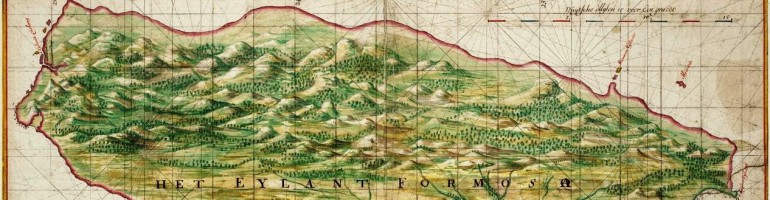

How does one defend democratic Taiwan from an all-domain war against its democratic sovereignty?
Over a decade ago Taiwan Republic’s first democratically elected president Lee Teng-hui declared the “special state to state” relationship between Taiwan and communist China. A few years ago Taiwan’s third democratically elected president Tsai Ing-wen clarified that position by stipulating democratic “RoC Taiwan” – with twenty-three million citizens – as the status quo. Tsai’s successor, democratically elected President William Lai deepened the position not so much as the historical pissing match noted by many media, but as a message to anti-democratic and anti-Taiwan forces outside and inside Taiwan that the People’s Republic of China has zero historical or legal claims to citizens of democratic Taiwan.
President Tsai’s remarkable eight years have shaped a stable domestic governing majority on the premise of the democratic sovereignty of “RoC Taiwan” as the status quo. A domestic consensus that’s acceptable to Taiwan’s allies in the Free World. The Chinese communists, with their allies in Taiwan and among Western academia, have launched a new wave of assault against democratic Taiwan.
The malevolent global and domestic anti-democracy and anti-Taiwan forces President Lai is facing are in Beijing, in Taipei, they are also the Western imperialist think tanks and newspapers. The China KMT and the China People’s Party are both anti-democracy and anti-Taiwan sovereignty political parties that are serving as the vanguard of the Chinese communist war to subvert Taiwan’s democratic sovereignty. The echoes one hears from some Western imperialist think tanks, columnists, and Chinese communist mouthpieces inside Taiwan, are all trying to return Taiwan to the status of “troublemaker” – they argue: that Chinese imperialism and militarism are not the problem, Taiwan’s democratic sovereignty is the problem.
Democratically elected President Lai must ask the Chinese communists, their proxies in Taiwan, and Western imperialist scholars and journalists – on what basis does the Chinese Communist Party claim the right to govern the People’s Republic of China? Taiwan’s democratic sovereignty is legitimate – derived from one citizen one vote – how do the Chinese communists and dictator Xi derive their legitimacy to claim sovereignty?
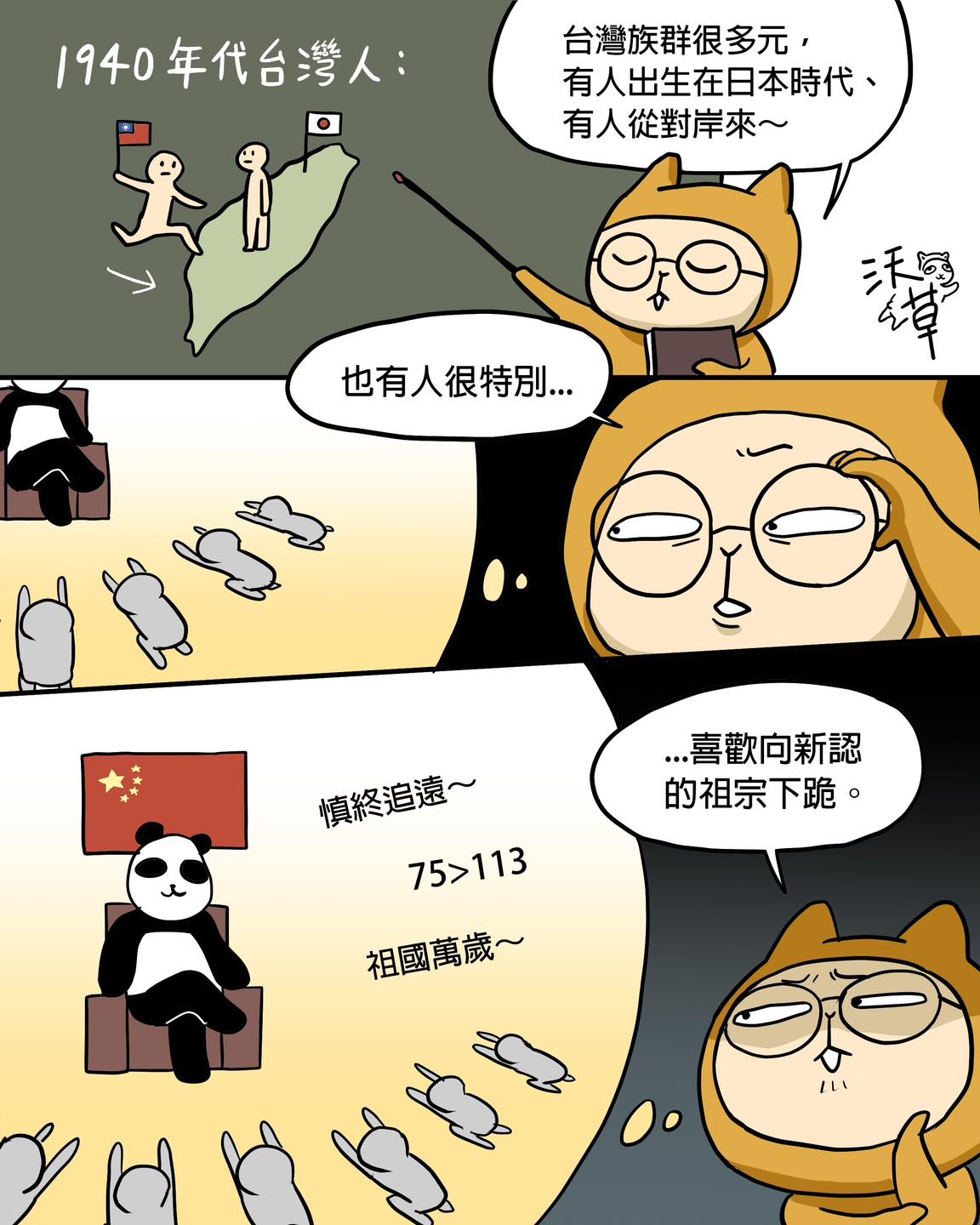
President Lai is staking out clear national boundaries around Taiwan’s democratic sovereignty, while doing so in a way acceptable to the US, Japan, and European democracies. I have written previously that if one studies the China KMT’s former chair Ma Ying-jeou’s statements during his latest visit to communist China, the only issue he and his refugee party have left to concede is that the “one Chinese national family” he and his party supports is the People’s Republic of China. In this context, President Lai’s remarks make complete sense – for decades now as China KMT’s anti-Taiwan national identity position becomes a permanent electoral minority inside Taiwan, they have defended a political paradox – to advocate as super RoC patriots inside Taiwan, while refusing to speak of the RoC whenever they kowtow to communist China. Presidents Tsai and Lai’s embrace of RoC dismantles that China KMT grift. The fact that no party has a political future in democratic Taiwan when they advocate surrendering to the Chinese communists may also be why the China KMT and the China People’s Party have moved from passively refusing to acknowledge Taiwan’s democratic sovereignty to attempting to use their paper-thin majority in the Parliament to destroy Taiwan’s democracy. As the Chinese communists have done in Hong Kong, as with many cases such as Hungary, Turkey, and Venezuela, anti-democratic forces will use democratic institutions to overcome their electoral unpopularity.
This means President Lai is fighting a multi-front war to preserve Taiwan’s democratic sovereignty – against the Chinese communists, against the Chinese communist proxies inside Taiwan, as well as against naive and/or compromised Western think tanks who still dream that dialogue and engagement with the Chinese communists will lead to a peaceful compromise.
© Taiwan in World History 台灣與世界歷史. This site grants open access for educational and not-for-profit use. Maps and illustrations are borrowed under educational and not-for-profit fair use. If you are the rights holder and prefer not to have your work shared, please email TaiwanWorldHistory (at) Gmail (dot) com and the content will be removed.







 Taiwan in World History (台灣與世界歷史)