While the headlines and focus will be about the amount of US military aid to Taiwan Republic, and the weapon systems transferred, to me this is the most significant breakthrough in this year’s NDAA. Ten American officials per year to Taiwan is not significant – the mental-psychological breakthrough on the part of DC – the real pivot to the Indo-Pacific, understanding the China threat, and realizing the nature of the Chinese threats against democratic Taiwan – those are decades in the making. And one suspects once the breakthrough occurs, more will (and should) follow.
Even just the simple yet monumental step of normalizing the interactions between these two democratically elected national governments of America and Taiwan – official to official, bureaucracy to bureaucracy.
If the billions in direct military aid authorized by the NDAA are funded, and if the Biden administration does not waste more time fighting Congress, then I would expect more American advisors and officials to follow that money. I cannot find a previous case where Congress authorized large military foreign aid without request from the foreign party – nor was such an amount being transferred without direct US involvement (advisors, etc.) Because humans always refer to the most recent historical experience as a template, I have read many articles referring back to the US-RoC Mutual Defense Treaty/US Advisor era. Times change, the nature of the governments are different, and characteristics of modern warfare shift – the era of large contingents of US and Japanese troops stationed in Taiwan makes little sense. Rapidly rotating in units for realistic training and coordination – advisors in key units, teams from the US and Japan to help locate and fix weakest links in Taiwanese strategic and tactical planning, intelligence and counterintelligence, logistics, civil defense, sabotage, and infiltration, etc., in 2023 these will make more difference to the security of the Indo-Pacific and countering the China threat than anything else.
Have we ever had a case in American history where a designated aid nation did not request aid, and US Congress generously, voluntarily provide such a massive amount? And instead of debating whether this is good policy, perhaps the first prudent thing to do is to ponder what is going on in this moment of world history that such an unusual move has been taken.
Novices and bad actors will focus on the dollar amount, while experts and those with a sincere desire to protect democracy in the Indo-pacific will notice that the direct military aid is only the tip of a very large spear against the China threat — technology, education, trade, democracy, law enforcement, intelligence, and counterintelligence, etc. are other realms where this global struggle are occurring.
The most important part of the NDAA is Congress forcing a lumbering executive branch to pivot to face the China threat for real — i.e., increasing production of critical munitions, money for base protection, a stockpile of critical munitions in the region, etc. Novices and bad actors will focus on allegedly “provoking” the Chinese communists and rising tensions even though the communists are experts at self-provocation — they will fuss about budget and deficit, and they will spread lies that the Taiwanese prefer to surrender. Experts from this point on will avoid focusing on weapons sold and transferred, and see if Congress is able to force the executive branch and the Pentagon to do real interoperability — i.e., to abandon the idiocy of Jimmy Carter and invite the Taiwanese military to participate in US-Japan-Australian-NATO exercises. I wonder, and this is speculation on my part – would the US government voluntarily grant this massive amount of foreign military aid without sending American military advisors? Taiwan’s archaic and dated military leaders require a push and a nudge re: modern warfare – rapid pace, technology-centered, intelligence-counterintelligence, modern logistics, and creativity. What the Taiwan military leadership requires most, and perhaps this is where American, Japanese, and European advisors can best provide, is the lesson of Ukraine – a national military divorced from the democracy of its nation cannot and will not fight. Taiwan’s national security establishment requires democratization so that it can absorb and adhere to the strengths of the democracy it is suppose to protect.
I am against large US military presence in Taiwan, having nothing to do with the easily hurt feelings of the Chinese in China and the Chinese in Taiwan — but that it makes little tactical and strategery sense. Quick and thoughtful public and routinized rotations of American and Japanese units in and out of Taiwan to work on interoperability and training, with a small officer-advisor corp in Taiwan as advisors to the Ministry of National Defense and Taiwan’s democratically elected civilian leaders, and massive munitions and platforms depot in the area ready for the fight immediately are hopefully enough to deter the communists.
Now that the American aid is here, Taiwan must increase its annual war budget by the same amount — we have to increase our war budget so that our American congressional allies will have cover from domestic bad actors, united front fellow travelers. All multinational policies regarding the China threat is to prevent Beijing from even considering starting a war of annexation against Taiwan.
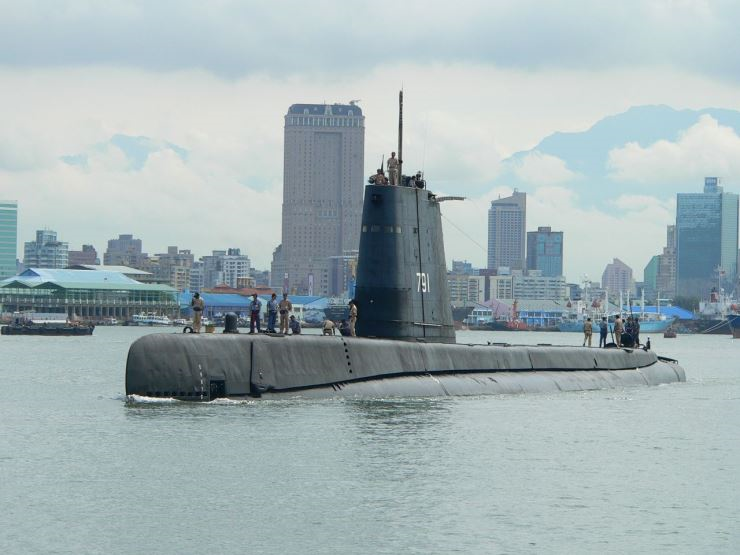
A history of why the Taiwanese Navy, in 2022, is still using two World War Two era GUPPY II conventional submarines would be a fascinating book – covering dictator Chiang Kai-shek’s delusional dreams of recovering his fictional China, to US Cold War policies, to misguided US policies on offensive versus defensive weapons, to the complications of Taiwanese domestic politics during the democracy era, that one of the two major political parties – the China KMT – has a national identity crisis (and hence, blocked the conventional submarine project for a decade.)
For a leaky Taiwanese national security scene, I have been impressed with how tightly the Tsai administration has held information on this ‘domestic’ submarine project. The fewer leaks the better, not just for the submarines project, but a sign that systemic problems in the national security apparatus are being fixed. While there were rumors of South Korean, or maybe Japanese involvement, recent reports indicate that the US and UK are the primary actors – with the recent British parliamentarians visiting Taipei indicating that discussions were held re: the submarines most interesting. A kind of soft AUKUS+ emerging – nuclear submarines for Australia and maybe Japan, conventional submarines for Taiwan.
What remains missing, I think, is a discussion-debate inside Taiwan, and then between Taiwan and its democratic allies, on an overall strategy to deter and defeat the China threat. Are eight submarines enough? Should they have offensive cruise missile capabilities? Are the submarines designed to operate with CSIST’s mini/unmanned underwater vehicles? Are they designed with interoperability with the Japanese and American Navy?
After decades of studying elections in the US, Europe, and Asia, a few observations and thoughts.
One. Never criticize/review citizens-voters. The easiest path for the losing party is to criticize the voters-citizens, and the party that falls prey to that temptation will continue to lose. Democracy is imperfect and messy, but its beauty is that what’s right and wrong is decided by citizens – full stop, end of discussion. I am unhappy with what the voters chose for the 2022 Taiwan local elections, but it is what it is. DPP leaders must examine exit polling and other data to improve their performance in future elections. This defeat is on them, not the voters.
Two. Refrain from reviewing/criticizing “the media.” Likewise, to criticize the media landscape and reporting. Taiwan’s journalism is deeply flawed – a legacy of its China KMT authoritarian era, communist infiltration, too many outlets controlled by conglomerates, and the unwillingness of media companies to pay journalists decent wages. I am not uncritical of Taiwanese and western journalists but related to the point above, the losing party will continue to lose if they focus on journalists and not themselves.
Three. I am a supporter and admirer of President Tsai. During the democratic era, out of its three elected presidents, Lee, Chen, and Tsai, Tsai has been the best national security president. For domestic affairs and electoral politics President Tsai and her team have been far less impressive – they are no match for President Chen’s insight into the mechanics of local politics, nor President Lee’s charisma and retail electioneering. In contrast, President Tsai and her team are too Taipei-centered, too reliant on a particular style of soft Taiwan soap-opera-ish online storytelling – these may be useful towards a particular subset of urban educated younger voters, but clearly not useful for nationwide local elections.
Four. Misreading past success and failure. I am astonished that after the DPP drubbings in the 2018 local elections the national party failed to radically rethink its local electioneering strategy – and in fact, I think they misread the 2020 national, presidential election victory as a sign that the DPP already overcame the previous challenge – institutional, attitudinal, structural, towards local elections. Think of this as the DPP’s version of a common fallacy by some western journalists and academics, over and misreadings of what local elections actually mean – either in the US, or Taiwan.
Five. Elections require storytelling and a narrative strategery. For the DPP this 2022 election was story-narrative free – confused, contradictory, grab bag of things from the past. It was passive, confusing, contradictory, and reactive. I am dumbfounded, for example, that they nominated the super competent and likable health minister responsible for protecting Taiwan during this pandemic, and failed to have a clear and prepared strategy to counter the predictable pan-blue/red lies about vaccines and death rates. The focus within the DPP leadership on nominees rather than a coherent story/narrative makes me wonder if the major party factions have moved on to the 2024 nomination fight.
Six. All politics is local, with some peculiar exceptions. I was taught from my very first Political “Science” class that voters do not vote on foreign affairs – voters respond to pocketbook/kitchen table issues. There are exceptions when foreign affairs bleed into domestic tranquility (American War in Vietnam, Global War on Terror and Iraq invasion ….), or when the China KMT nominated a dangerously incompetent candidate in 2020, enough so that citizens decided this is neither the kind of neighborhood nor moment in Taiwanese history to experiment with an unusual candidate. Watching the 2022 DPP election strategy, I failed to hear a consistent series of domestic, local, policy-based narratives – pandemic success could have been rebranded as a harbinger for positive healthcare reforms, success in trade talks with the US and other democracies could have been translated into a vision for transformation local manufacturing, education, R&D, very few words on the perpetual problems of low wages, particularly for young, recent graduates, housing justice for the youth and low-income population, etc, etc. Even the China threat could have been productively built into a clear, consistent web of local, domestic, and future policy visions – and yet this did not occur.
Seven. The unique characteristics of President Tsai and her team. President Tsai’s astonishing success in national security and foreign affairs is rooted in her approach to public affairs – sober, consistent, thoughtful, professorial in its sophistication and boring-ness – all characteristics that are particularly unuseful in domestic politics, particularly local elections. The nominees from DPP are super competent – but unable to control the tempo and seize the narrative. Going back to the super competent Health Minister and nominee for Taipei Dr. Chen – was he even the right nominee? A man who has never run for local offices, without a political-campaign team of his own, to run in one of the nastiest, toughest localities in Taiwan? And if he was to be the the best nominee for the moment, why did the DPP fail to put together a political-campaign team, with the same level of narrative storytelling sophistication it organized during the 2020 election?
Eight. Speed is not our friend and the dangers of over-reading specific episodes. As brave Chinese people protest the Chinese communists all over China I cautioned students from jumping to quick, self-serving conclusions. This is my sense about the 2022 Taiwan local election as well. Is this the pendulum effect? Is this voter fatigue? Are these major factions within the DPP moving onto 2024 prematurely? Are voters seeking an outlet for their frustration with the pandemic? I have noted previously that during the democratic era, President Tsai is the first Taiwanese president who – paws crossed – has maintained relatively high approval ratings and avoided a major protest during her second term. Is this changing? We do not know, but I am certainly watching closely. The simplest conclusive assertion I can share is that this election had little to do with the “cross-straits/communist China/rising tension” issue. It is possible for Taiwanese citizens to seek democratic avenues to express dissatisfaction or to teach a lesson to the ruling party, without it having to do with changing views of the Chinese Communist Party. Maybe even top election managers of the DPP could use that lesson, along with analysts and talking heads, so that we may gain a better, more informative sense of local Taiwanese politics. 29.11.2022
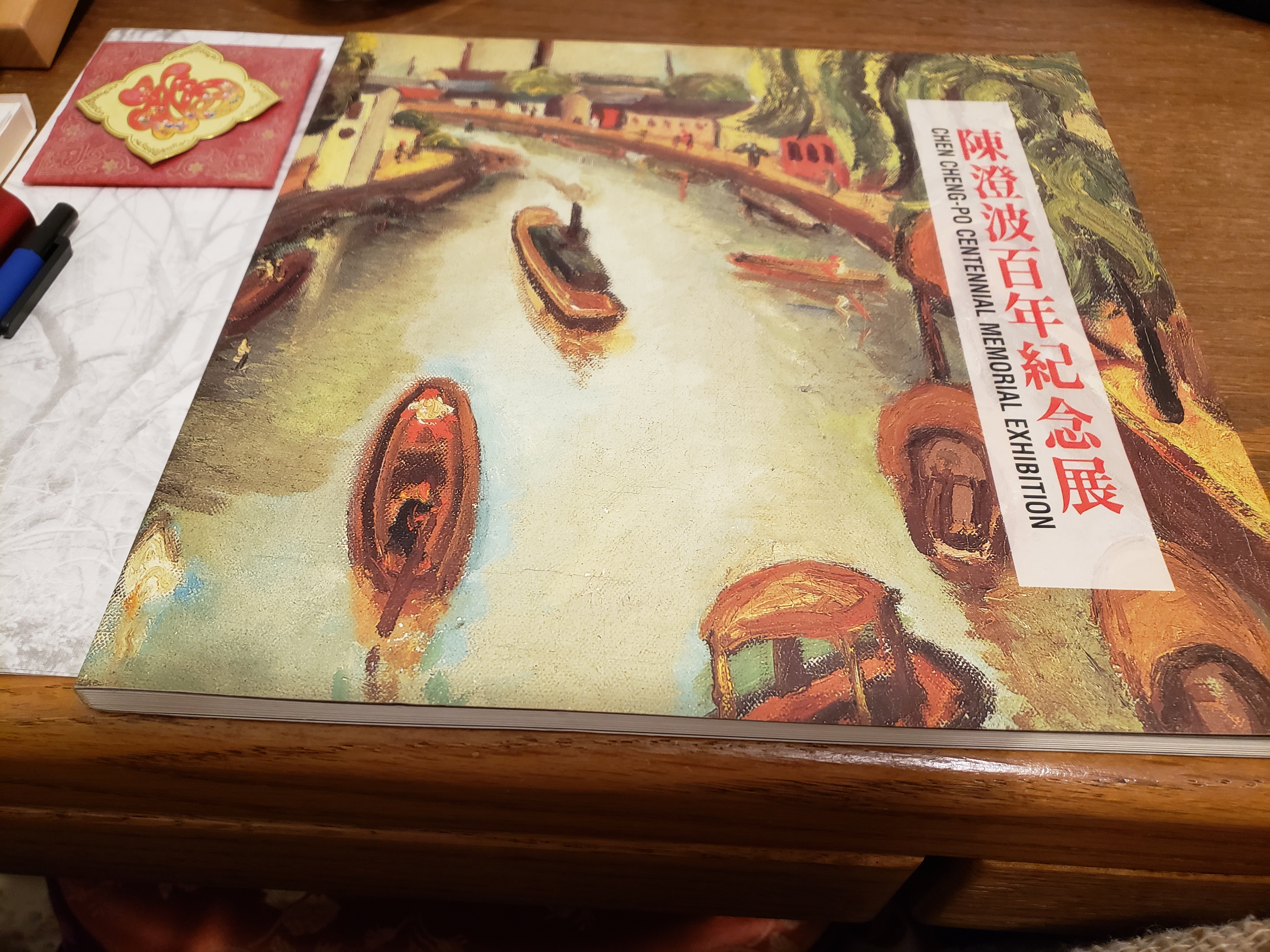
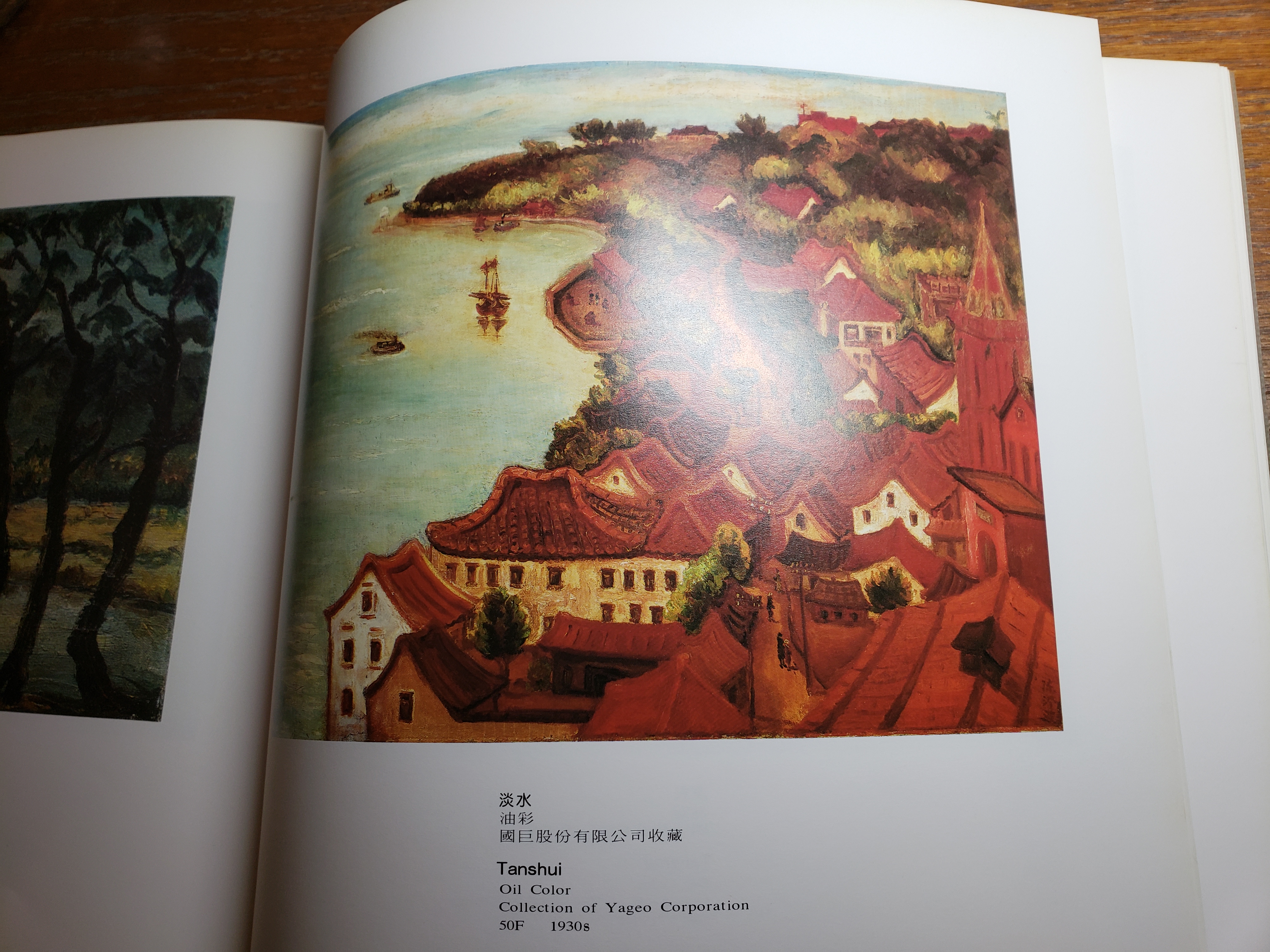
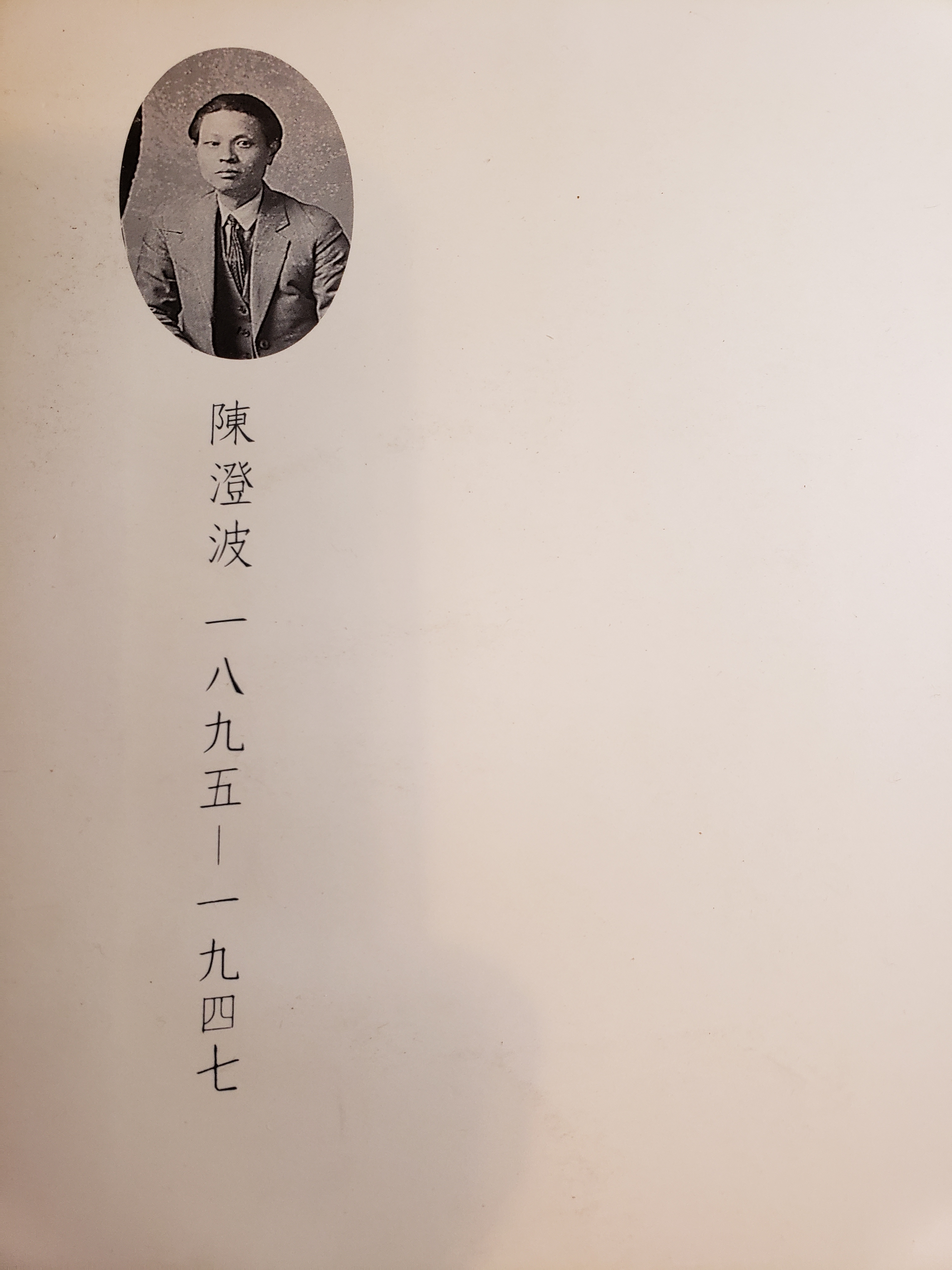
Taiwan Republic dispatch. No one likes losing elections, and I am hyperpartisan when it comes to Taiwanese politics. I do, however, take a world history perspective on the wins and losses — that is, what is the larger, general direction. This is why I turned off the news after last evening’s losses and read this book on Taiwanese artist Chen Cheng-po, educated by the Japanese, murdered by the invading China KMT — his mangled corpse left at Chiayi town square, family members unable to retrieve it, as a show of force for the Chinese invaders. Many of his pieces I love, his painting on Tamsui, one of my favorite northern Taiwan places, is my favorite — it populates my computer background, class slides, and phone screen savers.
It has taken centuries of struggle by Taiwanese forbearers, against enemies foreign and domestic, to get Taiwan Republic to this point of democracy and human rights — and it will be centuries more of tears and sweat to preserve and improve Taiwanese democratic statehood. Human beings always wish for an easier path, I include myself in that camp — so yes we all wish for a “final” victory, a moment when we can all breathe a sigh of relief that the Chinese in China and the Chinese in Taiwan and the western imperialist powers will all leave Taiwanese democracy alone. Not without centuries more of difficult fighting and sacrificing — of using Taiwanese art and literature, anime and manga, food and street fairs, films and documentaries, songs and poems — just as Mr. Chen did here, to put into earthly forms expressions and explanations of this Taiwanese nation that we love. For that love, he was murdered by the Chinese invaders.
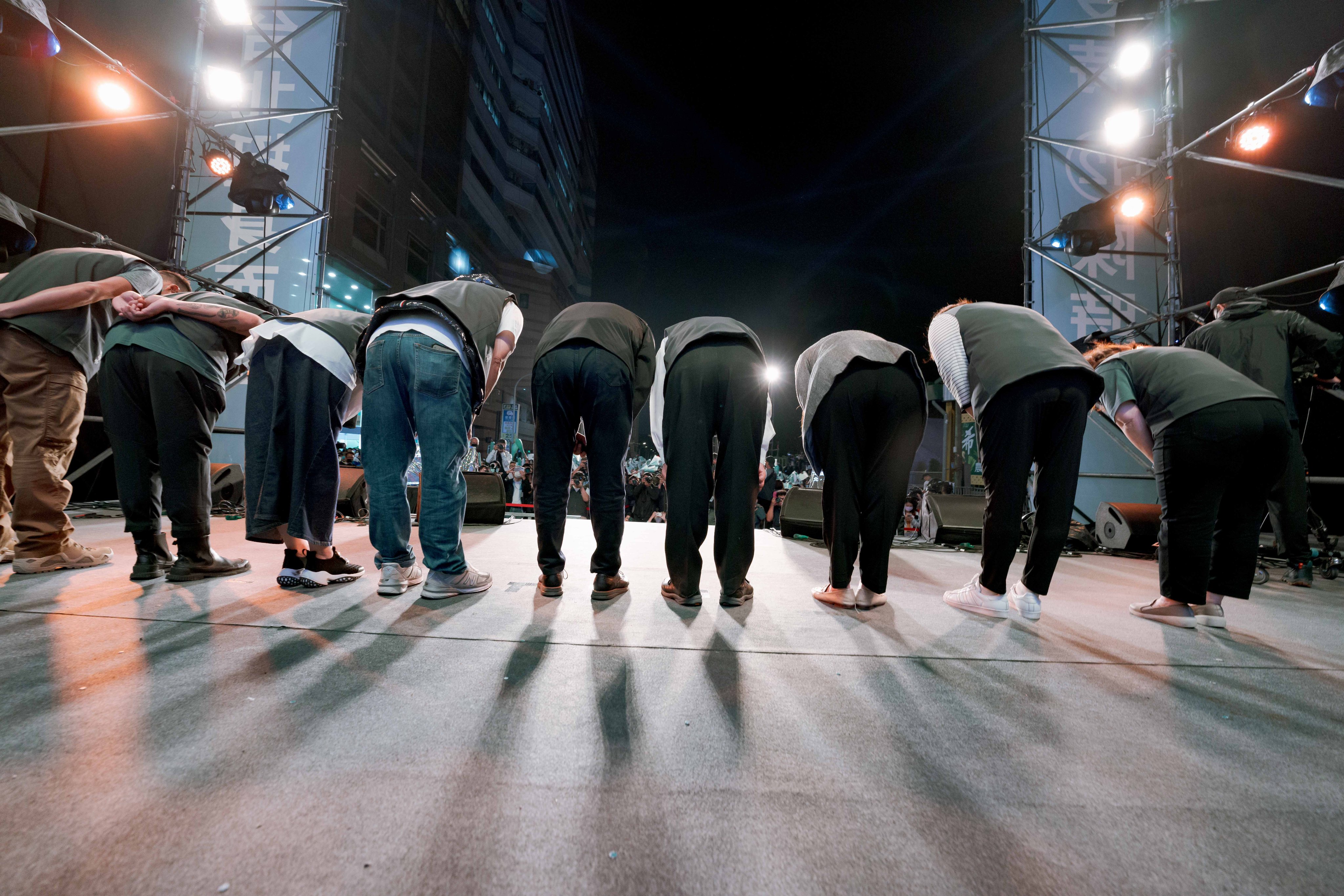
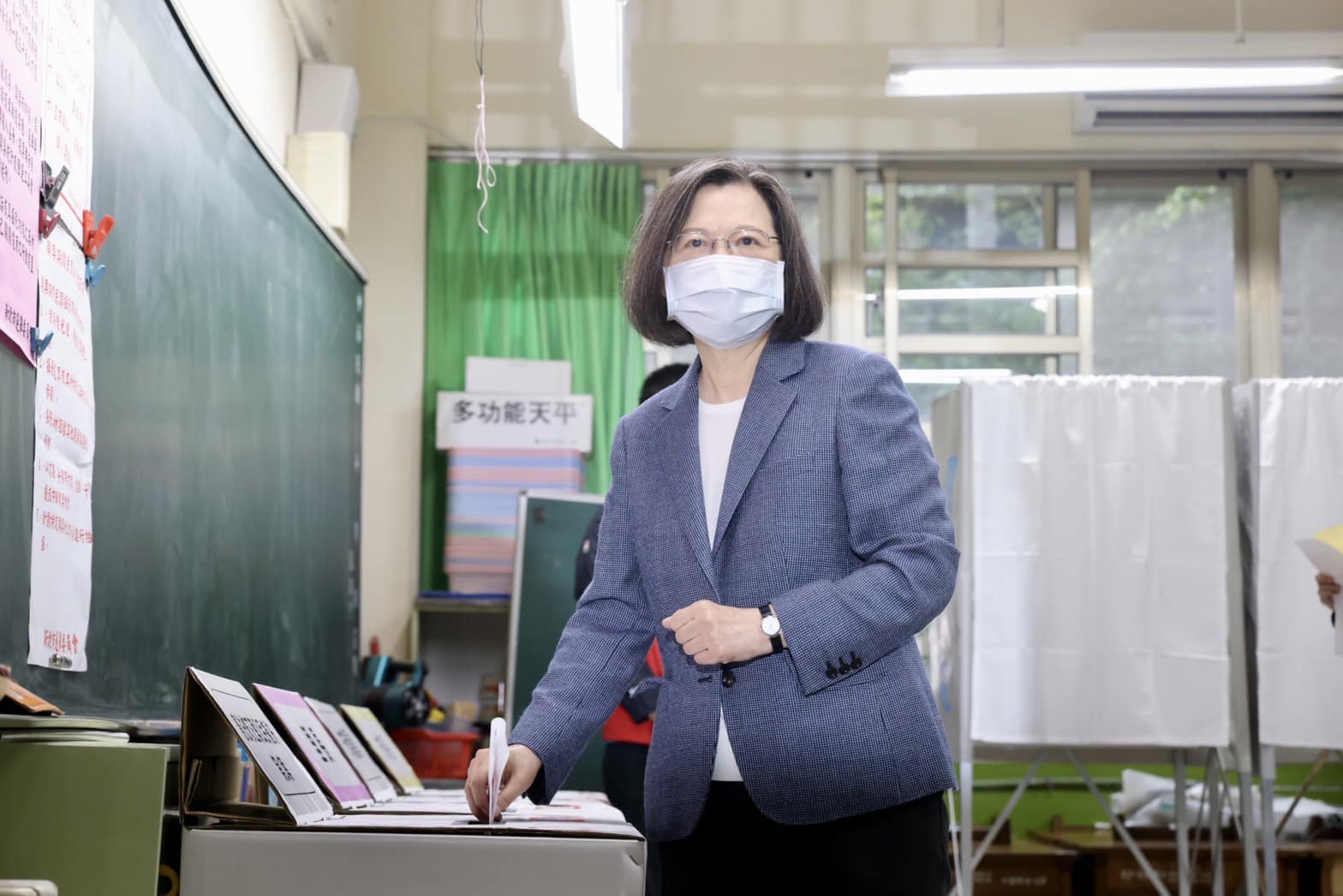
Given the level of political polarization, I am proud of the relative normalness of it all — for a relatively young democracy, little violence, losers conceded, and the democratically elected president resigned as chair of her party to take responsibility. I walked around the streets of Taipei last evening, MRT and shops buzzing, citizens going about their business – they voted, some obsess over results, life goes on as it must in a democracy. We can always rely on some western imperialist press and academics to produce bad takes — local electoral victories in Taiwan as a sign of warm feelings for the Chinese communists, implications for the rising tension, etc. I suggest studying the ruling DPP’s massive defeats in the 2018 local elections and then pondering what happened in 2020 as a way to frame what is going on in Taiwan. Our Taiwanese elders fought the Chinese to have this democracy, preserving democratic sovereignty no matter who wins any particular election is the most important reason for the struggles. Without democracy and domestic peace, Taiwanese nationalism would be pointless. 27.11.2022
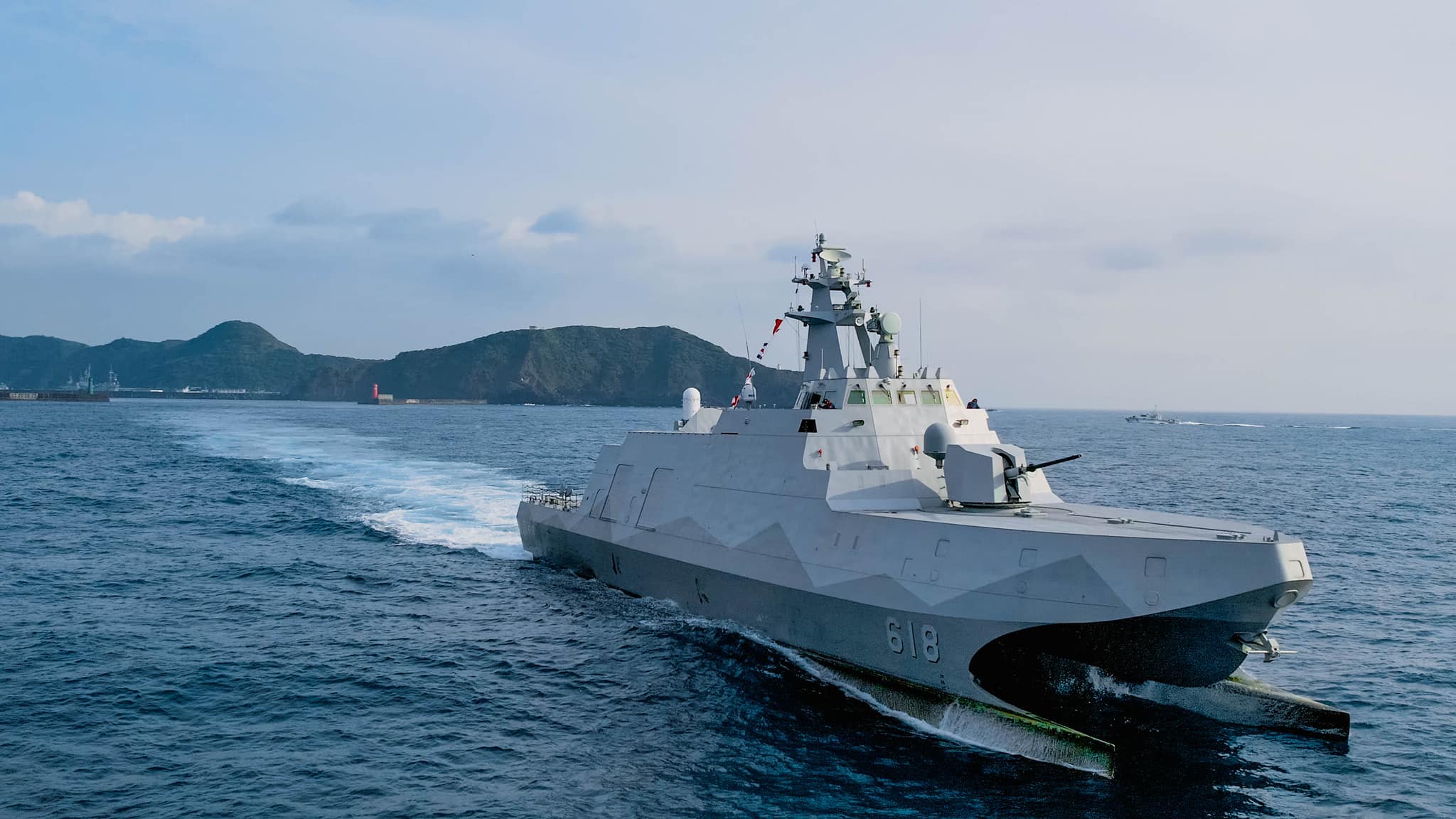
Taiwanese shipbuilder responsible for its double-hulled fast attack corvette has signed an MOU with Lockheed Martin for Taiwan to build the hulls while Lockheed Martin coordinates and fits their weapons and sensors. These small naval ships will be sold to Southeast Asian nations. The fact that usually hypersensitive to Beijing’s opinion Southeast Asia may be involved is fascinating. If this deal proceeds accordingly, this is good news for Taiwanese and regional security – anything which further integrates democratic and independent Taiwan into the US-Japan-led global democratic supply chain is good. Not clear if this is a part of the purposeful news leak from the latest Taiwan-US military summit where the US plans to collaborate on weapons manufacturing. Also, a very good sign that a civilian, nonstate-owned Taiwanese shipbuilder is involved in this deal. Previous plans to integrate aviation and aircraft maintenance with global arms suppliers faced stiff resistance from Taiwan’s archaic and complicated military-state (and formerly, authoritarian China KMT party) owned enterprises. Israel, South Korea, and Singapore are three good models of small-mid sized nations surrounded by larger hostile powers, and how they have focused their resources and rationalized the collaboration between military-state led R&D, civilian corporations and manufacturing, and links to global military supply chains.
An important part of Taiwan’s democratic consolidation is to push into the last mile – the national security apparatus is the most resistant to democratic change and modern transformation. This is also the sector where modern management techniques and manufacturing would go a long way in aiding Taiwan to modernize its own domestic arms manufacturing. As the Russian invasion of Ukraine has demonstrated, even a global superpower like the United States cannot manage the logistical challenges of a modern medium-intensity war alone – so it serves vital American national security interests to coordinate with global democracies such as Taiwan, Japan, Korea, EU partners by creating a global arms supply chain. We hope for peace of course, but any potential democracies versus authoritarian China conflict in the future will be far more intense than the Russian invasion of Ukraine. The ability of the US, Japan, Taiwan, and democratic allies to restock high-end high technology munitions (THAAD, Patriots, AMRAAM, etc.) in a high-intensity war will play a critical role in any future conflict in the region. 24.11.2022
“In a move likely to anger the Chinese communists ….” “rising tensions,” “escalating tensions,” “spiraling tensions” …. there, western imperialist journalists and academics, I’ve collated your cliches.
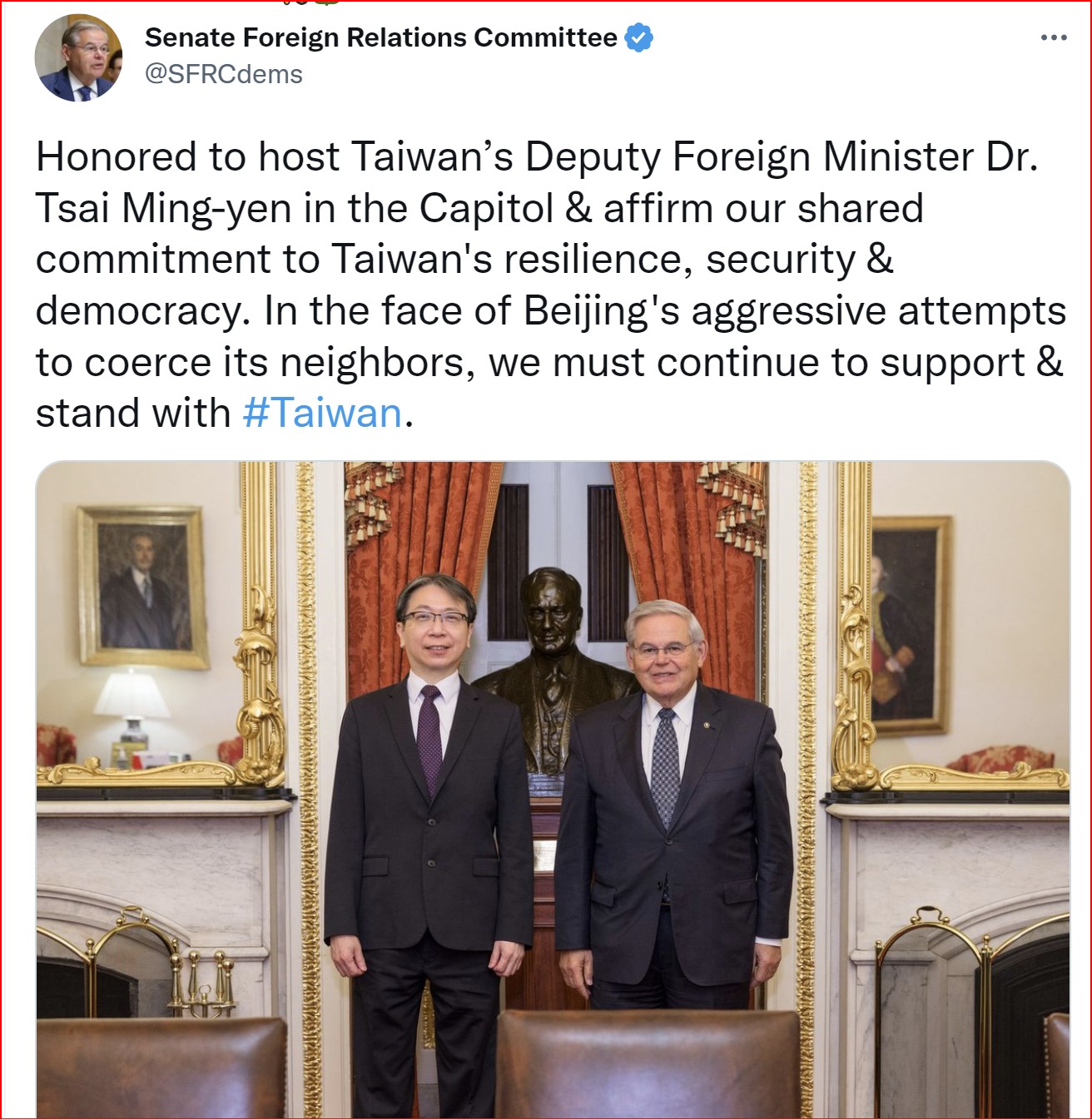
The senator wisely noted the governmental titles and location of this public, official, nation-to-nation meeting between Taiwan and the US. While other western imperialists will practice Chinese communist filial piety by calling Taiwan an “island” or “region” or “area,” none of those weasel words describe any entity in the global stage that have Deputy Ministers of Foreign Affairs who could visit the capitol building of another nation in an official capacity.
What is the “status quo” between Taiwan and the democratic world? Let me borrow a concept from graduate school, ABD – “All but dissertation” – “All but fully normalized” – AbFN. Whatever angels on the head of a pin style arguments some western IR folks wish to fuss over, I am a pragmatist – if the smartest way to preserve Taiwanese democracy and independence and avoid a Chinese communist war of annexation is to remain at AbFN for now, then so be it. But let there be no doubt, Taiwan has made amazing progress in its international status and statehood since 1996. 23.11.2022
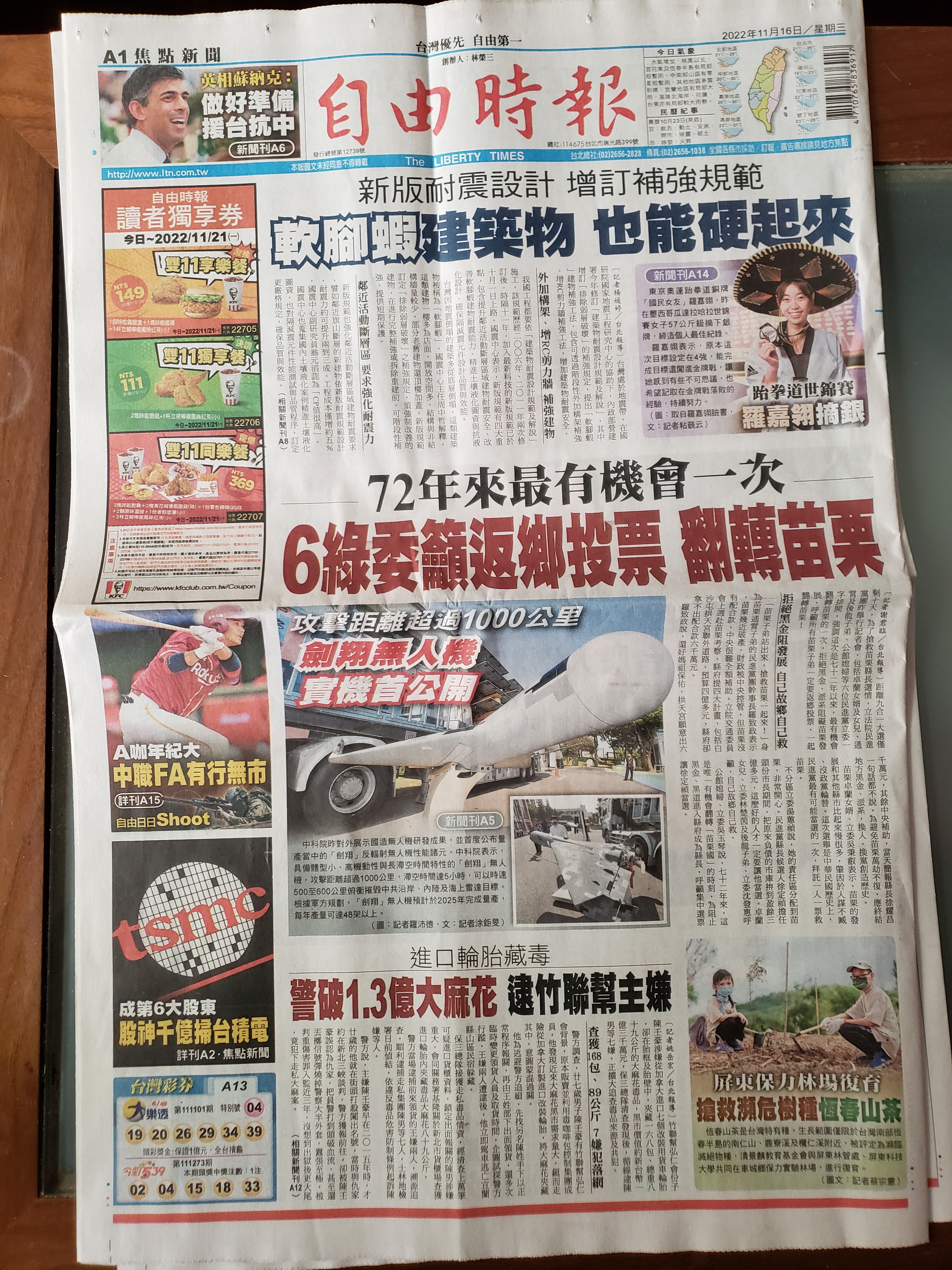
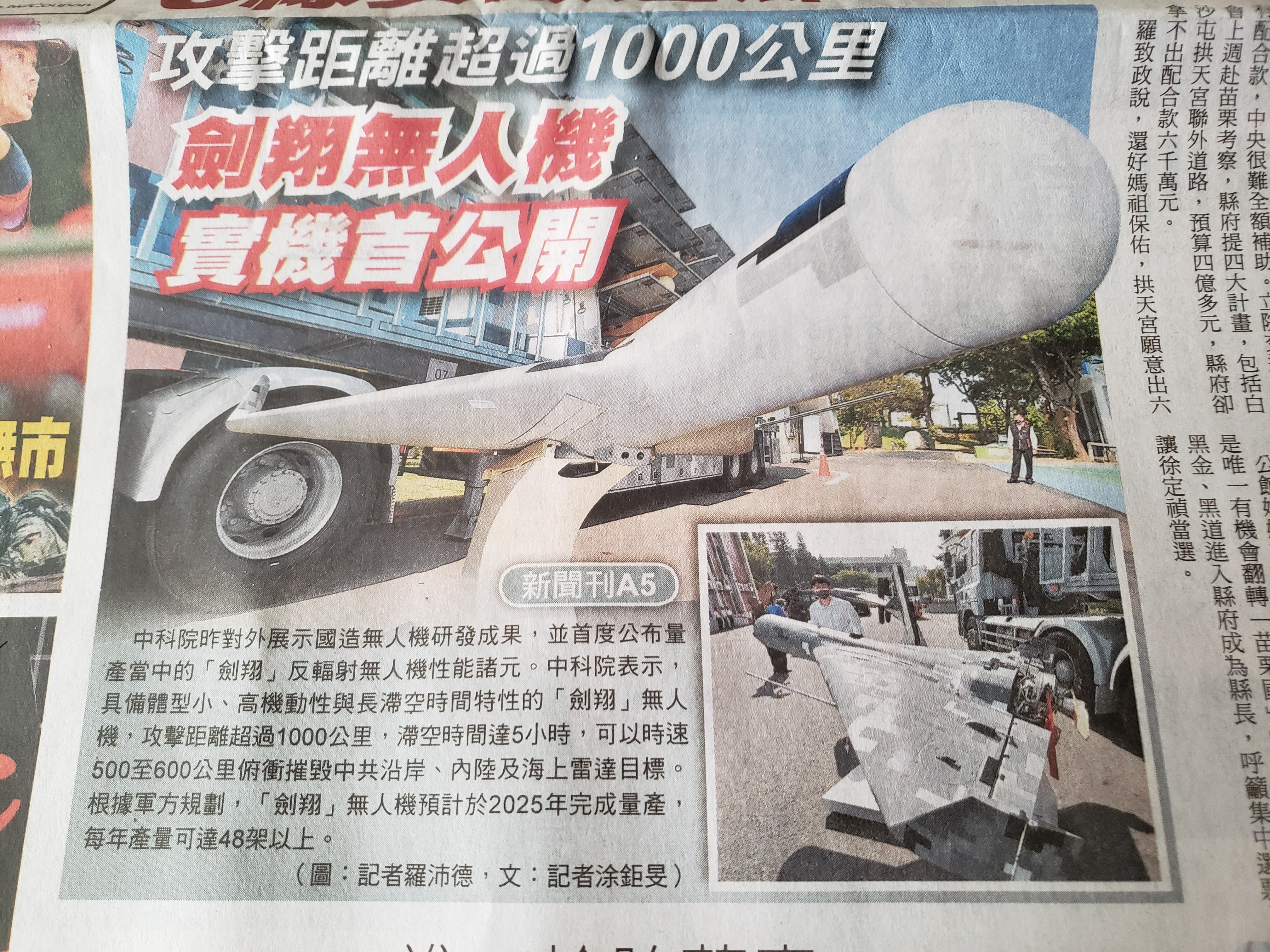
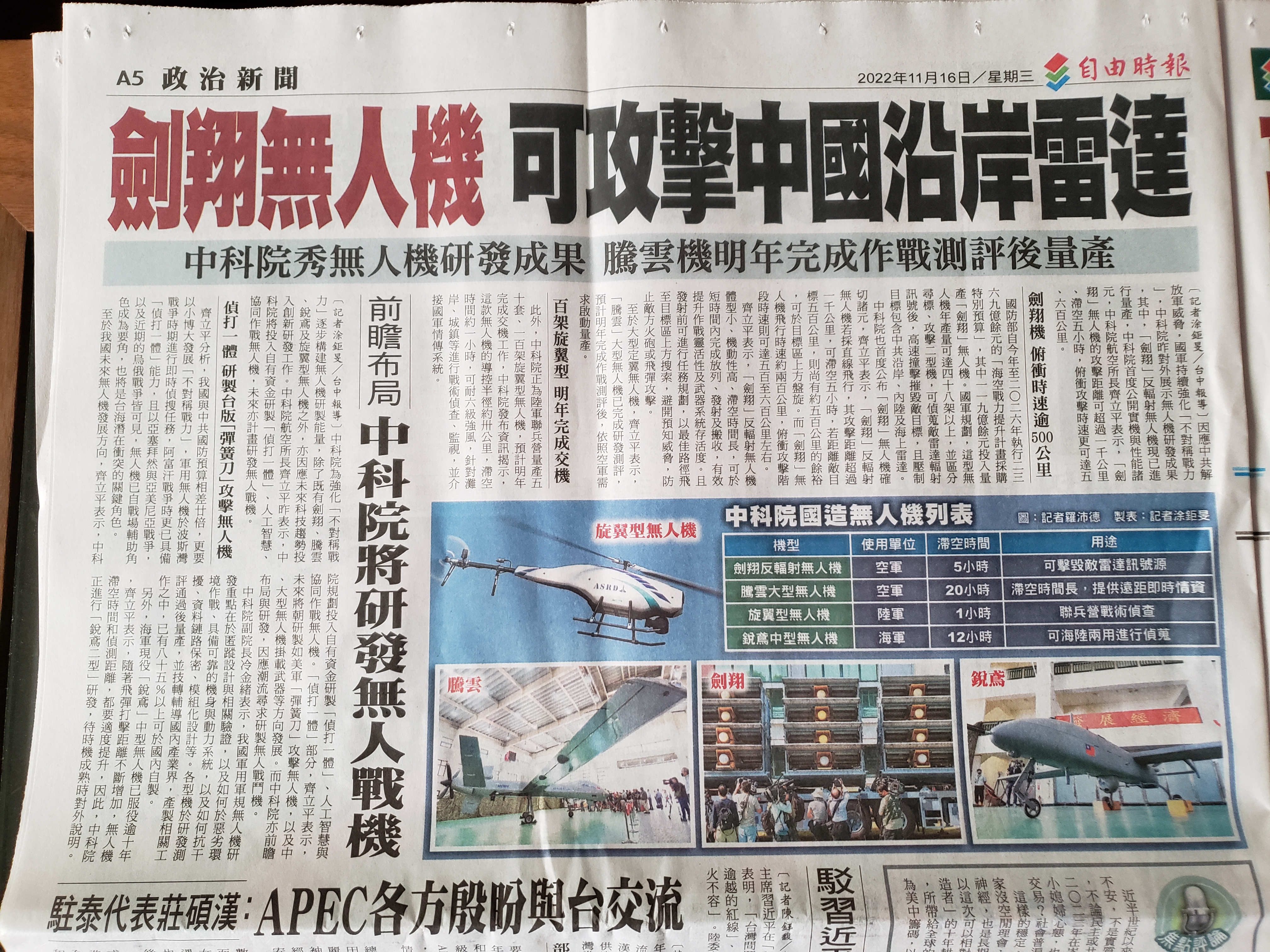
Taiwan’s Ministry of National Defense is at least two decades late in terms of unmanned vehicles – in the air, at sea and submersed, for coastal defense. The gap between Taiwan’s vibrant and creative civil society – economy, commerce, technology, innovation – and its national security establishment cannot be wider than in the UAV sector. And I suspect while the obvious gaps are in the hardware, the greater threat to Taiwan’s national security exists in the ‘software’ – strategy, tactics, openness to new ideas, thinking creatively, and learning from the world. The Chinese communist military has invested decades in unmanned technology – the Taiwan Ministry of National Defense is still discussing bayonets. This Ministry of National Defense is reactive, conventional, and prefers copying past practices, refusing to learn from global counterparts such as the Israelis. A Martian traveling to earth in the 1990s and assessing the balance of power between communist China and democratic Taiwan, would surely assume smaller Taiwan would focus its energy and attention on unmanned vehicles. That it is 2022 and Taiwan’s national security apparatus has barely just started – much less engaging its talented civilian sectors in a wide-ranging discussion of strategy and tactics, is astonishing. Though, better late than never.
There are other public policy discussions a democratic nation such as Taiwan should engage in. The role and purpose of CSIST, for example – should it focus on R&D and subcontract the manufacturing to civilian firms? Should it try to engage R&D in all sectors as it appears to do now? In what ways can CSIST play a leading role in placing Taiwanese high-technology manufacturing into the global democratic supply chain? If Taiwanese civilian firms have an edge on CSIST in UAV technology, what are the global best practices to ensure the talent and creativity of the private sectors are harnessed while maintaining national security? As Admiral Lee and others have rightly argued, Taiwan’s democracy requires open and honest discussions and debates on its national security options. 16.11.2022
Admiral Lee’s main argument is that smaller, resource-poor Taiwan’s best defense policy is to transform its national security establishment’s long-held mentality and focus on smaller, mobile, survivable platforms-munitions in all branches while emphasizing resiliency, mobility, and survivability in surveillance, intelligence, and logistics. These are difficult changes because they revolutionize how things have been done within the Taiwan Ministry of National Defense since 1949. These proposals also revolutionize how the nation’s elected leaders and citizens evaluate their national security and express their sense of national pride – pouring concrete and making small mobile communication vehicles and producing thousands of cheap, replaceable drones make national security sense, but challenges the psychology and emotions of all sectors of this nation.
Which gets us to the mystifying process of how the Taiwanese Navy has been pursuing its surface fleet since the early 1980s. I am not a partisan in intra-Taiwan Ministry of National Defense factions and arguments – I find those arguments, dating back to their China days (big northern fleet versus small attack craft southern command ….) tiresome. It is fascinating to think carefully about Admiral Lee’s stillborn manned and unmanned stealth missile crafts versus recent news that once again the Taiwan Navy will reverse course, delay its larger AEGIS/VLS surface vessels, and build smaller non-AEGIS/VLS frigates.
I do not have the professional-academic background to argue which model makes the most sense. Whether Taiwan is better off with a large vessel fleet, small fast attack craft fleet, a combination of both, and/or focus on submarines (and if so, what size and how many ….) I do have the background to conclude that Taiwan has not had an adequate, democratic, public policy debate over such an important issue. Admiral Lee’s argument is that if the US warning that dictator Xi and the Chinese communists want to be ready for a war of annexation no later than 2027 – then quickly getting hundreds of small, cheap, rapidly manufactured missile crafts into service is far more sensible than programs requiring decades. He further makes the argument, convincingly, that the Chinese communists would like nothing more than a grand, conventional, force-on-force battle – reminiscent of how Chiang Kai-shek’s army melted into thin air in 1948-1949 China I think.
And if these smaller frigates take too long to build, require too many sailors to staff, take too long to train to bring online, and are too easily sunk by the Chinese – well then in the same issue of this Taiwan-based military magazine, the additional mystery of Taiwan Navy building a massive amphibious landing vessel. In an ideal world – say if you are cheating in a computer game and money can be infinitely replaced, then sure you buy everything. In the real world, Admiral Lee argues correctly, one needs to prioritize – and the priority is not choosing weapons that make people proud, but choosing weapons that will survive the initial strikes from China and be able to inflict enough damage on the invaders so as to deny them the victory they seek.
But then the peculiar modern history of Taiwan is this. In the early 1980s when Taiwan was still under China KMT martial law military publications began to appear, but military affairs were very much seen as highly confidential, only the military ought to discuss the military. Taiwan has a long history of civilians rightly avoiding politics, military, history, and diplomacy – no one wanted to become yet another political prisoner of the China KMT. This is what I thought of when Admiral Lee pointed out Taiwan is one of the world’s leading manufacturers of high-end speed seacrafts – one of many, many areas where the democratic, civilian Taiwanese civil society thrives, yet this historically created chasm between the national security establishment and Taiwanese civilians remain. In this sense, the greatest proposal from Admiral Lee’s book is not about a particular model or approach, or a particular weapon or munition – I’ve noticed in publications and online discussions these shorthands, asymmetry, porcupine, Javelins and Stingers. I think the main conclusion from Admiral Lee’s book, and the experience of Ukraine, is that a democracy cannot compartmentalize its national security policies from other realms of democratic policy debates. That in order for a democracy to make difficult national security decisions, in order for the democracy to harness all of its talents, its national security apparatus must be as democratic and modern as the rest of the nation. Admiral Lee pointed to the thriving and creative ship design and building industry in Taiwan – contrast that with the uncreativity and directionlessness of the Taiwan Navy since the 1980s. I see similar gaps in unmanned vehicles (design, manufacturing, deployment-uses), in gaming, in information warfare, etc etc. Taiwanese businesses are perhaps some of the most creative and resilient in global logistics – whereas the Taiwan military has had a reputation for weaknesses in logistics. Democratizing and modernizing the national security establishment are the only ways forward to ensure Taiwan’s national security can withstand the challenge posed by its imperialistic autocratic neighbor.
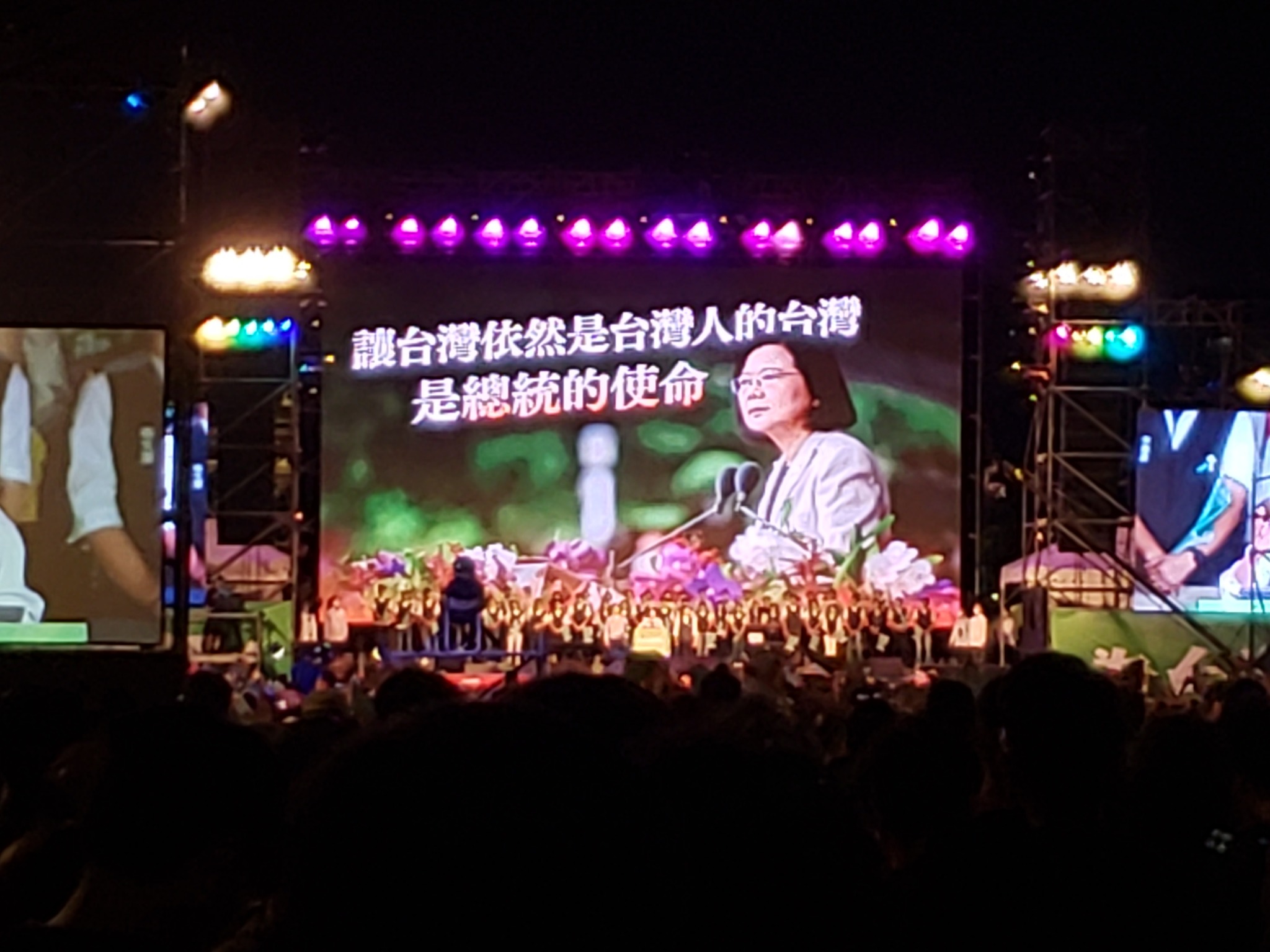
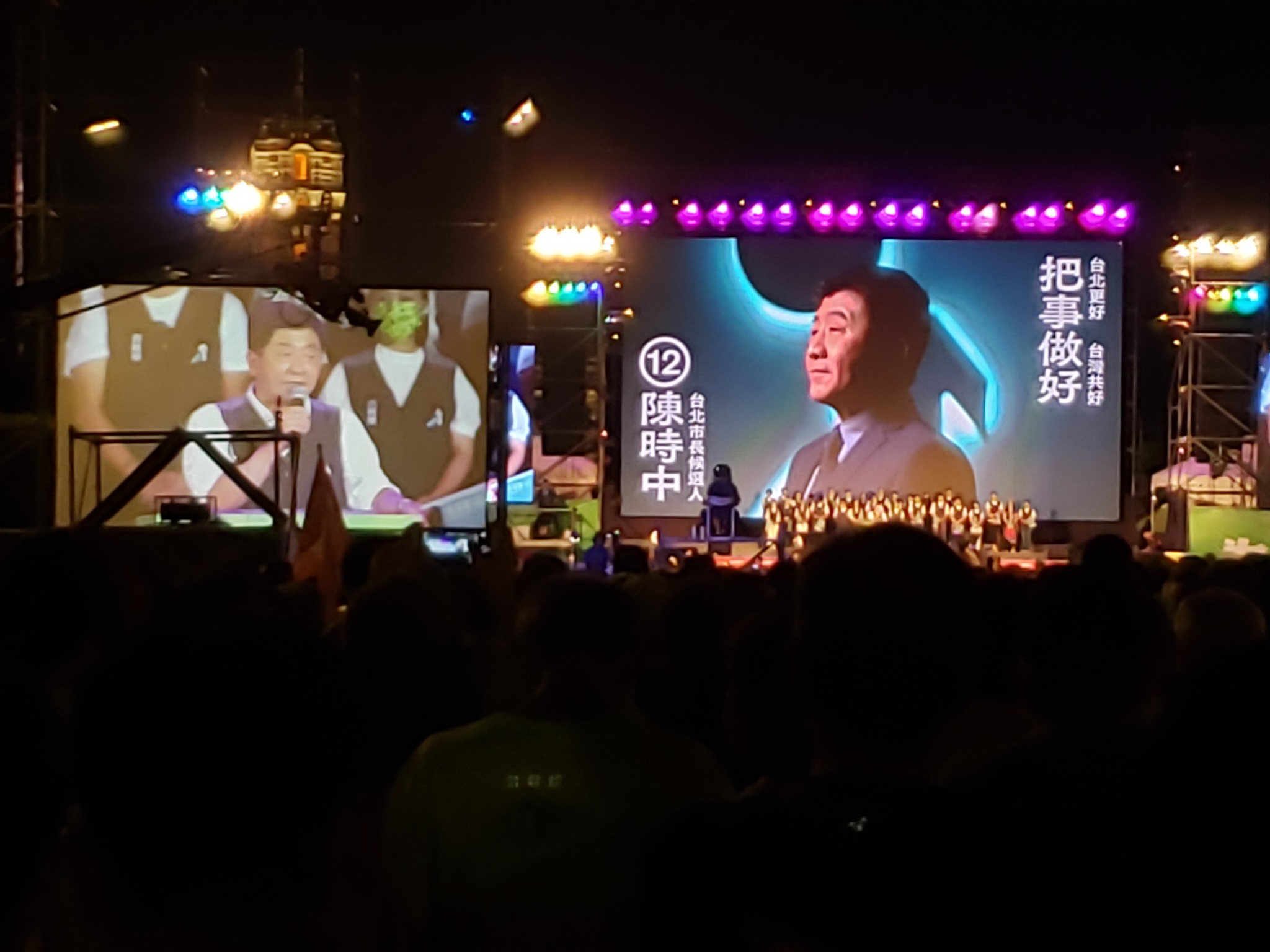
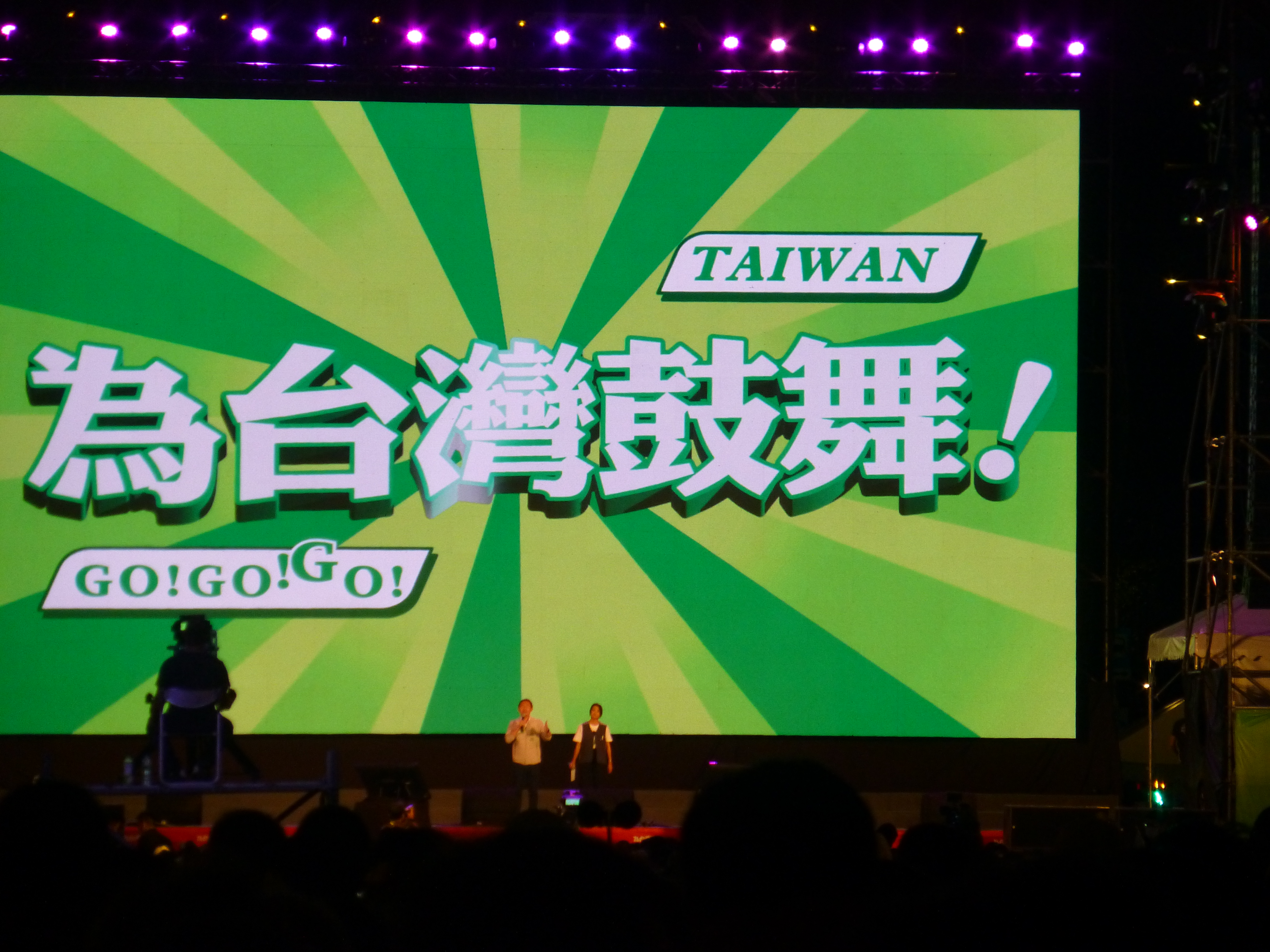
阿中部長凍蒜!On the boulevard that used to greet the invader-dictator and then renamed for the indigenous people 凱達格蘭大道, next to the memorial that still inexplicably honors the dictator-invader, thousands of us participated in a political rally on behalf of Taiwanese democracy — a democratic Taiwan Republic that belongs to its citizens — as President Tsai said, a Taiwan that belong to the Taiwanese, a better Taiwan for the world — free from threats and violence.
Have you ever noticed how some too-cool-for-school western reporters, academics, and talking heads find focusing on democracy and human rights corny and not “realistic/realist/adult enough”? The more clever ones will go around in wordological circles and pretend to care, and the more honest ones will just tell you a version of “might makes right” – in the end, the main idea remains, smaller nations with darker people do not get to have self-determination. Interesting too to see overlapping circles of this unwillingness to engage democracy as a core, existential subject in domestic American elite discourse – see the corporate media and chattering heads twisting themselves into knots over President Biden daring to give a speech on democracy; or the core issue of democracy and self-determination in the Russian invasion of Ukraine; likewise, the nature of Chinese imperialism and Taiwanese democracy.
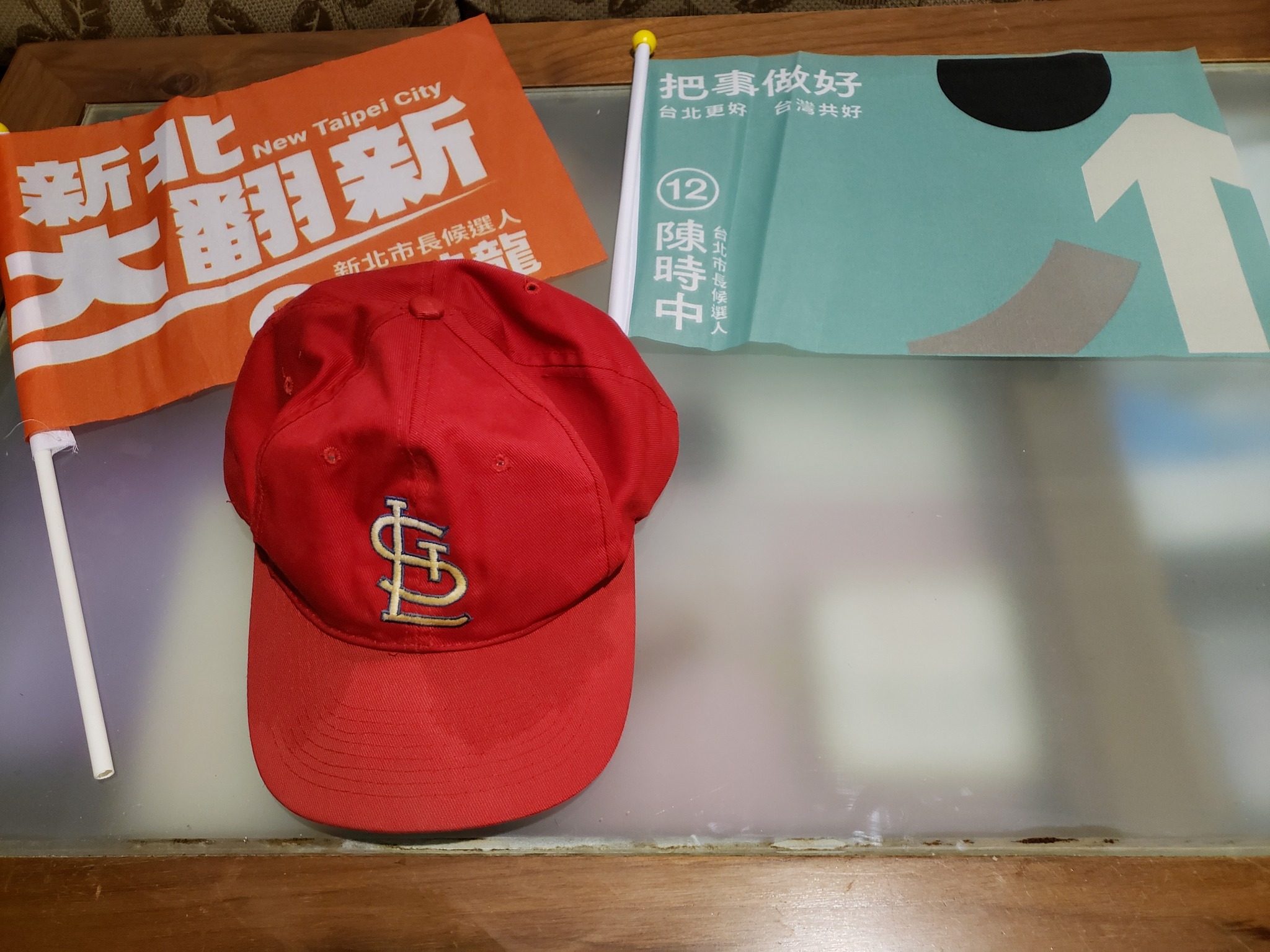
Well, democracy and self-determination are verbs for Taiwanese citizens – not abstract theoretical concepts, not frameworks for which egghead academics negotiate away on their behalf. And it is a concept as many are in Taiwan, borrowed and then modified for local taste – Mickey Mouse paws wearing street bowing by politicians, a parade of too loud vehicles, traditional market sweeps, the chanting at rallies that feels like a Taiwanese-Japanese baseball game.
I stood for three hours with thousands of Taiwanese citizens primarily to thank 阿中部長 for preventing the pandemic the Chinese communists are responsible for from harming my elders. It was very moving to watch Taiwanese democracy as a way of life and an emerging national identity — to be greeted in Taiwanese as ‘The nation of Taiwan’s owners’ in front of the same building where the invader-dictators tried to wipe out Taiwanese as a language. To watch the old school Premier at the end of his speech giving ninety-degree bows three times, sincerely asking for our votes in three languages, Taiwanese, Hakka, and Mandarin. Imagine a Chinese communist, China KMT dictator, or a western imperialist doing that.
The path of decolonization and transitional justice will be crooked and difficult for Taiwan, but there is this energy in this young democracy, irreverent, nontraditional, heterodox, good-humored, and pragmatic. Nothing gave me more faith that this democracy will survive the onslaught from the Chinese communists, the China KMT, and western imperialists, than how orderly and peacefully the rallygoers left at the end — picking up their own trash, waiting for the traffic light, keeping relatively quiet to not disturb the neighborhood. Democracy and nationalism are pointless without love for their fellow citizens inside this nation — they are also pointless if the nation is filled with violence and chaos. May the Buddha bless our beloved ancestral homeland, and our hard-fought and blood-soaked democracy. 12.11.2022






 Taiwan in World History (台灣與世界歷史)