Tag Archives: geostrategery

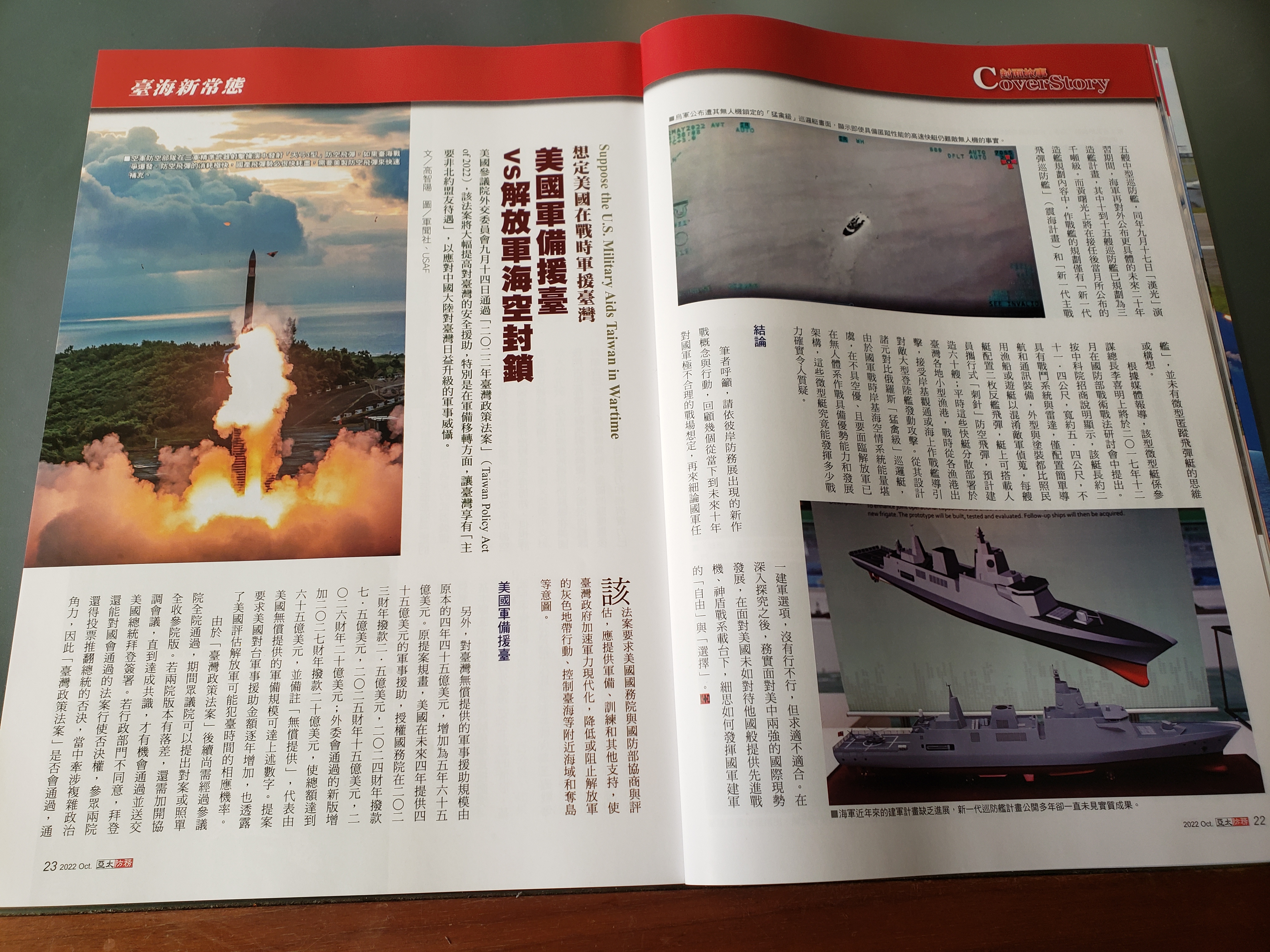
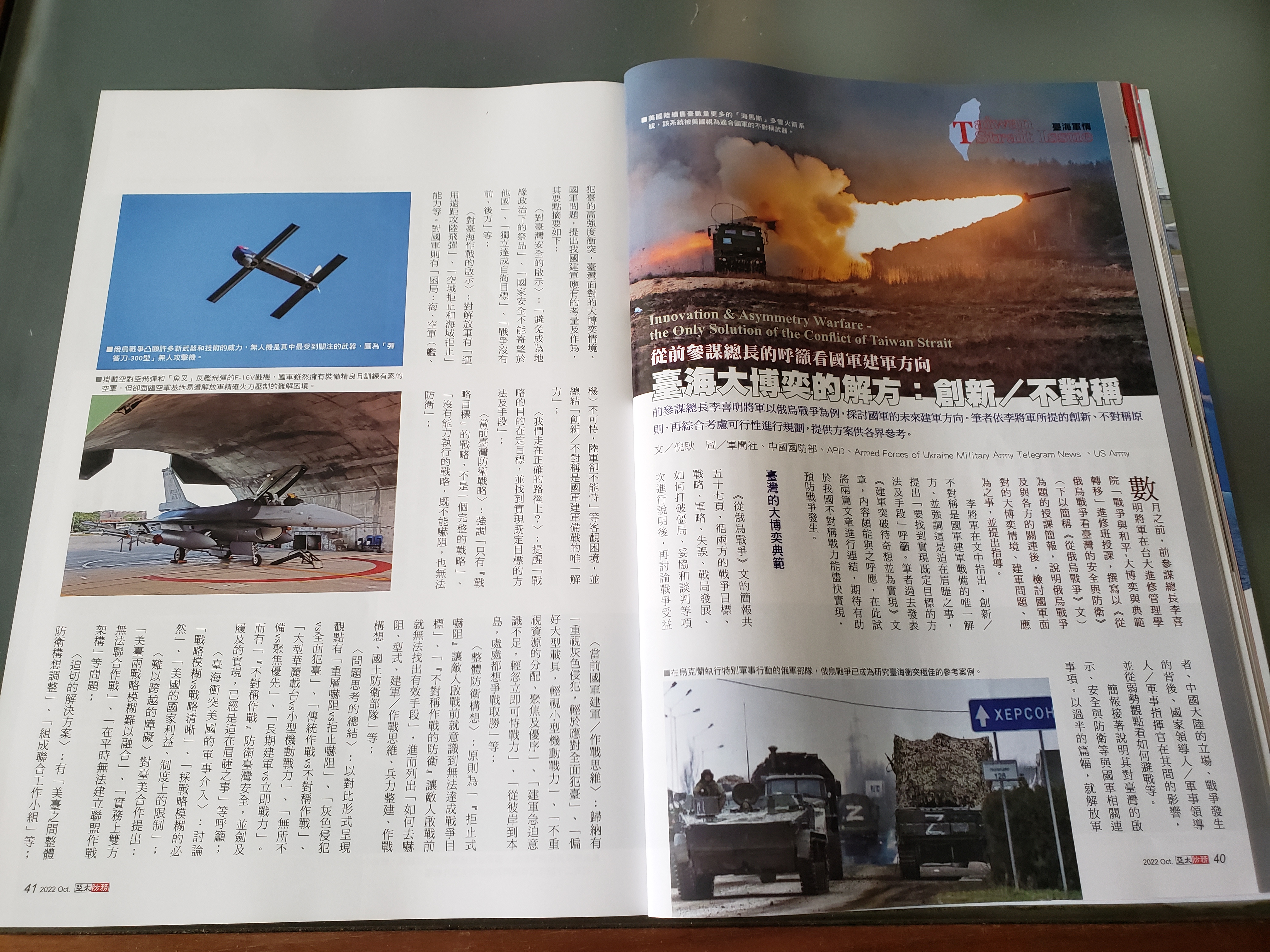
Reviews: The Overall Defense Concept: An asymmetric approach to Taiwan’s defense 台灣的勝算 李喜明: Geostrategery and Taiwan Republic 台灣国 classrooms

This is an important book regarding the national security of Taiwan, and it is a pity that it has provoked little earnest discussion and debate among Taiwan’s civilian and military leaders. This does not mean I believe Admiral Lee’s ideas should all be adopted – but the lack of debates is indicative of the greatest danger posed to Taiwan’s national security – the inability of its hyper-conservative (in this instance, I mean not ideology but a culture – reluctance to embrace new ideas, take risks, debate openly) national security apparatus to adopt democratic and modern norms in order to make necessary and rapid adjustments.

At nearly five hundred pages, this book could have used more thorough editing. The writing can be repetitive. In a polarized national identity climate, nothing in public policy Taiwan can escape quick and ideological dismissals. Probably I disagree with Admiral Lee on most political and diplomatic issues. I respect his expertise, and I see no reason as other reviewers have, prematurely jump to conclusions regarding his patriotism and loyalty.

If I were to choose a few pages as a microcosm of what makes this book important, it would be the section on Admiral Lee’s proposed manned and unmanned stealth mini-attack naval crafts (pages 344-357). Many words have been spilled by many parties over this aborted proposal – but the admiral’s convincing explanation here, and the unhealthy political process by which other leaders in the Taiwan national defense establishment ended this project without engaging in a proper and fair democratic debate, serves as an important example for what policymakers in Taipei, Tokyo, and DC ought to focus on – not merely weapons and platforms, not how much money to provide for military aid, not denial versus control, not porcupine or not – but that Taiwan’s military leadership is in dire need of a revolutionary change in culture.

Elsewhere I have noted this, that in the decades of Taiwanese democratization, the national security institutions have been the least touched by democracy and openness to engage the rest of the world. One may generally argue that this is the case in most nations. Yet I think one can reasonably argue that this phenomenon is particularly pronounced in Taiwan. And Taiwan’s civilian leaders from all parties lack the expertise, and rightly fear the instability of a menacing authoritarian neighbor, by pushing for democratization and openness within its military.

This is where a constructive avenue is to adopt the models of the 1950s, where Taiwan turned to Japanese and American officers – retired and active service – for advice. Again, refusing to participate in simpleminded name calling one sees in some Taiwan-based military publications – this is not about whether Taiwanese officers have expertise and insight. I think they do, no less than foreign officers. I have never had doubt about the quality of the Taiwanese rank-and-file military – only doubts and worries about its generals and admirals. The problem is not expertise, but bureaucratic, institutional inertia, decades in the making – requiring a push from the outside to cut through decades of habits and precedence. In many ways while reading this book and other related articles the inertia in the Taiwanese military leadership reminds me of the American higher ed thought leaders – everyone knows a demographic tsunami is coming, everyone agrees that the economic model makes no sense – yet there is zero incentive structure for anyone to be the one to say this, much less to make substantive changes.

So then back to Admiral Lee’s mini-missile crafts. I do not have the expertise to decide whether they were the right approach for the defense of Taiwan. I think the fact that there was basically no national discussion and debate, from the proposal, and adoption, to the removal of both the policy and Admiral Lee himself from office, illustrates the gap between Taiwan’s democracy and its national security policy-making apparatus. Even the fact that this book has received relatively muted responses from Taiwanese political leaders, military establishment, journalists, and scholars, illustrates this dangerous gap – an otherwise vibrant democracy, yet cannot engage in honest and direct conversations and debates regarding its fundamental survival.

And I admit, as I read Admiral Lee’s thorough proposals, moving away from jet aircraft and large warships and armored vehicles, my initial reactions were emotional and reactive – my decades-long sense of Taiwan’s national defense and identity intertwined in these weapons and systems. Yet Admiral Lee’s analysis is rational and thoughtful – how does a smaller nation invest very limited resources so that it could deny a larger neighbor the military victory it seeks? And Admiral Li is a rare Taiwan military leader who is neither defeatist/too political, yet is willing to risk the unpopularity of speaking the unvarnished truth.

This reminds me of something I have thought about for decades as I watch Taiwanese military maneuvers and read interviews and articles published by the Taiwanese military – a core question for me has been: Are these generals and admirals honestly preparing to fight for real? And I think Admiral Lee has convincingly answered this question as sadly being no. This is where Taiwan’s civilian democratic leaders require the most assistance from their US, Japan, and other democratic allies – expertise and credibility to push for a revolution in Taiwanese military leadership. A few recent examples are alarming indications. That the Taiwan military leadership reacted so slowly to the Chinese communist unmanned aerial vehicle intrusions is a clue of deep-seated institutional problems. The recent special forces maneuver preparing for a Chinese communist landing at the mouth of the Tamsui River – they have been practicing against that scenario for as long as I have been reading the news – do you suppose the Chinese communists have noticed that too? And if so, why would they follow the Taiwan Ministry of National Defense’s scenario? And finally, this is subtle but to my thinking indicative and fundamental. A Taiwanese college student, a music major, on his own initiative used open-source information to map out major Chinese communist military installations on Google Map. In most functioning democracies he would have been invited by the Ministry of Defense – if only for the PR/marketing/recruitment drive – and an even smarter military would see this as a way to draw strengths from the democracy it is trying to protect. Yet thus far, to my knowledge, the Taiwan Ministry of National Defense has not reacted.

This is where Admiral Lee’s policy suggestions should meet actual global policy moves. All of the particulars he has offered are debatable in a democratic process. I think one of the most important first steps for Admiral Lee’s proposal to have a chance of taking root inside Taiwan’s national security institutions is for a US-Japan led global effort to share expertise – civil defense and modern military concepts by Finland, Sweden, and Norway; logistics and civil defense by Israel; how to modernize the Ministry of National Defense by the US. And perhaps a pressing issue is to find ways to send Taiwanese and American officers to learn from their Ukrainian counterparts. How did Ukraine manage to transform its authoritarian, Soviet-based national security apparatus to adapt to its modern democratic reality? How did Ukraine manage to deal with members within its national security apparatus who had loyalty-identity issues without violating democratic norms? How did Ukraine manage the vast logistical and supply issues [recent Taiwan military publication rightly focuses on this issue – where will foreign military supplies reach Taiwan during a war? Has Taiwan planned on how to move them from air and sea ports to storage and distribution?] What lessons have the Ukrainians learned regarding the resiliency of local governments, police, reserve forces, transportation, and communication?

Taiwan has had a long history of sending officers and fact-finding teams abroad, similar to those US higher ed task forces and committees, where findings and reports sink slowly into an entrenched bureaucracy full of reasons why needed reforms cannot occur. Taiwan Can Help, Taiwan in military affairs needs that push from abroad – expertise, resources, reassurances – so that it can transform its mentality from fielding a force for the parade grounds, into a military force prepared to fight, prepared for the unexpected. Admiral Lee has provided invaluable service to his nation by writing this book – a thankless task really, he could have easily kept his mouth shut, become the head of another state-owned industry, and collect his pensions, he should have the gratitude of everyone who cares about Taiwan’s democracy. 12.11.2022

© Taiwan in World History 台灣與世界歷史. This site grants open access for educational and not-for-profit use. Maps and illustrations are borrowed under educational and not-for-profit fair use. If you are the rights holder and prefer to not have your work shared, please email TaiwanWorldHistory (at) Gmail (dot) com and the content will be removed.
Leave a comment

Filed under books and artifacts, Taiwan Republic

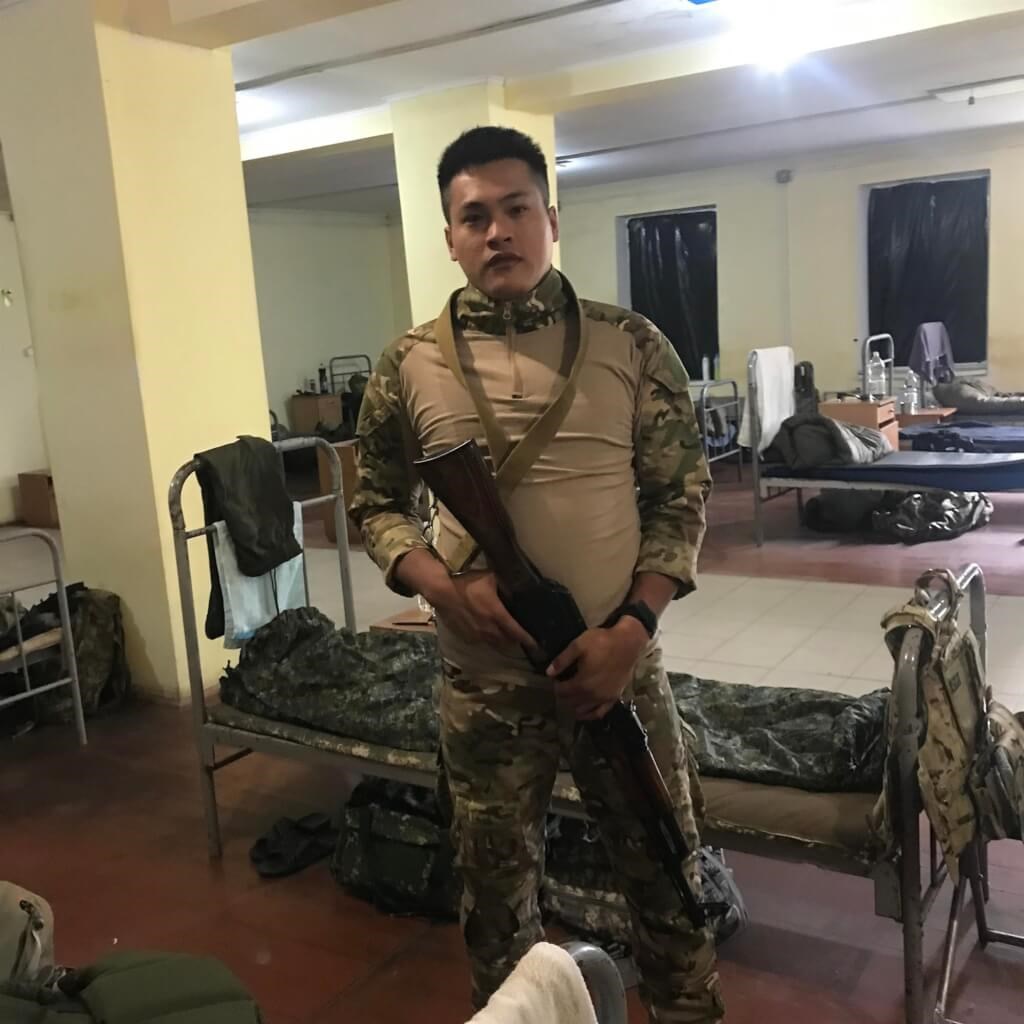
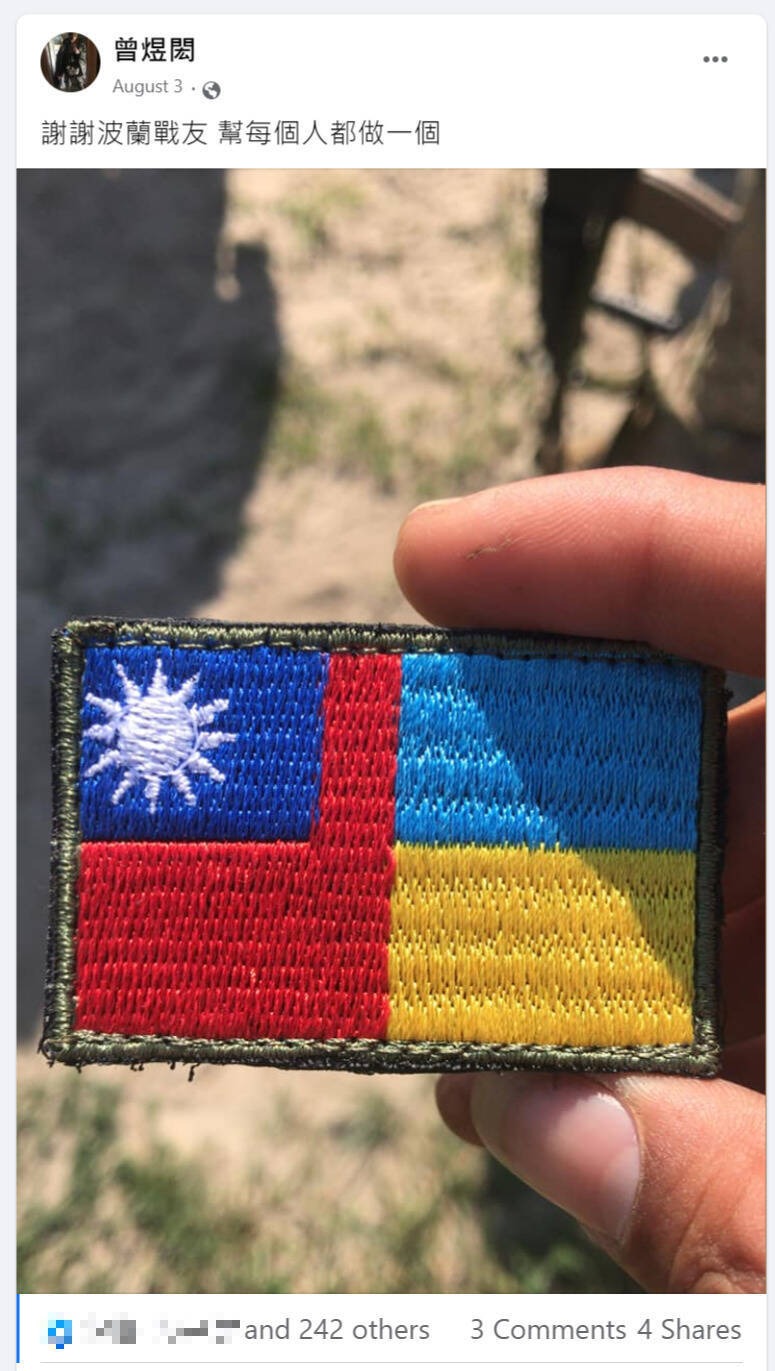
Glory to heroes – honor the first Taiwanese warrior, Tseng Sheng-Kuang (曾聖光), to perish on the battlefield in defense of Ukraine and democracy: Taiwan dispatch, national identity, and Taiwan Republic 台灣国 classrooms

除了記錄軍旅生活,曾聖光也經常關注台灣國軍改革的議題,常分享軍事評論人員對於國軍改革建議,像是認為漢光演習變成演戲,「根本是表演用」,不符合實戰,認為義務役4個月太短應該直接1年,並分享一張諷刺圖,認為目前台灣目前的黃埔思維、刺槍術、勤儉建軍、越戰戰鬥法等等是阻礙變革的原因。曾聖光分享一篇文章,認為台灣目前「民間的民防體系、後備動員體系、災難應變能力、戰略物資儲備都不成熟甚至沒有」,認為「即使在最佳的情況下,目前讓民間與軍方能夠進入到戰爭狀態的準備至少要5年,那些跟你講什麼準備好的都是鬼扯」,也許是想要透過實際參戰,把實戰觀念跟技術帶回台灣。

This emerging Taiwanese national identity.

In a world full of cowards, only a few heroes emerge. Something I tell students often — when assessing actions of historical figures and others, we tend to imagine a utopian standard for ourselves — surely we would face down the Nazis, of course we would risk jail or worse when the Chinese communist tanks rolled in the streets of Beijing, we would never ponder our livelihood by ratting out friends to the China KMT dictatorship — this is not making excuses for evil acts, just a caution that while watching films and reading novels we like to transpose ourselves as the hero, in beliefs in previous lives somehow we are almost always prince and princess and never dirt poor peasants, yet in reality, most of us do not make the cut. We are not rockstars. We are average, and fallible. A more cautious, realistic, humble view of human behavior — whether in warfare or in everyday life.

All a long-ish way to pay tribute to this fallen Taiwanese hero — most of us will think and talk and feel behind our phones and keyboards, and few of us will get on a plane, pick up a gun, and kill and die for democracy.
Taiwanese hero Tseng’s criticism of the Taiwan military leadership excerpted above should not get lost, either, it is nothing new – Taiwan has sent hundreds and thousands of talented young women and men abroad to study modern military doctrines, only to have them return and get chewed up by the China KMT national security apparatus. The best way to honor his memory is to take these ideas to heart and engage in difficult reforms of the Taiwan national security establishment.

This slowly emerging, complex modern Taiwanese national identity based around democratic sovereignty is another way to honor his sacrifice, and it relates to Taiwan’s pandemic slogan Taiwan Can Help. The China KMT dictatorship brought to Taiwan a contradictory identity – at once self-pitying (refugees forced to a barbarous hinterland island, dependent on American generosity and Taiwanese tolerance but unable to face this embarrassment directly ….) and arrogant (“we” are the real China, the cream of the crop, “we” brought the gold and high culture and the essence of real Chineseness to you lessers ….) One sees a microcosm of this pitiful interplay among the Taiwan national security press – the inaccurate often repeated myth that the Taiwanese defense industry would have made world-class weapons had it not been for American manipulation; one still sees the China KMT legislators at parliament asking whether foreign nations will come to Taiwan’s assistance when the Chinese communists attack.

A slow but significant transformation in democratic Taiwan, and a significant feature of this emerging Taiwanese national identity, is to normalize this democratic nation by stepping away from this self-pitying/arrogant prison brought by these outsiders. Taiwan, as any democratic must, should not focus on who will help during an invasion but must focus on what we must do to defend ourselves. Taiwan Can Help is an important democratic and universal human rights principle – we are not beggars, we are a member of a democratic community and we have a duty to help others whenever we can. This principle applies domestically, and globally. A small detail I noticed when Taiwanese Vice President Lai briefly chatted with US Vice President Harris in Honduras – VP Lai did not ask VP Harris for anything, instead, VP Lai offered Taiwan’s assistance to US-led humanitarian work in Central America. A seachange in attitude from the China KMT dictatorship days.

May the Buddha bless this Taiwanese hero and his family, and may the Buddha protect Ukraine, Taiwan Republic, America, and all democracies.

Hualien man becomes 1st Taiwanese combatant to die in Ukraine war

© Taiwan in World History 台灣與世界歷史. This site grants open access for educational and not-for-profit use. Maps and illustrations are borrowed under educational and not-for-profit fair use. If you are the rights holder and prefer to not have your work shared, please email TaiwanWorldHistory (at) Gmail (dot) com and the content will be removed.
Leave a comment

Filed under Taiwan Republic

Reading Taiwanese newspaper – Democratic sovereignty, head of FCC in Taiwan Republic: World history, geostrategery, and Taiwan Republic 台灣国 classrooms

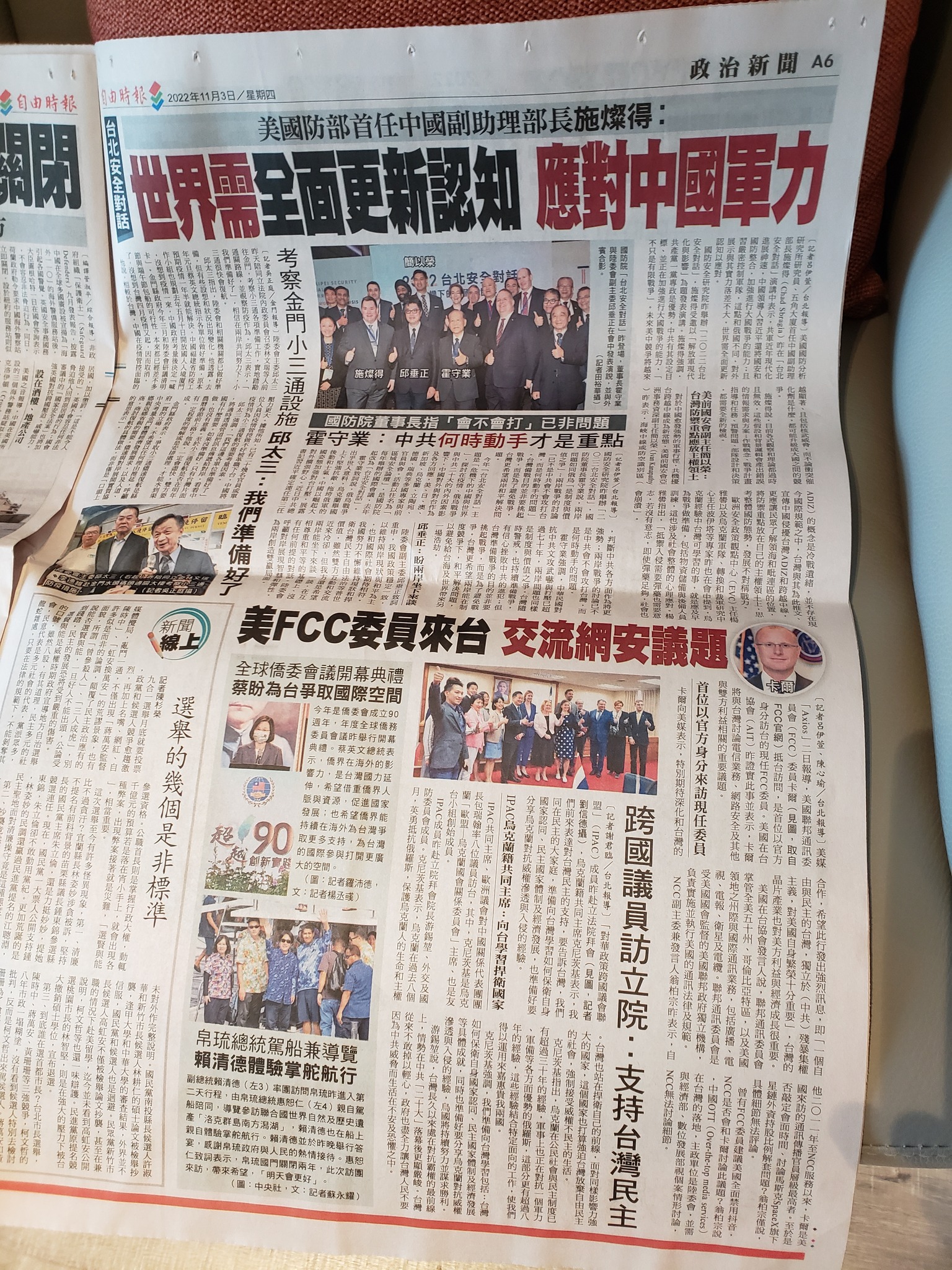
Taiwan news, Thursday (3/11/2022) print newspaper. Most important news is tucked away inside A6, I find the only print newspaper left in Taipei confusing. A global security dialogue took place in Taipei, a second-third track quasi-official conference full of leaders from the Indo-Pacific. That the focus is on the China Threat is not surprising. That a former US official called on Taiwan Republic to focus its resources to defend its soverignty is fantastic — this echoes President Tsai’s main idea, and is why the China communists-KMT and some American academics are staging such fierce information warfare against Tsai and Taiwanese democracy.

On the same page is the other significant news: the head of the American FCC is visiting Taiwan Republic to discuss cybersecurity. Taiwan Republic just established a Ministry of Digital Affairs and assigned their genius cabinet member Audrey Tang (part Taiwanese, part Vulcan) to head it. Remember the head of the Taiwanese FBI visiting the head of the American FBI? Then I pointed out that whether the Library of Congress style categorizing has the heading of hacking, cybercrime, industrial espionage, illegal drugs, or human trafficking, these are all spokes leading back to the Chinese Communist Party. And so once the Americans started counterattacks against the Chinese communists in semiconductors, then I am looking at ways the US will lead its democratic allies to combat the Chinese in financial, cyber, and other related realms. Taiwan is an interesting frontline beyond the obvious geography — China, HK, Taiwan, California — the movement of people, multiple passports, nationalities, know-how, capital — dictator Xi plugged up HK as a conduit to strengthen (temporarily) his dictatorship, the US, in turn, shows up in Taiwan Republic with FBI, DEA, Coast Guard, and Homeland Security. A multifront, all-domain, global struggle. 4.11.2022

© Taiwan in World History 台灣與世界歷史. This site grants open access for educational and not-for-profit use. Maps and illustrations are borrowed under educational and not-for-profit fair use. If you are the rights holder and prefer to not have your work shared, please email TaiwanWorldHistory (at) Gmail (dot) com and the content will be removed.
Leave a comment

Filed under Taiwan Republic

What are the status quo – Taiwan Republic studies and a changing global reality: World history, geostrategery, and Taiwan Republic 台灣国 classrooms

When it comes to the Taiwan Strait the actors and players, however different they are, converge on the quasi-religious, allegedly sacred principle of the “status quo.” But what does it mean, and is it that important?

President Biden and Secretary Blinken recently – and accurately – framed the status quo as no side using violence to change the de facto reality. What has been the reality? In China there is unfortunately a ‘People’s’ Republic of China with a Chinese communist dictatorship – and in Taiwan, there is a “Republic of China” that used to be a warlord Chiang dictatorship, but since the 1990s has become a stable, electoral democracy. Whatever official name one gives to the political entity exercising democratic sovereignty over Taiwan, Taiwan has never been a part of the PRC.

Is this “status quo”? Philosophically the concept of the status quo has always been a fudge, a placeholder, an illusion. World history and human behavior are always dynamic – we build monuments and write last wills and testaments all in desperate, futile attempts to pretend that there can be permanence, unchanging, but this is impossible. The “status quo” hedge was formulated in the 1970s to get to pressing business – US-communist China facing down the USSR – moving, and deferring irresolvable differences over Taiwan.

The US government has been inconsistent, and self-contradictory for decades on its own Taiwan policies. The one constant element regarding its meaning of the status quo is no war – and no military coercion to change the status quo. This is ironic given some American anti-war activists rhetorically converging with some US think tankers converging with Chinese communist propaganda about what the status quo means, and who is allegedly pushing for war.

So, if the historically accurate definition of the status quo is that “RoC/Taiwan/Make up any name it actually matters less than democratic sovereignty derived from free and fair elections in Taiwan” has never been a part of the People’s Republic of China, and Taiwan’s future must be peacefully and democratically decided by its 23 million citizens free from coercion and threats, then I cannot think of a major political party nor likely presidential candidate in Taiwan who would dare to veer far from this democracy red line. Can we say the same for American academics and think tank experts? Their relative reluctance to center democratic sovereignty is fascinating and ought to be a separate study/book.

I think a particularly bad habit pushed by the China communists and China KMT is to overload the system with character salads and mind-numbing numerical formulations – the fictional 92 consensus that’s not a consensus, the three yes and four no’s and the five musts and twelve something somethings and on and on and on. Cutting through the junk, the fundamental belief of the Chinese communists, some in the China KMT, and some in American academia are that might makes right – communist China is bigger, its status quo, which is invasion and annexation of democratic Taiwan, is the meaning of status quo. This is also why some American experts will do almost anything to avoid using the words democracy/dictatorship – ever notice that? I bet they talk about democracy plenty when it comes to domestic American politics though. As Mr. Spock would say, fascinating.

Two additional issues are usually ignored but worth thinking about. Historically, in terms of “separatists” and “splittists” – in 1949, it was Mao and the Chinese communists who added the tragic comedic word “People’s” to the Republic of China and created the reality of two Chinas – so, who split from whom? What would geopolitics have been like had Mao kept the national name and declared Chiang a bandit?

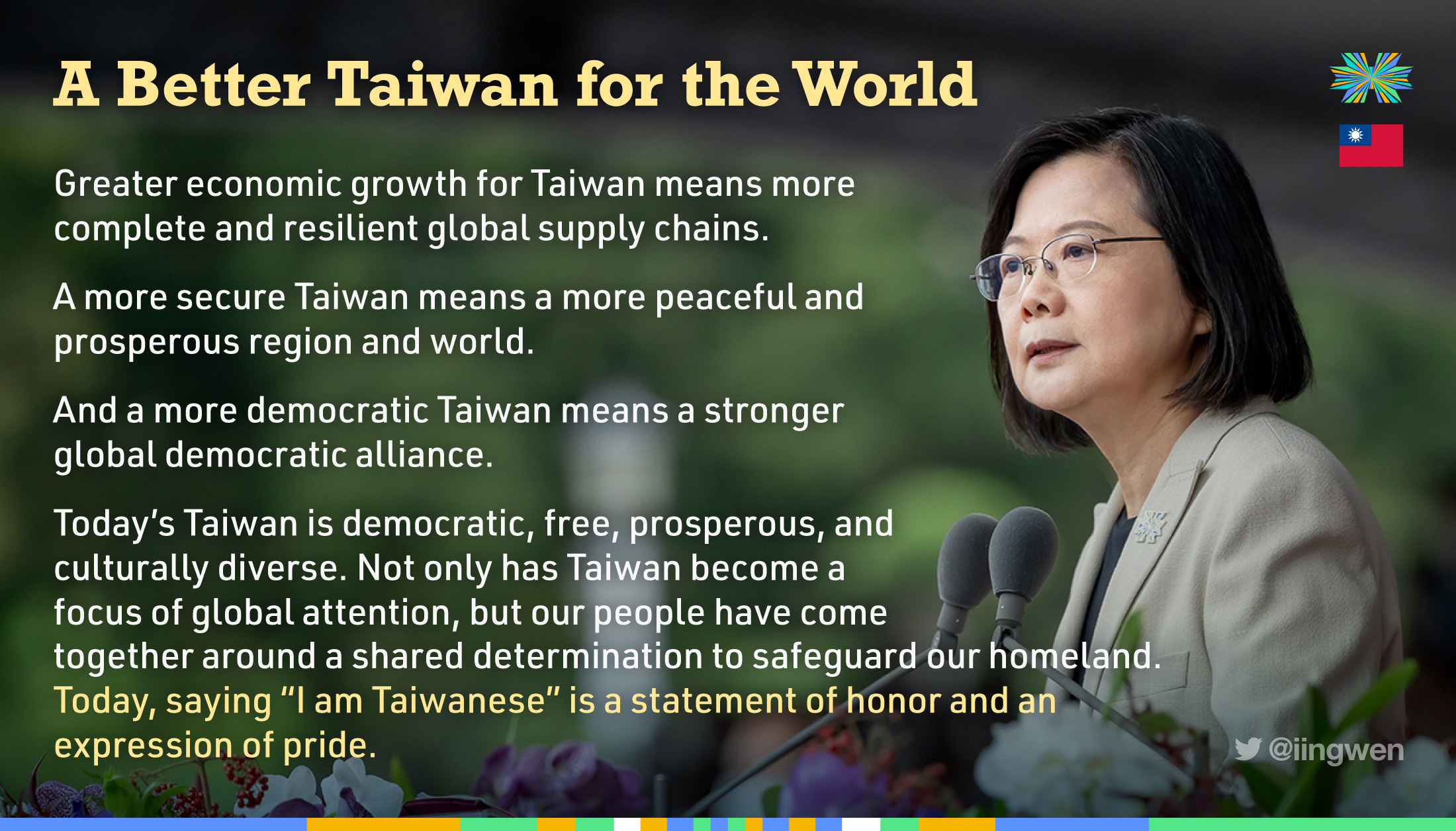
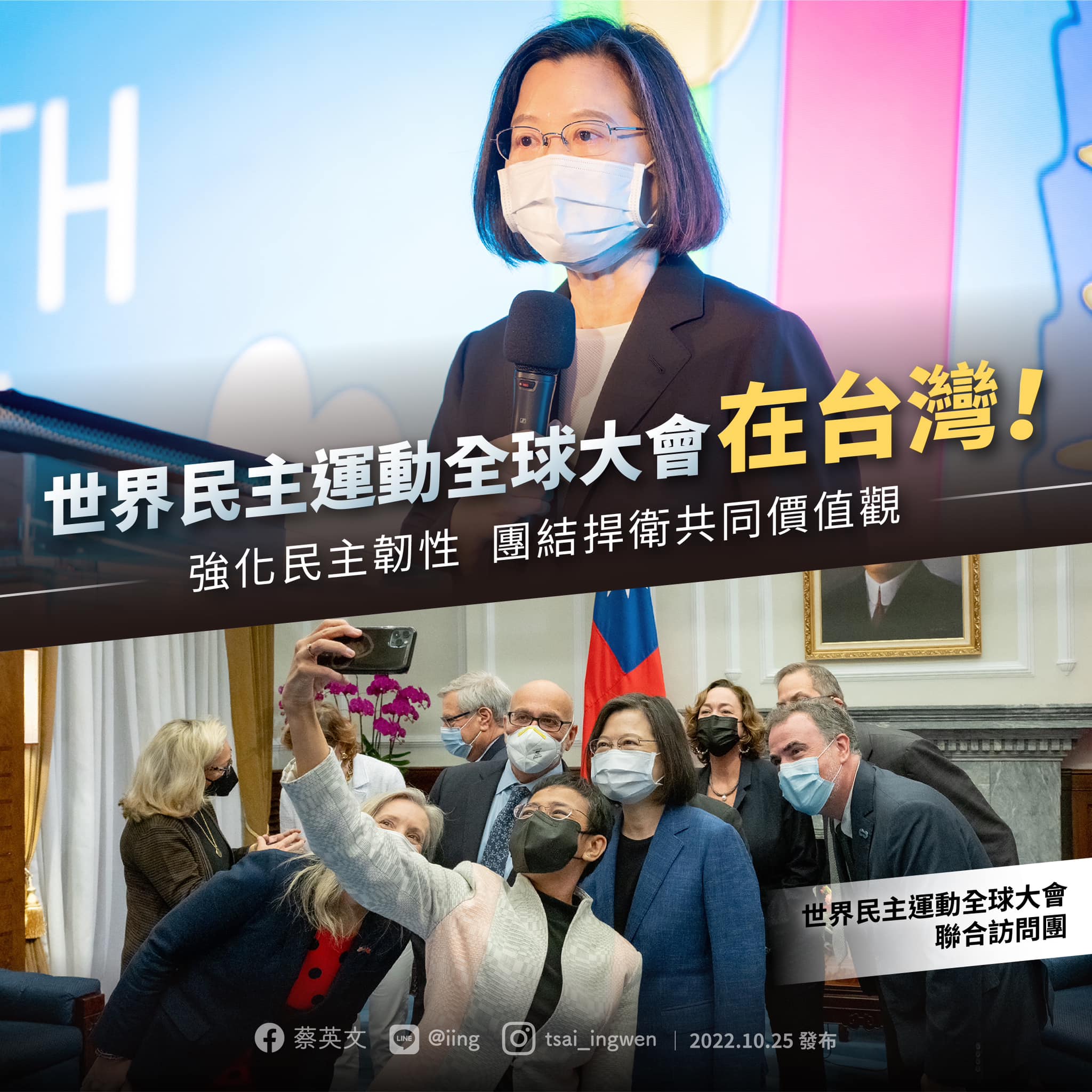
And I know this is difficult to swallow given concerted China communists and China KMT, and some US academics’ propaganda to vilify the democratically elected president of Taiwan Tsai Ing-wen. Decades from now world history will show that Tsai’s moderate, intricate domestic and foreign compromises are the last plausible opportunity for the China communists and China KMT to have a facesaving option to avoid a wasteful, unwinnable war. Yes, President Tsai has danced around RoC RoC-Taiwan RoC is Taiwan. Her red line is democracy and peace, not having or not having China in the national name – and notice, she has never, ever made pronouncements about the future. Like any good world historian and believer in democracy, she knows that that is a bad habit brought to Taiwan by Chinese authoritarians – to have the arrogance and imperiousness to leave edicts to descendants on what they may or may not do. Democracy, peace, and letting the future citizens of Taiwan democratically and peacefully choose their own path. In an era of narrow ethnonationalism (China CCP and China KMT, plus fascism all over the democratic west), Tsai’s policies are a bulwark for principled democratic values. Would be lovely to see self-styled progressives and enlightened western academics and journalists support this kind of thoughtful policy from President Tsai, both for democracy and for true peace. 29.10.2022

© Taiwan in World History 台灣與世界歷史. This site grants open access for educational and not-for-profit use. Maps and illustrations are borrowed under educational and not-for-profit fair use. If you are the rights holder and prefer to not have your work shared, please email TaiwanWorldHistory (at) Gmail (dot) com and the content will be removed.
Leave a comment

Filed under Taiwan Republic

Bibliography: Taiwan Republic and related military reports: Geostrategery and Taiwan Republic 台灣国 classrooms

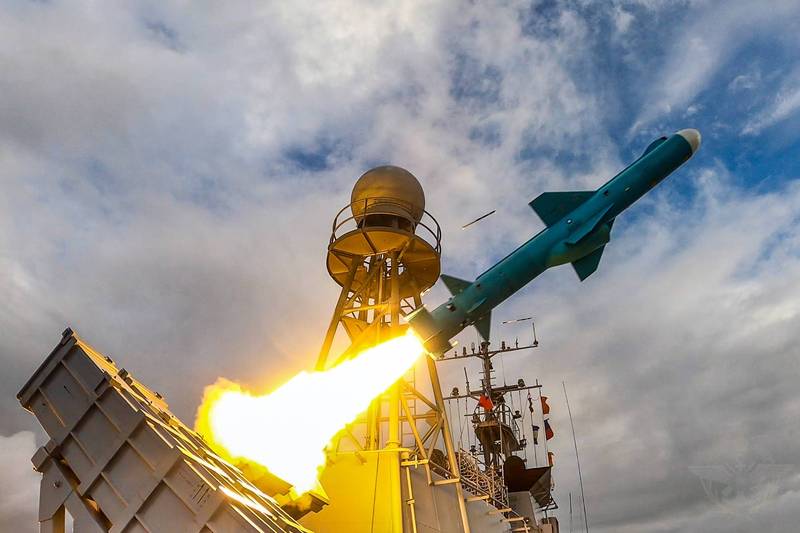
A pattern for recent Indo-Pacific military reports is that Taiwan Republic has placed more emphasis on munitions and logistics (at least in public). All of the major players, US, Japan, Taiwan Republic, and Australia, are behaving as if a Chinese communist invasion to annex Taiwan is likely – and, that such an attack would not be “contained.”

On the policy side, American rhetoric – unusually blunt, urgent, public, dire – remains not yet matched by action. The US government is a giant, lumbering, mega bureaucracy – often at war with itself or worse, one part not aware of what another part is doing. Urgent warnings of a possible Chinese invasion is contradicted by delays in weapons deliveries to Taiwan – and the continued arguments over which weapons are “asymmetrical” or not are not helpful, or most important, the US has not yet fully committed to and bringing along other democratic allies, to take the Chinese invasion of Taiwan off the table as an option for Beijing – joint maneuvers, integrated training, counter-intelligence and intelligence, and most importantly, helping the democratically elected civilian leaders of Taiwan Republic reform their China KMT dictatorship legacy upper national security and intelligence establishment.

The best recent sign is that the purposeful leak of US-Taiwan cooperation in arms manufacturing did not lead to public denial or backtracking. Anyone used to the US Taiwan policy failures of the 1980s and 1990s would have expected that. The struggle against the Chinese communists is an all-domain global struggle, for which the military is an important portion – trade, technology, semiconductors, agriculture, education, etc. are all battlefields. If both sides proceed wisely with the arms manufacturing plan, it should speed up the delivery of key munitions to Taiwan, while integrating Taiwan into the US-led global arms supply chain. Not spoken and a guess on my part: If you study how the Chinese communists defeated the China KMT 1945-1949, you would be pretty worried about whether the top-level Taiwan-manufactured missiles and radars have been compromised by communist infiltration. I hope a part of this collaboration is a US-led effort to assist Taiwan in filtering out this important counterintelligence effort. Foreign media have marveled at how the Taiwanese do not appear alarmed by repeated Chinese communist threats to invade – a complicated issue for which I only have guesses/theories – what I have noted is that Taiwan as a nation does not behave in terms of operational security as if it has a gigantic communist neighbor dedicated to annexing it. 

Two final points. First, whatever anyone means by “asymmetrical” – Stingers and Javelins will do nothing for Taiwan Republic without integrating Taiwan into a US-led regional security scheme. How the US, Taiwan, Japan, and other democratic allies design the specifics of this plan, balancing what will deter and deny a Chinese invasion, without being needlessly careless diplomatically, is the main task at hand. Second, beyond a long-delayed democratic reform and modernization of the top Taiwan national security establishment, what the US and Japan can assist the most in is Taiwan’s decades-delayed improvement of its naval surface fleet. Taiwan’s navy is lost, directionless, and decades late in the AEGIS/VLS realms. Having watched this for decades, I just don’t see forces within the Taiwanese navy, or Ministry of National Defense, or the civilian democratically elected leaders who have the expertise or the power to nudge the surface fleet along. 27.10.2022

陸射魚叉飛彈2024起交付

對美採購肩射刺針飛彈 2025年全數、甚至提前交運

國軍強化作戰持續力 明年編898億 補充彈藥零附件

空軍採購66架F-16 C/D 戰機延遲1年交貨 2025年第三季首批6架返台

《TAIPEI TIMES》Overhauled frigate project unveiled

輕巡防艦拚3年交艦 將掛載增程雄三

發展不對稱戰力!「無人機」3跨部會整合 國家隊最快明年7月成形

海軍輕型巡防艦選用混合動力推進系統 恐埋下維修「惡夢」

Taiwan to upgrade combat systems of Kang Ding-class frigates

【無人機掘金礦1】中科院軍用無人機發展無極限 經緯董座首揭新銳鳶明年量產

軍民兩用無人機|烏俄戰場顯奇蹟|#羅正方 #矢板明夫 #汪浩|@華視三國演議

「富江艦」下水後 國防部:下一艘預計12月底前下水

多項新軍購案待宣佈 國防部證實:尚有數案刻於美方行政審核中

US mulls arms delivery to Taiwan: MND report

陸軍本週以4億元採購5000枚紅隼火箭彈 強化國土防衛能力

國防部造輕型巡防艦 防空型、反潛型2025、2026年服役

Asymmetrical warfare focus has Taiwan drone companies upping the ante

© Taiwan in World History 台灣與世界歷史. This site grants open access for educational and not-for-profit use. Maps and illustrations are borrowed under educational and not-for-profit fair use. If you are the rights holder and prefer to not have your work shared, please email TaiwanWorldHistory (at) Gmail (dot) com and the content will be removed.

Leave a comment

Filed under Taiwan Republic

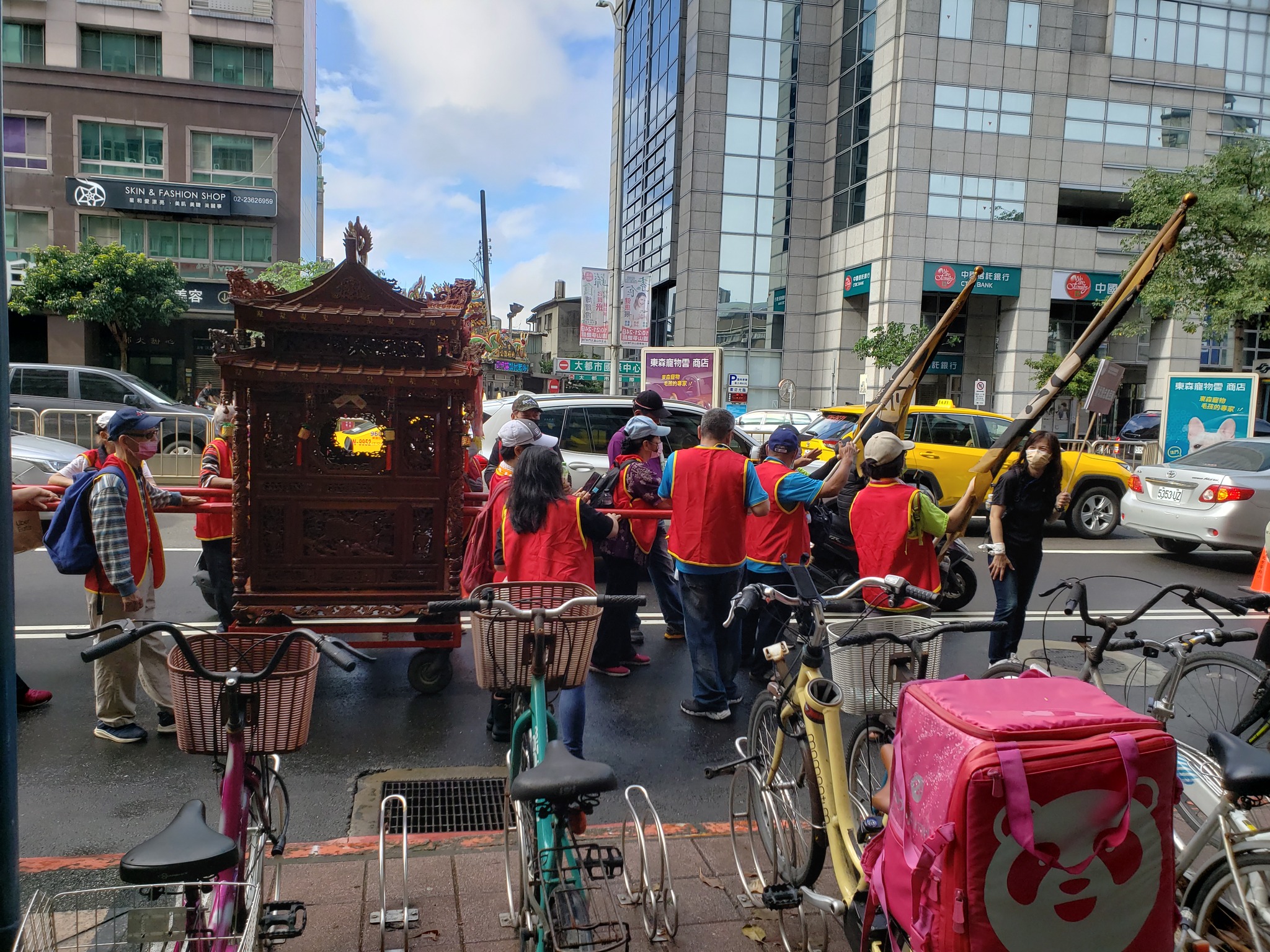
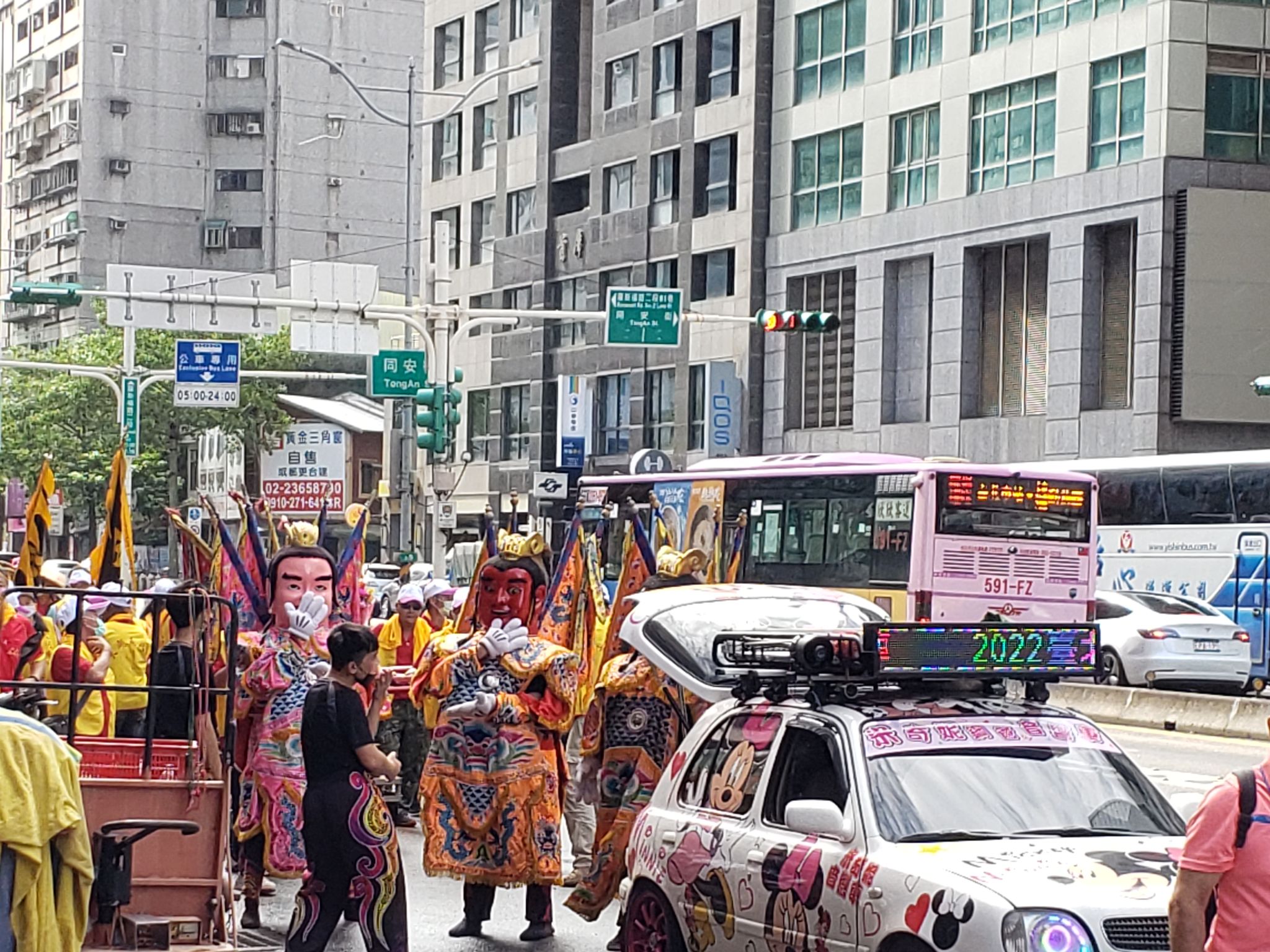
A Taiwanese Hakka temple festival parade (featuring Minnie Mouse?!) – this emerging Taiwanese national identity: Taiwan dispatch, historical memory, and Taiwan Republic 台灣国 classrooms

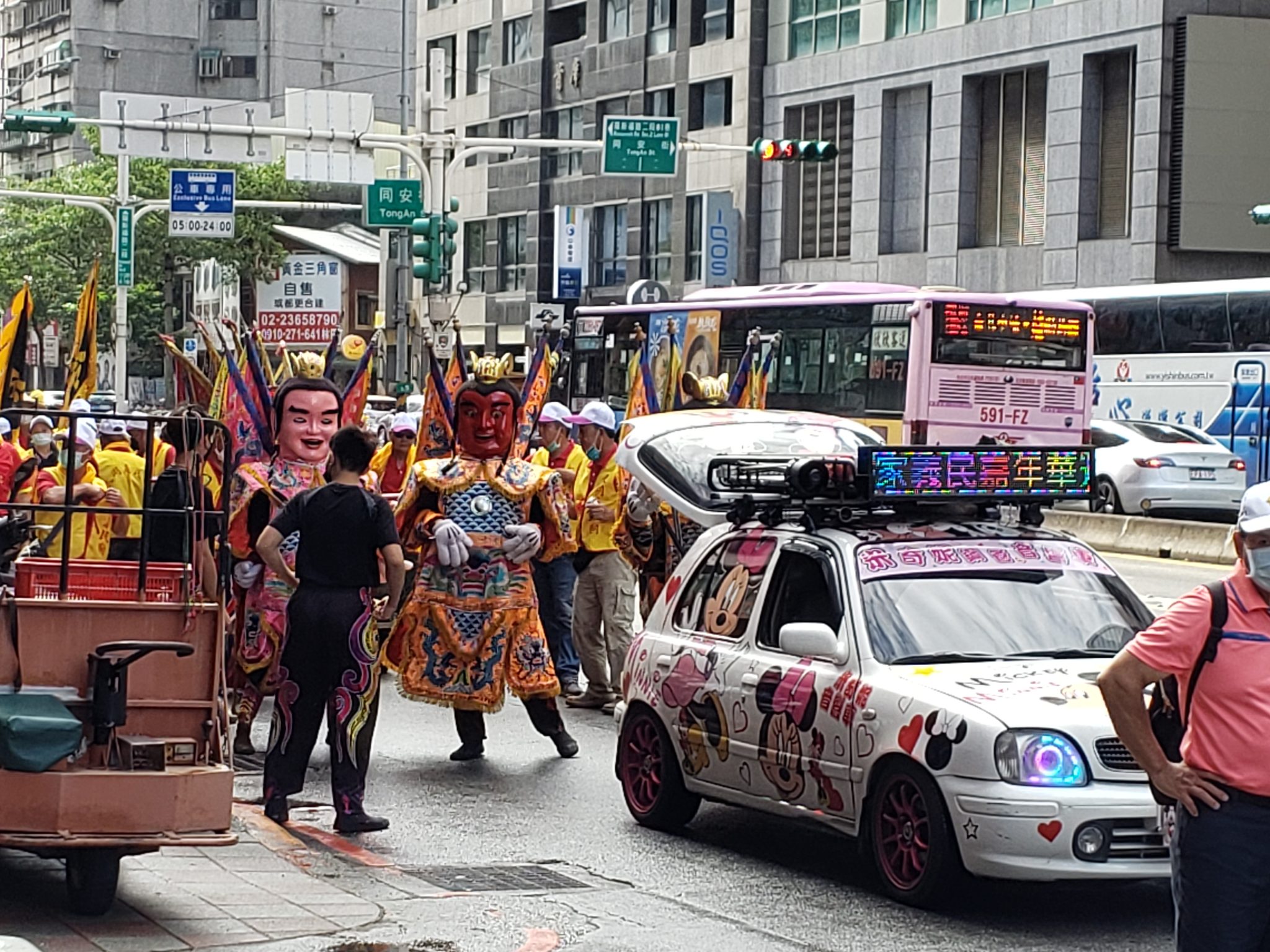
Taipei Hakka temple festival parade – This emerging Taiwanese national identity …. Goddesses and Gods. You go to the traditional market with mom (the sadly disappearing 古亭市場 Guting Market), you happen to run into a massive Hakka Temples Parade. And mom is now used to her American son, baseball cap in tow, running off like an idiot with his camera while all the local shoppers carried on.

The Goddesses and Gods from different temples are carried with traditional carriages and parishioners — interesting to compare the flags and clothing with ceremonies and rituals of the British monarchy. Taiwan being hilariously Taiwan, it had to include the Three Gods 三太子 wearing what looks to me like Minnie Mouse hands (?!) preceded by a pop-dance music sedan (I am too old to tell you what they are playing except to say I muttered something Grandpa Simpson would mutter about music ….) with maybe copyright infringing Minnie Mouse? And why Minnie and not Mickey?

I’ve written previously about the heterodoxies of Taiwan as a matter of facing reality, pragmatism, and national survival — contrary to the imperialist, Marxist-Leninist orthodoxies of the China CCP-KMT (both Leninist Chinese parties are also deeply addicted to faux ancient dynastic symbolisms and rituals ….), or the modern nation-states and progressivism/conservativism/liberalism of western imperialists. To have so many groups with so many languages and so many different historical memories survive relatively peacefully in a relatively small Taiwan, while facing a gigantic foreign enemy, Taiwan cannot afford western nor Chinese orthodoxy-perfectionism. I have never bought the half-hearted “celebrate diversity” slogan of the west — I think this emerging Taiwanese national identity is far more sophisticated and pragmatic. Don’t measure everything, don’t discuss everything, let things be whenever possible, and focus on the very few things that matter for survival. Much as Taipei architecture and urban planning make little sense, and much as Taiwanese political campaigns can be a real mishmash of styles, and much as Taiwanese music and cinema and particularly tee vee shows feels like a potluck or potpourri of mixtures that may or may not make any sense, it is this heritage of heterodoxy – being OK with things that are not coherent, or are even self-contradictory, that makes this peaceful democratization of Taiwan possible. And isn’t it revealing, that democratic sovereignty is such a core to this emerging Taiwanese national identity, and are the two words neither the China CCP-KMT, nor many western experts and journalists, are willing to face directly and earnestly?

I myself, while my non-Hakka vendor was trying to convince me of his anti-Hakka prejudices (I disagree, but politely ignored him because he held my lunch in his hand ….), appreciate the dissonance — same as I felt at the Taiwan National Day 2022, none of it makes any sense, and it is OK to let that be and resist the western-Chinese reflex to try to “fix” it. Wave, smile, and wish the Hakka Goddesses and Gods and the fellow Taiwanese citizens they protect the best. And be OK with this dynamic, incoherent, emerging Taiwanese national identity. 22.10.2022

© Taiwan in World History 台灣與世界歷史. This site grants open access for educational and not-for-profit use. Maps and illustrations are borrowed under educational and not-for-profit fair use. If you are the rights holder and prefer to not have your work shared, please email TaiwanWorldHistory (at) Gmail (dot) com and the content will be removed.

Leave a comment

Filed under Taiwan Republic

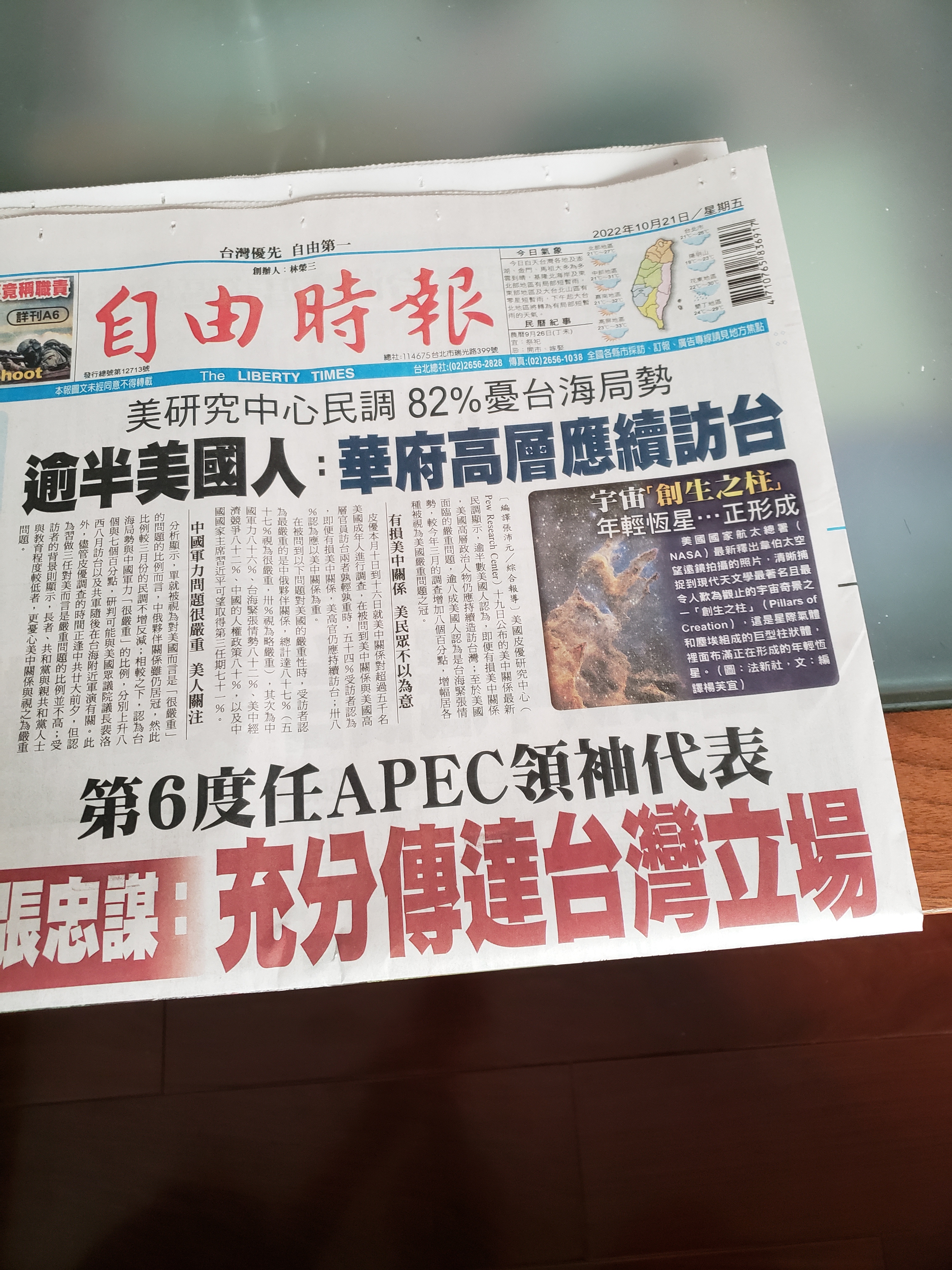
Bibliography: A Chinese communist invasion to annex Taiwan Republic “imminent”?: Taiwan dispatch, geostrategery, and Taiwan Republic 台灣国 classrooms

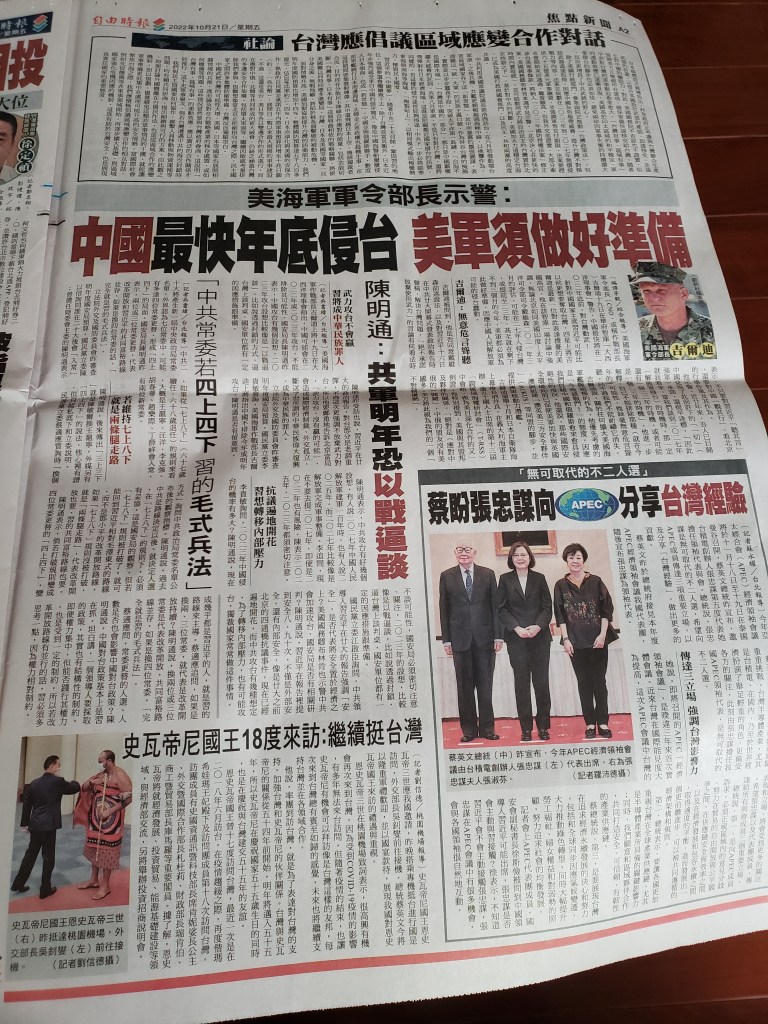
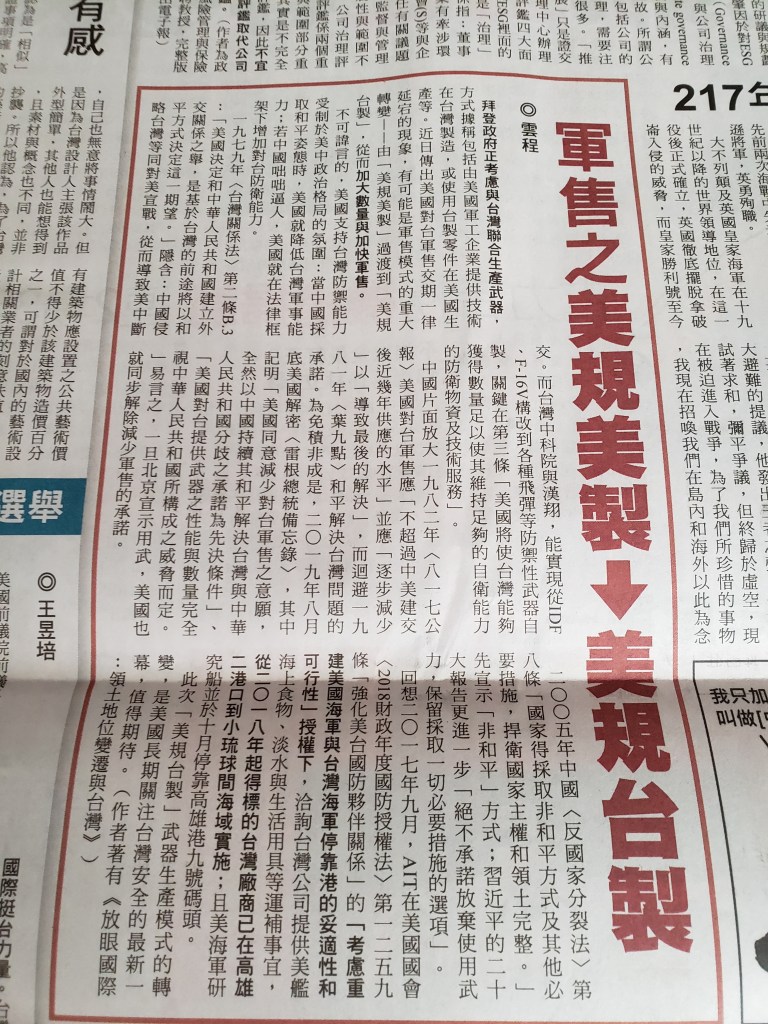
Taipei is now sadly a one traditional newspaper town (traditional as in print). A few observations. Amazing how much Taiwan Republic and the world have changed that the leader of the US Navy speaking of imminent Chinese communist invasion to annex Taiwan is on the second page, not the front. The big news about US-Taiwan Republic co-producing weapons got tucked away, though with a very interesting op-ed.

If you asked me a year ago if there would be a war, I would have said 10% yes, 90% no — now watching the body language of American, Taiwanese, Japanese, and European (minus Germans ….) political and military leaders, we are now at even odds, 50-50. In retrospect, when former Prime Minister Abe coaxed and warned the US to reexamine its policy of strategic ambiguity, it was probably not a theoretical argument. Big mistake if you think a war will be Taiwan focused or can be contained to Taiwan — this is not Ukraine/Europe, study the map and you will see why any Chinese communist invasion will become a kinetic world war. This is why it is so critical to pursue military, political, economic, and diplomatic policies now to prevent Beijing from attacking – without forcing Taiwan to surrender its democratic sovereignty.

再提中共欲加速統一 布林肯:可能用脅迫甚至武力[影]

China’s Accelerated Timeline to Take Taiwan Pushing Navy in the Pacific, Says CNO Gilday

China’s plans to annex Taiwan moving ‘much faster’ under Xi, says Blinken

© Taiwan in World History 台灣與世界歷史. This site grants open access for educational and not-for-profit use. Maps and illustrations are borrowed under educational and not-for-profit fair use. If you are the rights holder and prefer to not have your work shared, please email TaiwanWorldHistory (at) Gmail (dot) com and the content will be removed.
Leave a comment

Filed under Taiwan Republic

US mulls plan to produce arms with Taiwan: report – Taipei Times: Geostrategery and Taiwan Republic 台灣国 classrooms

The US government is considering a plan to jointly produce weapons with Taiwan, Japan’s Nikkei newspaper reported yesterday, citing three sources. Washington wants to step up production capacity for US-designed arms and speed up their transfer as part of a move to bolster deterrence against China, Nikkei reported. The report added that a person with direct knowledge of the US government’s deliberations said discussions had begun, while a different source said it was likely to take some time. Possibilities would include the US providing technology to produce weapons in Taiwan, or producing the weapons in the US using Taiwanese parts, the Nikkei added.

This is a fascinating ‘leak’ – or purposeful ‘official leak’. Is this to test reactions? Meant to sabotage further collaboration between the US and Taiwan Republic? Are arms producers on both sides jockeying for position?

The main idea makes strategic and tactical sense. And like most things in this realm, should have been done decades ago. But wouldhave couldhave shouldhave. Strategic in this being a substantive signal to the Chinese communists that the US and its democratic allies are serious about their ‘red line’ re: not allowing a Chinese communist war of annexation against Taiwan. Tactically, there are lower-level or specific weapon systems – Javelins and Stingers, HIMARS and AMRAAMs and Harpoons – where the US annual requirement would not be able to sustain a supply line that can meet Taiwan’s more acute needs. We have already seen examples of this in the Russian invasion of Ukraine – the US having to deplete its own stockpile while scouring warehouses globally to meet a medium-level intensity conflict. A Chinese communist invasion of Taiwan would deplete munitions at a far higher rate.

This is also another example of a sign of a long-needed normalization between the US, its democratic allies, and Taiwan – i.e., “US technology” used in “Taiwan weapons” have been going on for decades, with rumors and hints but no official confirmations. Whereas this is one of many recent moves signaling that both sides have moved away from the decades-long unhealthy self-imposed restrictions to behave as two democratic nations ought to behave. To repeat a simple but critical idea, however, the reaction to the China Threat must be systemic – arms coproduction must be linked with joint training and US assistance with upper-level Taiwanese military and intelligence reforms; just as the resistance to the Chinese communist threat must include economic, trade, technology, educational, cultural, agricultural, and other realms. 20.10.2022

© Taiwan in World History 台灣與世界歷史. This site grants open access for educational and not-for-profit use. Maps and illustrations are borrowed under educational and not-for-profit fair use. If you are the rights holder and prefer to not have your work shared, please email TaiwanWorldHistory (at) Gmail (dot) com and the content will be removed.
Leave a comment

Filed under Taiwan Republic

Taiwan National Day 2022 as art – this emerging Taiwanese national identity: Taiwan dispatch and Taiwan Republic 台灣国 classrooms

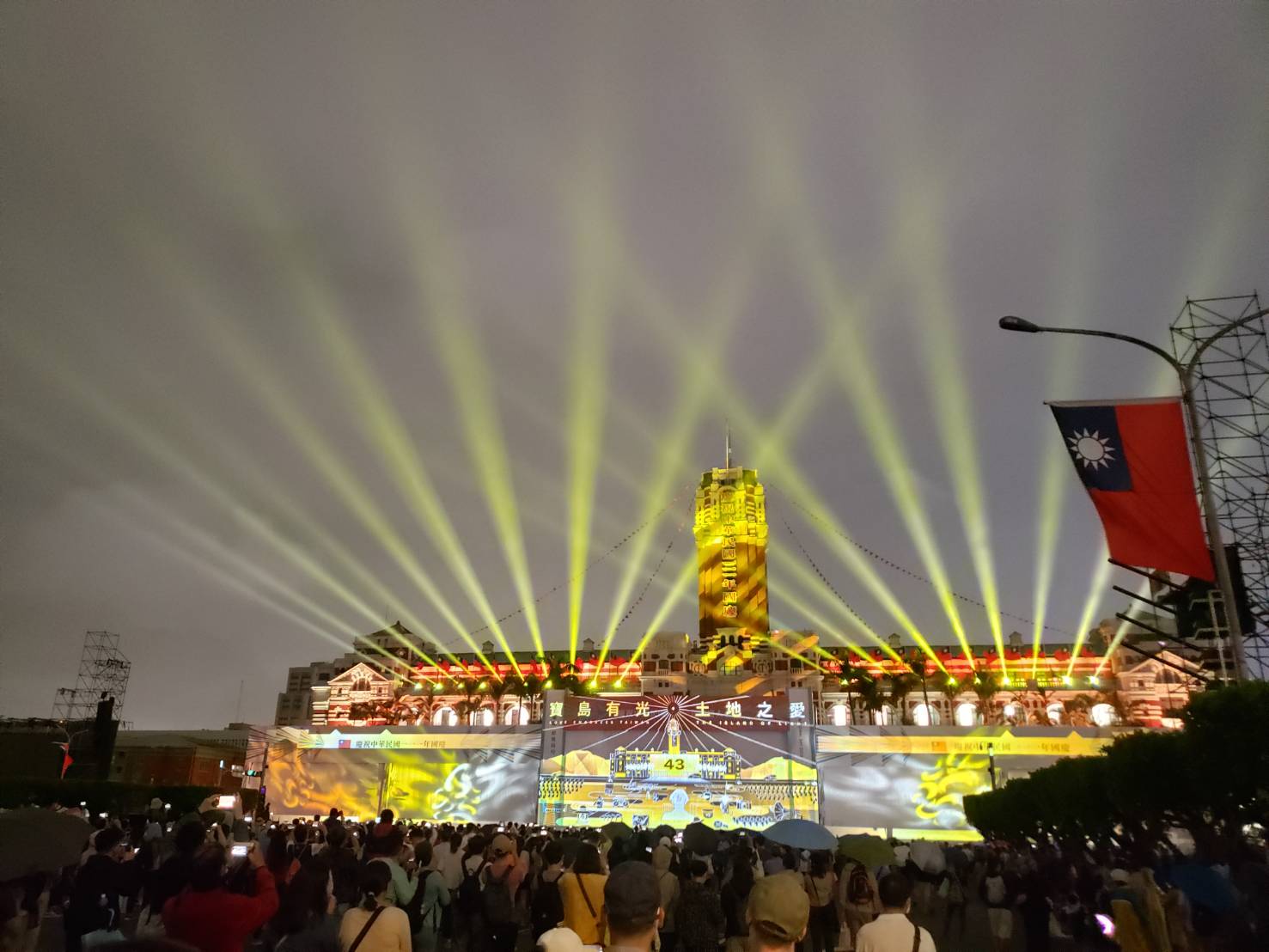
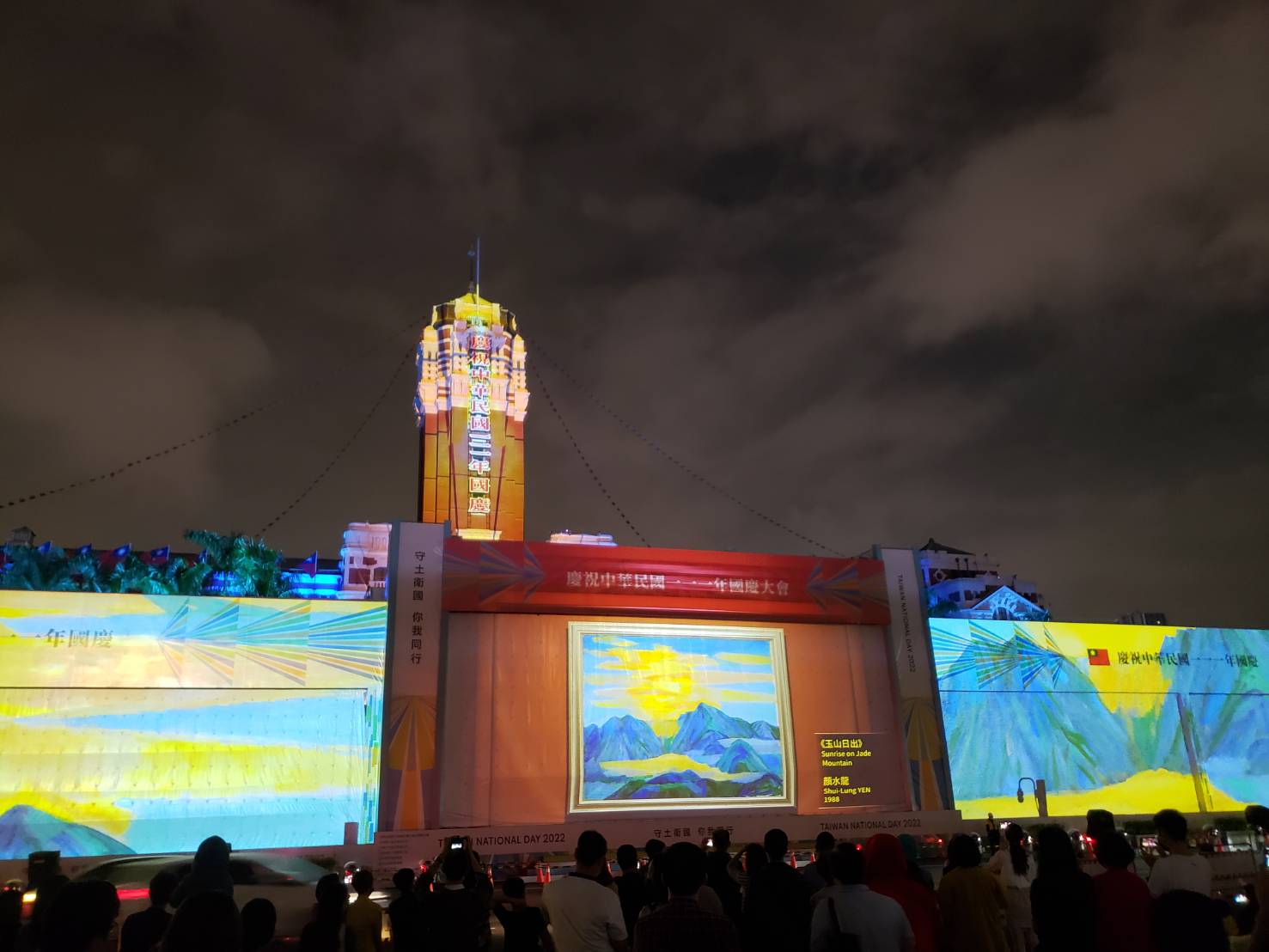
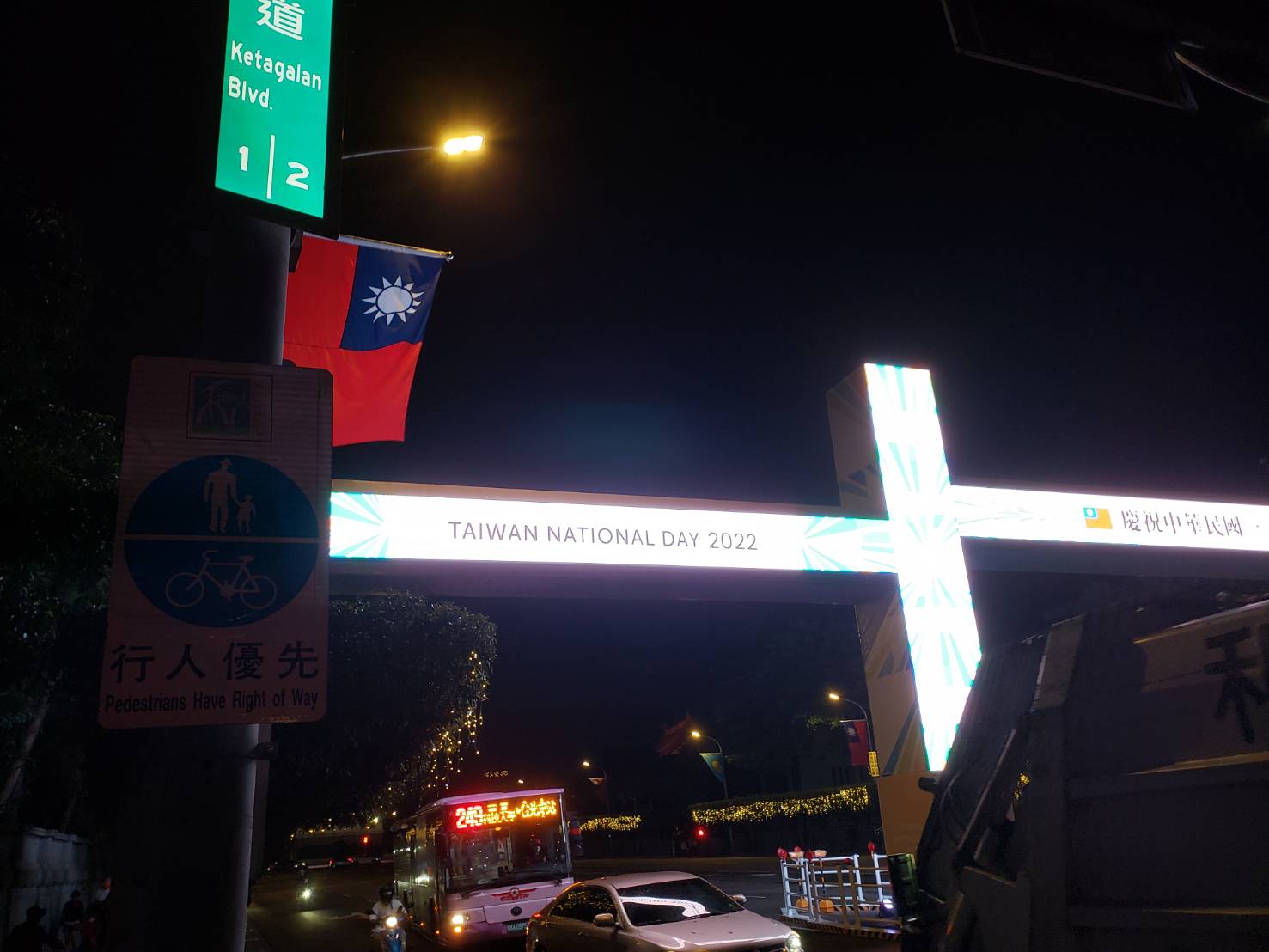
This emerging modern Taiwanese national identity. I took the subway (two convenient stops) to the Japanese Colonial Administration Building 臺灣總督府/Presidential Palace to see the “national” day laser show. I then walked around the palace and then walked home, less than half an hour, relatively safe (scooters notwithstanding, no guns, few muggings, etc.) This is probably the first time since I was ten, that I have shed a tear or had any feelings for this day. And it is in how President Tsai’s folks narrated the show, through Taiwanese artists, musicians, and filmmakers, melding home, family, and nation together — a Taiwan that belongs to the world — while opening that democratic space I have been writing about where more Taiwanese who immigrated before 1949, from 1945 to 1949, and after, could find democratic, peaceful common ground in this emerging Taiwanese nation. I have here the moment when the last painting of my favorite artist Chen Cheng-po of Taiwan Republic’s sacred Jade Mountain came on screen and my eyes teared up, he was murdered by the invading China KMT, and the show followed with this complex blend of people, ideas, and ways of telling this Taiwan story. Whatever differences we may have, this is where we were born, this is the soil that nurtured us, this is the nation we share, and this is where we will die. Or, as I wrote this morning, nationalism-patriotism without loving the human beings who share this land is meaningless. Nations are not about flags and names and constitutions and “history.” Many western and even many Asian/Taiwanese scholars are missing or ignoring the importance of this massive national identity engineering project of President Tsai. An impressive feat, taking the symbol of colonial administration, to Chinese KMT colonial occupation, and projecting diverse Taiwanese film and art and music and collective memory onto that symbol — in my own lifetime, I have witnessed that same building used by dictator Chiang Ching-Kuo extolling us to take back his fictionalized China, to this new emerging Taiwanese nation with democratic sovereignty. This relatively bloodless national revolution, decades in the making, marches on. Remarkable. May Taiwan Republic, democracy and human rights, full of art and music and good food, emerge from this process. 8.10.2022

© Taiwan in World History 台灣與世界歷史. This site grants open access for educational and not-for-profit use. Maps and illustrations are borrowed under educational and not-for-profit fair use. If you are the rights holder and prefer to not have your work shared, please email TaiwanWorldHistory (at) Gmail (dot) com and the content will be removed.
Leave a comment

Filed under Taiwan Republic

Bibliography: Taipei aims to bolster information sharing with allies, build up its war reserves and protect key infrastructure, a vice defense minister said, Taipei Times: Geostrategery and Taiwan Republic 台灣国 classrooms

Official calls for global efforts to contain China. DEFENSE BUILDUP: Taipei aims to bolster information sharing with allies, build up its war reserves and protect key infrastructure, a vice defense minister said. Deputy Minister of National Defense Wang Shin-lung (王信龍) on Monday called for global efforts to contain Chinese security threats, including through joint military exercises, a strategic communication platform and the sharing of drone signals. In terms of military cooperation with the US, Wang said that Taipei hopes to establish an “intelligence, surveillance, reconnaissance” sharing mechanism with Washington and enhance routine high-level official dialogue. Following his speech, Wang told Taiwanese reporters that his delegation had “productive” meetings with the US side during the conference held from Saturday to yesterday. “In the closed-door meetings, we have had candid exchanges concerning the obstacles and possible risks we are facing in terms of US arms sales, while the US side pledged it would do its best in helping Taiwan to solve these problems,” Wang said.

We will see if words and policy declarations are matched by actions. After decades of contradictory US policy regarding the west Pacific, if these reports are accurate, and if the Biden administration follows through on investments in western Pacific democratic alliances, then they should be credited for substantively advancing American national security interests.

Given the gravity and urgency of the communist China threat, it is mind-boggling that the democratically elected presidents of Taiwan and the US do not meet regularly, nor do their Secretary of State and Foreign Minister, Secretary of Defense and Minister of Defense, and so on. These self-imposed restrictions by the US have long outlived their original purposes, much as the original communique, the One China myth-pacifier, etc. And while DC and Taipei have been, for decades, stuck in this self-manufactured, very boring rom-com KPop soap opera, tea leaf reading for signs of relationship upgrade and downgrade, in this life and death crisis created by the Chinese communists, direct conversations at the highest level between the democratically elected leaders of the US and Taiwan are pragmatic and in the interest of national security on all sides.

As we have seen with Ukraine, a sign of western imperialism is in how western academia, journalism, think tanks, and officialdom overestimate the role their actions figure in the calculations of autocrats in Moscow, Beijing, and elsewhere. No serious observers on any side have advocated needlessly “provoking” the Chinese communists. Yet it is fascinating to see how difficult this false conviction will not die – Did Putin really invade democratic Ukraine over NATO or not being coddled even more by the west, or were there ultimate factors internal to Russia and that dictatorship? Do we seriously believe a Pelosi visit or even the US changing Taiwan’s embassy in DC name from Taipei to Taiwan are the primary or even secondary drivers in the Chinese communist calculation over when their Taiwan annexation D-Day would come? Western imperialism may find this line of thinking self-flattering – frontline democracies like Taiwan Republic, Ukraine, the Baltics, and Poland cannot afford this fantasy. Autocrats are most likely to attack when they think they are stronger, and when they think we lack the will to resist. The main thing that matters to dictators is the preservation of their dictatorship.

The priorities outlined here by the Taiwanese Ministry of National Defense are sensible, and I am glad to see them specifying priorities in public, like intelligence sharing and coordination, interoperability, and joint exercises with the US and democratic allies. These are commonsensical ideas that for decades, because of unwise political decisions, the US-Taiwan-Japan have voluntarily ceded to communist China in lieu of military preparation. Also, a good sign that the relatively cautious and conservative Taiwanese military is willing to engage the US and the public this way – the core of Taiwan’s national defense will require the democratization and modernization of its military leadership. As the world should have learned from Ukraine, the priority must be to prevent a Chinese communist war of annexation from beginning. And while words like “dialogue” and “talks” and “compromise” are not bad per se, I have seen no evidence that they prevented or slowed the Russian decision to invade Ukraine. Ultimately, what may encourage a dictator like Xi to give his war plan to annex Taiwan a second thought is seeing concrete evidence that such a war will lead to the end of his dictatorship. How to communicate – in words and deeds – this reality to dictator Xi, is the top priority for Taiwan, the US, Japan, and global democracies. 6.10.2022

© Taiwan in World History 台灣與世界歷史. This site grants open access for educational and not-for-profit use. Maps and illustrations are borrowed under educational and not-for-profit fair use. If you are the rights holder and prefer to not have your work shared, please email TaiwanWorldHistory (at) Gmail (dot) com and the content will be removed.
Leave a comment

Filed under Taiwan Republic