Tag Archives: historical memory

President Tsai Ing-wen and this emerging Taiwanese national identity, part one. Taiwan Republic 台灣国, national identity, and world history classrooms.

President Tsai Ing-wen and this emerging Taiwanese national identity, part one. Taiwan Republic 台灣国, national identity, and world history classrooms. It will take many decades to fully assess President Tsai Ing-wen’s legacy. Oral history, historical archives, primary documents and not yet available – and this phase of Taiwanese history is particularly significant and dynamic – Western imperialist academics would probably say “fraught” or “nuanced.” So, these reflections are super preliminary. My main thesis: even though by temperament and reputation President Tsai is moderate, almost boring, Taiwanese national identity under her eight years made revolutionary leaps.

Historians tend to credit significant changes to the leaders of that time period – reasonable as a kind of academic shorthand. Of all elements of public life, national identity is the most complex – surely democratically elected president Tsai had an impact on this evolving Taiwanese national identity – but as it is often the case, great leaders also see and hear dynamic changes from the bottom up – and rather than to create those evolutions, they act instead as a channels, creating a path to coherently give words and meaning to these evolving national identities.

To me, the most significant change to this emerging Taiwanese national identity during Tsai’s eight years is that President Tsai, a former China KMT technocrat, miraculously convinced pro-Taiwan DPP supporters to tolerate formal institutions and symbols of the foreign/Chinese-imposed RoC – even up to the bloody reign of the younger Chiang dictator CCK. President Tsai advanced and modified her mentor, Taiwan’s first democratically elected president Lee Teng-hui’s formulation “RoC in Taiwan” into “RoC Taiwan” – starting the periodization at the end of the latest Chinese civil war in 1949, which the China KMT lost before they fled to Taiwan. This is an imperfect, everyone has something to not like compromise – but one which generates a stable, peaceful governing majority among Taiwan’s citizens, and significantly, has the support from the US, Japan, and the Free World. Even though the headlines out of Taipei now are the inevitable counterrevolutions from reactionary, anti-democracy, and anti-Taiwan political parties – if we broaden the historical lens out to centuries of Taiwanese history, the evolution of Taiwanese national identity has always been a two-step forward one or two steps back process.

An important data point to ponder regarding whether the Tsai formulation is transitory or historically significant is to assess the relative positions of new President Lai with former President Chen. Both Chen and Lai had to deal with anti-Taiwan, anti-democracy, and reactionary majorities in the parliament – noise and all notwithstanding, the pro-Taiwan and pro-democracy forces are in far better shape in 2024 than they were in 2000. It was a miracle that President Chen survived the reactionary coup attempts – President Lai has a firmer hold on to the executive branch, pro-democracy majority, and foreign support. And President Tsai’s policies played a significant role in this change – all the boring, non-crowd-pleasing policies she pushed through – pension reforms, improving the standings of the military and civil servants, infrastructure, transforming Taiwan from an international beggar, as the China KMT had formulated, into a positive global contributor, and so on.

The second significant development – and I am still thinking about this – is Tsai’s push for the Taiwanese to ponder, to enact, this emerging Taiwanese national identity apart from the “China-or-Not-China” construct – real independence comes only when the Taiwanese stop habitually comparing themselves first to China, or to China alone. To me, President Tsai’s calls for citizens of Taiwan to think of Taiwan as a part of the world is a significant revolution – to change decades of Chinese colonial, imperialist brainwashing that Taiwan is “only” a cultural periphery of a superior Chinese imperial core. And through an understanding of world history and global studies, to see Taiwan’s historic, and contemporary roles – not as the China KMT had constructed – Taiwan as a beggar, a muddied hinterland without culture or history – but as a democratic, sovereign, dynamic Taiwan nation that is positively contributing to the Free World. In this realm, I think the main dynamism and energy come not from formal, institutional, political quarters – or even formal educational institutions. When President Tsai took President Lee’s comment – “The agony of being Taiwanese” and updated it to become “The pride of being a Taiwanese,” I think she is more reflecting and channeling emerging Taiwanese national consciousness from the ground up than she is creating and leading.

Again, a historical comparison is useful. I think up to the late 1990s Taiwan-as-a-part-of-China was framed in Taiwan by the Chinese colonialist occupational elites as a conscious and subconscious “default” – in different realms of public life, to deviate from that default required strenuous efforts. Whereas in 2024 Taiwan is a nation with democratic sovereignty separate from China and any other nation is the new default. This rapid evolution in modern Taiwanese national identity may well explain why reactionary, anti-Taiwan, and anti-democracy leaders like Ma and other members of the China KMT have sharpened their rhetoric and attacks against Taiwanese democracy. As we have seen with political evolutions in North America and Europe, “white privilege” and “Chinese ‘mainlander’ privilege” share historical similarities. Foreign colonial settlers who have enjoyed decades of unearned, illegitimate power losing that privilege to a democratic, dynamic present will often turn to foreign autocratic allies to destroy the democracy from within. 14.6.2024

[illustration: “For Taiwan it is not about independence versus unification; in reality the only problem is a Chinese invasion to annex democratic Taiwan” Source: https://www.threads.net/@chenweiliaodesign?xmt=AQGzkbK9vj9u6STHE5MPKhr9Gx7BQRHQGrdJl4iOf3yynQ ]

© Taiwan in World History 台灣與世界歷史. This site grants open access for educational and not-for-profit use. Maps and illustrations are borrowed under educational and not-for-profit fair use. If you are the rights holder and prefer not to have your work shared, please email TaiwanWorldHistory (at) Gmail (dot) com and the content will be removed.

Leave a comment

Filed under geostrategery, Taiwan Republic, world history

“US clarity key in Strait: ex-commander. SECURITY: The head of the US Indo-Pacific Command has said nothing is vague about helping Taiwan, while a researcher said ‘strategic ambiguity’ prevents conflict, “ Taipei Times. Geostrategery and world history classrooms.

“US clarity key in Strait: ex-commander. SECURITY: The head of the US Indo-Pacific Command has said nothing is vague about helping Taiwan, while a researcher said ‘strategic ambiguity’ prevents conflict, “ Taipei Times. Geostrategery and world history classrooms. My first reaction to Admiral Harris is “Well duh ….” But that’s not very scholarly I suppose. As a world historian what I am reminded of is how often seismic, institutional, complex changes in history take place – and how slowly the supposedly smartest most expertly people adjust to changing, different realities. Often stubbornly refusing to accept these changes. You add in the very human, self-serving tendency to rewrite and smooth out the historical narrative after the fact, and then we tend to forget that almost all major world events came as a massive surprise to leading experts and policymakers. The age of empires. The age of modern nation-states. The two world wars. The communist and fascist movements. 9-11. Globalization. De-Globalization ….

Strategic ambiguity, whether it was all that great to begin with, has become one of those not very useful, cult-like phrases (like porcupine defense) that policymakers and the mandarins of Western imperialist IR circles cannot let go of. Taiwan’s first president Lee Teng-hui articulated the earliest, in the mid-1990s, the end of strategic ambiguity’s applicability and usefulness. Unlike scholarly, word-obsessing, catch-phrase laden arguments the think tanks and policymakers often get stuck in, Lee was not as much a genius as he was pragmatically responding to rapidly changing realities in Taiwan (democratization) and in the then not quite yet named Indo-Pacific region – namely the rise of communist China as a menacing global belligerent, funded and aided by Western consumers. The world of 2024 has changed radically enough that it is self-serving now to forget how lonely Lee was – Western democracies, even after the Tiananmen Massacre – remained attached for decades to the naïve idea that consumerism and materialism would mellow the communists. An even deeper problem is this hubris that somehow these global autocrats could be “managed” with words, soothing, ambivalent, jargony words.

All of this makes President Biden and his liberal hawks worthy of high praise – while they are a part of this longstanding official and academic IR circle in the West, they are also sensibly changing longstanding US policies regarding the Indo-Pacific, communist China, the meaning of “status quo,” and without actually saying so outright, rendering strategic ambiguity meaningless. At least five times now President Biden has stated that the US would militarily defend democratic Taiwan – at least the first four times mandarins of DC policy-making circles had a massive self-indulgent tantrum, spoke as if they had more right to decide national security policies than a democratically elected president of the United States of America. It takes even the most powerful democratically elected leader of the world saying something five times to finally get through the thick skulls, and healthy egos, of these folks.

But the key idea is probably what Biden and his officials understand. These are not parlor games. These are not monks arguing over words in sutras. The most important lesson comes from Ukraine. Why did the West fail to convince dictator Putin that an invasion of democratic Ukraine was not in his dictatorship’s interest? Because for too many years the US and NATO have given Moscow mixed signals – “strategic ambiguity,” European edition. No matter how much IR professors and think tank scholars wish, I don’t think dictators respond to dialogue and treaties and so on. If you think about the careers of dictator Putin and dictator Xi (remember the same mandarins having a cow when Biden called both dictators? ….) – the kind of ruthless machination required to rise to the top of a mafia-like communist dictatorship, what are the motivations, what are they likely to respond to? My guess is clarity of words and following clear words with action – an invasion of Crimea meant a military response from the West, for example.

So, the main question for President Biden and leaders of the free world, based on lessons learned from our failures in Ukraine, is how to best convince the dictator of China that a war they initiate would guarantee the end of their dictatorship? Not chest-thumping, not military adventurism, in many cases, the options are not military – but creative ways for the US and the free world to recognize Taiwan’s democratic sovereignty while stating clearly that any attempt by China to start a war would end the Chinese communist dictatorship. Without that clarity, the lesson from Putin is that a dictator will always be tempted by war. 11.6.2024

© Taiwan in World History 台灣與世界歷史. This site grants open access for educational and not-for-profit use. Maps and illustrations are borrowed under educational and not-for-profit fair use. If you are the rights holder and prefer not to have your work shared, please email TaiwanWorldHistory (at) Gmail (dot) com and the content will be removed.

Leave a comment

Filed under geostrategery, Taiwan Republic, world history

Taiwanese democracy and independence are in peril. Democracy and Taiwan Republic 台灣国classroom.

Taiwanese democracy and independence are in peril. Democracy and Taiwan Republic 台灣国classroom. The thin majority gained in the Taiwanese parliament by the China KMT and its adjacent People’s First Party has generated the gravest challenge to Taiwanese democracy and sovereignty since the anti-democratic pro-communist China Ma Ying-jeou administration. Even before president-elect Lai was inaugurated the violence and chaos instigated by the KMT and allies in parliament yesterday demonstrated a new tactic by the Chinese Communist Party to defeat Taiwanese democracy – using democratic institutions and norms to subvert Taiwanese sovereignty from within. None of this makes any sense unless analyzed and filtered through the prism of national identity – do the three major political parties in parliament agree that Taiwan is a sovereign nation and that it is not a part of the People’s Republic of China?

While the videos of the violence in the Taiwan parliament are made for social media and tee vee, the consequential violence is the attempt by the China KMT to push through extrajudicial, anti-constitutional measures to Hong-Kong-ize the KMT-controlled parliament. Taiwan’s national constitution is a hot mess because Taiwan is forced to use a poorly designed, nonsensical constitution implemented by the dictatorial China KMT when it ruled China. Taiwan cannot modify/change its constitution because any change to the “status quo” is not acceptable to the global great powers. One can, for example, reasonably argue a nation Taiwan’s size would be better served by a modified Japanese, or Western European system. But such a discussion is not possible.

This gets us to an oft-ignored historical fact when global media and some scholars discuss Taiwan. There is a focus on computer chips. There is the rising tension possible war narrative. There is a focus on DC and Beijing. The peculiar and unsustainable nature of Taiwan’s democracy – the historically specific ways of how it arrived at this democracy – is far less discussed. The Taiwanese democracy of 2024 is vibrant – more vibrant than American democracy. Yet it is unsustainable because it is built on a flawed institutional basis – this quicksand being a constitution not designed for Taiwan but cannot be modified, and the fact that a foreign authoritarian political party, the China KMT – which as of 2024 still cannot clearly explain its national identity-allegiance and has not atoned for its anti-democratic crimes from the past – has been allowed to exist and participate in Taiwanese democracy. The peculiar history – Taiwan democratized peacefully in part because it was led by Taiwanese president and chair of the then Taiwan-izing KMT – means an incomplete process where all major forces for decades have had to fudge around major issues. Symbols of the China KMT dictatorship, such as the Chiang Kai-shek memorial, remain. There are memorials and museums to the China KMT crimes – 2.28 massacre, White Terror, Martial Law – all crimes with victims but without perpetrators, much less holding criminals to account.

As a historian, I will not speculate on how this particular episode of political turmoil and counter-democratic push will play out. It does seem to me that Taiwan is facing two concurrent key moments of reckoning. In global affairs, Taiwan’s ultimate status as a sovereign nation apart from the People’s Republic of China has been fudged and pushed off since the end of the Pacific War. Because of Taiwan becoming a democratic entity and because of dictator Xi’s impatience, the room for the you say potato I say potah-toe wink wink nudge nudge type of cross-straits/global system talk is coming to an end. Likewise, the provisional compromise wherein Taiwan is at once a vibrant, energetic, diverse democratic nation and still tolerates a major authoritarian political party that cannot speak clearly about its ultimate national allegiance, where symbols of an authoritarian and foreign past – RoC constitution, flag, Sun Yat-sen and Chiang Kai-shek remains – as the Chinese Communist Party pushes full speed for its allies, the China KMT and adjacent parties, to subvert the executive power that asserts Taiwanese sovereignty and democracy, this domestic reckoning is coming soon as well. 17.5.2024

© Taiwan in World History 台灣與世界歷史. This site grants open access for educational and not-for-profit use. Maps and illustrations are borrowed under educational and not-for-profit fair use. If you are the rights holder and prefer not to have your work shared, please email TaiwanWorldHistory (at) Gmail (dot) com and the content will be removed.
Leave a comment

Filed under Taiwan Republic, world history

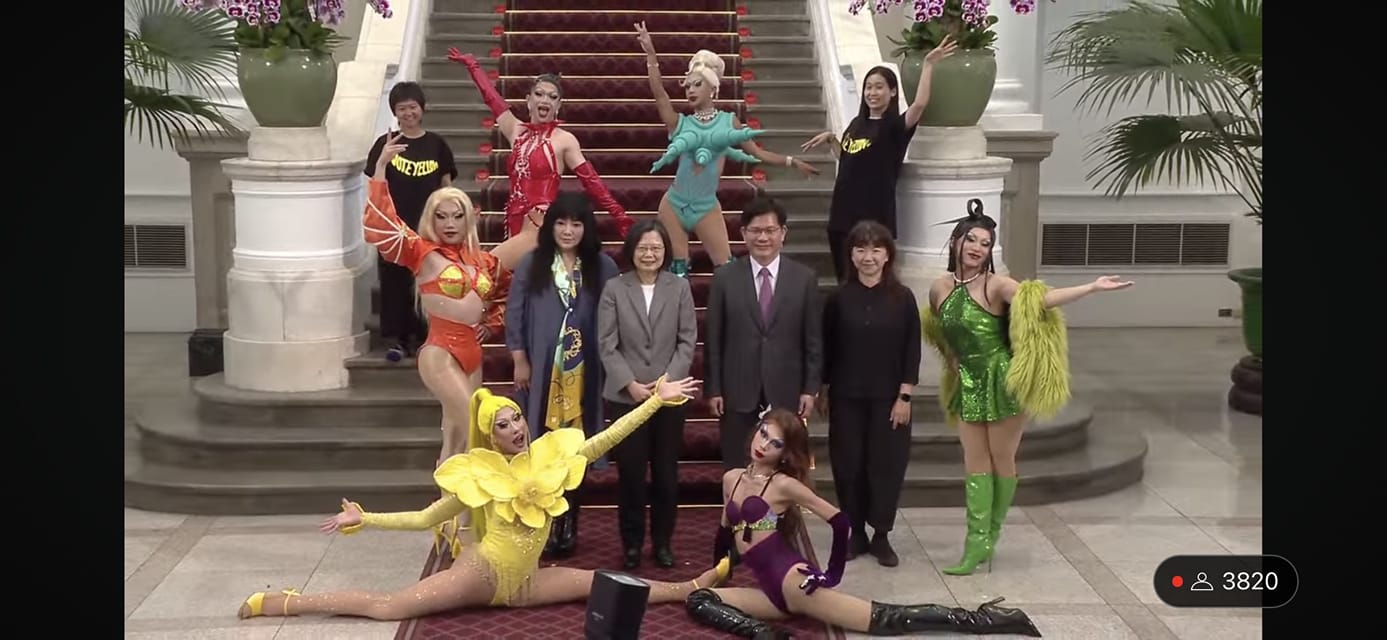
President Tsai Ing-Wen, Nymphia Wind, and this emerging Taiwanese national identity. National identity and Taiwan Republic 台灣国classrooms.

President Tsai Ing-Wen, Nymphia Wind, and this emerging Taiwanese national identity. National identity and Taiwan Republic 台灣国classrooms.

Tsai Ing-Wen and Nymphia Wind are as important to this emerging Taiwanese national identity as missiles, State Department policy papers, and the UN.

President Tsai has invented an understated, humble, nerdy bookish Taiwanese cool – an unusual combination for Taiwanese and world politicians. As her remarkable, world-changing eight-year term draws to an end, I will periodically share reflections on the emerging independent Taiwan shaped by her leadership. President Tsai is not a traditional politician, and her charisma is not traditional either – I have trouble listening to her speeches because they are content rich but her delivery is incredibly boring. She is unusual for a politician in the modern age in that she says precious little and does not appear to desire to be the center of national attention. No one calls her Tsai Goddess 蔡神, and she seems perfectly happy about that. It speaks to a remarkable level of confidence and peace in herself.

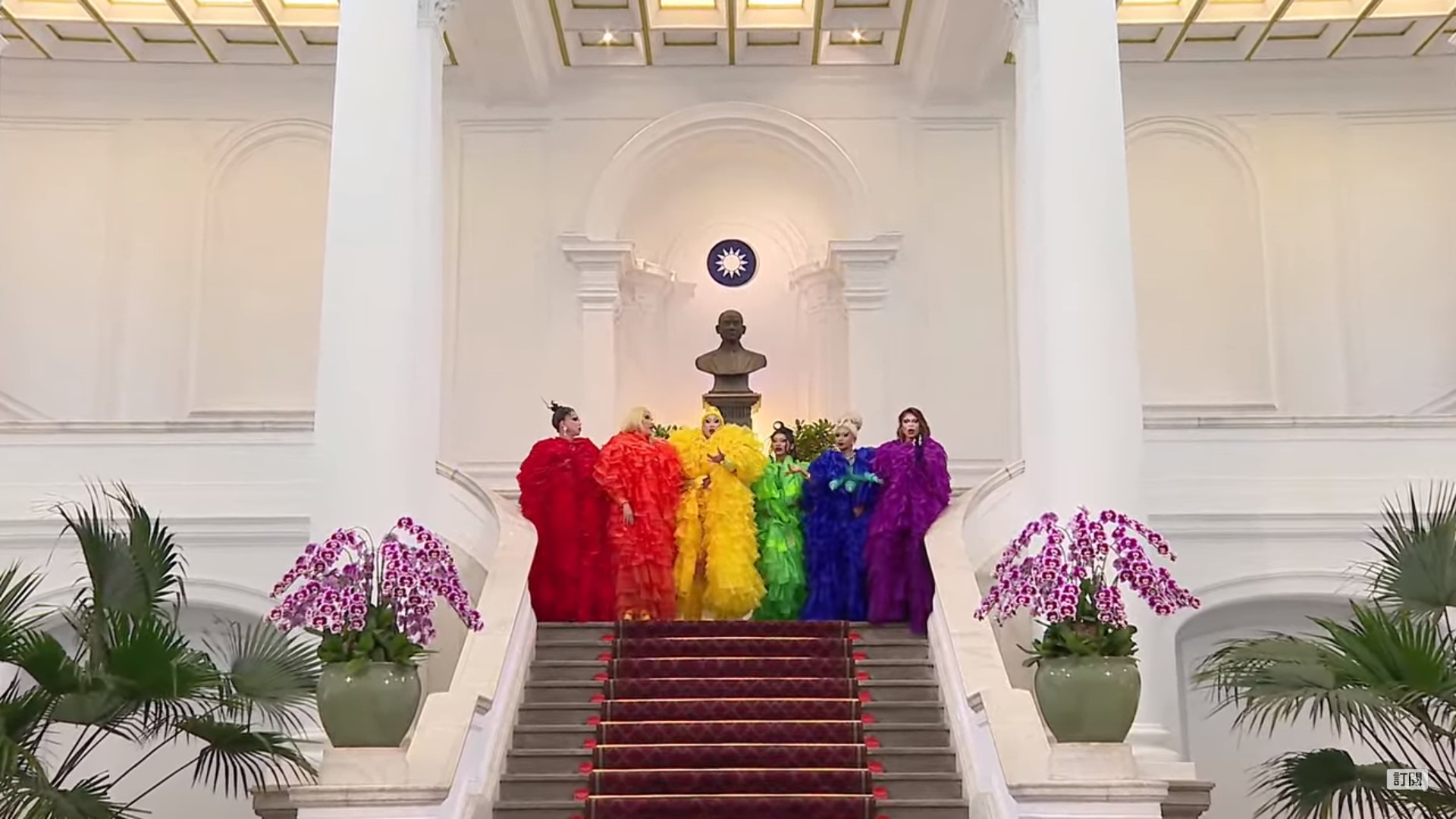
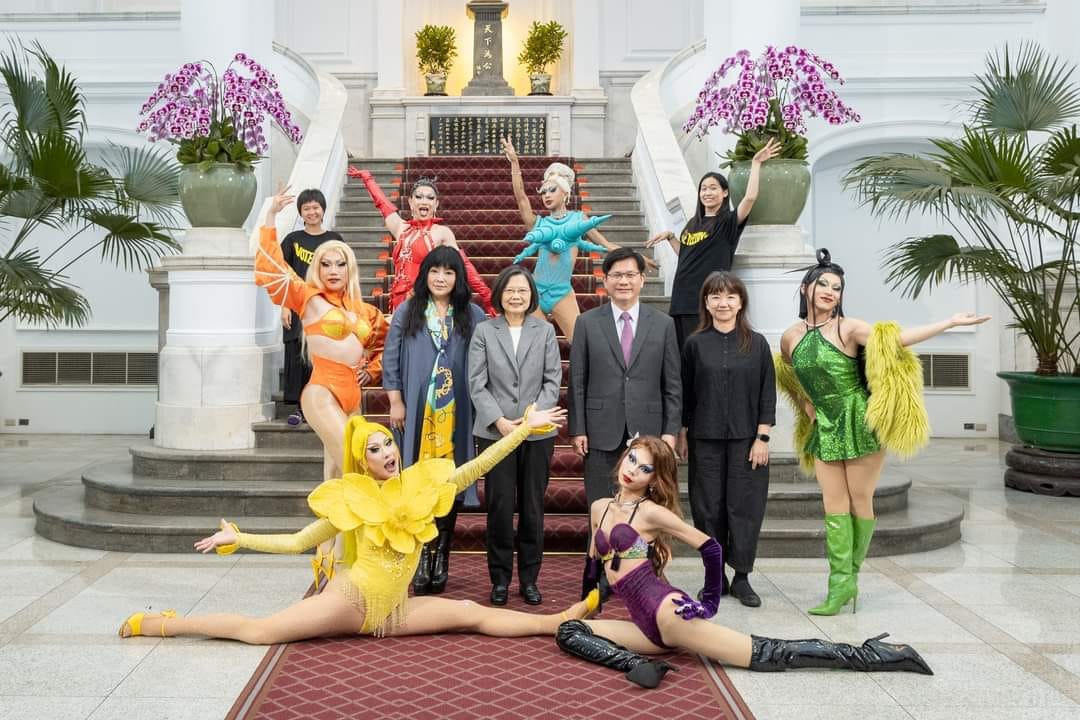
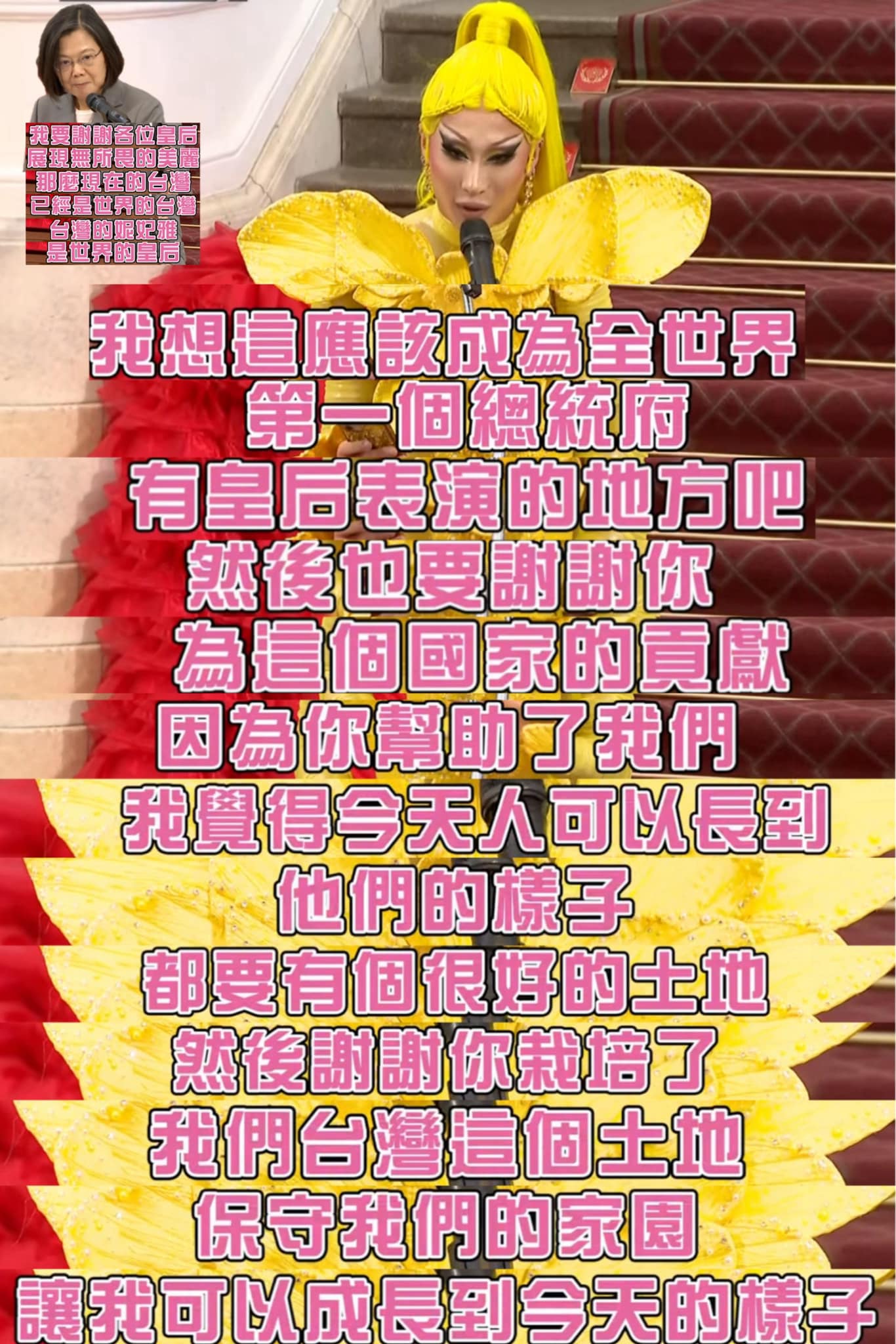
Taiwanese drag queen and victor of the hit TV show “RuPaul’s Drag Race,” Nymphia Wind visited the Taiwanese presidential palace yesterday and was honored by President Tsai. With a more ordinary political leader one can imagine any number of calculations – conservative-reactionary voters, public perception, religious leaders, and so on. I thought the event crystalize Tsai’s unique leadership style, and highlighted a particular way she is shaping this emerging Taiwanese national identity – gently tolerant, forward-looking, while minimizing direct confrontations. Tsai is competent at using the social media age tools while being, in this sense, wholly counter-cultural – her message is not divide/attack, but calling her citizens to build new bridges and doors. And this counter-cultural Taiwanese national identity has the support of a stable governing majority, while receiving unprecedented support from the US, Japan, and other nations in the Free World.

And it is Tsai’s stubborn incrementalism, moderation, cosmopolitanism, a counter-cultural kind of love of slowness and quietness that frustrates and angers both his supporters and his enemies foreign and domestic. Tsai is also unusual in that she rarely feels the need to counter-attack, or even acknowledge these assaults.

An interesting contrast between the two DPP presidents Chen and Tsai. Chen is one of the best natural retail politicians of his generation – charismatic, and bombastic, but also short-sighted, and self-centered, his words often not matched by deeds. Many of his Taiwan independence words were used for short-term campaign purposes, producing the opposite effect internationally and domestically. More so, I think both the China KMT and the China communists preferred Chen because they knew he would take the bait and argue everything. President Tsai’s approach is an improvement made upon President Lee’s realism, idealism, and incrementalism – a peaceful transition into a Taiwan-centric national identity is only possible when it is acceptable to independence supporting Taiwanese (remarkable to hear president-elect Lai speak of RoC Taiwan), those related to the Chinese folks brought to Taiwan by Chiang in 1949, and supported by the US, Japan, and major democratic powers. National status and national identity are dynamic – and no doubt the Tsai formulation is transitory – but a critical departure in the Taiwanese postwar national history.

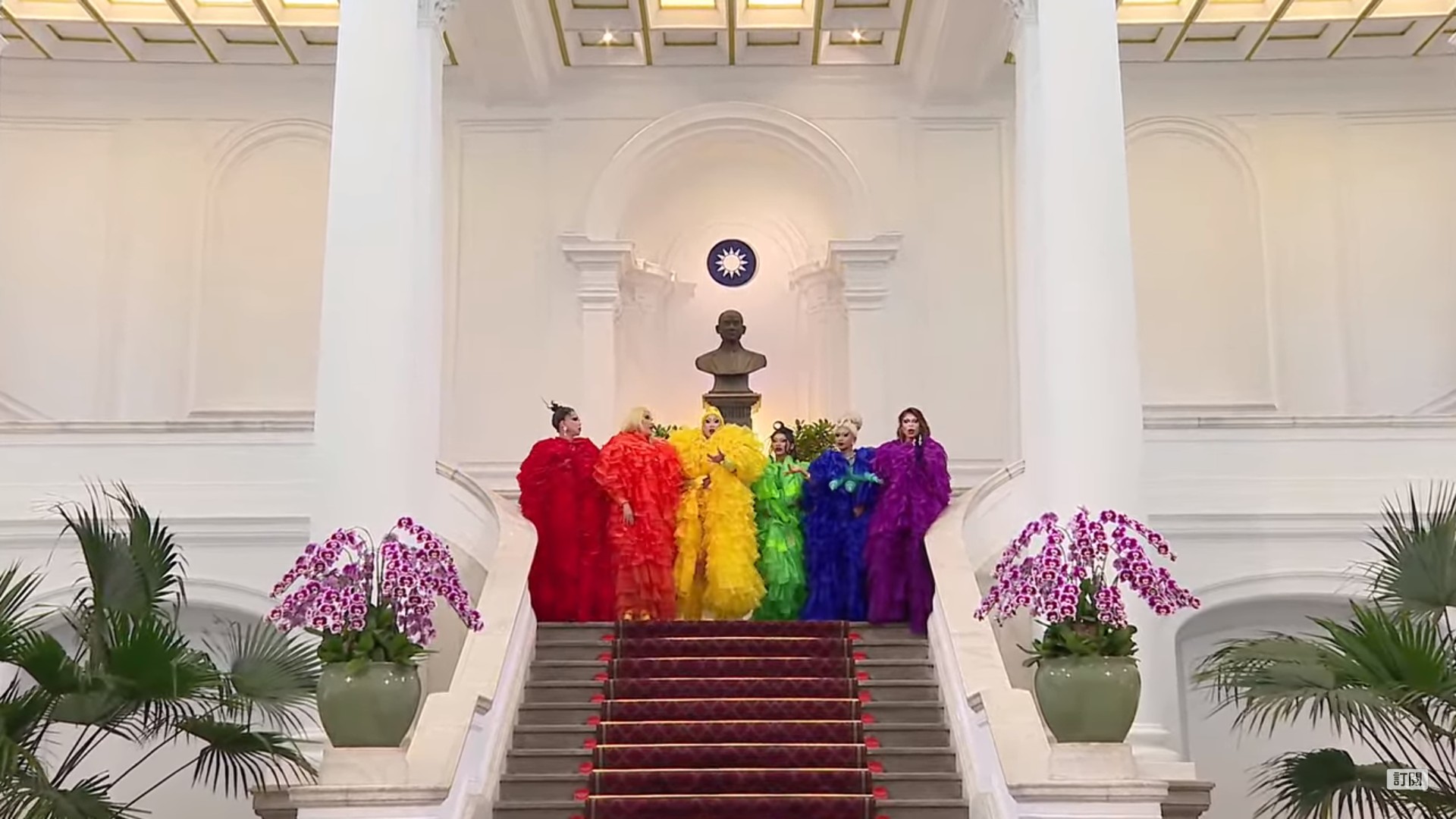
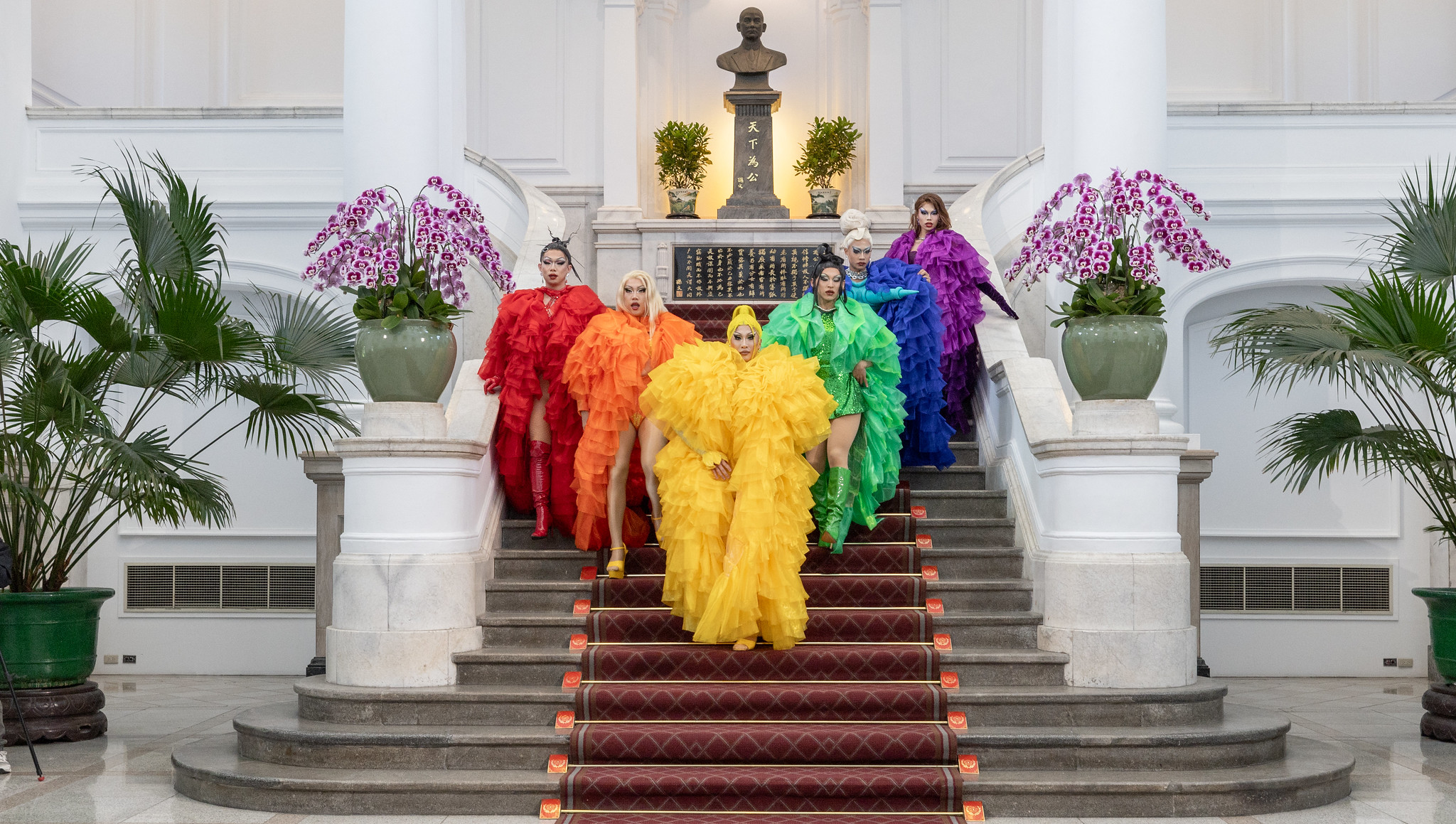
President Tsai hosting Nymphia Wind and other drag queens in the presidential palace is extraordinary. Tsai has frustrated many deep greens for avoiding and slow-walking many of the decolonization steps – such as removing the word “China/Chinese” from institutional names, in fact, she has mostly taken the superstructures left by the China KMT dictatorship, the so-called “RoC” – and kept the exteriors of these structures – flag, presidential palace, Sun Yat-sen as the fabricated founding father, Double Ten National Day – while changing what they mean to a Taiwanese citizen in 2024 by slowly, creatively, and often joyously subvert the meaning from within.

And so this remarkable sight within this building built by the Japanese as the seat of power when they administered Taiwan – which then got adopted by Chiang Kai-shek when he lost the Chinese Civil War in 1949 as his “presidential palace,” holding on to Sun Yst-sen as his claim to remain as the legitimate ruler of China, while using this presidential palace as the locus of power of the China KMT colonialist dictatorship over Taiwan – the superstructure of the Chiang crime family remain remarkably intact – RoC name and flag, statue of Sun Yat-sen, the national emblem that looks like a copy of the China KMT party emblem – yet with a democratically elected president, a concept opposed by the Leninst KMT, hosting world-renowned drag queen/fashion designers/artists. I felt the same sense of wonderment and awe watching the colorful and glamorous drag queens dancing around the reactionary symbols of Sun and the national emblem inside the presidential palace as I often do attending Taiwanese temple festivals – ancient symbols and rites freely intermixed with pole dancers, LED neon, manga-inspired characters, electronic pop music. Nonsensical, but peaceful and incremental, this emerging Taiwanese national identity. 15.5.2024

© Taiwan in World History 台灣與世界歷史This site grants open access for educational and not-for-profit use. Maps and illustrations are borrowed under educational and not-for-profit fair use. If you are the rights holder and prefer not to have your work shared, please email TaiwanWorldHistory (at) Gmail (dot) com and the content will be removed.
Leave a comment

Filed under Taiwan Republic, world history

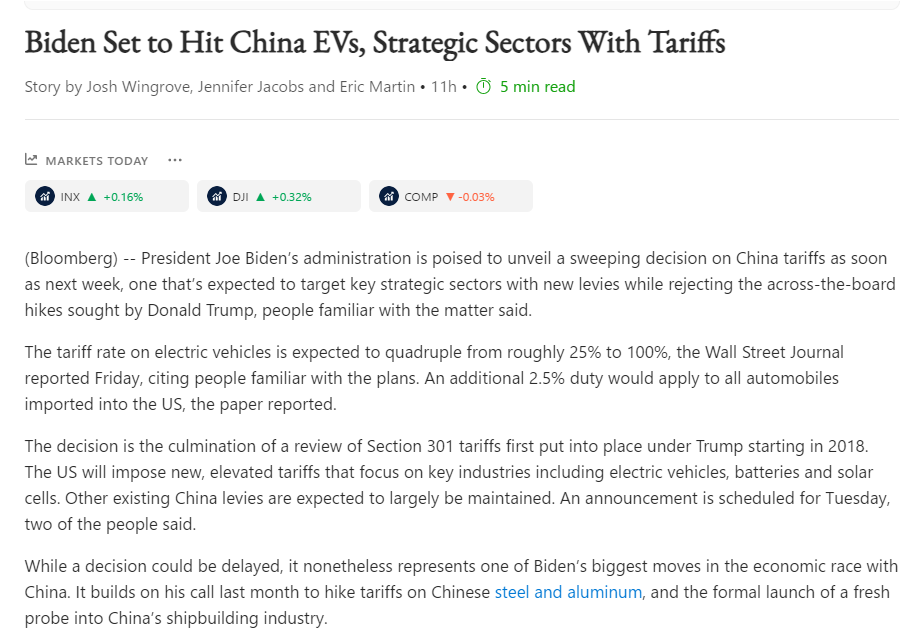
The dangers of a geoeconomics policy spiral. “Biden Set to Hit China EVs, Strategic Sectors With Tariffs,” Markets Today. Geoeconomics and geostrategery classrooms.

The dangers of a policy spiral. “Biden Set to Hit China EVs, Strategic Sectors With Tariffs,” Markets Today. Geoeconomics and geostrategery classrooms. The policy spiral involving economic sanctions now has a US cutting off oil supply to the Empire of Japan on the eve of the Pacific War feel. Partisans will pick and choose ahistorical moments in the timeline to blame communist China and/or US. My sense is that years before the West realized, the Chinese communists knew their ability to make themselves profitable to the West was coming to an end — and so Beijing decided a de-globalized, disconnected, poorer China that’s on a permanent war footing is a safer bet for Xi’s dictatorship. Will the Chinese communists repeat the Empire of Japan’s major mistake — thinking that actively pursuing expansionist warfare would make them safer? That part I am not sure yet, although in the last two years, I have become more convinced that dictator Xi might just be stupid enough to repeat that mistake. Certainly the military set up in the Indo-Pacific, particularly from the South Sea into the Taiwan Strait and the East Sea are prone for an accident.

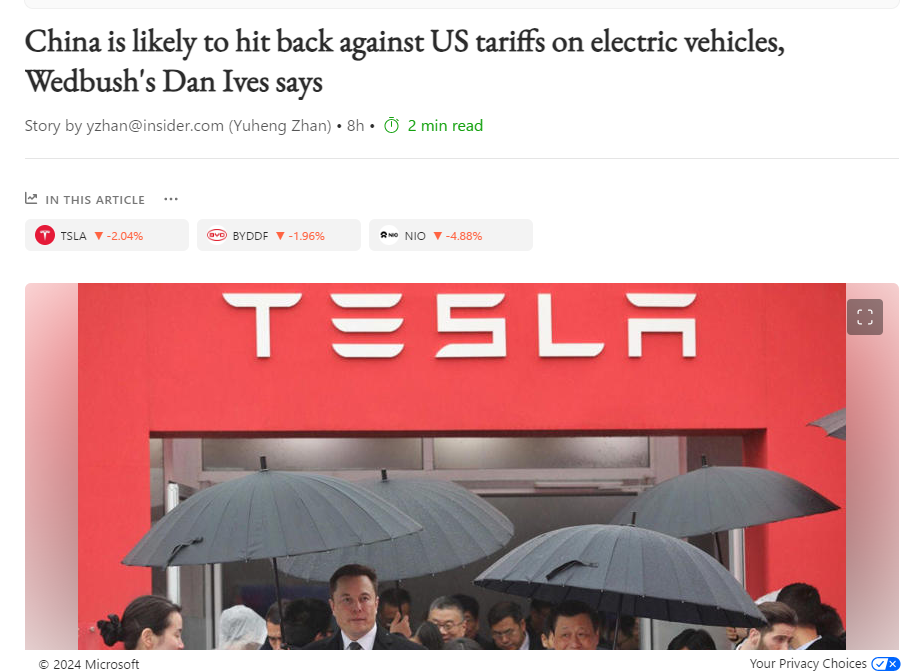
“China is likely to hit back against US tariffs on electric vehicles, Wedbush’s Dan Ives says,” Markets Insider

This is a companion article regarding geoeconomic policy spirals on the eve of Pearl Harbor. The main thing to understand about a policy spiral is that even when observers and policymakers can see them clearly, they are difficult to stop — because every policymaker gets short-term memory problems, because no one can agree on where the timeline ends and begins — most important, neither democratically elected nor dictatorial leaders want to be the one to “cave” and pay the domestic legitimacy price for being weak – requiring one party to back off is the only way to stop a policy spiral. You add in the complexities of the sectors involved — economic, politics, religious, military …. — add in multinational, domestic and foreign policies, and policy spirals are difficult to end without a massive catastrophe. I have always thought of the two world wars as major spasms within a huge, century-plus-long policy spiral — once one Western imperialist power decided foreign colonies, global empires, militarism, and mercantilism was the path, other Western nations plus Japan responded in kind. You would have thought the First World War was costly enough to cause a break in the policy spiral and encourage a deep rethink — it was not nearly enough. It required an even worse Second World War plus the nucular age to cause a break. It was not a utopian break — Cold War, local skirmishes, etc etc. But it was an unusually stable and prosperous few decades, 1945 to say 2000. the first break in this stability was the unwise decision by junior Bush to instigate a needless war in Iraq — that signaled the end of the 1945 world order. Everything after is far too complex to lay out in a fifteen-week seminar, much less a post. The main point being: the world is now knee deep in another dangerous policy spiral.

© Taiwan in World History 台灣與世界歷史This site grants open access for educational and not-for-profit use. Maps and illustrations are borrowed under educational and not-for-profit fair use. If you are the rights holder and prefer not to have your work shared, please email TaiwanWorldHistory (at) Gmail (dot) com and the content will be removed.
Leave a comment

Filed under geoeconomics, world history

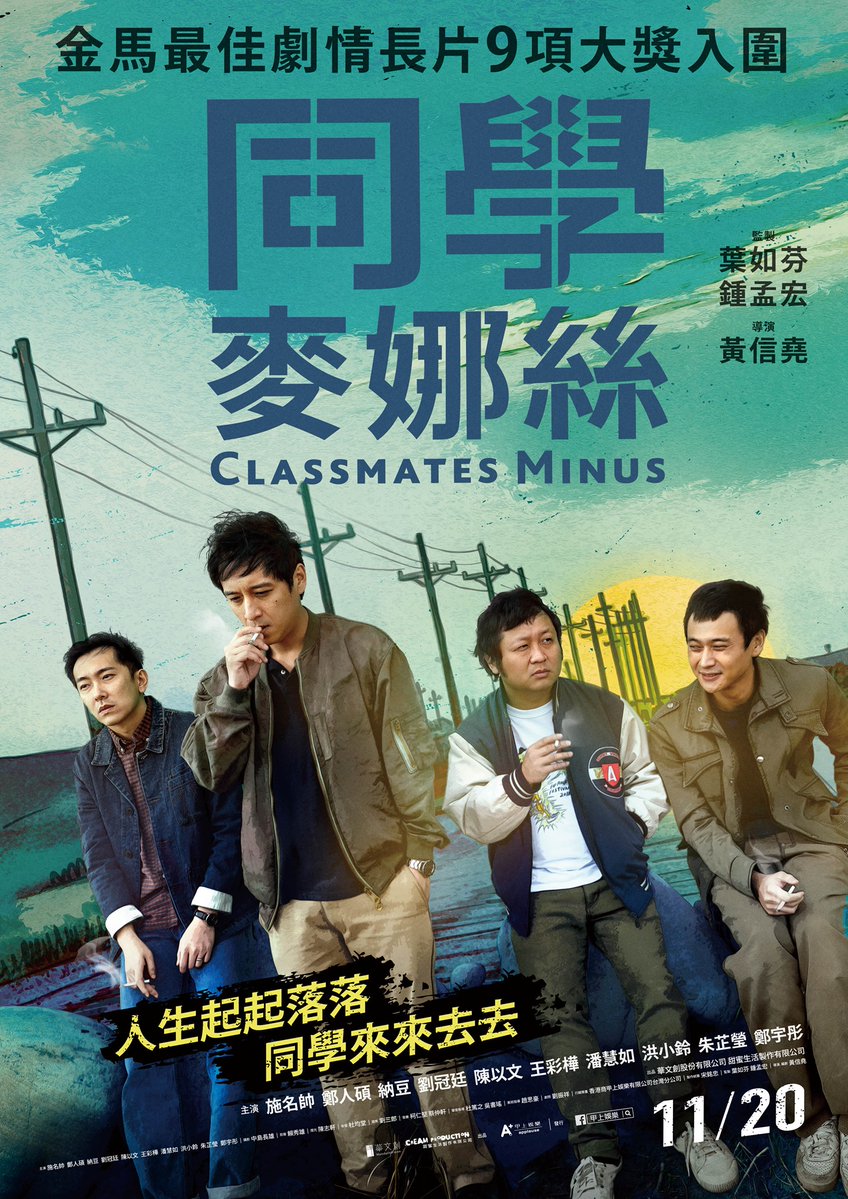
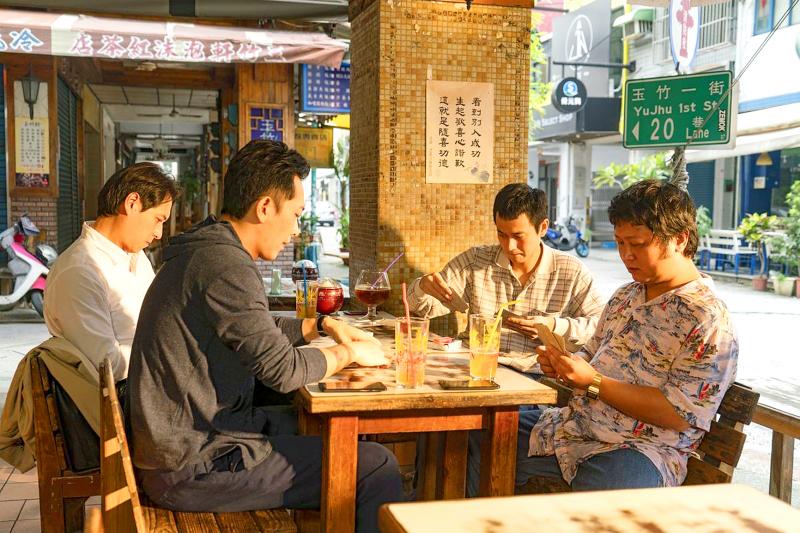
Reviews: Classmates Minus (同學麥娜絲). National identity and popular culture classrooms

Reviews: Classmates Minus (同學麥娜絲). National identity and popular culture classrooms. Netflix. This is a subsequent film from the director of The Great Buddha+ (大佛普拉斯). It is rare to have a film or tee vee show that can have me belly-laugh and cry uncontrollably at the same time. Related to my previous review of the recent Taiwanese soap opera Mad Doctor and Taiwan’s Public tee-vee – in this film, and in this director’s work, ordinary Taiwanese outside of colonialist Chinese Taipei are not props. In that choice alone this is a significant gesture towards a new, emerging Taiwanese identity. There is a broader idea about the nature of imperialism – whether it is British, American, or Chinese; whether it is about Taiwan University or Harvard graduates; income, how many houses owned, net worth, profession, gender, race, and ethnicity. Out of the diversity of imperialisms through time and across space, one shared trait is their default setting in categorizing everyone/everything else as-compared-to-the-idealized-imperialist. This is how we often get the “Oh look he is just an uneducated janitor but how nice he saved money to donate to the school kids just like a real human being/us” news stories.

What Classmates Minus reminded me of is how different the storytelling is when one engages subjects outside of the imperial core as they are, warts and all – with a good dose of wry humor, cleared-eyed, but full of love. Gentle and heartfelt enough to make me cry, as if these are my classmates. Humorous and sarcastic enough because life sucks, your friends are unreliable, your family problematic, but whatareyougonnado?

The older I get the more soothing it is to listen to characters who can speak fluent Taiwanese – I understand about ninety percent of it without subtitles. To my ears, Taiwanese is a more emotion-laden language than Mandarin, just as I have noted Taiwanese rock n’ roll songs are more powerful than Mandarin ones. For me, the attachment to this language I cannot speak fluently due to Chinese imperialism-invasion is in part remembering elders who are gone. Very interesting that during the last year of my Dad’s life, he stopped using Mandarin altogether – as if the illness and pain liberated him from the prison the Chinese refugees built for his professional-cultural life, as he faded he reclaimed his own ancestral language.

This film’s storytelling structure is something I want to go back and map out to think about. You cannot say it is disorganized, but it is not a conventional structure. A small sidenote: I have noticed Taiwanese films and tee-vee shows where political elections appear as background or subplots. I have often argued with my parents about Taiwanese temples and religious practices – they jump too quickly into the religion v superstition judgment; my point is humans fight to protect their family, property livelihood, and their Goddesses and Gods. Likewise, I think even though most of the portrayal of elections and democracy have been jaded, some are even cynical – it is the ritual and melded into the quotidian – as if it is family outings and annual holidays and temple festivals – that rootedness and ordinariness of democracy must be what most bother the Chinese communists and KMT. And finally, kudos for using one of the most brilliant Taiwanese indie bands, 濁水溪公社.

© Taiwan in World History 台灣與世界歷史. This site grants open access for educational and not-for-profit use. Maps and illustrations are borrowed under educational and not-for-profit fair use. If you are the rights holder and prefer not to have your work shared, please email TaiwanWorldHistory (at) Gmail (dot) com and the content will be removed.

Leave a comment

Filed under books and artifacts, Taiwan Republic, world history

Reviews. Let’s Talk About Chu 愛愛內含光 National identity and popular culture classrooms.

Reviews. Let’s Talk About Chu 愛愛內含光. National identity and popular culture classrooms. Netflix. A refreshing thing about Taiwan versus America is how difficult it is to get Taiwanese to mass panic about sexual or moral-ethical issues. It’s not that they are necessarily “progressive” or enlightened, but that in Taiwan you are more likely to get a shrug. As I watched this problematic show, I imagined what the tiresome “what about the children” reactions might have been on the east side of the Pacific. There are many things about Taiwan’s peculiar colonial history – colonized by the Chinese invaders since 1945 – and the impact on its educational-cultural means of production, that I am highly suspicious of. The politics of languages. How come the east side of Taipei gazillioaires never speak Taiwanese in these tee vee shows? For a show premised on the idea that its frankness about sex and sexuality is supposed to shock-provoke, that’s actually the most boring part of the show – but then I generally find film and tee-vee portrayal of sex either boring and/or unintentionally funny. So maybe that’s me and not them. Most of the sub-threads of this eight-episode show are contrived – the professor and his ex-student; the gay couple with the problematic portrayal of a descendant of a 1949er becoming a street hoodlum speaking not very good Taiwanese (my experience is that kids and grandkids of 1949ers who grew up in rural Taiwan speak more fluent Taiwanese than me and my cousins in Taipei ….) and so on. What made the show work for me are the superb lead actress Chan Tzu Hsuan (xoxo) and lead actor Kai Ko (oxox). Beyond their ability to keep my attention, ironically this relationship is the opposite of the shock-and-awe sex premise of the show. It’s a predictable, conventional love story. It’s about companionship, about genuine concern for one another, an ordinary, boring kind of love. And that’s OK by me. Love and relationships are predictable and boring because life is boring too. Like many recent Taiwan for Netflix shows this is a beautifully shot product – with a conventional but well-done soundtrack. Although in this mass media age, one inevitably notices copy-catting – lead actor with a motorcycle. Taiwanese directors now seem to love a particular bridge scene with the motorcycles at dusk. Rooftops, Taiwanese directors in the 2020s love rooftops for some reason. Maybe because at street level Taipei is such a mess. As contrived and silly as the show overall is, there were several moments during the eight episodes when lead actress Chan Tzu Hsuan’s facial expressions – when she thought she saw her father and his mistress in particular – that are super-duper. Minimal, heartbreaking, less is more. In all though, a broader issue not only for Taiwanese but for global artists to ponder. This is not the first time when a Taiwanese show launched bravely and then ended up with the socially acceptable happy endings – and maybe some of this is a human trait, but one wonders what part market pressure plays a role? These shows can be art, but they are primarily products – conventional capitalist markets are conventional – making unconventional products unprofitable. 18.2.2024

© Taiwan in World History 台灣與世界歷史. This site grants open access for educational and not-for-profit use. Maps and illustrations are borrowed under educational and not-for-profit fair use. If you are the rights holder and prefer not to have your work shared, please email TaiwanWorldHistory (at) Gmail (dot) com and the content will be removed.
Leave a comment

Filed under books and artifacts, Taiwan Republic

Taiwanese national identity and the global order: Geostrategery, Taiwan Republic 台灣国 , and national identity classrooms

Taiwanese national identity and the global order. Geostrategery, Taiwan Republic 台灣国 , and national identity classrooms.

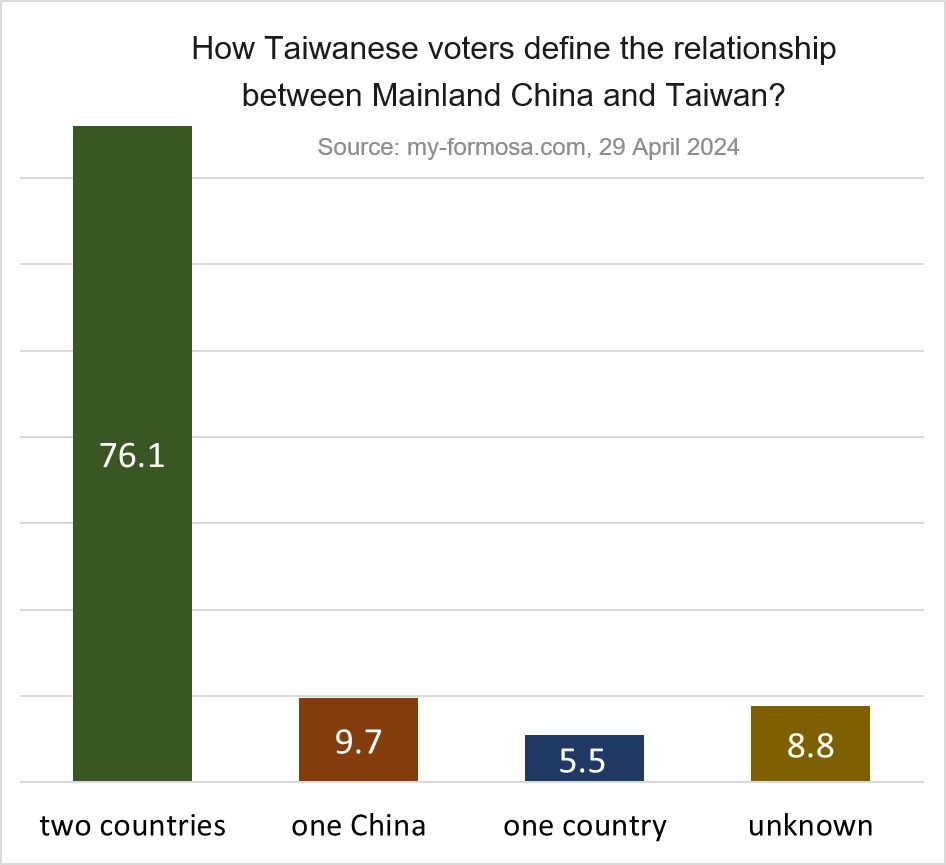
This emerging Taiwanese national identity. Came across this poll on the Twitters recently. How Taiwanese citizens self-identify in this poll is not surprising. The majority is basically the governing coalition President Tsai cobbled together over eight years – a fusion of Taiwan Republic, Taiwan, RoC Taiwan, Taiwan RoC, and RoC voters.  President-elect Lai and the DPP need to figure out why this governing majority doesn’t translate well in legislative and local elections. Taiwan’s “mainlander” and Chinese communist-dominated media obsess over America’s statement not supporting “Taiwan independence,” and ignore substantive US, Japan, and Free World redefinition of what “status quo” means — i.e., status quo now also functionally means not supporting China annexing Taiwan, peaceful or by force. Also important to note the complex, dialectical, chemical-reaction characteristics of how national identities form – this emerging Taiwanese national identity is a compromise, articulated by Presidents Lee and Tsai – though leaders oftentimes respond to identity formation from below rather than to create, invent, or to lead them. This is the one feature that the authoritarian Chinese Communist Party and the China KMT cannot fathom – that a free people can, over time, come to these ideas without being brainwashed or forced by a higher authority.

Polls like this matter more for domestic electoral politics. They matter less for Taiwan’s ability to maintain its de facto independence within the global system – except perhaps in the realm of national security. To maintain this independence, Taiwan requires coherent and honest national security consciousness, improvements in its military (particularly upper-level leadership), and support from the US, Japan, and the Free World. Meaning, that to make national identity sustainable, it must be supported by military and economic power, and the endorsement of important global powers.

The nature of national identity, particularly for middling to smaller nations in the global system, is reactive-passive rather than active-assertive. Just as Taiwanese (Taiwan the place/people/nationality) ‘national’ identity did not emerge until the Japanese arrived; just as the Manchus did not ponder the status of Taiwan until global maritime powers arrived, the reality is that even if one hundred percent of Taiwanese citizens believe Taiwan is a sovereign, independent nation (whether as Taiwan, Taiwan Republic, ROC Taiwan, Taiwan ROC), that independence depends on Taiwan’s ability to defend that status, and whether this Taiwanese sovereignty separate from China is supported by the major powers.

This makes the interaction between the emerging Taiwanese national identity from the 1990s, when Taiwan slowly dismantled the authoritarian and colonialist system imposed by the China KMT, and the changing US policy regarding Taiwan, communist China, and the Indo-Pacific the key. Taiwan’s first democratically elected president Lee Teng-hui and President Tsai sought a Taiwanese national identity and sovereign status independent from the People’s Republic of China, acceptable to the US and the Free World, while minimizing domestic discord. Meanwhile, as the ability of the Chinese Communist Party to make China profitable for the Free World dissipated by the 2010s, and as dictator Xi went on an isolationist war footing, the US and its allies began to redefine what “status quo” means in the Taiwan context. While the pro-communist China media within Taiwan obsesses over the boilerplate US declaration that it “does not support Taiwan independence” (one will be hard-pressed to find a major political leader within the pro-Taiwan sovereignty groups that’s spoken about “Taiwan independence” in the last decade ….), I think the US will clarify this revised “status quo” because the China KMT and PFP are one step away from conceding to Beijing that “one China/one nation” = People’s Republic of China.

When Ma or whoever within the pan-blue/white/red camp concedes Taiwan’s sovereignty to the People’s Republic of China, the US, and its democratic allies will openly oppose both “independence” and “annexation/unification” on the basis that both are changes to the status quo. The US and Free World definition of “status quo” in the Taiwan Strait is a two-state solution – has been for decades but as the CCP and KMT have accelerated their push for Taiwan to surrender its sovereignty, the greater urgency for the US, Japan and its allies to also clarify their position. During the Lee Teng-hui era, there was still enough finesse on the Chinese communist side, and ambiguity among the deep blue/red groups inside Taiwan, to have the face-saving “special state-to-state” formulation. President Tsai is probably the last Taiwanese president in a position to give the Chinese communists a face-saving way to peacefully live with the status quo – notice for example that while she has been firm on the two sovereign states on both sides of the Taiwan Strait, she has never declared what the future might be. So Tsai’s eight years were a lost opportunity for the Chinese communists and its allies inside Taiwan. From this moment forward Taiwan’s status will be a matter of total national-allies power (economic, military, educational, technological ….) – communist China, its allies inside Taiwan, Russia, et al, versus Taiwan, US, Japan, and their democratic allies. 2.5.2024

© Taiwan in World History 台灣與世界歷史. This site grants open access for educational and not-for-profit use. Maps and illustrations are borrowed under educational and not-for-profit fair use. If you are the rights holder and prefer not to have your work shared, please email TaiwanWorldHistory (at) Gmail (dot) com and the content will be removed.
Leave a comment

Filed under geoeconomics, geostrategery, Taiwan Republic, world history

Reviews. The Great Buddha+ (大佛普拉斯). National identity and popular culture classrooms

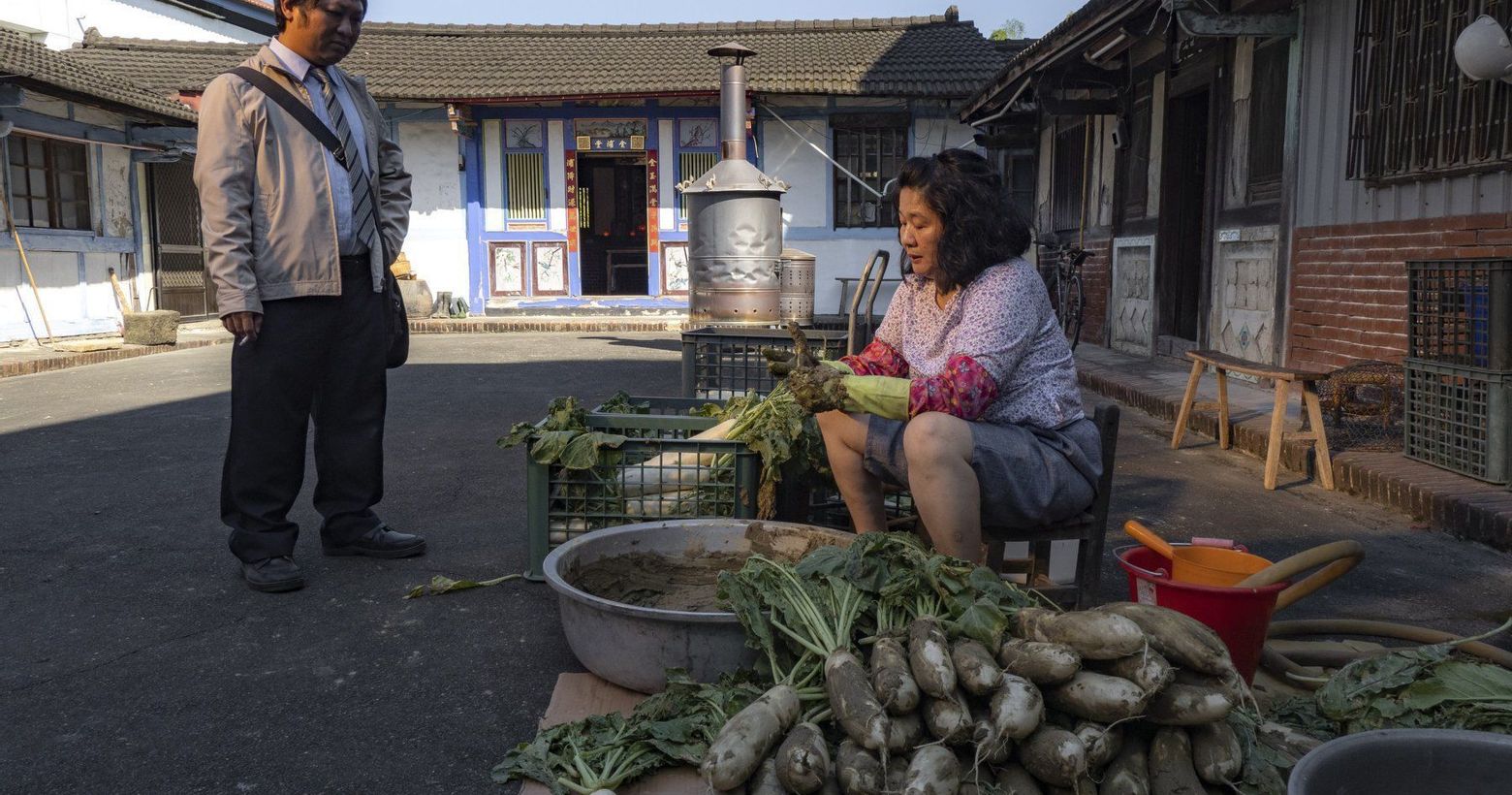
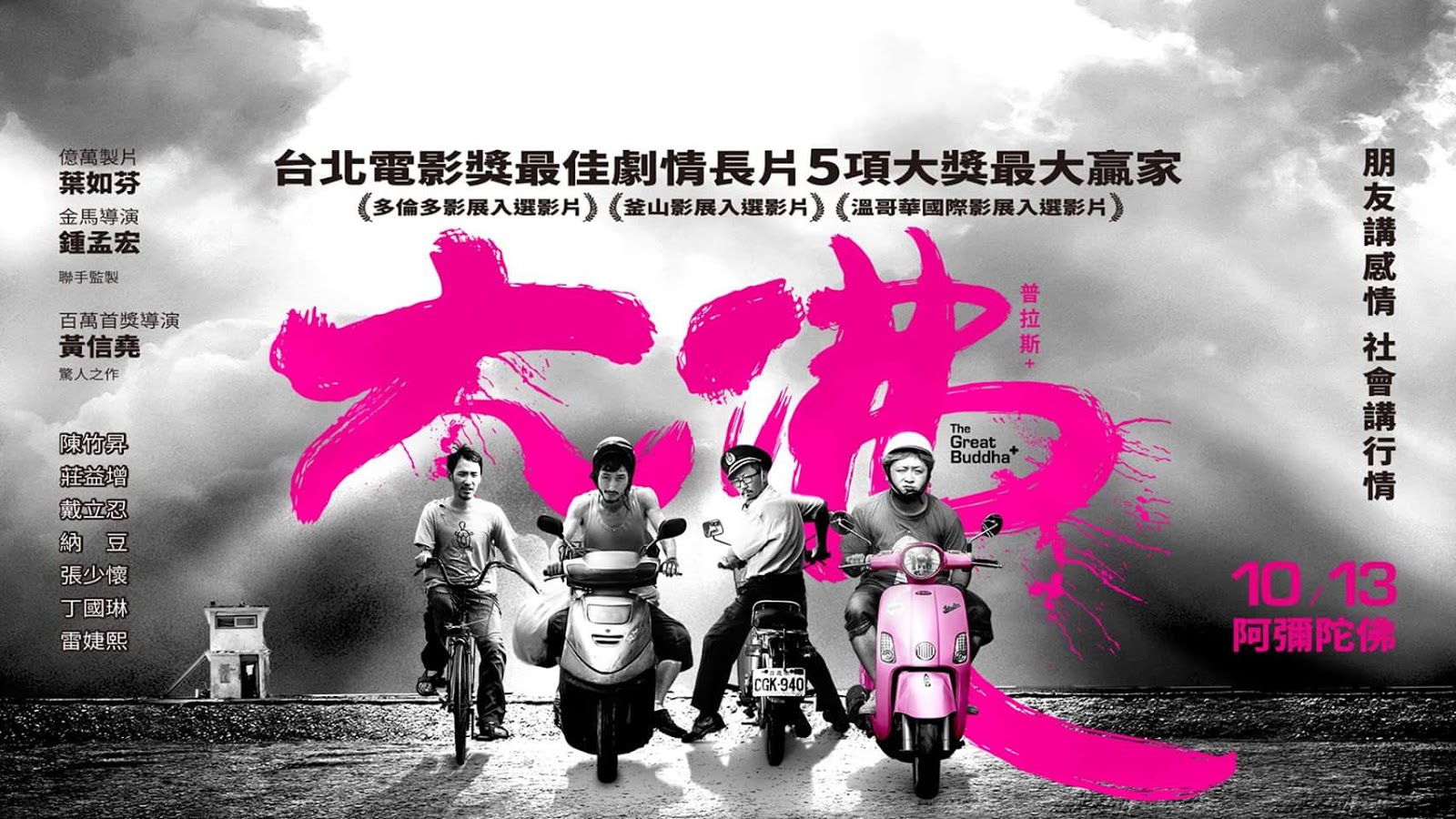
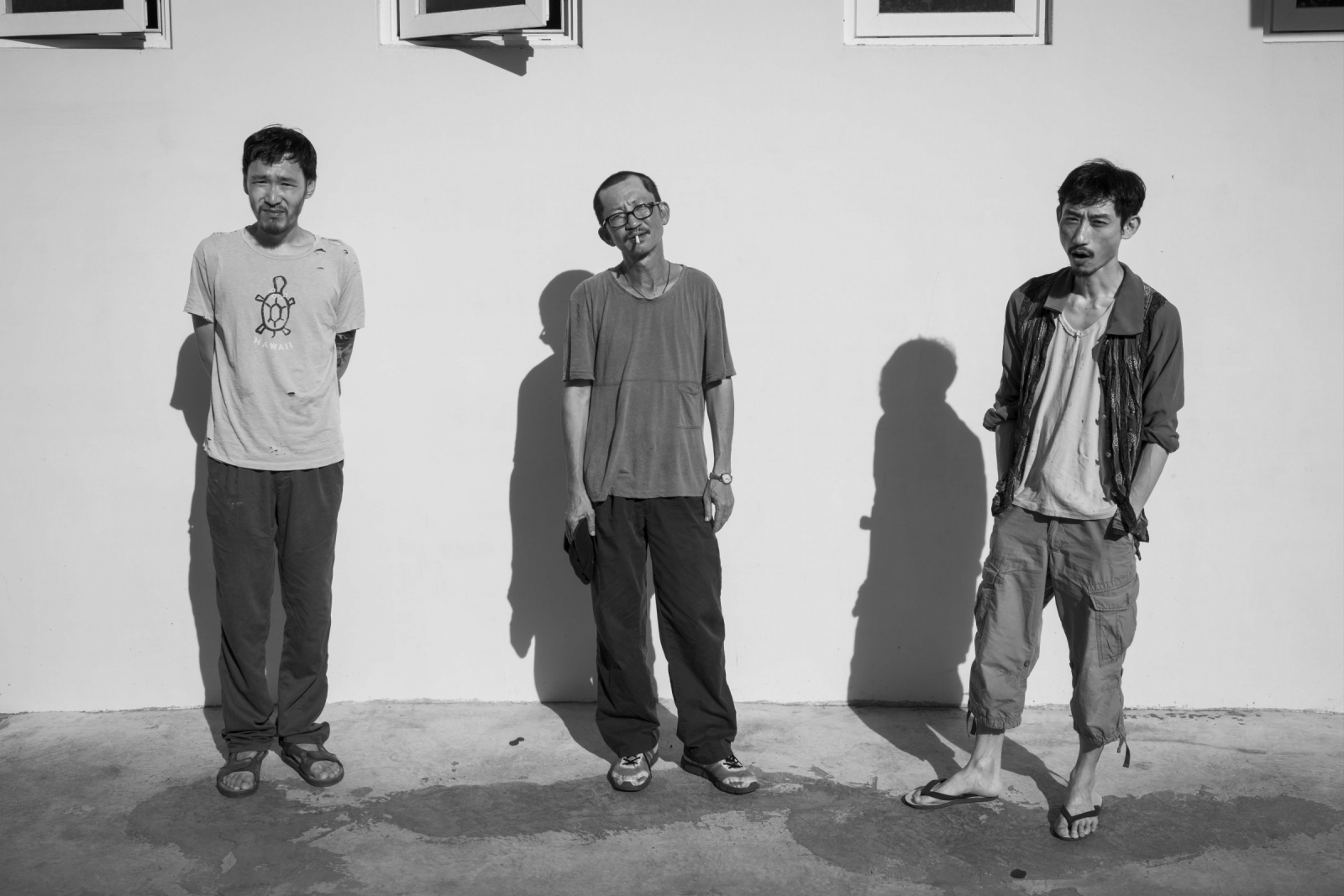
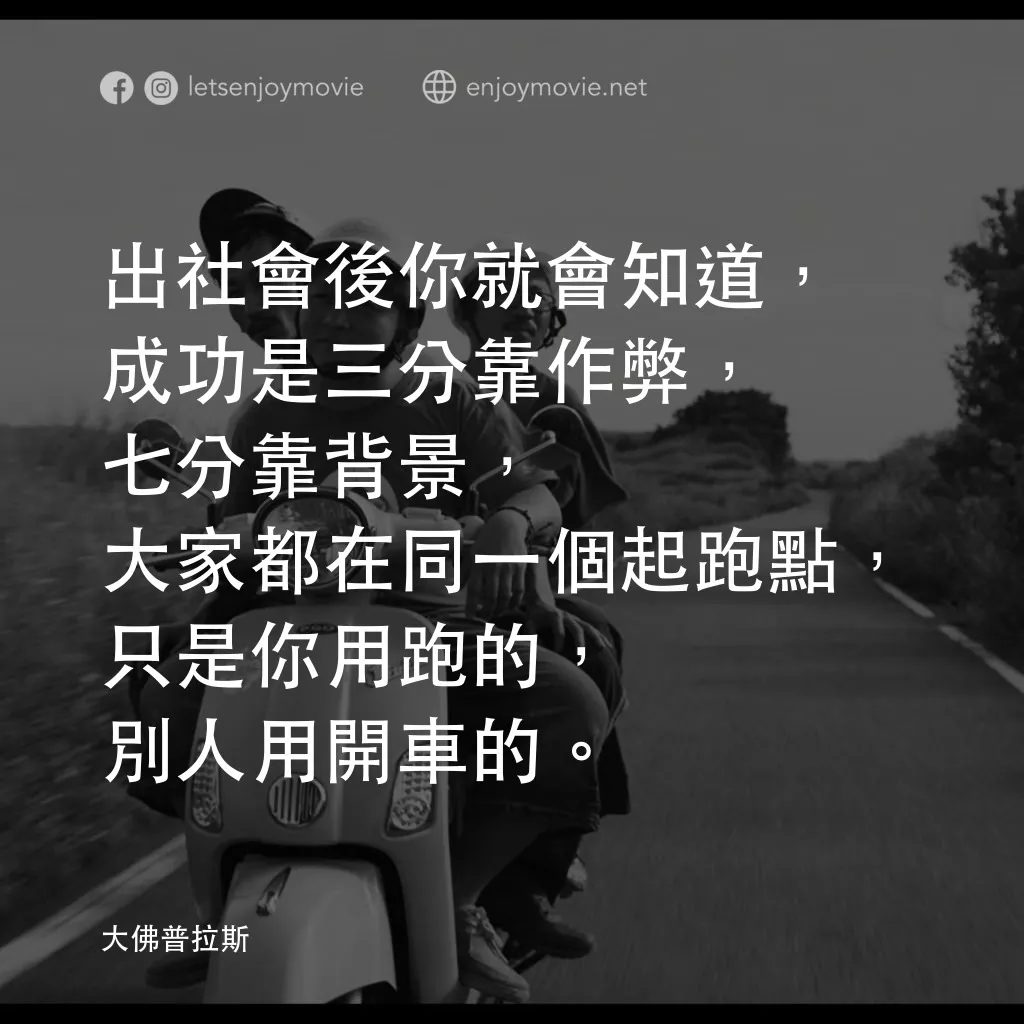
Reviews. The Great Buddha+ (大佛普拉斯). National identity and popular culture classrooms. This Taiwanese film is available on Amazon Prime, which is quite a breakthrough for those of us who are permanent foreign exchange students. And for a grumpy elderly monkey who grew up used to a letter taking 7-10 days to cross the Pacific, mind-boggling. I waited so long to watch it because too many people talked about it too often. I waited too, because I knew it would depress me in deep and complicated ways. I watched it alone on purpose. I cried. Often. I stopped several times to gather myself. As a former Taipei resident, taught-brainwashed by the Chinese occupiers to detest my own kinfolks, the rural southern Taiwan depicted is alien and super familiar at once — foreigner in one’s own land kind of stuff — all subjects of foreign colonial occupation would have some version of this out of the body experience. While the invading Chinese refugees stripped my native language, culture, memory, and identity during my childhood, the world depicted in this film is the parallel universe the Chinese colonialists exploited and demeaned — this is where they grabbed conscripts for their stupid civil war, this is where they exploited the cheap labor to benefit their parasitic party-state. And now, decades after their military dictatorship formally collapsed, the sociological, cultural, economic, and political legacies remain — a poisoned well, no way forward, no way back. The rural Taiwanese character sketches are familiar from my ancestral village of Neihu, now an urban Taipei suburb but during my childhood a transitional rural light industry village; and my mother’s central Taiwan home of Chang-Hwa. Even after all of these decades I could smell the dust, heavy metal, rice paddies, animals, cooking, diesel fuel …. and hear the sounds, scooters to mini farm tractors (“metal water buffalos”) and factories and food vendors and animals. I enjoyed the banter in Taiwanese — basically impossible to hear in Taipei nowadays — though it reminded me how poorly I speak Taiwanese, the fluent, natural, beautiful language of our ancestors, the language of this soil. As it has been for decades, even in one film the language of the invaders speaks to education/class/wealth, while the language of the occupied is the language of the homeless and impoverished and powerless. yes, I enjoyed the temple dedicated to the bloodthirsty invader Chiang Kai-shek, and the scene alluding to the many multinational Buddhist-ish cults based in Taiwan. The passive-aggressive full of Buddhist kindness art critique of the great big Buddhist statue was delightful as it depicted at once the hypocrisy of the Taiwan elites, and every childhood conversation one has ever had with one’s elders. The swearing in Taiwanese throughout made me so proud and happy — just beautiful. I wish more Taiwanese would learn to righteously swear at our colonial occupiers in our beautiful ancestral tongue. The beautiful memorable parts of this film are the inconsequential details — conversations, silence, framing of scenes, detailing essential truths about what life for the most vulnerable in Taiwan is like under Chinese KMT occupation. And as I thought about it, it is also an op-ed about how these awful realities have not changed since the supposedly Taiwanese party DPP has taken over — rather than a genuinely Taiwanese renaissance, a much-needed decolonization, cleansing, and a national rebirth, what we have now is a new crop of Taiwanese politicians ruling by following the underlying corrupt, elitist, exploitative logic and habits of the Chinese refugees-invaders. What to do about this? …. Well, I did say I avoided the film knowing it would be deeply and personally depressing right. I don’t know. I am at a loss myself. 22.9.2018

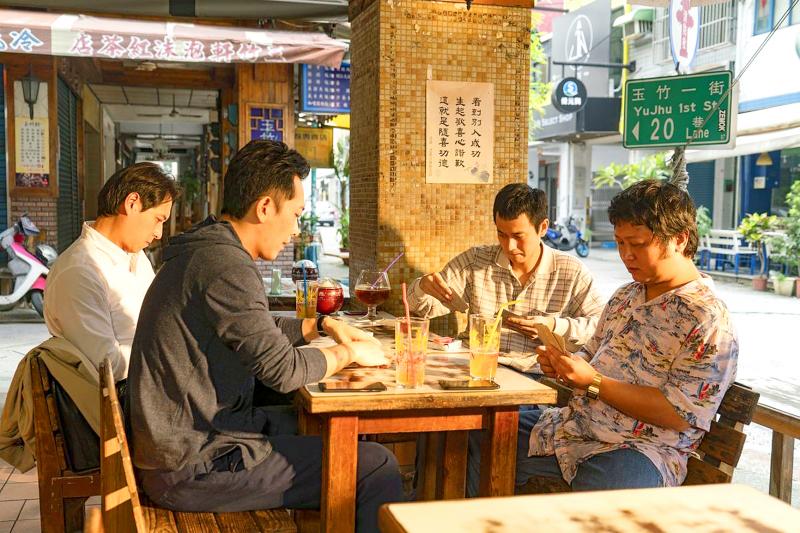
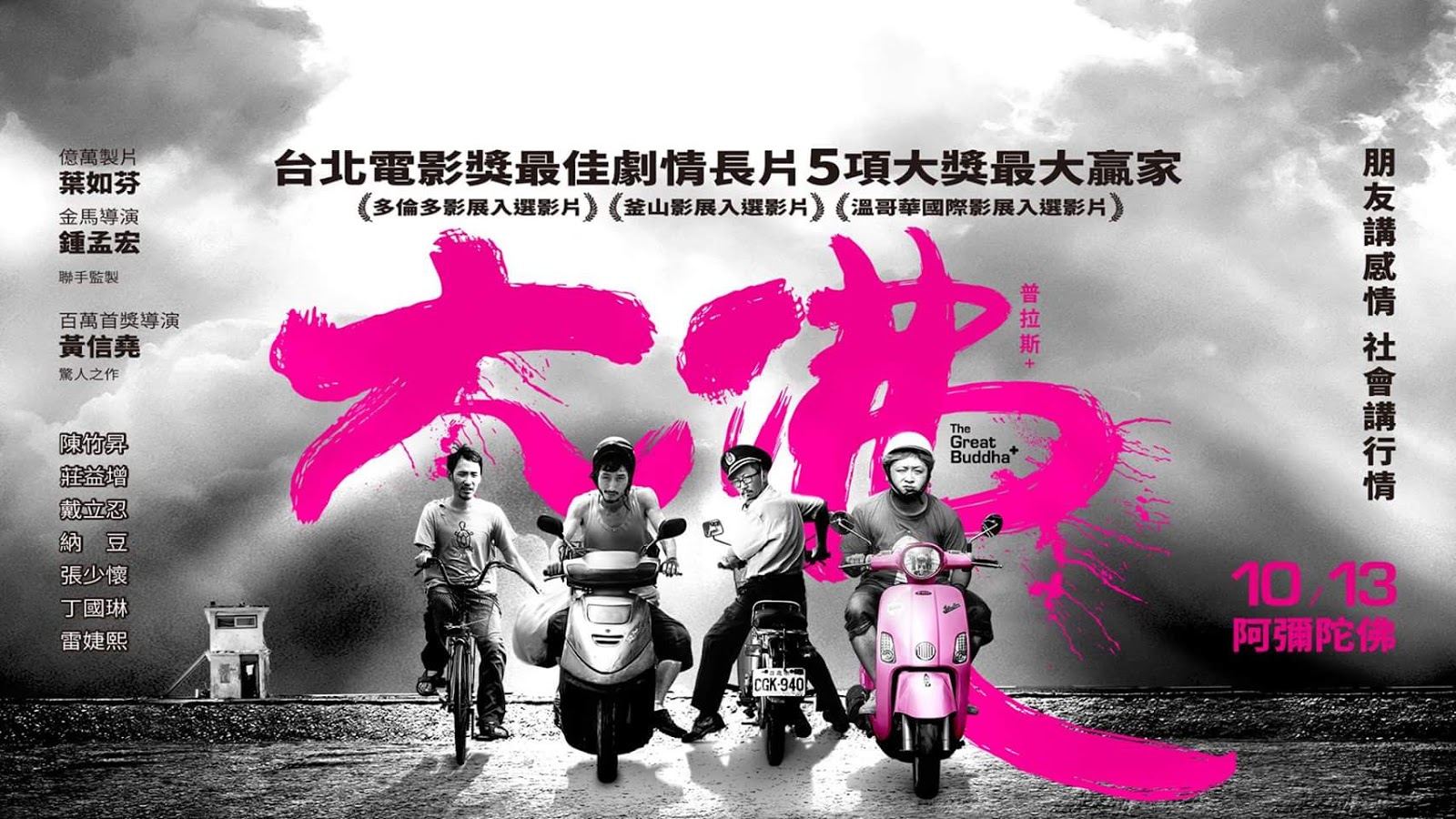
Reviews. The Great Buddha+ (大佛普拉斯) [Netflix] It is difficult making a film about human beings on the margin of society – or about the inhumanity of modern capitalism – while being hilariously funny, and deeply sad, and humane, and thoughtful, without veering into melodrama, sentimentalism, hope-casting, cynicism, or worse, becoming preachy. The is a beautifully constructed film – on some level even on multiple viewings it feels like being hit by a sledgehammer – yet it is also gentle and beautiful at once. As always with this director, the Taiwanese spoken throughout is lovely, and the musicians chosen for the soundtrack are superb. He’s got this thing about religious and political – modern democratic – pieties, and he expresses the critiques of elite hypocrisy in the sharpest and funniest ways. Usually, I hate crying during films and tee-vee shows – this film has the unusual achievement of making me cry and belly laugh at the same time. The death of one of the main characters was rendered in such a beautiful way – full of commentary yet with such humor, love, and respect. And the gaps between the religious and secular-democratic pieties versus how they actually behave – the passive-aggressive arguing over the overly large statue of the Buddha; and the campaign posters sheltering a near homeless family from the rain. And maybe too, the brilliance with this director is in the discipline to not propose quick fixes, or even to have a conventional ending to his stories. Life is full of good and bad – friendship and love, injustice and exploitation – and how many of us leave this earth all that different than the poor fella with the chalk outline around his corpse? Another gift of this director I think, which I noted in a review of his other film, is in respecting his characters – people on the margin – enough to not sentimentalize or idealize them. A wonderful, beautiful, funny, terribly sad film. Just like life itself. 22.2.2024

© Taiwan in World History 台灣與世界歷史. This site grants open access for educational and not-for-profit use. Maps and illustrations are borrowed under educational and not-for-profit fair use. If you are the rights holder and prefer not to have your work shared, please email TaiwanWorldHistory (at) Gmail (dot) com and the content will be removed.
Leave a comment

Filed under books and artifacts, Taiwan Republic

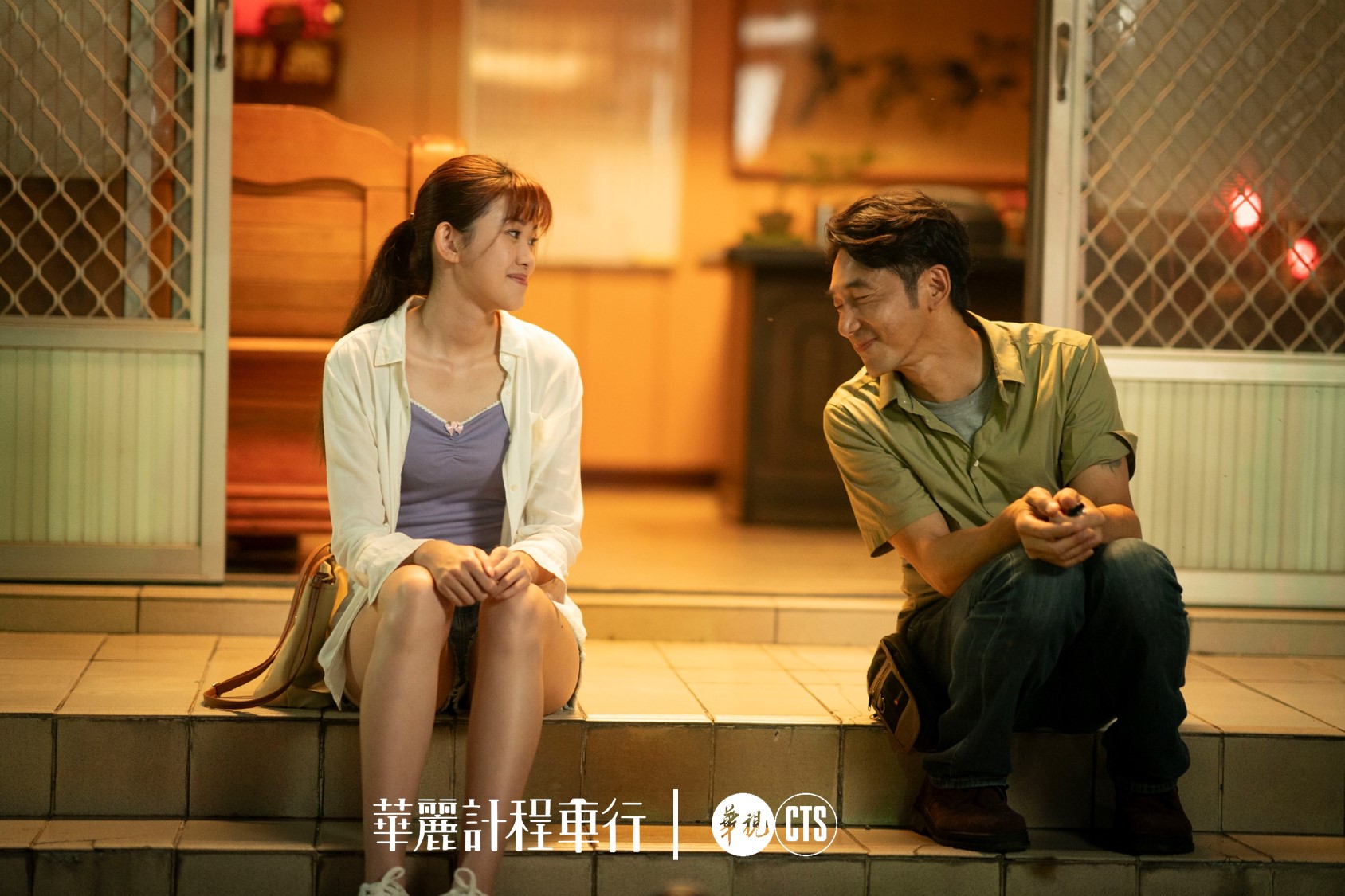
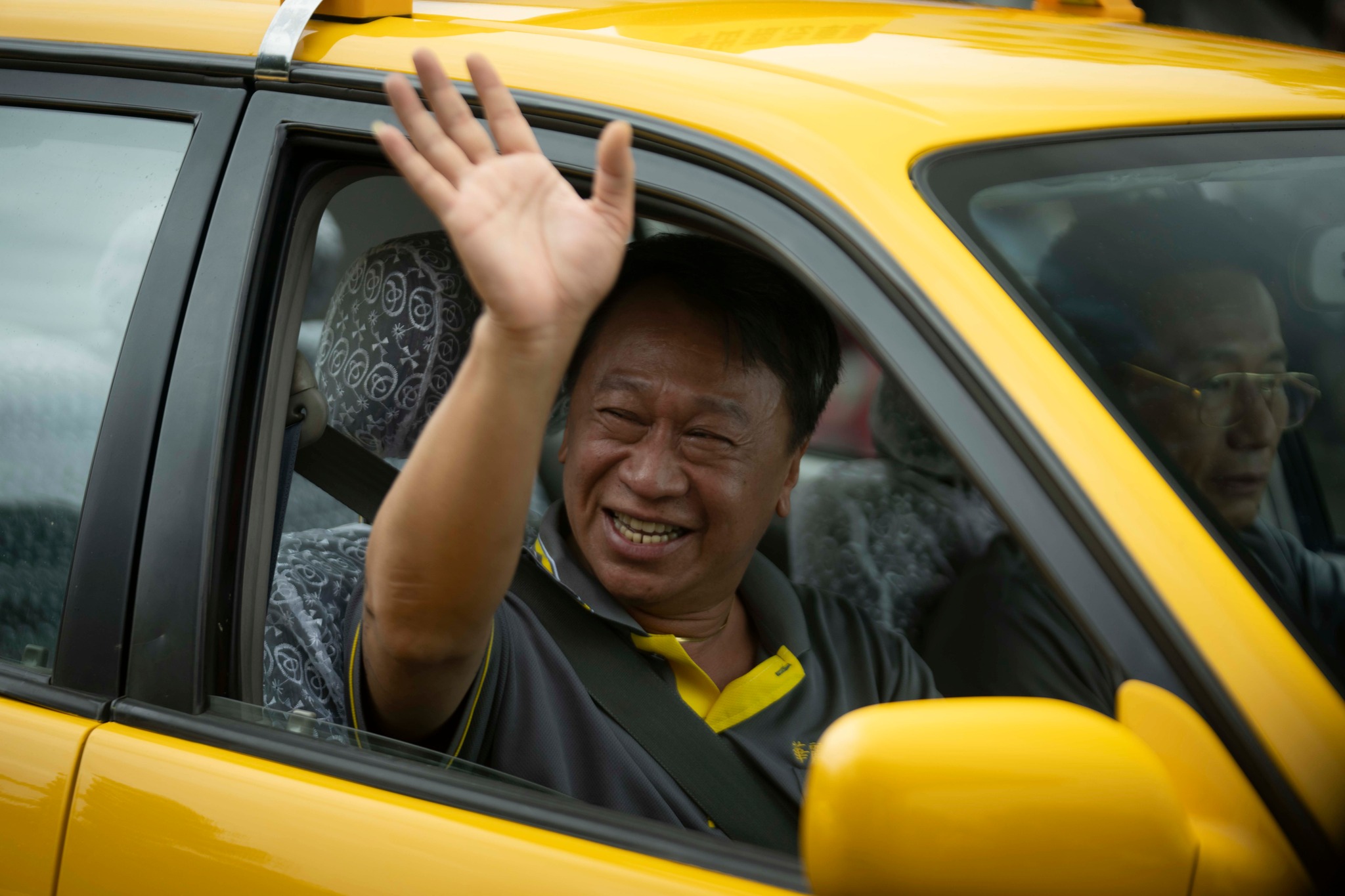
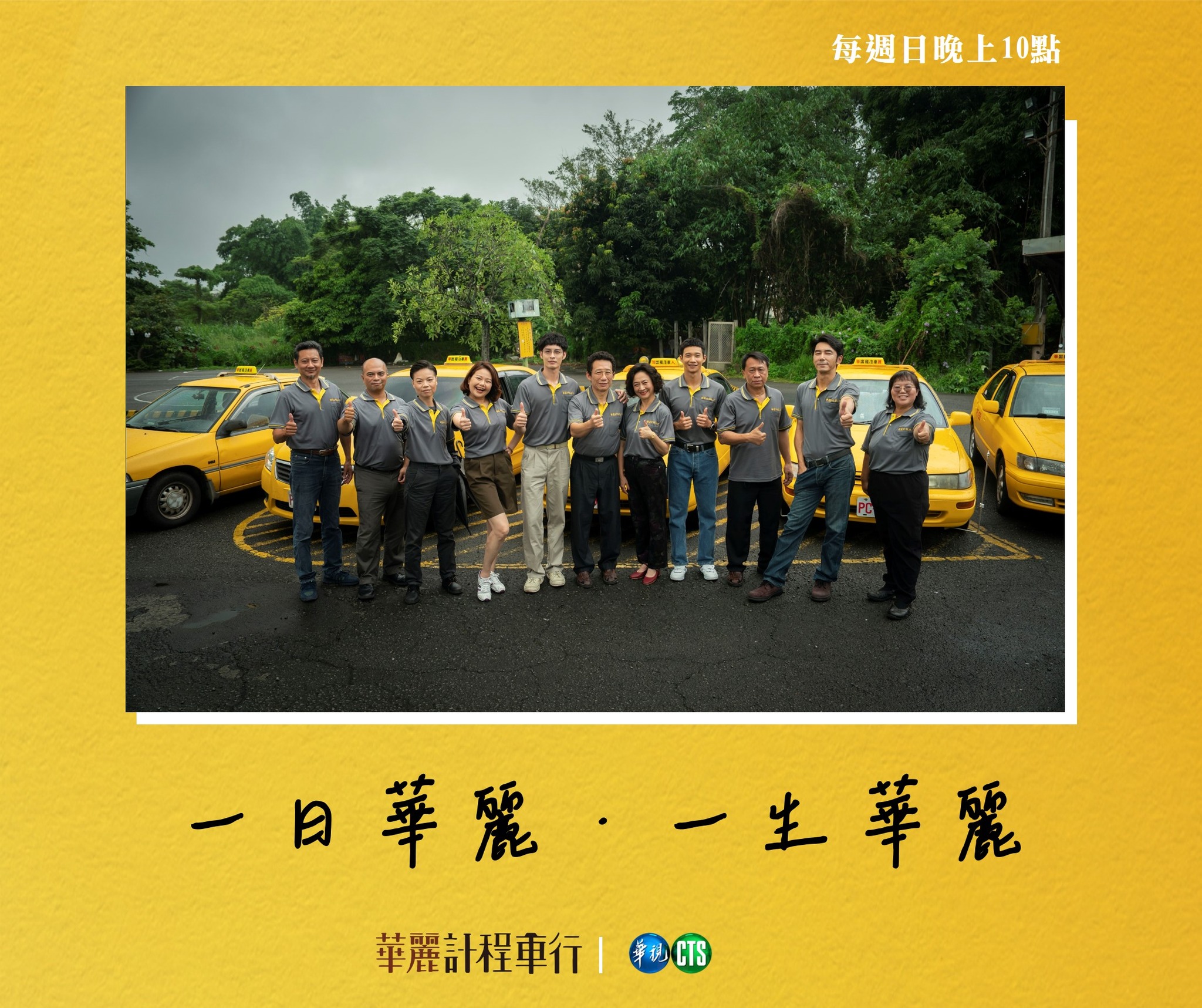
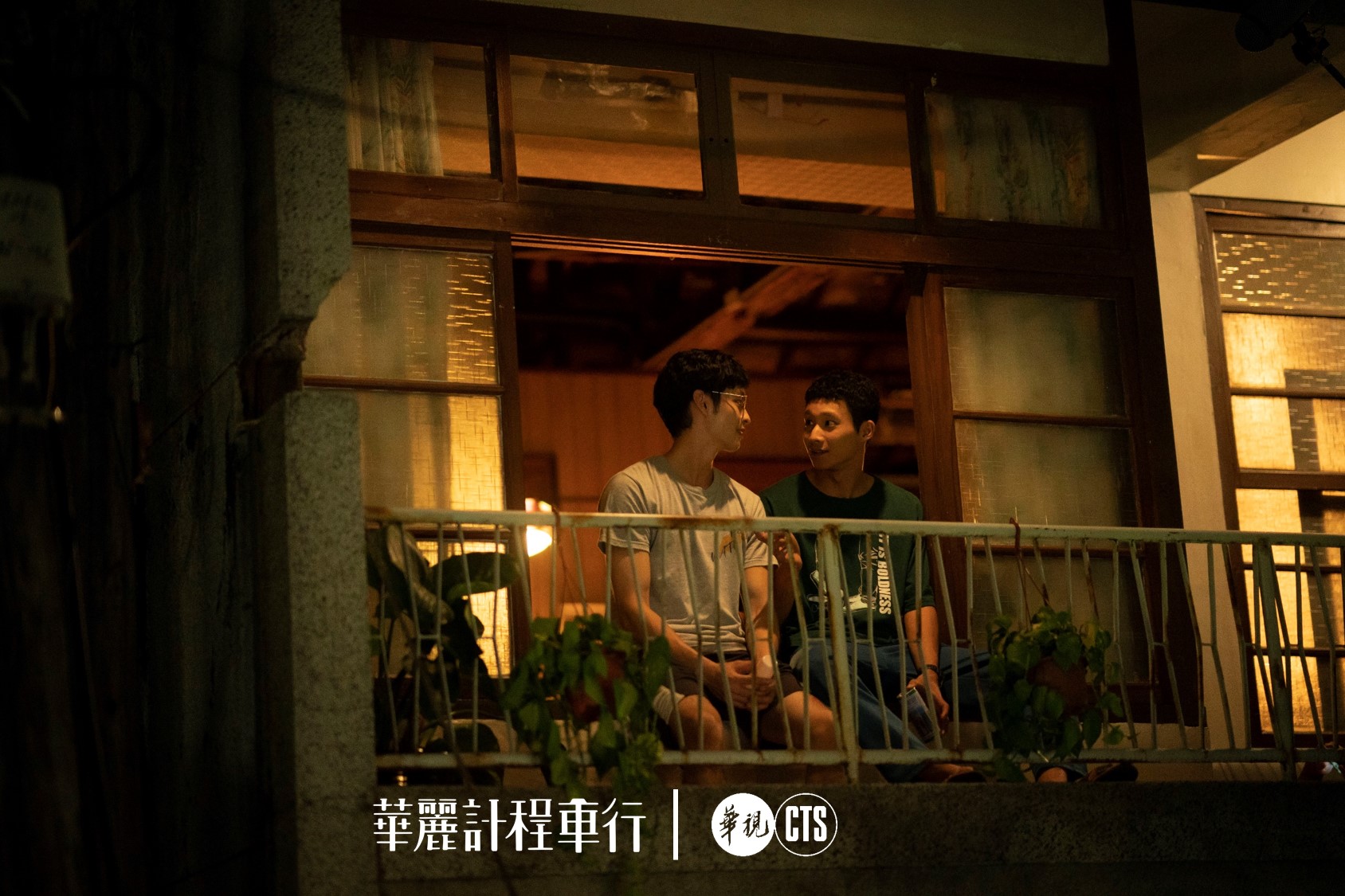
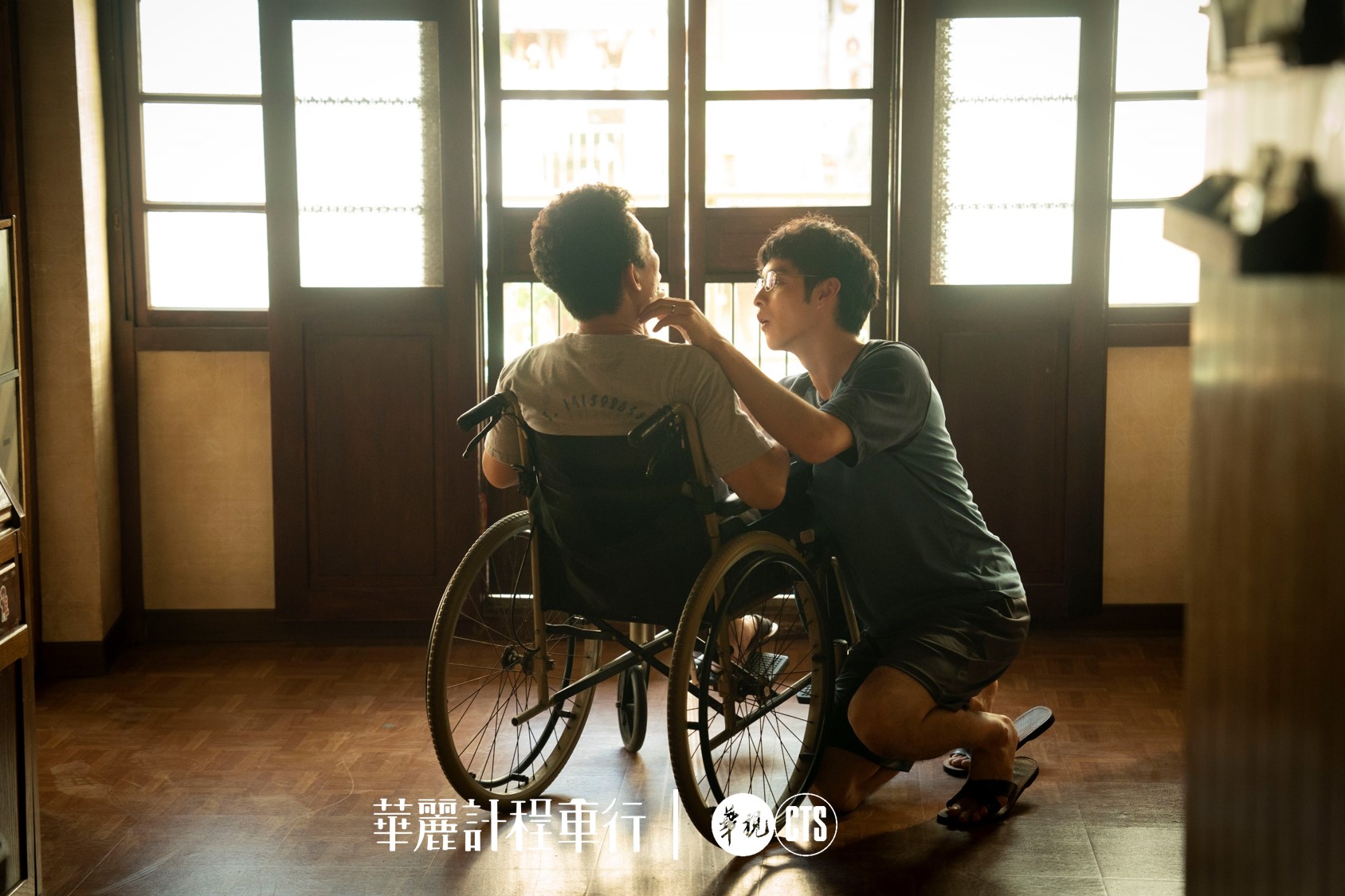
Reviews. 華麗計程車行 A Wonderful Journey

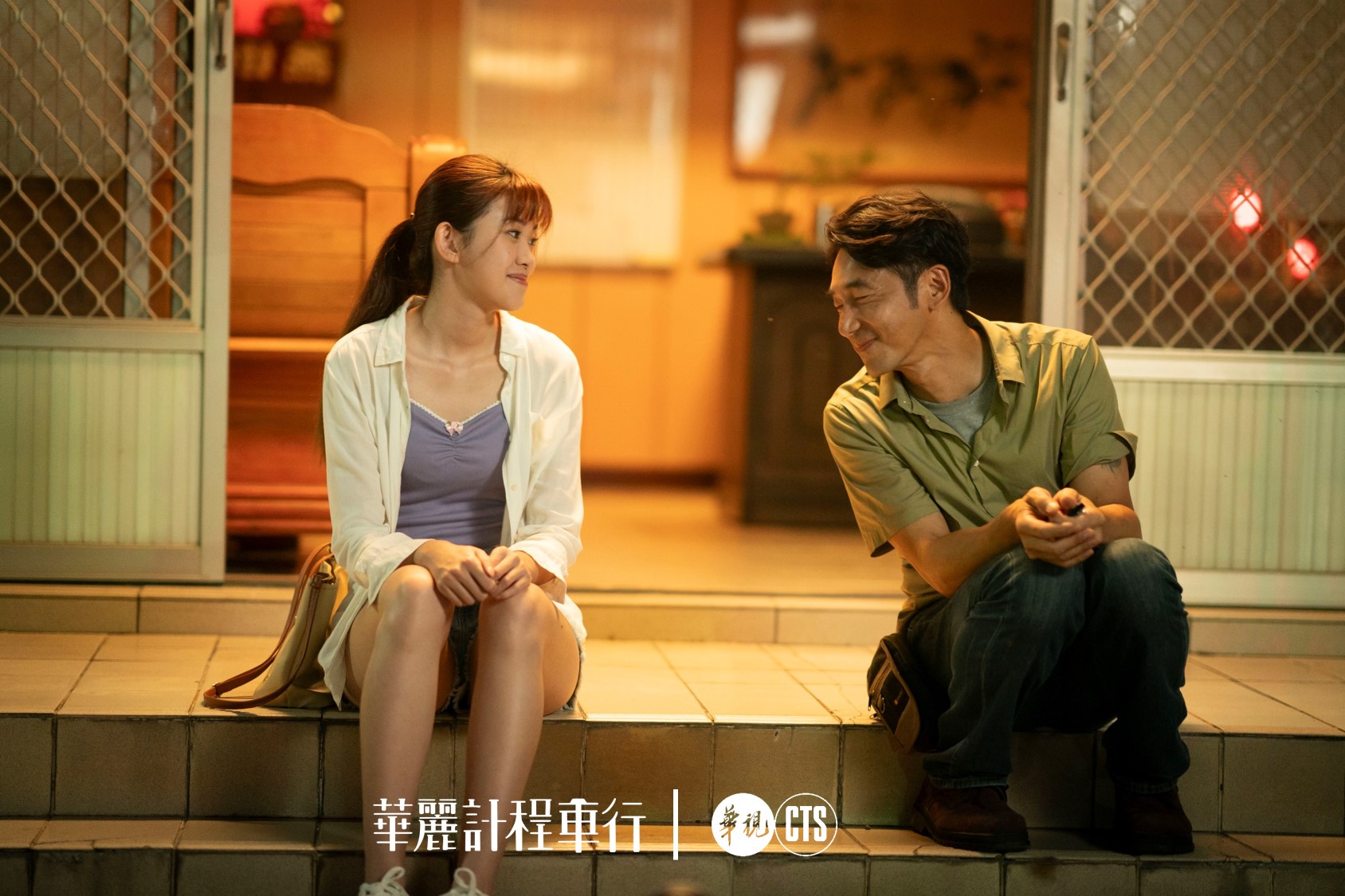
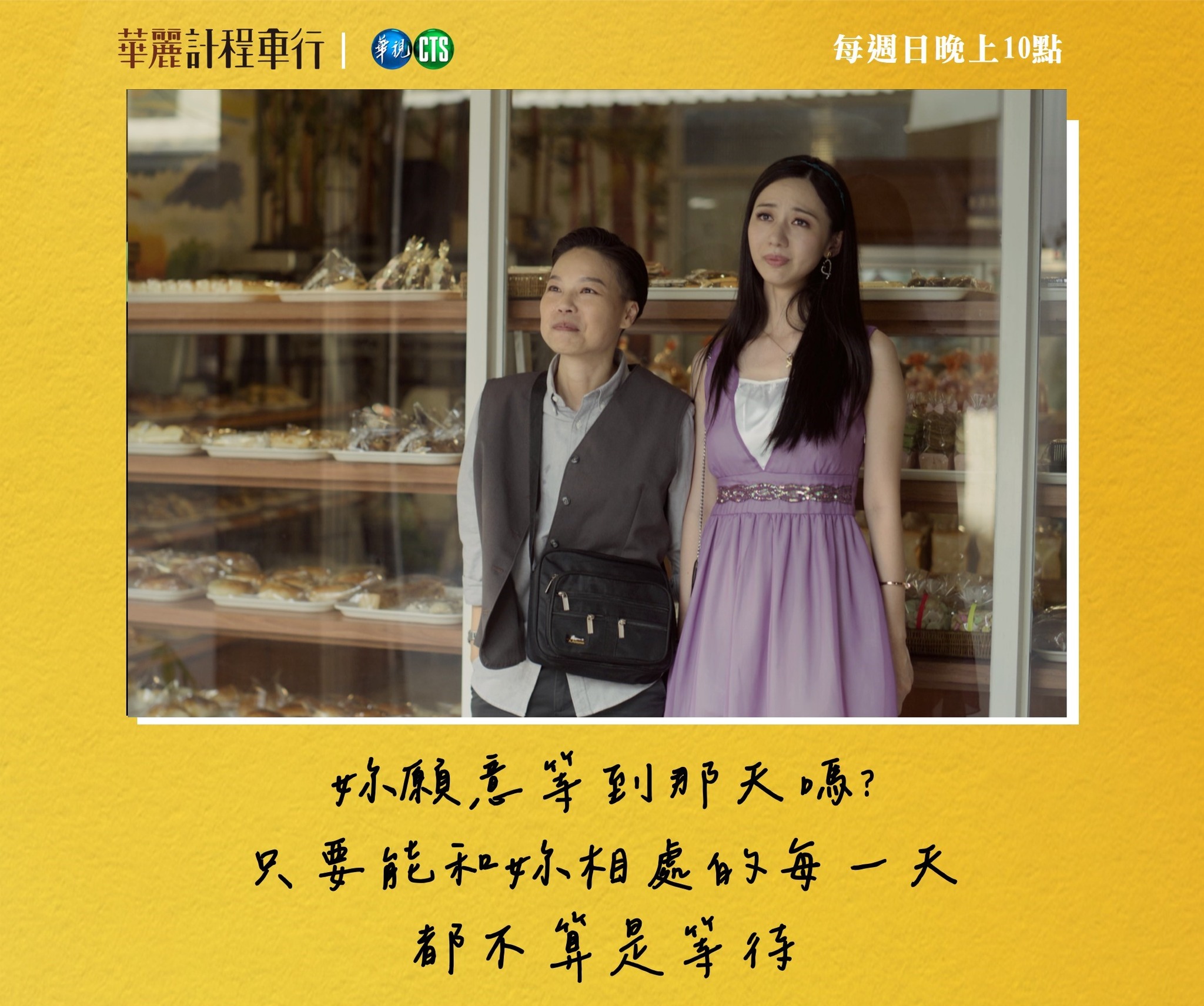
National identity and popular culture classrooms. Reviews. 華麗計程車行 A Wonderful Journey, [Netflix]. Ten episodes is a wonderful disciplining tool for storytelling. This Taiwanese tee vee show – based in the historic southern Taiwanese city of Chiayi, the third such Taiwanese show in recent months – is based on a small Taiwanese family-run taxi company. Part coming of age, part that slice of modern Taiwanese history, part about Taiwan outside of Chinese Taipei colonialist core, part sketches of rural, small town, paycheck-to-paycheck working folks. Impossible to not compare a sentimental show like this to the gold standard, 俗女養成記 The Making of an Ordinary Woman. Ordinary Woman was a near-perfect show, Wonderful Journey is weaker – though compared with what one might ordinarily find on US and Taiwanese channels and Netflix, it is an above-average show. While Ordinary Woman tightly organized the storylines around the lead character and her family, what surprised me the most about Wonderful Journey is in how the stories about the protagonist/narrator, family, and taxi company – though not unimportant, were not as impressive as the middling/later episodes which individually sketched the ”side” characters. Most moving and memorable are the two episodes focusing on the driver instructor/mechanic and his budding relationship with a KTV/bar lady – and the episode describing the death of the narrator’s dad’s best friend/long-time taxi driver – just those two episodes cost me several bags of Kleenex. These episodes reminded me of the stories from the Taiwanese film Buddha+ — empathetic, stylized, a clear-eyed look at the Taiwanese working poor – and how the meaning and dignity of life were represented by different characters. As with many of these shows, some of the best moments were the mini sketches between characters – the two brothers, and the taxi drivers, reminiscent of the scenes of Buddha Minus where old friends played cards and chatted. Returning to the comparisons between Wonderful Journey and Ordinary Woman – Wonderful Journey is not nearly as funny, or moving, or ‘real’ – some of the dialogue struck me as stiff and unlikely to be spoken in the real world. While both shows are heartfelt and earnest, Wonderful Journey often fell into sentimentalism-sap – whereas the imperfection of life and the need to still get up each morning even though life sucks was shown by Ordinary Woman in a funny, creative, non-cynical way. Too often as lesser shows lean on – Wonderful Journey resorted to speech-making instead of trusting the audience to understand the complexities of what these characters are enduring. This is particularly so for the conventional rainbow unicorn all lose ends tied up final episode – as my old writing mentors repeated, show don’t tell. It is impossible for me to not return to the politics of languages and national identity in these Taiwanese shows. When the China KMT colonized Taiwan in 1945 and fled to Taiwan in 1949, the Mandarin they brought became the “national language” and the many languages spoken by residents of Taiwan became “dialects.” One of the many consequences of this foreign-imposed, dictatorship maintenance language policy is a still in-practice conceptual categorization of Taiwan’s popular cultural world – whereas American musicians are pigeonholed into genres/categories, Taiwanese singers and actors and shows are categorized (and valued/devalued) on the basis of languages. Ordinary Woman was extraordinary and unusual as a Taiwanese show in that it successfully challenged the language rules created by the Chinese colonialists – wherein either a show is a “national language show,” or it is a “Taiwanese dialect show,” – an extraordinary amount of beautiful Taiwanese was spoken in Ordinary Woman without one feeling as if it was an overcorrection, whereas Mandarin made appearances when it was natural. Wonderful Journey tried to straddle the politics of languages-national identity – the choice of a not-very inspiring Mandarin ballad as an opening theme song, where how languages of this period in that locality are not as nearly thoughtfully crafted. And this part perhaps is simply the budget. Unlike the long-running Taiwanese soap Uncle, also located in Chiayi, it is kind of remarkable to have a show located in Chiayi with taxi cabs as the main theme and to see/know so little of this important southern Taiwanese city. 15.4.2024

© Taiwan in World History 台灣與世界歷史. This site grants open access for educational and not-for-profit use. Maps and illustrations are borrowed under educational and not-for-profit fair use. If you are the rights holder and prefer not to have your work shared, please email TaiwanWorldHistory (at) Gmail (dot) com and the content will be removed.
Leave a comment

Filed under books and artifacts