Tag Archives: historical memory

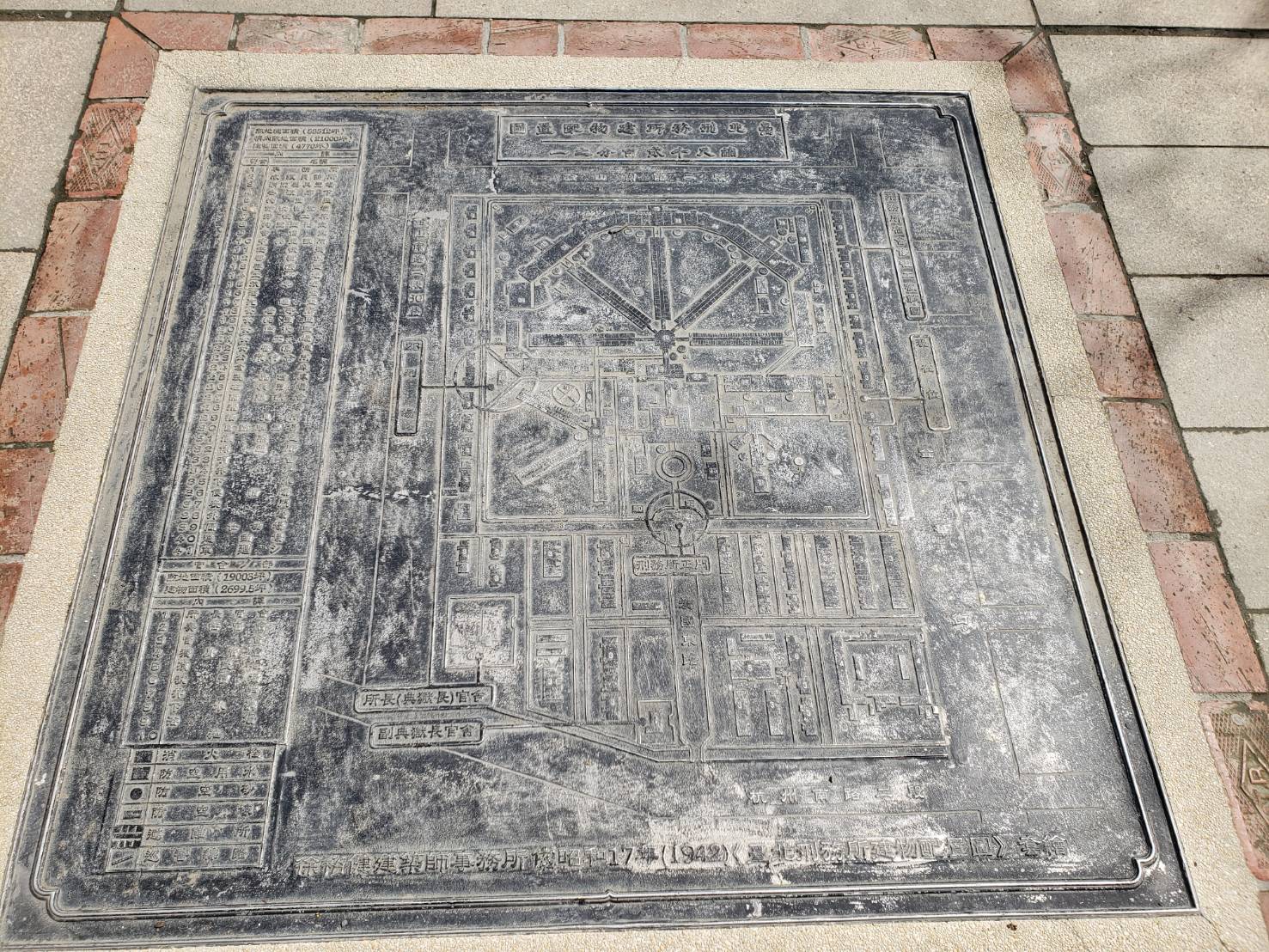
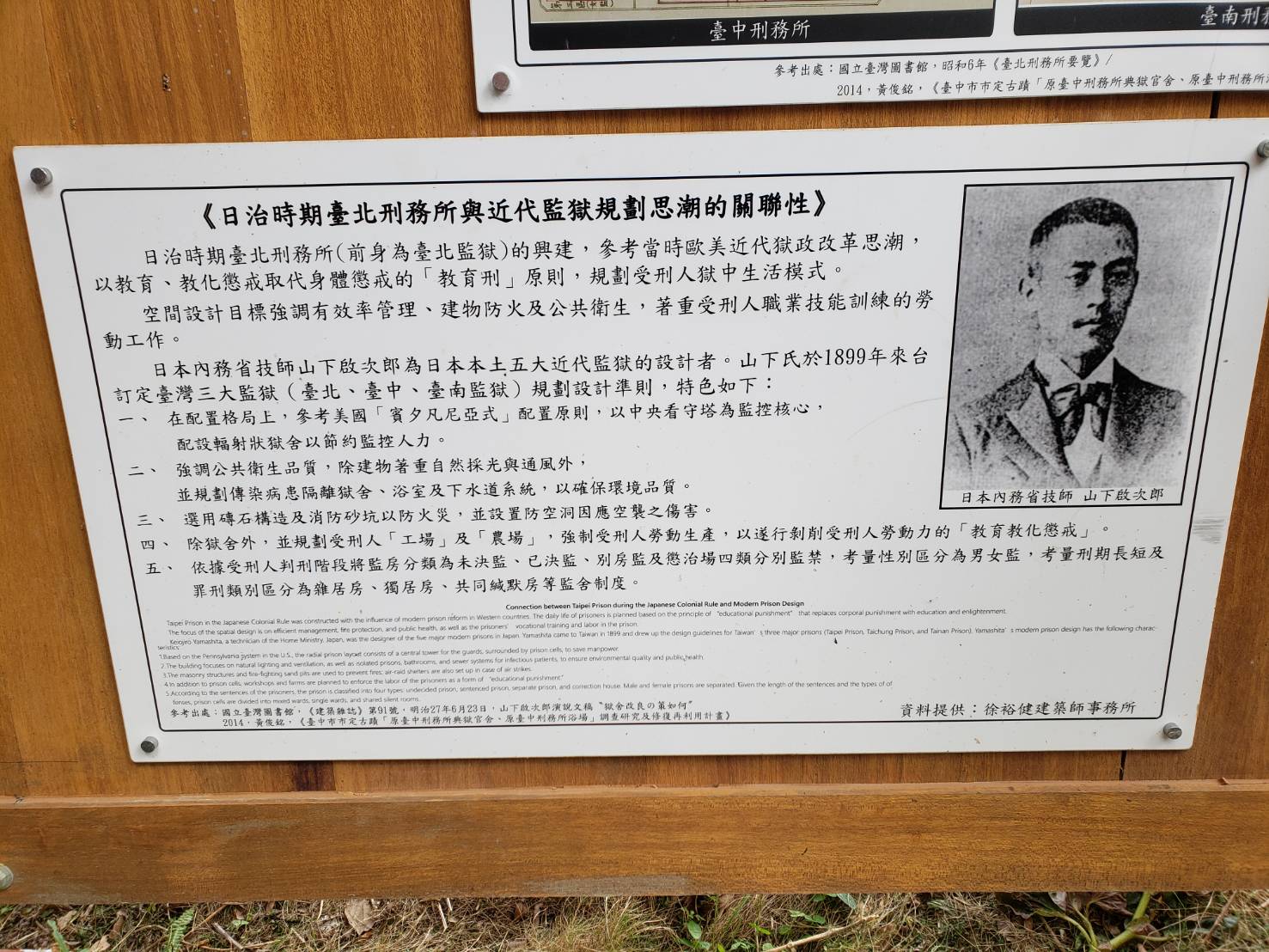
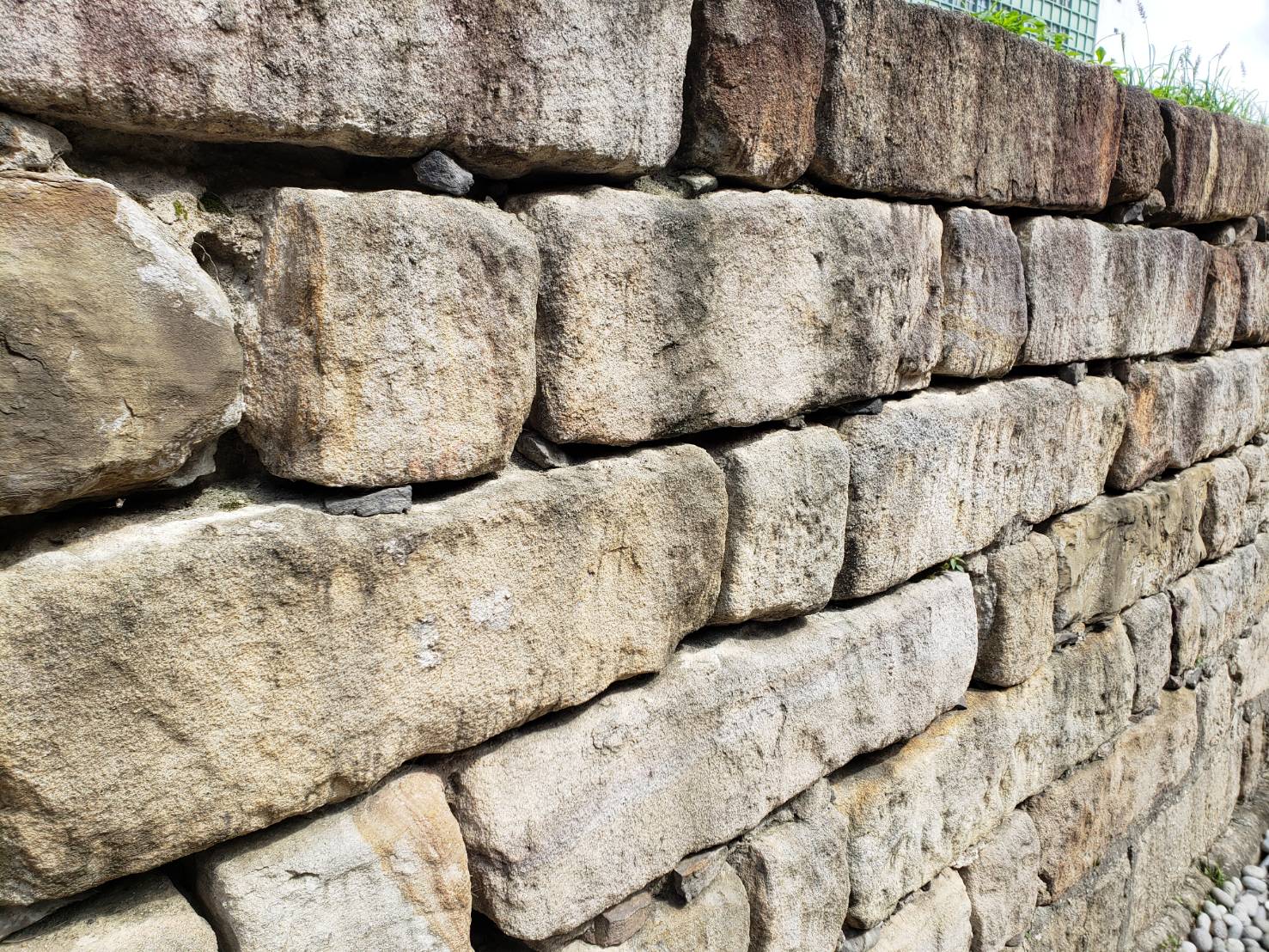
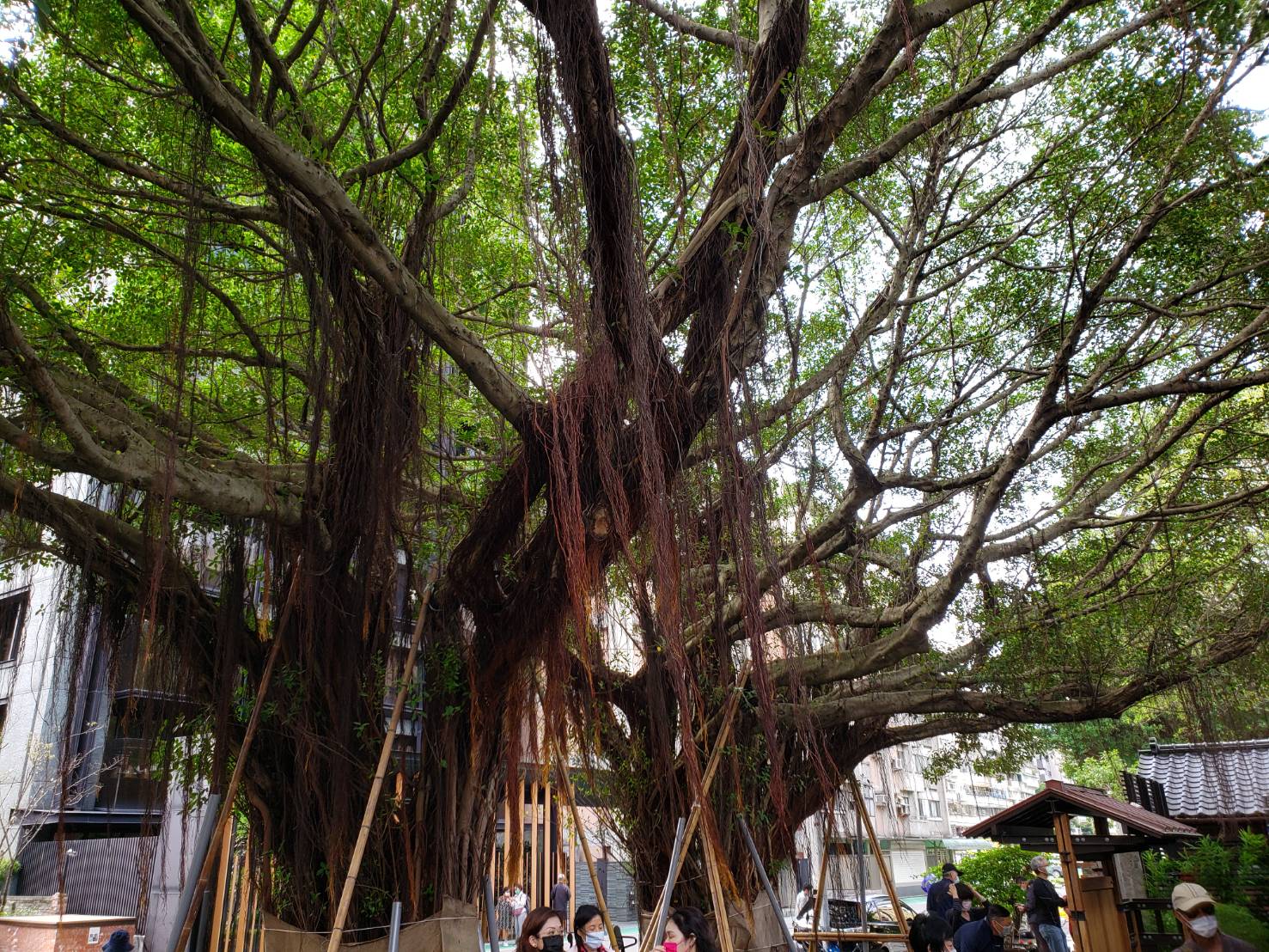
A prison into a small urban mall, Japan, China KMT, democratic Taiwan Republic – this emerging Taiwanese national identity 榕錦時光生活園區-原臺北刑務所官舍: Taiwan dispatch, historical memory, and Taiwan Republic 台灣国 classrooms

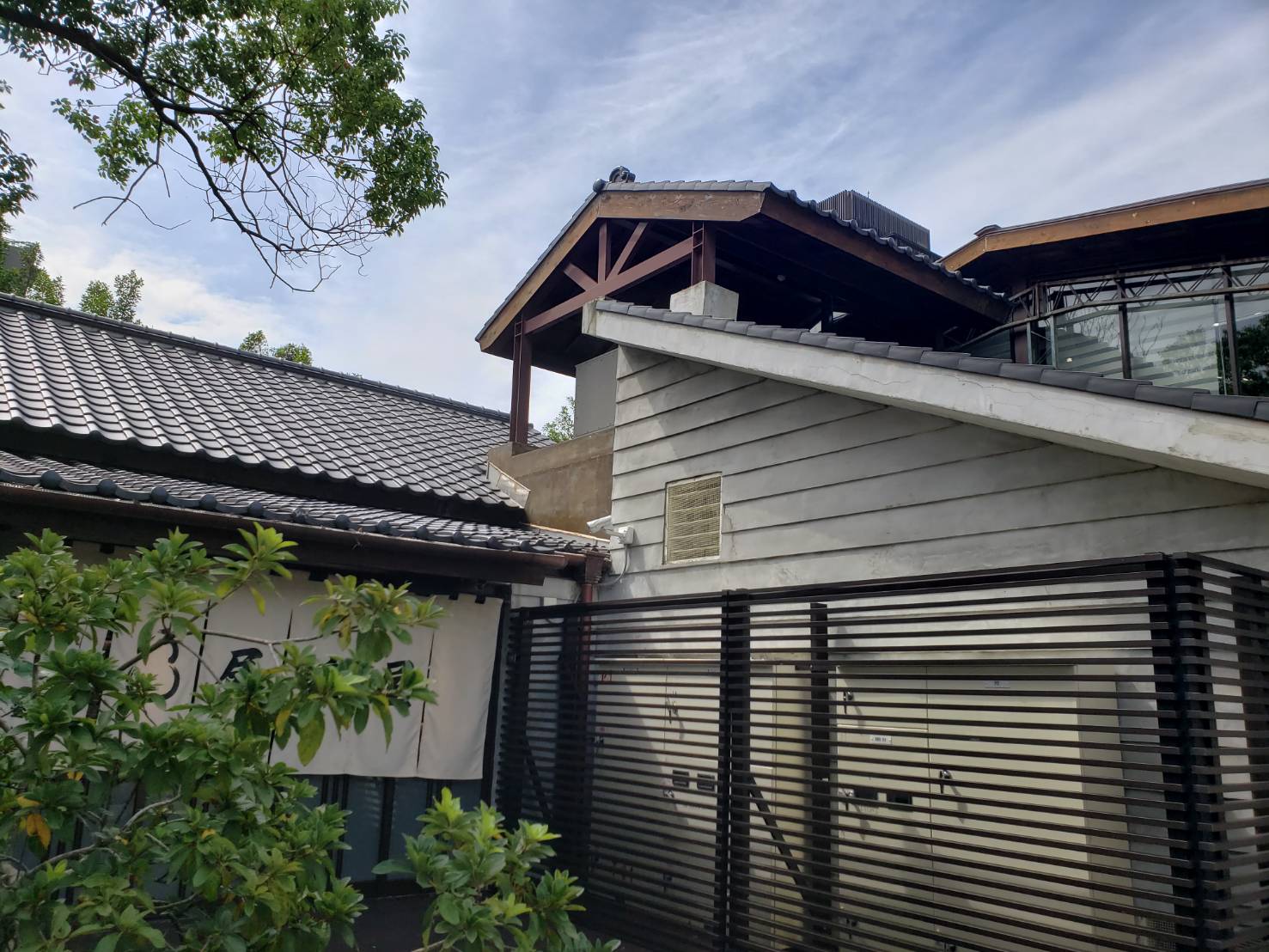
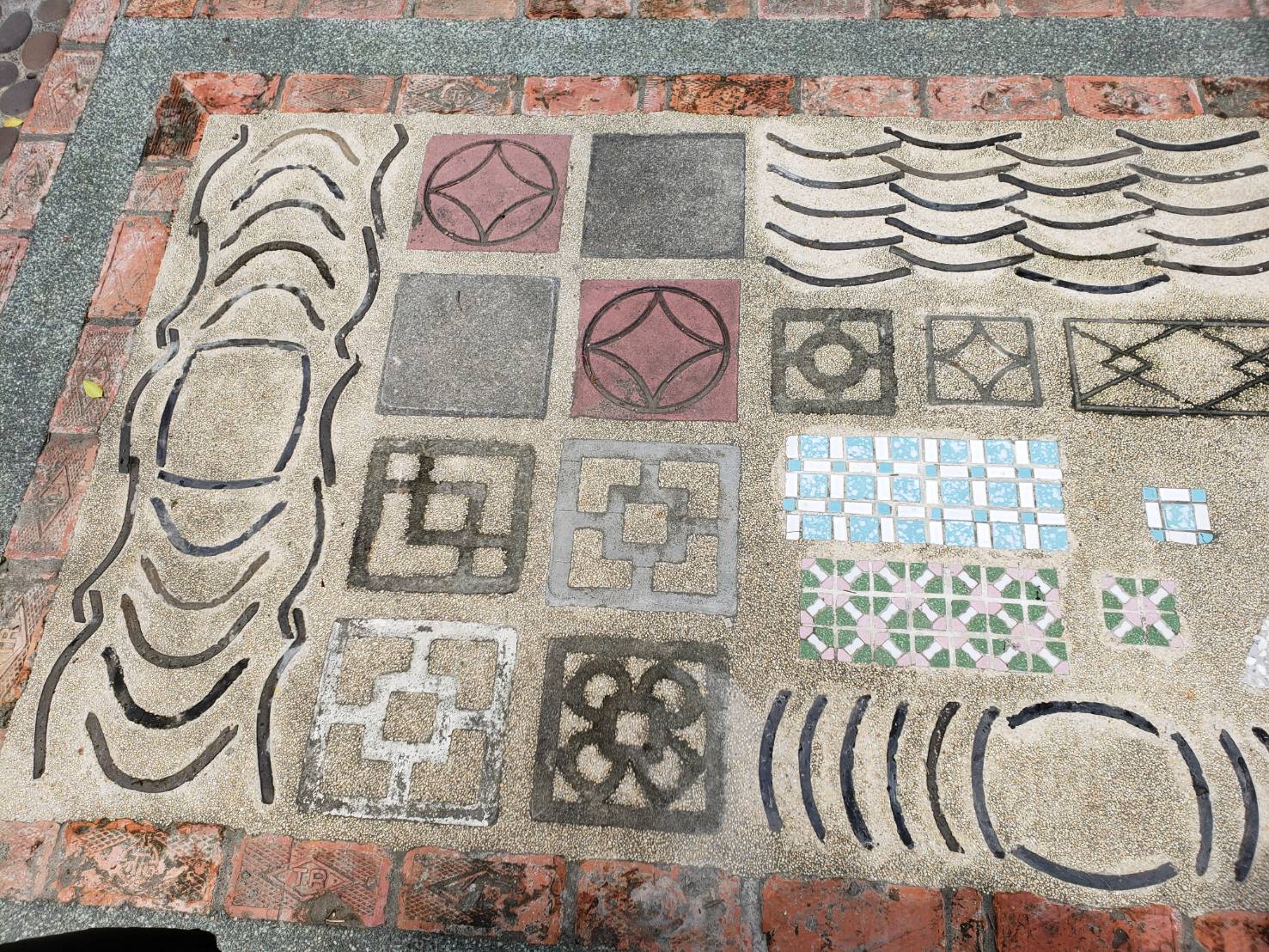
This emerging Taiwanese national identity — urban history and collective memories. Remarkable to have this new project, 榕錦時光生活園區-原臺北刑務所官舍, three blocks from my childhood home. As an elementary school student, I used to save the bus money to buy newspapers and walk home from my school via these alleys.

Taipei is sadly a remarkably not beautiful city — whatever it was the pre-Japanese folks had in mind, and whatever grand plans the Japanese had, the Chinese invaders brought chaos and temporary-ness — occupiers who did not plan to stay long behaved accordingly. It also occurred to me today while experiencing the present and remembering my childhood that I have watched multiple Taipeis slowly meld incompletely into one another — the elegant Japanese wooden buildings that used to be all around the neighborhood, with the one-to-two-story super ugly Chinese invader concrete buildings, with the latter-day 1990s and beyond “western-ish/glass/concrete” apartments.

My parents made a pain face a few days ago when I politely noted that all of the buildings in Taipei are designed as if they have no neighbors — as if they are not a part of a city. In my childhood 1970s Taiwan was still under a Chinese invader-junta dictatorship, and in those classrooms, I was being brainwashed about how “we” fought the Japanese and must soon take back “our” fictionalized China — while coming home to visit my Japanese-speaking maternal grandparents and aunts and uncles.

If you ask me what I make of a former Japanese prison being turned into an urban hipster shopping/restaurant/coffee place, I made a face. Not because I am above the fray anti-consumerism per see — a prison is an unhappy place, and this transformation did strike me as odd. On the other hand, as I have often argued with fellow academic historians — we cannot keep just having a cow over every single history inspired film and tee-vee shows not being as boring as many academic books — regular people have fun, and we should at least not be anti-fun. More pragmatically, for downtown Taipei land this precious/costly, this is probably the only way to preserve the site without razing the little that’s left of what the Japanese built and turning it into yet another unremarkable but highly profitable apartment. And that’s not nothing, either. And I think the folks the city subcontracted did a tasteful job, things are clearly marked, and the rebuilt restaurants and coffee shops are useful, attractive to mass consumers, and interesting enough to history buffs.

This slowly emerging democratic Taiwanese national identity — to find a reasonable national container to tolerate these contradictory currents — peacefully — none of us particularly pleased, but tolerable, functional, democratic, and not a part of China. Historians cannot resist periodizations. Do urban projects like this mean modern Taiwanese national history has moved from the Dutch, Koxinga, Manchus, Japanese, China KMT invaders, and Democracy, into the consumerist coffee house phase?

© Taiwan in World History 台灣與世界歷史. This site grants open access for educational and not-for-profit use. Maps and illustrations are borrowed under educational and not-for-profit fair use. If you are the rights holder and prefer to not have your work shared, please email TaiwanWorldHistory (at) Gmail (dot) com and the content will be removed.
Leave a comment

Filed under Taiwan Republic

A Taiwanese Hakka temple festival parade (featuring Minnie Mouse?!) – this emerging Taiwanese national identity: Taiwan dispatch, historical memory, and Taiwan Republic 台灣国 classrooms

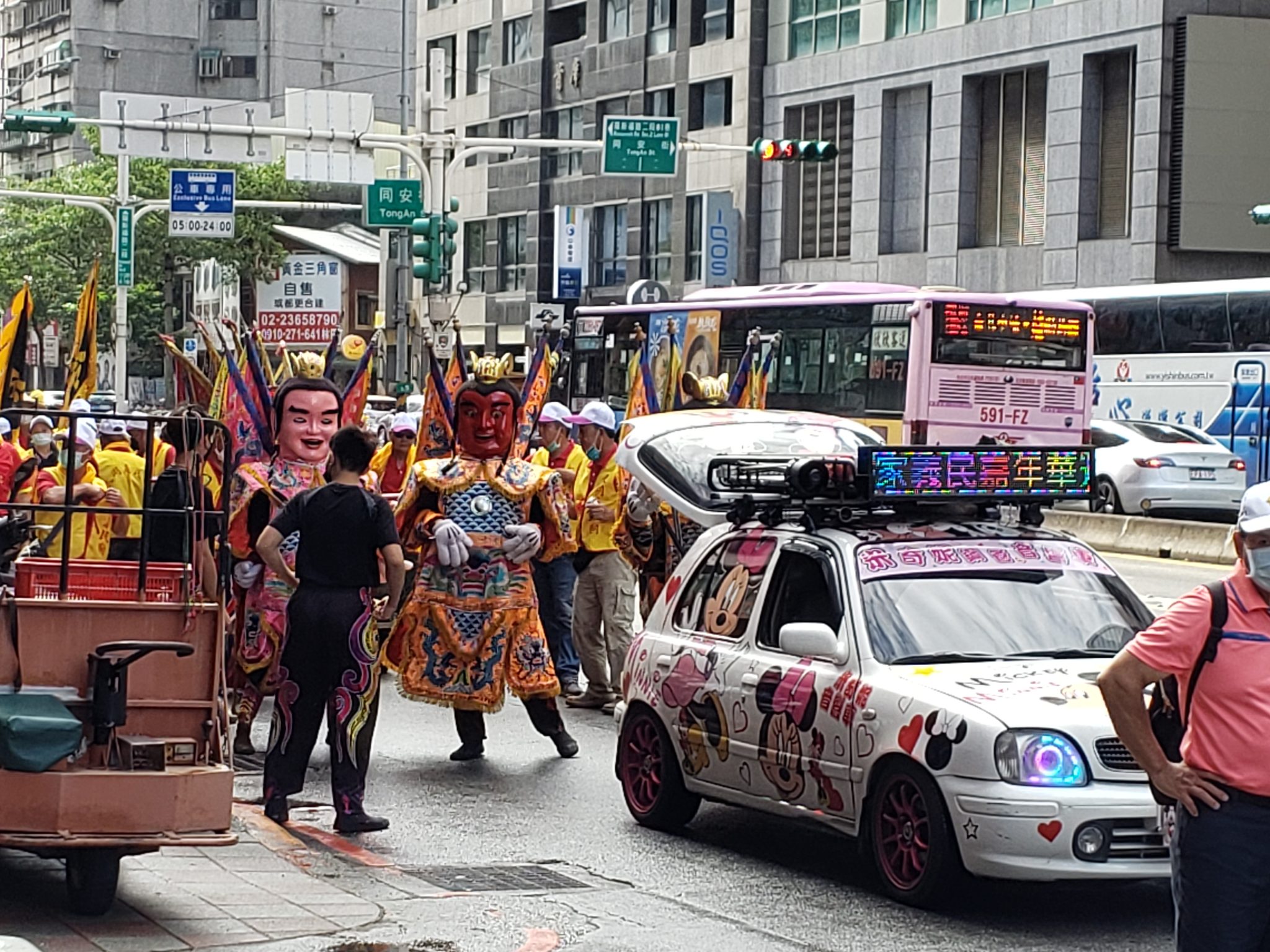
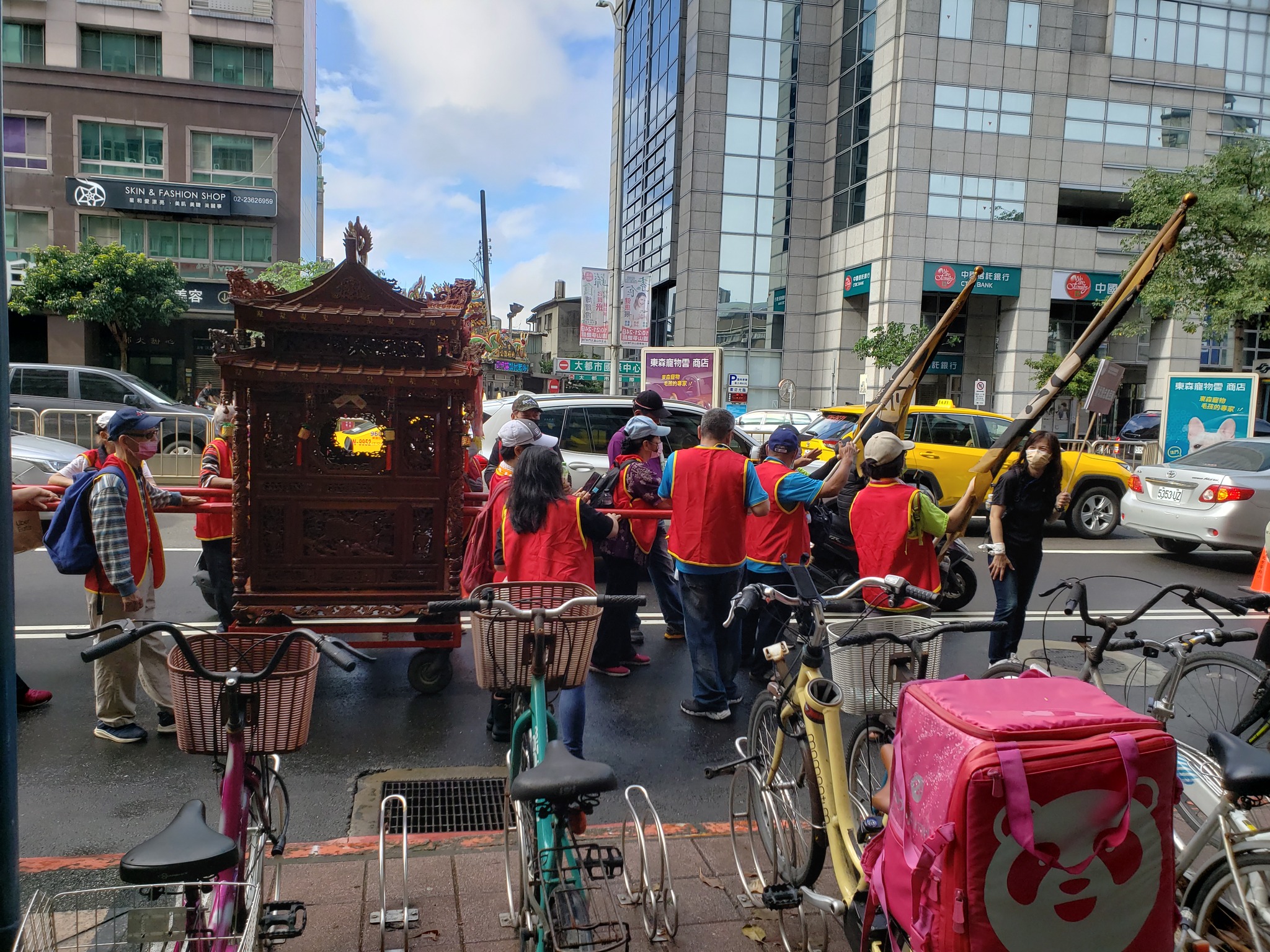
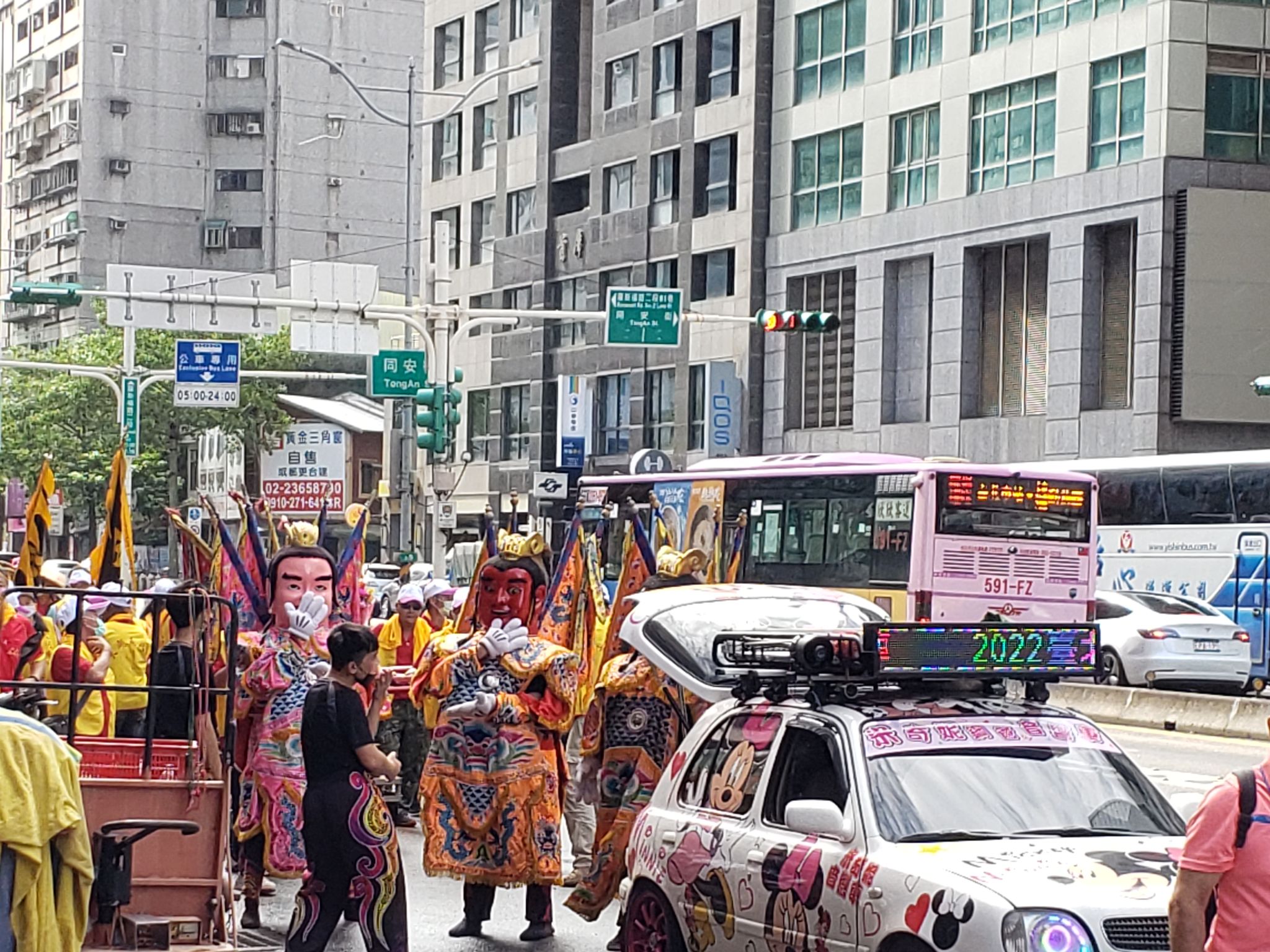
Taipei Hakka temple festival parade – This emerging Taiwanese national identity …. Goddesses and Gods. You go to the traditional market with mom (the sadly disappearing 古亭市場 Guting Market), you happen to run into a massive Hakka Temples Parade. And mom is now used to her American son, baseball cap in tow, running off like an idiot with his camera while all the local shoppers carried on.

The Goddesses and Gods from different temples are carried with traditional carriages and parishioners — interesting to compare the flags and clothing with ceremonies and rituals of the British monarchy. Taiwan being hilariously Taiwan, it had to include the Three Gods 三太子 wearing what looks to me like Minnie Mouse hands (?!) preceded by a pop-dance music sedan (I am too old to tell you what they are playing except to say I muttered something Grandpa Simpson would mutter about music ….) with maybe copyright infringing Minnie Mouse? And why Minnie and not Mickey?

I’ve written previously about the heterodoxies of Taiwan as a matter of facing reality, pragmatism, and national survival — contrary to the imperialist, Marxist-Leninist orthodoxies of the China CCP-KMT (both Leninist Chinese parties are also deeply addicted to faux ancient dynastic symbolisms and rituals ….), or the modern nation-states and progressivism/conservativism/liberalism of western imperialists. To have so many groups with so many languages and so many different historical memories survive relatively peacefully in a relatively small Taiwan, while facing a gigantic foreign enemy, Taiwan cannot afford western nor Chinese orthodoxy-perfectionism. I have never bought the half-hearted “celebrate diversity” slogan of the west — I think this emerging Taiwanese national identity is far more sophisticated and pragmatic. Don’t measure everything, don’t discuss everything, let things be whenever possible, and focus on the very few things that matter for survival. Much as Taipei architecture and urban planning make little sense, and much as Taiwanese political campaigns can be a real mishmash of styles, and much as Taiwanese music and cinema and particularly tee vee shows feels like a potluck or potpourri of mixtures that may or may not make any sense, it is this heritage of heterodoxy – being OK with things that are not coherent, or are even self-contradictory, that makes this peaceful democratization of Taiwan possible. And isn’t it revealing, that democratic sovereignty is such a core to this emerging Taiwanese national identity, and are the two words neither the China CCP-KMT, nor many western experts and journalists, are willing to face directly and earnestly?

I myself, while my non-Hakka vendor was trying to convince me of his anti-Hakka prejudices (I disagree, but politely ignored him because he held my lunch in his hand ….), appreciate the dissonance — same as I felt at the Taiwan National Day 2022, none of it makes any sense, and it is OK to let that be and resist the western-Chinese reflex to try to “fix” it. Wave, smile, and wish the Hakka Goddesses and Gods and the fellow Taiwanese citizens they protect the best. And be OK with this dynamic, incoherent, emerging Taiwanese national identity. 22.10.2022

© Taiwan in World History 台灣與世界歷史. This site grants open access for educational and not-for-profit use. Maps and illustrations are borrowed under educational and not-for-profit fair use. If you are the rights holder and prefer to not have your work shared, please email TaiwanWorldHistory (at) Gmail (dot) com and the content will be removed.
Leave a comment

Filed under Taiwan Republic

Taiwan National Day 2022 as art – this emerging Taiwanese national identity: Taiwan dispatch and Taiwan Republic 台灣国 classrooms

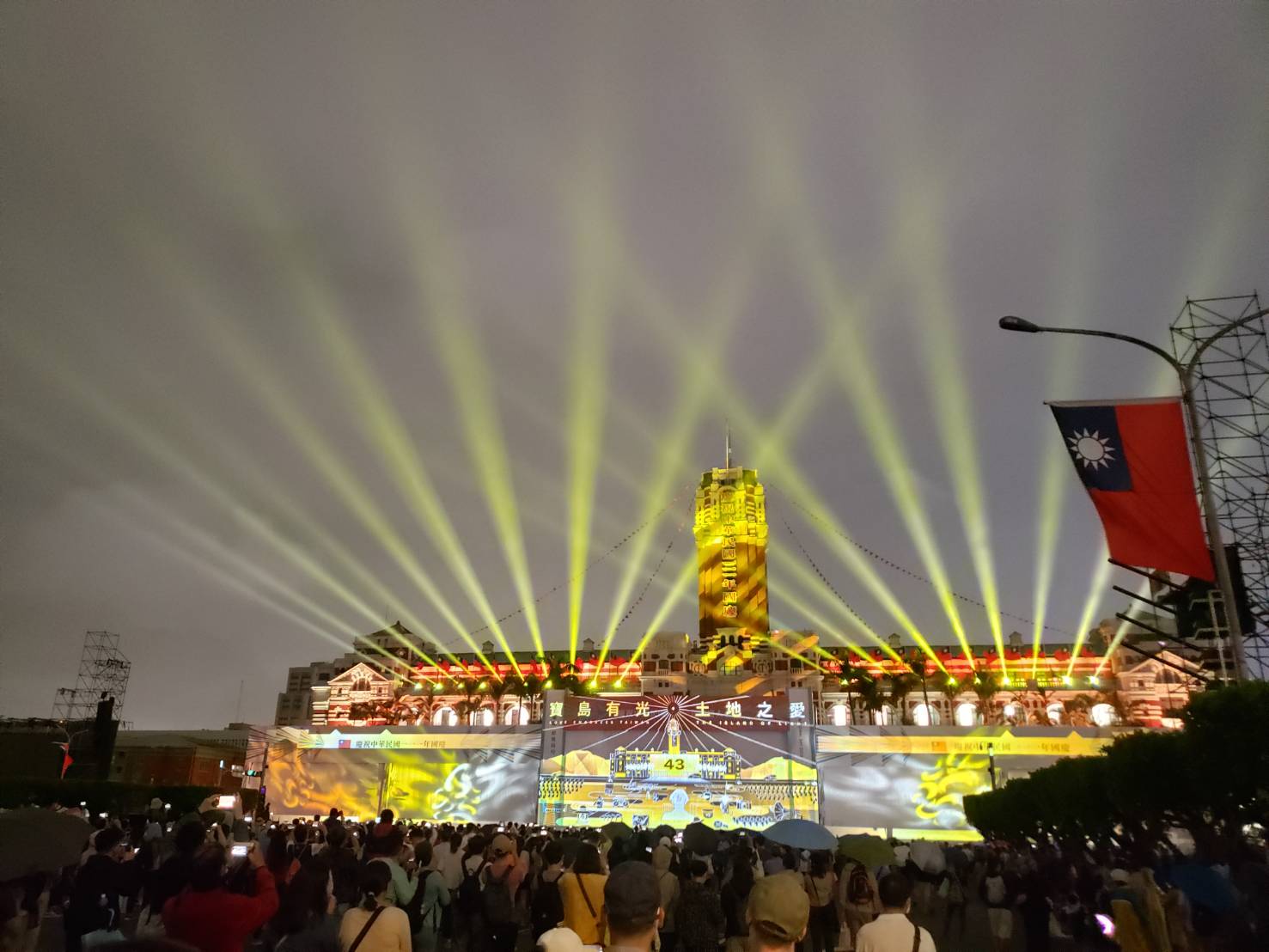
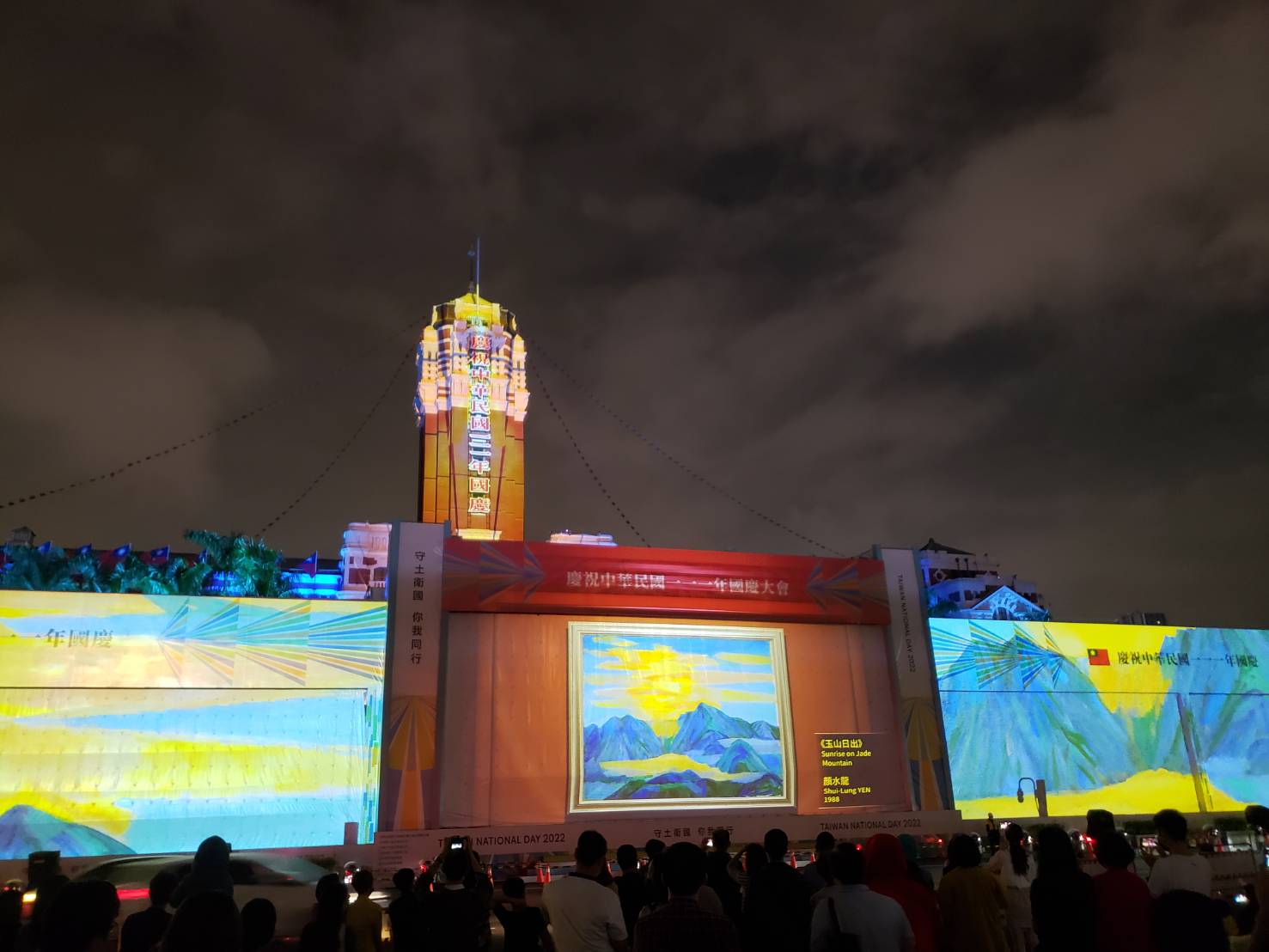
This emerging modern Taiwanese national identity. I took the subway (two convenient stops) to the Japanese Colonial Administration Building 臺灣總督府/Presidential Palace to see the “national” day laser show. I then walked around the palace and then walked home, less than half an hour, relatively safe (scooters notwithstanding, no guns, few muggings, etc.) This is probably the first time since I was ten, that I have shed a tear or had any feelings for this day. And it is in how President Tsai’s folks narrated the show, through Taiwanese artists, musicians, and filmmakers, melding home, family, and nation together — a Taiwan that belongs to the world — while opening that democratic space I have been writing about where more Taiwanese who immigrated before 1949, from 1945 to 1949, and after, could find democratic, peaceful common ground in this emerging Taiwanese nation. I have here the moment when the last painting of my favorite artist Chen Cheng-po of Taiwan Republic’s sacred Jade Mountain came on screen and my eyes teared up, he was murdered by the invading China KMT, and the show followed with this complex blend of people, ideas, and ways of telling this Taiwan story. Whatever differences we may have, this is where we were born, this is the soil that nurtured us, this is the nation we share, and this is where we will die. Or, as I wrote this morning, nationalism-patriotism without loving the human beings who share this land is meaningless. Nations are not about flags and names and constitutions and “history.” Many western and even many Asian/Taiwanese scholars are missing or ignoring the importance of this massive national identity engineering project of President Tsai. An impressive feat, taking the symbol of colonial administration, to Chinese KMT colonial occupation, and projecting diverse Taiwanese film and art and music and collective memory onto that symbol — in my own lifetime, I have witnessed that same building used by dictator Chiang Ching-Kuo extolling us to take back his fictionalized China, to this new emerging Taiwanese nation with democratic sovereignty. This relatively bloodless national revolution, decades in the making, marches on. Remarkable. May Taiwan Republic, democracy and human rights, full of art and music and good food, emerge from this process. 8.10.2022

© Taiwan in World History 台灣與世界歷史. This site grants open access for educational and not-for-profit use. Maps and illustrations are borrowed under educational and not-for-profit fair use. If you are the rights holder and prefer to not have your work shared, please email TaiwanWorldHistory (at) Gmail (dot) com and the content will be removed.
Leave a comment

Filed under Taiwan Republic

Taiwanese civilian perspective on ‘asymmetric warfare’ and Taiwan’s national defense strategy 台灣作戰策略中的不對稱防衛辯論 賴怡忠 思想坦克: Geostrategery and Taiwan Republic 台灣国 classrooms

美國這幾年針對不對稱有個說法,就是台灣為了戰力保存,應該在武獲過程朝向取得「小而多的東西,而非大而少的東西」(a large number of small things, not a small number of big things)。但如果回顧在2009年時任國防部助理部長的葛瑞森將軍提到台灣應走不對稱與創新時,他指出不對稱無法取代傳統軍武提供能力,但能夠降低中國對台越來越顯著的數量優勢,降低中國根據這個優勢而發展的行動效度。之後更有人提到不對稱的重點是將不對稱視為作戰/行動概念,而不是物質概念(武器的大小與多少)。從這角度看,美方對於「不對稱防衛」概念的理解也是莫衷一是,沒有清楚的操作型定義,更甭提軍事準則。如果是因應情境而不採取對稱對應的方式,顯示大家對於「什麼不是不對稱」比對於「什麼是不對稱」有較清楚的想法。那這可以表示以載台來否定其不是不對稱防衛,是否就失之武斷呢?在戰略層次上,專注於反登陸的不對稱防衛策略,根據美方部分前官員的誠懇建議,希望台灣不要將資源浪費在空防與海防上。但現在的建議是連不增加新品,就是幫既有系統換裝的作為,都不為對方所喜。當然美方也說,類似的問題也發生在美國的軍事改革上,對台灣的困境有「同情的理解」。只是台海防衛是台灣的生死大事,我要怎麼做當然是我的決定,因為是我在付代價,自然沒法對美方主張照單全收。這個無法對美方照單全收的立場,除了台海防衛是我自己的事外,也與美方對台灣防衛至今持續採「戰略模糊」有關。如果美國承諾可以在中國攻台時協助防衛台灣的空防與海防,台灣要專注在反登陸防衛自然沒什麼問題。但因為戰略模糊策略,軍方無法預判美國是否一定會來,自然其防衛策略就必須涵蓋每一個角落。雖然因此會影響整體的防衛力,但放棄某些區域防衛的結果,一定會導致中方極力攻擊這個弱點區域以擴大戰果。如果台美有類似冷戰期間美日同盟所謂的「美矛日盾、美攻日守」的角色與任務分工(roles and mission assignment),即便還不是具體的條約同盟,但肯定台灣對於以反登陸為主的不對稱防衛能更誠心接受。

This is an important summary of the debates over Taiwan’s national security strategy during the last few decades, and the role played by “asymmetric warfare.” On that term, or “porcupine strategy,” students of global affairs are wise to be cautious to separate the jargon-chasers/repeaters from the professionals with a realistic grasp of the trade-offs between different options. Dr. Lai’s essay is an additional important corrective – in a field dominated by American voices, where the civilian, non-China KMT party-state voices inside Taiwan are scarce, it is a good sign that Taiwan’s decades-long democracy is slowly penetrating the China KMT dictatorship-dominated national security arena. Dr. Lai’s paragraph on America’s strategic ambiguity and Taiwan’s inability to fully accept the American advice on asymmetric warfare is most important. To the extent that the US, Japan, and democratic allies can operationalize President Biden’s repeated expression of strategic clarity regarding Taiwan’s democratic sovereignty status quo, adopting a version of asymmetric warfare would become more likely in Taiwan.

© Taiwan in World History 台灣與世界歷史. This site grants open access for educational and not-for-profit use. Maps and illustrations are borrowed under educational and not-for-profit fair use. If you are the rights holder and prefer to not have your work shared, please email TaiwanWorldHistory (at) Gmail (dot) com and the content will be removed.
Leave a comment

Filed under Taiwan Republic

Is an insignia just an insignia? US Military Assistance Advisory Group (MAAG) in Taiwan and the Taiwan Policy Act of 2022: Geostrategery and Taiwan Republic 台灣国 classrooms

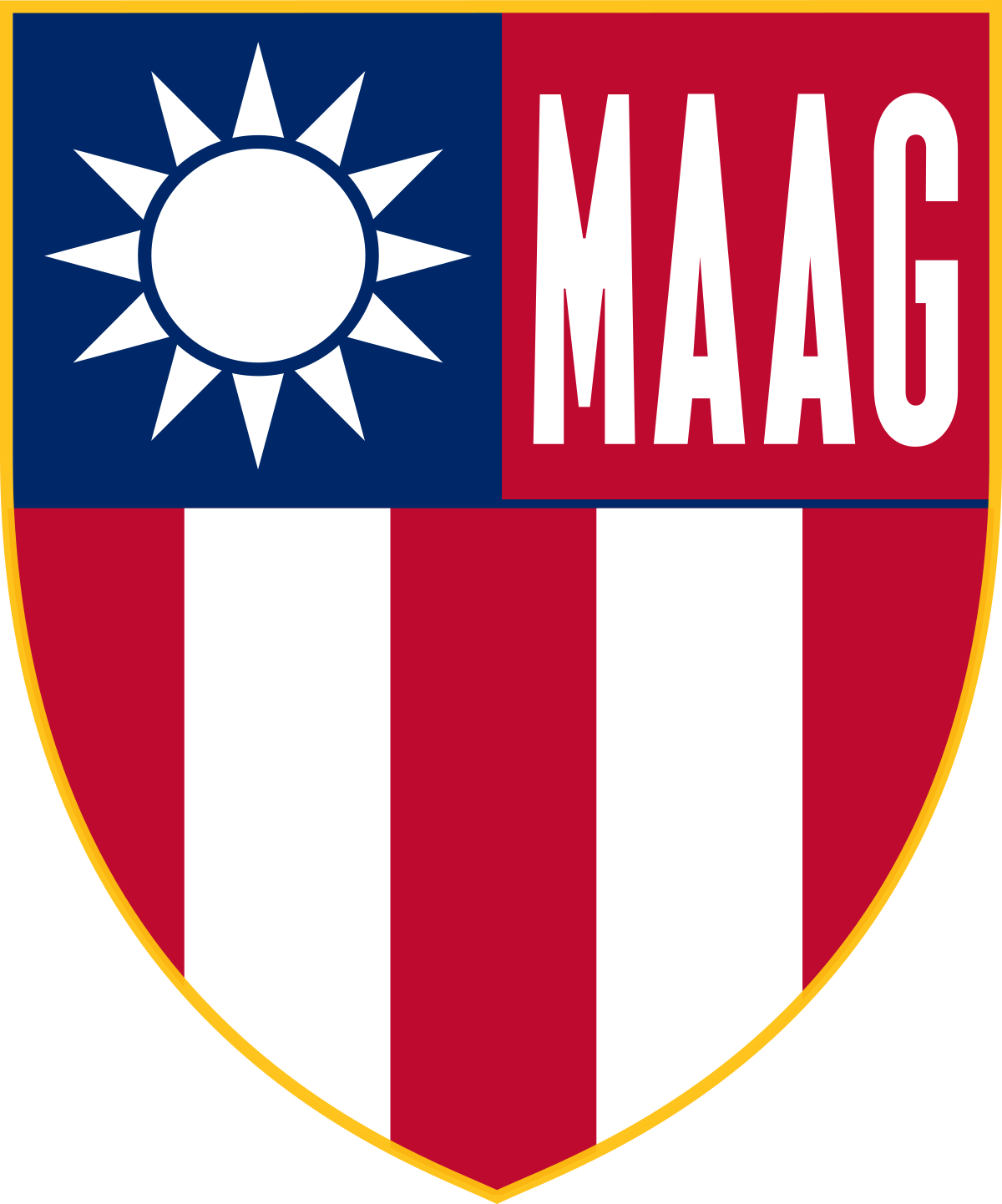
The first photo is of the Taiwanese ambassador to the US opening the new building for the Taiwanese military mission to the United States. Second is the historic US Military Assistance Advisory Group (MAAG) logo from the US-Taiwan Mutual Defense Treaty days. What do you see? MAAG represents decades of US military advisors and assistance in fixing a hapless China KMT military (along with Japanese military advisors ….). An era when the US interest in Taiwan not becoming a part of the PRC was official and required little doublespeak. It is impossible for the Taiwanese embassy or military attache to choose a logo without US feedback. If this is the case this would have been the most oddly inconsistent episode for a hypercautious President Tsai, and her even more hypercautious Ministry of National Defense.

So what does this mean? I don’t think it is a coincidence that the US, Japan, and even some in NATO have moved towards strategic clarity coupled with actual military muscles in and around Taiwan. I also think it is easy to see shadows – updated for a different reality in Taiwan and the US – of MAAG in the Taiwan Policy Act of 2022. The US-Taiwan-Japan strategic dilemma of 2022 is not hardware alone – Taiwan’s Ministry of National Defense, its generals and admirals and officer corps, and its national intelligence apparatus, require guidance and rapid reforms.

Much as my observation before that the salami slicing process the US and the PRC went through from 1949 to 1979, the US, Japan, and other global democracies are doing with democratic Taiwan now – with the reality that PRC is militarily more powerful than the Chiang dictatorship back during 1949-1979 – with the ultimate objective of pushing US-Japan-NATO relations with Taiwan Republic up to everything but formal diplomatic recognition, with an international consensus that a Chinese communist military invasion to annex Taiwan would not be tolerated. The process began with Taiwan’s first president Dr. Lee decades ago, the special state-to-state formula, now given substance by President Tsai, Prime Minister Abe’s free and open Indo-Pacific, and President Biden’s strategic clarity. 29.9.2022

History of MAAG in Taiwan:

© Taiwan in World History 台灣與世界歷史. This site grants open access for educational and not-for-profit use. Maps and illustrations are borrowed under educational and not-for-profit fair use. If you are the rights holder and prefer to not have your work shared, please email TaiwanWorldHistory (at) Gmail (dot) com and the content will be removed.
Leave a comment

Filed under Taiwan Republic

It’s the democracy, stupid: World history and Taiwan Republic 台灣国 classrooms

A quasi-Taiwanese oligarch once contemptuously asked, “What’s democracy? Can you eat it?” An archaic, narrowminded summary of the contrast between what the Pelosi visit to Taiwan meant, versus the conventional wisdom pushed by Beijing, its allies inside Taiwan, and some in western media and academia.

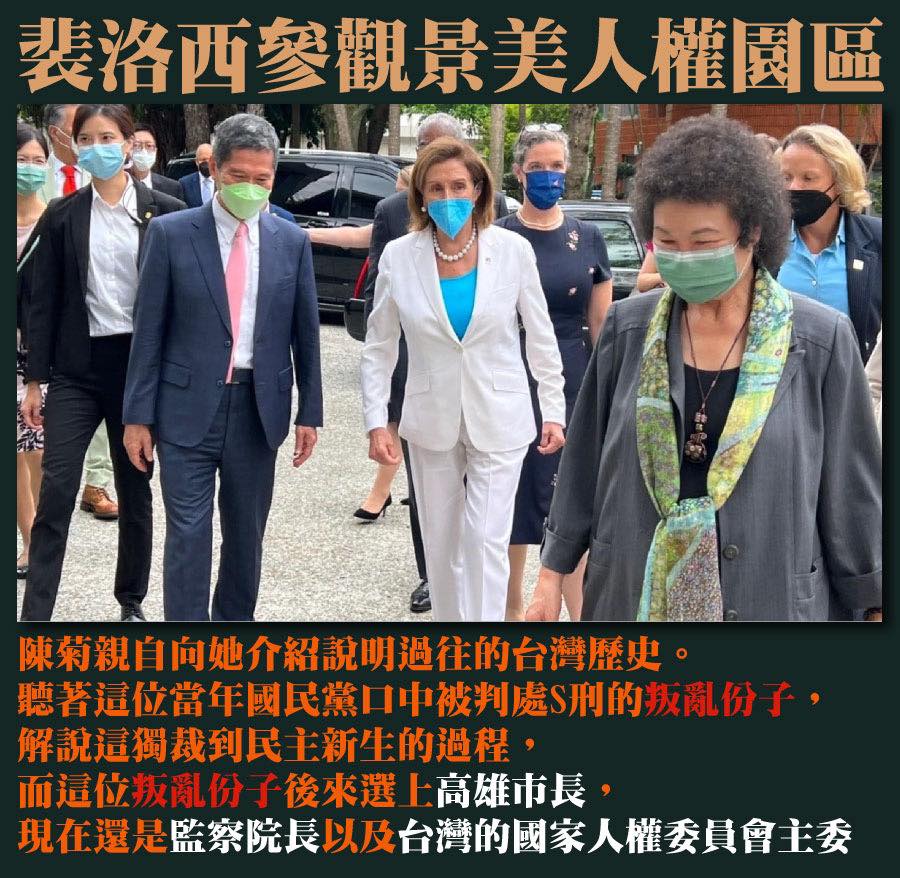
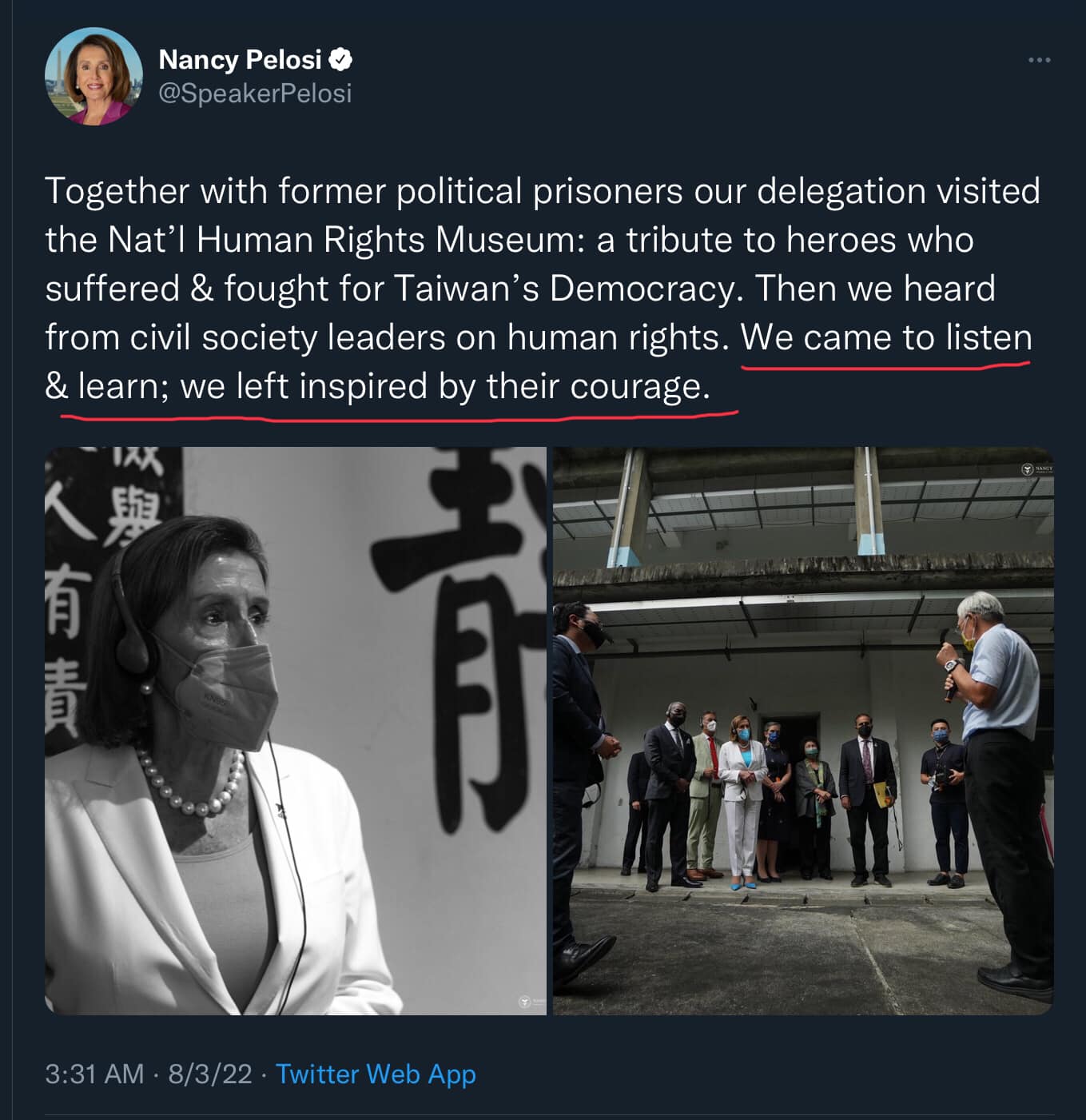
Western conventional wisdom notwithstanding, the Chinese communist belligerence is not about Pelosi or The Speakership or PLA Day. At every public stop in Taiwan Republic and Japan Speaker Pelosi said the communist taboo words “democracy,” “human rights,” and “Taiwan is a democratic nation.” Taiwan’s democratically elected president Tsai said the communist taboo words “democratic sovereignty” repeatedly. Speaker Pelosi’s visit to the Taiwan Human Rights Park-Museum commemorating the victims of the invading China KMT, and meeting survivors of Chinese communists occupied Tibet, occupied East Turkestan, occupied Hong Kong, and the Tiananmen massacre was what the China Communists and their allies in Taiwan and the west feared the most. A visit mostly ignored or poorly covered by the western media is too cool for school for this democracy-human rights sappiness. Incidentally, one could make a similar observation of the western press corps’s inability to focus on democracy and the threats posed by domestic extremists, too. Ditto the coverage on the courageous Ukrainians defending their democracy, along with their genuine love of their beautiful nation.

This is the world history level irony-paradox: for decades the China KMT and China CCP conspired to domesticate the “Taiwan problem.” How can the functioning democracy be a “problem” while an ethno-nationalist, belligerent, militarist communist dictatorship is not? Yet by its barbarism and belligerence, Beijing has done as much to internationalize Taiwan — a global, oceanic, outward-facing democratic Taiwan, away from the Chinese authoritarian muck and mire — than any force inside Taiwan. If the Biden White House would buck up, instead of fussing about the Pelosi visit, they should coordinate a legislative delegation from democracies to visit Taipei every week from now until the end of the year. If the PLA copycat Russian jet engines are decent enough to sustain massive military barbarism weekly, well then I tip my cap to them. Then maybe we can ask the oppressed masses of communist China: How come you don’t have a democratically elected legislature for foreign delegations to visit? Are you really incapable of exercising your Buddha-given right to choose your own leaders? If “little/periphery” Taiwan can have a democracy that is prosperous and full functioning, why can’t China do the same? 5.8.2022

© Taiwan in World History 台灣與世界歷史. This site grants open access for educational and not-for-profit use. Maps and illustrations are borrowed under educational and not-for-profit fair use. If you are the rights holder and prefer to not have your work shared, please email TaiwanWorldHistory (at) Gmail (dot) com and the content will be removed.
Leave a comment

Filed under Uncategorized

Engineering an inclusive Taiwanese national identity, saying good riddance to the One China prison: National identity, historical memory, and Taiwan Republic 台灣国 classrooms

One of President Tsai’s greatest accomplishments is to fashion a democratic and inclusive Taiwanese national identity – convincing her party to tolerate and even grudgingly embrace RoC iconographies, while opening a democracy-to-defend -Taiwan’s path for supporters of the China KMT and/or RoC. Taiwan is not immune from the dark forces of polarization and mindless populism/utopianism. Tsai’s formulation is a solid governing majority – no one’s entirely satisfied, but good enough for at least three-quarters of this diverse citizenry. And Tsai has managed to do so by leading, summarizing, channeling, and shaping, while listening, responding, understanding where her diverse nation’s citizens are at, and meeting them halfway. A good lesson for autocrats in Moscow and Beijing, and imperialists in DC and NY and beyond: with national identity, a soft touch is more effective than harsh, autocratic edicts. And threats of violence almost always create the opposite effect.

For authoritarian Leninist parties like the China KMT and Chinese Communist Party, and for some western imperialists, national identity and nationalism flow in one direction – top down. Autocrats in the CCP, China KMT, and America complain similarly about books and educators “brainwashing” wayward children reflecting this autocratic mindset. As a history teacher, I’ve always noticed this naivete – autocrats giving formal education, textbooks, and long-suffering teachers way too much credit.

In reality, national identity and nationalism are the results of complex, multidirectional, contradictory forces, often resulting from unintended consequences. When Taiwan became a colony of Japan in 1895 the Japanese did not intend to provoke modern Taiwanese identity – yet they did. When Taiwan was occupied by the China KMT in 1945 the Chinese autocrats did not intend for the Taiwanese to see themselves as different from the invaders – yet they did. Latter-day China KMT, Chinese Communist Party, or DC imperialists did not intend for citizens of Taiwan to see themselves as members of a national community – however defined – apart from the People’s Republic of China, yet this occurred. Far from a top-down model – the pattern is that the harder an autocratic power pushes, whether the Japanese, China KMT, or Chinese communists, the more likely the masses to resist and move in the opposite direction.

This is why even though I am an academic historian, schooled in international relations and world history, I have never agreed with the premise that Taiwan’s status must be history-based, or international law based. National identity and historical memory are not determined by anyone outside power, or authority, or premised on a top-down approach. Decades of Chinese communist genocide against Tibet and East Turkestan will not erase the national identity of those occupied nations. Decades of China KMT brainwashing against the Taiwanese have been equally ineffective. This, by the way, go a long way in explaining why the Soviet-sponsored government of Afghanistan or the US-sponsored governments of Vietnam and Afghanistan melted on contact with the enemy, whereas Ukraine’s democratic government held – a resilient nationalism is one that’s bottom-up, organic, native to the place and people.

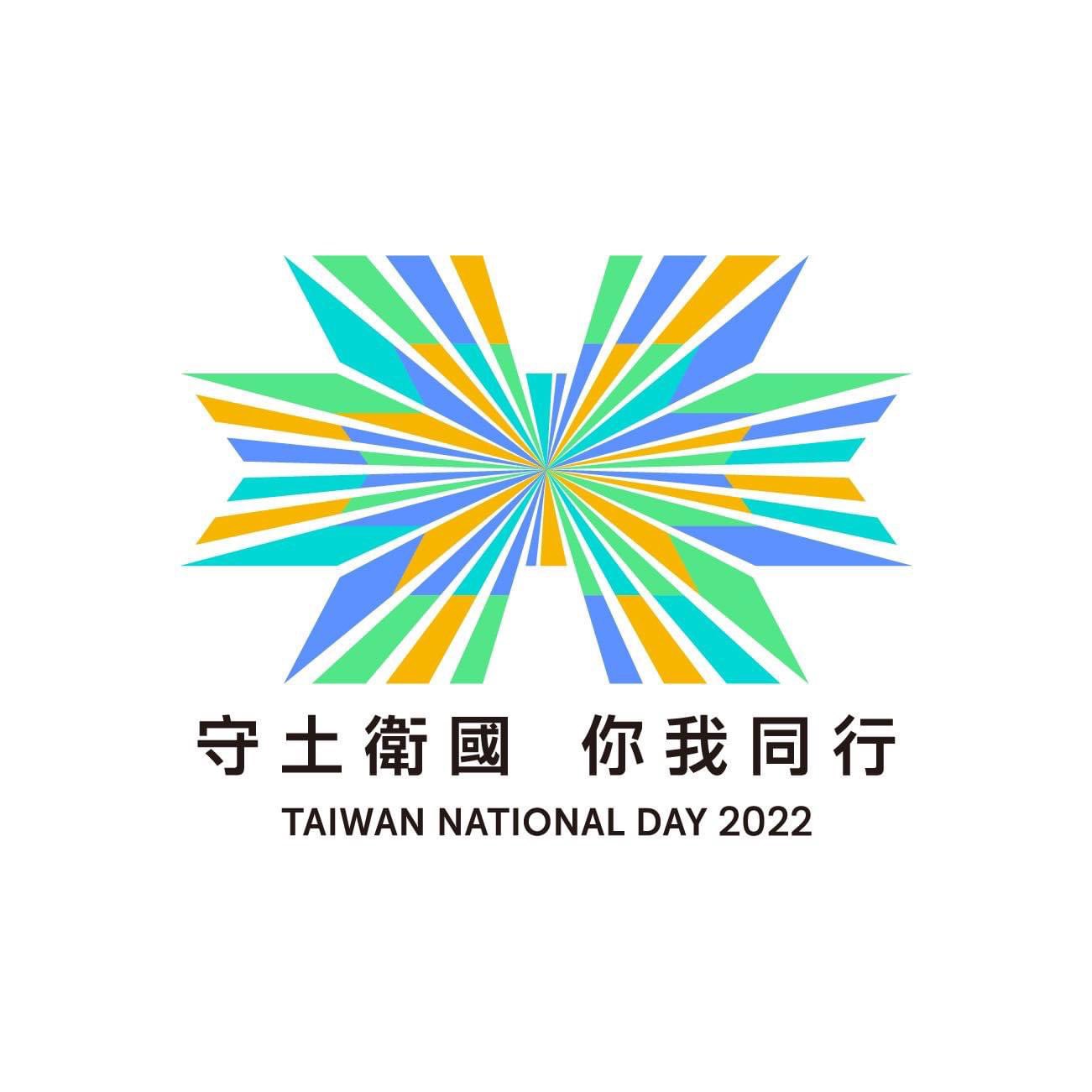
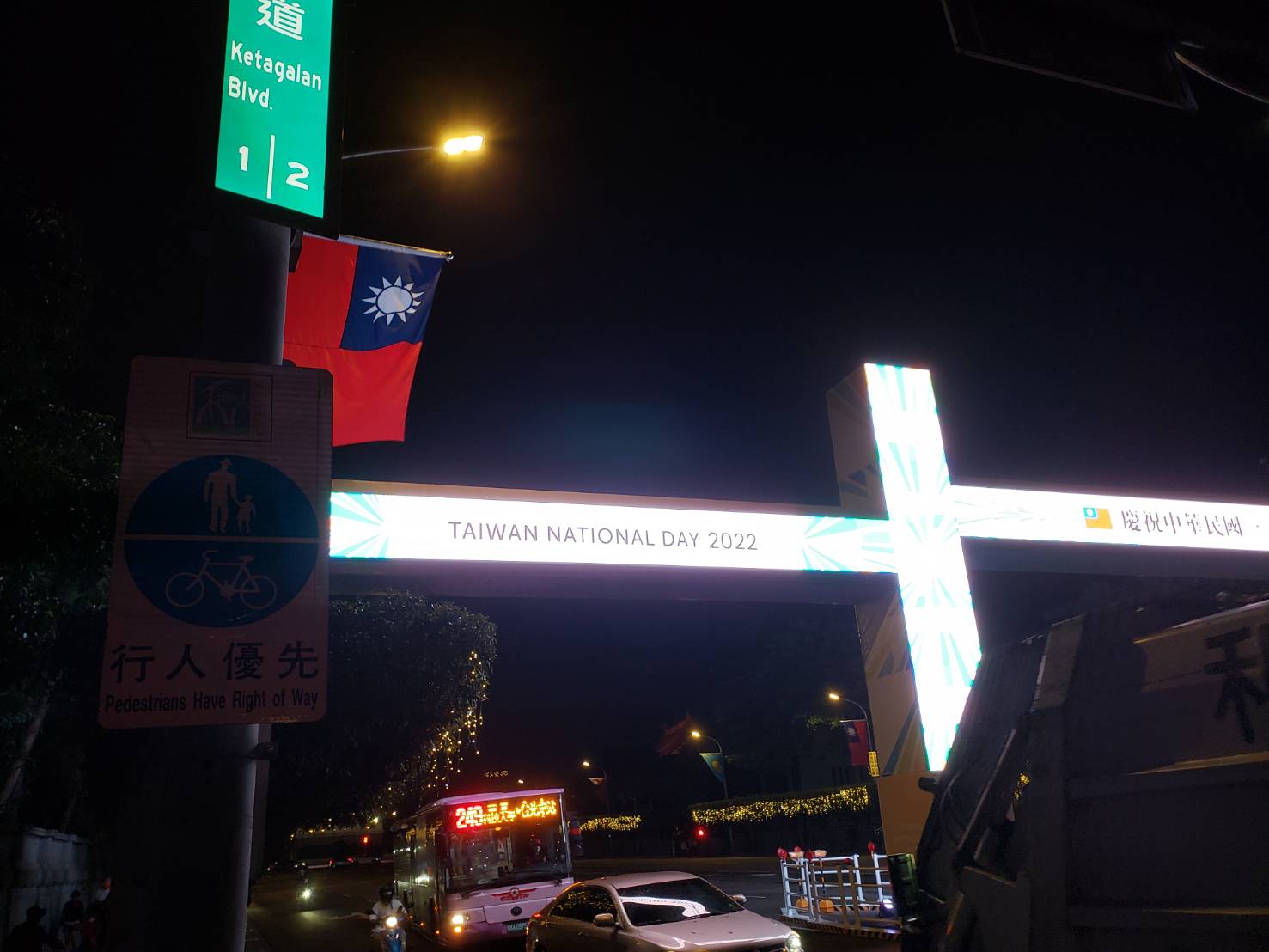
Which gets us to this year’s RoC National Day logo. I have written previously about President Tsai’s 2021 National Day speech, and the domestic and international consensus she fashioned regarding what Taiwan’s “status quo” means now. This year’s logo is a deepening of this process. The color and design move farther away from the stodgy China KMT Leninist party-state conceptions. In Mandarin, “You and I together, let’s defend our soil and protect our nation.” A simple statement of democratic sovereignty. Some will fuss that the formal national name RoC did not appear, but that’s the point isn’t it – Tsai and Lee’s efforts have been to fashion a stable domestic compromise – Taiwan, Taiwan RoC, RoC Taiwan, RoC – a democratic, diverse nation where citizens may define “our nation” from that list, with “NOT PRC” as the boundary of this Taiwan status quo. And in English for a global audience, Taiwan’s slow rebranding of itself – ever so slowly disentangling itself from China/Chinese “renegade province/breakaway province ….” nonsense.

Leaders lead, and citizens often do not follow. In this President Tsai has an even deeper understanding than President Lee. So China KMT and other extremists complaining about brainwashing notwithstanding, I think President Tsai understands the complexities of Taiwanese national identities after the Pacific War. Those here before 1945, those who came 1945-1949, those who fled in 1949, and those who arrived later. Indigenous and Hakkas, different regions of Taiwan, social classes and professions, etc. To engineer an inclusive national narrative reflecting these groups and minimize their conflicting memories and share in their democratic present-future. To have this vision accepted by the great powers, the US, Japan, and the EU. Tsai needs to maneuver adroitly and with pragmatism coupled with simple, important principles. This contrasts with the self-inflicted dilemma of the China KMT, wherein its successive chairs are outflanked by loud extremists regarding surrendering to the PRC. Whereas Tsai has managed to pull her party into a remarkable embrace of RoC, its flag, its national day, and its military. And as a part of this process, Taiwanese citizens and their democratically elected national government are creating a national identity and historical memory based on democratic sovereignty. 9.9.2022

© Taiwan in World History 台灣與世界歷史. This site grants open access for educational and not-for-profit use. Maps and illustrations are borrowed under educational and not-for-profit fair use. If you are the rights holder and prefer to not have your work shared, please email TaiwanWorldHistory (at) Gmail (dot) com and the content will be removed.

Leave a comment

Filed under Uncategorized

Reviews: Guided Tour of Taiwanese History 導讀台灣 台灣史系列 導演魏德聖 三立: Geostrategery and Taiwan Republic 台灣国 classrooms

This history series by Taiwan’s 三立 is a rare public forum for Taiwanese history on Taiwanese mass media. Academic historians can, and will, find something to fuss over history for a mass audience. What is notable about this series is that it provides a rare oasis of thoughtful content in an otherwise content-poor Taiwanese electronic media landscape. It also does an admirable job breaking down politically and historically created barriers in how Taiwanese history has and has not been conceptualized. Nothing in the public discourse in Taiwan can escape the omnipresent national identity-historical memory either/or’s, the “Are we Taiwanese or Chinese or both” debate. This series makes a serious attempt to push across these artificial boundaries – periodization, conceptual categories, national identity as confined by modern nation-states, and so on while placing Taiwan the place, and Taiwanese the ever-evolving communities of humans on this island, at the center. In this effort, it echoes the evolving views developed by newer generations of Taiwanese leaders – pushing farther back into Taiwanese history and pre-history (Dutch, indigenous, Oceania), while broadening beyond the usual characters (Han Chinese, Japanese, China KMT) – and providing new ways to include contradictory and competing historical memories, from indigenous to the Japanese to the disaggregated Taiwanese to the immigrants of 1949 to the even more recent immigrants from Southeast Asia and beyond to the global Taiwanese diaspora, into a dynamic Taiwanese national identity bond together by place and by democracy. I have often noted that for a nation that formally declares such reverence for history, Taiwan is comparatively apathetic to its own history and quick in developing historical amnesia. Any effort, such as this series, to reverse this trend will do much to deepen and enhance Taiwan’s democratic sovereignty.

導讀台灣:台灣史系列 導演魏德聖 每周日20:00 三立新聞台 帶您用鏡頭看台灣 https://www.youtube.com/channel/UCMjFUtt9nFwMlbzqCTKY3wQ/about

© Taiwan in World History 台灣與世界歷史. This site grants open access for educational and not-for-profit use. Maps and illustrations are borrowed under educational and not-for-profit fair use. If you are the rights holder and prefer to not have your work shared, please email TaiwanWorldHistory (at) Gmail (dot) com and the content will be removed.
Leave a comment

Filed under Uncategorized

The Taiwan Policy Act of 2022 and updating the Taiwan-US ‘status quo’ 宋國誠專欄:掏空一中原則的準軍事同盟──美國「台灣政策法」重點釋義 Up Media: Geostrategery and Taiwan Republic 台灣国 classrooms

美國國會參眾兩院將在9月份開始審議一項決定台美關係大躍進的重要法案「2022台灣政策法」(The Taiwan Policy Act of 2022)。這是由參議院外交委員會主席梅南德茲(Robert Menendez)和共和黨議員格雷厄姆(Lindsey Graham)聯名提出的。這項法案若經審查通過並交付總統拜登簽署執行,不僅是一項跨黨派、重磅級的挺台法案,更是台美重建一種「沒有官方之名的官方關係」的重大起步,台美之間將逼近1979年(美中建交)之前「全政府形式」的官方關係。法案共分三大篇、九大主題、107頁,立足於結構性增補《臺灣關係法》的基礎,納入《六項保證》的精神與規定,以「包裹立法」(a package of legislation)的方式,展現美國全面支持臺灣民主政體的立場。儘管法案聲明以不與台灣恢復外交關係為前提,但法案開宗明義指出,法案的目的在「促進台灣安全」、「確保區域穩定」、「遏制中國對台侵略」,以及採取嚴厲制裁中國對台灣的「敵對行動」(hostile action)。這是一項設計完備、包羅萬象、具體可行的護台法案,一旦付諸執行,將是40多年來美國對台政策最清晰的法律表達,最重要的是,法案的施行將徹底支解並淘空中共的「一中原則」,以極限逼近「軍事同盟」的軌道,促使美台關係朝向「高階/準官方」的模式邁進。

I am not as optimistic as Dr. Song – if the Taiwan Policy Act of 2022 passes without major revisions, and if it is signed by President Biden, the executive branch has many tools to slow-walk and water down the measures (see also, legislation re: the Chinese communist genocide in East Turkestan.)

What these major legislative push shows are three main things. First, decades of mediocre American presidents have long delayed much-needed reevaluations of US-Taiwan policies. Such reviews started way back during the Clinton administration, and for one or another reason, expectations were never matched by results. Bureaucratic inertia, foreign entanglements, domestic scandals, “the blob” being its blobby selves, etc etc. Therefore, it is good to see sustained pressure coming from both political parties in Congress.

The second context is this. DC policy circles are mostly stuck in the imperious idea that they are “managing” or “creating” the world as we experience it, overestimating their roles and underestimating factors out of American control. Whether DC chooses to adjust to the dynamic, changing meaning of the “status quo,” Taiwan Republic, communist China, and even the US in 2022 are vastly different than 1972, or 1978. Rather than seeing this legislative effort as “changing the status quo,” it is a belated updating of formal policies to catch up with geopolitical reality.

Finally, this reminds me of the no-we-are-not-maybe-we-will Ross and Rachel dance between the US and the PRC from 1949 to 1978. While the US embassy to China remained in Taipei, and while the official statements kept asserting that US policy remained unchanged, salami slicing continued unabated, with changes in world conditions, the nature of contact between DC and Beijing changed, substantially, and rapidly. Given the dismal performance of the Biden White House on the Pelosi episode, I am not holding out high hopes for this. A wise and creative executive would minimize fighting against Congress on this issue, and use this as an opportunity to “internationalize” America’s policies on Taiwan – i.e., exporting the Taiwan Relations Act+ model to fellow democracies of Japan and EU. Using this approach as one of many other policy tools to prevent a Chinese communist war of annexation against Taiwan from ever starting. If we learn nothing else from the democratic west’s failure in Ukraine, it ought to be that porcupine or not, finding credible ways to prevent an authoritarian belligerent from starting an invasion is key for all of our interests. 7.9.2022

Additional report: 重構美對台政策 美國會9月將審理《2022年台灣政策法》

© Taiwan in World History 台灣與世界歷史. This site grants open access for educational and not-for-profit use. Maps and illustrations are borrowed under educational and not-for-profit fair use. If you are the rights holder and prefer to not have your work shared, please email TaiwanWorldHistory (at) Gmail (dot) com and the content will be removed.
Leave a comment

Filed under Uncategorized

One graph, different interpretations – is Taiwan spending enough on defense? World history and Taiwan Republic 台灣国 classrooms

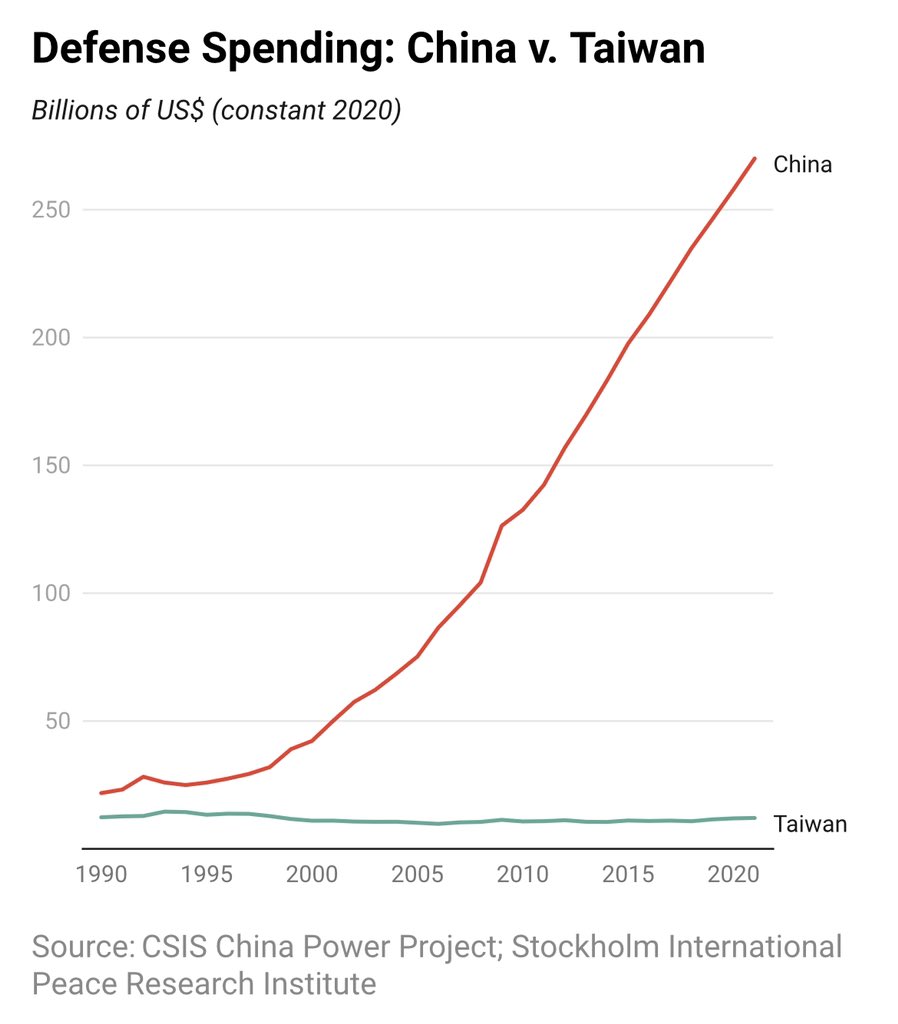
Saw this graph on The Twitters. It fits with a recurring narrative that Taiwan is spending too little on defense, and some of the more obnoxious addendums to this line of thought is that Taiwan is purposely waiting for America to bail it out.

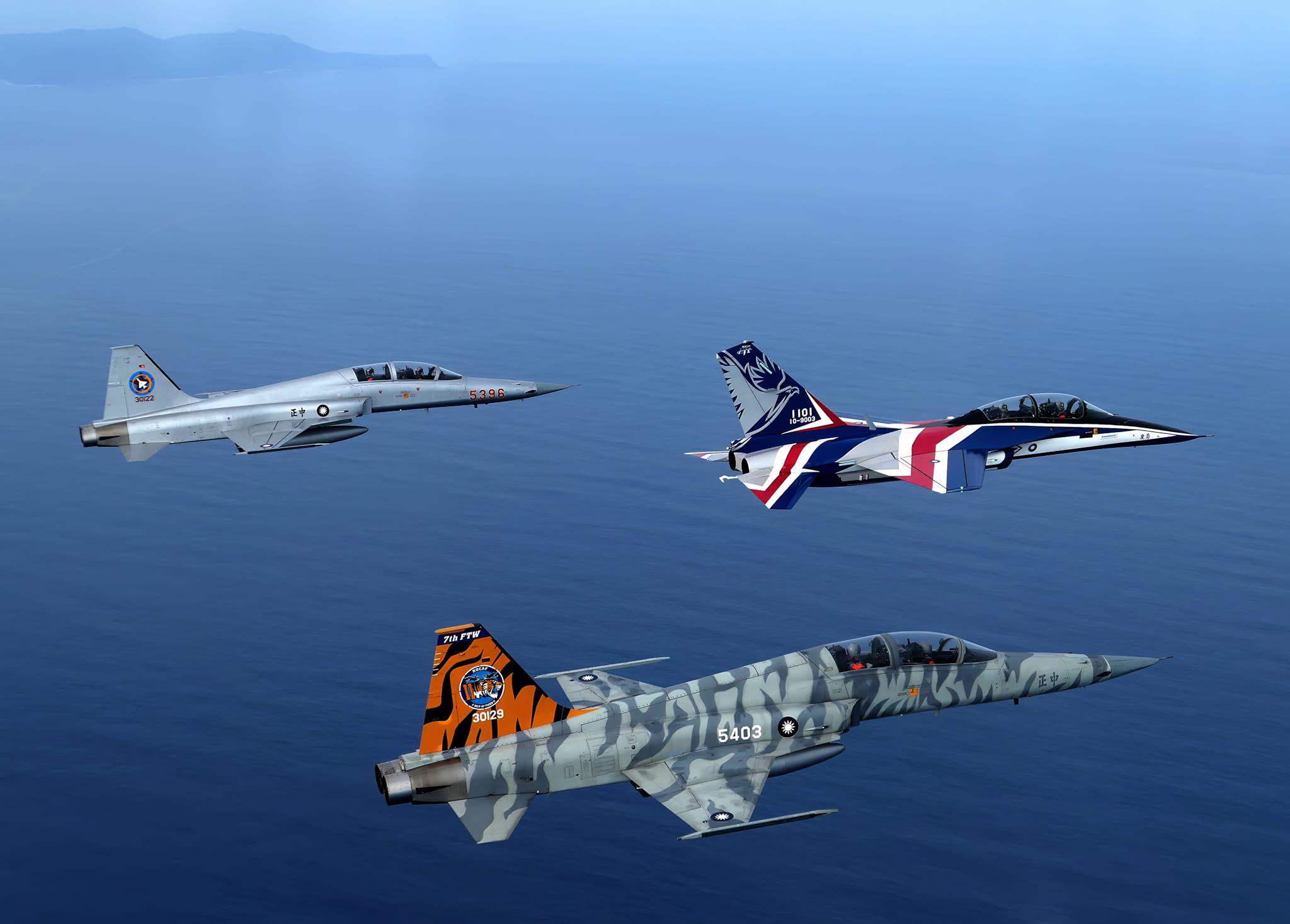
Taiwan should spend at least 3% of its GDP on defense. Taiwan should not have allowed its armed forces to fall below 200,000. I have no idea why a nation like Taiwan, facing the enemy that it has, does not have conscription for men and women for at least a year. Taiwan’s Ministry of National Defense and national security establishments are overdue for thorough modernization and reform. If the point of this graph is that Taiwan should spend more on its military, and take its own defense more seriously, I am in agreement.

How social media and a graph can easily mislead is this. I don’t think Taiwan’s democratic forces have the wherewithal, without sustained assistance from the US and Japan, to reform its national security establishment – Ministry of National Defense, intelligence, etc. One can pour ten times the cash into this structure and raise the conscription time to three years and still get unsatisfactory results. This graph also does a poor job of capturing the effect of decades of contradictory, unsteady, and self-defeating US policy on how to arm Taiwan, and sometimes, even whether or not to arm Taiwan. A few examples:

The US sabotaged Taiwan’s nuclear weapons program. I have mixed feelings about this policy choice, but even if Taiwan only has a credible not totally assembled nuclear deterrence force, maybe the scaremongering headlines of 2022 would read differently.

For decades the US interfered with and sabotaged Taiwan’s indigenous counterstrike/long-range missile programs.

Did Taiwanese combat pilots fly the venerable F-100s and F-104s well into the 1990s because they love history, or because the US prevented sales of advanced jet fighters for decades?

The billions the Taiwanese were forced to spend by US policy to develop the inferior IDF fighters achieve better result had the US sold the jet fighters it was willing to sell to Israel and Korea.

When the US forced Taiwan to purchase the inferior F-16A/B in the 1990s instead of the F-16C/D, with minimal anti-surface munitions and inferior Sparrow missiles, was this about Taiwanese budget or US policy?

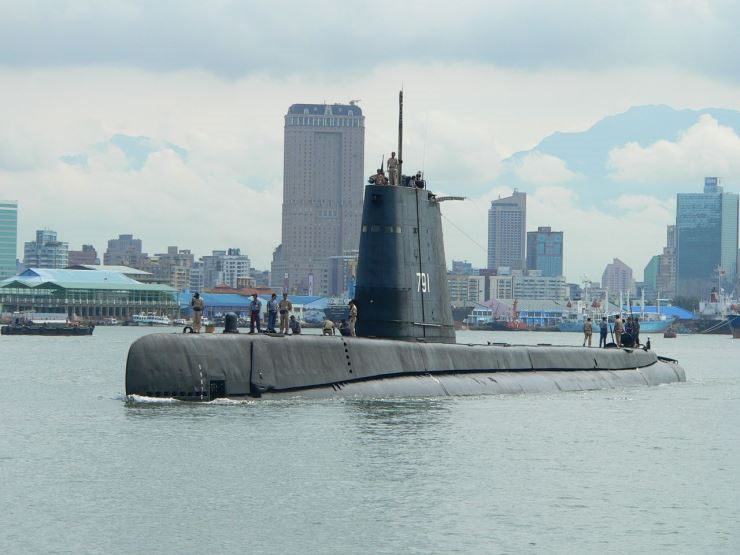
Are the Taiwanese, in 2022, still sailing two 1980s Dutch diesel submarines and two World War II era GUPPY IIs because they refuse to spend on defense?

Are the millions Taiwan is forced to spend to cobble together its own indigenous submarines now the best way to spend defense dollars?

How many years did US policy force the Taiwanese Navy to sail World War Two era destroyers?

Or prevented Taiwan from importing AEGIS/VLS for its navy?

Or interfered with Taiwan’s acquisition of anti-ship missiles throughout the 1970s and 1980s, forcing Taiwan into a costly and fun-filled route importing the Israeli Gabriels, reverse engineering it, and manufacturing its own HFIIs and HFIIIs?

Imperial superpowers have the luxury of selective amnesia and never having to apologize. Might makes right, we get it. If you take every single dollar Taiwan has ever spent on the military from 1960 to 2022, and had the US treated Taiwan as an ally like Israel, or Japan, or Korea, or Singapore – if that amount spent by Taiwan could have avoided decades of US policy detours and delays and the DC “balancing” and “managing” and “de-escalation” and “off ramping” …. Taiwan’s security in 2022 would have been in a far, far better place, and US policymakers would not feel this cornered. So yes encourage Taiwan to spend more and do more, but American policymakers should also take a long hard look into the mirror.

One of the two WW2 era GUPPY IIs still deployed by the Taiwanese Navy

© Taiwan in World History 台灣與世界歷史. This site grants open access for educational and not-for-profit use. Maps and illustrations are borrowed under educational and not-for-profit fair use. If you are the rights holder and prefer to not have your work shared, please email TaiwanWorldHistory (at) Gmail (dot) com and the content will be removed.
Leave a comment

Filed under Uncategorized