Tag Archives: identity

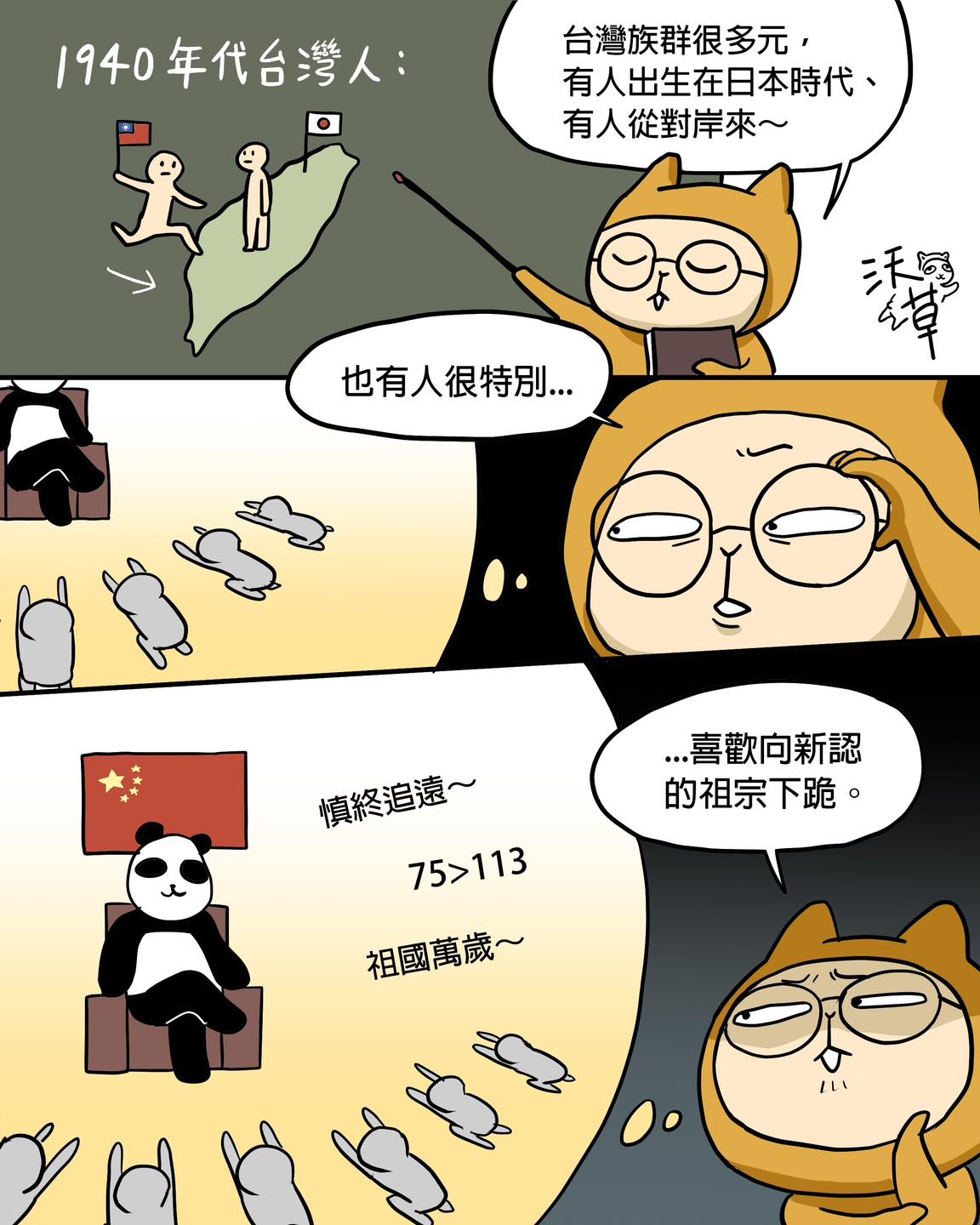
Who’s your daddy, communist China? “PRC could not be ‘motherland,’ William Lai says. The PRC turned 75 on Oct. 1, but the Republic of China is older. The PRC could never be the homeland of the people of the ROC, Lai said,” Taipei Times. Taiwan Republic 台灣国 and geostrategery classrooms

Who’s your daddy, communist China? “PRC could not be ‘motherland,’ William Lai says. The PRC turned 75 on Oct. 1, but the Republic of China is older. The PRC could never be the homeland of the people of the ROC, Lai said,” Taipei Times. Taiwan Republic 台灣国 and geostrategery classrooms

How does one defend democratic Taiwan from an all-domain war against its democratic sovereignty?

Over a decade ago Taiwan Republic’s first democratically elected president Lee Teng-hui declared the “special state to state” relationship between Taiwan and communist China. A few years ago Taiwan’s third democratically elected president Tsai Ing-wen clarified that position by stipulating democratic “RoC Taiwan” – with twenty-three million citizens – as the status quo. Tsai’s successor, democratically elected President William Lai deepened the position not so much as the historical pissing match noted by many media, but as a message to anti-democratic and anti-Taiwan forces outside and inside Taiwan that the People’s Republic of China has zero historical or legal claims to citizens of democratic Taiwan.

President Tsai’s remarkable eight years have shaped a stable domestic governing majority on the premise of the democratic sovereignty of “RoC Taiwan” as the status quo. A domestic consensus that’s acceptable to Taiwan’s allies in the Free World. The Chinese communists, with their allies in Taiwan and among Western academia, have launched a new wave of assault against democratic Taiwan.

The malevolent global and domestic anti-democracy and anti-Taiwan forces President Lai is facing are in Beijing, in Taipei, they are also the Western imperialist think tanks and newspapers. The China KMT and the China People’s Party are both anti-democracy and anti-Taiwan sovereignty political parties that are serving as the vanguard of the Chinese communist war to subvert Taiwan’s democratic sovereignty. The echoes one hears from some Western imperialist think tanks, columnists, and Chinese communist mouthpieces inside Taiwan, are all trying to return Taiwan to the status of “troublemaker” – they argue: that Chinese imperialism and militarism are not the problem, Taiwan’s democratic sovereignty is the problem.
Democratically elected President Lai must ask the Chinese communists, their proxies in Taiwan, and Western imperialist scholars and journalists – on what basis does the Chinese Communist Party claim the right to govern the People’s Republic of China? Taiwan’s democratic sovereignty is legitimate – derived from one citizen one vote – how do the Chinese communists and dictator Xi derive their legitimacy to claim sovereignty?

President Lai is staking out clear national boundaries around Taiwan’s democratic sovereignty, while doing so in a way acceptable to the US, Japan, and European democracies. I have written previously that if one studies the China KMT’s former chair Ma Ying-jeou’s statements during his latest visit to communist China, the only issue he and his refugee party have left to concede is that the “one Chinese national family” he and his party supports is the People’s Republic of China. In this context, President Lai’s remarks make complete sense – for decades now as China KMT’s anti-Taiwan national identity position becomes a permanent electoral minority inside Taiwan, they have defended a political paradox – to advocate as super RoC patriots inside Taiwan, while refusing to speak of the RoC whenever they kowtow to communist China. Presidents Tsai and Lai’s embrace of RoC dismantles that China KMT grift. The fact that no party has a political future in democratic Taiwan when they advocate surrendering to the Chinese communists may also be why the China KMT and the China People’s Party have moved from passively refusing to acknowledge Taiwan’s democratic sovereignty to attempting to use their paper-thin majority in the Parliament to destroy Taiwan’s democracy. As the Chinese communists have done in Hong Kong, as with many cases such as Hungary, Turkey, and Venezuela, anti-democratic forces will use democratic institutions to overcome their electoral unpopularity.

This means President Lai is fighting a multi-front war to preserve Taiwan’s democratic sovereignty – against the Chinese communists, against the Chinese communist proxies inside Taiwan, as well as against naive and/or compromised Western think tanks who still dream that dialogue and engagement with the Chinese communists will lead to a peaceful compromise.
© Taiwan in World History 台灣與世界歷史. This site grants open access for educational and not-for-profit use. Maps and illustrations are borrowed under educational and not-for-profit fair use. If you are the rights holder and prefer not to have your work shared, please email TaiwanWorldHistory (at) Gmail (dot) com and the content will be removed.
Leave a comment

Filed under geostrategery, Taiwan Republic, world history

‘Porcupine’ without clarity on Taiwan’s statehood will not work: “Taiwan may yet become a porcupine,” The Strategist ASPI. Taiwan Republic 台灣国 and geostrategery classrooms.

‘Porcupine’ without clarity on Taiwan’s statehood will not work: “Taiwan may yet become a porcupine,” The Strategist ASPI. Taiwan Republic 台灣国 and geostrategery classrooms. This is an excellent article. Particularly noteworthy is the attention the author paid to the historical-political-cultural background within the autocratic China KMT-dominated national security apparatus which has frustrated efforts at reform. This is unusual for English-language IR analysts. The key paragraph is:

“Historical legacy worsens the military’s rigid top-down culture and bureaucratic resistance to change: it was once part of the then authoritarian Nationalist Party (KMT), which imposed dictatorship on Taiwan from 1949 to 1987. Previous defence ministers have often been retired generals or admirals, who have tended to allocate funds and choose programs to suit the desires of the service they came from, regardless of the needs of national defence.”

Analysts have aptly compared Taiwan’s democratization – broadly understood, in all realms of this emerging democratic nation – as comparable to pro-democracy and pro-Taiwan leaders trying to upgrade and fix an aircraft while it is in flight. Taiwan Republic’s first democratically elected president Dr. Lee Teng-Hui had to simultaneously combat reactionary, anti-democratic, and anti-Taiwan forces within the China KMT, erroneous and unhelpful policies from the US, and the Chinese communists while democratizing Taiwan. President Chen, the second democratically elected president, had to face a parliament dominated by the anti-democracy and anti-Taiwan China KMT, along with a US that maintained unhelpful policies. While Presidents Tsai and Lai face the US and the Free World that is finally realizing the threat to the world posed by the Chinese communists, the importance of domestic political stability and the threat of an invasion from the Chinese to annex Taiwan means the pace of reform and change within the Taiwan national security apparatus is limited.

Two elements are often missing in foreign analysis of Taiwan’s military reforms to prepare for the Chinese invasion are domestic consensus on Taiwan’s national identity, and the clarity by the US and democratic allies on Taiwan’s democratic sovereignty. Taiwan does not have a healthy democratic polity because not all of the major political parties recognize Taiwan’s democratic sovereignty. Anti-democracy and anti-Taiwan China KMT’s leaders in the parliament are adamant that China – Taiwanese democratic sovereignty’s greatest enemy – must be addressed as the “mainland”. If there is no national consensus on “us/we” versus “them/they” – then from whom should the Taiwanese military defend Taiwanese citizens? If you read enough China KMT and China KMT adjacent writings you might be convinced that unreliable American imperialists or Japanese pose a greater threat than the Chinese communists. President Lai’s challenge is to nudge the national security apparatus to democratize and indigenize itself so that the national identity confusion is resolved – only then can democratic forces within Taiwan have a productive debate over whether the “porcupine” strategy makes sense, and if so, in what form would it be most effective. In short, it is impossible to have such a national security debate if the major parties do not even agree on Taiwan’s nationhood.

The other element missing in many analyses is that the porcupine strategy without a clear commitment from the US and the Free World to Taiwan’s democratic sovereignty will not deter Chinese imperialists from military adventurism. Think of this as the global companion to Taiwan’s domestic national identity crisis. So long as the US and the Free World maintain the dated strategic ambiguity regarding Taiwan’s democratic sovereignty, then Chinese imperialists in Beijing will imagine the opportunity where their militarism will succeed. So long as policymaking circles in DC and other democratic capitals hold on to the outdated and erroneous beliefs that democratic nations can dialogue and engage the Chinese communists into a peaceful compromise (how did this belief work out with dictator Putin and democratic Ukraine by the way? ….) – then the dictators of China will dream of a shock and awe, low cost, lighting military strike against democratic Taiwan where collaborators within Taiwan will assist in creating a de facto communist annexation of democratic Taiwan. Without clarity on Taiwan’s emerging national identity – premised on democratic sovereignty – domestically and abroad, Taiwan’s national security will not be enhanced, whether it be porcupine or hellscape. 30.7.2024

© Taiwan in World History 台灣與世界歷史. This site grants open access for educational and not-for-profit use. Maps and illustrations are borrowed under educational and not-for-profit fair use. If you are the rights holder and prefer not to have your work shared, please email TaiwanWorldHistory (at) Gmail (dot) com and the content will be removed.
Leave a comment

Filed under geoeconomics, geostrategery, Taiwan Republic, world history

Taiwan’s democratic sovereignty “Resilience improving: US official. DETERRING CHINA: The Pentagon has made strides in developing a new concept of operations to address challenges in the western Pacific region, Ely Ratner said,” Taipei Times.  Taiwan Republic 台灣国, national identity, and geostrategery classrooms.

Taiwan’s democratic sovereignty “Resilience improving: US official. DETERRING CHINA: The Pentagon has made strides in developing a new concept of operations to address challenges in the western Pacific region, Ely Ratner said,” Taipei Times.  Taiwan Republic 台灣国, national identity, and geostrategery classrooms. Sooner or later – and given the radical policies pursued by the Chinese communists and its anti-democracy and anti-Taiwan allies inside Taiwan and beyond, sooner – policymakers in Taipei, Tokyo, DC, and other capitals in the Free World will have to reckon with whether Taiwan’s democratic sovereignty is real. As of 2024, the Biden administration is working mightily to give Taiwan’s democratic sovereignty greater resilience while holding onto the geostrategery fiction cobbled together between DC, the Chinese communists, and the dictatorial China KMT. The last of this fiction is in Secretary Ratner’s comments:

“The consistent policy of the US is to maintain the “status quo” in the Taiwan Strait and oppose any unilateral attempts to change it, [Ratner] said.”

The United Front position of the Chinese Communist Party, the China KMT, and the China People’s Party is that Taiwan does not have democratic sovereignty. Unlike in the 1960s, 1980s, or the 2010s, wherein the dictatorial China KMT maintained linguistic barriers between what remains of the “RoC/Free China” and “PRC/Communist Bandits” – China KMT’s former chair Ma, its legislators in the Taiwanese parliament, have negated Taiwan’s democratic sovereignty vis-a-vis China/PRC. Similar to dictator Putin’s declaration on the eve of the latest Russian invasion of Ukraine that a sovereign independent nation-state of Ukraine “did not exist,” this is the united front position of the Chinese communists and its allies inside Taiwan.

Interestingly, some Western IR analysts-scholars have proposed ‘softer’ but functionally similar positions to the Chinese communists and the China KMT – that Taiwan’s alleged historical destiny is to be annexed by the Chinese communists; or, again similar to what Ukraine has experienced, Western analysts using the threat of nucular war/world was as the reason to force Taiwan to “compromise/negotiate/make concessions” – all slightly softer ways of arguing Taiwan should surrender its democratic sovereignty.

The historical reasons that enabled the “status quo in the Taiwan Strait” fiction have run their course. From 1949, when the latest Chinese civil war ended, to recently, the communist dictators of China lacked the military ability to invade Taiwan. From 1949 to 1996 when the China KMT colonized and occupied Taiwan with their brutal dictatorship, Taiwan lacked a genuine voice and did not possess democratic sovereignty. From 1949 to 2019 the US and the Free World saw communist China as a “card” to play against the USSR during the Cold War, and subsequently, as a major source of cheap labor and a significant market for consumer goods. By 2024, none of those conditions are true – although policymakers in Western democracies have been slow to react and adjust. Moreover, the fantasy that if the US and the Free World would just “give” democratic Taiwan to the Chinese communists a sustainable peace could be had persists – again the echo with Ukraine, I am certain that even two years after the Russian invasion began, there are still similar voices inside Western capitals regarding abandoning democratic Ukraine to the Russian dictator “for peace in our time”.

The reality of 2024 is that there is a new status quo. A new status quo where the Chinese communists and their anti-democracy and anti-Taiwan allies inside Taiwan, such as the China KMT, have become radicalized and militant. Beijing has formed a strategic-military global alliance with Moscow and other bad actors to subvert the world order. China is no longer a reliable provider of cheap labor. Taiwan has become a democracy – with one citizen one vote – since 1996. On a purely political theory basis, the democratically elected government of Taiwan has more legitimacy to claim national status than the dictators of China – ask Western theorists on what basis should we consider dictator Putin and dictator Xi legitimate leaders of their nations for your own amusement. The sooner the Free World faces this new status quo honestly and makes concrete preparations – with Taiwan’s democratic sovereignty as the core – the safer the world becomes. Leaving Taiwan’s democratic sovereignty ambiguous creates room for military adventurists in Beijing to temptation – the temptation to imagine that Chinese communist and China KMT aggression against Taiwanese democracy in all forms (military, gray zone, economic coercion, assault against Taiwan’s democratic institutions, information warfare, and so on) will be accepted by global democracies. As we should have learned from Ukraine and many historical precedents – the more ambivalent liberal democracies are, the longer the Free World waits, the more aggressive autocracies become. Which ultimately means the higher the price the world has to pay. 27.7.2024


© Taiwan in World History 台灣與世界歷史. This site grants open access for educational and not-for-profit use. Maps and illustrations are borrowed under educational and not-for-profit fair use. If you are the rights holder and prefer not to have your work shared, please email TaiwanWorldHistory (at) Gmail (dot) com and the content will be removed.
Leave a comment

Filed under geostrategery, Taiwan Republic, world history

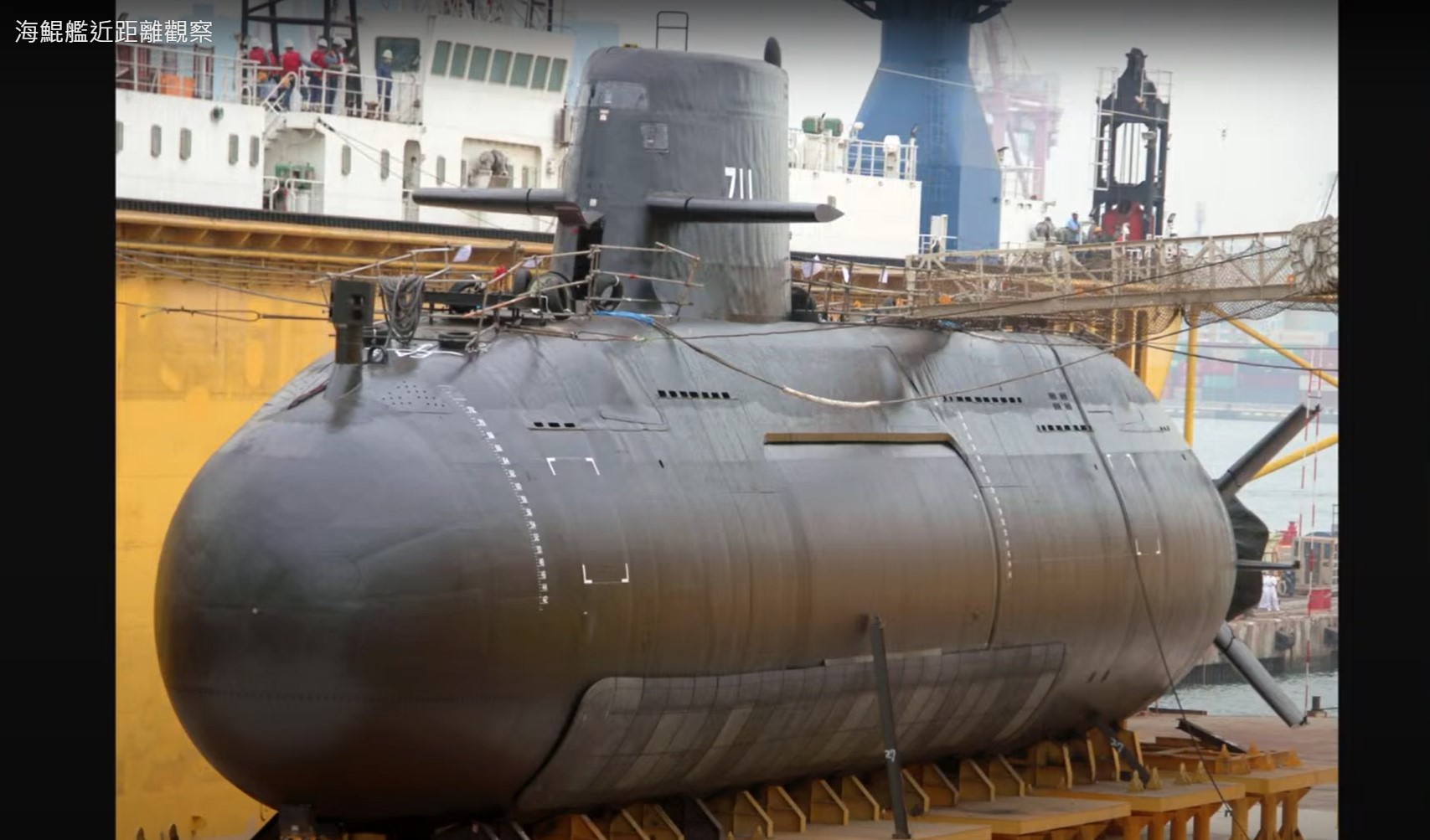
Has Taiwan Republic ended Martial Law? “海鯤艦近距離觀察,” Tommy Chi 諸葛風雲的異想世界。 Decolonization and military classrooms.

Has Taiwan Republic ended Martial Law? “海鯤艦近距離觀察,” Tommy Chi 諸葛風雲的異想世界。 Decolonization and military classrooms. The brutal China KMT martial law/military colonization of Taiwan formally ended 37 years ago. However, because Taiwanese citizens have yet to purge the impact of decades of China KMT dictatorship/Chinese Taipei colonialism-cultural imperialism, it is difficult to find globally and historically contextualized discussion of Taiwanese politics, history, and national security in its mass media. Although there are hopeful signs that Taiwanese citizens, despite the self-censorship imposed by anti-democracy and anti-Taiwan China KMT adjacent forces among corporate media, are making progress. This YouTube channel’s analysis of the Taiwan submarine program is a good example.

Historians obsess over periodizations. It’s an occupational hazard. When I was a graduate student, my committee member and Soviet Russia specialist (for me to study the two major Leninist authoritarian political parties of modern Chinese history, I had to understand Soviet-Russian history ….) spent a semester teaching me how to write scholarly book reviews. One of the Soviet historians I read noted something that changed how I thought about history – she chronicled how much time it took for Tsarist institutions, bureaucracies, and procedures to last deep into the Soviet period – long after The Revolution had occurred. Her point is that histories are written as stories – with a beginning, middle, and end, with different distinct and separate chapters. Human affairs, on the other hand, are complicated. We layer and mix things through time. Because humans are not machines, we cannot “delete our hard drives,” purge our memories, or turn the switches to “off.” And yet when we narrate and explain human affairs, that’s precisely how we speak of changes – this is particularly so during the age of revolution, when there are ideological and emotional imperatives to pretend there are clean breaks.

Maybe even asking if the China KMT martial law has really “ended” is indicative of this fallacy. China KMT’s colonization of Taiwan and its brutal dictatorship, from 1945 to 1996, did not end cleanly with the formal end of martial law or the first democratic presidential election. This is because the China KMT colonizers-dictators had five decades to change the language, alter the scholarly ecosystem, and monopolize the media. The China KMT dictatorship had decades to infiltrate itself into every corner of Taiwan – business, agriculture, labor unions, civic groups, neighborhood associations. The most difficult-to-study part of colonization is cultural imperialism – erasing the diverse cultural-national histories that existed in Taiwan before the China KMT invaded – while replacing them with a two-dimensional, fictional, blood and soil Chinese nationalism formulated in the service of justifying the right of the China KMT to colonize Taiwan as a one-party dictatorship (legitimate heir of thousands of years of authentic Chinese culture and polity, etc.) Nearly four decades after the China KMT martial law and dictatorship formally ended, the democratization and de-colonization of the Taiwanese consciousness have yet to begin in earnest. It is an interesting process to observe – a citizenry traumatized and changed by the China KMT colonization, attempting to discuss public policies, while still trapped in many instances by the ideological-cosmological constructs imposed by the Chinese colonizers.

The Taiwan submarine program is an example of the progress made in four decades by Taiwan’s democratization –  the existence of lively and insightful discussions of Taiwan’s national security, such as this YouTube channel would not have been possible in the 1980s. The extent to which Taiwan’s democracy has much left to be done in terms of decolonization and modernization can also be found in how Taiwan has been limited in how it debates national security issues, such as with this submarine program.

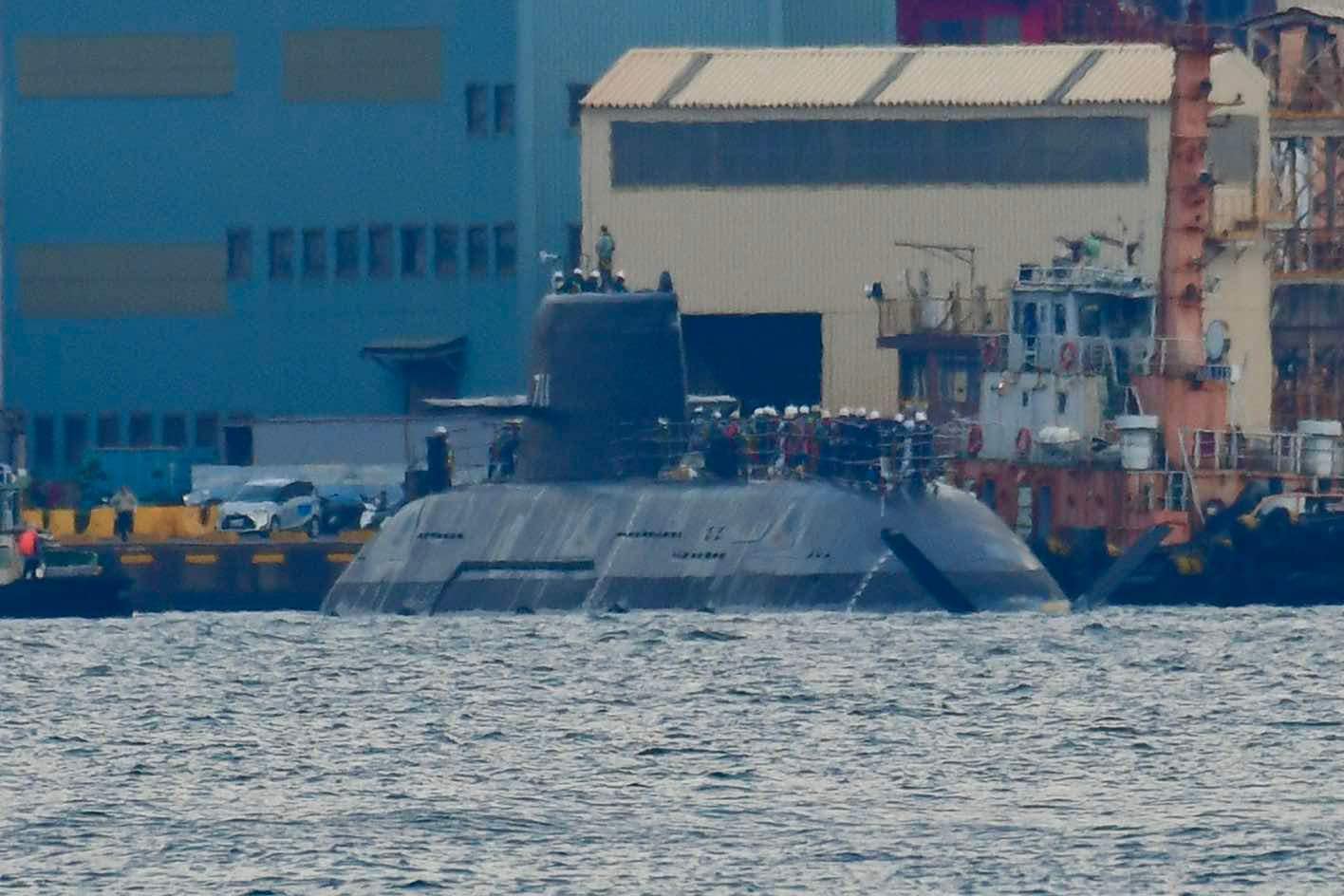
The near-miraculous existence of this Taiwan-assembled submarine — Taiwan is incapable of independently manufacturing its own automobiles, maybe not even motorcycles (although I am not certain of this) — it is certainly not capable of independently manufacturing its own frigates or destroyers. A submarine is closer to a spacecraft in terms of difficulty. Another way to think about it is this Taiwan submarine gives us a good way to gauge how much behind-the-scenes aid came from Taiwan Republic’s Free World allies. This is also the first major Taiwanese arms program in my memory where for eight years no major news leak occurred — a great credit to President Tsai and the people she put in charge of this project. President Tsai is the first democratically elected president of Taiwan to have had any meaningful control over the China KMT-dominated national security bureaucracy. The Taiwan submarine is in harbor trial and will be in sea trial for the rest of this year. To understand the AUKUS+ Free World nature of this project, see the foreign ambassadors who attended the submarine’s unveiling – the US, Korea, Japan, and the UK. To understand how lethal a fleet of Taiwanese conventional submarines is against Chinese imperialism and militarism, study the attacks against the submarines coming from the Chinese communists and its allies inside Taiwan. 16.7.2024

© Taiwan in World History 台灣與世界歷史. This site grants open access for educational and not-for-profit use. Maps and illustrations are borrowed under educational and not-for-profit fair use. If you are the rights holder and prefer not to have your work shared, please email TaiwanWorldHistory (at) Gmail (dot) com and the content will be removed.
Leave a comment

Filed under geostrategery, Taiwan Republic, world history

President Tsai Ing-wen and this emerging Taiwanese national identity, part five, “Tainan: The 400-year-old cradle of Taiwanese culture,” BBC. Taiwan Republic 台灣国, national identity, and world history classrooms.

President Tsai Ing-wen and this emerging Taiwanese national identity, part five, “Tainan: The 400-year-old cradle of Taiwanese culture,” BBC. Taiwan Republic 台灣国, national identity, and world history classrooms. This article on Tainan and Taiwanese history by Will Buckingham is excellent. A rarity for articles in either English or Mandarin dealing with Taiwanese history and national identity to have such a balance between accuracy and necessary complications. Particularly noteworthy is the attention the author paid to Taiwan’s indigenous, pre-global imperialism (European, Chinese, Japanese, China KMT) history and identity. 

The last paragraph of this article should be highlighted: “As Tsio̍h told me before I climbed on my bike to cycle home from the Confucius temple: “We Taiwanese are not that pure. We’re a hybrid society. We should be proud of that and start telling people this history and these stories of hybridity. Then maybe we can find peace with ourselves.”

In decades of teaching world history to American students, I have assigned a semester-long research project where students connect their family’s history with the world history we studied. Every semester I would gently remind them that not a single human being is ever 100% anything – and as sure as I am that Taiwan Republic has great food or that my mother will never, ever like a haircut I get, more than one student will begin the research presentation by proudly declaring their family to be “100% [insert the nationality]”

So the quote above, while apt for Taiwanese citizens, particularly as a young democratic nation facing down an aggressive, authoritarian, imperialist neighbor, is also sound advice for all of humanity.

It’s an interesting psychological phenomenon. Why is it so important for some to be “pure”? Maybe we have become so accustomed to taking tests and being graded that we erroneously equate higher national identity “purity” with a higher score. I’ve also often reminded students that even though intellectually humans say that we want to learn and be challenged, in reality, most of us prefer simple answers, a clean story arc where heroes and villains are unambiguous, with a happy ending that ties up all loose ends. 

“Impurity,” like functioning democracies, is the opposite of that simple, memorable, story that requires little work from the audience – multicultural, multinational, dynamic democratic national identities require commitment, sacrifice, and hard work.

Hybridity, impurity, and complications are characteristics of this emerging Taiwanese national identity under President Tsai. In Taiwan’s struggles to maintain its democratic sovereignty, there is tension between reactionary, authoritarian forces (from China and its allies in Taiwan and the Free World) propagating a fictional but easier-to-narrate blood and soil national identity, versus a subtle, contradictory, chaotic emerging Taiwanese identity based upon democratic sovereignty. This is an island democratic nation of 23 million citizens, whose presidential palace was built by the Japanese, later used by the China KMT colonizers-dictators, now housing democratically elected presidents. This democracy is still using the formal name of “RoC” imposed on Taiwan by the authoritarian China KMT, where multicultural citizens speak Mandarin, Taiwanese, Hakka, Indigenous; or Indonesian, Malay, English, or Vietnamese. How does Taiwan maintain a functioning, stable democracy capable of defending itself from Chinese communist subversions and sabotage – through mass media, social media, by using educational institutions and authoritarian and anti-democracy political parties such as the China KMT – without resorting to “easier/quicker” blood and soil and authoritarian constructs. How Taiwanese citizens decolonize the authoritarian and colonialist-imperialist mode of thinking about national identity – hence what democracy means and how it functions to preserve itself – is critical to the sustainability of this democratic nation. 15.7.2024


© Taiwan in World History 台灣與世界歷史. This site grants open access for educational and not-for-profit use. Maps and illustrations are borrowed under educational and not-for-profit fair use. If you are the rights holder and prefer not to have your work shared, please email TaiwanWorldHistory (at) Gmail (dot) com and the content will be removed.

Leave a comment

Filed under geostrategery, Taiwan Republic, world history

President Tsai Ing-wen and this emerging Taiwanese national identity, part four, “民族認同度又上升!近8成自認台灣人 中國人再下跌剩不到1成,” 自由时报 Liberty Times。 Taiwan Republic 台灣国, national identity, and world history classrooms.

President Tsai Ing-wen and this emerging Taiwanese national identity, part four, “民族認同度又上升!近8成自認台灣人 中國人再下跌剩不到1成,” 自由时报 Liberty Times。 Taiwan Republic 台灣国, national identity, and world history classrooms. “台灣民意基金會週四發布「台灣人最新的民族認同」即時民調,結果顯示有高達76.8%自認為自己是台灣人,當中有58%屬「強烈認同」,18.8%屬「輕度認同」。至於自認為自己是中國人僅有6.6%(2.9%「強烈認同」),9.5%自認為自己是台灣人也是中國人。另外有5.2%表示沒意見,1.8%不知道或拒答。”  Recent polling from Taiwan shows that a solid, governing majority of 76.8% of Taiwanese citizens identify themselves as “Taiwanese,” – 6.6% of residents of Taiwan identify themselves as “Chinese,” with 9.5% self-identifying as “both.”

National identity is dynamic and fluid – what is noteworthy about the Tsai era is how Tsai opened the door for pro-democracy and anti-communist non-green, non-DPP citizens to redefine what “status quo” entails. A lot of this is achieved because Dr. Tsai is a measured and moderate leader. Taiwan’s increased global status during her administration did not hurt – this increased, normalizing national status among the global democracies worked in tandem with the radicalization of the pro-China, anti-democracy China KMT (and later, the China People’s Party) inside Taiwan, as well as the belligerence and imperialism of dictator Xi and his Chinese communist regime.

Two other areas to ponder on how one develops one’s own national identity. Authoritarian, top-down Leninist parties like the China KMT and Chinese Communist Party obsess with brainwashing – education, propaganda, rules, threats, guilt trips, blood and soil nonsense. They cannot fathom that this emerging Taiwanese national identity can be organic and bottom-up – hence they accuse the ruling DPP of “brainwashing.” They only know what they practice themselves. Whereas in a globalized, cosmopolitan, diverse, and democratic nation like Taiwan, this emerging national identity is far more fluid and unpredictable. Twenty-three million citizens with diverse backgrounds and life experiences are connected to globalized media, with Taiwan as a top world trading partner, and tens of millions of students, businesspeople, and guest workers coming to and from Taiwan. Democratically elected leaders like Tsai and Lai may shape and respond to emerging national identity – they may even attempt to set boundaries, such as stipulating that the process ought to be peaceful democratic sovereignty. What authoritarians like Xi and Ma and Ke and others cannot countenance is that national identity in a democratic nation cannot be dictated from above.

And so while a poll like this is fascinating, it is also a snapshot subject to closer, careful interpretations – down to what it means to be “Taiwanese.” To be “Taiwanese” in 1945, in 1979, in 1996, and in 2024 would have recurring, consistent ideas, coupled with newer, evolving, changing meanings. 

What President Tsai has not been given credit for is how she used the tools of statecraft to give Taiwan the necessary preconditions for realizable democratic sovereignty – military power, strategic alliances, international reputation, and economic health. Her most remarkable accomplishment with this emerging Taiwanese national identity, however, is the fact that in her highly successful eight-year terms, she has never once dictated what future Taiwanese citizens must choose regarding their nationhood. Authoritarians like the Chinese Communist Party, China KMT, the China People’s Party, or an authoritarian-reactionary ideology like Confucianism, presumed the right of the leaders/elders/elites to instruct their lessers/subjects and those who have yet to be born what they must and must not choose. This coheres well with the destructive blood and soil varieties of populist nationalism. President Tsai’s vision is democracy and human rights – the right of individual citizens to, without coercion, peacefully and democratically decide their fate. She has set an example that the US and much of Europe can learn from. 5.7.2024


© Taiwan in World History 台灣與世界歷史. This site grants open access for educational and not-for-profit use. Maps and illustrations are borrowed under educational and not-for-profit fair use. If you are the rights holder and prefer not to have your work shared, please email TaiwanWorldHistory (at) Gmail (dot) com and the content will be removed.

Leave a comment

Filed under geostrategery, Taiwan Republic, world history

President Tsai Ing-wen and this emerging Taiwanese national identity, part three, the dead-end of the “blood and soil” Chinese nationalism. Taiwan Republic 台灣国, national identity, and world history classrooms.

President Tsai Ing-wen and this emerging Taiwanese national identity, part three, the dead-end of the “blood and soil” Chinese nationalism. Taiwan Republic 台灣国, national identity, and world history classrooms. This week Taiwan’s army presented prototypes of an indigenous 105mm wheeled armor vehicle. Taiwanese netizens rapidly made a size comparison of the proposed wheeled 105 mm vehicle with the M-1A2T MBTs coming to Taiwan. Further improvements will be made, though it has been interesting to follow the discussion-debate on its viability in the Taiwanese civil space.

During the democratic era, Taiwan Republic has had four presidents — Lee, Chen, Tsai, and Lai. Decades apart, Chen and Lai share the fate of facing a pro-China pro-autocracy majority in the parliament, but for foreign and domestic reasons Lai is in a far stronger position. I have been writing about different elements of why this is the case, as a way of analyzing the formation of modern Taiwanese national identity. An interesting indicator is in the realm of national security. For historical-political reasons, during Chen’s eight years in the 2000s the national security area, public and private, was monopolized by the so-called “mainlanders,” and a particular subset – veterans of China KMT dictatorship’s military, who spent decades forcing the subjugated Taiwanese to be anticommunists, until the democracy era, when they decided Taiwan independence is far worse than Chinese communism. What’s left of that group is the embodiment of a “blood and soil” type of reductivist, violent, anti-democratic Chinese nationalism.

It is not so much that with time these Chinese Taipei occupiers mellowed — in fact, many have become more radicalized — it is that their numbers have noticeably been reduced because Tsai’s eight years opened the door to those associated with the population that fled to Taiwan between 1945-1949 who maintain a sentimental attachment to “RoC” but also are pro-democracy to join with the pro-democracy and pro-not surrendering to the Chinese communists Taiwanese mainstream. Many of the online and YouTube civilian Taiwan military analysts I follow may well have voted for the reactionary and anti-democracy Ma twice, and may still vote for China KMT candidates on the legislative and local levels. But on presidential-national identity-democratic sovereignty issues, they have become a part of Tsai’s emerging domestic consensus on “RoC” Taiwan and its democratic sovereignty. Taiwan, as is the case with the US and Europe, is a good case study of why blood and soil type nationalisms may achieve short-term political gains but result in long-term national dead-ends — while Tsai’s liberal-democratic nationalism – the idea that being Taiwanese citizens is defined by adherence to a set of democratic values and principles and not based on blood and lineage — is such an important principle for Lai and allies domestic and foreign to promote and to protect. 27.6.2024

[Illustration from 新‧二七部隊 New 27 Brigade at https://www.facebook.com/photo?fbid=122154187856155786&set=a.122105799836155786]

[Analysis of the armored vehicle at Tommy Chi諸葛風雲的異想世界https://www.youtube.com/watch?v=Tlp34pK3png]

© Taiwan in World History 台灣與世界歷史. This site grants open access for educational and not-for-profit use. Maps and illustrations are borrowed under educational and not-for-profit fair use. If you are the rights holder and prefer not to have your work shared, please email TaiwanWorldHistory (at) Gmail (dot) com and the content will be removed.

Leave a comment

Filed under geostrategery, Taiwan Republic, world history

“US officials say UN Resolution 2758 twisted: sources. UNDER THE RADAR: Two US deputy assistant state secretaries visited Taiwan and met with foreign diplomats to discuss how to boost the nation’s international participation,” Taipei Times. Taiwan Republic 台灣国, geostrategery, and world history classrooms.

“US officials say UN Resolution 2758 twisted: sources. UNDER THE RADAR: Two US deputy assistant state secretaries visited Taiwan and met with foreign diplomats to discuss how to boost the nation’s international participation,” Taipei Times. Taiwan Republic 台灣国, geostrategery, and world history classrooms. Even though arguing over the textual meaning of UN resolutions is something that my students roll their eyes over, this is as important as weapons and troops because it goes to the heart of the American and Free world’s position on Taiwan Republic’s democratic sovereignty. The combat jets and naval vessels are necessary to carry out geostrategery policies – but clarity on the international, sovereign boundaries between the People’s Republic of China and the “Republic of China” Taiwan is an important step in fixing the decades-long American mistake made in the name of strategic ambiguity. Not the least in clarifying whether or not the Free World has a legitimate reason to come to democratic Taiwan’s aid if the Chinese communists choose to invade – is it a Chinese civil war (no!), or is it, like Russia invading Ukraine, one nation invading another (yes!!)? This is why the China KMT has vehemently opposed one citizen one vote direction presidential elections in Taiwan.

Just as Taiwanese presidents Dr. Tsai and Dr. Lai must make domestic and diplomatic concessions – weighing relative tranquility with needed reforms – and hence the current mainstream position inside Taiwan regarding the meaning of democratic sovereignty is that the PRC and the RoCTaiwan are not subservient to one another but Taiwan as of now will hold onto the tragic-comedic formal name “RoC” – global powers must balance between changing facts and policy inertia. Although in the realm of recognizing China as a threat to global democracies, shoring up Taiwan’s de facto independence, and redefining the “status quo” as near-permanent, things have been moving at light speed.

My educated guess is this: with the latest trip to China made by the reactionary, fascist, anti-democratic former China KMT Chair Ma, and with the “mainstream” China KMT leadership loudly denying Taiwan’s democratic sovereignty, the only remaining usefulness of the China KMT to the Chinese communists is for the China KMT to recognize that the People’s Republic of China as the only legitimate representative of One China, and to concede that Taiwan must be annexed and ruled underneath this PRC-One China. If DC, Tokyo, London, and other liberal democratic capitals see this trend clearly, then they know that once the China KMT crosses that line into official surrender, the Free World must fully recognize Taiwan’s democratic sovereignty as a response. 23.6.2024

© Taiwan in World History 台灣與世界歷史. This site grants open access for educational and not-for-profit use. Maps and illustrations are borrowed under educational and not-for-profit fair use. If you are the rights holder and prefer not to have your work shared, please email TaiwanWorldHistory (at) Gmail (dot) com and the content will be removed.

Leave a comment

Filed under geoeconomics, geostrategery, Taiwan Republic, world history

President Tsai Ing-wen and this emerging Taiwanese national identity, part two, Returning the China KMT to China. Taiwan Republic 台灣国, national identity, and world history classrooms.

President Tsai Ing-wen and this emerging Taiwanese national identity, part two, Returning the China KMT to China. Taiwan Republic 台灣国, national identity, and world history classrooms. For the first time in eight years, Taiwan’s legislature has a pro-communist-China majority, and with street protests and headlines, it feels as if Taiwanese democracy has descended into chaos. However, with historical context, particularly comparing President Lai’s first term with President Chen’s perilous eight years, this emerging Taiwanese national identity during President Tsai’s exceptional eight years has created an entirely different domestic and global reality.

President Tsai’s DPP has co-opted symbols and iconographies of “RoC” as “RoC Taiwan” – pro-democracy, anticommunist, Taiwanese democratic sovereignty – for a remarkable example, see President Lai’s recent speech at the ‘RoC’ Army Academy. This means the DPP now occupies a mainstream position within Taiwan’s democratic polity, while at the same time, the China KMT’s former president Ma has repeatedly rejected Taiwan’s democratic sovereignty, and its current vice chair visited communist China asserting that Taiwanese are also “Chinese 中国人”。China KMT’s radicalization has, given Ma’s recent trip to communist China, meant that the only major concession left of any worth that the China KMT has to give to Beijing is to acknowledge that the “one China” they support is the People’s Republic of China, and that Taiwan and Taiwanese should be subjects – dictatorships have subjects and no citizens — of this communist China. If you think of the Taiwanese political spectrum as running from China/Chinese to Taiwan/Taiwanese, and from democracy to authoritarianism – President Lee’s dream of a moderate, indigenized Taiwan KMT was the last chance that this authoritarian foreign party had to remain competitive in national elections in Taiwan – whereas President Tsai has pulled DPP into a larger, more moderate domestic coalition – acceptable to US and the Free World.

Another way to think about the China KMT’s radicalization, and now the fledgling China People’s Party, and their quandary – with possible reliance on foreign financial support, an absolute minority of hard-core anti-democracy and pro-China supporters (think of the same dilemma faced by American GOP candidates, with a MAGA dominated party primary, and a moderate-centrist voting citizenry). Leave aside one’s own value judgment, let’s ponder electoral politics. If you are the China KMT, and you have been in the political wilderness for eight years, and for the first time since Taiwan became a democratic nation, a two-term incumbent DPP president has successfully extended DPP’s presidential term to the sitting VP, and you barely won a legislative majority – would the reasonable electoral strategy to expand your future electoral coalition _in Taiwan_ in both the legislative and executive branches be to promote highly polarizing, anti-democratic, and pro-communist China legislations? The DPP has many domestic political weaknesses – dissatisfied younger voters, income inequality, housing crisis, educational stagnation …. Yet the China KMT and People’s Party chose highly polarizing, ideologically pro-communist China legislation to begin. Doesn’t make any sense does it.

The only way China KMT’s legislative agenda makes any sense is to understand how Taiwan’s emerging national identity has evolved under President Tsai, and how a moderate status quo DPP has become a political dilemma faced by a radicalizing anti-democratic China KMT. The China KMT’s latest presidential candidate, New Taipei mayor Hou, himself a native Taiwanese, spent years painstakingly avoiding polarizing pro-China issues, and kept the China KMT at arm’s length – yet right after he was nominated by the China KMT, he too could not overcome the pressure by his radicalized party’s leadership to nominate a pro-China VP candidate, and to accept electorally disastrous policies (granting electoral right to Chinese communist subjects; opening Taiwanese job markets to Chinese communist students). A sensible candidate without this baggage known as the China KMT might have focused on center-right issues – housing, pollution, education, income equality, or after eight years of DPP executive and legislative majority, a candidate with a party not beholden to the Chinese communists might have wisely simply focused, as Obama did, on “change.”

While President Tsai did not push the China KMT towards radicalization – that pro-China anti-democracy coup started when Ma and Lien pushed Lee out of the China KMT, and came as a result of financial dependency, ideology, and primarily due to an authoritarian minority used to colonialist privileges resenting democratization removing those bounties – Tsai pulling the DPP into the moderate status quo position and coopting ‘RoC’ institutions and iconographies – the DPP took over the ideological, national identity vacuum abandoned by the China KMT. Therefore, President Lai’s position is far more stable than President Chen because of this shifting domestic and global landscape. The unique challenge he faces is that as the China KMT becomes radically anti-democracy and pro-Chinese annexation, Taiwan’s democracy will face sharper challenges because Taiwan’s major opposition parties are essentially insurrectionists. With time one assumes (hopes?) an opposition party that affirms Taiwan’s democratic sovereignty will emerge – but for the time being, this will be a challenging moment, particularly given China’s desperation and direct interference into Taiwanese democracy. 18.6.2024

© Taiwan in World History 台灣與世界歷史. This site grants open access for educational and not-for-profit use. Maps and illustrations are borrowed under educational and not-for-profit fair use. If you are the rights holder and prefer not to have your work shared, please email TaiwanWorldHistory (at) Gmail (dot) com and the content will be removed.

Leave a comment

Filed under geostrategery, Taiwan Republic, world history

President Tsai Ing-wen and this emerging Taiwanese national identity, part one. Taiwan Republic 台灣国, national identity, and world history classrooms.

President Tsai Ing-wen and this emerging Taiwanese national identity, part one. Taiwan Republic 台灣国, national identity, and world history classrooms. It will take many decades to fully assess President Tsai Ing-wen’s legacy. Oral history, historical archives, primary documents and not yet available – and this phase of Taiwanese history is particularly significant and dynamic – Western imperialist academics would probably say “fraught” or “nuanced.” So, these reflections are super preliminary. My main thesis: even though by temperament and reputation President Tsai is moderate, almost boring, Taiwanese national identity under her eight years made revolutionary leaps.

Historians tend to credit significant changes to the leaders of that time period – reasonable as a kind of academic shorthand. Of all elements of public life, national identity is the most complex – surely democratically elected president Tsai had an impact on this evolving Taiwanese national identity – but as it is often the case, great leaders also see and hear dynamic changes from the bottom up – and rather than to create those evolutions, they act instead as a channels, creating a path to coherently give words and meaning to these evolving national identities.

To me, the most significant change to this emerging Taiwanese national identity during Tsai’s eight years is that President Tsai, a former China KMT technocrat, miraculously convinced pro-Taiwan DPP supporters to tolerate formal institutions and symbols of the foreign/Chinese-imposed RoC – even up to the bloody reign of the younger Chiang dictator CCK. President Tsai advanced and modified her mentor, Taiwan’s first democratically elected president Lee Teng-hui’s formulation “RoC in Taiwan” into “RoC Taiwan” – starting the periodization at the end of the latest Chinese civil war in 1949, which the China KMT lost before they fled to Taiwan. This is an imperfect, everyone has something to not like compromise – but one which generates a stable, peaceful governing majority among Taiwan’s citizens, and significantly, has the support from the US, Japan, and the Free World. Even though the headlines out of Taipei now are the inevitable counterrevolutions from reactionary, anti-democracy, and anti-Taiwan political parties – if we broaden the historical lens out to centuries of Taiwanese history, the evolution of Taiwanese national identity has always been a two-step forward one or two steps back process.

An important data point to ponder regarding whether the Tsai formulation is transitory or historically significant is to assess the relative positions of new President Lai with former President Chen. Both Chen and Lai had to deal with anti-Taiwan, anti-democracy, and reactionary majorities in the parliament – noise and all notwithstanding, the pro-Taiwan and pro-democracy forces are in far better shape in 2024 than they were in 2000. It was a miracle that President Chen survived the reactionary coup attempts – President Lai has a firmer hold on to the executive branch, pro-democracy majority, and foreign support. And President Tsai’s policies played a significant role in this change – all the boring, non-crowd-pleasing policies she pushed through – pension reforms, improving the standings of the military and civil servants, infrastructure, transforming Taiwan from an international beggar, as the China KMT had formulated, into a positive global contributor, and so on.

The second significant development – and I am still thinking about this – is Tsai’s push for the Taiwanese to ponder, to enact, this emerging Taiwanese national identity apart from the “China-or-Not-China” construct – real independence comes only when the Taiwanese stop habitually comparing themselves first to China, or to China alone. To me, President Tsai’s calls for citizens of Taiwan to think of Taiwan as a part of the world is a significant revolution – to change decades of Chinese colonial, imperialist brainwashing that Taiwan is “only” a cultural periphery of a superior Chinese imperial core. And through an understanding of world history and global studies, to see Taiwan’s historic, and contemporary roles – not as the China KMT had constructed – Taiwan as a beggar, a muddied hinterland without culture or history – but as a democratic, sovereign, dynamic Taiwan nation that is positively contributing to the Free World. In this realm, I think the main dynamism and energy come not from formal, institutional, political quarters – or even formal educational institutions. When President Tsai took President Lee’s comment – “The agony of being Taiwanese” and updated it to become “The pride of being a Taiwanese,” I think she is more reflecting and channeling emerging Taiwanese national consciousness from the ground up than she is creating and leading.

Again, a historical comparison is useful. I think up to the late 1990s Taiwan-as-a-part-of-China was framed in Taiwan by the Chinese colonialist occupational elites as a conscious and subconscious “default” – in different realms of public life, to deviate from that default required strenuous efforts. Whereas in 2024 Taiwan is a nation with democratic sovereignty separate from China and any other nation is the new default. This rapid evolution in modern Taiwanese national identity may well explain why reactionary, anti-Taiwan, and anti-democracy leaders like Ma and other members of the China KMT have sharpened their rhetoric and attacks against Taiwanese democracy. As we have seen with political evolutions in North America and Europe, “white privilege” and “Chinese ‘mainlander’ privilege” share historical similarities. Foreign colonial settlers who have enjoyed decades of unearned, illegitimate power losing that privilege to a democratic, dynamic present will often turn to foreign autocratic allies to destroy the democracy from within. 14.6.2024

[illustration: “For Taiwan it is not about independence versus unification; in reality the only problem is a Chinese invasion to annex democratic Taiwan” Source: https://www.threads.net/@chenweiliaodesign?xmt=AQGzkbK9vj9u6STHE5MPKhr9Gx7BQRHQGrdJl4iOf3yynQ ]

© Taiwan in World History 台灣與世界歷史. This site grants open access for educational and not-for-profit use. Maps and illustrations are borrowed under educational and not-for-profit fair use. If you are the rights holder and prefer not to have your work shared, please email TaiwanWorldHistory (at) Gmail (dot) com and the content will be removed.

Leave a comment

Filed under geostrategery, Taiwan Republic, world history