Tag Archives: military

What are the status quo – Taiwan Republic studies and a changing global reality: World history, geostrategery, and Taiwan Republic 台灣国 classrooms

When it comes to the Taiwan Strait the actors and players, however different they are, converge on the quasi-religious, allegedly sacred principle of the “status quo.” But what does it mean, and is it that important?

President Biden and Secretary Blinken recently – and accurately – framed the status quo as no side using violence to change the de facto reality. What has been the reality? In China there is unfortunately a ‘People’s’ Republic of China with a Chinese communist dictatorship – and in Taiwan, there is a “Republic of China” that used to be a warlord Chiang dictatorship, but since the 1990s has become a stable, electoral democracy. Whatever official name one gives to the political entity exercising democratic sovereignty over Taiwan, Taiwan has never been a part of the PRC.

Is this “status quo”? Philosophically the concept of the status quo has always been a fudge, a placeholder, an illusion. World history and human behavior are always dynamic – we build monuments and write last wills and testaments all in desperate, futile attempts to pretend that there can be permanence, unchanging, but this is impossible. The “status quo” hedge was formulated in the 1970s to get to pressing business – US-communist China facing down the USSR – moving, and deferring irresolvable differences over Taiwan.

The US government has been inconsistent, and self-contradictory for decades on its own Taiwan policies. The one constant element regarding its meaning of the status quo is no war – and no military coercion to change the status quo. This is ironic given some American anti-war activists rhetorically converging with some US think tankers converging with Chinese communist propaganda about what the status quo means, and who is allegedly pushing for war.

So, if the historically accurate definition of the status quo is that “RoC/Taiwan/Make up any name it actually matters less than democratic sovereignty derived from free and fair elections in Taiwan” has never been a part of the People’s Republic of China, and Taiwan’s future must be peacefully and democratically decided by its 23 million citizens free from coercion and threats, then I cannot think of a major political party nor likely presidential candidate in Taiwan who would dare to veer far from this democracy red line. Can we say the same for American academics and think tank experts? Their relative reluctance to center democratic sovereignty is fascinating and ought to be a separate study/book.

I think a particularly bad habit pushed by the China communists and China KMT is to overload the system with character salads and mind-numbing numerical formulations – the fictional 92 consensus that’s not a consensus, the three yes and four no’s and the five musts and twelve something somethings and on and on and on. Cutting through the junk, the fundamental belief of the Chinese communists, some in the China KMT, and some in American academia are that might makes right – communist China is bigger, its status quo, which is invasion and annexation of democratic Taiwan, is the meaning of status quo. This is also why some American experts will do almost anything to avoid using the words democracy/dictatorship – ever notice that? I bet they talk about democracy plenty when it comes to domestic American politics though. As Mr. Spock would say, fascinating.

Two additional issues are usually ignored but worth thinking about. Historically, in terms of “separatists” and “splittists” – in 1949, it was Mao and the Chinese communists who added the tragic comedic word “People’s” to the Republic of China and created the reality of two Chinas – so, who split from whom? What would geopolitics have been like had Mao kept the national name and declared Chiang a bandit?

And I know this is difficult to swallow given concerted China communists and China KMT, and some US academics’ propaganda to vilify the democratically elected president of Taiwan Tsai Ing-wen. Decades from now world history will show that Tsai’s moderate, intricate domestic and foreign compromises are the last plausible opportunity for the China communists and China KMT to have a facesaving option to avoid a wasteful, unwinnable war. Yes, President Tsai has danced around RoC RoC-Taiwan RoC is Taiwan. Her red line is democracy and peace, not having or not having China in the national name – and notice, she has never, ever made pronouncements about the future. Like any good world historian and believer in democracy, she knows that that is a bad habit brought to Taiwan by Chinese authoritarians – to have the arrogance and imperiousness to leave edicts to descendants on what they may or may not do. Democracy, peace, and letting the future citizens of Taiwan democratically and peacefully choose their own path. In an era of narrow ethnonationalism (China CCP and China KMT, plus fascism all over the democratic west), Tsai’s policies are a bulwark for principled democratic values. Would be lovely to see self-styled progressives and enlightened western academics and journalists support this kind of thoughtful policy from President Tsai, both for democracy and for true peace. 29.10.2022
© Taiwan in World History 台灣與世界歷史. This site grants open access for educational and not-for-profit use. Maps and illustrations are borrowed under educational and not-for-profit fair use. If you are the rights holder and prefer to not have your work shared, please email TaiwanWorldHistory (at) Gmail (dot) com and the content will be removed.

Leave a comment

Filed under Taiwan Republic

Bibliography: Taiwan Republic and related military reports: Geostrategery and Taiwan Republic 台灣国 classrooms

A pattern for recent Indo-Pacific military reports is that Taiwan Republic has placed more emphasis on munitions and logistics (at least in public). All of the major players, US, Japan, Taiwan Republic, and Australia, are behaving as if a Chinese communist invasion to annex Taiwan is likely – and, that such an attack would not be “contained.”

On the policy side, American rhetoric – unusually blunt, urgent, public, dire – remains not yet matched by action. The US government is a giant, lumbering, mega bureaucracy – often at war with itself or worse, one part not aware of what another part is doing. Urgent warnings of a possible Chinese invasion is contradicted by delays in weapons deliveries to Taiwan – and the continued arguments over which weapons are “asymmetrical” or not are not helpful, or most important, the US has not yet fully committed to and bringing along other democratic allies, to take the Chinese invasion of Taiwan off the table as an option for Beijing – joint maneuvers, integrated training, counter-intelligence and intelligence, and most importantly, helping the democratically elected civilian leaders of Taiwan Republic reform their China KMT dictatorship legacy upper national security and intelligence establishment.

The best recent sign is that the purposeful leak of US-Taiwan cooperation in arms manufacturing did not lead to public denial or backtracking. Anyone used to the US Taiwan policy failures of the 1980s and 1990s would have expected that. The struggle against the Chinese communists is an all-domain global struggle, for which the military is an important portion – trade, technology, semiconductors, agriculture, education, etc. are all battlefields. If both sides proceed wisely with the arms manufacturing plan, it should speed up the delivery of key munitions to Taiwan, while integrating Taiwan into the US-led global arms supply chain. Not spoken and a guess on my part: If you study how the Chinese communists defeated the China KMT 1945-1949, you would be pretty worried about whether the top-level Taiwan-manufactured missiles and radars have been compromised by communist infiltration. I hope a part of this collaboration is a US-led effort to assist Taiwan in filtering out this important counterintelligence effort. Foreign media have marveled at how the Taiwanese do not appear alarmed by repeated Chinese communist threats to invade – a complicated issue for which I only have guesses/theories – what I have noted is that Taiwan as a nation does not behave in terms of operational security as if it has a gigantic communist neighbor dedicated to annexing it. 

Two final points. First, whatever anyone means by “asymmetrical” – Stingers and Javelins will do nothing for Taiwan Republic without integrating Taiwan into a US-led regional security scheme. How the US, Taiwan, Japan, and other democratic allies design the specifics of this plan, balancing what will deter and deny a Chinese invasion, without being needlessly careless diplomatically, is the main task at hand. Second, beyond a long-delayed democratic reform and modernization of the top Taiwan national security establishment, what the US and Japan can assist the most in is Taiwan’s decades-delayed improvement of its naval surface fleet. Taiwan’s navy is lost, directionless, and decades late in the AEGIS/VLS realms. Having watched this for decades, I just don’t see forces within the Taiwanese navy, or Ministry of National Defense, or the civilian democratically elected leaders who have the expertise or the power to nudge the surface fleet along. 27.10.2022

陸射魚叉飛彈2024起交付

對美採購肩射刺針飛彈 2025年全數、甚至提前交運

國軍強化作戰持續力 明年編898億 補充彈藥零附件

空軍採購66架F-16 C/D 戰機延遲1年交貨 2025年第三季首批6架返台

《TAIPEI TIMES》Overhauled frigate project unveiled

輕巡防艦拚3年交艦 將掛載增程雄三

發展不對稱戰力!「無人機」3跨部會整合 國家隊最快明年7月成形

海軍輕型巡防艦選用混合動力推進系統 恐埋下維修「惡夢」

Taiwan to upgrade combat systems of Kang Ding-class frigates

【無人機掘金礦1】中科院軍用無人機發展無極限 經緯董座首揭新銳鳶明年量產

軍民兩用無人機|烏俄戰場顯奇蹟|#羅正方 #矢板明夫 #汪浩|@華視三國演議

「富江艦」下水後 國防部:下一艘預計12月底前下水

多項新軍購案待宣佈 國防部證實:尚有數案刻於美方行政審核中

US mulls arms delivery to Taiwan: MND report

陸軍本週以4億元採購5000枚紅隼火箭彈 強化國土防衛能力

國防部造輕型巡防艦 防空型、反潛型2025、2026年服役

Asymmetrical warfare focus has Taiwan drone companies upping the ante

© Taiwan in World History 台灣與世界歷史. This site grants open access for educational and not-for-profit use. Maps and illustrations are borrowed under educational and not-for-profit fair use. If you are the rights holder and prefer to not have your work shared, please email TaiwanWorldHistory (at) Gmail (dot) com and the content will be removed.
Leave a comment

Filed under Taiwan Republic

Bibliography: A Chinese communist invasion to annex Taiwan Republic “imminent”?: Taiwan dispatch, geostrategery, and Taiwan Republic 台灣国 classrooms

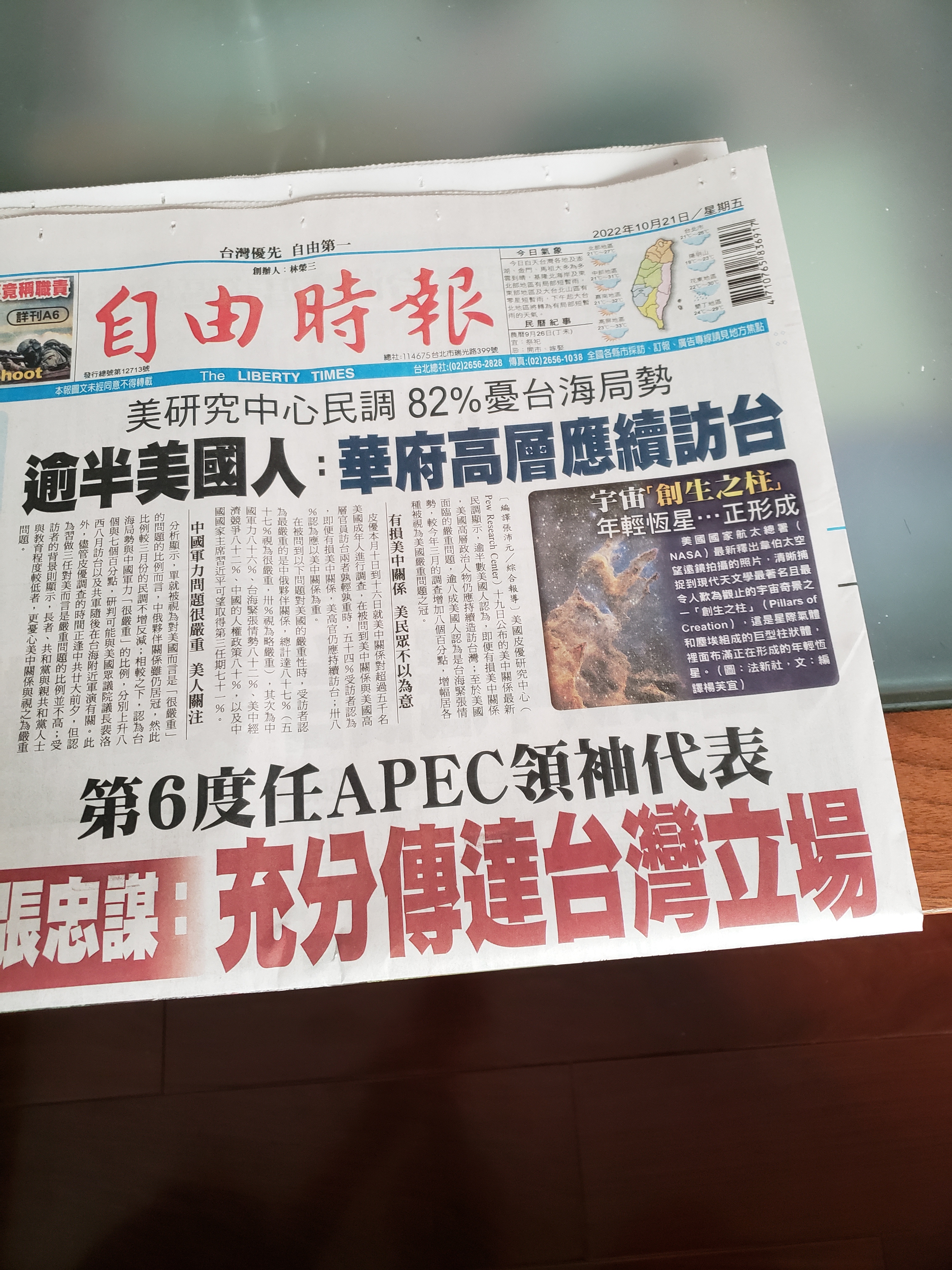
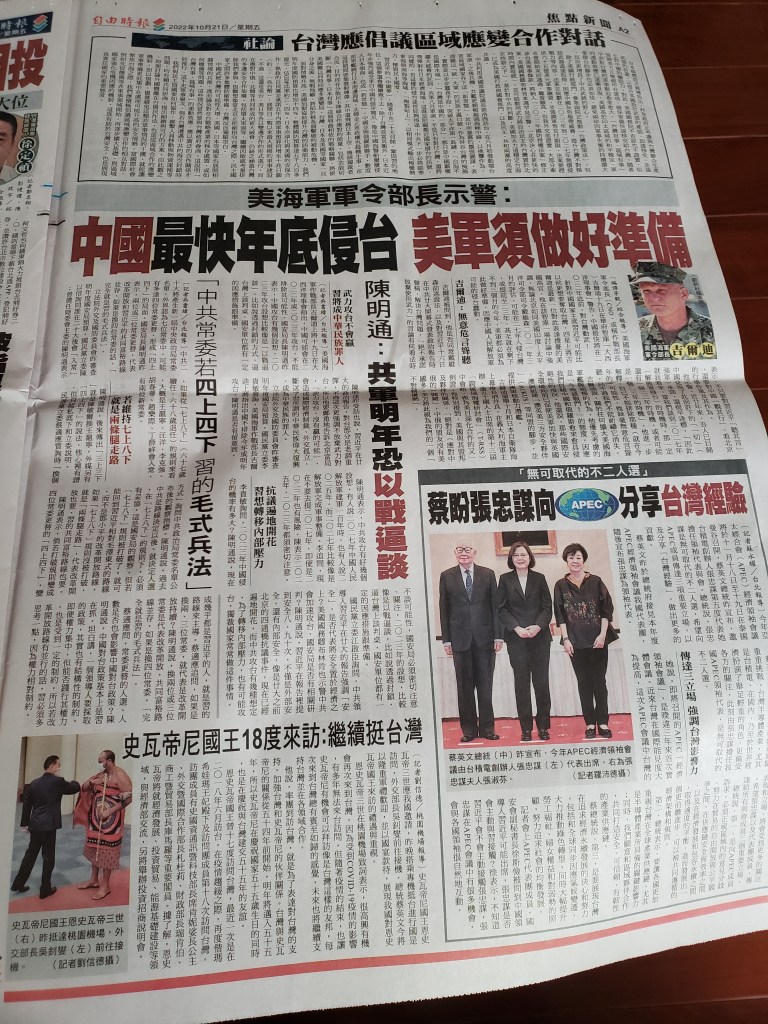
Taipei is now sadly a one traditional newspaper town (traditional as in print). A few observations. Amazing how much Taiwan Republic and the world have changed that the leader of the US Navy speaking of imminent Chinese communist invasion to annex Taiwan is on the second page, not the front. The big news about US-Taiwan Republic co-producing weapons got tucked away, though with a very interesting op-ed.

If you asked me a year ago if there would be a war, I would have said 10% yes, 90% no — now watching the body language of American, Taiwanese, Japanese, and European (minus Germans ….) political and military leaders, we are now at even odds, 50-50. In retrospect, when former Prime Minister Abe coaxed and warned the US to reexamine its policy of strategic ambiguity, it was probably not a theoretical argument. Big mistake if you think a war will be Taiwan focused or can be contained to Taiwan — this is not Ukraine/Europe, study the map and you will see why any Chinese communist invasion will become a kinetic world war. This is why it is so critical to pursue military, political, economic, and diplomatic policies now to prevent Beijing from attacking – without forcing Taiwan to surrender its democratic sovereignty.

再提中共欲加速統一 布林肯:可能用脅迫甚至武力[影]

China’s Accelerated Timeline to Take Taiwan Pushing Navy in the Pacific, Says CNO Gilday

China’s plans to annex Taiwan moving ‘much faster’ under Xi, says Blinken

© Taiwan in World History 台灣與世界歷史. This site grants open access for educational and not-for-profit use. Maps and illustrations are borrowed under educational and not-for-profit fair use. If you are the rights holder and prefer to not have your work shared, please email TaiwanWorldHistory (at) Gmail (dot) com and the content will be removed.

Leave a comment

Filed under Taiwan Republic

US mulls plan to produce arms with Taiwan: report – Taipei Times: Geostrategery and Taiwan Republic 台灣国 classrooms

The US government is considering a plan to jointly produce weapons with Taiwan, Japan’s Nikkei newspaper reported yesterday, citing three sources. Washington wants to step up production capacity for US-designed arms and speed up their transfer as part of a move to bolster deterrence against China, Nikkei reported. The report added that a person with direct knowledge of the US government’s deliberations said discussions had begun, while a different source said it was likely to take some time. Possibilities would include the US providing technology to produce weapons in Taiwan, or producing the weapons in the US using Taiwanese parts, the Nikkei added.

This is a fascinating ‘leak’ – or purposeful ‘official leak’. Is this to test reactions? Meant to sabotage further collaboration between the US and Taiwan Republic? Are arms producers on both sides jockeying for position?

The main idea makes strategic and tactical sense. And like most things in this realm, should have been done decades ago. But wouldhave couldhave shouldhave. Strategic in this being a substantive signal to the Chinese communists that the US and its democratic allies are serious about their ‘red line’ re: not allowing a Chinese communist war of annexation against Taiwan. Tactically, there are lower-level or specific weapon systems – Javelins and Stingers, HIMARS and AMRAAMs and Harpoons – where the US annual requirement would not be able to sustain a supply line that can meet Taiwan’s more acute needs. We have already seen examples of this in the Russian invasion of Ukraine – the US having to deplete its own stockpile while scouring warehouses globally to meet a medium-level intensity conflict. A Chinese communist invasion of Taiwan would deplete munitions at a far higher rate.

This is also another example of a sign of a long-needed normalization between the US, its democratic allies, and Taiwan – i.e., “US technology” used in “Taiwan weapons” have been going on for decades, with rumors and hints but no official confirmations. Whereas this is one of many recent moves signaling that both sides have moved away from the decades-long unhealthy self-imposed restrictions to behave as two democratic nations ought to behave. To repeat a simple but critical idea, however, the reaction to the China Threat must be systemic – arms coproduction must be linked with joint training and US assistance with upper-level Taiwanese military and intelligence reforms; just as the resistance to the Chinese communist threat must include economic, trade, technology, educational, cultural, agricultural, and other realms. 20.10.2022

© Taiwan in World History 台灣與世界歷史. This site grants open access for educational and not-for-profit use. Maps and illustrations are borrowed under educational and not-for-profit fair use. If you are the rights holder and prefer to not have your work shared, please email TaiwanWorldHistory (at) Gmail (dot) com and the content will be removed.
Leave a comment

Filed under Taiwan Republic

Bibliography: Taipei aims to bolster information sharing with allies, build up its war reserves and protect key infrastructure, a vice defense minister said, Taipei Times: Geostrategery and Taiwan Republic 台灣国 classrooms

Official calls for global efforts to contain China. DEFENSE BUILDUP: Taipei aims to bolster information sharing with allies, build up its war reserves and protect key infrastructure, a vice defense minister said. Deputy Minister of National Defense Wang Shin-lung (王信龍) on Monday called for global efforts to contain Chinese security threats, including through joint military exercises, a strategic communication platform and the sharing of drone signals. In terms of military cooperation with the US, Wang said that Taipei hopes to establish an “intelligence, surveillance, reconnaissance” sharing mechanism with Washington and enhance routine high-level official dialogue. Following his speech, Wang told Taiwanese reporters that his delegation had “productive” meetings with the US side during the conference held from Saturday to yesterday. “In the closed-door meetings, we have had candid exchanges concerning the obstacles and possible risks we are facing in terms of US arms sales, while the US side pledged it would do its best in helping Taiwan to solve these problems,” Wang said.

We will see if words and policy declarations are matched by actions. After decades of contradictory US policy regarding the west Pacific, if these reports are accurate, and if the Biden administration follows through on investments in western Pacific democratic alliances, then they should be credited for substantively advancing American national security interests.

Given the gravity and urgency of the communist China threat, it is mind-boggling that the democratically elected presidents of Taiwan and the US do not meet regularly, nor do their Secretary of State and Foreign Minister, Secretary of Defense and Minister of Defense, and so on. These self-imposed restrictions by the US have long outlived their original purposes, much as the original communique, the One China myth-pacifier, etc. And while DC and Taipei have been, for decades, stuck in this self-manufactured, very boring rom-com KPop soap opera, tea leaf reading for signs of relationship upgrade and downgrade, in this life and death crisis created by the Chinese communists, direct conversations at the highest level between the democratically elected leaders of the US and Taiwan are pragmatic and in the interest of national security on all sides.

As we have seen with Ukraine, a sign of western imperialism is in how western academia, journalism, think tanks, and officialdom overestimate the role their actions figure in the calculations of autocrats in Moscow, Beijing, and elsewhere. No serious observers on any side have advocated needlessly “provoking” the Chinese communists. Yet it is fascinating to see how difficult this false conviction will not die – Did Putin really invade democratic Ukraine over NATO or not being coddled even more by the west, or were there ultimate factors internal to Russia and that dictatorship? Do we seriously believe a Pelosi visit or even the US changing Taiwan’s embassy in DC name from Taipei to Taiwan are the primary or even secondary drivers in the Chinese communist calculation over when their Taiwan annexation D-Day would come? Western imperialism may find this line of thinking self-flattering – frontline democracies like Taiwan Republic, Ukraine, the Baltics, and Poland cannot afford this fantasy. Autocrats are most likely to attack when they think they are stronger, and when they think we lack the will to resist. The main thing that matters to dictators is the preservation of their dictatorship.

The priorities outlined here by the Taiwanese Ministry of National Defense are sensible, and I am glad to see them specifying priorities in public, like intelligence sharing and coordination, interoperability, and joint exercises with the US and democratic allies. These are commonsensical ideas that for decades, because of unwise political decisions, the US-Taiwan-Japan have voluntarily ceded to communist China in lieu of military preparation. Also, a good sign that the relatively cautious and conservative Taiwanese military is willing to engage the US and the public this way – the core of Taiwan’s national defense will require the democratization and modernization of its military leadership. As the world should have learned from Ukraine, the priority must be to prevent a Chinese communist war of annexation from beginning. And while words like “dialogue” and “talks” and “compromise” are not bad per se, I have seen no evidence that they prevented or slowed the Russian decision to invade Ukraine. Ultimately, what may encourage a dictator like Xi to give his war plan to annex Taiwan a second thought is seeing concrete evidence that such a war will lead to the end of his dictatorship. How to communicate – in words and deeds – this reality to dictator Xi, is the top priority for Taiwan, the US, Japan, and global democracies. 6.10.2022

© Taiwan in World History 台灣與世界歷史. This site grants open access for educational and not-for-profit use. Maps and illustrations are borrowed under educational and not-for-profit fair use. If you are the rights holder and prefer to not have your work shared, please email TaiwanWorldHistory (at) Gmail (dot) com and the content will be removed.

Leave a comment

Filed under Taiwan Republic

Taiwanese civilian perspective on ‘asymmetric warfare’ and Taiwan’s national defense strategy 台灣作戰策略中的不對稱防衛辯論 賴怡忠 思想坦克: Geostrategery and Taiwan Republic 台灣国 classrooms

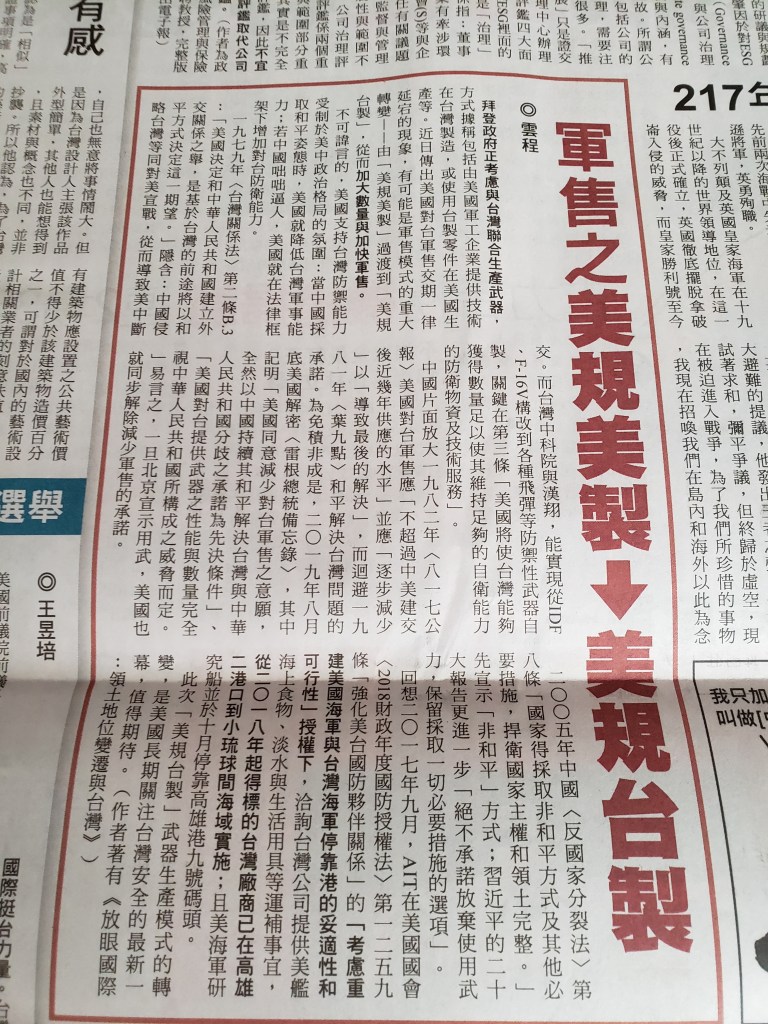
美國這幾年針對不對稱有個說法,就是台灣為了戰力保存,應該在武獲過程朝向取得「小而多的東西,而非大而少的東西」(a large number of small things, not a small number of big things)。但如果回顧在2009年時任國防部助理部長的葛瑞森將軍提到台灣應走不對稱與創新時,他指出不對稱無法取代傳統軍武提供能力,但能夠降低中國對台越來越顯著的數量優勢,降低中國根據這個優勢而發展的行動效度。之後更有人提到不對稱的重點是將不對稱視為作戰/行動概念,而不是物質概念(武器的大小與多少)。從這角度看,美方對於「不對稱防衛」概念的理解也是莫衷一是,沒有清楚的操作型定義,更甭提軍事準則。如果是因應情境而不採取對稱對應的方式,顯示大家對於「什麼不是不對稱」比對於「什麼是不對稱」有較清楚的想法。那這可以表示以載台來否定其不是不對稱防衛,是否就失之武斷呢?在戰略層次上,專注於反登陸的不對稱防衛策略,根據美方部分前官員的誠懇建議,希望台灣不要將資源浪費在空防與海防上。但現在的建議是連不增加新品,就是幫既有系統換裝的作為,都不為對方所喜。當然美方也說,類似的問題也發生在美國的軍事改革上,對台灣的困境有「同情的理解」。只是台海防衛是台灣的生死大事,我要怎麼做當然是我的決定,因為是我在付代價,自然沒法對美方主張照單全收。這個無法對美方照單全收的立場,除了台海防衛是我自己的事外,也與美方對台灣防衛至今持續採「戰略模糊」有關。如果美國承諾可以在中國攻台時協助防衛台灣的空防與海防,台灣要專注在反登陸防衛自然沒什麼問題。但因為戰略模糊策略,軍方無法預判美國是否一定會來,自然其防衛策略就必須涵蓋每一個角落。雖然因此會影響整體的防衛力,但放棄某些區域防衛的結果,一定會導致中方極力攻擊這個弱點區域以擴大戰果。如果台美有類似冷戰期間美日同盟所謂的「美矛日盾、美攻日守」的角色與任務分工(roles and mission assignment),即便還不是具體的條約同盟,但肯定台灣對於以反登陸為主的不對稱防衛能更誠心接受。

This is an important summary of the debates over Taiwan’s national security strategy during the last few decades, and the role played by “asymmetric warfare.” On that term, or “porcupine strategy,” students of global affairs are wise to be cautious to separate the jargon-chasers/repeaters from the professionals with a realistic grasp of the trade-offs between different options. Dr. Lai’s essay is an additional important corrective – in a field dominated by American voices, where the civilian, non-China KMT party-state voices inside Taiwan are scarce, it is a good sign that Taiwan’s decades-long democracy is slowly penetrating the China KMT dictatorship-dominated national security arena. Dr. Lai’s paragraph on America’s strategic ambiguity and Taiwan’s inability to fully accept the American advice on asymmetric warfare is most important. To the extent that the US, Japan, and democratic allies can operationalize President Biden’s repeated expression of strategic clarity regarding Taiwan’s democratic sovereignty status quo, adopting a version of asymmetric warfare would become more likely in Taiwan.

© Taiwan in World History 台灣與世界歷史. This site grants open access for educational and not-for-profit use. Maps and illustrations are borrowed under educational and not-for-profit fair use. If you are the rights holder and prefer to not have your work shared, please email TaiwanWorldHistory (at) Gmail (dot) com and the content will be removed.
Leave a comment

Filed under Taiwan Republic

A significant ‘no-position’ position: ‘No position’ on sovereignty: Ned Price, Taipei Times: Geostrategery and Taiwan Republic 台灣国 classrooms

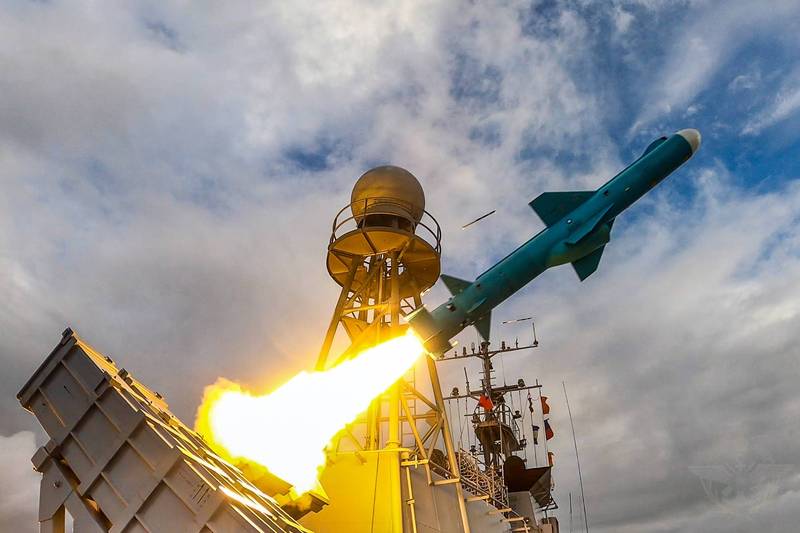
US Department of State spokesman Ned Price on Monday said that Washington does not take a position on the sovereignty issue between Taiwan and China, a position not often explicitly stated by US officials. Price was responding to a question at a news briefing on whether Washington’s “one China” policy supported the belief that “Taiwan is part of China and that the US respects Chinese territorial integrity and sovereignty over Taiwan.” The US “does not take a position on sovereignty,” Price said, adding that Washington’s “one China” policy has not changed and has been at the crux of the US’ approach to Taiwan since 1979, when the US’ Taiwan Relations Act went into effect.

Several important global and historical contexts usually missing in the general discourse on the Chinese communist problem. First, this “no position” position by the US, clearly stated, takes place a year after President Tsai’s significant democratic sovereignty Taiwan has never been a part of the PRC speech. The US, Japan, and EU did not respond to that speech – they neither endorsed, nor disavowed, President Tsai’s assertion that Taiwan has never been a part of communist China, that China and Taiwan exercise separate sovereignties, and that the future of Taiwan belongs exclusively to the twenty-three million citizens of Taiwan exercising their democratic sovereignty.

Since that speech, the emphasis of the US, Japan, and EU has been on the peaceful ‘status quo’ – meaning, as they see more and more menacing signs of Chinese communist plans for military options to annex Taiwan, the international line for acceptable behavior has been underlined and sharpened.

Finally, a more subtle but critical point. The US may have no “formal” position on Taiwanese sovereignty (and significantly, Price phrased this as sovereignty across the strait, meaning, Chinese communist sovereignty is also up for discussion ….) but the ‘body language’ of the US, Japan, and EU since the 2021 speech by President Tsai has been anything but position-less. The Taiwanese de facto embassy in Washington, DC, and Tokyo and major European capitals have been as active and public as they have been in decades. European and Asian diplomats visit the Taiwanese embassy in DC and Tokyo – Taiwanese diplomats meet regularly with their American, Japanese, and European counterparts across the globe. One may call all of this “unofficial” and “no position” and “no change in policy” all one wishes – what is one to make of all of this? A peaceful status quo marks the Chinese communist military option as a catastrophic international incident. No position on sovereignty saves a little bit of face for the Chinese communists – incidentally, President Tsai convincing her supporters to tolerate, for now, “RoC” does the same – while the US, Japan, and the EU in behavior push interactions with Taiwan up to the edge of all-but-formal-recognition.

© Taiwan in World History 台灣與世界歷史. This site grants open access for educational and not-for-profit use. Maps and illustrations are borrowed under educational and not-for-profit fair use. If you are the rights holder and prefer to not have your work shared, please email TaiwanWorldHistory (at) Gmail (dot) com and the content will be removed.
Leave a comment

Filed under Taiwan Republic

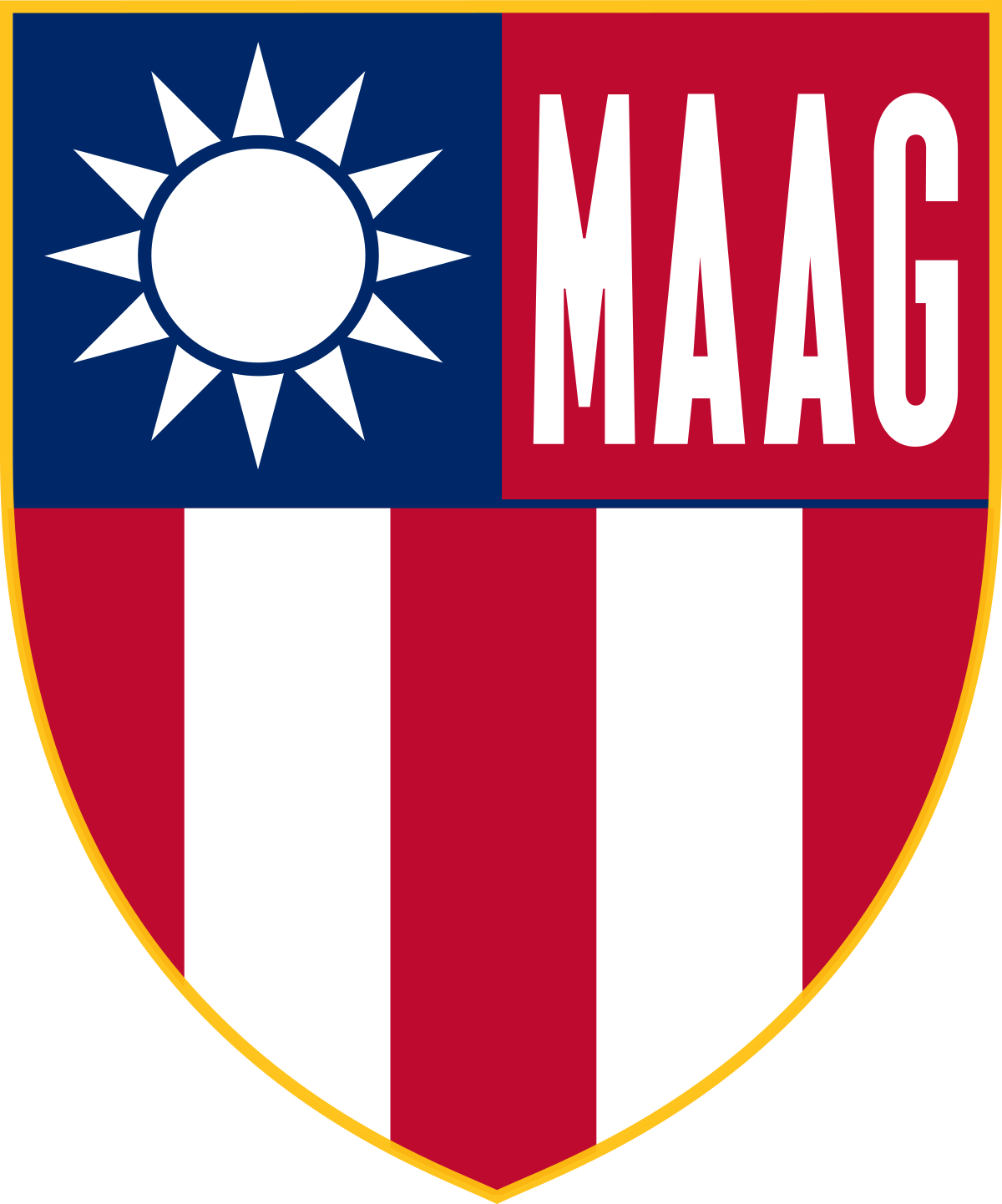
Is an insignia just an insignia? US Military Assistance Advisory Group (MAAG) in Taiwan and the Taiwan Policy Act of 2022: Geostrategery and Taiwan Republic 台灣国 classrooms

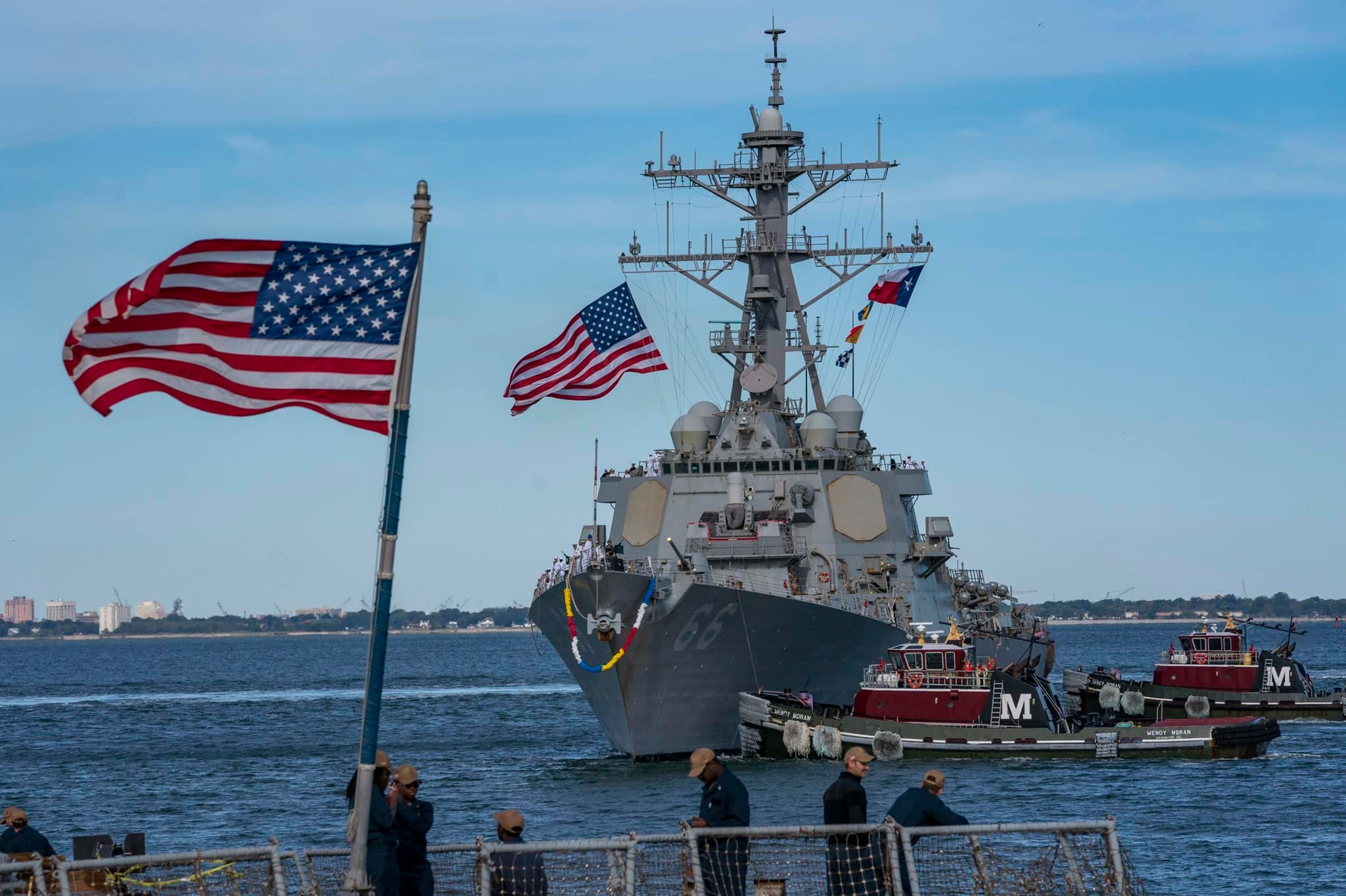
The first photo is of the Taiwanese ambassador to the US opening the new building for the Taiwanese military mission to the United States. Second is the historic US Military Assistance Advisory Group (MAAG) logo from the US-Taiwan Mutual Defense Treaty days. What do you see? MAAG represents decades of US military advisors and assistance in fixing a hapless China KMT military (along with Japanese military advisors ….). An era when the US interest in Taiwan not becoming a part of the PRC was official and required little doublespeak. It is impossible for the Taiwanese embassy or military attache to choose a logo without US feedback. If this is the case this would have been the most oddly inconsistent episode for a hypercautious President Tsai, and her even more hypercautious Ministry of National Defense.

So what does this mean? I don’t think it is a coincidence that the US, Japan, and even some in NATO have moved towards strategic clarity coupled with actual military muscles in and around Taiwan. I also think it is easy to see shadows – updated for a different reality in Taiwan and the US – of MAAG in the Taiwan Policy Act of 2022. The US-Taiwan-Japan strategic dilemma of 2022 is not hardware alone – Taiwan’s Ministry of National Defense, its generals and admirals and officer corps, and its national intelligence apparatus, require guidance and rapid reforms.

Much as my observation before that the salami slicing process the US and the PRC went through from 1949 to 1979, the US, Japan, and other global democracies are doing with democratic Taiwan now – with the reality that PRC is militarily more powerful than the Chiang dictatorship back during 1949-1979 – with the ultimate objective of pushing US-Japan-NATO relations with Taiwan Republic up to everything but formal diplomatic recognition, with an international consensus that a Chinese communist military invasion to annex Taiwan would not be tolerated. The process began with Taiwan’s first president Dr. Lee decades ago, the special state-to-state formula, now given substance by President Tsai, Prime Minister Abe’s free and open Indo-Pacific, and President Biden’s strategic clarity. 29.9.2022

History of MAAG in Taiwan:

© Taiwan in World History 台灣與世界歷史. This site grants open access for educational and not-for-profit use. Maps and illustrations are borrowed under educational and not-for-profit fair use. If you are the rights holder and prefer to not have your work shared, please email TaiwanWorldHistory (at) Gmail (dot) com and the content will be removed.
Leave a comment

Filed under Taiwan Republic

Taiwan to purchase NASAMS for Air Bases 美國同意軍售NASAMS防空系統 空軍重啟「天隼二號」力拚排入2024年預算 Up Media: Geostrategery and Taiwan Republic 台灣国 classrooms

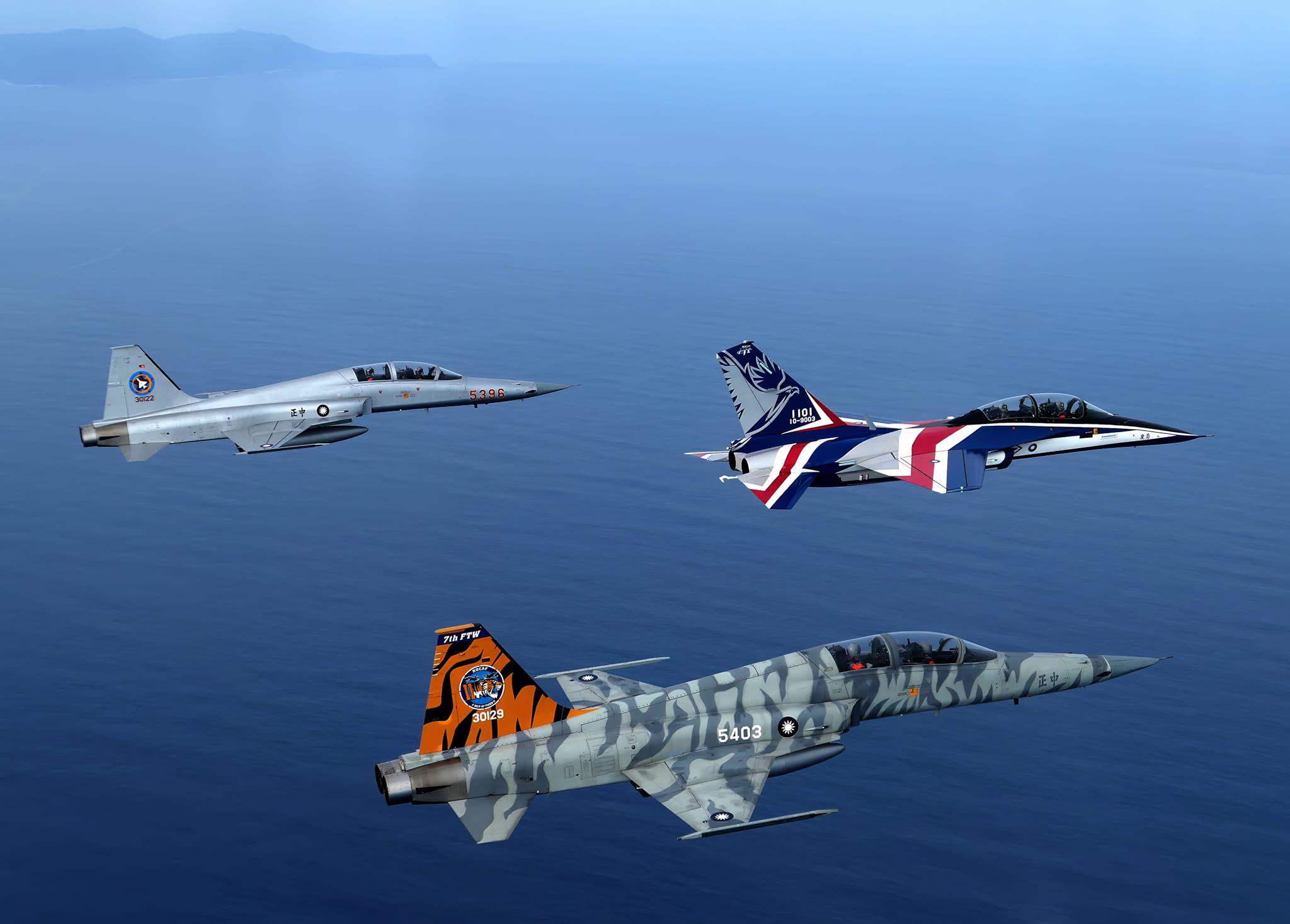
據指出,今年6月20日在美國馬里蘭州安納波利斯(Annapolis)舉行的台美高層對話「蒙特瑞會談」(Monterey Talks)中,美方主動向我方說明,為強化我中低空防空系統的戰力,同意出售由挪威康斯堡防衛與航太公司(Kongsberg Defence and Aerospace)和美國雷神公司合作推出的「國家先進防空系統」(NASAMS)的第三型改良;因中科院陸射劍二防空系統提供陸軍做為野戰防空系統,目前生產線已飽額,而空軍急需提升東部佳山與台東基地,以及台北等機場的中低空防空系統的防衛能量,經政府高層同意後,空軍重啟「天隼二號」專案,並於8月底赴美進行訪商與現地勘察防空系統運作等各項作業,返台後已著手進行武器獲得建案需求文件的撰寫,在年底前提出整體獲得規劃書後,排入2024年的國防預算中。這次美方同意出售的NASAMS防空系統,也是美國現役部署在華盛頓特區周圍,用來保衛首都空域的利器。該系統最初是以結合MPQ-64「哨兵」雷達及AIM-120先進中程空對空飛彈(AMRAAM)為基礎開發的陸基版本,射程可達25公里,高度範圍可達 14-15公里。NASAMS系統第二和第三型改良版陸續加入了Link 16的軍事網路連線功能,並能選擇使用AIM-9X Block II型「響尾蛇」(Sidewinder)飛彈、德製IRIS-T短程防空飛彈,或是AMRAAM增程版(ER)等不同彈種。

If this report is accurate, that the US will sell more than four batteries of the NASAMS to Taiwan Republic for Taipei, Hualien, Taitung, and CCK Air bases, the system itself is fine. Two things to note. Taiwan’s domestic military production has a technological and a production bottleneck. I am worried about the Chinese communist’s ability to infiltrate critical information on Taiwan-developed weapons. What Taiwan’s domestic weapons development has lacked, and this is related to the unsteady and contradictory US policies, is the ability to focus on systems and platforms where Taiwan has the most technological advantage, and leave the other systems to imports. A cursory review of what Taiwan has tried to domestically develop over the last two decades shows a catalog of everything and anything – many items, advanced torpedoes, and next-generation jet fighters, probably do not make sense; while other items, drones, and unmanned vehicles, guided antitank missiles, long-range counterstrike missiles, could have used more focus and investments.

But then one could and should do the same thing with decades of contradictory American policy. Take a peek at the list of major weapons the US sold to Taiwan for the last few decades and it is difficult to create a coherent national security narrative out of them. The F-16A/B with Sparrow missiles instead of the F-16C/D because? Why the Kidd class destroyers and not AEGIS/VLS destroyers/frigates? Why did the US actively obstruct Taiwan’s attempts to acquire submarines for decades? The underlying mistaken premise – that Chinese communist military ambition can be managed by DC, that if the communists decide to invade and annex Taiwan it will be because Taipei and/or DC “provoked” such a decision, has infused America’s decisions on what weapon systems can be sold to Taiwan. This is where short-range systems like the NASAMS represent that continued mistaken notion from the US – “defensive,” “not provocative,” “short-range/point defense,” – while lacking a consistent strategic and tactical vision. Given limited defense resources in Taiwan, Japan, and the US, do the short-range NASAMS belong in the top ten missiles Taiwan Republic must purchase now? The answer to that depends on the level of strategic clarity and commitment the US provides to Taiwan and other democratic allies in this region. 28.9.2022

© Taiwan in World History 台灣與世界歷史. This site grants open access for educational and not-for-profit use. Maps and illustrations are borrowed under educational and not-for-profit fair use. If you are the rights holder and prefer to not have your work shared, please email TaiwanWorldHistory (at) Gmail (dot) com and the content will be removed.
Leave a comment

Filed under Taiwan Republic

Deterring war with counterstrike capability for Taiwan and Japan: Geostrategery and world history classrooms

After an earlier post on Taiwanese and Japanese counterstrike capabilities, a student emailed with questions. Here are my explanations and clarifications. In this analysis let’s separate the strategic from the tactical. The strategic objective for any democracy – Taiwan Republic, Japan, Ukraine, Poland – is to avoid war without surrendering democratic sovereignty and independence. The strategic cost of a democracy not having counterstrike capacity is sadly being played out in Ukraine – where the invading belligerent can lob long-range missiles at any location inside Ukraine, yet residents of Moscow can go on their business as if they did not start a war of annexation. It has also forced the Ukrainians to tolerate the democratic West offering weapons with an eyedrop – in pace, in quantity, in quality since 2014. The democratic west is even able to impose the unreasonable and irrational rule that the Russians can hit Ukraine, but Ukraine may not strike targets inside Russia.

On the tactical. Japan’s current inability to strike at any targets in communist China means that when the Chinese communists hit at strategic Japanese installations, at best Japan could take defensive measures, but must rely on the US to prevent the sources of attack from perpetuating the violence. Meaning, that in any conflict where one side is artificially forced to not have counterstrike capabilities, the conflict always lasts longer – there is no incentive for the Russians to stop; there will not be an incentive for the Chinese communists to change course. Worse, it means convenient and comfortable Chinese military bases to strike Japan will all be available to Beijing – and Tokyo must rely on a US POTUS to not get weak at his knees and to act.

How many democratically elected leaders of any nation would voluntarily allow her nation’s national security to be contingent on the determination and courage of a foreign leader – even the President of the United States of America? This is also why the labels “hawks” and “doves” or even “peace” and “war” as used among western academia and officialdom and press are meaningless. Before February 24 not one soul in democratic Kyiv wanted war, hawkish or not. Ukraine did nothing to provoke, unless you, like some western enlightened believe, by merely breathing and existing Ukraine was provoking an attack. The unfortunate situation Ukraine found itself in was being forced by western powers to be under armed. Not coincidentally, the same western policymakers who ensured Ukraine was weak enough to look attractive to Moscow to attack are the same who have tried to sabotage Taiwan’s ability to counterstrike and be fully armed for decades. Japan is a great nation and a regional-multiregional power. It cannot and must not remain without the ability to strike at the sources of thousands of Chinese communist ballistic missiles aimed at Japan and its democratic allies. This is why I keep predicting, that not only will the Japanese double their military, we will see full-sized carriers, tactical and strategic nuclear-capable missiles, and Japanese officers returning to Taiwan Republic very soon. 5.8.2022

© Taiwan in World History 台灣與世界歷史. This site grants open access for educational and not-for-profit use. Maps and illustrations are borrowed under educational and not-for-profit fair use. If you are the rights holder and prefer to not have your work shared, please email TaiwanWorldHistory (at) Gmail (dot) com and the content will be removed.
Leave a comment

Filed under Uncategorized