Tag Archives: world history

Reviews. 華麗計程車行 A Wonderful Journey

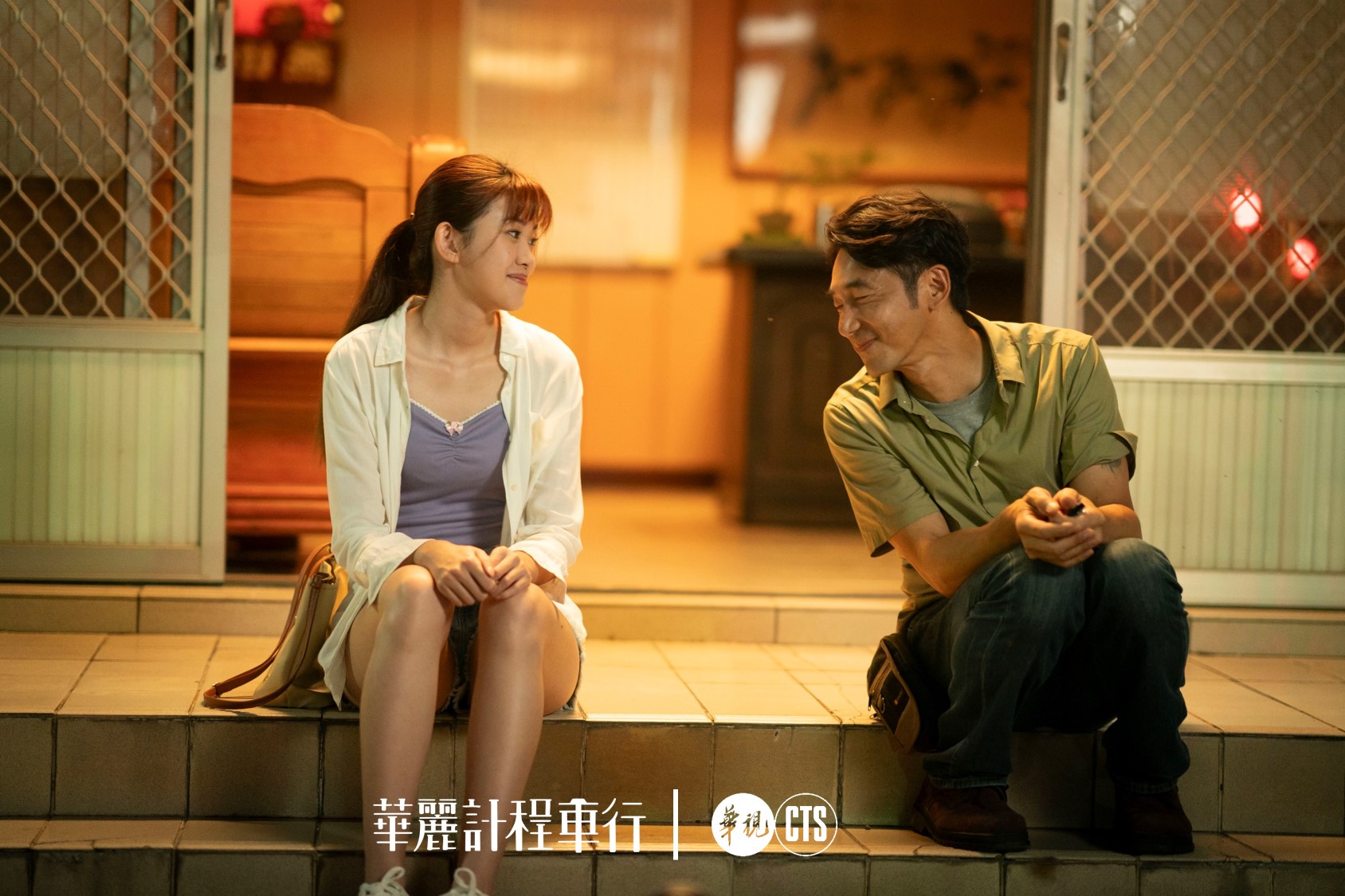
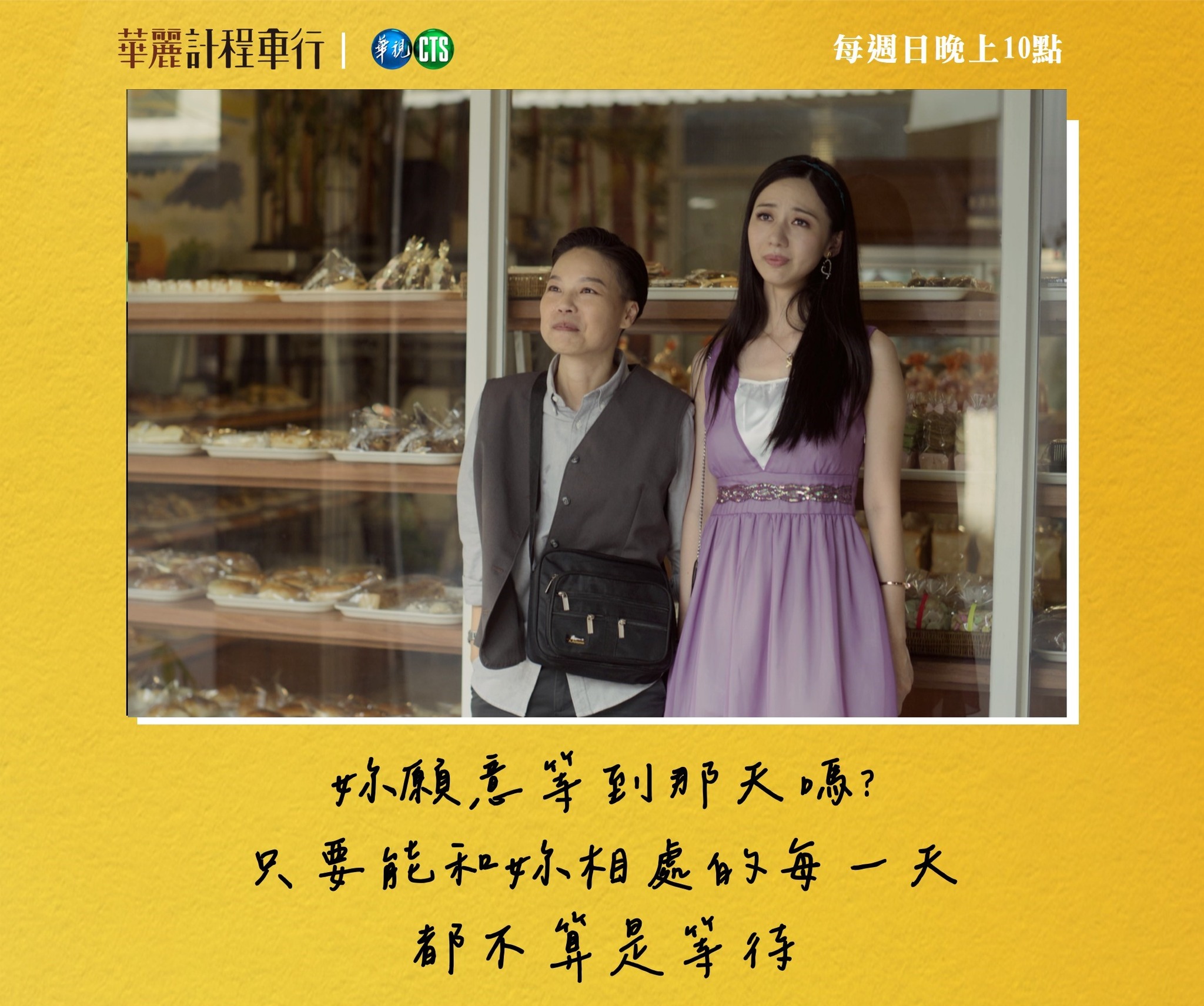
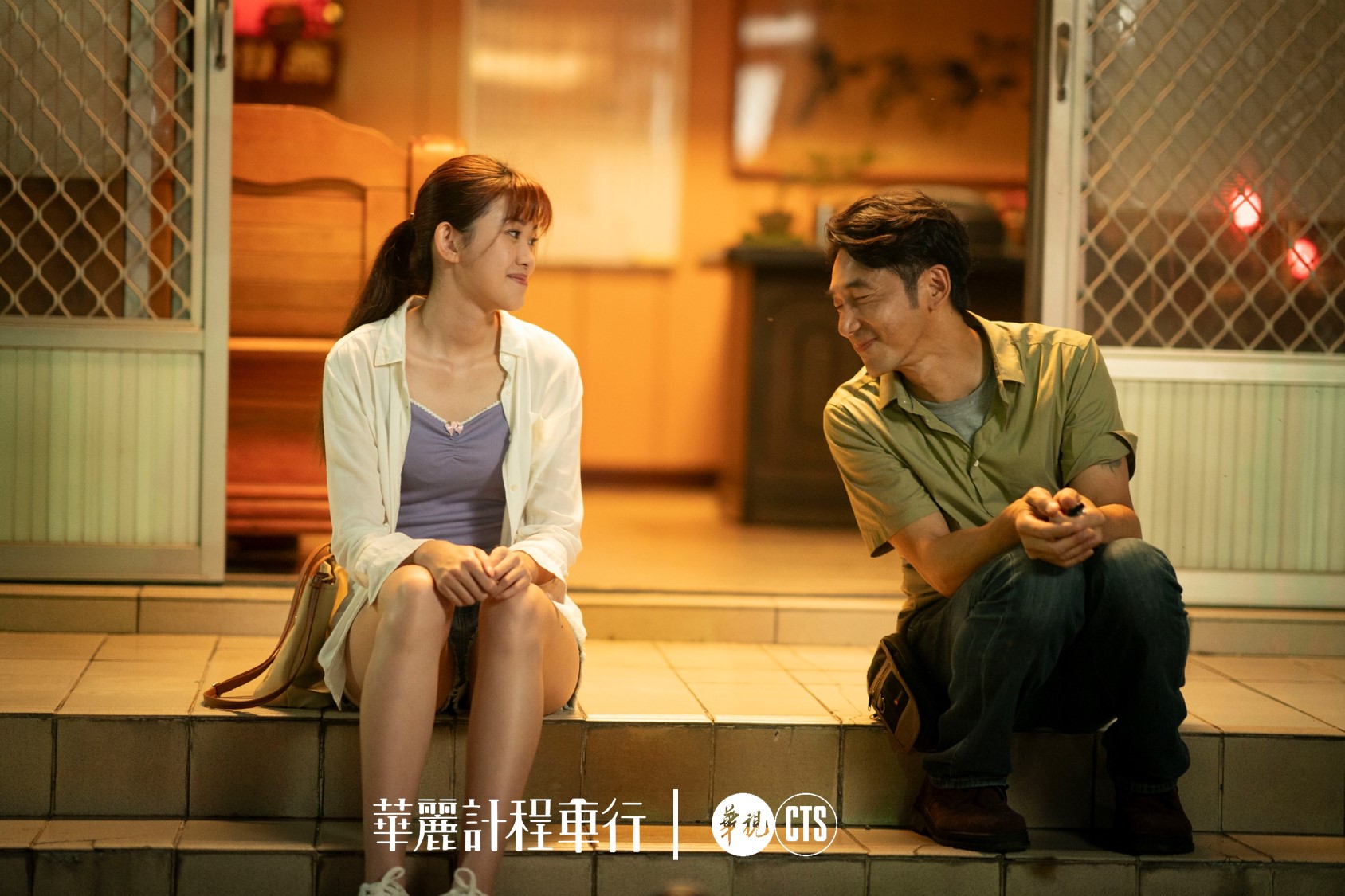
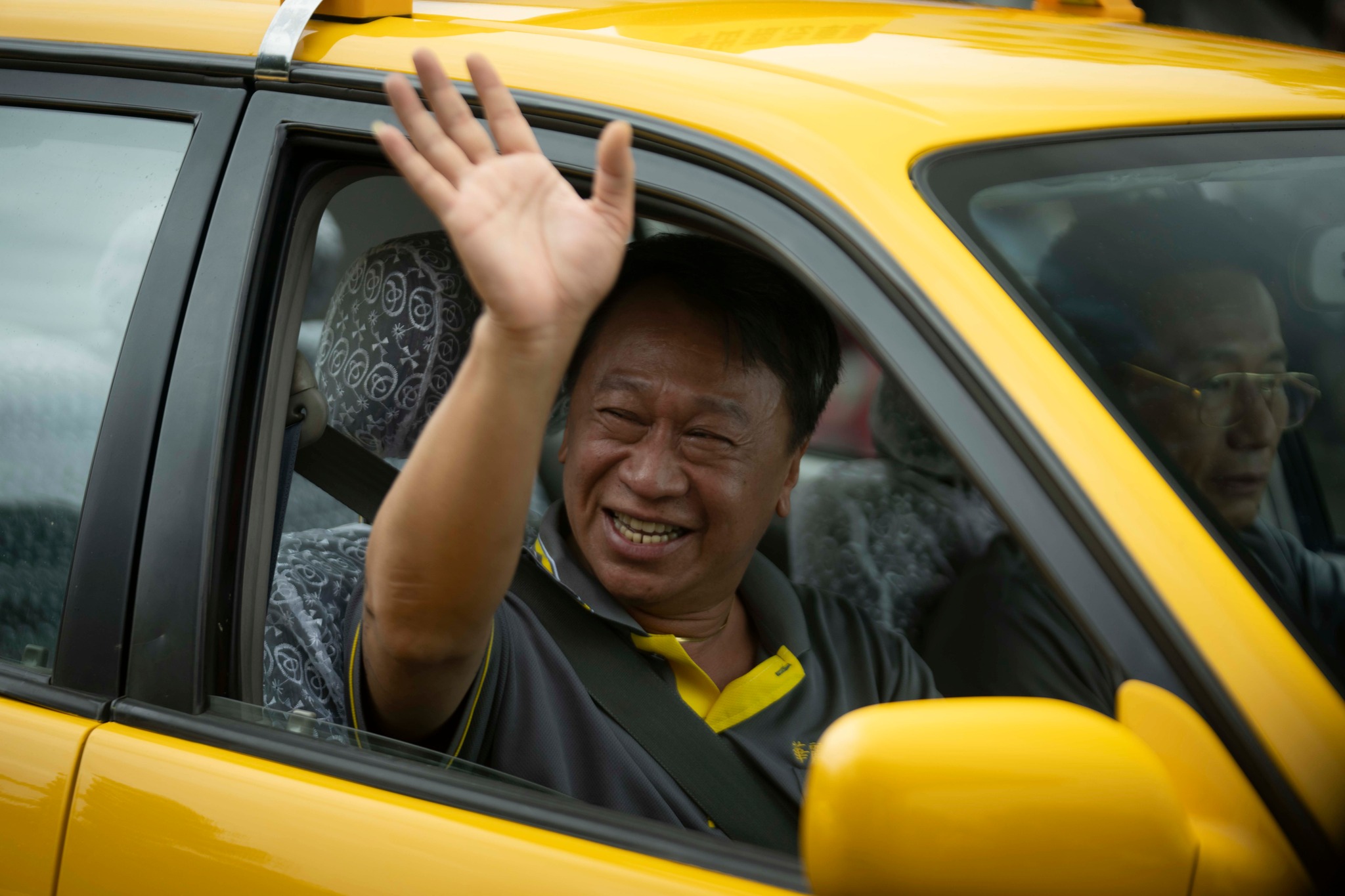
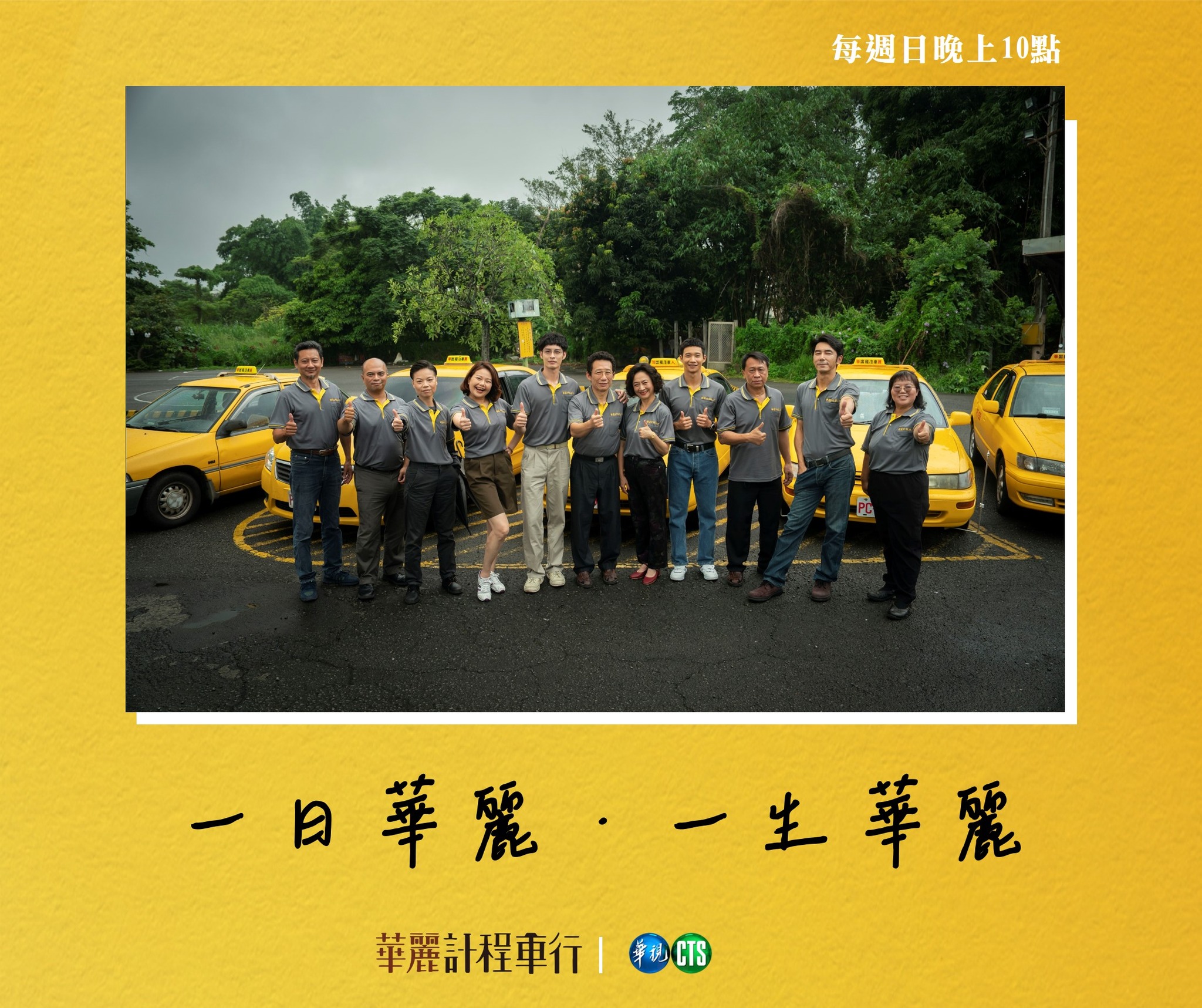
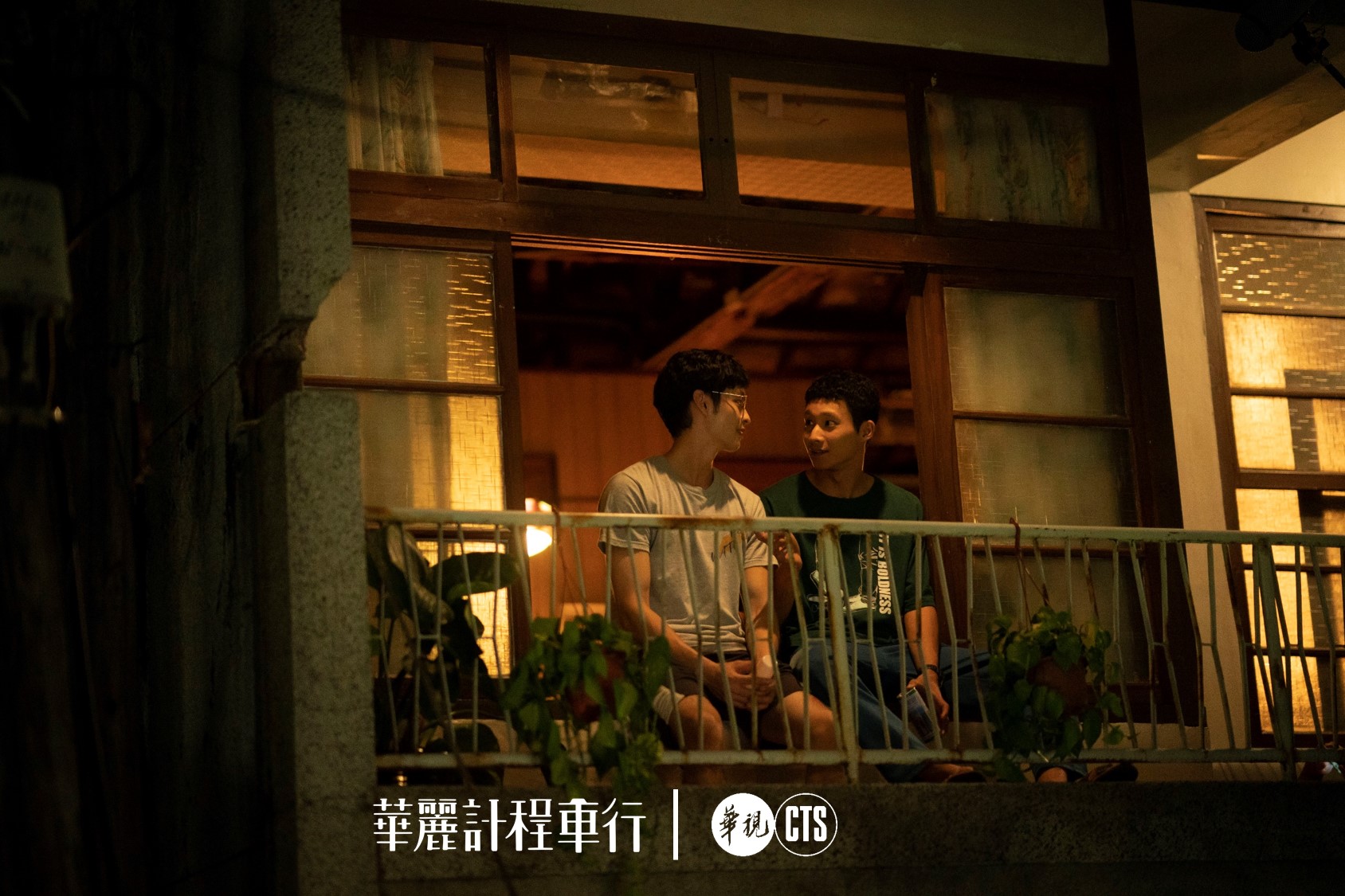
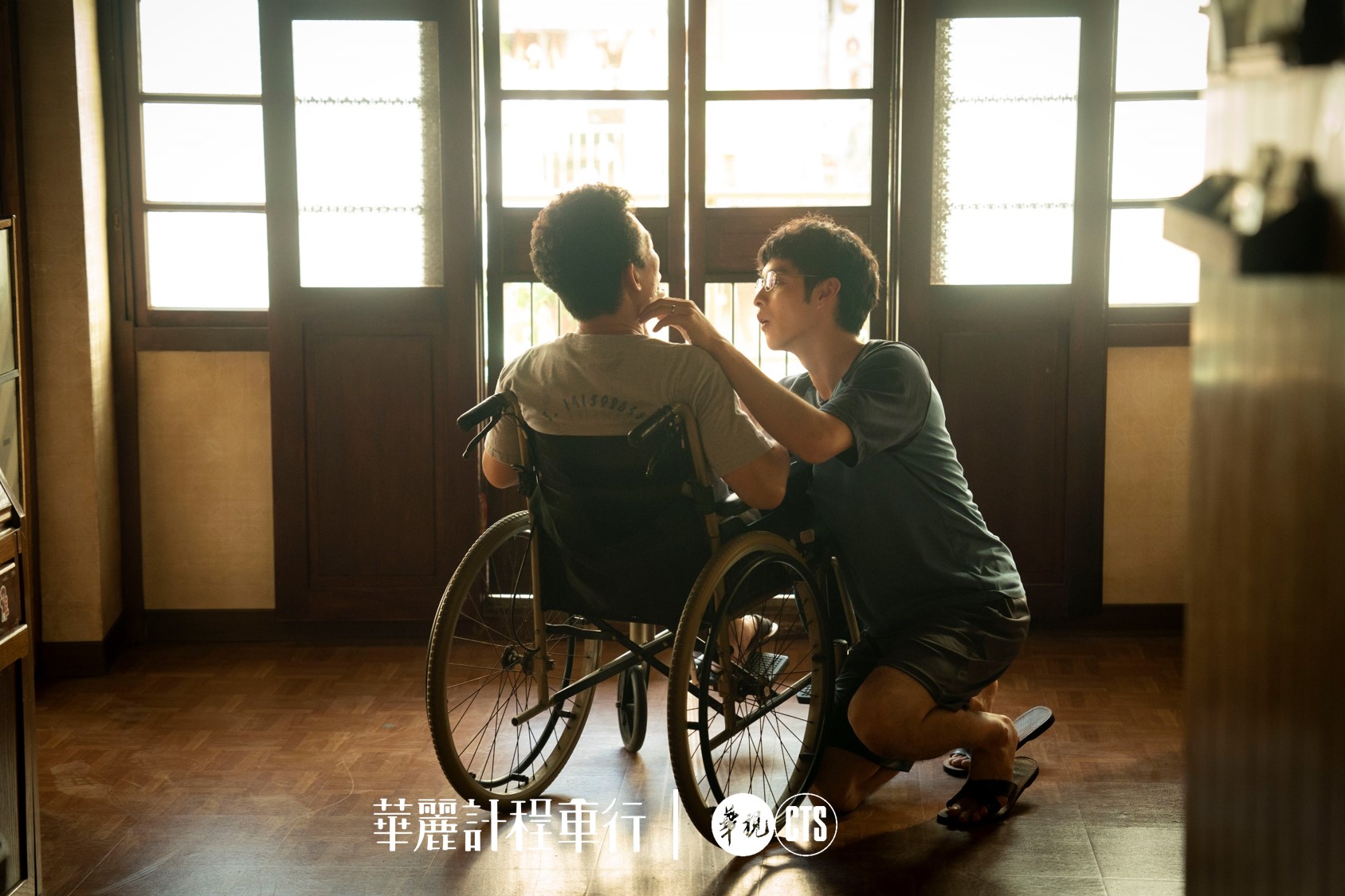
National identity and popular culture classrooms. Reviews. 華麗計程車行 A Wonderful Journey, [Netflix]. Ten episodes is a wonderful disciplining tool for storytelling. This Taiwanese tee vee show – based in the historic southern Taiwanese city of Chiayi, the third such Taiwanese show in recent months – is based on a small Taiwanese family-run taxi company. Part coming of age, part that slice of modern Taiwanese history, part about Taiwan outside of Chinese Taipei colonialist core, part sketches of rural, small town, paycheck-to-paycheck working folks. Impossible to not compare a sentimental show like this to the gold standard, 俗女養成記 The Making of an Ordinary Woman. Ordinary Woman was a near-perfect show, Wonderful Journey is weaker – though compared with what one might ordinarily find on US and Taiwanese channels and Netflix, it is an above-average show. While Ordinary Woman tightly organized the storylines around the lead character and her family, what surprised me the most about Wonderful Journey is in how the stories about the protagonist/narrator, family, and taxi company – though not unimportant, were not as impressive as the middling/later episodes which individually sketched the ”side” characters. Most moving and memorable are the two episodes focusing on the driver instructor/mechanic and his budding relationship with a KTV/bar lady – and the episode describing the death of the narrator’s dad’s best friend/long-time taxi driver – just those two episodes cost me several bags of Kleenex. These episodes reminded me of the stories from the Taiwanese film Buddha+ — empathetic, stylized, a clear-eyed look at the Taiwanese working poor – and how the meaning and dignity of life were represented by different characters. As with many of these shows, some of the best moments were the mini sketches between characters – the two brothers, and the taxi drivers, reminiscent of the scenes of Buddha Minus where old friends played cards and chatted. Returning to the comparisons between Wonderful Journey and Ordinary Woman – Wonderful Journey is not nearly as funny, or moving, or ‘real’ – some of the dialogue struck me as stiff and unlikely to be spoken in the real world. While both shows are heartfelt and earnest, Wonderful Journey often fell into sentimentalism-sap – whereas the imperfection of life and the need to still get up each morning even though life sucks was shown by Ordinary Woman in a funny, creative, non-cynical way. Too often as lesser shows lean on – Wonderful Journey resorted to speech-making instead of trusting the audience to understand the complexities of what these characters are enduring. This is particularly so for the conventional rainbow unicorn all lose ends tied up final episode – as my old writing mentors repeated, show don’t tell. It is impossible for me to not return to the politics of languages and national identity in these Taiwanese shows. When the China KMT colonized Taiwan in 1945 and fled to Taiwan in 1949, the Mandarin they brought became the “national language” and the many languages spoken by residents of Taiwan became “dialects.” One of the many consequences of this foreign-imposed, dictatorship maintenance language policy is a still in-practice conceptual categorization of Taiwan’s popular cultural world – whereas American musicians are pigeonholed into genres/categories, Taiwanese singers and actors and shows are categorized (and valued/devalued) on the basis of languages. Ordinary Woman was extraordinary and unusual as a Taiwanese show in that it successfully challenged the language rules created by the Chinese colonialists – wherein either a show is a “national language show,” or it is a “Taiwanese dialect show,” – an extraordinary amount of beautiful Taiwanese was spoken in Ordinary Woman without one feeling as if it was an overcorrection, whereas Mandarin made appearances when it was natural. Wonderful Journey tried to straddle the politics of languages-national identity – the choice of a not-very inspiring Mandarin ballad as an opening theme song, where how languages of this period in that locality are not as nearly thoughtfully crafted. And this part perhaps is simply the budget. Unlike the long-running Taiwanese soap Uncle, also located in Chiayi, it is kind of remarkable to have a show located in Chiayi with taxi cabs as the main theme and to see/know so little of this important southern Taiwanese city. 15.4.2024

© Taiwan in World History 台灣與世界歷史. This site grants open access for educational and not-for-profit use. Maps and illustrations are borrowed under educational and not-for-profit fair use. If you are the rights holder and prefer not to have your work shared, please email TaiwanWorldHistory (at) Gmail (dot) com and the content will be removed.
Leave a comment

Filed under books and artifacts

白沙屯媽祖 and this emerging Taiwanese national identity

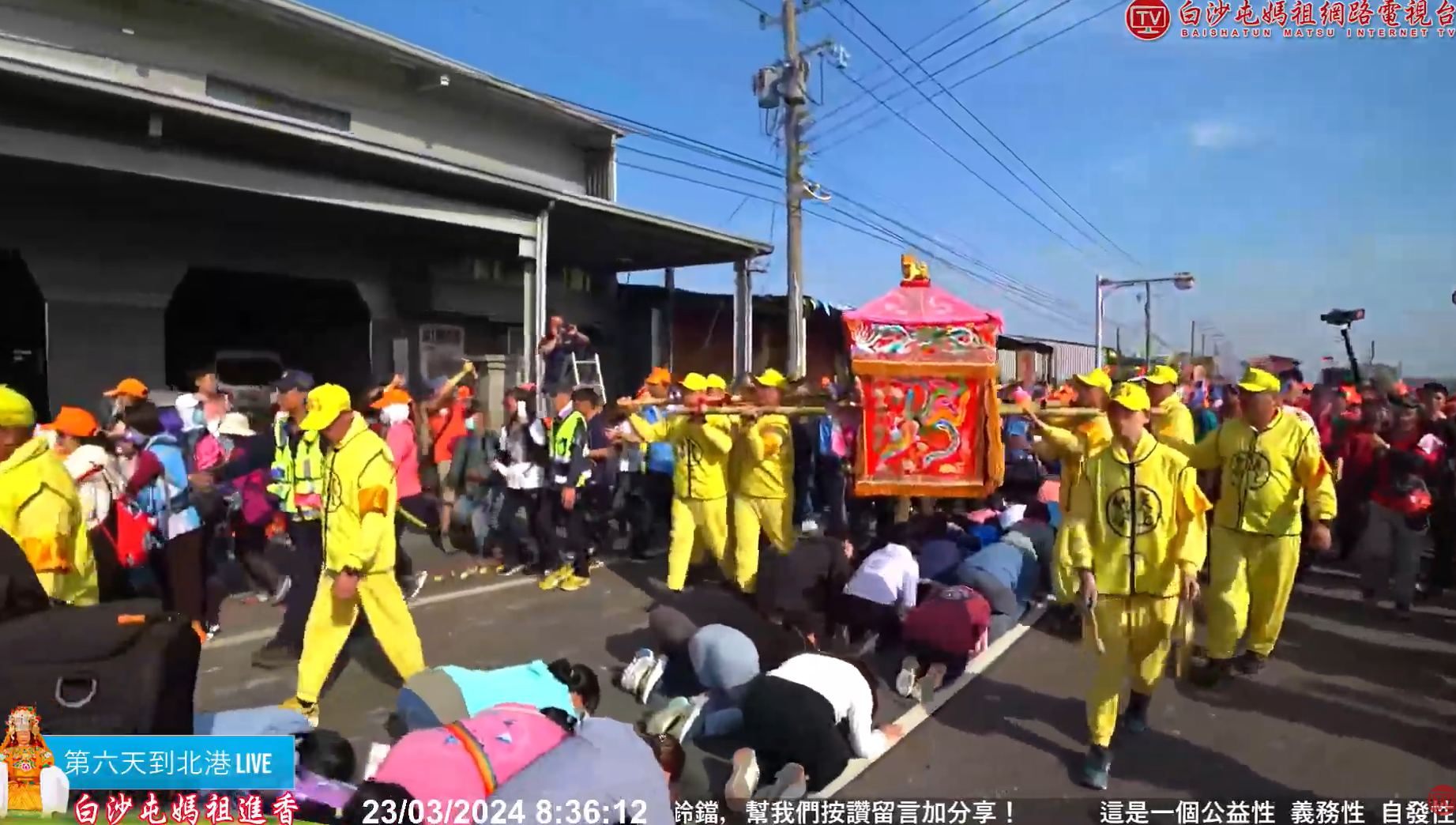
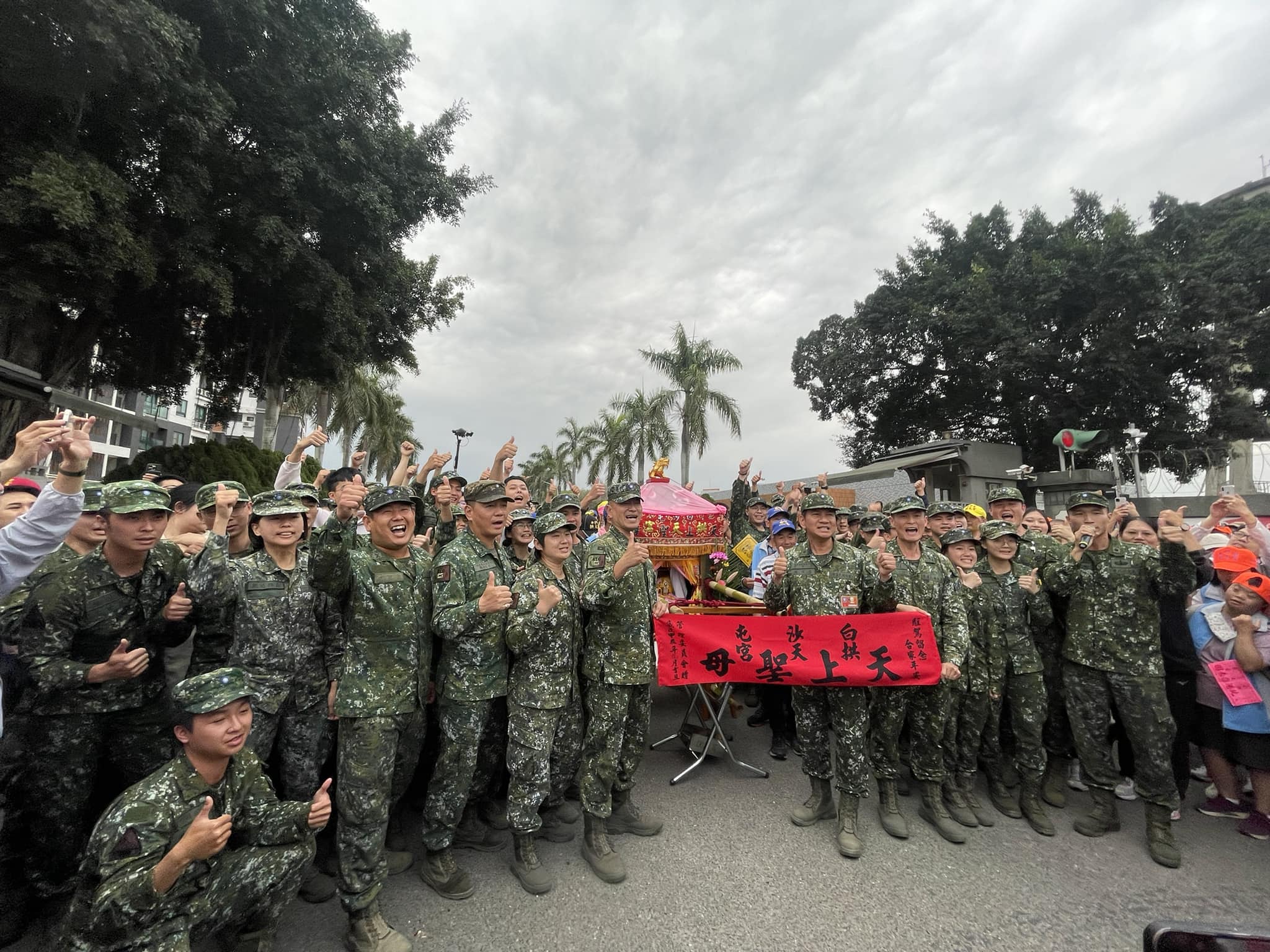
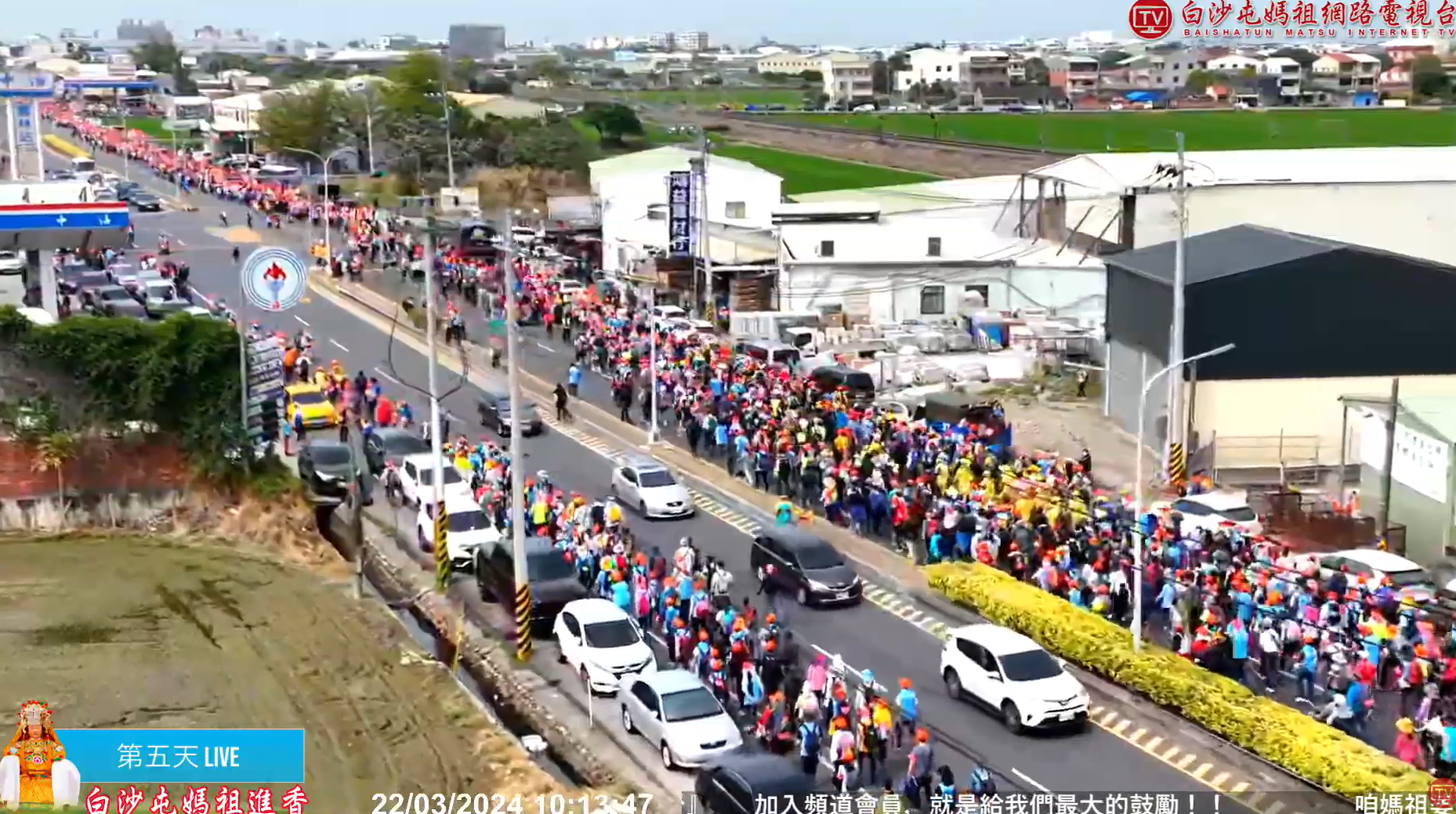
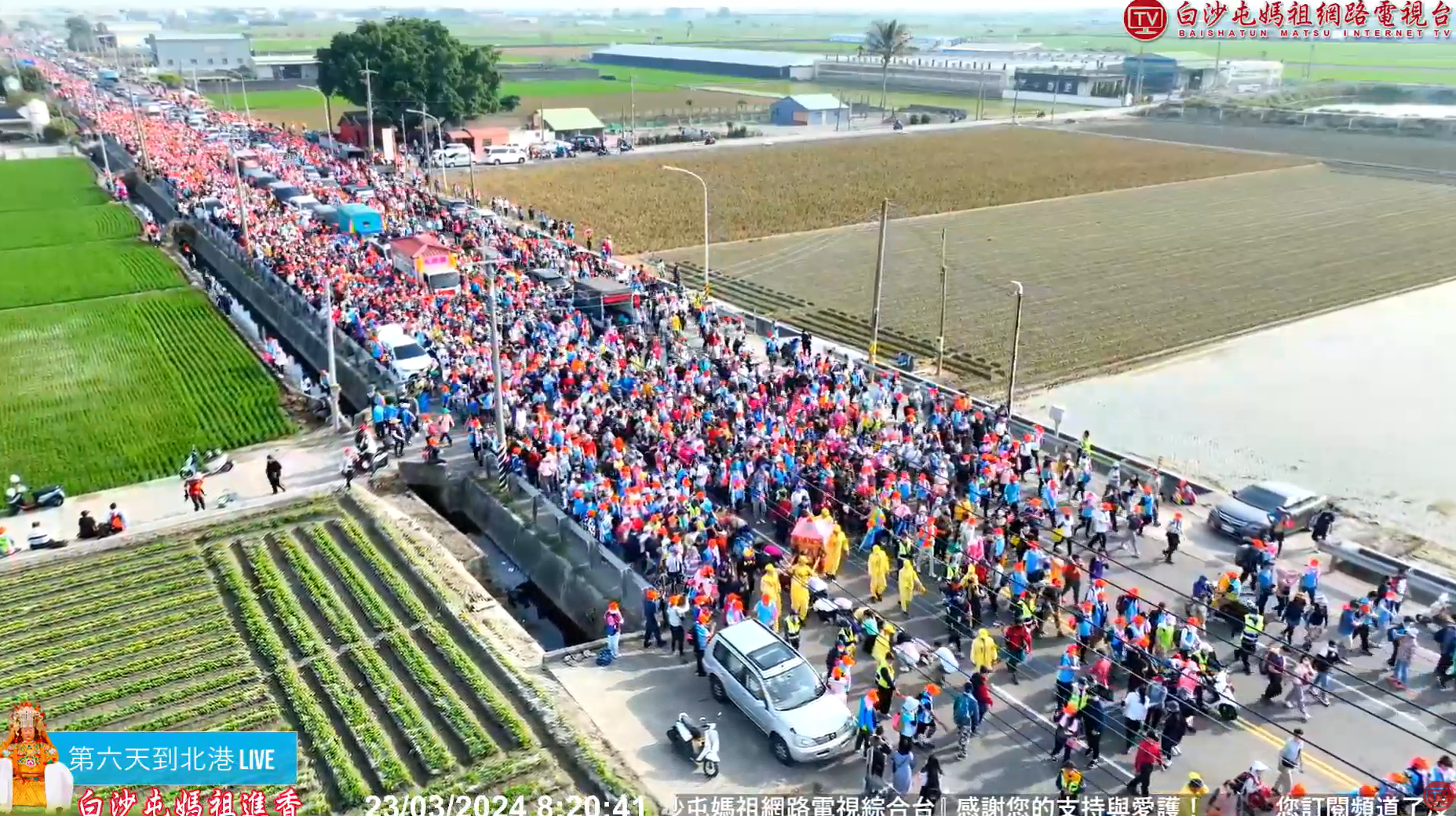
白沙屯媽祖National identity and world history classrooms. This emerging Taiwanese national identity. If a language is a dialect with an army (nifty idea, I would caution that one should be careful trying to universalize such an idea) – then is a religion a cult with an army? All of my classes have a religion/ritual component because it is so fundamental to understanding human behavior. What I have found with American students is a general impatience and naive optimism about knowing the boundary between “religion” and “cult” – in the same way that they tend to jump the gun on discerning the unstable boundary between education, information, and propaganda. In my familial life, it’s been interesting to ponder my highly educated Taiwanese parents as a microcosm of Taiwan’s complex social-political history. In behavior, they are modified traditionalists. Dad dislikes burning paper money and incense; mom is duty-bound because ancestor worshipping got handed to her by my paternal grandma. Yet ideologically, due to the China KMT’s campaign to de-Taiwanese Taiwan – a decades-long cultural genocide campaign to erase Taiwanese identity during their colonial occupation – my parents reflexively refer to Taiwanese religion(s) as backward, superstitious, and/or corrupt. Mom has spent decades hilariously trying to get my brother and me to become Christians – a status religion of the Chinese Taipei/China KMT – and whenever I ask her why she thinks a Middle Eastern/European God is superior to the Goddesses and Gods of Taiwan, she is unable to give me an answer. I have watched and studied this Mazu’s pilgrimage with great interest. The element I am most interested in is the emerging Taiwanese national identity; how the past is evolving into the present and future (This Goddess has a YouTube channel and a GPS APP ….); and the national discourse around the events. That a commander of a Taiwan army base – the army of all branches! – would welcome the Goddess in eloquent Taiwanese has sparked a social media debate. How dare Taiwanese speak Taiwanese to their Goddess, the Chinese sky dragon occupiers shriek. I am reminded of a session of World History I taught years ago when I tried to explain the nature of faith and why “superstition” is such a problematic idea when applied unthinkingly – all religions are human invented and sustained by human choices – hence all religions have the capacity for good, and cult-like bad behavior. Using myself as an example I explained why I believe that every person I meet has a reason – there is something I am to learn from them, these are not chance encounters. A very polite student asked me to prove this – and we had a great class discussion about the nature of believing versus proving. Can you, should you, try to prove that your spouse is your “soulmate” (not a fan of that term)? I would advise not. Other notes about watching the Goddess Mazu’s YouTube and studying social media posts. My favorite idea is that the Goddess does not change your fate, she offers you comfort and confidence to face challenges. The live feed gives me many glimpses of Taiwan outside of Chinese Taipei which I am far more familiar with. All of the grandparents and parents standing behind kids too young to hold incense and bai-bai to Mazu as she goes by – that reminds me a lot of my Neihu Grandma and me as a kid. I knew Grandma chatted with the Goddesses and Gods because in that position you hear the conversation intimately. The old people in wheelchairs and how high the volunteers must hold up the Goddess, and the folks holding the clothing of their loved ones – perhaps too ill to come out, maybe hospitalized or missing – bring back memories and are deeply moving. As a historian, I always ask students to imagine something like this pilgrimage for say someone 150 years ago – no tee vee, no radio, no newspaper, no formal education – the pomp, the sounds, the faith that Goddess Mazu is directing her route, the miracles small and big along the route, the impressive mass of pilgrims, the design of Her flag. Sure, we can arrogantly dismiss this as superstition. As I have watched the last six days, what I see is a psychologist, a social worker, a grief counselor, a neighbor, a good listener friend embodied in the Goddess Mazu – back a century ago, in impoverished, difficult communities when many such resources would be unthinkable. The fabric of these diverse Taiwanese localities, knit together by faith and historical memories, pageants and rituals, as a new and democratic island republic emerges. 22.3.2024

© Taiwan in World History 台灣與世界歷史. This site grants open access for educational and not-for-profit use. Maps and illustrations are borrowed under educational and not-for-profit fair use. If you are the rights holder and prefer not to have your work shared, please email TaiwanWorldHistory (at) Gmail (dot) com and the content will be removed.
Leave a comment

Filed under Taiwan Republic

Repairing a fragmenting world order

Geostrategery and world history classrooms.

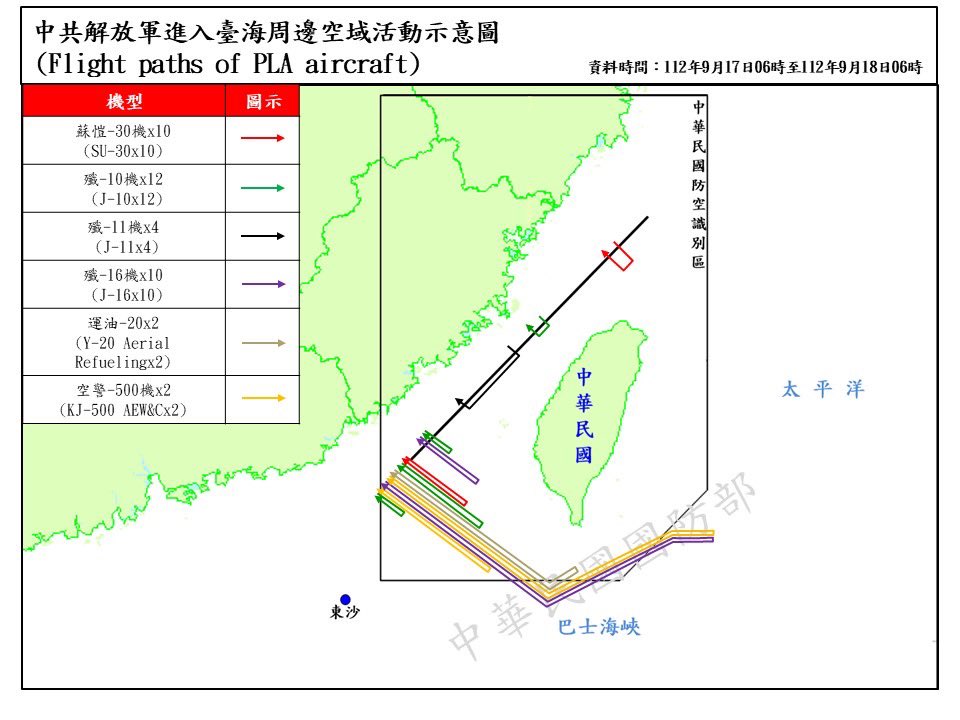
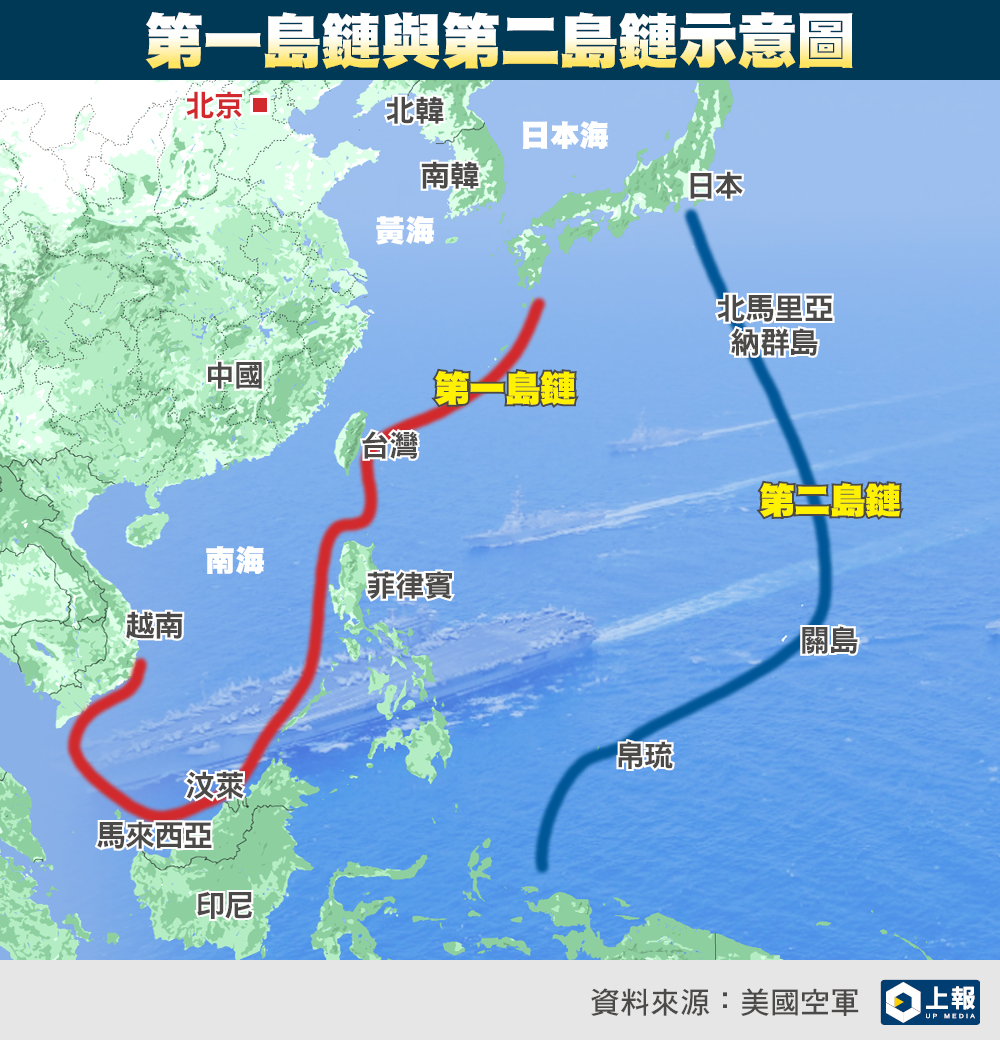
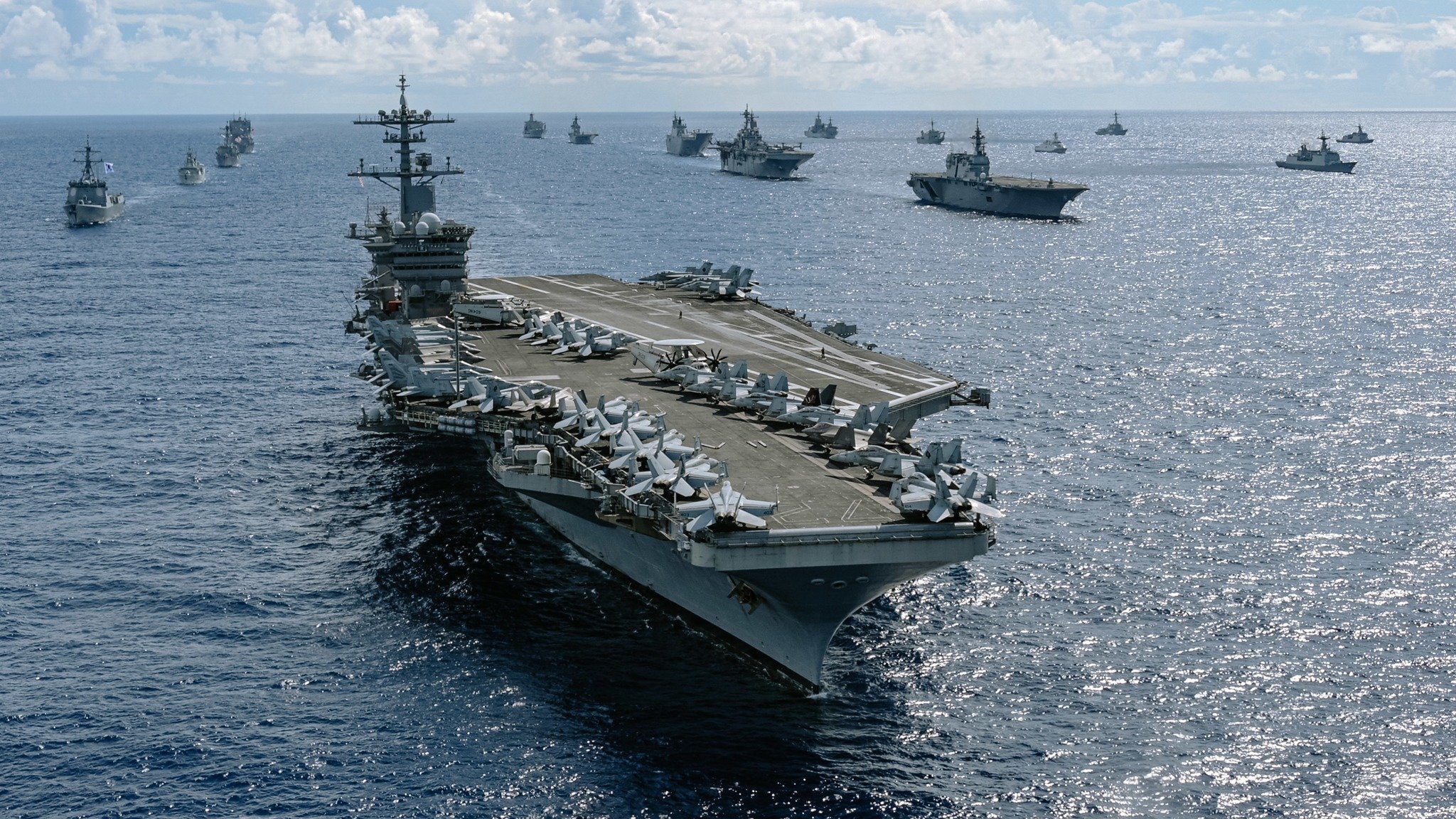
Some analysts will continue to focus on Taiwan — semiconductors, alleged national humiliation, etc. etc …. The narrative is: if we “give” democratic Taiwan to the Chinese communists, there will be world peace. Thankfully many national policymakers are not this misguided. I have been watching closely the US-Philippines, Japan-Philippines, and US/Japan-Vietnam/ASEAN moves. My theory is this: this is a dangerous moment in world history when one superpower, the US, is in domestic disarray because of the rise of American fascism; while the would-be next superpower, China, has been stillborn — neither powerful enough to create a new Pax Sinica; nor small enough to not do major damage as it flails and circles the drain. The main issue is not superficial and myopic like Taiwan-only — though Taiwan is an important piece; or whether we are talking to the Chinese nicely enough. The category of analysis is world order, and the theater of this struggle begins with the South and East Seas, not the Taiwan Strait. Though yes, Taiwan is a key chokepoint between the two seas.

If this is what’s happening, then the US focus on Vietnam and the Philippines makes a ton more sense. I have written previously that the postwar American-invented world order is maritime-based, US Navy-enforced, and focused on free access to global raw material, labor, manufacturing, and markets. A not-quite superpower communist China, reaching into the South and East Seas attempting to “split” the Pacific and Indian Oceans challenges this world order. An American superpower in domestic disarray makes for a dangerous decade ahead. One can “give” democratic Taiwan to the Chinese tomorrow. Hell, one can even “give” democratic Japan (the truth is if Taiwan falls to the communists both Korea and Japan are dead nations walking ….) — it would not change the underlying, structural, global forces at work, no more than if we “give” democratic Ukraine to the Russians. I have been impressed with the complex global alliances the Biden liberal hawks have restored and enhanced. However, the best bet to ensure global stability and avoid a hot world war is to invest in American and global liberal democratic social welfare safety nets — to fund global democratic institutions. Populism-fascism across global liberal democracies will make a world war inevitable. 2.10.2023

© Taiwan in World History 台灣與世界歷史. This site grants open access for educational and not-for-profit use. Maps and illustrations are borrowed under educational and not-for-profit fair use. If you are the rights holder and prefer not to have your work shared, please email TaiwanWorldHistory (at) Gmail (dot) com and the content will be removed.
Leave a comment

Filed under Taiwan Republic

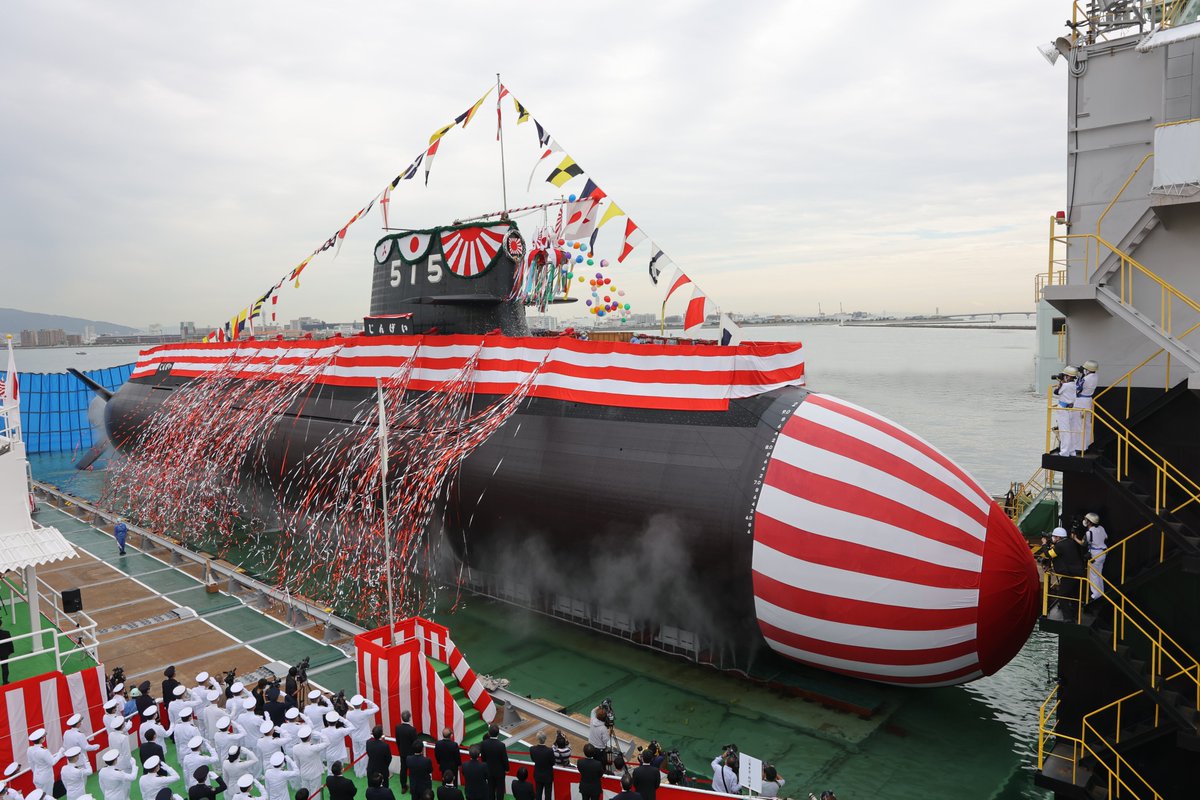
[Taiwanese ‘indigenous’] Submarine prototype could be ready ahead of schedule – Taipei Times Geostrategery and Taiwan Republic 台灣国 classrooms

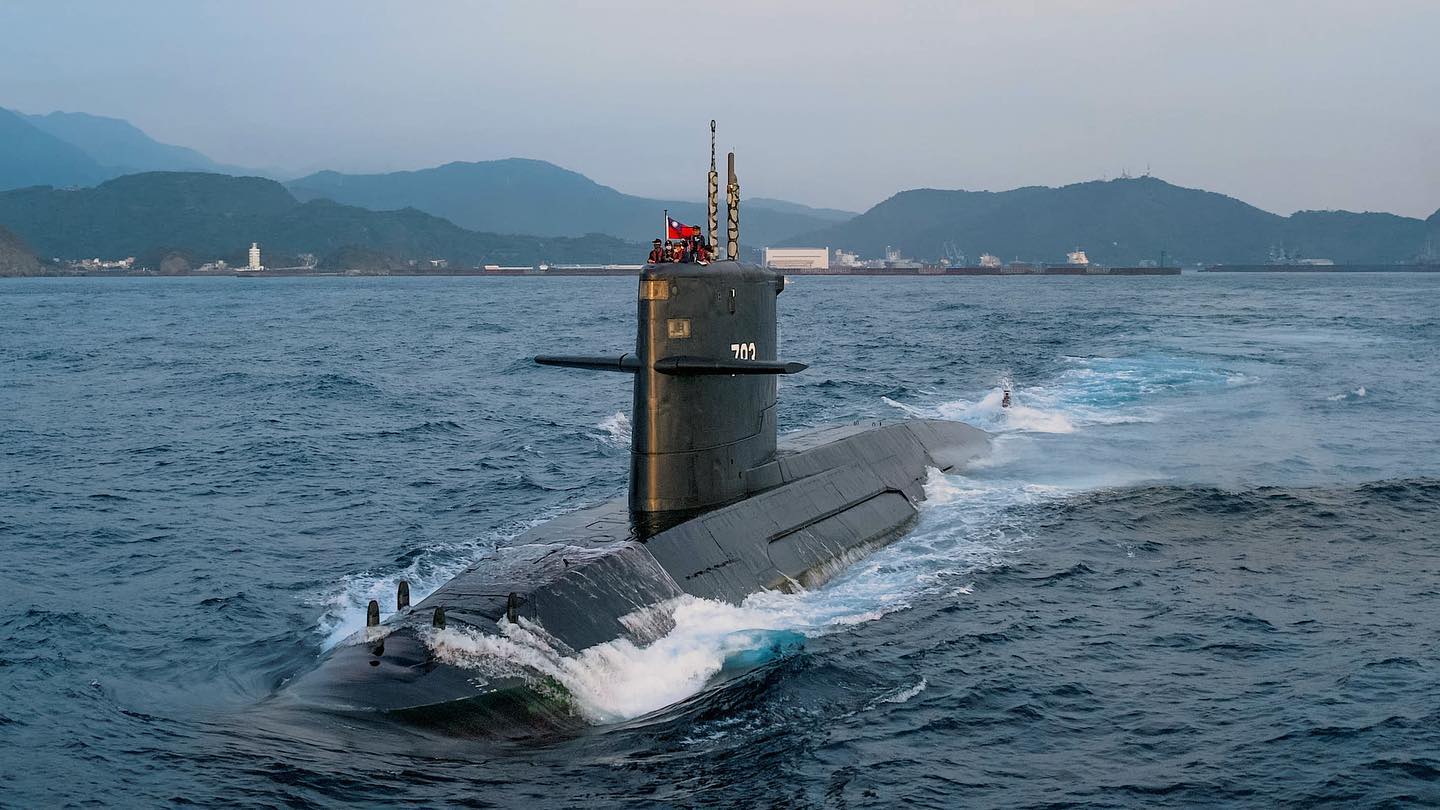
The Indigenous Defense Submarine (IDS) prototype is expected to undergo a harbor acceptance test in September, a sea acceptance test in February next year and, if it passes, be delivered to the navy in the first half of 2025 instead of November 2025, defense officials said yesterday. The goal of the IDS program is to create a fleet of nine to 11 domestic diesel-electric submarines that would defend the waters around Taiwan, the officials said, speaking on condition of anonymity. The boat would be 70m long, 8m wide and 18m high, including the conning tower, and have a displacement of 2,500 tonnes to 3,000 tonnes, the officials said. It would have a pair of stabilizing fins on the sides of the conning tower and an X-shaped tail rudder, they added. The submarine’s weapons would include 18 MK 48 Mod 6 heavyweight torpedoes and an undisclosed number of Harpoon missiles, they said.

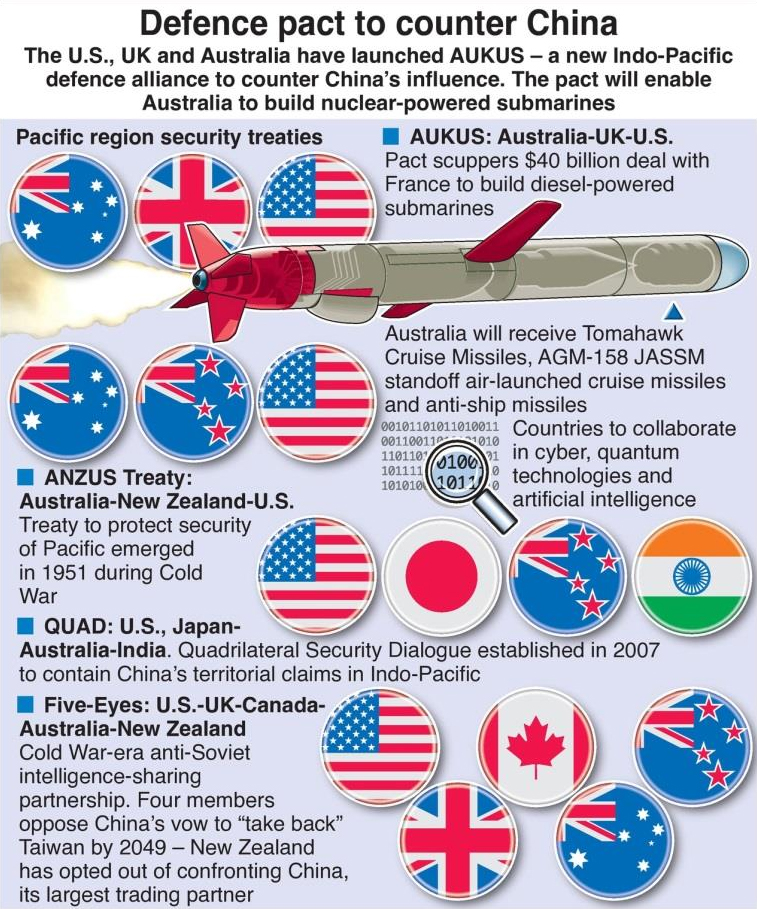
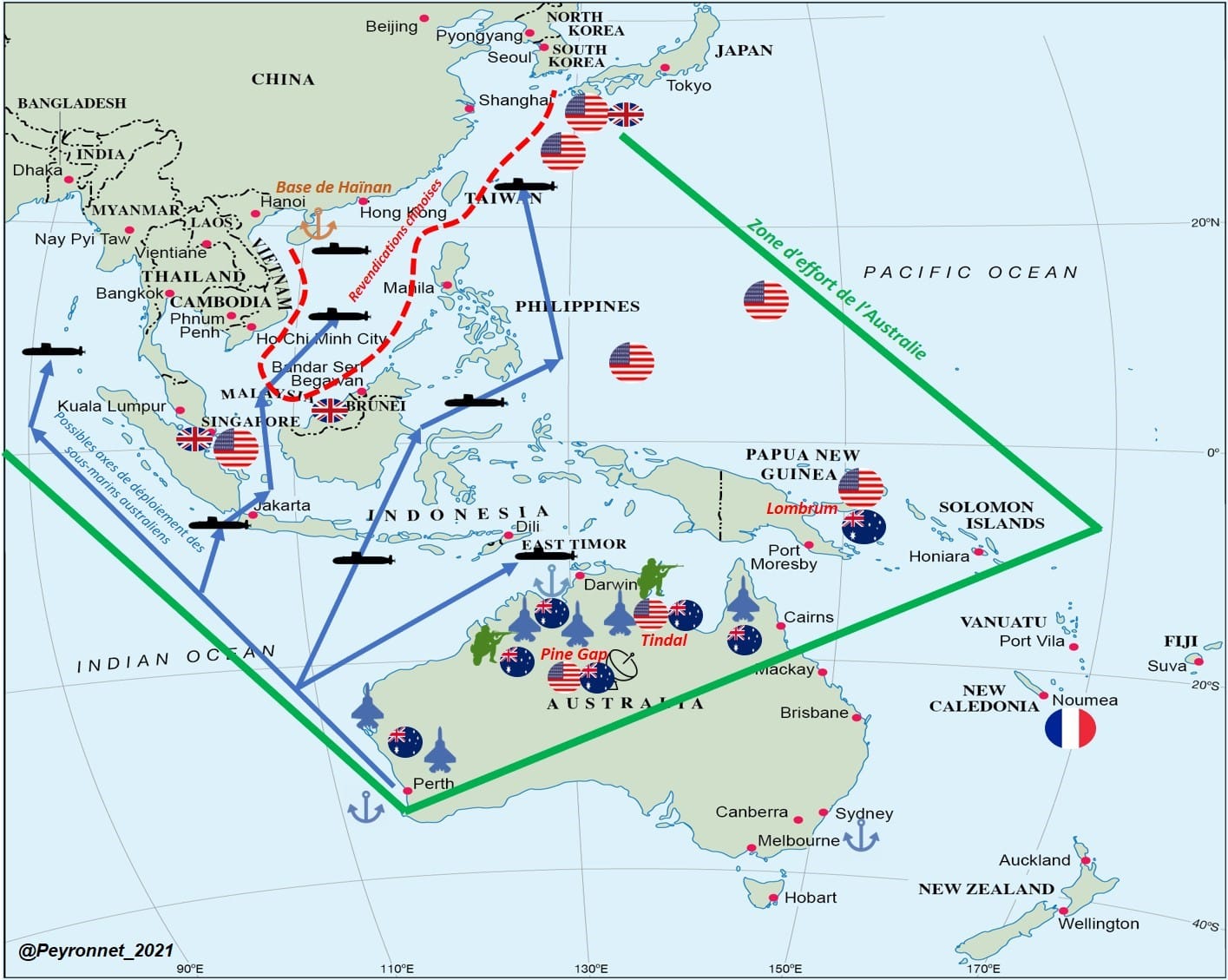
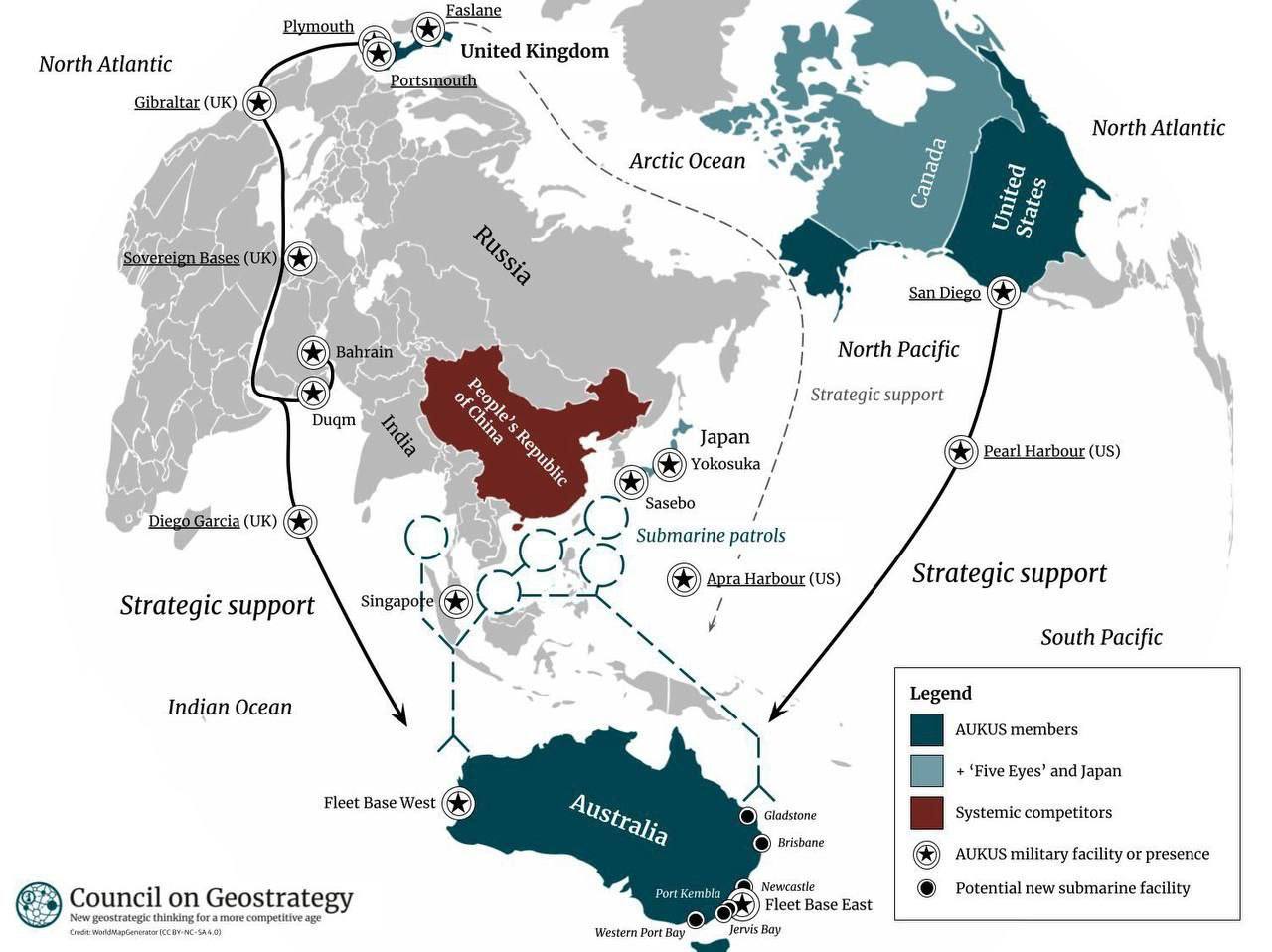
Whether or not this Taiwanese “indigenous” submarine program began as such, it is now best understood as a subset of AUKUS+Japan. Someday someone ought to write a book using the decades of back and forth between Taiwan and the US re: submarines – as a microcosm to illustrate the self-contradictory positions the US has taken regarding the status and future of Taiwan.

For 2023, the key facts are these. Decades of observing major Taiwanese military projects, given the nature of Taiwanese domestic politics and sustained information warfare sponsored by the Chinese Communist Party, I have never witnessed a Taiwanese multinational, complex, major military project that has leaked as little, and, for now, sustained as few charges of graft and irregularities, as this submarine project. During the democratic era of Taiwanese national history, President Tsai is the first democratically elected president who managed significant control over the national security apparatus.

These Taiwanese submarines also reflect a broader change in US-Japan-led vision for the Indo-Pacific – changes in military thinking and the status of Taiwan yes – less commented upon but just as significant as the revolutionary changes in multinational industrial policy. In this perhaps the size of the China Threat coupled with the lessons from Ukraine have finally forced leaders in the global democracies to rethink decades of “neoliberal” orthodoxy – free market, invisible hand, creative destruction – fascinating theories, important forces in world history, but there are realms in public policy, pandemic abatement, public health, national security, where one must sacrifice efficiency for resilience and reliability.

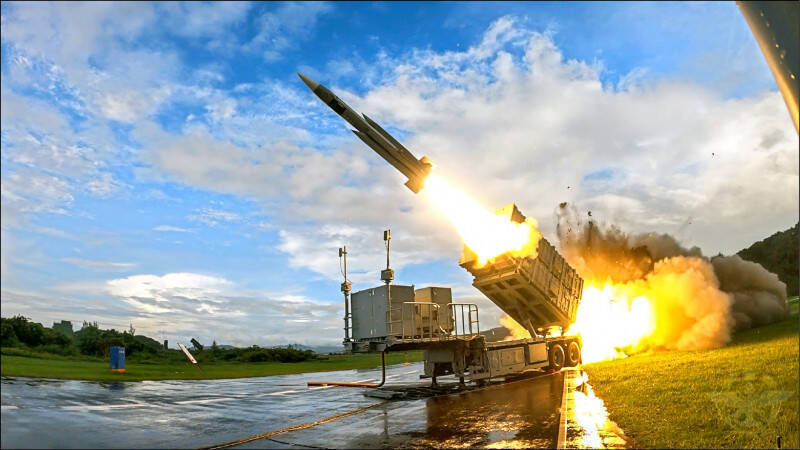
And so, while the AUKUS nucular submarines are the big ticket system to illustrate changes in thinking, many many other systems weave a complex global re-think in national security supply chains. From semiconductors. To HIMARS munitions. To 155mm rounds. To AMRAAMs and Patriots and AGM-158s and Javelins and Stingers and Mk.46s and Mk 48s. Looking for a new balance between national security, and responsibility to shareholders-the market, while ensuring there is enough global manufacturing, storage capacity, and resilience to respond to the challenge China poses. And, related to this overall concept, how to stretch out the R&D and small batch production lifecycle of each weapon, across time and nations, to sustain improvement and capacity while improving global resilience.

Sometime this past week it was reported that it will take the US another five years to increase its annual production rate for its attack submarines from 1.5 per year to 2. Modern wars are industrial wars. This is the weak link among the democracies, as they navigate populism and elections, how to remain democratic yet sustain important, not particularly popular national security public policy projects over the decades. 2.4.2023 Taipei, Taiwan.

© Taiwan in World History 台灣與世界歷史. This site grants open access for educational and not-for-profit use. Maps and illustrations are borrowed under educational and not-for-profit fair use. If you are the rights holder and prefer not to have your work shared, please email TaiwanWorldHistory (at) Gmail (dot) com and the content will be removed.
Leave a comment

Filed under Taiwan Republic

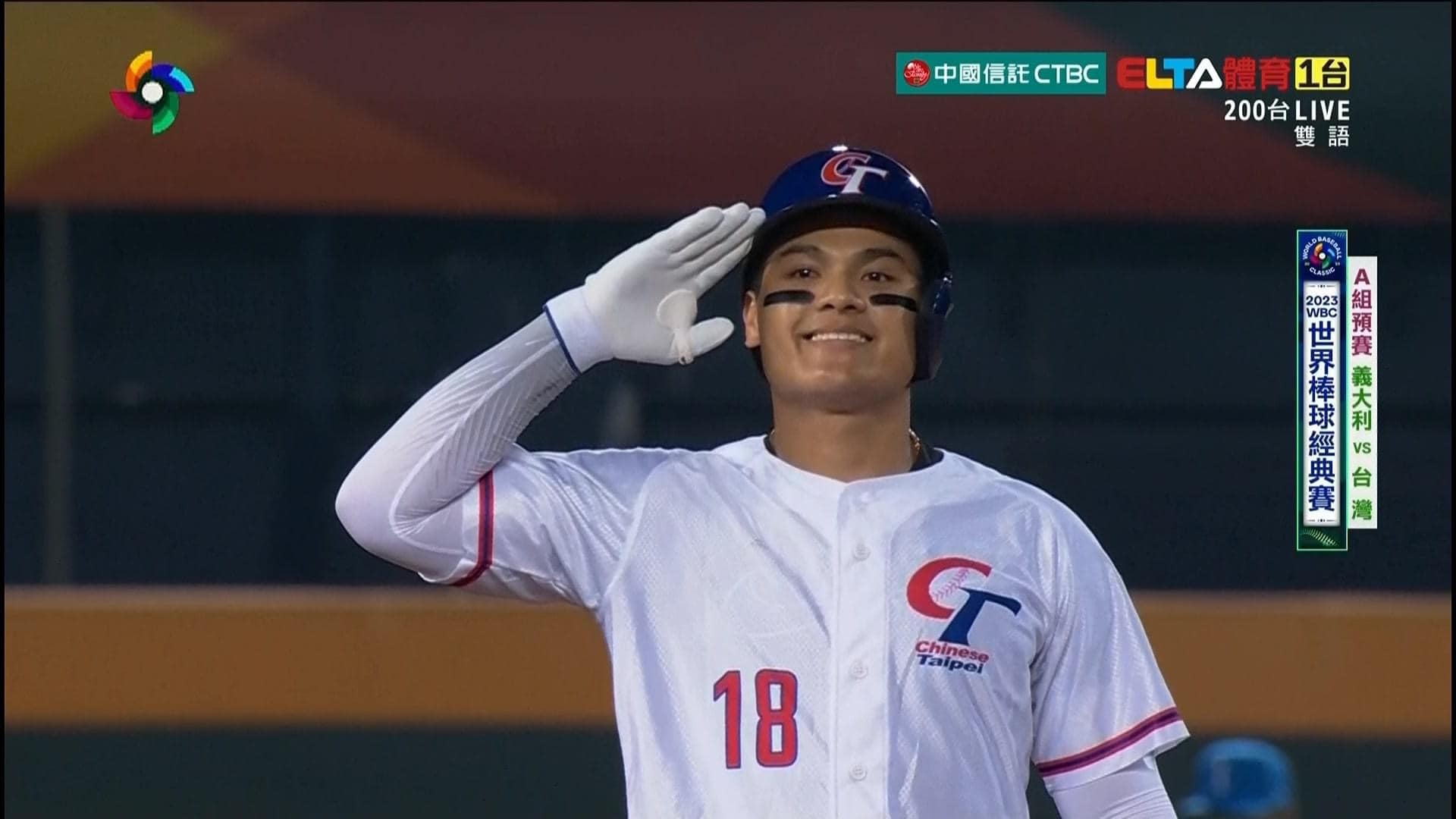
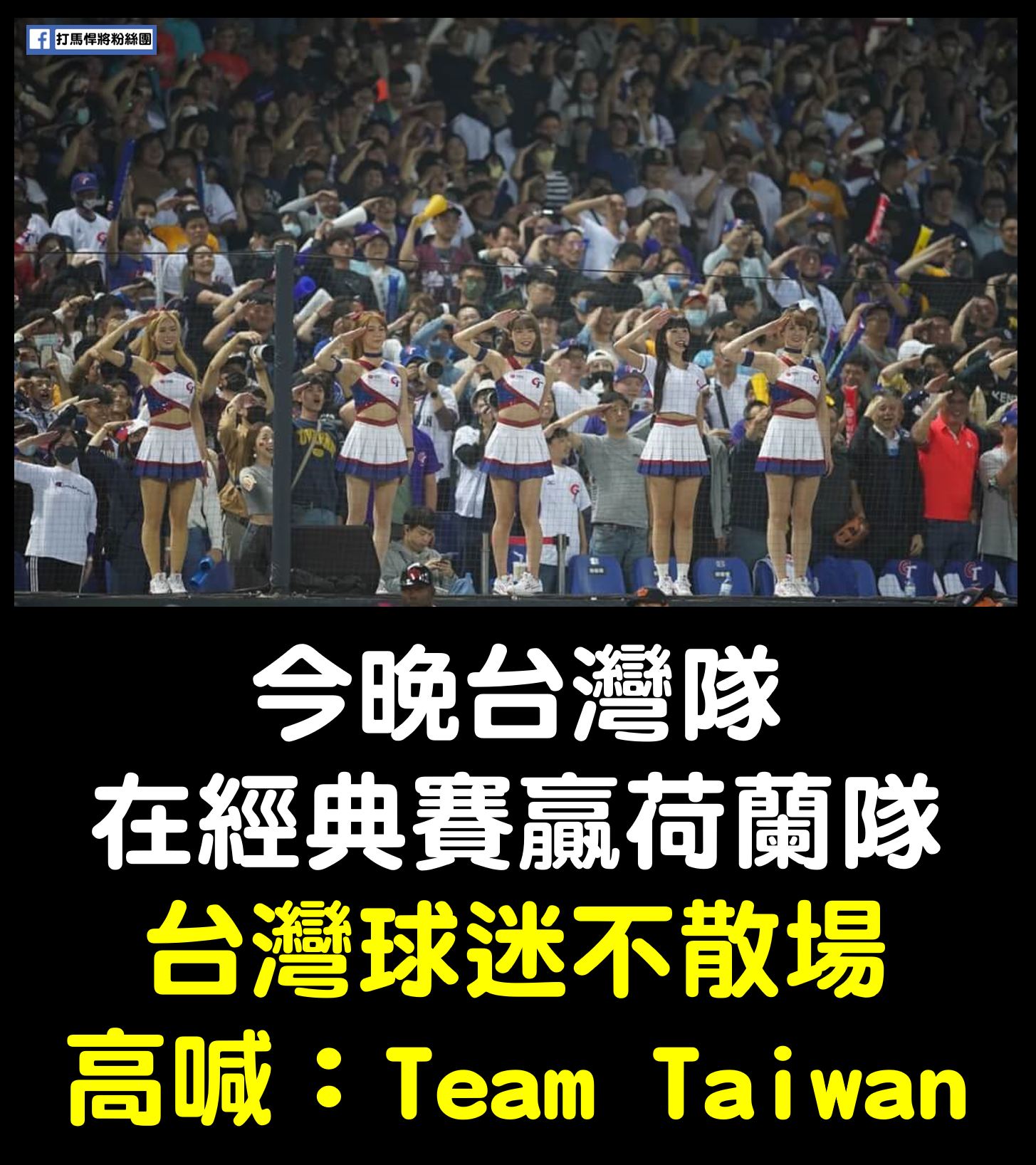
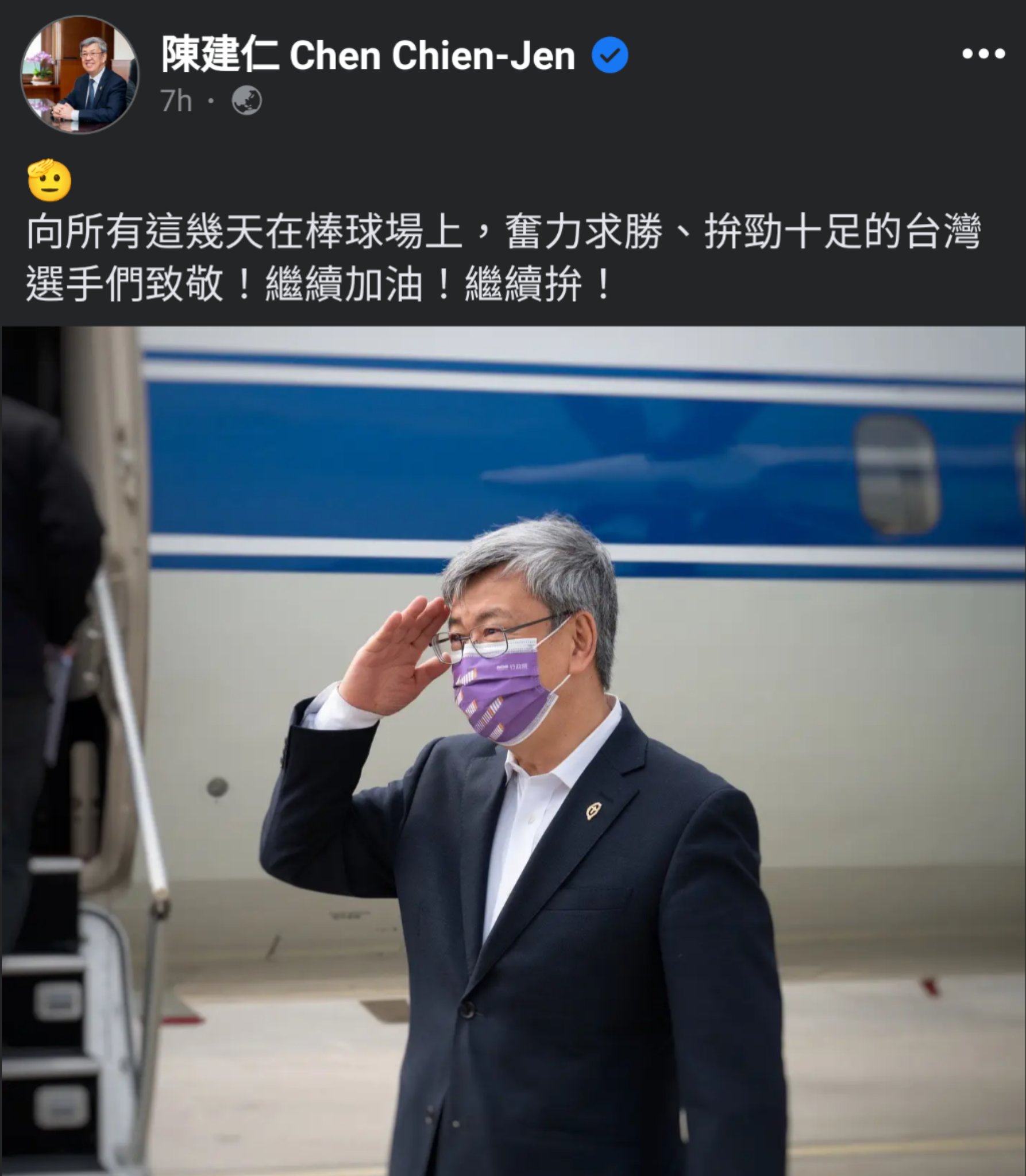
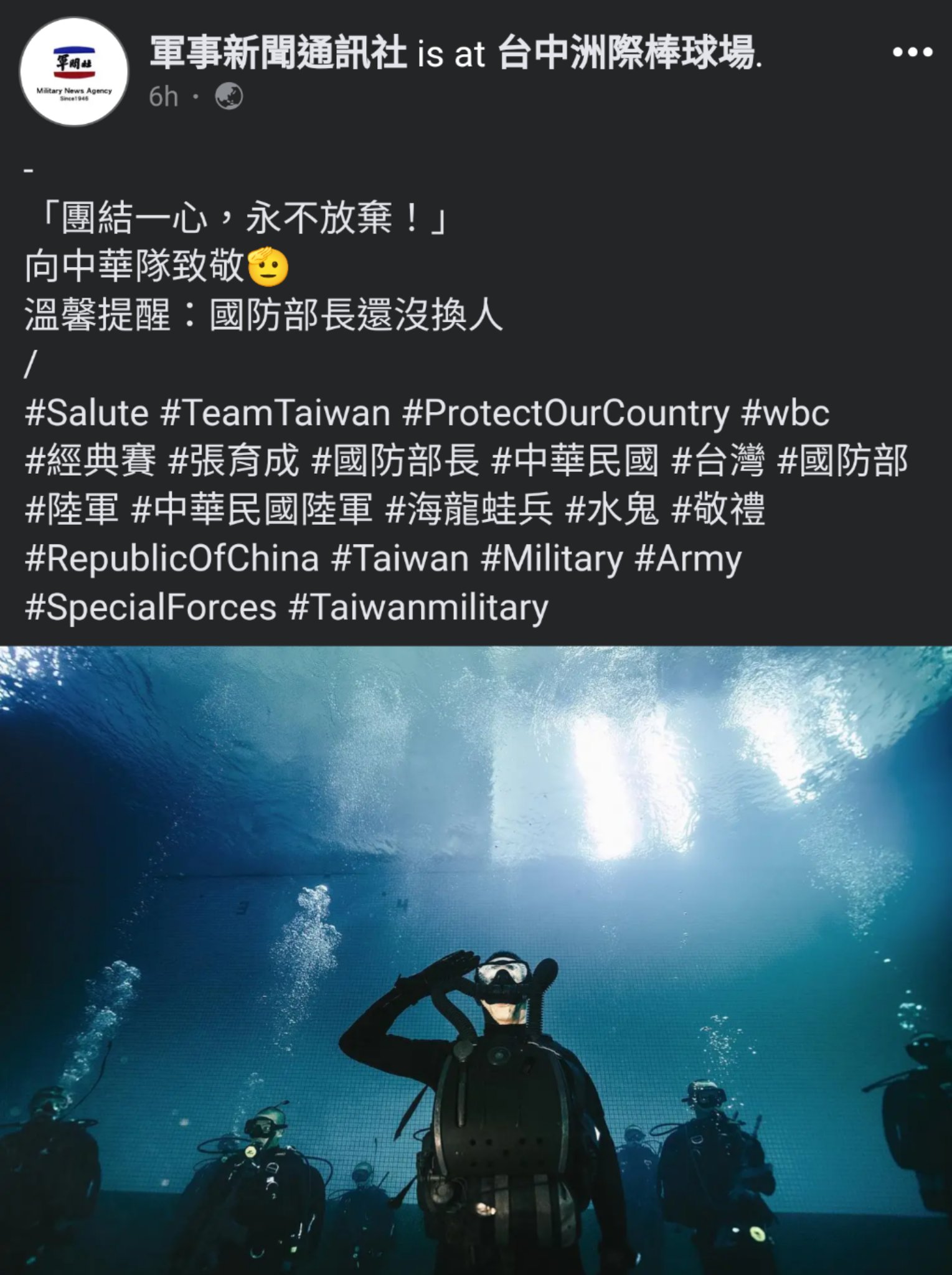
‘中华台北’能当饭吃吗? From Chinese Taipei to Team Taiwan – this emerging Taiwanese national identity, on a baseball diamond: National identity and Taiwan Republic 台灣国 classrooms

Where else but Taiwan Republic would a baseball hero’s nickname be ‘Minister of National Defense’, and where else but Taiwan would the democratically elected vice president now prime minister and Army frogmen heroes echo his salute?

Politicians focus on curriculum and monuments and formal national iconographies when it comes to national identity debates — these categories play a role, but national identity emerges from a complex mixture, of formal and informal, planned and accidental, low and high cultures, action and reaction. The Chinese Taipei refugees imposed a particularly odd set of values and historical memories on postwar Taiwan — meek, notebook in hand, sitting using only one-third of a chair, autocratic filial piety, loyalty to the Chiang crime family, frugality amidst their corruption, self-effacing mixed with Han Chinese imperialism and racism.

This Taiwanese baseball team, on the other hand, is modern and global, they are celebrating loudly — a natural swagger, this Team Taiwan celebrates individuality, and spontaneity — they reflect the real historical experience of peripheral, heterodox, land of refuge from many different quarters of historic Taiwan.

How to purge democratic Taiwan of this poison the Chinese brought democratically, without bloodshed — it may be that constitutional reforms and national day declarations and political summits play less role than something like a World Baseball Classic, where Taiwanese naturally call their team Team Taiwan — where Chinese Taipei is understood as the slur imposed by the Chinese Taipei KMT that it is — where Taiwanese naturally, joyously, return to their historic, authentic national identity — a land of pirates and rebels and migrants, an island nation where beliefs and practices and foodways from different immigrants get hilariously mixed together.

© Taiwan in World History 台灣與世界歷史. This site grants open access for educational and not-for-profit use. Maps and illustrations are borrowed under educational and not-for-profit fair use. If you are the rights holder and prefer not to have your work shared, please email TaiwanWorldHistory (at) Gmail (dot) com and the content will be removed.
Leave a comment

Filed under Taiwan Republic

【台灣國】國防MIT》各型飛彈產量去年逾800枚 中科院16條生產線量能全開, Taiwanese NCIST 16 missile production lines with an annual production of 1,000 missiles in 2023 – 自由時報 Liberty Times Geostrategery and Taiwan Republic 台灣国 classrooms

〔記者羅添斌/台北報導〕為因應中國軍事威脅,軍方加速量產各型國產飛彈,大幅增加戰備及庫儲飛彈,高層人士今天指出,中科院以16條生產線全面生產各型飛彈,去年的飛彈總產量合計超過800枚,預估今年明年將達到產能高峰,可達年產量1000枚飛彈的階段目標。國防部以「海空戰力提升計畫採購特別預算」,委由中科院量產包括劍翔無人攻擊載具丶萬劍彈丶雄昇飛彈丶天弓三型防空飛彈丶陸射型與艦射型劍二飛彈丶增程型空射劍二飛彈丶雄三及增程雄三反艦飛彈等,中科院先前投資興建的飛彈量產廠房順利運作,目前各型飛彈的生產線,已開到16條之多,可說是能量全開。

Without a breakdown of which missiles are produced in what quantity annually, it is difficult to assess the significance of “1,000” – though it is a good sign that Taiwan Republic, Japan, and US are all addressing the logistics of a war against China. Taiwanese “indigenous” missiles are a product of the peculiar stage in Taiwan-US-China relations – a product of compromise and the fictional One China status quo. I wonder if policymakers in DC have seriously studied and throught through the implications of having the Taiwanese continue this dual track – purchasing/importing US-made missiles while investing in domestically manufactured missiles. Perhaps the blurb from the recent US-Taiwan military talks about “enhancing munitions coproduction” is a way to discuss this issue – from economies of scale, to whether NCIST missiles are more vulnerable to Chinese communist infiltration and sabotage, to obstacles to interoperability with Japanese and American units. An example: during the war can the US-made Patriots efficiently coordinate with the Taiwanese TK2 and TK3 surface-to-air missiles? How about Taiwanese naval units using American Harpoons and Taiwanese HF series? Or Taiwanese artillery units using Taiwanese MLRS and soon-to-be imported American HIMARS?

A final observation: while it is good that Taiwan’s CSIST is moving away from the “handcrafted” model of manufacturing missiles into the modern mass assembly, one of the many chasms between the Taiwan military and Taiwanese democracy is in this island nation’s economic dynamism and know-how, and how isolated the military remains. Simple question: should a quasi-state military research entity like CSIST even manufacture missiles? Or would it be best to adopt the model from Israel, or Singapore, or South Korea, or Japan, have CSIST coordinate strategic level priority weapon systems research, and subcontract manufacturing to private or public-private corporations? 10.2.2023

© Taiwan in World History 台灣與世界歷史. This site grants open access for educational and not-for-profit use. Maps and illustrations are borrowed under educational and not-for-profit fair use. If you are the rights holder and prefer not to have your work shared, please email TaiwanWorldHistory (at) Gmail (dot) com and the content will be removed.
Leave a comment

Filed under Taiwan Republic

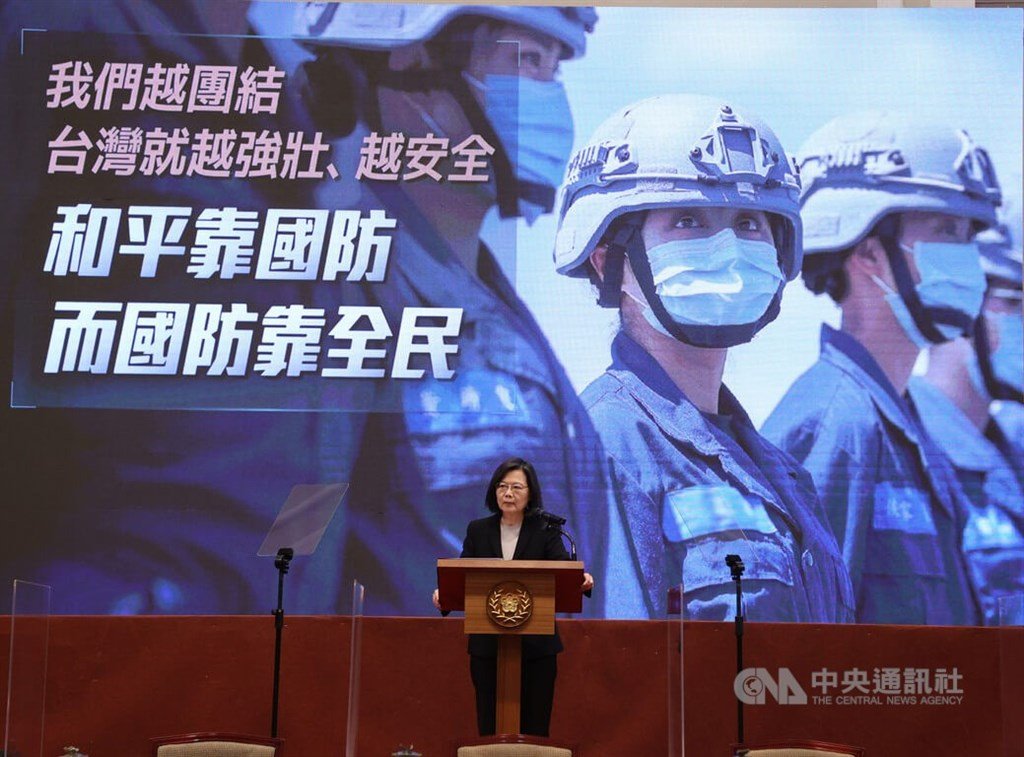
[President] Tsai reinstates one-year conscription [for Taiwan] – Taipei Times: Geostrategery, politics, and Taiwan Republic 台灣国 classrooms

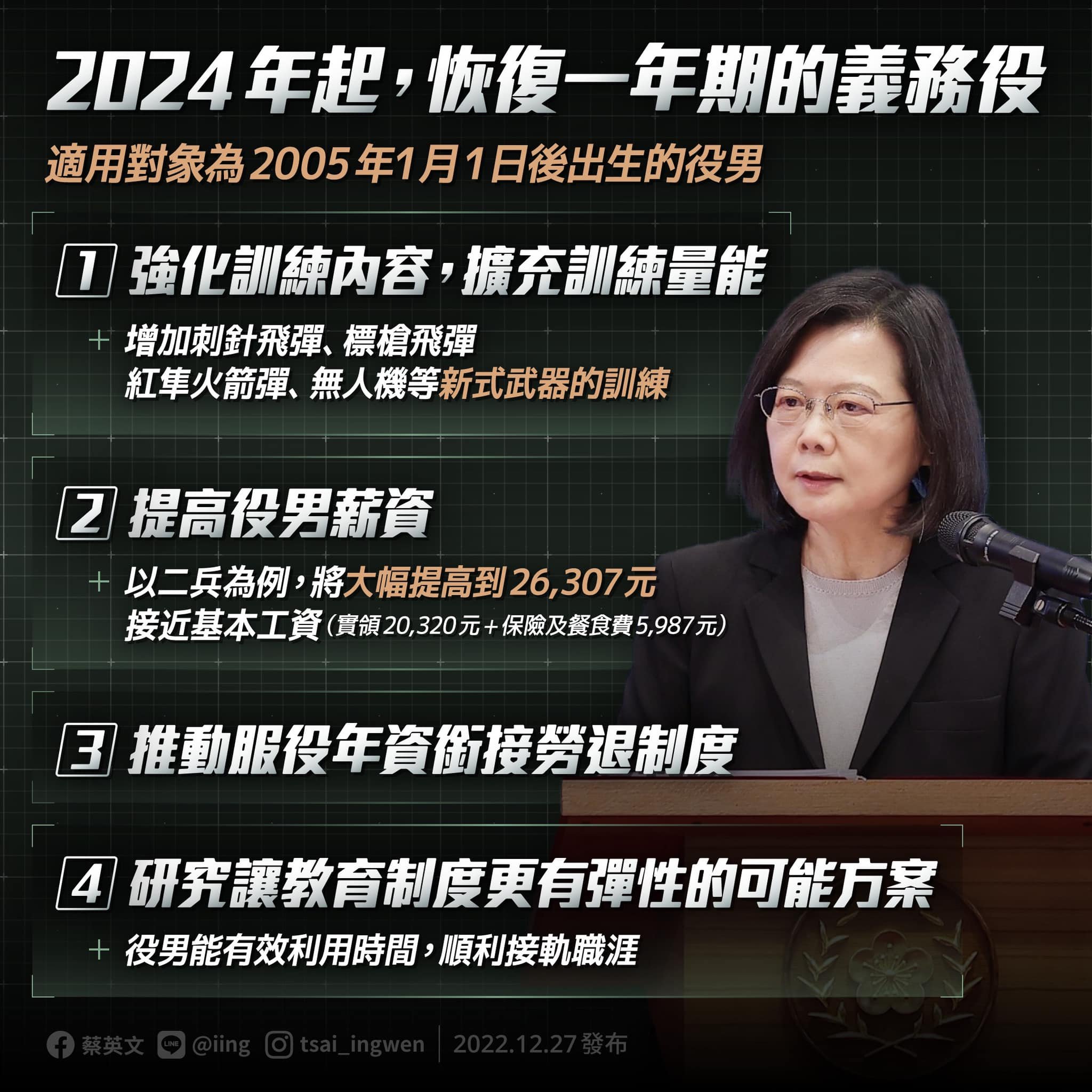
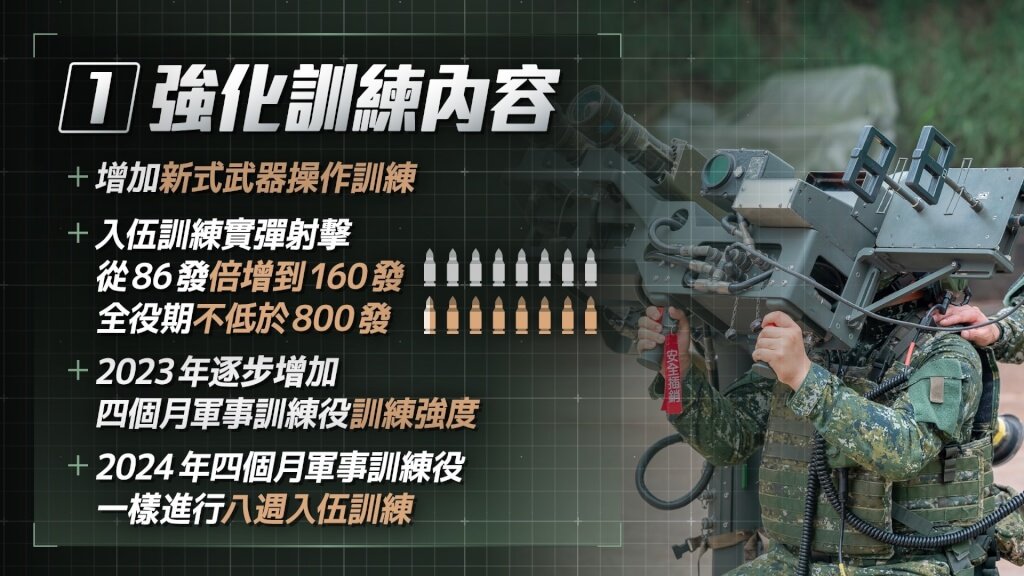
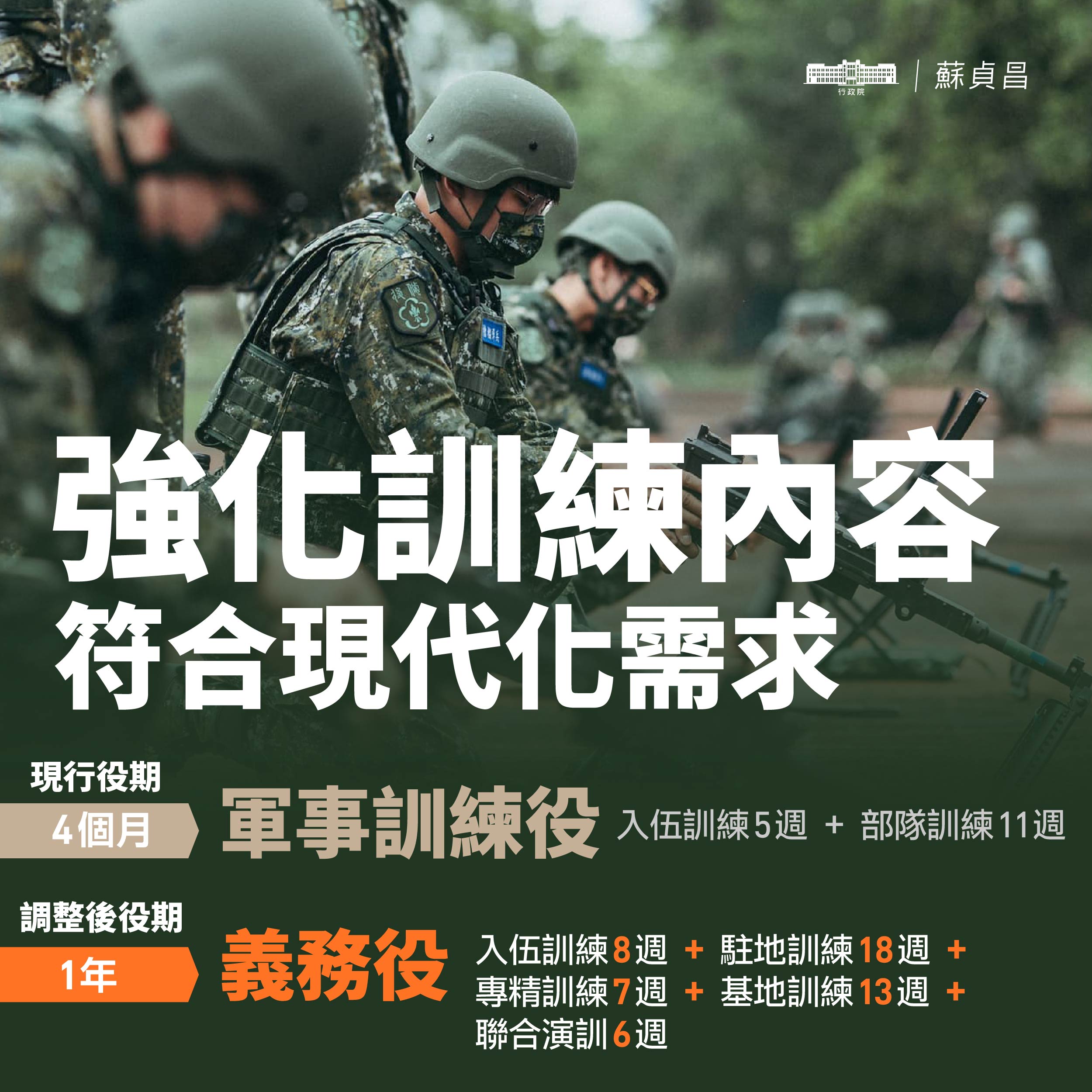
Many people have stereotypical views of mandatory service based on their own experience, but the training regimen has undergone drastic changes, Tsai added. To ensure conscripts undergo appropriate training and do not waste time during the longer service period, they would undergo more intense and longer boot camp training to boost their combat preparedness, the president said. Boot camp training is to be extended to eight weeks from five, and is to include physical fitness and exercise, as well as weapons and combat training. Standard courses would focus on discipline, equipment maintenance, basic training and stress training, while physical training would include basic fitness, grenade throwing and a 500m obstacle course. Physical training is to incorporate science-based learning for health management and muscle-building. The arms training section would increase the number of shots fired from 104 to 160 to ensure that recruits know the differences between weapons and how firing position affects accuracy. Combat training is to focus on combat techniques, field medicine and what to do in the event of a biological or nuclear disaster, while the training regimen for recruits is to include marches, camp setting and other skills. The Ministry of Education is in talks with local universities and colleges to develop ways to make the higher-education curriculum more flexible so that conscripts can complete their required one year of service while studying, Tsai said. That would allow them to avoid postponing plans to enter the job market due to the longer military service requirement, she said.

Depending on what ‘altitude’ you fly over news items, for most international news outlets Taiwan reinstating year-long conscription feeds into the “rising tensions-most dangerous place on earth” storyline. And for domestic Taiwan news, arguments about which party made this move necessary, whether American pressure is behind this change if this means the youth vote will shift for 2024, etc etc.

To me, this is classic President Tsai and why I am a supporter. Smart policymaking, aggravatingly careful and slow and boring, good for Taiwan’s democracy, not likely to win her praise or many votes. Kind of like her green energy policy. Legalizing gay marriage. Pension reforms. Pandemic abatement. The opposite of the kind of quick, easy-to-understand modern storytelling to rile up populist emotions.

I have no faith in the ability and resolve of the China KMT dictatorship-dominated Taiwan national security establishment, though I know if they are good at one thing, it is to use their bureaucratic skills to kill reform efforts pushed by civilian, democratically elected leaders. So we will see.

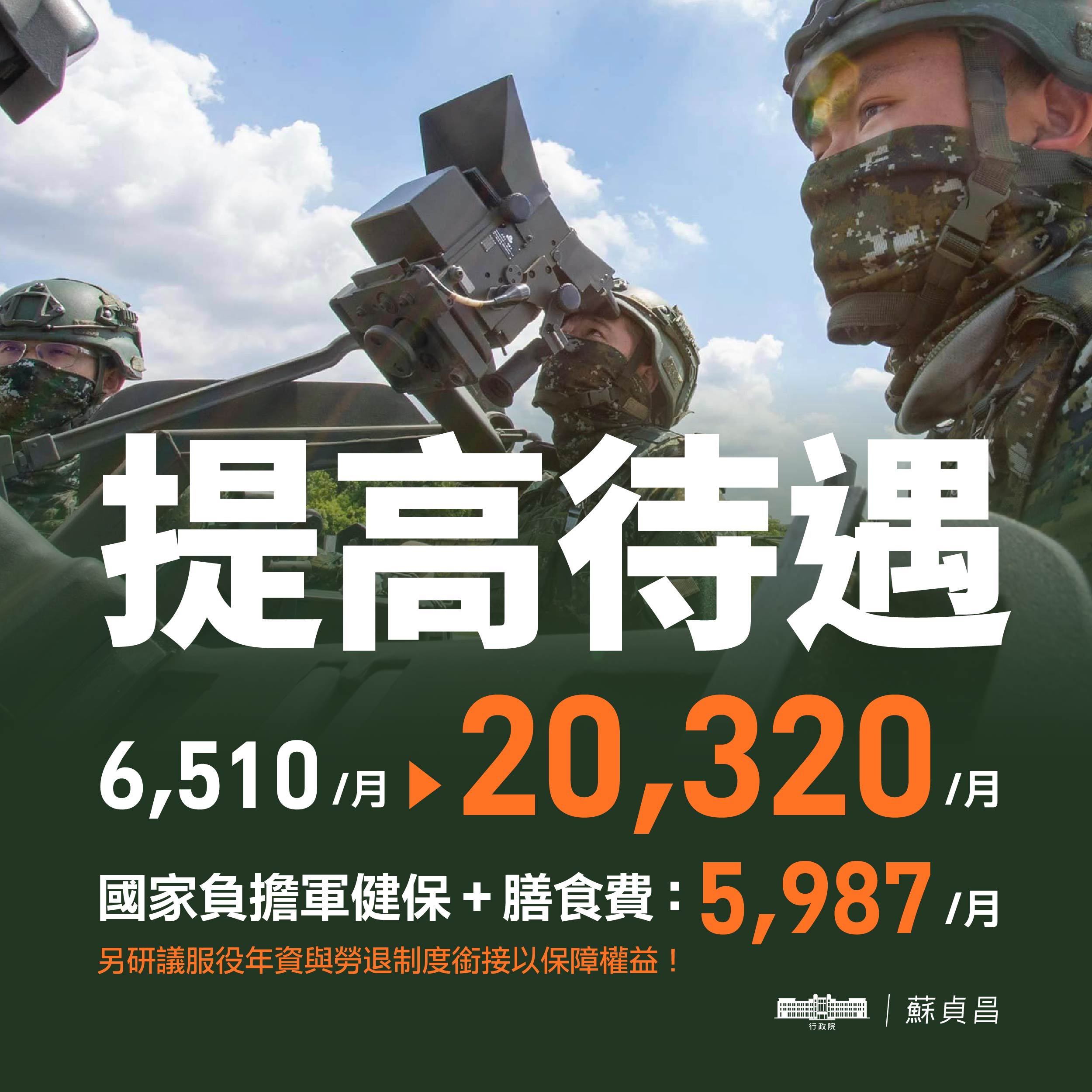
It is politically smart to give the mostly superficial domestic Taiwan press the massively raised salary of the conscripts as their headlines. Once you listen to the press conference and read the details the most encouraging facet of this new policy is the recognition that the Taiwan Ministry of National Defense requires revolutionary change and improvements – a breakthrough for the democratically elected president of Taiwan to acknowledge that former draftees felt their time and talent were not fully respected and utilized by the military, to be smart about using this year-long conscription wisely, to import training regimes (and important, doctrines and concepts) from the US and other leading democracies, to think about how the volunteer military and conscripts enhance one another. This is a difficult and important first step – future elections will determine whether the momentum to democratize and reform the Taiwan military will continue.

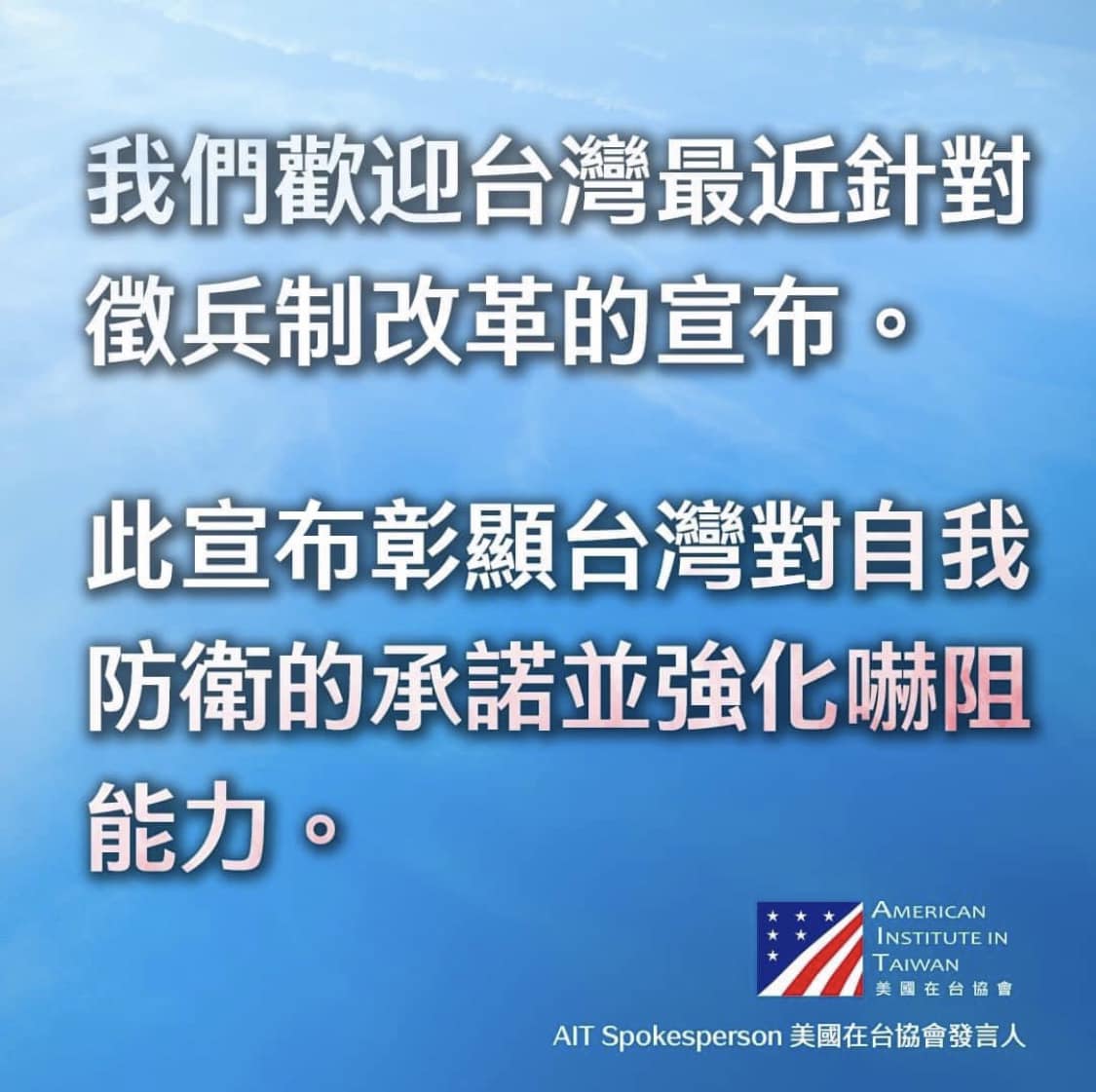
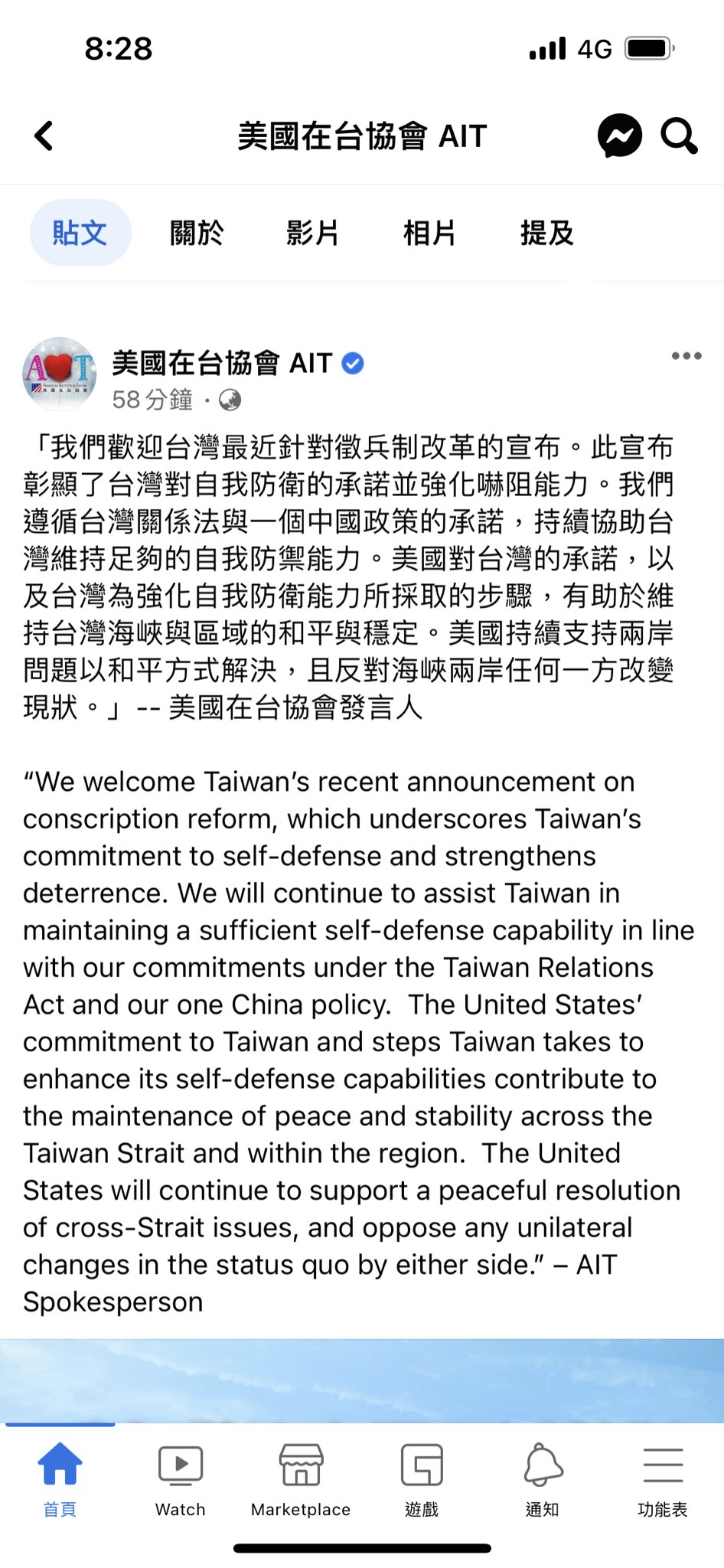
An additional breakthrough is in how rapidly and directly the praise came from the American embassy in Taipei – without regard for the thin skin-ness of the Chinese communists and their allies inside Taiwan and in the west. This gets me back to my earlier point that folks generally focus on the headline numbers of the NDAA and aid to Taiwan, I have been fascinated by the detailed plans on interoperability and the “software” of national security – personnel, advisors, new mentality. California and Florida National Guards heroically trained Ukrainian officers – Hawaii National Guard has been paired with the Taiwanese military, is this the model we will see with new, modern training for the conscripts and volunteers alike? And again, having seen too many bright-eyed Taiwanese patriots graduate from West Point, Annapolis, and US Air Force Academy only to file for early retirement due to a reactionary and hyper-bureaucratic Taiwan military leadership. We will see, and we hope for the best. No shortage of talent and vitality from the bottom up in a democracy such as Taiwan – the bottleneck is within Taiwan’s military leadership.

An additional thing to ponder is this paradox of Taiwan. A medium small-ish nation. An oceanic, island democracy with a history of heterodoxy and not following imperial rules. Taiwanese businesspeople are notoriously creative and flexible. Taiwanese cuisine and music and literature are hybrid and ever-changing. The parts of Taiwan dominated by the China KMT dictatorship are reactionary, uncreative, haughty, stuck in trench warfare mentality – hyper-bureaucratic, better to get fifteen stamps than five, hurry up and wait – these facets of Taiwan public life exist in a parallel universe with the vibrant, democratic, can-do democracy that grew up around this China KMT dictatorship.

So I have been wondering about creatively deconstructing how the Taiwan public health – less dominated by the China KMT dictatorship because during the martial law era this was a safe harbor for educated Taiwanese – could serve as a model for how a reformed Taiwanese military could democratize and harness the creativity and energy of this democratic nation. Taiwanese public health and healthcare were not flawless during this pandemic – yet compared to the Taiwan military, it has been far more flexible and responsive to criticism and suggestions from citizens, civilian authorities, and foreign experts. Pandemic management had features and characteristics that are warfare-like – the “enemy” was not just the virus, but foreign and domestic bad actors, fear, rumors, anxiety, and fake news. What is it about the Taiwanese public health leadership, bureaucracy and regulation, institutional culture, and how it relates to the rest of this democracy, that enabled it to successfully meet these challenges? And what lessons might the democratically elected civilian leaders of Taiwan seeking to democratize and reform the Taiwan national security establishment draw from this model? 28.12.2022

© Taiwan in World History 台灣與世界歷史. This site grants open access for educational and not-for-profit use. Maps and illustrations are borrowed under educational and not-for-profit fair use. If you are the rights holder and prefer not to have your work shared, please email TaiwanWorldHistory (at) Gmail (dot) com and the content will be removed.
Leave a comment

Filed under Taiwan Republic

台灣首艘原型自製潛艦 台船:明年9月下水 First Taiwanese ‘indigenous’ submarine to be launched by September 2023 – 自由時報 Liberty Times: Geostrategery and Taiwan Republic 台灣国 classrooms

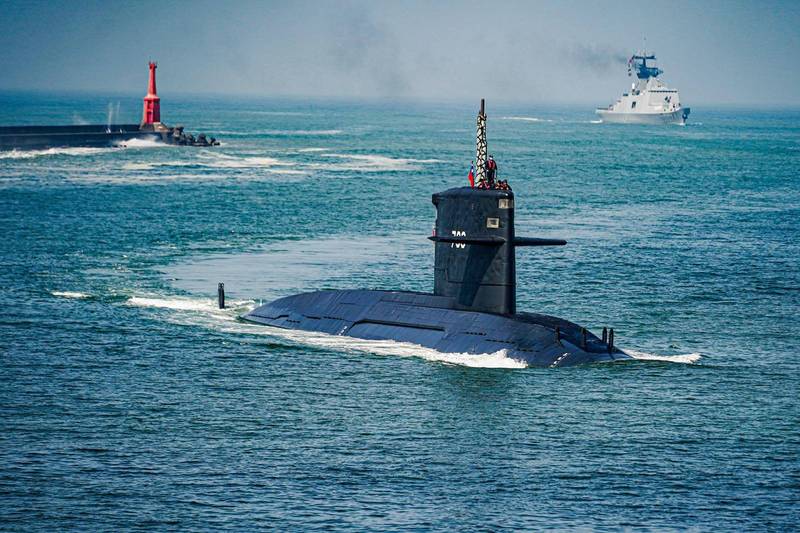
〔記者洪定宏/高雄報導〕台船公司今天發布新聞稿指出,總統蔡英文交付台船執行史無前例的「潛艦國造」任務,雖然過程中外界多所揣測、評價,無論正面肯定抑或是曲解錯誤認知,台船仍全力、全工時趕工,目標明(2023)年9月下水。據了解,國造潛艦原型艦的設計藍圖即有700多份,並採用雙殼、部分單殼的混合艦殼,以及X型尾舵的構型設計,總排水量2000餘噸,可搭載MK48 MOD6 AT重型魚雷及潛射魚叉反艦飛彈,有效反制中共水面艦艇。

Even though Taipei appears full of doom and gloom over President Tsai’s electoral defeats during the recent local elections, future historians will study this ‘indigenous’ Taiwanese submarine project as an example of her administration’s success.

If the project proves successful, President Tsai and her team would have overcome decades – since the 1960s – of American, Chinese communist, China KMT interference and sabotage against a Taiwanese submarine fleet. No doubt rapidly shifting geopolitical realities enabled the change in American policy. This shift then brought along critical technology from other democratic allies, the UK, maybe South Korea, maybe Japan, and others. I remain fascinated and a bit confused at the relatively muted reactions from the Chinese communists and their allies inside Taiwan – is this because they have other problems and crises to deal with, or do they have other angles?

What remains true is this, if we compare the three democratically elected Taiwanese presidents, Lee, Chen, and Tsai – a bureaucracy of Taiwan’s central government, particularly the national security establishment, ensconced in decades of China KMT party-state external authoritarian occupation, a similar project under Presidents Lee and Chen that did not leak like a sieve would have been unimaginable. The relative success of the Tsai administration in preventing the vestiges of the authoritarian bureaucracy from sabotaging this project has been a noticeable success in Taiwan’s democratic consolidation.

As to whether or not these ‘indigenous’ (even a global empire like the US can no longer manufacture high-end weapons without global supply chains and know-how, much less Taiwan ….) submarines will deter and defeat a Chinese invasion – are eight enough? Should they be paired with unmanned underwater vehicles? Should they be armed with defensive and offensive ordinances? Are they linked with other Taiwanese military units as well as US and Japanese units? Maybe the first step in a genuine democratization of the Taiwanese military is to have an open national debate on why the Taiwanese Navy has been circling in step since the 1990s – unable to match the surface nor subsurface fleets of the region? In this, I suspect advice and know-how from American and Japanese officers will play a critical role in ensuring the money invested in hardware such as submarines will be properly deployed during a future war to defend Taiwanese sovereignty and democracy – a kind of AUKUS+ regional submarine chain – Australian and Japanese long-range submarines plus smaller Taiwanese and others to contain the China threat. This is also where the significance of the US NDAA is never about money or hardware/weapons per se, but the infusion of American expertise into the stagnate and reactionary Taiwan national security establishment. 27.12.2022

© Taiwan in World History 台灣與世界歷史. This site grants open access for educational and not-for-profit use. Maps and illustrations are borrowed under educational and not-for-profit fair use. If you are the rights holder and prefer not to have your work shared, please email TaiwanWorldHistory (at) Gmail (dot) com and the content will be removed.
Leave a comment

Filed under Taiwan Republic

Bibliography: US defense bill authorizes fellowships [of American officials to Taiwan] – Taipei Times: Geostrategery and Taiwan Republic 台灣国 classrooms 

MILITARY GRANTS ADDED: Ten US officials per year are to study Mandarin and local issues, and return to Washington to bolster understanding of Taiwan’s needs. The US Senate on Thursday passed the 2023 National Defense Authorization Act (NDAA), which is to set up a fellowship for US federal employees to work in Taiwanese government agencies, in addition to greenlighting US$2 billion in annual military grants to Taiwan. The first year is to be spent studying Mandarin and related topics, followed by a year working in a government agency, legislative office or approved organization related to their field of expertise, the Taiwan Fellowship Act says. At least 10 fellows from the three branches of the US government — executive, legislative and judicial — are to be selected annually. In the first two years of the program, no fewer than five fellows are to be selected, the bill says. Returnees would be required to continue serving in the US government for at least four years after completing the program, with the goal of enhancing understanding of Taiwan’s central government and regional issues, it says. The American Institute in Taiwan would be required to begin negotiations with Taiwanese agencies within 30 days of the bill’s enactment. The legislation is modeled after the Mansfield Fellowship Program between the US and Japan. Under that program, established in 1994, US government employees are provided more than one year of Japanese-language education and placed in a Japanese agency, where they work full-time for 10 months alongside Japanese colleagues.

While the headlines and focus will be about the amount of US military aid to Taiwan Republic, and the weapon systems transferred, to me this is the most significant breakthrough in this year’s NDAA. Ten American officials per year to Taiwan is not significant – the mental-psychological breakthrough on the part of DC – the real pivot to the Indo-Pacific, understanding the China threat, and realizing the nature of the Chinese threats against democratic Taiwan – those are decades in the making. And one suspects once the breakthrough occurs, more will (and should) follow.

Even just the simple yet monumental step of normalizing the interactions between these two democratically elected national governments of America and Taiwan – official to official, bureaucracy to bureaucracy.

If the billions in direct military aid authorized by the NDAA are funded, and if the Biden administration does not waste more time fighting Congress, then I would expect more American advisors and officials to follow that money. I cannot find a previous case where Congress authorized large military foreign aid without request from the foreign party – nor was such an amount being transferred without direct US involvement (advisors, etc.) Because humans always refer to the most recent historical experience as a template, I have read many articles referring back to the US-RoC Mutual Defense Treaty/US Advisor era. Times change, the nature of the governments are different, and characteristics of modern warfare shift – the era of large contingents of US and Japanese troops stationed in Taiwan makes little sense. Rapidly rotating in units for realistic training and coordination – advisors in key units, teams from the US and Japan to help locate and fix weakest links in Taiwanese strategic and tactical planning, intelligence and counterintelligence, logistics, civil defense, sabotage, and infiltration, etc., in 2023 these will make more difference to the security of the Indo-Pacific and countering the China threat than anything else.

Five Notable Items for Asia Watchers in the National Defense Authorization Act

美參院83:11壓倒性通過// 挺台國防授權法案 送拜登簽署

美參院通過國防授權法案 提供台灣百億美元軍援

U.S. Senate passes annual defense bill with Taiwan provisions

US bill features up to US$10bn for Taiwan security

© Taiwan in World History 台灣與世界歷史. This site grants open access for educational and not-for-profit use. Maps and illustrations are borrowed under educational and not-for-profit fair use. If you are the rights holder and prefer not to have your work shared, please email TaiwanWorldHistory (at) Gmail (dot) com and the content will be removed.

Leave a comment

Filed under Taiwan Republic

US House passes US$12bn aid for Taiwan military, Taipei Times: Geostrategery and Taiwan Republic 台灣国 classrooms

The US House of Representatives on Thursday passed the 2023 National Defense Authorization Act (NDAA), which authorizes up to US$12 billion in grants and loans to Taiwan to buy US weapons over the next five years. The bill passed the Democratic Party-controlled House on a 350 to 80 vote. It is expected to clear the Senate next week before being sent to the White House for US President Joe Biden to sign into law. The act would authorize up to US$2 billion in annual grants from next year to 2027, and an additional US$2 billion in loans for Taiwan to use to bolster its military capabilities with weapons from the US. It also authorizes a regional contingency stockpile for Taiwan that consists of munitions and other appropriate defense articles costing up to US$100 million a year for use in the event of a conflict.

Have we ever had a case in American history where a designated aid nation did not request aid, and US Congress generously, voluntarily provide such a massive amount? And instead of debating whether this is good policy, perhaps the first prudent thing to do is to ponder what is going on in this moment of world history that such an unusual move has been taken.

Novices and bad actors will focus on the dollar amount, while experts and those with a sincere desire to protect democracy in the Indo-pacific will notice that the direct military aid is only the tip of a very large spear against the China threat — technology, education, trade, democracy, law enforcement, intelligence, and counterintelligence, etc. are other realms where this global struggle are occurring.

The most important part of the NDAA is Congress forcing a lumbering executive branch to pivot to face the China threat for real — i.e., increasing production of critical munitions, money for base protection, a stockpile of critical munitions in the region, etc. Novices and bad actors will focus on allegedly “provoking” the Chinese communists and rising tensions even though the communists are experts at self-provocation — they will fuss about budget and deficit, and they will spread lies that the Taiwanese prefer to surrender. Experts from this point on will avoid focusing on weapons sold and transferred, and see if Congress is able to force the executive branch and the Pentagon to do real interoperability — i.e., to abandon the idiocy of Jimmy Carter and invite the Taiwanese military to participate in US-Japan-Australian-NATO exercises. I wonder, and this is speculation on my part – would the US government voluntarily grant this massive amount of foreign military aid without sending American military advisors? Taiwan’s archaic and dated military leaders require a push and a nudge re: modern warfare – rapid pace, technology-centered, intelligence-counterintelligence, modern logistics, and creativity. What the Taiwan military leadership requires most, and perhaps this is where American, Japanese, and European advisors can best provide, is the lesson of Ukraine – a national military divorced from the democracy of its nation cannot and will not fight. Taiwan’s national security establishment requires democratization so that it can absorb and adhere to the strengths of the democracy it is suppose to protect.

I am against large US military presence in Taiwan, having nothing to do with the easily hurt feelings of the Chinese in China and the Chinese in Taiwan — but that it makes little tactical and strategery sense. Quick and thoughtful public and routinized rotations of American and Japanese units in and out of Taiwan to work on interoperability and training, with a small officer-advisor corp in Taiwan as advisors to the Ministry of National Defense and Taiwan’s democratically elected civilian leaders, and massive munitions and platforms depot in the area ready for the fight immediately are hopefully enough to deter the communists.

Now that the American aid is here, Taiwan must increase its annual war budget by the same amount — we have to increase our war budget so that our American congressional allies will have cover from domestic bad actors, united front fellow travelers. All multinational policies regarding the China threat is to prevent Beijing from even considering starting a war of annexation against Taiwan.

© Taiwan in World History 台灣與世界歷史. This site grants open access for educational and not-for-profit use. Maps and illustrations are borrowed under educational and not-for-profit fair use. If you are the rights holder and prefer not to have your work shared, please email TaiwanWorldHistory (at) Gmail (dot) com and the content will be removed.
Leave a comment

Filed under Taiwan Republic