If this report is accurate, that the US (CIA) invited Taiwanese Military Intelligence to collaborate directly with the CIA, then this is good news. The Taiwan Ministry of National Defense is the least democratized and most requiring of revolutionary changes in Taiwan’s national government, and the intelligence agencies are even more so. Anything that key democratic allies of Taiwan can do to help Taiwan’s national security apparatus democratize and modernize will do as much to deter a Chinese communist invasion as weapons and increased defense spending. This is also where strategic clarity on the part of the US will help greatly. 21.9.2022
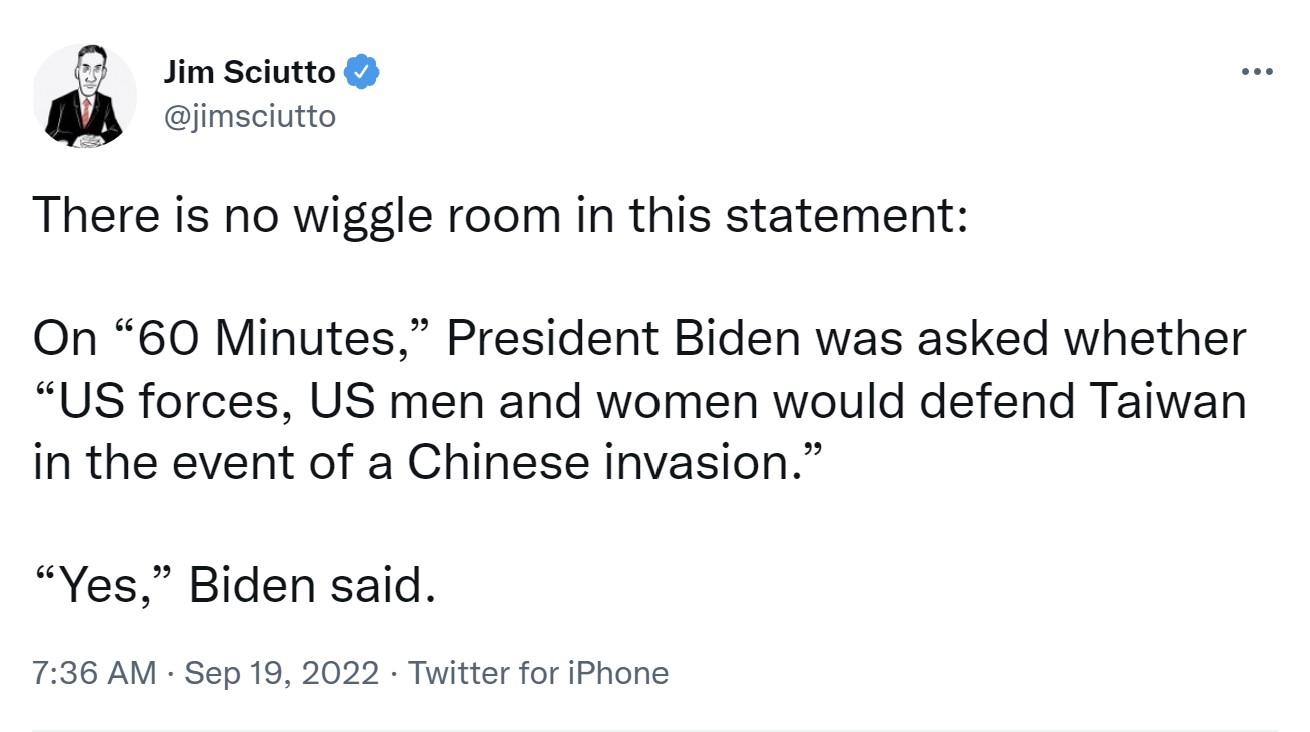
How many times does the President of the United States of America have to say the same thing before the DC press corps, American academia, think tankers, and officialdom stop branding it as a “gaffe”?
Washington DC chattering class and their parlor games notwithstanding, I assume this simple statement of fact surprises zero leaders in Beijing and Taipei. The flashy headlines are about committing American fighting women and men in defense of Taiwan – the strategic clarity of American policy has always been that the United States of America and its allies will not tolerate the changing of the “status quo” between communist China and democratic Taiwan by force. Nor will the US accept unilateral changes to the status quo by any party.
The worrisome aspect is not that President Biden has now stated this simple fact four times, or that the DC foreign policy luminaries do the hysteria meltdowns they always do on the Twitters. It is signs from Japan, the US, and other democratic allies that a Chinese communist invasion to annex Taiwan is no longer theoretical. Strategic ambiguity is being erased not because America is choosing it, but because Chinese communist clarity is forcing the issue. This is why President Tsai needed to demarcate the international borders between the PRC and ‘RoC’Taiwan and its democratic sovereignty on October 10, 2021. This is why former Prime Minister Shinzo Abe needed to declare that a crisis for Taiwan is a crisis for Japan, and hence a crisis for the United States. And this is why President Biden has had to declare America’s military defense of Taiwan four times.
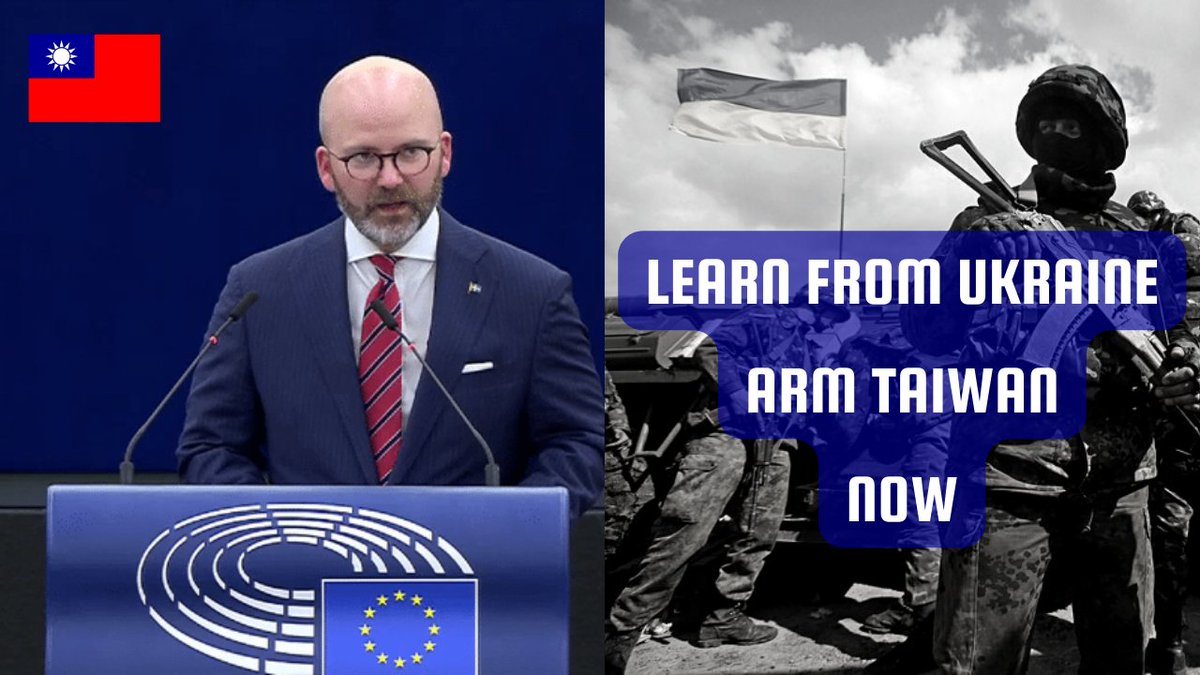
As someone with many relatives in Taiwan, I’d say for most democratic citizens of Taiwan, though they may be grateful for any foreign assistance, the point is not for American soldiers to fight for Taiwan, but to have a comprehensive, global democratic effort to deter and prevent Beijing from starting a war – without Taiwan giving up its democratic sovereignty. Strategic ambiguity may have made sense – sort of – four decades ago – but ultranationalist and controversial dictator Xi Jinping has removed its utility. What comes next – in the interest of democracy and peace in the Indo-Pacific, the vast majority of the US media, academia, and think tank hot takes on Twitters are beside the point. Do we have good enough intelligence on Beijing’s plans and intentions? Are US, Japan, Taiwan, and other democratic allies properly supplied, trained, and coordinated to respond to a Chinese invasion? Are the US, Japan, and EU properly communicating to the Chinese communists the price for an unwise war of choice? If the brave citizens of democratic Ukraine have taught us nothing else, it is that letting a barbarous dictatorship initiate an invasion is a failure for all democracies. 20.9.2022
I have confidence in President Biden and most of his national security liberal hawks. Unlike the corporate media and DC chattering class, I don’t think President Biden repeatedly committed Taiwan “gaffes” – any more than I believe he committed Ukraine “gaffes.” And most of the Biden national security officials are professional, competent, and for a Democratic administration, perhaps the most Taiwan conscious since 1979. And of all of the bureaucratic institutions in DC, the Pentagon is the one I worry the least about when it comes to what the Taiwan Republic means to American national interest.
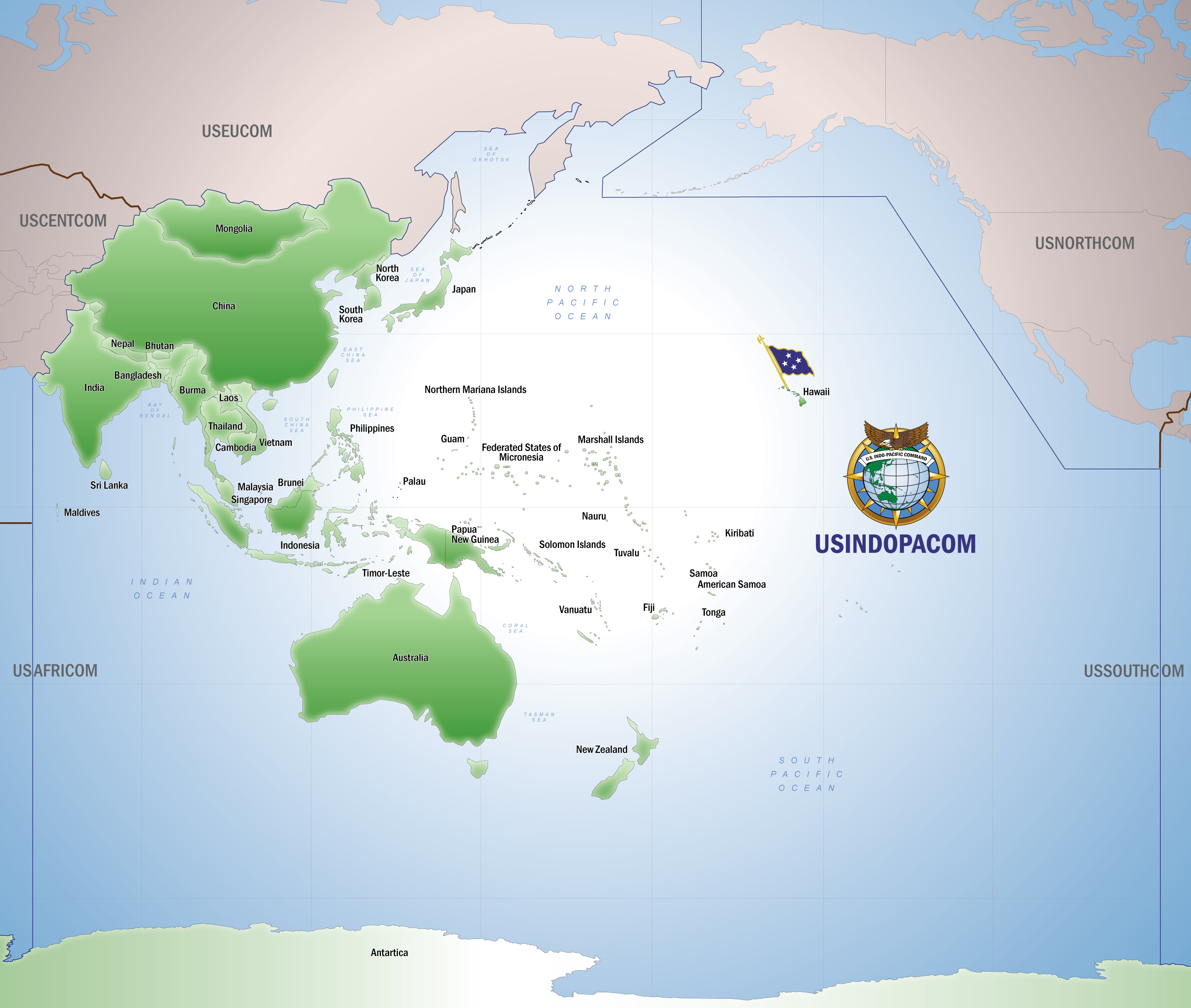
This move, however, does fall into a worrisome pattern of Biden administration’s unforced errors re: the Chinese communists. Cutting through the useless and misleading constructs of hawks versus doves, provocation versus conciliation for the moment – this is not the first time where the Biden team has taken a status quo/reality and walked themselves back and twisted themselves in knots with little gained. A routine visit to the Taiwan Republic by the Speaker of the House turned, in large parts by the Biden White House and the DC chattering class, into an unnecessary international incident. The Biden State Department needlessly edited, multiple times, its Taiwan Policy webpage. And now, this superfluous – and easily misinterpreted by the Chinese communists – move by the Pentagon to place Taiwan underneath the China portfolio – whatever bureaucratic efficiency and “right-sizing” that may come from this move, it is difficult to argue that the damage to Taiwan and America is justified.
And this is where the establishment US-western – academia, media, think tanks, and officialdom – dealing with the Chinese communists remain blissfully, stubbornly detached from reality. To the Chinese communists and their struggle against the US and global democracies, the war is in all realms, in all ways – commerce, technology, higher ed, information, public, private, NGOs …. Name the realm, and for Beijing, it is just another battlespace. And so, for whatever reason and whatever purpose the Pentagon saw fit to make this change, the most disheartening part is that leading US national security officials remain ignorant of the type of struggle the Chinese communists are waging against the US and other democracies. To use a phrase favored by the Biden team – the Chinese communists are waging an “all of government/all of nation” war against the US and democracies. We cannot afford to not perceive this and adjust how we conceptualize the global geostrategic environment. The two key elements to deter a Chinese communist war of annexation against Taiwan. First, dictator Xi and the Chinese communists must be made to understand that a war of their own choosing will end their dictatorship. Second, the US, Japan and other democracies must internationalize Taiwan – separate it from China. This Pentagon move does the opposite of these two key prime directives. 19.9.2022
Signal and noise, forest and trees. Many over-the-top reports about Chinese communist blockades and missiles and jet fighters around Taiwan Republic. Related to my earlier post about the nature of Taiwanese democratization and its resilience, compared to the 1996 Chinese communist crisis, this time Taiwan Republic is far more democratic, diverse, and less reliant on a centralized party-state. This is the same as the unruly democracy in Ukraine that confounded and surprised the invading Soviet Red Army and western experts. Imperialists, western or not, are always confounded when peasants have their own ideas – and are willing to fight for them.
Rather than being led by the western press and think tanks passing on Chinese communist scary talking points, and staring only at Speaker Pelosi’s visit or these Chinese communist military intimidations, none of what’s been happening makes any sense without understanding the nature of global shipping. It is not that Taiwan is unique or important per se, but that Taiwan is one of many, many global maritime chokepoints in the Chinese communist world war against the maritime global order imposed by the US Navy. From 1300 AD to now we have lived in an era of global maritime empires. Each leading maritime imperial power has had unique takes on how this empire building ought to proceed. But they ALL share a core principle – a ‘rules-based’ world order and a ‘free and open maritime environment’ that is to serve the global movements of goods, services, and labor. Anything, ANYTHING (and anyone) that interferes with this principle is pummeled.
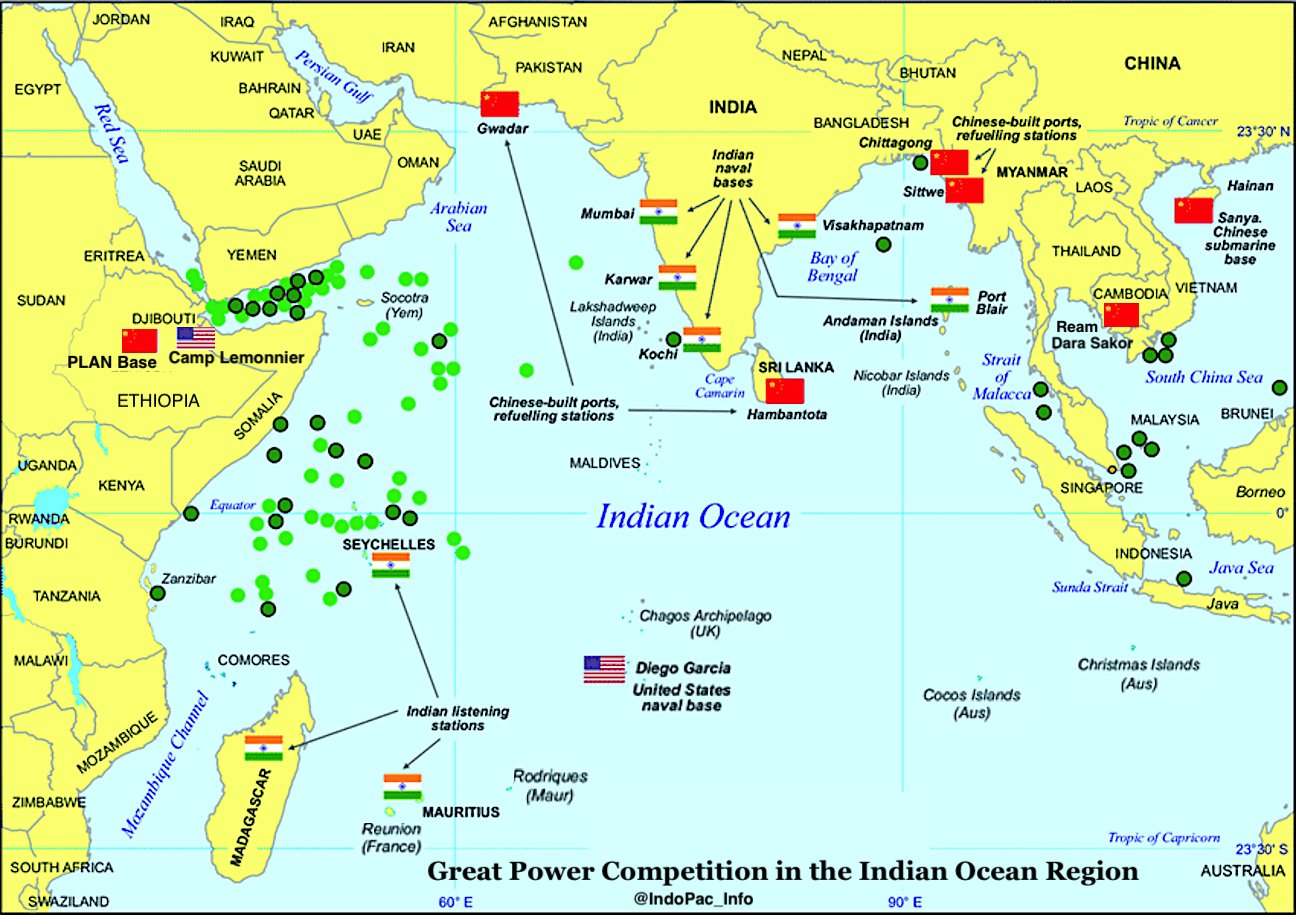
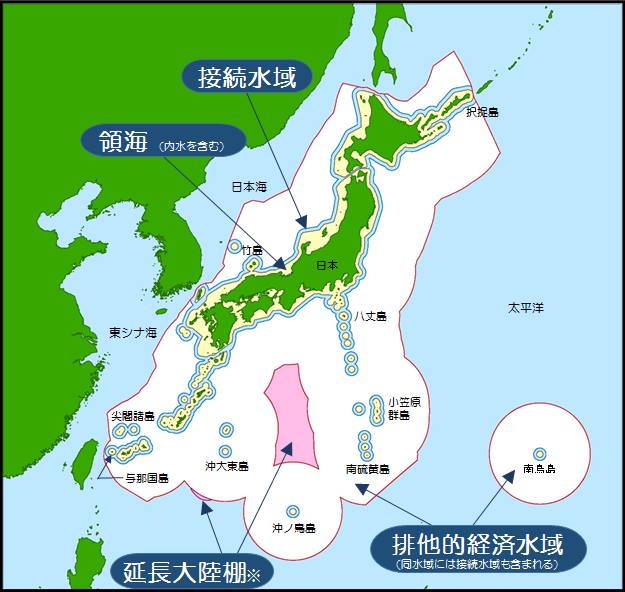
The revival of the Chinese communist economy from 1980 to 2022 owes largely to this global maritime imperial order imposed by the US Navy. But as the Chinese communists ascend, and the US stalled or declined, this Globalization 1.0 world order frayed. This is why while it is important to study the Taiwan case, not connecting Taiwan to many many other global cases misses the central point – the Chinese communist navy bases in East Africa, Mideast, South Asia, and Southeast Asia. Chinese communists claimed the entirety of the South and East Seas. Chinese communists recently declared the Taiwan Strait as Chinese territorial water, functionally choking off critical supplies for Japan and Korea. Chinese communist military expansions into the south Pacific. Chinese communist “corporations” buying major global shipping harbors – and shares of the Panama and Suez canals. The main point is that this present Chinese communist crisis over Taiwan Republic is not occurring in isolation – and all of them are related to a long-standing effort by the Chinese communists to subvert the maritime empire created and led by the US Navy.
Once we understand the historical and global context, then it is easier to guess what the US Navy, Japanese Navy, and NATO navies will do if the Chinese communists come anywhere near a blockade of the Taiwan Republic. And no of course this is not about friendship. It is not even about democracy though it really doesn’t hurt. It’s actually not even about dollars and cents per se. A global maritime imperial order requires steadfast enforcement of precedence. The two ‘recent’ historical precedents I can think of are the Libyan attempt to claim the tiny, far less economically important than the Taiwan Strait Gulf of Sidra, as their own – the US Navy showed up in less than a day and pummeled the Libyan military. And the Iranian attempt to blockade the opening to the Pershing Gulf – US and allied navies showed up immediately and annihilated the Iranian navy. 3.8.2022
When you install an alarm system for your home are you “provoking” and “escalating” against your neighbor? Only if one believes your neighbors have the right to access your home. The simple but clearest way to think about Taiwan Republic and Ukraine.
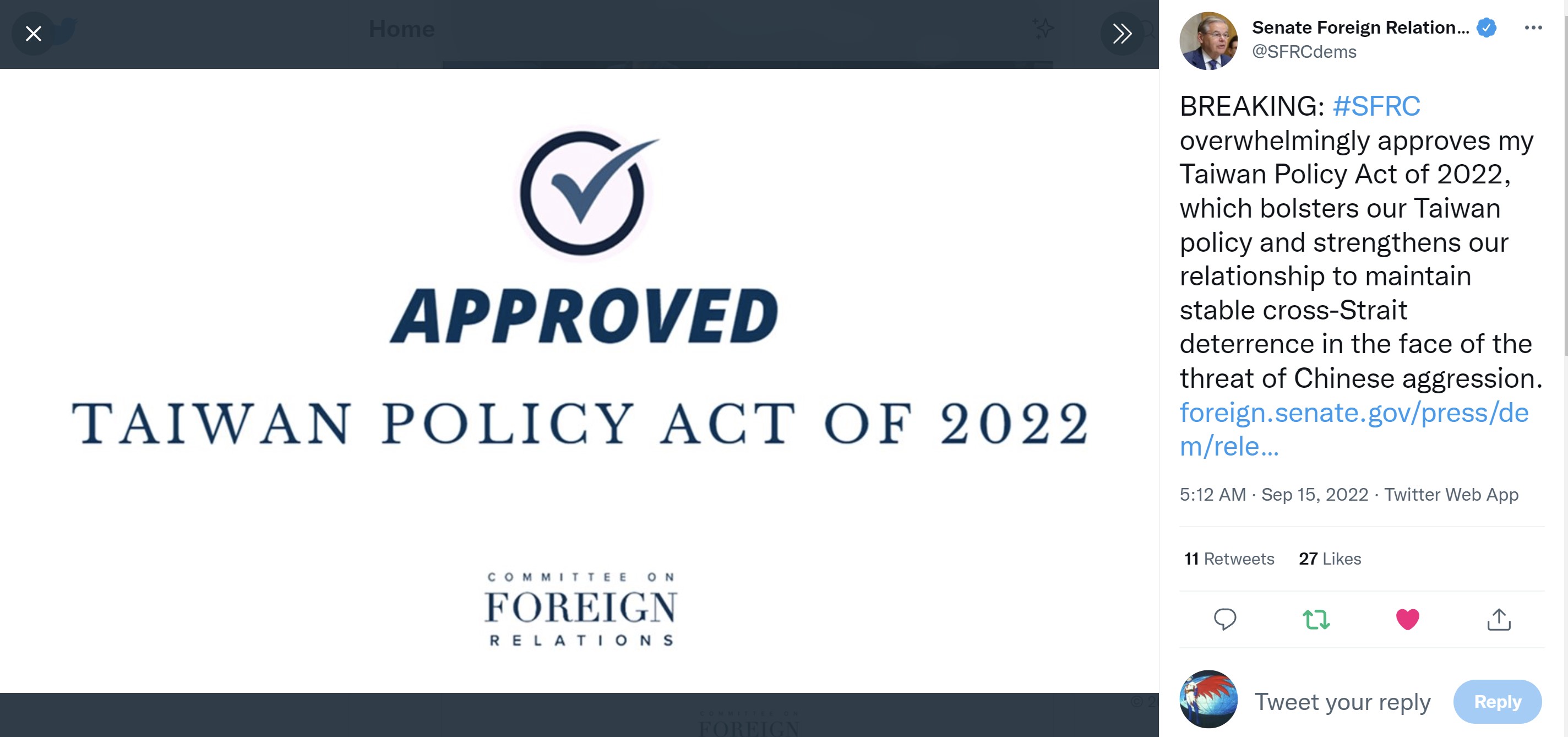
Global studies-information warfare pro tip: think of the narratives generated by Moscow and its echo chambers in western academia, media, think tanks, and officialdom against democratic Ukraine (It’s about NATO, the pandemic made Putin crazy, we need offramps and golden bridges for Moscow, de-escalation but only by Ukrainians conceding land and democratic sovereignty …. Nuclear war!); and the propaganda generated by the Chinese communists, their amen corners in western academia, media, think tanks against Speaker Pelosi’s routine visit to Taiwan Republic (The Fourth Taiwan Strait Crisis, dictator Xi’s fragile ego and coronation as dictator for life, apparently someone in the White House has a Chinese Communist farmer’s almanac and it shows American officials may not visit Taiwan on “PLA Day,” don’t forget “face”!) as global information warfare dress rehearsals. Then understand the “Taiwan Policy Act of 2022 will raise tension/anger the snowflakey Chinese/nucular war etc etc” hot takes coming from western experts in this context.
I have written about the Taiwan Policy Act so will not repeat here This should have been done during the 1990s. Think of the TPA as a decades late updating of the Taiwan Relations Act, TRA 2.0. As to angering the Chinese — wake me up when they are not hysterical about something, that would be the real news/moment to notice. The fallacy held by many in the west is also the key lesson that remains unlearned from the west’s deadly mistakes in Ukraine. While we should never purposely provoke a dictatorship, we should also remain clear-eyed that a dictatorship’s choices are often not tied to actions chosen by global democracies. Did the west ‘provoke’ the Chinese communist genocide against Tibet? Or the genocide against East Turkestan? Was the Putin invasion of Ukraine provoked by anyone in DC or Kyiv (I know, to some in the west, by Ukrainians and Taiwanese merely daring to democratically elect their leaders and have an opinion about their own future they are ‘provocations’ ….) So we return to the key issue for all frontline democracies – not lofty jargon and theories which did nothing to prevent the loss of lives and suffering in Ukraine and elsewhere – How do democracies prevent-deter war launched by dictators without capitulation and surrendering one’s democratic sovereignty? Taiwan Policy Act of 2022 is an important step in clarifying to Beijing that an invasion to annex Taiwan will be treated by the global democracies as an international incident, not a domestic affair. It should raise the price for war for Beijing, hopefully, high enough cost to prevent a war of annexation.
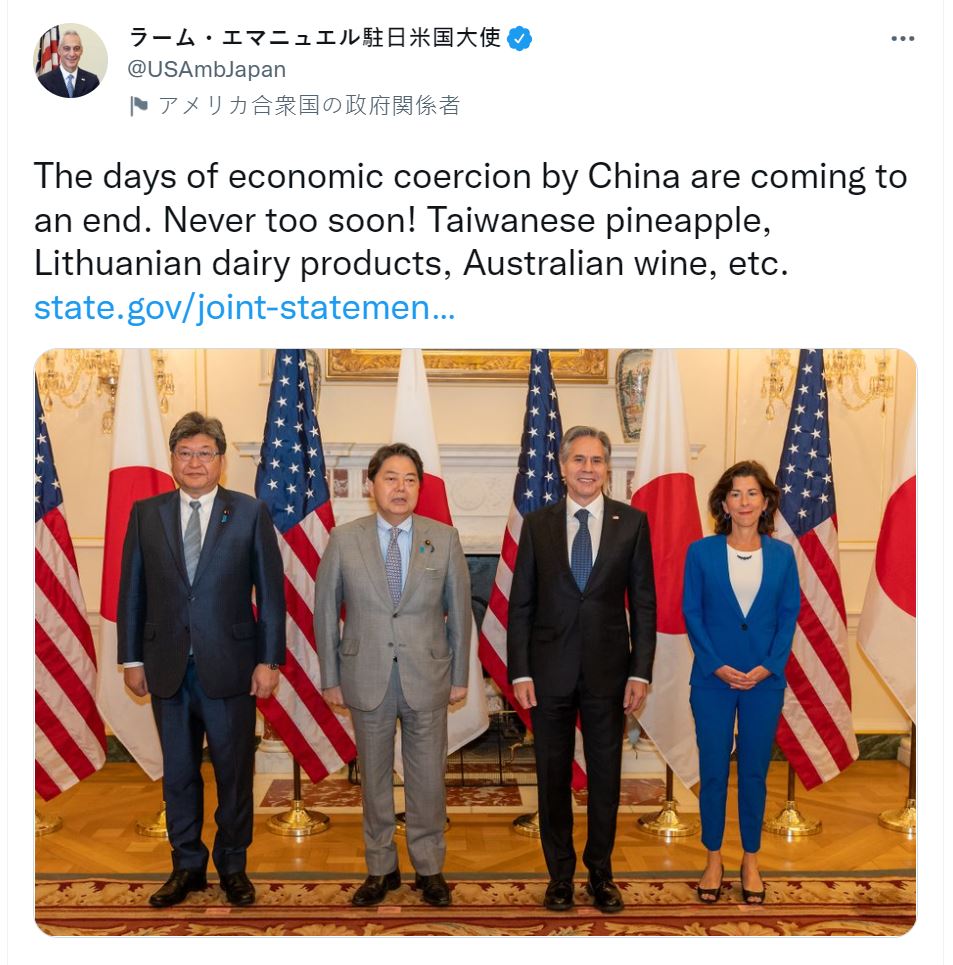
Recent breakthroughs in Taiwan Republic’s foreign relations, Baltics and Eastern Europe, Somaliland, and the South Pacific are vital to deter a Chinese communist war of annexation. This is why the arguments over “symbolic” versus “substantive” are, much like other recurring arguments over hawks or doves, realists or unrealistic, beside the point. Will Lithuania ever play a dominant role in Taiwan’s GDP? Probably not. Yet Lithuania represents a sea change in American, Japanese, and European attitudes toward the threat posed by the Chinese Communist Party upon the world. Lithuania and Somaliland also represent creative re-thinking on how best to recognize Taiwan’s democratic sovereignty, without full breaks with the Chinese communists. To edge towards internationalizing Taiwan as much as possible, so as to prevent Beijing and its allies in Taiwan and the west from claiming that an invasion is a “domestic issue.” This is why it is important for the US and Japan to think more broadly about the threats posed by Beijing, and how best to prevent a war. Integrating Taiwan into the US-Japan-EU-led global economic, cultural, educational, and technological systems will go a long way in doing so. A more proactive approach by the US to export its Taiwan Relations Act+ model to like-minded allies will also undercut any efforts by the Chinese communists, its allies in Taiwan, and the west, from sabotaging international efforts to prevent a Chinese invasion of annexation.
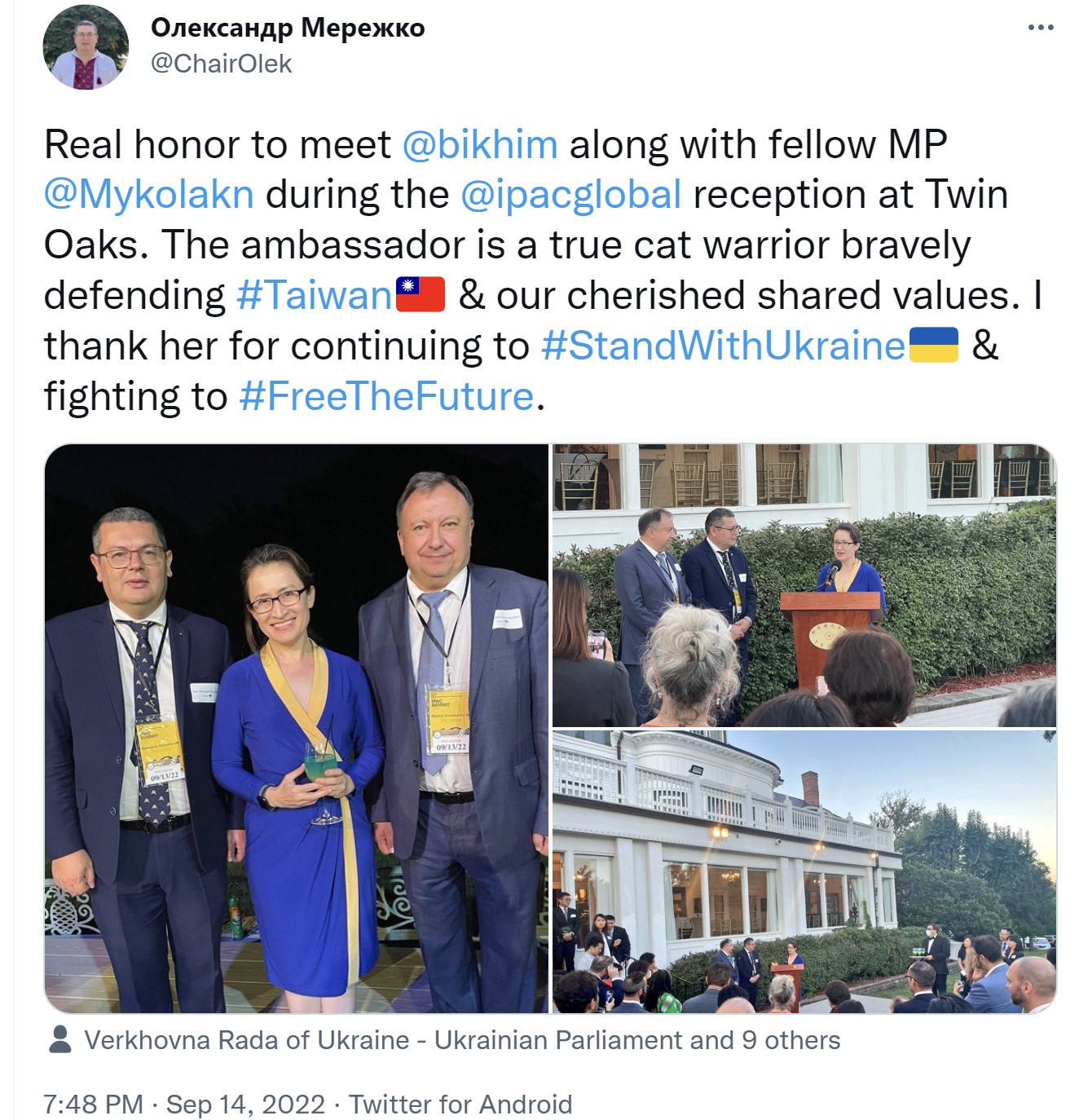
The most reassuring part of this report is the indication that the US and Taiwan Republic are collaborating. Remarkable progress in that the US is allowing the Taiwanese ambassador to the US to do this, in public – what a difference a few decades make. Would be even better if Japan co-lead this effort. The Chinese Communist Party ‘war’ against the world is all domain, multidimensional – and so seeing geoeconomic tools as a part of the efforts to deter a war of annexation against Taiwan makes sense. The main lesson from the Russian invasion and war of annexation against Ukraine is that a dictatorship like Russia and China will have very different ways of calculating “acceptable economic sacrifices.” And so I suspect the two main tools for the US, Japan, EU, and Taiwan to dissuade dictator Xi from launching a war of annexation remain convincing dictator Xi that such a move would lead to the end of his dictatorship. A parallel to the Ukraine case is the dictatorship’s information bubble – somehow Putin either convinced himself or selectively only listened to those inside Russia and Ukraine that assured him that Kyiv would fold and that most Ukrainians would welcome an invasion. One suspects Xi has created a similar information bubble, wherein he has selectively listened only to the most extreme anti-democracy anti-Taiwan voices inside Taiwan – assured, falsely, that Taipei would melt the way Chiang Kai-shek and his party-state did in 1949 and that the majority of Taiwanese would welcome a Chinese communist annexation. How the US, Japan, EU, and Taiwan find effective and convincing voices to change this perception in Beijing will go a long way to dissuade dictator Xi from resorting to an invasion.
After an earlier post on Taiwanese and Japanese counterstrike capabilities, a student emailed with questions. Here are my explanations and clarifications. In this analysis let’s separate the strategic from the tactical. The strategic objective for any democracy – Taiwan Republic, Japan, Ukraine, Poland – is to avoid war without surrendering democratic sovereignty and independence. The strategic cost of a democracy not having counterstrike capacity is sadly being played out in Ukraine – where the invading belligerent can lob long-range missiles at any location inside Ukraine, yet residents of Moscow can go on their business as if they did not start a war of annexation. It has also forced the Ukrainians to tolerate the democratic West offering weapons with an eyedrop – in pace, in quantity, in quality since 2014. The democratic west is even able to impose the unreasonable and irrational rule that the Russians can hit Ukraine, but Ukraine may not strike targets inside Russia.
On the tactical. Japan’s current inability to strike at any targets in communist China means that when the Chinese communists hit at strategic Japanese installations, at best Japan could take defensive measures, but must rely on the US to prevent the sources of attack from perpetuating the violence. Meaning, that in any conflict where one side is artificially forced to not have counterstrike capabilities, the conflict always lasts longer – there is no incentive for the Russians to stop; there will not be an incentive for the Chinese communists to change course. Worse, it means convenient and comfortable Chinese military bases to strike Japan will all be available to Beijing – and Tokyo must rely on a US POTUS to not get weak at his knees and to act.
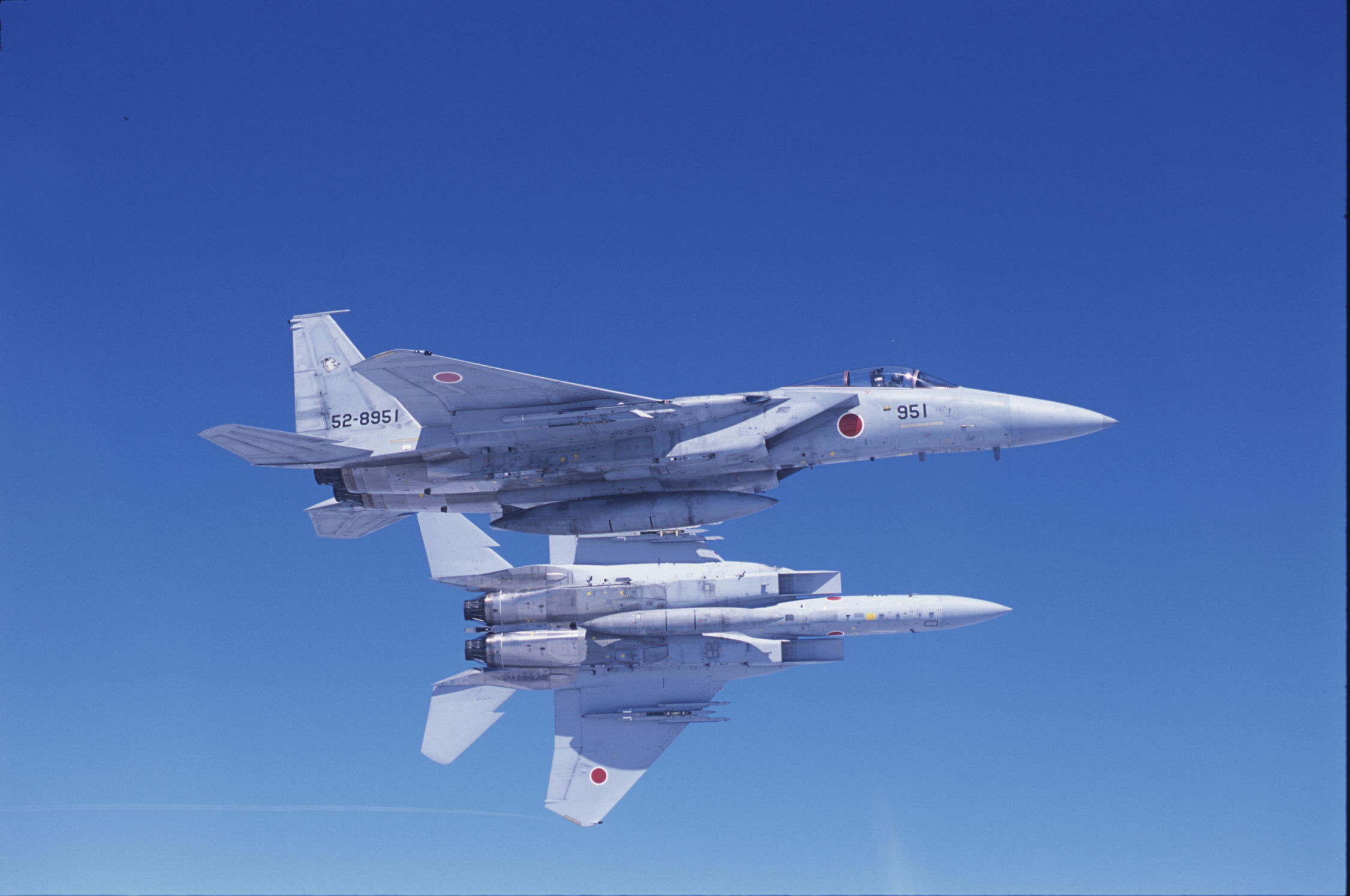
How many democratically elected leaders of any nation would voluntarily allow her nation’s national security to be contingent on the determination and courage of a foreign leader – even the President of the United States of America? This is also why the labels “hawks” and “doves” or even “peace” and “war” as used among western academia and officialdom and press are meaningless. Before February 24 not one soul in democratic Kyiv wanted war, hawkish or not. Ukraine did nothing to provoke, unless you, like some western enlightened believe, by merely breathing and existing Ukraine was provoking an attack. The unfortunate situation Ukraine found itself in was being forced by western powers to be under armed. Not coincidentally, the same western policymakers who ensured Ukraine was weak enough to look attractive to Moscow to attack are the same who have tried to sabotage Taiwan’s ability to counterstrike and be fully armed for decades. Japan is a great nation and a regional-multiregional power. It cannot and must not remain without the ability to strike at the sources of thousands of Chinese communist ballistic missiles aimed at Japan and its democratic allies. This is why I keep predicting, that not only will the Japanese double their military, we will see full-sized carriers, tactical and strategic nuclear-capable missiles, and Japanese officers returning to Taiwan Republic very soon. 5.8.2022
A quasi-Taiwanese oligarch once contemptuously asked, “What’s democracy? Can you eat it?” An archaic, narrowminded summary of the contrast between what the Pelosi visit to Taiwan meant, versus the conventional wisdom pushed by Beijing, its allies inside Taiwan, and some in western media and academia.
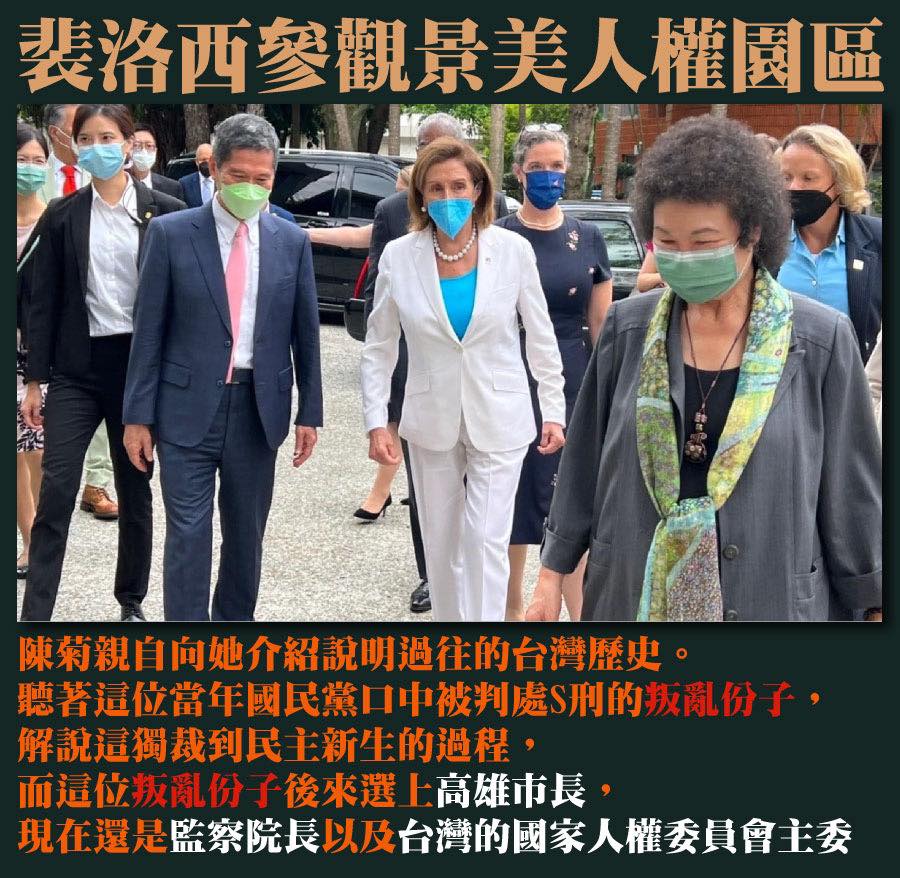
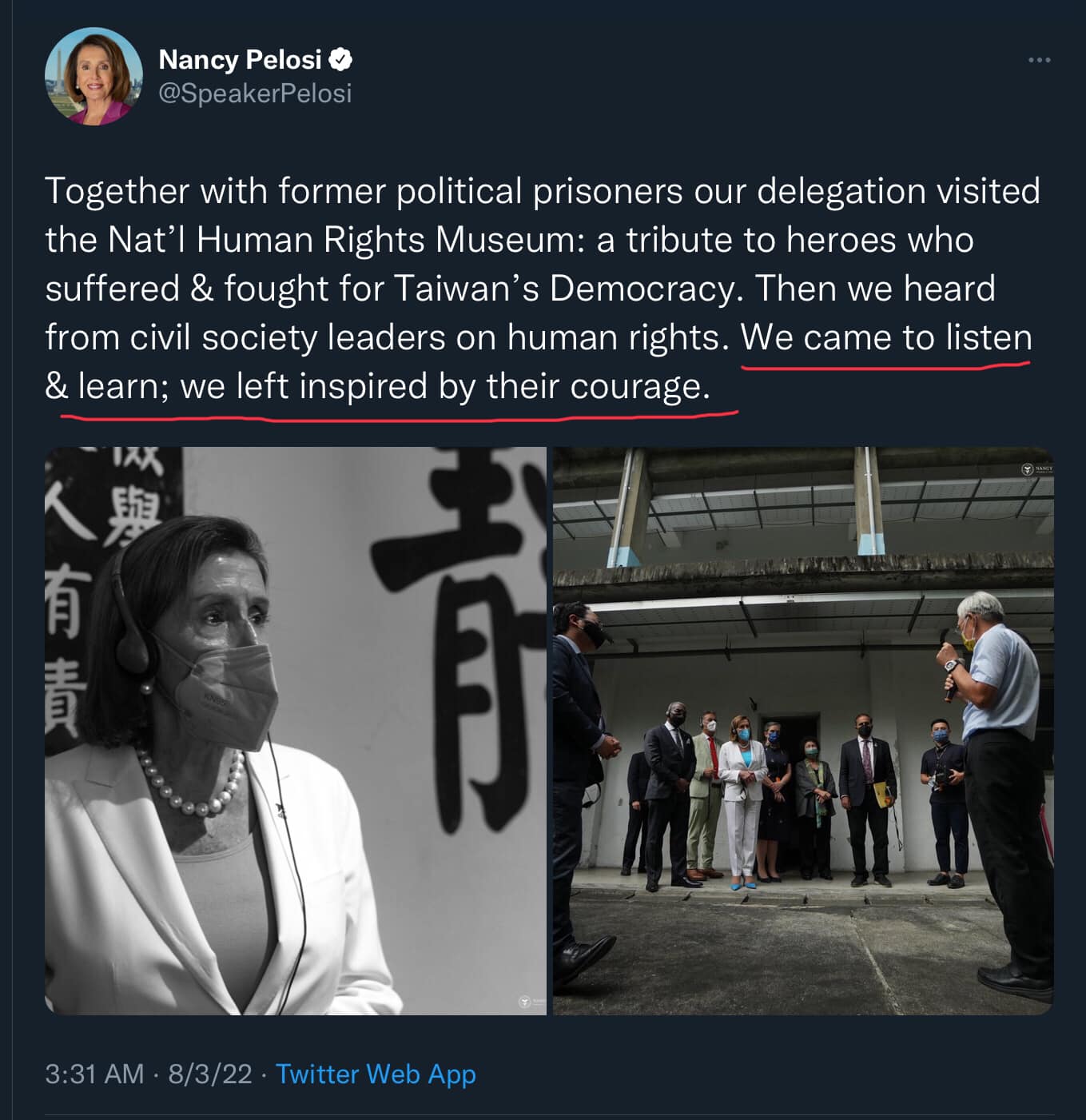
Western conventional wisdom notwithstanding, the Chinese communist belligerence is not about Pelosi or The Speakership or PLA Day. At every public stop in Taiwan Republic and Japan Speaker Pelosi said the communist taboo words “democracy,” “human rights,” and “Taiwan is a democratic nation.” Taiwan’s democratically elected president Tsai said the communist taboo words “democratic sovereignty” repeatedly. Speaker Pelosi’s visit to the Taiwan Human Rights Park-Museum commemorating the victims of the invading China KMT, and meeting survivors of Chinese communists occupied Tibet, occupied East Turkestan, occupied Hong Kong, and the Tiananmen massacre was what the China Communists and their allies in Taiwan and the west feared the most. A visit mostly ignored or poorly covered by the western media is too cool for school for this democracy-human rights sappiness. Incidentally, one could make a similar observation of the western press corps’s inability to focus on democracy and the threats posed by domestic extremists, too. Ditto the coverage on the courageous Ukrainians defending their democracy, along with their genuine love of their beautiful nation.
This is the world history level irony-paradox: for decades the China KMT and China CCP conspired to domesticate the “Taiwan problem.” How can the functioning democracy be a “problem” while an ethno-nationalist, belligerent, militarist communist dictatorship is not? Yet by its barbarism and belligerence, Beijing has done as much to internationalize Taiwan — a global, oceanic, outward-facing democratic Taiwan, away from the Chinese authoritarian muck and mire — than any force inside Taiwan. If the Biden White House would buck up, instead of fussing about the Pelosi visit, they should coordinate a legislative delegation from democracies to visit Taipei every week from now until the end of the year. If the PLA copycat Russian jet engines are decent enough to sustain massive military barbarism weekly, well then I tip my cap to them. Then maybe we can ask the oppressed masses of communist China: How come you don’t have a democratically elected legislature for foreign delegations to visit? Are you really incapable of exercising your Buddha-given right to choose your own leaders? If “little/periphery” Taiwan can have a democracy that is prosperous and full functioning, why can’t China do the same? 5.8.2022
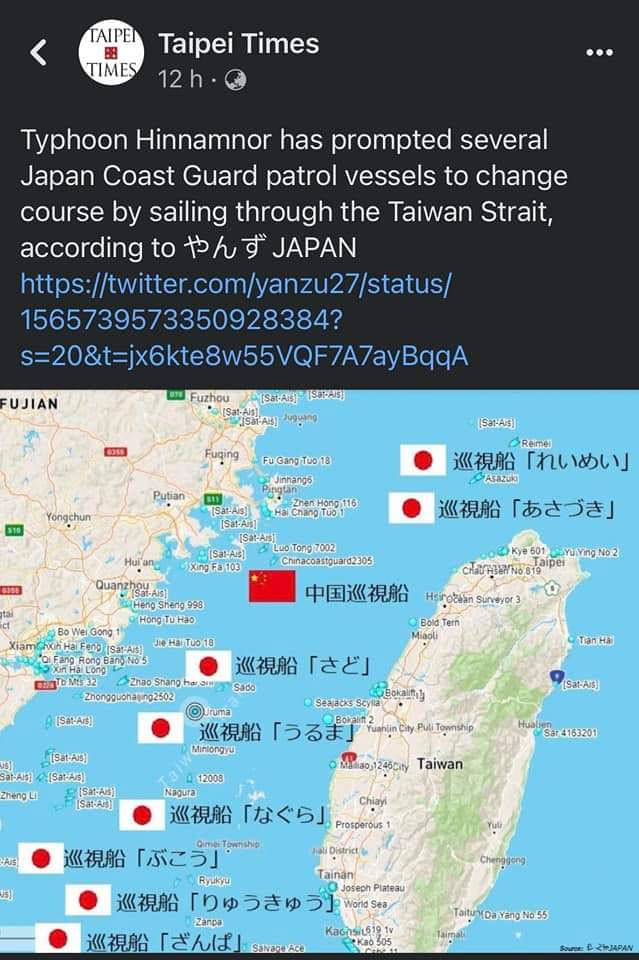
Eight Japanese Coast Guard vessels recently sailed into the Taiwan Strait, ostensibly to avoid the typhoon. It’s a very Japanese gesture, refined and civilized — eight is a lot, typhoon gives the snow-flakey Chinese communists a facesaving excuse. Look at a map of the region and ask yourself: Does this make sense? Then connect these dots: the 2022 Chinese communist missile tantrum, their firing of communist missiles into the Japanese EEZ, their unreasonable claims of the entirety of the Taiwan Strait as Chinese communist territorial water, and the two US naval cruisers sailing in formation with Taiwanese naval and coast guard vessels, what should we surmise? I have a folder of reports of US, Taiwan, and Japan coast guard vessels in the South Pacific for the last 12 months — no way they are not coordinating their work in that region. 6.9.2022



 Taiwan in World History (台灣與世界歷史)